

The Law Offices of Anidjar and Levine help policyholders document storm- and weather-related losses, review policy terms, and address disputes over causation, scope, exclusions, or undervaluation. These claims may involve hurricane wind, roof leaks, flooding, hail, lightning, and injuries caused by unsafe post-storm conditions. Strong evidence, prompt notice, and organized records can significantly affect the outcome. Counsel may also help challenge claim delays, denials, or unfair handling. For injury-related matters, learn more from a Panama City Personal Injury Lawyer.
Main Takeaways
- A Panama City storm damage lawyer reviews your policy, documents losses, and pursues payment for covered wind, hail, lightning, leak, or surge damage.
- Strong claims often rely on prompt notice, time-stamped photos, repair records, receipts, and organized correspondence with the insurer.
- Disputes commonly involve causation, scope of repairs, valuation, exclusions, and delays after hurricanes or severe weather events.
- Lawyers can coordinate emergency mitigation, preserve evidence, and request written explanations for denials or reduced payments.
- Florida policyholders may challenge undervaluation, delay, or wrongful denial through negotiation, appraisal, or litigation when necessary.
How We Can Help With Your Panama City Storm & Weather Damage Property Claim
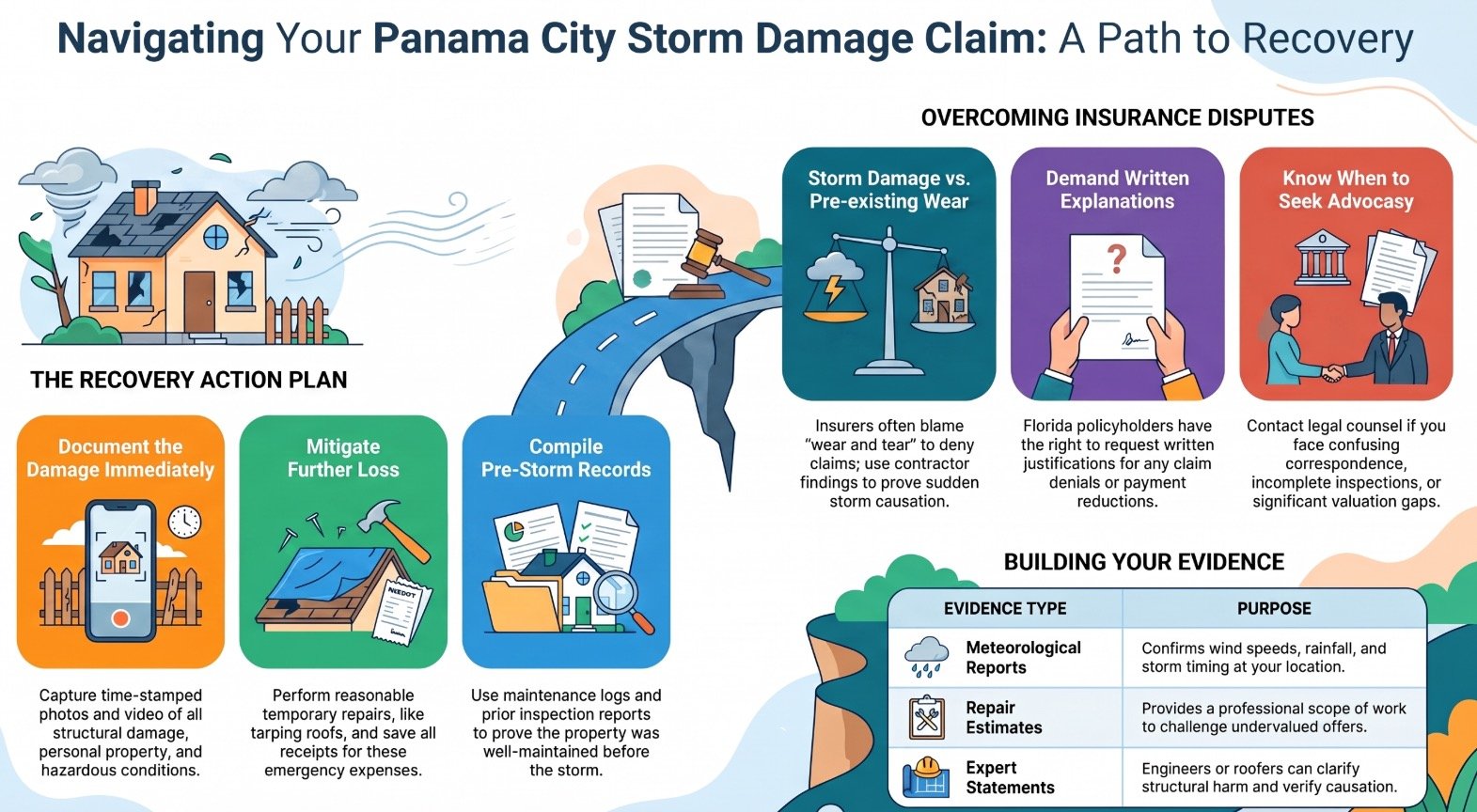
When a storm or severe weather event damages a home or commercial property in Panama City, legal counsel can help the policyholder present a clear, well-supported claim and respond effectively to the insurance company’s resistance. Assistance often begins with careful review of damage documentation, policy terms, and timelines, so the claim reflects the full scope of loss and needed repairs.
From there, counsel may guide the policyholder on coverage options, organize estimates, and communicate with adjusters consistently and professionally. This support can include coordinating emergency response for temporary repairs, mitigation efforts, and preserving essential evidence before conditions worsen. A structured approach helps reduce confusion, supports responsible stewardship of resources, and protects the claimant from avoidable mistakes. If disputes arise over valuation, exclusions, or delays, counsel can prepare persuasive submissions and advocate for fair treatment, allowing families, ministries, and business owners to focus on restoring stability and serving their communities well.
Understanding Panama City Storm & Weather Damage Property Claims


Understanding Panama City storm and weather damage property claims cases helps explain why some losses are paid promptly while others become disputed. These matters often depend on policy language, proof of damage, timelines, and whether insurers believe claimed conditions resulted from a covered event.
OUR CONSULTATIONSARE FREE
START YOUR FREE CASE REVIEW

Injury-related property claims may involve unsafe structures, displaced families, interrupted care, and added living expenses that affect vulnerable residents. Careful documentation, prompt notice, and organized records often support fair evaluation. When disagreements arise, legal review may address scope of loss, valuation methods, exclusions, and duties after damage. This process also connects with broader service goals, including community recovery planning and emergency resource coordination, because unresolved claims can delay repairs, housing stability, and assistance to neighbors in need. A disciplined approach helps protect rights while promoting accountability, informed decisions, and practical outcomes that strengthen households, support local recovery efforts, and encourage responsible stewardship of limited community resources after major storms.
Common Causes of Panama City Storm & Weather Damage Property Claims
Several weather-related events commonly lead to property claims in Panama City, particularly when severe conditions cause sudden or extensive structural damage. Common sources of loss include hurricane wind damage, roof leaks from wind-driven rain or compromised materials, and flooding or storm surge that affects foundations, interiors, and personal property. Hail impacts and lightning strikes also contribute to significant losses, often raising complex questions about coverage, causation, and the full scope of repairs.
Hurricane Wind Damage


Because hurricane-force winds can compromise nearly every part of a structure, they are a frequent source of property claims in Panama City after major storms. Powerful gusts may dislodge shingles, loosen siding, break windows, damage doors, and detach exterior equipment, leaving homes and community buildings vulnerable to further loss and disruption.
Even a well-built residence with a Windproof roof can sustain significant wind-related damage when uplift forces exceed design limits. In many claims, insurers question whether the loss resulted from wear, poor maintenance, or storm conditions, which may lead to an insurance denial. Careful documentation, prompt inspection, and preservation of damaged materials often help clarify the cause. For those seeking to protect families, neighbors, or congregations, understanding hurricane wind damage is crucial to pursuing a fair and timely property claim.
Roof Leak Causes
Roof leaks often follow the same storm conditions that cause visible wind damage, yet the source of intrusion is not always immediately apparent. In Panama City, heavy rain, lifted shingles, damaged flashing, debris punctures, and compromised sealants commonly allow water to enter roofing systems. Even minor openings may spread moisture into insulation, ceilings, and wall cavities before residents recognize a problem.
Service-minded property owners often document conditions promptly because early action may protect occupants and preserve evidence. Drafting a roof leak report with photographs, repair invoices, and contractor findings can clarify whether storm forces created the opening. Insurers may question age, wear, installation defects, or maintenance issues, which can lead to insurance coverage disputes. Careful evaluation helps distinguish sudden storm-related damage from preexisting deterioration and supports a more accurate claim outcome.
Flooding And Storm Surge
When tropical systems push water inland, flooding and storm surge often produce some of the most extensive property losses in Panama City. Rising water may undermine foundations, saturate wall systems, damage electrical components, and leave contamination that complicates cleanup and safe reentry for families and caretakers alike.
These claims often require careful Insurance documentation, because policy language may distinguish between wind-driven rain, surface water, and flood exclusions. Photographs, repair estimates, moisture reports, and timelines of evacuation or mitigation efforts can help clarify the source and extent of damage. In many matters, adjuster dispute resolution becomes necessary when carriers question causation, scope, or valuation. A lawyer serving Panama City property owners may help organize evidence, protect deadlines, and support fair treatment so homes, ministries, and community spaces can be restored responsibly.
Hail And Lightning Losses
How hail and lightning affect a property claim often depends on the storm’s speed, the condition of the structure, and the accuracy of the post-loss inspection. Hail may bruise shingles, crack skylights, dent metal surfaces, and allow hidden water intrusion. Lightning can damage roofing materials, electrical systems, appliances, and safety equipment, sometimes with limited exterior evidence.
A careful hail-and-lightning comparison helps identify separate causes of loss and supports fair evaluation under the policy. Prompt storm damage documentation, including photographs, repair estimates, weather data, and contractor findings, strengthens the record for families and community institutions seeking recovery. When uncertainty exists, professional review may clarify whether damage resulted from a covered event, prior wear, or deferred maintenance, which often becomes central to the insurer’s decision.
Don’t Wait. Call Our Florida Personal Injury Lawyers Now!
Legal Rights of Panama City Storm & Weather Damage Property Claims Injury Victims
Although storm and weather damage claims often begin as insurance matters, Panama City property owners and other affected parties retain important legal rights when an insurer delays, undervalues, or wrongfully denies covered losses. Those rights may include fair claim handling, timely communication, payment under applicable policy terms, and the opportunity to challenge improper decisions through negotiation or litigation. Careful records, Emergency preparedness plans, and use of FEMA resources can support recovery efforts and protect communities.
- Policyholders may request written explanations for denials, exclusions, or reduced payment amounts.
- Injured parties may preserve photographs, estimates, receipts, and correspondence as supporting evidence.
- Florida law may provide remedies when insurers act in bad faith or violate claim obligations.
- Legal counsel may help families, volunteers, and neighbors pursue accountability while restoring safe housing.
Why Do Panama City Storm & Weather Damage Property Claims Injuries Happen?
Because severe weather often creates unstable conditions in and around damaged structures, injuries tied to Panama City storm and weather damage property claims frequently occur during the storm itself, in the immediate aftermath, or throughout the repair and cleanup process. High winds, flying debris, broken glass, flooding, downed power lines, collapsing roofs, and weakened trees can place residents, volunteers, contractors, and neighbors in danger.
In many cases, injuries happen because hazards are not immediately visible. Water intrusion may weaken floors, mold may spread quickly, and electrical systems may remain energized after visible damage ends. Urgent efforts to protect property, assist others, and document losses can also increase risk when Storm safety planning is limited, or conditions change rapidly. The Insurance claim timeline may contribute indirectly, as property owners sometimes feel pressure to inspect, photograph, remove debris, or begin temporary repairs before a site is fully stabilized. These circumstances often combine to create preventable but serious harm.
What Should You Do After a Panama City Storm & Weather Damage Property Claims Injury?
After a Panama City storm-related injury, the injured person should seek immediate medical care to protect, recover, and establish a clear treatment record. It is also important to document injury and property damage evidence through photographs, medical records, repair estimates, and other supporting materials. Prompt reporting of all damage and losses to the insurer can help preserve the claim and reduce later disputes over the extent of the harm.
Seek Immediate Medical Care
Make prompt medical attention a priority whenever a storm-related injury occurs, even if the harm appears minor at first. After severe weather, hidden injuries such as concussions, internal bleeding, infections, or respiratory complications may worsen without timely treatment. A medically urgent evaluation can identify conditions that are not immediately visible and guide appropriate care.
Emergency response actions may include calling 911, visiting an emergency room, or seeking prompt treatment from a qualified physician. If the injured person is assisting family members, neighbors, or vulnerable residents, that person should still address personal health needs without delay. Early care protects well-being, supports recovery, and reduces the risk of preventable complications. In a service-minded community, obtaining immediate treatment also helps ensure an injured person can safely continue caring for others when conditions allow.
Document Storm Injury Evidence
While medical care addresses immediate health concerns, careful documentation of the injury and the surrounding storm conditions can play a crucial role in any later property or injury claim. Injured individuals should photograph visible wounds, damaged personal items, wet flooring, fallen debris, and any hazardous conditions before they change. If possible, images should include timestamps and wide views showing location and scale.
Written notes may also help preserve important details, including pain levels, mobility limits, weather conditions, and the sequence of events. A basic Safety precautions checklist can guide safe evidence collection without creating additional harm. Insurance documentation tips often recommend saving medical instructions, receipts, treatment summaries, and names of witnesses who offered assistance. Organized records can later support a clearer understanding of how the storm-related injury occurred.
Report Damage And Losses
Because storm-related property conditions can deteriorate quickly, report damage and losses as soon as it is safe to do so, both to the property insurer and to any relevant landlord, business owner, or local authority. Prompt notice helps protect community safety, supports timely inspections, and reduces disputes about the cause and extent of harm. Organize claim documentation carefully, including photographs, receipts, repair invoices, temporary housing costs, and written timelines. Accurate damage estimates from qualified professionals can clarify the scope of needed repairs and strengthen the claim. Loss mitigation efforts, such as tarping roofs or removing standing water, should be reasonable and well recorded. Evidence preservation remains critical, since damaged materials, communications, and inspection reports may later help establish responsibility and secure fair compensation for recovery efforts.
Critical Evidence in a Panama City Storm & Weather Damage Property Claims Case
Establishing a storm and weather damage property claim often depends on the strength and organization of the supporting evidence. In Panama City cases, several forms of documentation can help connect the event to the property damage and clarify the extent of the resulting losses.
The following materials are commonly treated as important components of a well-supported claim:
- Photographic damage documentation
- Meteorological reports
- Repair and inspection records
- Witness and expert statements
Photographic Damage Documentation
Capture every visible condition as soon as it is safe to do so, since photographic damage documentation often becomes some of the most persuasive evidence in a Panama City storm and weather damage property claim. Clear images should show damaged roofs, windows, interiors, landscaping, personal property, and any standing water from multiple angles and distances. Time-stamped photos may help establish the sequence and extent of damage.
Video walkthroughs can further preserve context by showing how each damaged area connects throughout the property. Also photograph expenses, including temporary repairs, hotel costs, debris removal, and replaced necessities, because these images can support reimbursement requests. A careful, organized record helps insurers, adjusters, and advocates evaluate losses accurately, better positioning affected families to secure the resources needed to restore safety, stability, and service to others.
Meteorological Reports
In many Panama City storm and weather damage property claims, meteorological reports provide an objective foundation for linking the reported loss to a specific weather event. These records can identify wind speeds, rainfall totals, hail activity, storm tracks, and timing, helping clarify whether conditions matched the claimed damage.
Reliable Meteorological report sources may include the National Weather Service, local weather stations, radar archives, and the National Hurricane Center. When carefully reviewed, these materials can support a fair evaluation of causation, severity, and geographic impact. They may also address disputed questions about when a storm arrived and how long hazardous conditions persisted. For those committed to helping affected property owners, meteorological data can strengthen accountability and promote a more informed, service-minded claims process for everyone involved.
Repair And Inspection Records
A thorough set of repair and inspection records can provide some of the most persuasive evidence in a Panama City storm and weather damage property claim. These documents help establish the property’s condition before the event, the scope of damage afterward, and whether you took timely steps to prevent further harm.
Maintenance logs may show consistent care, which can counter neglect allegations. Contractor receipts can confirm when repairs were made, what materials were used, and how much the work cost. Inspection reports may identify hidden moisture, roof failures, or structural concerns that photographs alone might not fully capture. Together, these records support a clear timeline and help evaluate insurance coverage, repair needs, and the full financial impact on the property owner and household members alike.
Witness And Expert Statements
When a storm and weather damage claim involves disputed causation, witness and expert statements often become paramount to proving what occurred and how the loss affected the property and any related injuries. Neighbors, contractors, first responders, and occupants may provide timely observations about conditions before and after the event, helping establish witness credibility and a reliable timeline. In many cases, expert testimony from engineers, roofers, meteorologists, or medical professionals clarifies storm causation, the extent of structural harm, and the connection between dangerous conditions and injury. Their findings can strengthen documented liability by addressing alternative explanations raised by insurers or opposing parties. Careful collection of these statements supports fair evaluation, encourages accountable decision-making, and helps those seeking to restore homes, safety, and stability after severe weather events.
Long-Term Effects of Panama City Storm & Weather Damage Property Claims Injuries
Storm and weather damage injuries in Panama City may produce lasting physical complications that continue well after the initial event and disrupt daily functioning. These incidents may also lead to significant emotional trauma effects, including persistent stress, anxiety, and difficulty regaining a sense of stability. Financial recovery challenges often arise as medical costs, repair expenses, and lost income continue to pressure affected individuals and families.
Lasting Physical Complications
Because injuries sustained during severe weather events often appear manageable in the immediate aftermath, their long-term physical consequences may be underestimated until persistent pain, reduced mobility, respiratory impairment, or neurological symptoms begin to interfere with daily life. Individuals assisting affected families should recognize that untreated fractures, spinal strain, head injuries, and deep lacerations may produce lasting limitations requiring extended rehabilitation and continuing medical supervision. Water intrusion can also cause mold growth, exposing occupants and volunteers to chronic respiratory complications that worsen asthma, bronchitis, and other breathing disorders. In some cases, nerve damage, joint instability, or repeated infections reduce a person’s ability to work, maintain housing, or consistently care for others. Careful documentation, timely treatment, and sustained support often play an critical role in protecting long-term health and stability.
Emotional Trauma Effects
Although property damage is often the most visible consequence of severe weather events, the emotional trauma that follows can persist long after repairs are completed and immediate dangers have passed. Survivors may experience Catastrophic stress, disrupted sleep, irritability, grief, and heightened vigilance during future storms. These reactions can affect caregiving, community service, and the ability to support vulnerable neighbors with patience and consistency.
In many cases, emotional harm develops quietly, especially when individuals focus on recovery tasks and claim documentation instead of their own well-being. Professional evaluation may reveal anxiety, depression, or post-traumatic symptoms that interfere with relationships and daily responsibilities. Compassionate support systems, trauma-informed counseling, and steady routines often help restore stability. Recognizing these effects early can strengthen households and enable more effective service to others during long-term recovery efforts.
Financial Recovery Challenges
When severe weather damages a home or business, the financial consequences often extend well beyond the initial repair period. Property owners may face difficult choices involving Budgeting repairs, temporary relocation costs, and delayed business operations. Even with coverage, rebuilding timelines can shift because of contractor shortages, code upgrades, or disputed estimates. An insurance claim denial may intensify pressure, especially when families or employers are trying to restore stability for others who depend on them. Long-term recovery often requires careful income-replacement planning, record preservation, and realistic forecasting of future expenses. In many cases, unmet financial obligations accumulate while damaged property remains unusable. A disciplined approach to documentation and claim review can support a more complete recovery. Professional legal guidance may help protect resources, reduce uncertainty, and strengthen a fair claim outcome.
Proving Liability in Panama City Storm & Weather Damage Property Claims
Establishing liability in Panama City storm and weather damage property claims injury cases requires a careful review of how the hazardous condition developed, who had responsibility for the property, and whether reasonable steps were taken to prevent foreseeable harm. Courts and claim evaluators often apply Negligence Standards to determine whether an owner, manager, contractor, or other responsible party failed to act with appropriate care under storm-related circumstances.
Effective cases are built through Duty Breach Evidence, including maintenance records, inspection logs, repair requests, photographs, witness statements, and building code violations. Causation Proof is equally important because an injured person must connect the unsafe condition directly to the harm suffered, not to unrelated weather forces alone. Comparative Fault may also affect recovery when a property owner argues that the injured person ignored warnings or entered a visibly dangerous area. Careful factual development helps protect community members while promoting accountability, safety, and responsible property stewardship after severe weather events.
Don’t Wait. Call Our Florida Personal Injury Lawyers Now!
Dealing With Insurance Companies After a Panama City Storm & Weather Damage Property Claims Injury
Because insurers often move quickly after a storm-related injury claim is reported, early communication, documentation, and claim-handling decisions can materially affect the outcome. Claimants are often well served by keeping records organized, providing accurate facts, and avoiding speculation when speaking with adjusters. Paying close attention to deadlines, requested forms, and written correspondence helps preserve credibility and supports a fair evaluation.
Insurance carriers may use Policy denial strategies that focus on exclusions, delayed notice, inconsistent statements, or disputed causation. For that reason, practical claim communication tips can help reduce avoidable disputes. These include confirming conversations in writing, preserving photographs and repair estimates, documenting injuries and related losses, and reviewing policy language before responding to broad information requests. A disciplined approach also benefits families and communities by promoting honesty, cooperation, and responsible recovery efforts after severe weather. When questions arise, informed guidance can help protect rights while maintaining a respectful, service-minded posture throughout.
What to Expect During a Panama City Storm & Weather Damage Property Claims Injury Claim Process
The Panama City storm and weather damage property claim process generally begins with an initial claim evaluation, during which the reported losses, policy terms, and available evidence are reviewed. From there, the claimant typically follows specific damage documentation steps, while the insurer investigates on an established timeline that may affect the pace of the claim. As the matter progresses, attention often turns to settlement discussions and, when disagreements arise, the procedures available for resolving disputes.
Initial Claim Evaluation
When a Panama City storm or weather damage property claim begins, the initial evaluation typically focuses on whether the loss is covered, how the damage occurred, and what evidence supports the reported claim value. During this stage, a careful Claim assessment helps identify immediate issues, service needs, and potential disputes.
Professionals often conduct a policy coverage scan to compare reported facts with relevant terms, exclusions, and deadlines. They may also prepare a documentation checklist to clarify what information will later support the claim, without yet addressing detailed proof-gathering steps. If bodily harm is involved, an injury review may consider reported symptoms, treatment status, and how the event affected daily responsibilities. This early evaluation promotes orderly communication, protects community-minded claimants, and helps all parties approach the process with fairness, diligence, and informed expectations.
Damage Documentation Steps
Following the initial claim evaluation, attention generally shifts to documenting the storm or weather-related loss in a clear and organized manner. Property owners are often advised to photograph each affected area, list damaged items, and preserve receipts for emergency repairs, temporary housing, and cleanup services.
Clear records can help show the property’s condition before and after the event. Maintenance logs, inspection reports, and notes on seasonal maintenance may support the overall claim. Records showing prior repairs, roof care, and leak-prevention efforts may also clarify whether the damage resulted from a sudden storm event rather than deferred upkeep. When appropriate, estimates from qualified contractors and inventories of personal property can create a fuller account, allowing those assisting the household to respond responsibly and efficiently.
Insurer Investigation Timeline
During the insurer’s investigation, a property owner in Panama City can generally expect several review stages before the insurer makes a coverage decision. After notice of loss, the insurer usually acknowledges the claim, assigns an adjuster, requests records, and schedules an inspection of storm or weather-related damage.
The insurer then compares the reported loss with policy terms, prior property conditions, repair estimates, photographs, and any expert findings. Policyholder duties often include protecting the property from further harm, providing timely information, and cooperating with requests for documents or interviews. Delays may occur if damage is extensive, access is limited, or additional engineering review is needed. Common claim denial reasons may involve late reporting, excluded causes of loss, preexisting damage, or insufficient proof connecting the damage to the storm event.
Settlement And Disputes
Although many storm and weather damage claims in Panama City resolve through negotiation, the settlement phase often turns on the scope of covered damage, the cost of repair, and the insurer’s valuation of the loss. Policyholders may receive offers that omit hidden moisture damage, code upgrades, or temporary living expenses. Careful review of estimates, photographs, and expert findings often strengthens a fair resolution for families and neighborhoods.
When disagreements persist, formal dispute procedures may follow. Denied claim appeals can require additional documentation, contractor opinions, and a clear explanation of why the denial conflicts with policy terms. In some matters, appraisal dispute mediation helps narrow valuation gaps without immediate litigation. If resolution still fails, counsel may pursue legal action to protect recovery and support rebuilding efforts after severe weather losses for affected residents.
Compensation for Panama City Storm & Weather Damage Property Claims Injury Damages
Many storm and weather damage claims in Panama City involve more than repair costs, because a severe event can also cause injuries that lead to substantial financial losses. When falling debris, structural collapse, flooding, or electrical hazards harm occupants, compensation may include medical bills, rehabilitation expenses, medication costs, and documented wage interruption. Careful records often strengthen these claims and help families maintain stability while serving affected loved ones.
Insurance recovery can become more difficult when carriers dispute whether injuries arose from covered storm conditions or from later neglect. In those situations, timely notice, medical evaluations, and photographs may support the claim. Policy denial appeals may be necessary when insurers undervalue injury-related losses or misapply exclusions. Cash settlement timing also matters, since delays can interrupt treatment and household obligations. A lawyer handling Panama City storm and weather damage property claims may coordinate evidence, communicate with insurers, and pursue fair compensation through negotiation or litigation when needed.
Economic vs Non-Economic Damages in Panama City Storm & Weather Damage Property Claims Cases
In Panama City storm and weather damage property claims cases, damages generally fall into two primary categories: economic losses and non-economic harms. Economic damage categories often include repair costs, temporary housing expenses, lost income, and other measurable financial consequences, while non-economic loss factors may involve pain, emotional distress, and loss of normal daily functioning. The value of either type of claim typically depends on the quality of the documentation, the credibility of the supporting evidence, and the extent to which the losses can be clearly connected to the storm event.
Economic Damage Categories
When a Panama City storm or severe weather event damages insured property, economic damages generally refer to the measurable financial losses tied to the claim, while non-economic damages involve intangible harm that may arise only in limited related disputes. In property cases, these damages often include repair or replacement costs, debris removal, temporary housing, mitigation expenses, lost rental income, and damaged personal property. Documentation may involve contractor estimates, invoices, photographs, inventories, and expert evaluations. Attention to flood insurance basics can help families and volunteers understand coverage limits, exclusions, and proof-of-loss requirements after rising water events. Claims may also address costs for Waterproofing solutions, roof tarping, mold prevention, and utility restoration when those measures reasonably reduce further harm. Careful valuation supports fair recovery and helps communities rebuild homes, stability, and service capacity after disaster.
Non-Economic Loss Factors
Often, non-economic loss factors play a limited role in Panama City storm and weather damage property claims, because the central dispute usually concerns the financial cost to repair, replace, or restore insured property. Even so, storm losses can affect a household beyond invoices and estimates. Displacement, uncertainty, and disruption may contribute to emotional distress, especially when families are caring for children, elders, or neighbors during long term recovery. In some circumstances, impaired enjoyment of the home may be significant when living spaces become unsafe, unusable, or deeply altered. Although pain and suffering is more commonly associated with personal injury matters, related hardships may still shape how the overall loss is experienced. A service-minded legal approach recognizes these human impacts while remaining focused on practical restoration, stability, and community well-being after severe weather events.
Proving Claim Value
Although storm and weather damage property claims are primarily measured through repair and replacement costs, proving claim value requires a careful distinction between economic losses and the more limited non-economic effects that may accompany a covered event. Economic damages often include structural repairs, temporary housing, debris removal, lost personal property, and mitigation expenses. Clear Insurance documentation, including photographs, invoices, receipts, and policy language, helps establish these amounts credibly and with purpose. Estimates comparison is also important because competing contractor opinions may reveal undervaluation or omitted work. Non-economic considerations are narrower in property cases, yet disruption, inconvenience, or stress may still affect negotiations when supported by the facts and policy terms. A careful presentation of both categories helps families and communities pursue fair outcomes while preserving resources for recovery, rebuilding, and long-term stability after loss.
When a Panama City Storm & Weather Damage Property Claims Injury Case Goes to Trial vs Settlement
In Panama City storm and weather damage property claims, the decision to resolve a case through settlement or proceed to trial typically depends on the strength of the evidence, the scope of the loss, and the insurer’s willingness to offer fair compensation. Experienced counsel evaluates damages, evidence disputes, policy positions, and witness credibility before advising the next step.
Settlement negotiation tactics often focus on presenting organized repair estimates, expert findings, and proof of interruption losses in a way that encourages responsible resolution. When insurers remain unreasonable, courtroom trial preparation becomes necessary, including document review, expert coordination, and testimony planning. Timeline decision factors may also influence strategy, especially when ongoing property conditions affect families, tenants, or community operations. Trial may be appropriate when liability is contested, valuation remains sharply disputed, or negotiations fail to reflect the claim’s full impact. A careful, service-minded approach seeks accountability while pursuing an outcome that supports recovery, stability, and long-term rebuilding efforts.
Florida Laws That May Affect Your Panama City Storm & Weather Damage Property Claims Case
Several Florida laws may shape a Panama City storm and weather damage property claim by governing insurance obligations, notice requirements, claim handling, and time limits for legal action. These rules often influence documentation duties, communications with carriers, and the overall recovery timeline for families rebuilding after severe weather.
- Policy language and Florida insurance statutes may control covered losses, exclusions, and payment duties.
- Prompt notice requirements can affect inspections, evidence preservation, and dispute resolution efforts.
- Claim handling standards may require timely investigation, fair communication, and reasonable settlement practices.
- Certain violations may support allegations involving insurer bad faith when conduct harms policyholders.
Florida law may also affect assignments of benefits, supplemental claims, appraisal procedures, and the proof needed to support repair estimates. In service-oriented communities, understanding these rules can help people protect neighbors, homes, and shared resources. Careful compliance may strengthen a claim’s position while reducing avoidable delays and misunderstandings during recovery after major storms.
The Statute of Limitations for Panama City Storm & Weather Damage Property Claims Injury Cases
When storm damage leads to disputes over insurance benefits or related losses, the statute of limitations can determine whether a Panama City property claim may still be pursued in court. Florida law sets firm claim filing deadlines, and missing them can bar recovery even when damage is substantial. For those seeking to protect households, neighbors, and community resources, timely action supports fairness and orderly resolution.
The applicable deadline may depend on whether the dispute involves an insurance contract, negligent repairs, or other storm-related losses. Courts may also examine when the damage was discovered or should reasonably have been discovered. In some cases, comparative negligence rules can reduce recovery if a property owner’s actions contributed to worsening damage. Accurate records, prompt notice, and careful attention to statutory time limits help preserve rights. Understanding these deadlines helps affected parties make informed decisions and better safeguard the people and property entrusted to their care.
How a Panama City Storm & Weather Damage Property Claims Lawyer Can Help You
Strict filing deadlines shape whether a storm or weather damage dispute can proceed, but timely action is only one part of protecting a property claim. A Panama City storm and weather damage property claims lawyer helps by organizing facts, evaluating losses, and presenting a clear demand supported by Policyholder documentation. This guidance can strengthen communication with insurers and reduce avoidable mistakes during a difficult recovery period.
Prompt legal guidance helps preserve storm damage claims by documenting losses clearly and meeting critical filing deadlines.
- Reviews policies to identify applicable benefits, exclusions, and duties after loss.
- Assesses estimates, photographs, inventories, and repair records for completeness and accuracy.
- Addresses coverage disputes through analysis, advocacy, and evidence-based responses to insurer positions.
- Seeks fair valuation of structural damage, personal property loss, and related expenses.
Don’t Wait. Call Our Florida Personal Injury Lawyers Now!
When to Contact a Panama City Storm & Weather Damage Property Claims Lawyer
Often, the right time to contact a Panama City storm and weather damage property claims lawyer is as soon as you discover significant loss, especially if policy terms, notice obligations, or the scope of damage are unclear. Prompt guidance may help a household, ministry, or community-focused organization protect deadlines, preserve evidence, and proceed in an orderly manner while caring for others affected.
Questions about when to call, emergency attorney concerns, or immediate mitigation steps often appear within the first days after a severe event. Legal contact may also be appropriate when insurer communications are confusing, inspection results seem incomplete, or temporary repairs are needed before a full evaluation. After storm documentation, insurance negotiation issues may surface if estimates differ, additional damage is later found, or requested records become extensive. Early consultation can support careful reporting, organized recordkeeping, and practical decision-making so damaged property, financial responsibilities, and service to neighbors receive timely and responsible attention for all.
Why You Need an Experienced Panama City Storm & Weather Damage Property Claims Lawyer
After a major storm or severe weather event, an experienced Panama City storm and weather damage property claims lawyer can add real value by identifying coverage issues, evaluating the full scope of loss, and addressing procedural requirements that can affect recovery. Legal guidance can help policyholders protect resources needed to restore homes, stabilize families, and continue serving their communities with minimal interruption.
Experience often matters because storm losses involve disputed causation, hidden damage, valuation disagreements, and strict notice obligations. Counsel can help navigate insurance timelines, preserve evidence, review estimates, and document losses in a way that supports a complete claim. When necessary, a lawyer may coordinate with adjusters, engineers, accountants, and contractors to test insurer conclusions and strengthen the factual record. Hiring storm experts may also be important where wind, water, mold, or structural damage is underestimated. Effective representation promotes accountability and helps make certain the insurance process reflects both policy terms and actual loss.
How to Choose the Right Panama City Storm & Weather Damage Property Claims Lawyer for Your Case
How should a policyholder evaluate counsel after a storm loss, when the quality of legal representation can directly affect the scope and timing of recovery? A careful selection process should focus on relevant property claim experience, knowledge of Florida insurance disputes, and a record of organized case management. Attorneys should also demonstrate clear communication, practical judgment, and a commitment to advancing the policyholder’s best interests.
Useful Customer review criteria include responsiveness, professionalism, honesty about outcomes, and consistency in client support during difficult periods. Read reviews for substance rather than volume alone. During meetings, thoughtful initial consult questions can clarify whether counsel has handled similar storm and weather damage losses, how fees are structured, who manages day-to-day communication, and what evidence may strengthen the claim. A policyholder serving family, neighbors, or a broader community benefits from choosing representation that combines technical skill with dependable, service-minded advocacy throughout the claim process.
About The Law Offices of Anidjar & Levine
After a storm loss, selecting qualified counsel naturally leads to a closer look at the firm’s background, client service approach, and experience with property insurance disputes. The Law Offices of Anidjar & Levine is known for representing property owners facing difficult claim issues, including delayed payments, undervaluation, and coverage disputes after severe weather events.
The firm emphasizes responsive communication and practical guidance, helping clients understand each stage of the claims process while pursuing fair results. Its attorneys review damage documentation, insurer correspondence, and policy terms to identify claim strengths and address potential obstacles early. When insurers act unfairly, the firm can examine whether Insurance bad faith has affected the handling of a loss. This combination of accessibility, preparation, and focused advocacy can be especially meaningful for individuals who want to protect their households, restore stability, and continue serving their families and communities after a significant storm-related property loss.
Frequently Asked Questions
Can I Reopen My Claim After Accepting an Insurance Payout?
Yes, a claim may sometimes be reopened after acceptance if additional damages are discovered or the payment was clearly inadequate. The matter often depends on policy language, release terms, deadlines, and supporting documentation. Careful review helps determine whether appraisal options apply or whether to pursue formal claim disputes. A disciplined approach helps affected property owners, especially when new evidence shows the original evaluation failed to capture the full scope of loss.
Will Filing a Claim Affect My Future Homeowners Insurance Premiums?
Yes, filing a homeowners insurance claim may affect future premiums. Insurers often review claim history, the type of loss, and local risk patterns when evaluating premium impacts. A single claim may cause little change, but multiple claims can increase costs or limit renewal options. Those seeking to protect household stability should review policy terms carefully and ask the insurer how a specific claim could affect future coverage decisions.
Are Mold Damages After a Storm Covered by Insurance?
Yes, mold damage after a storm may be covered by insurance when the policy recognizes clear storm causation and the homeowner acted reasonably to prevent further harm. Mold coverage often depends on whether the mold resulted directly from a covered peril, such as wind-driven rain or roof damage. Insurers may deny payment when delayed cleanup, long-term moisture, or maintenance problems contributed. Careful documentation helps families protect recovery and support valid claims.
Can I Recover for Spoiled Food After a Power Outage?
Yes, spoiled food after a power outage may be recoverable under certain policies, especially when you promptly report documented losses. Insurers often require proof of spoilage, including receipts, photographs, and details about refrigerator temperature during the outage. Policyholders are also expected to follow insurance mitigation duties by discarding unsafe items and preserving evidence where possible. Careful records help support a claim and protect household resources intended to serve others well.
What if My Property Damage Claim Involves a Vacation Home?
A claim involving a vacation property may require closer review because insurers often apply different rules for seasonal occupancy, maintenance, and security. The owner should gather specific documentation, including rental records, inspection reports, photographs, and repair estimates, to fully support the loss. Careful attention to coverage limits is also required, as some policies restrict payment for secondary residences. Thoughtful preparation helps ensure you present the claim clearly and responsibly.
—————————
Storm and weather damage claims in Panama City can involve complex losses, coverage disputes, and strict insurance deadlines. A knowledgeable lawyer can help property owners document damage, interpret policy terms, and pursue compensation for covered losses. The Law Offices of Anidjar and Levine provides focused legal guidance throughout the claims process, from initial filing through dispute resolution. For related legal support, visit our Panama City Personal Injury Lawyer page. With experienced representation, claimants may be better positioned to protect their rights and seek a fair recovery.

