

If you suspect a birth-related mistake harmed your newborn, you need a Miami neonatal injury lawyer from Law Offices of Anidjar and Levine who’ll act quickly to preserve critical evidence, including fetal monitoring strips, medication logs, and complete NICU records.
You’ll get clear guidance on deadlines, required documentation, and next steps while qualified medical experts review what happened and whether the care met accepted standards.
Your counsel should also calculate damages for lifelong therapy, equipment, and support services, with transparent fee terms.
Learn more through a Miami Medical Malpractice Lawyer.
Main Takeaways
- A Miami neonatal injury lawyer investigates birth-related harm, reviews records, and builds a medical-malpractice claim to seek fair compensation.
- Act quickly to preserve evidence like fetal monitoring strips, medication logs, NICU charts, imaging, and witness accounts.
- Your lawyer coordinates qualified medical experts to prove standard-of-care breaches and causation, not just a bad outcome.
- Counsel calculates lifetime damages, including therapy, equipment, specialized education, and long-term care needs.
- Choose counsel with a neonatal case focus, trial readiness, clear communication, and written fee terms detailing costs and contingency arrangements.
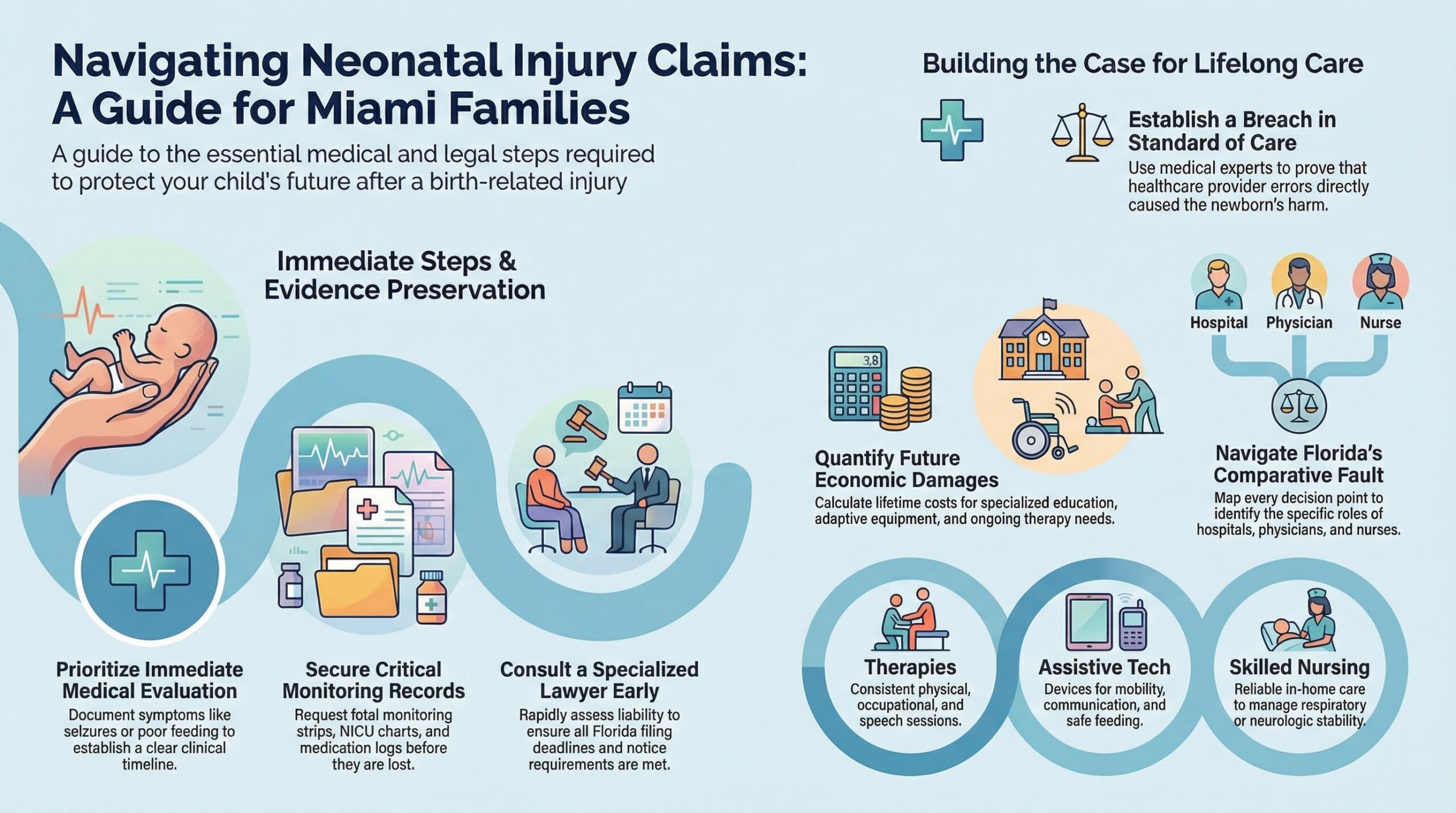


How We Can Help With Your Miami Neonatal Injury Claim
When your newborn’s injury may be tied to mistakes made during pregnancy, labor, delivery, or immediate postnatal care, you need a legal team that can move quickly and build a disciplined case.
You can count on us to listen carefully, protect your family’s privacy, and identify the records and witnesses needed to support your claim in Miami.
You’ll receive clear guidance on deadlines, required documentation, and the steps we’ll take to pursue accountability through negotiation or litigation.
We coordinate reviews with qualified medical professionals, organize evidence into a coherent narrative, and calculate damages that reflect long-term care needs.
Clear guidance on deadlines and documentation, plus expert medical reviews and damage analysis reflecting your child’s long-term care needs.
You won’t be left guessing, because we provide consistent case updates and explain critical decisions before action is taken.
You also get practical support for financial planning, including projecting future expenses and evaluating settlement structures, so you can serve your child’s needs with stability and purpose.
OUR CONSULTATIONSARE FREE
START YOUR FREE CASE REVIEW

Understanding Miami Neonatal Injury Cases
Although every birth injury claim turns on its own medical facts, Miami neonatal injury cases generally focus on whether a healthcare provider failed to meet accepted standards of care during pregnancy, delivery, or the newborn’s immediate treatment.
To understand your case, you’ll review prenatal records, labor and delivery notes, NICU charts, and imaging, then compare those details to what competent providers would’ve done under similar circumstances.
You also consider how the injury affects your child’s daily needs and your family’s ability to serve and support others in your community.
You should expect Case Timelines to involve rapid evidence preservation, early expert screening, and careful calculation of damages, followed by negotiation or litigation if accountability isn’t offered.
Statistical Trends can help you evaluate how often certain outcomes appear in similar claims, what resolution ranges look like, and how long proceedings typically last in Miami-Dade courts.
With this framework, you can make informed, service-minded decisions and pursue meaningful improvement in care.
Common Causes of Miami Neonatal Injuries
When you evaluate common causes of Miami neonatal injuries, you’ll often see preventable breakdowns during labor and delivery that can change a newborn’s outcome within minutes.
You should watch for birth asphyxia and other oxygen deprivation events, delivery room negligence errors such as delayed intervention or poor monitoring, and maternal infection mismanagement that allows fetal distress to escalate.
You’ll also want to take into account medication and anesthesia mistakes, since dosing errors, contraindications, or improper administration can quickly compromise both mother and baby.
Birth Asphyxia And Oxygen Deprivation
Because a newborn’s brain relies on a continuous oxygen supply, birth asphyxia and other forms of oxygen deprivation can cause some of the most severe and time-sensitive neonatal injuries seen in Miami delivery rooms.
You may encounter these events when labor is prolonged, the umbilical cord is compressed, placental function is impaired, or severe maternal bleeding reduces fetal oxygenation.
You serve families best by recognizing early warning patterns, including poor tone, low Apgar scores, seizures, and metabolic acidosis, then urging prompt evaluation and monitoring.
Clinicians may track Hypoxic Biomarkers through blood gases, lactate levels, and neurologic assessments to clarify severity and guide next steps.
When indicated, Neuroprotective Therapies such as therapeutic hypothermia can limit brain injury, especially when started within hours of birth.
Delivery Room Negligence Errors
Even if a pregnancy has progressed normally, preventable delivery room errors can still trigger life-altering neonatal injuries in Miami hospitals within minutes.
When you serve families, you need to recognize how quickly negligence can compound, especially during high-stakes decisions around labor progression and emergency response.
Equipment Failures, such as malfunctioning fetal monitors, delayed alarm recognition, or poorly maintained resuscitation tools, can deprive a newborn of timely intervention.
Communication Breakdowns also place infants at risk when staff don’t escalate concerns, document changes clearly, or coordinate roles during a rapid transfer to operative delivery.
You can support safer outcomes by insisting on clear protocols, verified equipment checks, and closed-loop communication that confirms orders are heard, understood, and completed without delay.
These steps reduce preventable harm.
Maternal Infection Mismanagement
Although labor can appear routine, mismanagement of maternal infections can rapidly place a newborn at risk for sepsis, respiratory distress, or hypoxic injury in Miami delivery settings.
When you serve families, you expect clinicians to screen for Group B strep, monitor maternal fever, and respond promptly to prolonged rupture of membranes or chorioamnionitis.
Failures in timely cultures, clear documentation, and coordinated handoffs can delay lifesaving evaluation after birth, allowing infection to escalate.
You also need antibiotic stewardship, because indiscriminate treatment can mask symptoms, promote the emergence of resistant organisms, and disrupt the microbiome, affecting early immune development.
Proper care relies on vigilant assessment, evidence-based protocols, and respectful communication, so you can focus on protecting the child’s first moments and future health.
Medication And Anesthesia Mistakes
When clinicians rush to manage labor pain or control blood pressure, medication and anesthesia mistakes can quietly undermine a newborn’s oxygenation and neurologic stability in Miami delivery rooms.
You can serve families best by recognizing common failure points, then insisting on clear protocols, double-checks, and rapid escalation when fetal status changes.
| Mistake | What you may see | Safer practice |
|---|---|---|
| Wrong dose/route | Maternal hypotension, fetal bradycardia | Weight-based dosing, independent verification |
| Delayed reversal | Prolonged apnea, poor tone | Readily available antidotes, timed reassessment |
| Drug interactions | Sedation, reduced uteroplacental flow | Electronic Prescribing alerts, medication reconciliation |
You should also press for Staff Training on epidural monitoring, high-risk meds, and closed-loop communication, so every clinician protects oxygen delivery and prevents avoidable neonatal harm.


Legal Rights of Miami Neonatal Injury Victims
How do Miami families protect a newborn’s interests after a preventable birth injury disrupts the first days of life?
You can rely on Florida law to demand accountability while keeping your focus on compassionate care for your child and community.
Your legal rights typically include access to essential medical records, protection of your Privacy Rights, and the ability to pursue damages that reflect both immediate harm and long-term needs.
Florida law can help you secure medical records, protect privacy, and pursue damages for both immediate harm and long-term needs.
You’re also entitled to fair process if an insurer or provider disputes responsibility, including timely notice and meaningful Appeal Options when decisions or settlements fall short.
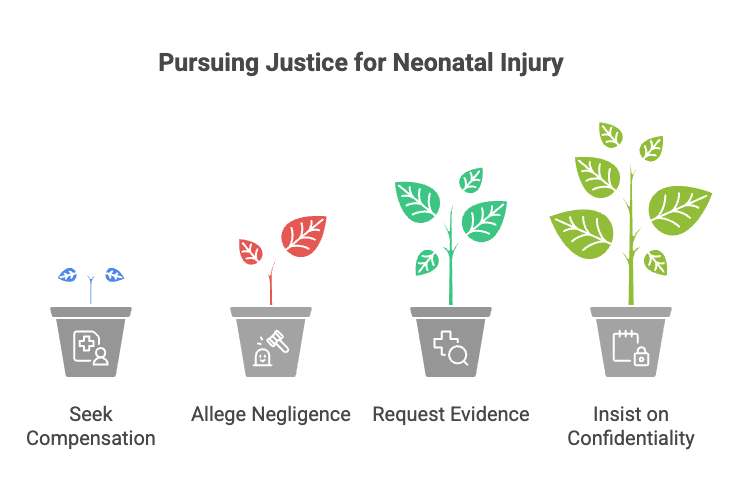
- You can seek compensation for medical costs, therapies, and future supportive services.
- You can allege negligence against hospitals, physicians, nurses, or contractors.
- You can request records, expert review, and preservation of clinical evidence.
- You can insist on confidentiality, ethical conduct, and court oversight of minors’ recoveries.
Steps to Take After a Miami Neonatal Injury
After a Miami neonatal injury, you should seek immediate medical care because timely evaluation and treatment can protect your child’s health and establish a clear clinical timeline.
You’ll also want to preserve records and evidence by requesting complete medical charts, keeping discharge papers and bills, and documenting symptoms, dates, and communications.
Once you’ve secured care and documentation, you should consult a neonatal injury lawyer so you can assess potential liability, protect your rights, and meet all filing deadlines.
Seek Immediate Medical Care
Although you may still be processing what happened, you should seek immediate medical care if you suspect your newborn suffered an injury during or shortly after delivery.
Act quickly, because early evaluation can limit complications and guide appropriate treatment.
Bring a Symptom checklist to the hospital or pediatric visit, noting breathing difficulty, poor feeding, abnormal crying, seizures, jaundice changes, limpness, or unusual muscle stiffness.
Ask the care team to follow established Triage protocols so your baby’s critical signs, oxygenation, and neurologic status receive prompt, standardized attention.
If symptoms worsen, don’t wait for a scheduled appointment; go to the emergency department or call 911.
You serve your child best by staying focused, asking clear questions, and ensuring follow-up care is arranged before discharge.
Preserve Records And Evidence
Because neonatal injury cases can turn on small details, you should preserve records and evidence as soon as your baby is stable and care is underway.
Request complete copies of prenatal, labor, delivery, and NICU records, including medication logs, fetal monitoring strips, imaging, and discharge summaries.
Keep a written timeline of symptoms, conversations, and staff names, and note dates and times with precision.
Save photographs of bruising, equipment, and room conditions, and preserve Photo timestamps by backing up original files without editing.
Collect bills, insurance letters, and pharmacy receipts to document financial impact and continuity of care.
Place paper and digital materials in Secure storage, limit access, and create duplicate backups so nothing is lost or altered.
Consult A Neonatal Injury Lawyer
With your records and evidence secured, you should consult a Miami neonatal injury lawyer as soon as you can to protect your rights and position the case for a clear, fact-based review.
You’ll gain guidance on deadlines, medical standards, and how to request complete hospital records without alerting opposing parties unnecessarily.
A lawyer can also coordinate emotional counseling referrals and communicate with cultural sensitivity, so your family feels respected while the focus stays on service, accountability, and your child’s future care.
| Goal | Your Action | Lawyer’s Role |
|---|---|---|
| Preserve truth | Share a timeline | Identify breaches |
| Limit stress | Ask for support | Arrange counseling |
| Build remedy | List needs | Calculate damages |
You should schedule a consultation promptly, bring your questions, and confirm the firm’s trial readiness and access to medical experts.
How a Miami Neonatal Injury Lawyer Can Help You
When your newborn’s health is impacted by a preventable medical error, a Miami neonatal injury lawyer can step in quickly to protect your rights and position your claim for success.
You’re entitled to steady advocacy that honors your family’s values and supports your focus on care, community, and service to others, while pursuing accountability through lawful channels.
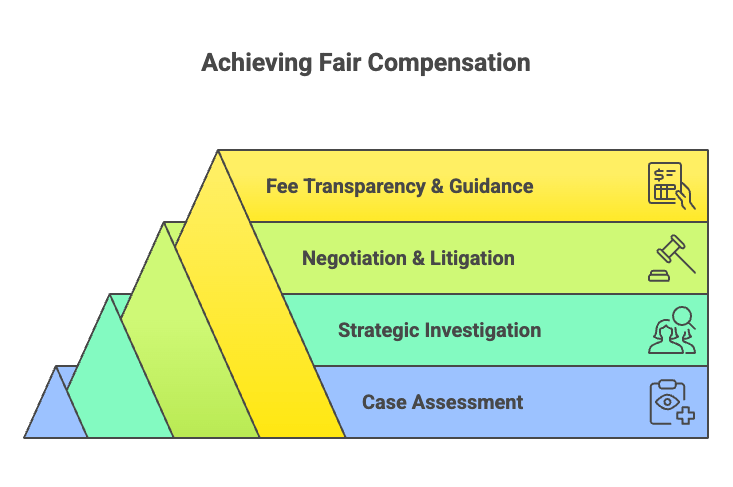
- You’ll receive a clear case assessment, grounded in medical records review and timely preservation of time-sensitive evidence.
- You’ll gain strategic investigation, including coordination with qualified clinicians who can explain standards of care in plain terms.
- You’ll benefit from strong negotiation and, if needed, disciplined litigation that seeks fair compensation without unnecessary conflict.
- You’ll have fee transparency, so you can plan responsibly, plus emotional guidance that keeps decisions calm, organized, and mission-focused.
Long-Term Effects of Miami Neonatal Injuries
When your baby suffers a neonatal injury in Miami, you may face long-term consequences that extend well beyond the initial hospital stay.
You could encounter cerebral palsy complications that affect mobility and daily function, as well as cognitive and learning impacts that influence school performance and future independence.
You’ll also need to plan for lifelong medical care needs, including ongoing therapy, specialty visits, and adaptive support as your child grows.
Cerebral Palsy Complications
Although cerebral palsy begins with an injury to a newborn’s developing brain, its impact often grows more apparent over time through complications that can affect movement, communication, and overall health.
You may notice increased muscle stiffness, poor coordination, or involuntary movements that limit daily activities and require ongoing therapy.
Over time, spasticity can contribute to musculoskeletal deformities, including hip displacement, scoliosis, and contractures, which can affect posture, comfort, and safe mobility.
Feeding and swallowing difficulty can raise risks of aspiration, slow weight gain, and dehydration, so you’ll often coordinate care with nutrition and speech therapists.
Many families also manage respiratory issues from a weak cough, recurrent infections, or aspiration, which can lead to hospital visits.
Cognitive And Learning Impacts
Because a neonatal brain injury can disrupt early neural development, you may not see the full cognitive and learning impact until school demands increase and expectations become more challenging.
As coursework becomes more demanding, you might notice uneven progress, slower processing speed, or difficulty organizing tasks across subjects.
You may encounter Executive dysfunction that affects planning, impulse control, and flexible thinking, which can undermine classroom performance and peer relationships.
Memory impairment can also interfere with retaining instructions, mastering reading comprehension, and recalling math steps, even when your child appears attentive.
You can serve your child best by tracking patterns, sharing clear observations with educators, and requesting structured supports that promote consistency and accountability.
When you document missed milestones, testing results, and school communications, you strengthen your ability to advocate effectively and protect your family’s long-term stability.
Lifelong Medical Care Needs
Academic supports can improve day-to-day functioning, but many Miami neonatal injuries also create lifelong medical care needs that extend well beyond the classroom.
You may coordinate ongoing neurology visits, physical therapy, and specialty nutrition, while tracking seizures, spasticity, or respiratory vulnerability.
As you serve your child and community, plan for dependable home health, Respite Care, and periodic re-evaluations that adjust goals as your child grows.
You’ll often rely on Assistive Technology to support mobility, communication, and safe feeding, and you should document every recommendation, cost, and outcome.
| Need | How can you respond |
|---|---|
| Therapy | Schedule consistent sessions |
| Medications | Monitor dosing and side effects |
| Equipment | Maintain and replace devices |
| Nursing | Arrange in-home skilled care |
| Emergencies | Keep updated action plans |
Proving Liability in Miami Neonatal Medical Malpractice Injury Cases
When a newborn suffers harm during labor, delivery, or early neonatal care, proving liability in a Miami medical malpractice case requires more than showing that an outcome was poor.
You must connect specific acts or omissions to the injury, and show the care team departed from accepted neonatal and obstetric standards.
Liability isn’t about a bad outcome—it’s proving specific errors caused harm and breached accepted neonatal and obstetric standards.
You’ll rely on records, fetal monitoring strips, medication logs, imaging, and credible expert testimony to explain what should’ve happened and when.
A disciplined Causation Analysis helps you identify whether delays in recognizing distress, failures to escalate care, or improper resuscitation more likely than not caused the harm.
You should also anticipate defenses that shift blame to unavoidable complications or preexisting conditions, and respond with objective timelines and clinical markers.
Florida’s Comparative Fault rules may reduce responsibility if multiple providers contributed, so you’ll map each role, decision point, and preventable breakdown with precision.
Compensation for Miami Neonatal Damages
Establishing liability sets the foundation, but your case’s value depends on proving the full scope of damages your child and family will carry forward.
You’ll document immediate medical bills, NICU costs, medications, and follow-up care, then connect them to the negligent act through records and qualified opinions.
You’ll also calculate future needs, such as therapies, adaptive equipment, home modifications, and attendant care, so support remains consistent as your child grows.
You can pursue non-economic losses, including pain, impairment, and loss of enjoyment, by presenting clear narratives from caregivers and objective clinical findings.
If the conduct was reckless or showed conscious disregard for safety, you may request punitive damages to promote accountability and protect other families.
Because recovery often depends on available insurance coverage, you’ll analyze policy limits, exclusions, and additional responsible parties to avoid leaving critical services unfunded.
A thorough damage plan lets you serve your child with stability and dignity.
The Statute of Limitations for Miami Neonatal Injury Cases
Because filing deadlines can bar even the strongest claim, you need to understand how Florida’s statute of limitations applies to neonatal injury cases in Miami before you commit to a timeline.
Filing deadlines can defeat even strong cases—know Florida’s limits for Miami neonatal injuries before you plan your next steps.
When you act promptly, you protect a child’s access to care and uphold accountability in the medical community.
In many situations, Florida law imposes a strict filing deadline, and missing it can end your case regardless of its validity.
You should also know how timing may shift under the Discovery rule, which can start the clock when you knew, or reasonably should’ve known, of the injury and its cause.
Even then, outside limits can still apply, so you can’t assume extra time.
Certain Tolling exceptions may pause or extend deadlines in narrow circumstances, such as specific legal disabilities or concealment, but they’re fact-sensitive and closely reviewed.
If you’re gathering records, document dates carefully, and calendar conservative deadlines to avoid preventable loss.
Why You Need an Experienced Miami Neonatal Injury Lawyer
Florida’s filing deadlines can close the courthouse doors fast, but timing is only one part of building a viable neonatal injury claim in Miami.
You need an experienced lawyer because neonatal cases demand disciplined investigation, precise medical record analysis, and swift action to preserve evidence before it disappears.
You’ll rely on counsel to identify breaches in prenatal, delivery, or NICU care, connect them to your child’s diagnosis, and quantify lifetime needs such as therapy, equipment, and tailored education.
You also need a team that can coordinate qualified medical experts, manage intricate notice requirements, and anticipate defenses raised by hospitals and insurers.
When your purpose is to secure resources and protect other families, your lawyer’s Community Outreach can help you locate support networks and services.
Strong Language Access guarantees your story, consent, and decisions remain accurate across every meeting and filing.
How to Choose the Right Miami Neonatal Injury Lawyer for Your Case
In the aftermath of a difficult delivery, you can’t afford guesswork when selecting a Miami neonatal injury lawyer, since early choices shape the evidence you preserve and the leverage you build.
Choose counsel who listens to your goals, respects your family’s mission to protect vulnerable infants, and moves quickly to secure records, fetal monitoring strips, and witness accounts.
| Selection Factor | What You Ask | What You Look For |
|---|---|---|
| Focus | Do you handle neonatal cases regularly? | Clear, relevant case examples |
| Team | Who reviews medical issues? | Access to qualified experts |
| Fee Transparency | How do costs and fees work? | Written terms, no surprises |
| Trial Experience | Have you tried similar cases? | Proven courtroom readiness |
| Communication | How often will you update me? | Predictable, documented contact |
You should also evaluate responsiveness, because delays can weaken a claim, and confirm that the attorney can explain options in plain language.
Demand accountability, and you’ll serve your child’s future with disciplined advocacy.
About the Law Offices of Anidjar and Levine
A trusted neonatal injury case demands a law firm that moves with discipline, investigates aggressively, and keeps you informed at every stage.
When you work with the Law Offices of Anidjar and Levine, you get a team that treats your case as a service mission, focused on protecting your child’s future and supporting your family’s stability.
You’ll see that the firm’s history reflects consistent advocacy for injured clients, built through careful preparation and accountable client communication.
The attorneys coordinate medical record review, consult qualified experts, and document damages with precision, so you can pursue compensation with confidence.
You won’t face uncertainty alone, because you receive clear updates and practical guidance as decisions arise.
You can also review client testimonials that describe responsiveness, professionalism, and follow-through, which matters when you’re choosing counsel for a high-stakes neonatal injury claim.
You’ll remain the priority, from intake through resolution.
Frequently Asked Questions
What Does Hiring a Miami Neonatal Injury Lawyer Cost Upfront?
You’ll often pay little to nothing upfront, because many firms use contingency fees instead of hourly billing, so you don’t fund the case unless you recover compensation.
Some attorneys still request retainer amounts for specific services, such as consulting, record review, or initial expert screening, though this varies by firm.
You should ask for a written fee agreement, projected costs, and details on how case expenses are advanced and reimbursed.
How Long Does a Neonatal Injury Lawsuit Typically Take in Miami?
You can expect a neonatal injury lawsuit in Miami to take about 18–36 months, though some settle sooner.
You’ll spend the early months on the investigation timeline, gathering records, expert reviews, and witness statements to clarify what happened and why.
You must also track statute limitations, because waiting can bar your claim entirely.
If you proceed to trial, scheduling, discovery disputes, and expert depositions often further extend the case.
Will My Child’s Medical Care Continue During an Ongoing Legal Case?
Yes, your child’s medical care should continue while the legal case moves forward, and you can prioritize treatment without waiting for a settlement.
You’ll typically rely on insurance coverage, Medicaid, or hospital financial assistance to keep services active.
Your care team can maintain care coordination through referrals, therapy schedules, and specialty follow-ups, even as records are gathered.
You should document appointments, costs, and changes in condition to support accountability and planning.
Can I Switch Lawyers if I’M Unhappy With My Current Representation?
Yes, you can switch lawyers if you’re dissatisfied, and you should act promptly to protect your client’s rights.
You’ll typically send written notice to your current attorney, follow any notice requirements in your agreement, and request that your file be transferred without delay.
You should confirm how fees and costs will be handled, especially for work already performed.
Choose new counsel who aligns with your service-focused goals.
Keep records.
Do Neonatal Injury Cases Usually Settle, or Do They Go to Trial?
Most neonatal injury cases settle, but you can’t assume that result.
Settlement Rates depend on liability strength, medical records, expert support, and insurer risk tolerance.
You often reach a resolution after discovery clarifies causation and damages, enabling both sides to serve the child’s long-term needs responsibly.
Still, you should prepare for trial because contested facts or low offers push litigation forward.
Trial Outcomes vary, and juries can award substantial damages or none.
—————————
If your child suffered a neonatal injury in Miami, you can’t afford delays or uncertainty.
You should document what happened, secure medical records, and follow all treatment guidance, because early evidence often shapes the claim.
You’re entitled to pursue compensation when preventable errors cause harm, but strict deadlines may limit your options.
With the Law Offices of Anidjar and Levine and a trusted Miami Medical Malpractice Lawyer, you’ll evaluate liability, calculate long-term needs, and negotiate or litigate from a position of strength.

