

The Law Offices of Anidjar and Levine can investigate whether distracted driving, speeding, unsafe passing, failure to yield, roadway hazards, or poor visibility caused a bicycle collision. The investigation may include police reports, photographs, traffic-camera footage, witness statements, vehicle and bicycle damage, and roadway conditions. Medical records can connect injuries to the crash while documenting treatment, lost income, and future needs. A Winter Park Personal Injury Lawyer can address comparative negligence, insurance negotiations, and filing deadlines while explaining available legal options and compensation.
Main Takeaways
- A Winter Park bicycle accident lawyer investigates causes such as distracted driving, speeding, unsafe passing, and failure to yield.
- Attorneys examine roadway hazards, lighting, weather, traffic signals, lane markings, and construction conditions.
- Witness statements, police reports, photographs, traffic video, and vehicle damage can clarify how the collision occurred.
- Cellphone records, vehicle data, and surveillance footage may provide evidence of distraction, speed, braking, or driver conduct.
- Medical records, treatment documentation, expenses, and work limitations help connect the crash to injuries and compensation claims.
How We Can Help With Your Winter Park Bicycle Accident Causes Injury Claim
When a bicycle accident occurs in Winter Park, determining the cause is critical to establishing liability and pursuing compensation for the resulting injuries. A legal team can help preserve relevant evidence, identify responsible parties, and organize a claim based on documented losses rather than speculation.
Support may include reviewing collision reports, photographs, witness accounts, roadway conditions, and available video footage. Counsel can also explain Medical documentation tips, such as obtaining timely evaluations, following treatment recommendations, and maintaining records of symptoms, expenses, and work limitations. These records help connect the accident to the claimed injuries and clarify the extent of recovery needs.


An attorney may develop an insurance claim strategy that addresses coverage issues, communicates with adjusters, and prevents premature statements from weakening the case. When negotiations do not provide appropriate compensation, representation can include preparing for litigation and presenting evidence effectively. Throughout the process, professional guidance allows injured individuals and their families to focus on recovery while their legal interests receive careful, service-oriented attention.
Understanding Winter Park Bicycle Accident Causes Injury Cases
OUR CONSULTATIONSARE FREE
START YOUR FREE CASE REVIEW

Understanding a Winter Park bicycle accident injury case begins with identifying how the collision occurred and which facts support legal responsibility. A careful evaluation considers roadway conditions, traffic rules, witness accounts, photographs, medical records, and available video evidence. These materials may clarify the sequence of events and connect the incident to specific injuries.
The injured cyclist’s medical treatment is also central to the case. Prompt evaluation can document symptoms, establish necessary care, and help assess future medical needs. Records concerning lost income, rehabilitation, pain, and limitations may further demonstrate the claim’s overall impact. A legal review should preserve evidence while respecting the cyclist’s recovery and the interests of family members or caregivers providing support.


Preventive information can provide useful context without determining fault. Helmet safety tips may explain protective practices, while bicycle maintenance checks can document whether equipment was properly inspected. Each case requires an impartial assessment focused on accountability, fair compensation, and reliable service to an injured community member.
Don’t Wait. Call Our Florida Personal Injury Lawyers Now!
Common Causes of Winter Park Bicycle Accidents
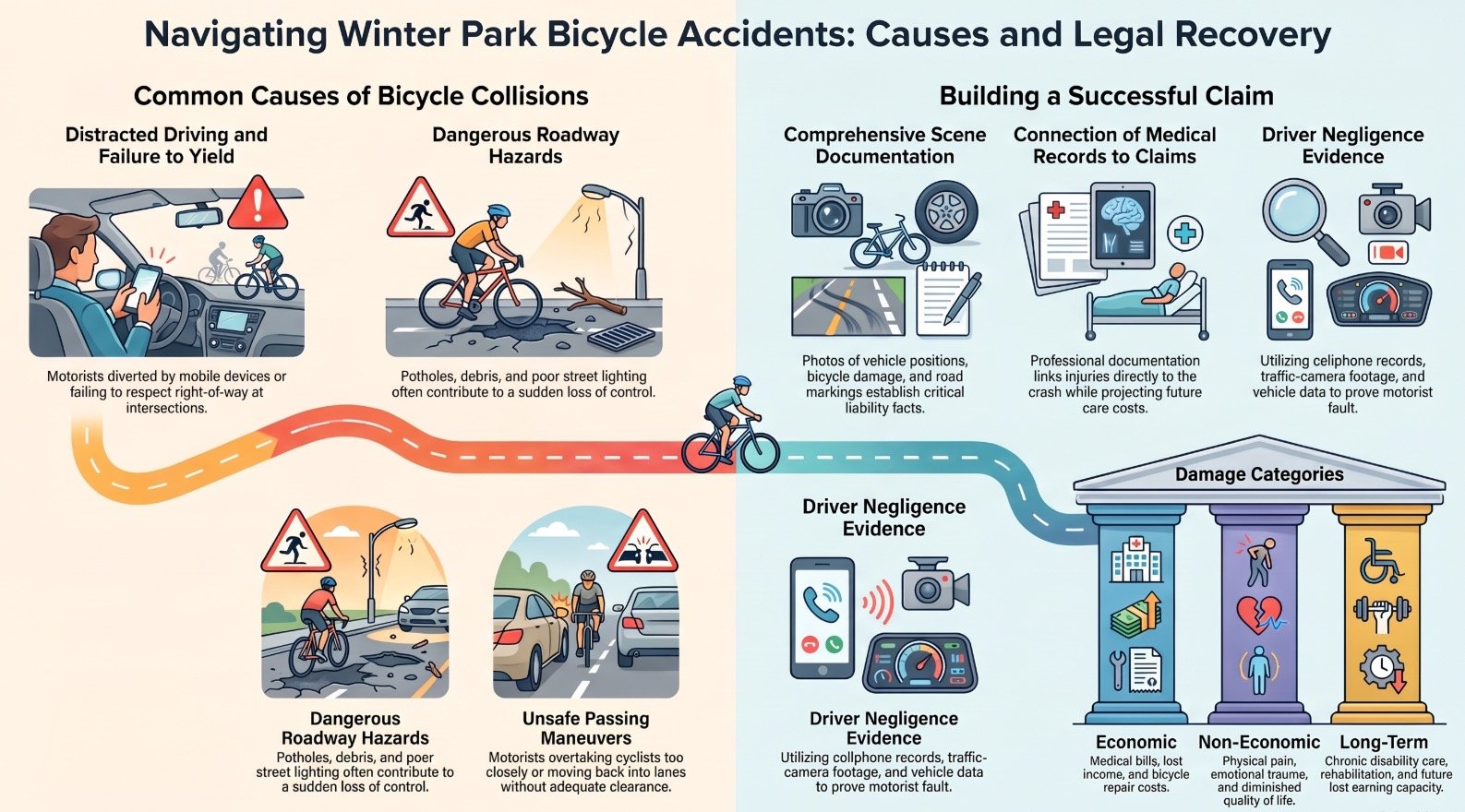
Common causes of bicycle accidents in Winter Park include distracted driving and motorists’ failure to yield to cyclists with the right of way. Unsafe passing, including inadequate clearance, can also create serious collision risks, while roadway hazards such as potholes, debris, and poor pavement conditions may contribute to crashes. Identifying these factors is vital when evaluating responsibility and potential legal claims.
Distracted Driving
Distracted driving is a significant cause of bicycle accidents in Winter Park, particularly when motorists divert their attention from the roadway to mobile devices, navigation systems, passengers, or other activities. Even brief inattention can prevent a driver from recognizing a cyclist’s position, speed, or intended movement. Reduced pedestrian visibility near crossings, trails, and residential streets may increase this danger, especially when lighting is limited or traffic conditions change quickly. Weather-related hazards, including rain, glare, and wet pavement, can further restrict a driver’s ability to observe and respond safely while attention is divided. Drivers who remain focused on traffic and actively scan for bicycles help protect vulnerable road users. When distracted driving causes injury, an evaluation of phone records, witness accounts, vehicle data, and surrounding conditions may clarify responsibility and support affected individuals.
Failure to Yield
When motorists fail to yield the right of way to bicyclists, collisions may occur at intersections, crosswalks, driveways, and merging points throughout Winter Park. An intersection duty requires drivers to observe traffic signals, signs, and surrounding roadway users before proceeding. Florida’s right-of-way rules generally require motorists to yield when bicyclists lawfully enter a crossing or travel through an intersection. Failure to recognize a bicycle, misjudging its speed, or turning across its path can create a serious impact. Drivers may also overlook cyclists when exiting private property or entering traffic from a side street. Determining fault requires examination of vehicle positions, signals, witness accounts, roadway markings, and available video evidence. Legal guidance can help injured bicyclists and their families understand potential claims, insurance issues, and available measures for pursuing accountability.
Unsafe Passing
Unsafe passing can cause a serious bicycle collision when a motorist overtakes too closely, fails to account for roadway conditions, or moves back into the travel lane before safely clearing the cyclist. Florida law requires motorists to provide adequate passing distance and proceed cautiously when overtaking people on bicycles. A driver who misjudges the cyclist’s speed, crosses into the rider’s path, or passes without proper right-of-way awareness may cause a devastating impact. Safe passing requires patience, a clear view ahead, and enough space to complete the maneuver without forcing the cyclist into traffic or toward the roadway edge. Investigators may examine vehicle positions, witness accounts, surveillance footage, and damage patterns when determining whether unsafe passing contributed to the crash. Careful review can help clarify responsibility and support injured cyclists seeking appropriate assistance.
Roadway Hazards
Roadway hazards can cause a bicycle collision even when a cyclist and motorist are otherwise acting lawfully. Uneven pavement, potholes, debris, drainage grates, and construction materials can force a rider into traffic or cause a sudden loss of control. Inadequate Winter street lighting may prevent cyclists and drivers from recognizing these dangers in time, particularly near intersections, trails, and roadway shoulders. Pothole maintenance is consequently important to public safety, because delayed repairs can leave hazardous conditions that affect bicycle stability and vehicle navigation. Municipal agencies, contractors, and property owners may have responsibilities to inspect and address dangerous conditions, depending on the location and applicable law. Evidence such as photographs, witness accounts, maintenance records, and incident reports can help clarify whether a roadway defect contributed to the collision and identify responsible parties.
Legal Rights of Winter Park Bicycle Accident Causes Injury Victims
Injured bicycle accident victims in Winter Park may be able to seek compensation from a negligent driver, property owner, government entity, or other responsible party. Florida Bicycle Laws establish duties for motorists and cyclists, while negligence principles may support recovery for medical expenses, lost income, property damage, and other legally recognized losses.
- Preserving evidence: Victims can document injuries, treatment, bicycle damage, photographs, witness information, and relevant communications.
- Investigating Liability Claims: A qualified representative may examine reports, surveillance footage, roadway conditions, maintenance records, and insurance coverage to identify responsible parties.
- Pursuing insurance benefits: A victim may seek applicable personal injury protection, liability coverage, or other available benefits, depending on the circumstances.
- Protecting legal deadlines: Florida law imposes time limits for filing claims, including claims involving governmental entities, making prompt legal evaluation important.
Victims may also have the right to communicate through an authorized advocate rather than directly with insurers. Legal guidance can help preserve evidence, evaluate damages, and pursue accountability while supporting the victim’s recovery and long-term interests.
Why Do Winter Park Bicycle Accident Causes Injuries Happen?
Bicycle accident injuries in Winter Park often occur when motorists, cyclists, pedestrians, or property owners fail to exercise reasonable care. Distracted driving, speeding, unsafe lane changes, and failure to yield can place cyclists in immediate danger, particularly at intersections and busy crossings. Drivers may also misjudge a bicycle’s speed or overlook it while turning.
Cyclists can face increased risks when riding against traffic, ignoring signals, using defective equipment, or failing to account for roadway conditions. Poorly maintained pavement, inadequate lighting, obstructed paths, and hazardous construction areas may further contribute to collisions. Pedestrians who enter bicycle lanes unexpectedly can create sudden hazards, while property owners may leave debris or other obstructions near travel routes.
Effective Road safety measures, including separated bicycle facilities, visible signage, lighting, and consistent traffic enforcement, can reduce these dangers. Bicycle visibility tips, such as using lights, reflective clothing, and clear hand signals, also help others recognize cyclists. Understanding these causes supports safer decisions and stronger community protection.
What Should You Do After a Winter Park Bicycle Accident Causes Injury?
After a Winter Park bicycle accident causes injury, the cyclist should seek immediate medical care, even if symptoms seem minor at first. The cyclist should also report the accident to the appropriate authorities and keep a written copy of the report when available. Detailed documentation of injuries, treatment, and related losses can help establish the extent of the harm.
Seek Immediate Medical Care
Prompt medical evaluation should follow any Winter Park bicycle accident that results in pain, visible injury, or possible trauma, even when symptoms initially appear minor. A cyclist should accept emergency assistance when needed and provide healthcare professionals with an accurate account of symptoms, impact, and physical limitations. Some injuries, including concussions, internal bleeding, and spinal damage, may not be immediately apparent. Medical records can also document the condition and treatment required after the collision. The injured person should follow discharge instructions, attend recommended appointments, and promptly report worsening pain, dizziness, numbness, confusion, or difficulty breathing. Although Bike safety gear may reduce harm, it cannot eliminate injury risks. Preserving medical documentation may later support accident reporting steps and help responsible parties understand the victim’s needs, without delaying necessary care.
Report the Accident
Once immediate medical needs have been addressed, the injured cyclist should report the Winter Park bicycle accident to the appropriate authorities. A prompt call to law enforcement can help preserve an impartial account and identify roadway hazards requiring attention. The cyclist or a designated representative should provide accurate information about the collision, including Weather conditions, lighting, traffic signals, and the road surface. Witness names and contact information should be given to responding officers whenever available. Police reports may later help insurers, investigators, and legal professionals understand how the crash occurred. The cyclist should also notify the appropriate insurance carrier without speculating about fault or minimizing the event. During insurance intake, factual and consistent answers are crucial. If injuries prevent communication, a trusted representative may coordinate reporting while protecting the cyclist’s interests.
Document Your Injuries
A cyclist injured in a Winter Park bicycle accident should document each injury as soon as reasonably possible, beginning with a prompt medical evaluation even when symptoms initially appear minor. Medical records can establish diagnoses, treatment recommendations, and changes in physical condition. Injury documentation should include pain levels, visible wounds, mobility limitations, prescribed care, and missed work or daily activities. Photographs may provide valuable photo evidence of bruising, swelling, lacerations, damaged clothing, the bicycle, and relevant roadway conditions. The cyclist should also preserve an Accident timeline describing events before, during, and after the collision, including emergency responses and medical visits. Witness identification is important, so names and contact information should be recorded promptly. These organized materials can help attorneys, insurers, and courts understand the cyclist’s needs and evaluate available compensation.
Critical Evidence in a Winter Park Bicycle Accident Causes Injury Case
A Winter Park bicycle accident injury case may depend on timely, reliable evidence that establishes how the collision occurred and the resulting harm.
Important evidence generally includes:
- Accident scene documentation
- Witness statements and testimony
- Medical records and bills
- Evidence of driver negligence
Together, these materials can help clarify liability, document damages, and support a claim for compensation.
Accident Scene Documentation
Because conditions at a bicycle crash site can change quickly, prompt and thorough documentation is critical in a Winter Park bicycle accident injury case. Photographs should capture vehicle positions, bicycle damage, roadway defects, traffic signs, signals, lighting, weather, and sight distances from multiple angles. Close images can preserve skid marks, debris patterns, damaged safety equipment, and visible injuries, while wider images establish the surrounding layout. Measurements and location details may help clarify travel paths, impact points, and whether obstacles affected visibility. Documentation should also address Helmet compliance and bike lane awareness, including the cyclist’s protective equipment and the condition, markings, or obstruction of designated lanes. Preserving relevant surveillance footage, repair records, and medical documentation can further connect scene conditions to the claimed harm. Timely preservation supports accurate evaluation and fair service to injured individuals.
Witness Statements And Testimony
When available, witness statements can provide critical evidence in a Winter Park bicycle accident injury case by clarifying how the collision occurred and which conditions contributed to it. Witness identification should be documented promptly, including names, contact information, and each person’s location before, during, and after the crash. Independent observers may describe vehicle speed, traffic signals, roadway hazards, visibility, and whether a driver appeared distracted or failed to yield. Their accounts can support or challenge statements made by involved parties. A police report may contain recorded witness information, initial observations, and summaries provided at the scene. However, witnesses should be contacted carefully so their recollections remain their own and are not influenced by suggestion. Preserving consistent testimony helps attorneys and courts evaluate responsibility while serving the injured cyclist’s pursuit of a fair resolution.
Medical Records And Bills
Medical records and bills establish the nature, severity, and financial consequences of injuries sustained in a Winter Park bicycle accident. Emergency reports, diagnostic images, physician notes, prescriptions, therapy records, and expert assessments can connect reported symptoms to treatment and document recovery requirements. Itemized bills help calculate past medical expenses, while treatment recommendations may clarify anticipated costs and continuing care. Accurate records also identify missed appointments, preexisting conditions, and changes in treatment, preventing disputes about the injury timeline. Accident scene documentation and witness statement collection can provide context, but medical evidence independently explains the physical consequences requiring professional attention. A careful legal review preserves relevant records, verifies billing accuracy, and identifies gaps that may affect a claim. These materials support fair compensation and help protect an injured cyclist’s access to necessary services.
Driver Negligence Evidence
Driver negligence evidence can establish how a motorist’s conduct caused or contributed to a Winter Park bicycle accident. Relevant proof may include traffic-camera footage, vehicle damage photographs, witness statements, cellphone records, and data showing speed, braking, or distraction. A careful police report review can identify citations, driver admissions, road conditions, and inconsistencies requiring further investigation. Investigators may also examine sight lines, lane positioning, lighting, and signage to determine whether the motorist failed to yield, followed too closely, or violated another traffic duty. An accident reconstruction can analyze physical evidence and vehicle movements, helping clarify how the collision occurred. Medical records and bills may then connect the documented impact to the cyclist’s injuries. Preserving evidence promptly supports a fair evaluation and helps responsible professionals seek accountability for affected individuals.
Don’t Wait. Call Our Florida Personal Injury Lawyers Now!
Long-Term Effects of Winter Park Bicycle Accident Causes Injuries
Injuries from bicycle accidents may result in chronic pain, reduced mobility, or permanent disability that affects daily activities and employment. Emotional and mental trauma, including anxiety or post-traumatic stress, may also persist long after physical wounds have recovered. Ongoing medical expenses for treatment, rehabilitation, medication, and assistive care can create substantial long-term financial burdens.
Chronic Pain And Disability
Chronic pain and disability can become lasting consequences of bicycle accident injuries, particularly when fractures, spinal damage, nerve trauma, or severe soft-tissue injuries impair physical function. Affected cyclists may experience persistent pain, reduced mobility, weakness, or limited use of an injured limb. These conditions can interfere with employment, household responsibilities, transportation, and personal care, creating continuing medical and financial needs. Treatment may include surgery, rehabilitation, prescription medication, assistive equipment, or ongoing expertevaluation. When another party’s negligence caused the collision, documentation of symptoms, diagnoses, treatment, and functional limitations can help establish the full extent of damages. Preventive measures, including helmet safety and traffic signal awareness, may reduce injury risks, but they cannot eliminate every danger. Legal guidance can help injured individuals pursue resources supporting recovery, independence, and long-term care.
Emotional And Mental Trauma
Although physical wounds may receive immediate medical attention, emotional and mental trauma can persist long after a Winter Park bicycle accident. Survivors may experience anxiety, depression, sleep disruption, irritability, or fear of riding near traffic. Some develop intrusive memories, heightened alertness, or avoidance behaviors that interfere with employment, relationships, and ordinary activities. These reactions can affect family members and caregivers, who may need guidance while providing patient, respectful support. Trauma counseling can help an injured person recover from the event, identify harmful thought patterns, and rebuild confidence through structured treatment. Mental health professionals may also recommend coping strategies, including breathing exercises, gradual exposure, journaling, and trusted social support. Recognizing psychological injuries as legitimate consequences can encourage timely care, protect long-term well-being, and help survivors regain independence with dignity and informed assistance.
Ongoing Medical Expenses
Ongoing medical expenses can become a significant burden when a Winter Park bicycle accident causes injuries that require prolonged treatment or leave lasting impairments. Rehabilitation, prescription medication, diagnostic testing, expert consultations, and assistive equipment may remain necessary for months or years. Some injured cyclists also require home modifications, personal assistance, or periodic procedures as conditions develop. Evaluating these costs requires consideration of the injury’s prognosis, treatment duration, pain severity, and potential need for future care. Lost income may compound the financial strain, particularly when disabilities reduce future earnings or prevent a return to the same occupation. A thorough claim should document medical bills, insurance payments, recommended treatment, and projected expenses. Such evidence can help establish the compensation needed to support recovery and preserve the injured person’s long-term stability.
Proving Liability in Winter Park Bicycle Accident Causes Injury Cases
Proving liability in a Winter Park bicycle accident injury case requires establishing that another party’s negligence caused the collision and resulting harm. Evidence may include photographs of the scene, bicycle damage, traffic signals, roadway conditions, and visible injuries. Witness statements can clarify vehicle movements, right-of-way issues, and whether a driver was distracted, speeding, or failed to yield. A police report may preserve initial observations, contact information, diagrams, and citations, although it may not determine civil liability.
Medical records and testimony can connect the collision to diagnosed injuries, treatment, and limitations. Investigators may also examine surveillance footage, vehicle data, and applicable traffic laws. Comparative negligence may affect recovery if the injured cyclist is alleged to have contributed to the occurrence, such as by ignoring a signal or riding improperly. Each party’s conduct should consequently be evaluated against the circumstances and available evidence. Careful documentation supports a fair assessment and helps protect the cyclist’s ability to seek appropriate legal remedies.
Dealing With Insurance Companies After a Winter Park Bicycle Accident Causes Injury
After a Winter Park bicycle accident causes injury, insurance companies may request statements, medical records, photographs, and other information while evaluating a claim. Injured cyclists should provide accurate, consistent information without speculating about fault or minimizing symptoms. Preserving medical documentation, including treatment notes, prescriptions, diagnostic results, and limitations, can help establish the injury’s seriousness and required care.
A police report may contain Police report inaccuracies, omissions, or misunderstood statements. Such issues should be identified promptly and addressed with supporting evidence rather than ignored. Insurers may also examine prior conditions, gaps in treatment, and alleged inconsistencies when developing claim denial reasons.
Legal counsel can communicate with adjusters, protect the cyclist from misleading questions, and assess whether requested information is appropriate. Effective negotiation tactics may include presenting organized evidence, clearly explaining liability, and evaluating settlement offers against documented losses. A careful, service-oriented approach helps preserve the injured person’s rights while encouraging fair, informed resolution.
What to Expect During a Winter Park Bicycle Accident Causes Injury Claim Process
A bicycle accident injury claim typically begins with an initial case evaluation to assess liability, injuries, damages, and available legal options. The process then involves gathering evidence, communicating with insurers, and negotiating a settlement based on the documented losses. If negotiations do not produce a fair resolution, the matter may proceed to trial.
Initial Case Evaluation
How does an initial case evaluation shape a Winter Park bicycle accident injury claim? It establishes whether the circumstances support legal representation and clarifies the injured cyclist’s immediate priorities. A qualified attorney typically reviews the reported collision, medical condition, treatment needs, and potential sources of compensation without making premature promises. The evaluation may also address Bike helmet importance, including how helmet use could affect liability arguments or damage assessments under Florida law. The cyclist can learn about possible responsible parties, applicable insurance coverage, and the insurance claim timeline, including expected communications and decision points. This meeting also provides an opportunity to discuss legal fees, communication practices, and claim objectives. Clear, accurate answers help the attorney determine strategy while allowing the cyclist to make informed decisions about pursuing recovery and serving personal needs.
Evidence Gathering Process
Once representation is considered, the evidence gathering process begins by preserving information that may establish how the Winter Park bicycle accident occurred and who may be responsible. Investigators may inspect the bicycle, vehicle, roadway, and surrounding property for damage, mechanical defects, debris, or visibility conditions. Photographs and video recordings can document lane markings, lighting, weather, road hazards, and traffic signal evidence. Witness statements may clarify vehicle movements, timing, and warnings that are not apparent from physical evidence. Medical records and employment documentation can connect reported injuries to the collision and describe resulting limitations. The bicycle’s condition and Safety gear compliance may also be reviewed without assuming that either factor determines fault. Prompt preservation requests can help prevent surveillance footage, electronic data, or other relevant materials from being lost.
Insurance Company Negotiations
Insurance company negotiations typically begin after the bicycle accident claim is reported and the insurer reviews available evidence concerning fault, injuries, and financial losses. An adjuster may request medical records, incident details, employment information, and documentation of bicycle damage. The claimant’s representative can organize these materials, identify disputed facts, and communicate with the insurer on the claimant’s behalf.
A careful negotiation strategy addresses both current expenses and reasonably documented future needs. It may include medical treatment costs, rehabilitation, lost income, property damage, and the effects of lasting limitations. Settlement leverage generally comes from credible evidence, consistent records, and a well-supported explanation of liability and harm. The insurer may present questions or challenge portions of the claim, requiring timely, accurate responses. Throughout this process, informed guidance can help protect the claimant’s interests and promote fair treatment.
Settlement Or Trial
A bicycle accident injury claim may conclude through a negotiated settlement or proceed to trial when the parties cannot reach a fair agreement. During settlement discussions, the injured cyclist’s representative presents liability evidence, injury documentation, medical expenses, and projected losses. Insurance tactics may include disputing fault, delaying responses, or trying to minimize treatment needs. Careful preparation helps safeguard that negotiations reflect the claim’s full value and support the injured person’s recovery and ability to serve family or community responsibilities.
If negotiations fail, litigation may require discovery, depositions, expert testimony, and courtroom presentation. Witness credibility can notably influence how judges or juries evaluate competing accounts. A trial involves greater uncertainty, time, and expense, although it may provide an appropriate path when liability or damages remain seriously contested. Consistent records and truthful testimony strengthen either resolution.
Compensation for Winter Park Bicycle Accident Causes Injury Damages
When a bicycle accident results from another party’s negligence, an injured cyclist may pursue compensation for medical expenses, lost income, property damage, pain and suffering, and other legally recognized losses. A careful evaluation should identify responsible parties, applicable insurance coverage, and documentation supporting each claimed loss. Evidence preservation is critical, including medical records, photographs, witness information, repair estimates, employment records, and available roadway or surveillance footage.
Counsel may develop a negotiation strategy that presents the claim clearly, addresses disputed responsibility, and uses settlement leverage supported by reliable evidence. The cyclist should understand that early offers may not reflect the full consequences of the injury, particularly when treatment or recovery remains ongoing. If negotiations fail, a jury trial may provide another path to recovery, although jury trial risks include uncertain outcomes, additional expense, and prolonged proceedings. A lawyer serving injured community members can explain procedural requirements, protect deadlines, communicate with insurers, and pursue an outcome consistent with the cyclist’s documented needs and lawful rights.
Economic vs Non-Economic Damages in Winter Park Bicycle Accident Causes Cases
Winter Park bicycle accident claims may include economic damages, such as medical expenses, lost income, and future treatment costs. Non-economic damages generally address pain, emotional distress, reduced quality of life, and other effects that lack a fixed market value. Comparing these categories requires evaluating documented financial losses alongside the severity and lasting impact of the injuries.
Economic Damage Types
Although every Winter Park bicycle accident claim depends on its specific facts, economic damages generally cover the measurable financial losses caused by the incident. These losses may include emergency transportation, hospital treatment, surgery, medication, physical therapy, medical equipment, and other reasonable healthcare expenses. Documentation such as invoices, receipts, insurance statements, and treatment records can help establish the amounts requested.
Income-related losses may also qualify. A claimant may seek compensation for lost wages when injuries prevent work during recovery. If the accident causes lasting limitations, an assessment may address reduced earning capacity and future earnings. Self-employed individuals may document canceled work, interrupted contracts, or diminished business income. Property damage, including bicycle repair or replacement and damaged safety equipment, may constitute another recoverable category. Careful records and professional evaluations help present an accurate calculation of these financial losses.
Non-Economic Damage Types
Non-economic damages address the personal effects of a bicycle accident that do not have a fixed price, including physical pain, emotional distress, inconvenience, and diminished enjoyment of life. They may also reflect scarring, disability, sleep disruption, anxiety, and limitations on family, social, or recreational activities. For injured cyclists, testimony from the individual, relatives, coworkers, and treating professionals can help explain how these effects altered daily life. Liability proof remains important because a disputed cause may affect whether non-economic losses are recoverable. Evidence should also address comparative fault, which can reduce an award under applicable law. Insurance tactics may minimize intangible harm, making careful documentation and a customer-focused settlement strategy valuable. Counsel may present consistent records and credible testimony to ensure the injured person’s experience receives appropriate consideration.
Comparing Damage Valuations
Analyzing damages in a Winter Park bicycle accident case requires separating economic losses from non-economic harm while considering how each category is supported by evidence. Economic damages may include medical expenses, rehabilitation costs, prescription charges, reduced earning capacity, and bicycle repairs or replacement. Comparing lost wages requires pay records, employment documentation, tax returns, and credible evidence concerning missed work or lasting limitations. Similarly, comparing property damage valuations involves repair estimates, receipts, photographs, depreciation, and comparable replacement prices. Non-economic damages address pain, emotional distress, inconvenience, disfigurement, and diminished enjoyment of life. Because these losses lack fixed invoices, documentation from medical professionals, family members, and the injured cyclist may establish their effect. A careful valuation recognizes both measurable costs and personal consequences, promoting fair compensation and responsible advocacy for accident victims.
Don’t Wait. Call Our Florida Personal Injury Lawyers Now!
When a Winter Park Bicycle Accident Causes Injury Case Goes to Trial vs Settlement
When a Winter Park bicycle accident causes injury, the decision to pursue settlement or proceed to trial depends on liability evidence, the severity of the injuries, available insurance coverage, and the parties’ willingness to reach a fair resolution. A settlement may provide compensation sooner, reduce litigation uncertainty, and spare an injured cyclist the demands of courtroom testimony. The legal settlement timeline can range from several weeks to many months, depending on medical progress, document collection, and negotiations.
Negotiating insurance offers requires careful evaluation of medical expenses, lost income, future care needs, and the injury’s lasting effects. An initial offer may not reflect the claim’s full value, particularly when treatment remains ongoing. Trial may become necessary when insurers deny responsibility, undervalue damages, or refuse reasonable resolution. Although litigation can take longer and involve greater preparation, it may allow evidence and testimony to receive a formal assessment. A legal professional can help evaluate risks while seeking an outcome that supports the injured person’s recovery and stability.
Florida Laws That May Affect Your Winter Park Bicycle Accident Causes Case
Florida law can considerably affect how a Winter Park bicycle accident claim is investigated, valued, and resolved. Applicable rules may shape fault analysis, evidence collection, insurance negotiations, and available compensation.
A service-oriented legal review may address these considerations:
- Traffic laws generally require bicyclists and motorists to exercise reasonable care, obey signals, and respect designated lanes. A violation may support a negligence argument, although surrounding facts remain important.
- Florida follows modified comparative negligence. A claimant’s recovery may be reduced by the claimant’s percentage of responsibility, and recovery may be barred when responsibility exceeds the statutory threshold.
- Florida bicycle registration is not generally required statewide. Nevertheless, ownership records, purchase receipts, photographs, and maintenance documentation can help establish bicycle value and condition.
- State law addresses bicycle equipment and safety practices, while local helmet requirements may apply to certain riders, particularly minors. Compliance or noncompliance may influence factual evaluations but does not automatically determine fault.
Medical records, witness accounts, roadway photographs, and electronic evidence can help clarify disputed events and support fair treatment for injured individuals.
The Statute of Limitations for Winter Park Bicycle Accident Causes Injury Cases
Although the deadline depends on the parties involved and the nature of the claim, Florida’s statute of limitations can restrict the time available to pursue compensation after a Winter Park bicycle accident. For many personal injury claims, Florida law generally provides two years from the accident date to file a lawsuit. Different periods may apply when a governmental entity, wrongful death, property damage, or another specific claim is involved. Certain circumstances can also affect when the limitations period begins or whether it is paused, making prompt legal evaluation important.
Missing the applicable deadline may permanently bar recovery, regardless of injury severity or insurance coverage. Early documentation of medical treatment, expenses, witness accounts, and accident conditions can preserve important evidence. Timely review also permits negligence comparisons and a comparative fault analysis, which may affect the amount recoverable when multiple parties contributed to the incident. Because statutory rules are fact-specific, injured cyclists should identify the controlling deadline without delay.
How a Winter Park Bicycle Accident Causes Lawyer Can Help You
A Winter Park bicycle accident causes lawyer can evaluate the collision, identify potentially responsible parties, and develop a claim supported by medical records, witness statements, photographs, and other evidence.
The lawyer’s work may help an injured cyclist pursue accountability while allowing family members and community supporters to focus on meaningful care.
- The lawyer can organize medical documentation, including treatment records, diagnostic results, rehabilitation notes, and evidence of future care needs.
- The lawyer can investigate roadway conditions, vehicle conduct, bicycle equipment, and applicable traffic rules to clarify how the crash occurred.
- The lawyer can communicate with insurers, protect the cyclist’s interests during negotiations, and formulate an effective insurance claim strategy.
- The lawyer can calculate damages involving medical expenses, lost income, property damage, pain, and continuing limitations, then present those losses clearly.
Through careful preparation, counsel can reduce administrative burdens and promote a fair resolution based on documented facts rather than speculation. This support also helps you make informed decisions throughout the claim process.
When to Contact a Winter Park Bicycle Accident Causes Lawyer
Prompt legal guidance may be appropriate when a cyclist suffers injuries, faces disputed liability, or receives communication from an insurer after a collision. Early contact can help preserve photographs, witness accounts, medical records, and information concerning road conditions or bike lane safety before evidence changes. A lawyer may also clarify whether vehicle drivers, roadway conditions, defective equipment, or multiple factors contributed to the incident.
Consultation is particularly important when injuries require continuing treatment, affect employment, or involve uncertain long-term consequences. The cyclist should avoid giving a recorded statement, signing a release, or accepting a settlement before understanding the claim’s potential value and applicable obligations. Florida insurance timelines can affect notice requirements, claim processing, and the availability of certain benefits, making prompt attention prudent.
A consultation may also assist families or community advocates seeking to protect an injured person’s interests when that person is hospitalized or unable to manage communications. Contacting counsel does not require filing a lawsuit; it provides an opportunity to evaluate circumstances and preserve informed choices.
Why You Need an Experienced Winter Park Bicycle Accident Causes Lawyer
When a bicycle collision involves disputed facts or serious injuries, an experienced Winter Park bicycle accident causes lawyer can identify the contributing factors and determine which parties may bear legal responsibility. Such analysis may include driver conduct, roadway design, maintenance failures, visibility, and bicycle equipment. Counsel can also evaluate whether seasonal safety concerns, including inadequate roadway lighting, poor helmet fit, or limited winter traction, contributed to the event.
An experienced lawyer helps preserve photographs, medical records, witness accounts, electronic data, and other evidence before it disappears or becomes difficult to obtain. This work can clarify how the collision occurred and support a complete assessment of medical expenses, lost income, rehabilitation needs, and other damages. Legal guidance also helps injured cyclists and their families communicate with insurers without overlooking important facts or accepting an inadequate resolution. By carefully examining each potential cause, counsel can advance accountability and help protect the interests of those affected, including vulnerable road users and their communities.
How to Choose the Right Winter Park Bicycle Accident Causes Lawyer for Your Case
Selecting the right Winter Park bicycle accident causes lawyer requires careful consideration of the attorney’s experience, investigative methods, and understanding of bicycle collision claims. A qualified lawyer should evaluate roadway design, driver conduct, visibility, vehicle maintenance, and potential violations that may have contributed to the crash.
Prospective clients should ask how the attorney will investigate insurance tactics, communicate developments, and address disputed liability. The lawyer should be prepared to preserve accident evidence, including photographs, surveillance footage, bicycle damage, medical records, witness accounts, and electronic data when available. Prompt action may prevent important information from being lost or altered.
Experience with bicycle injury cases also helps an attorney recognize bias against cyclists and present technical facts clearly. Fee arrangements, expected expenses, accessibility, and case-management procedures should be explained before representation begins. A careful selection process allows an injured cyclist and the lawyer to establish realistic goals, protect legal rights, and pursue accountability while supporting the client’s recovery and broader safety concerns.
About The Law Offices of Anidjar & Levine
The Law Offices of Anidjar & Levine represents individuals injured in bicycle accidents and other serious personal injury incidents. The firm helps injured people understand their rights, evaluate potential claims, and pursue accountability from responsible parties. Its attorneys may investigate accident circumstances, review medical documentation, identify applicable insurance coverage, and communicate with insurers on a client’s behalf.
Legal team oversight supports consistent case preparation from the initial consultation through resolution. This process can include coordinating evidence collection, consulting qualified experts, and determining how injuries affect employment, daily activities, and future care needs. The firm also emphasizes clear communication so clients can make informed decisions while managing the demands of recovery.
Settlement strategy planning is based on the facts, damages, and available legal remedies. When appropriate, negotiations may seek fair compensation without unnecessary delay. If the team cannot reach a satisfactory resolution, it can evaluate whether litigation serves the client’s interests and prepare accordingly.

Frequently Asked Questions
Can I File a Claim if I Was Partially at Fault for the Bicycle Accident?
A cyclist may file a claim even when partially responsible, although Comparative fault can reduce the recoverable settlement amount. The applicable percentage depends on evidence concerning traffic conduct, roadway conditions, and other parties’ actions. Insurance coverage may compensate medical expenses, lost income, and related damages, subject to policy limits and legal requirements. A careful legal strategy should preserve evidence, assess liability, and address disputed fault while pursuing fair compensation and protecting the injured person’s interests.
What Happens if the At-Fault Driver Fled the Winter Park Bicycle Accident Scene?
If an at-fault driver fled a Winter Park bicycle accident scene, the cyclist should seek medical attention, report the hit-and-run promptly, and preserve photographs, witness information, and available video evidence. Law enforcement may pursue Criminal Charges while investigators identify the vehicle and driver. An insurer might issue Insurance Denials if coverage or fault remains disputed. A legal professional can evaluate uninsured-motorist benefits and other recovery options to help protect the injured cyclist’s interests.
Can a Bicycle Accident Claim Involve a Defective Bicycle or Faulty Equipment?
A bicycle accident claim may involve a defective bicycle or faulty equipment when a manufacturing flaw, poor design, or inadequate warnings contributed to the injuries. Defective Brakes can prevent a rider from stopping safely, while faulty lighting may reduce visibility and increase collision risks. Evidence may include maintenance records, purchase documentation, photographs, expert evaluations, and preserved bicycle components. A thorough investigation can help identify potentially responsible manufacturers, distributors, retailers, or negligent parties.
Are Bicycle Accident Claims Affected by Bicycle Helmet Use in Florida?
Florida law generally does not require adult bicyclists to wear helmets, but helmet use can influence how an accident claim is evaluated. Helmet evidence may help establish reasonable safety precautions or, if absent, invite arguments about comparative negligence and injury severity. However, failing to wear a helmet does not automatically bar recovery. Police reports, medical records, witness accounts, and expert testimony may collectively determine liability, causation, and damages in service-focused representation.
Can Family Members Pursue a Claim After a Fatal Winter Park Bicycle Accident?
Yes, eligible family members may pursue a wrongful death claim after a fatal Winter Park bicycle accident, depending on Florida law and the decedent’s relationship to each claimant. Wrongful death eligibility typically requires the personal representative to act for surviving beneficiaries. Damages calculation may include medical and funeral expenses, lost income, loss of companionship, and other legally recognized harms. Prompt investigation helps preserve evidence, establish liability, and protect the family’s interests.
—————————
Bicycle accidents in Winter Park may result from driver negligence, unsafe road conditions, or other preventable hazards, often leaving injured riders with significant medical and financial burdens. Understanding the cause of a collision is crucial when pursuing compensation. An experienced Winter Park bicycle accident lawyer can investigate the incident, protect the victim’s legal rights, and pursue damages from responsible parties. The Law Offices of Anidjar and Levine can provide informed guidance throughout the claims process, and a Winter Park Personal Injury Lawyer can help injured cyclists evaluate their available legal options.

