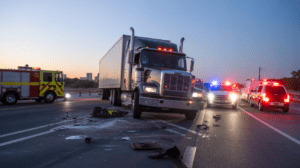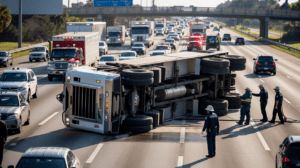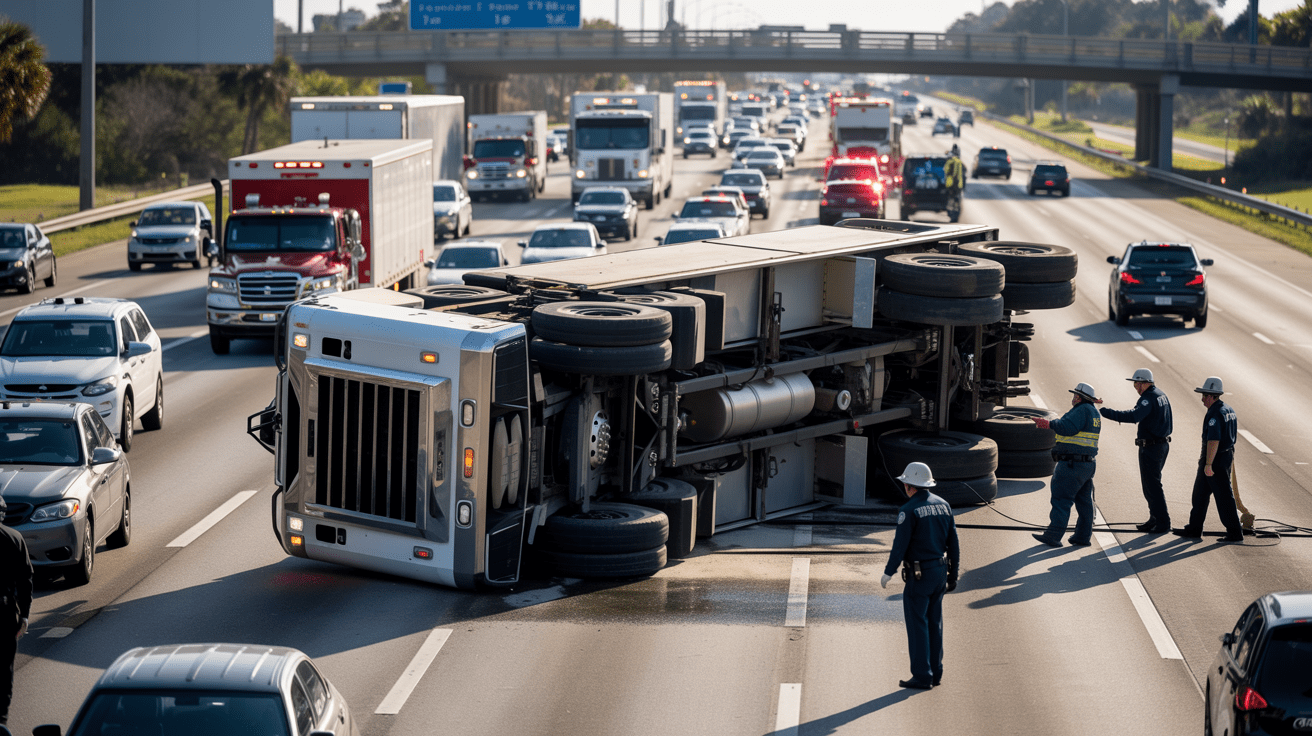
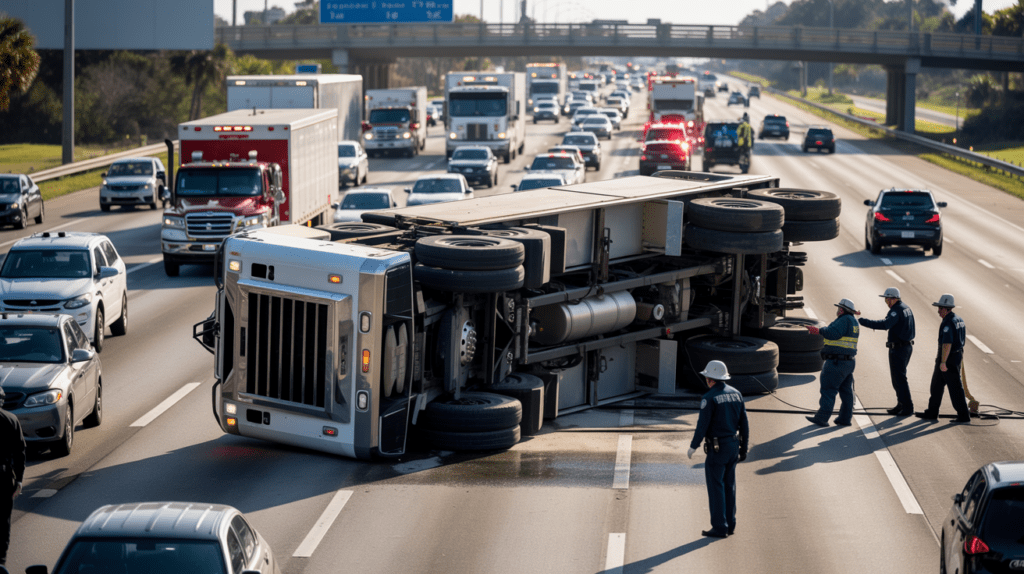
Welcome to The Explainer. You know, we’ve all seen the aftermath of a major highway accident. But what’s really going on when a massive truck rolls over? Today, we’re gonna go way beyond the headlines to really understand the chain of events that leads to these disasters, what you need to know if you’re ever involved in one, and the really tough path to figuring out who is truly responsible.
Learn More: Tampa Truck Rollover Accident Lawyer
So let’s start right here with this crucial point. As the quote says, these are some of the most catastrophic incidents on our roads. And it’s not just because the trucks are bigger. It’s about a whole different set of physics, a different kind of chaos that’s at play, which we’re about to get into.
And this really brings up two big questions we’re gonna tackle. Right? First off, what are the hidden causes that are actually behind these rollovers? And second, if the absolute worst happens, what are the immediate steps you can take that can make all the difference?
Alright. Let’s dive right into the why. You see, when investigators start piecing these accidents back together, they almost always find that the root cause wasn’t some freak accident or just bad luck. It was a preventable error, a failure somewhere in the system.
And what investigators find time and time again is a pattern. It almost always comes down to one of these four main areas. You’ve got a driver going way too fast, cargo that’s not loaded correctly, a driver who is dangerously tired, or a truck that just wasn’t properly maintained. Each one is like a link in a chain of failure. Now check this out, because this slide shows a hidden danger that’s so important.
A balanced load keeps the truck’s center of gravity low and stable, just where you want it. But when that load is unbalanced or it’s not secured right, the center of gravity gets dangerously high. And that turns the truck into a ticking time bomb, basically ready to tip over during a totally routine turn. And get this, our sources make a really stark comparison.
Driving when you’re drowsy is just like driving drunk. I mean, your reaction time completely tanks. Your judgment gets cloudy. But here’s the scary part.
With these super tight deadlines and all this economic pressure, drivers are often put in a terrible position, forced to choose between making a deadline and following the safety rules that keep us all safe.
So the worst has happened. The scene is just pure chaos. It’s confusing. What you do in these first few moments is absolutely critical. And I mean, not just for your immediate safety, but for literally everything that comes next.
So how do you make sense of all that chaos? Well, experts lay out this simple three step process. Think of it like a roadmap for a really bad situation. First, you secure your well-being.
Second, you capture the facts. And third, you get the right help on your side for the long road ahead. Let’s really focus on that first step because it’s one people so often skip. Right after a crash, your adrenaline is just pumping.
You might not even feel hurt, but our sources are crystal clear. Serious injuries like internal bleeding or concussions, they don’t always show up right away. Getting checked out isn’t just being overly cautious, it’s about protecting your health and creating an official medical record. Okay, so once the immediate chaos is handled, the focus shifts.
We move away from the side of the road and onto the really complicated legal journey of figuring out exactly who was responsible for the crash. And now we’re in the legal phase. Proving liability here isn’t as simple as just pointing a finger at the driver. It’s way more like a forensic investigation.
It means digging through driver logs, poring over maintenance records, analyzing how the cargo is loaded, all to find out exactly where the system broke down. And this right here, this is where things get really complex. As you can see, the fault can lie with a whole bunch of different parties. Was it the driver?
Maybe their logbooks or the truck’s black box will tell us. Was it the trucking company that decided to skip some maintenance? Or what about the warehouse that loaded the cargo all wrong? It could even be the mechanic who serviced the brakes.
Each one holds a critical piece of the puzzle. But why does all this matter so much? Why go through this whole legal battle? Well, it’s because the consequences of a rollover don’t just end when the wreck is cleared from the highway.
So what’s really at stake for the people involved? Let’s take a look at the long term impacts. The fallout from a rollover goes so much further than just the twisted metal on the road. Victims often have to deal with a lifetime of challenges, from chronic pain and permanent disabilities to deep psychological trauma like PTSD and anxiety.
And of all these terrible long term effects, traumatic brain injuries, or TBIs, can be the most devastating.
A TBI can change literally everything about a person their personality, their memory, their ability to work, to connect with people they love. It’s this hidden injury that sends ripples through their entire life and family. And then on top of all that physical and emotional trauma, you have the crushing financial weight. And this number you see, that’s really just the tip of the iceberg.
Once insurance limits are maxed out, families can be left facing a mountain of debt for medical bills and long term care, turning a personal tragedy into a total financial catastrophe. So we’ve walked through the causes, the chaos of the aftermath, and the long, painful consequences. What’s the big picture here? What’s the one question that really ties all of this together?
And that really brings us to the heart of it all. As this final slide asks, where does accountability truly lie? The answer isn’t just one person or one company. It’s in the entire chain of responsibility, From the driver behind the wheel, to the person who loaded the cargo, to the executive sitting in the boardroom, every single link in that chain is designed to keep us safe. And when just one of them breaks, well, the result is devastation.