
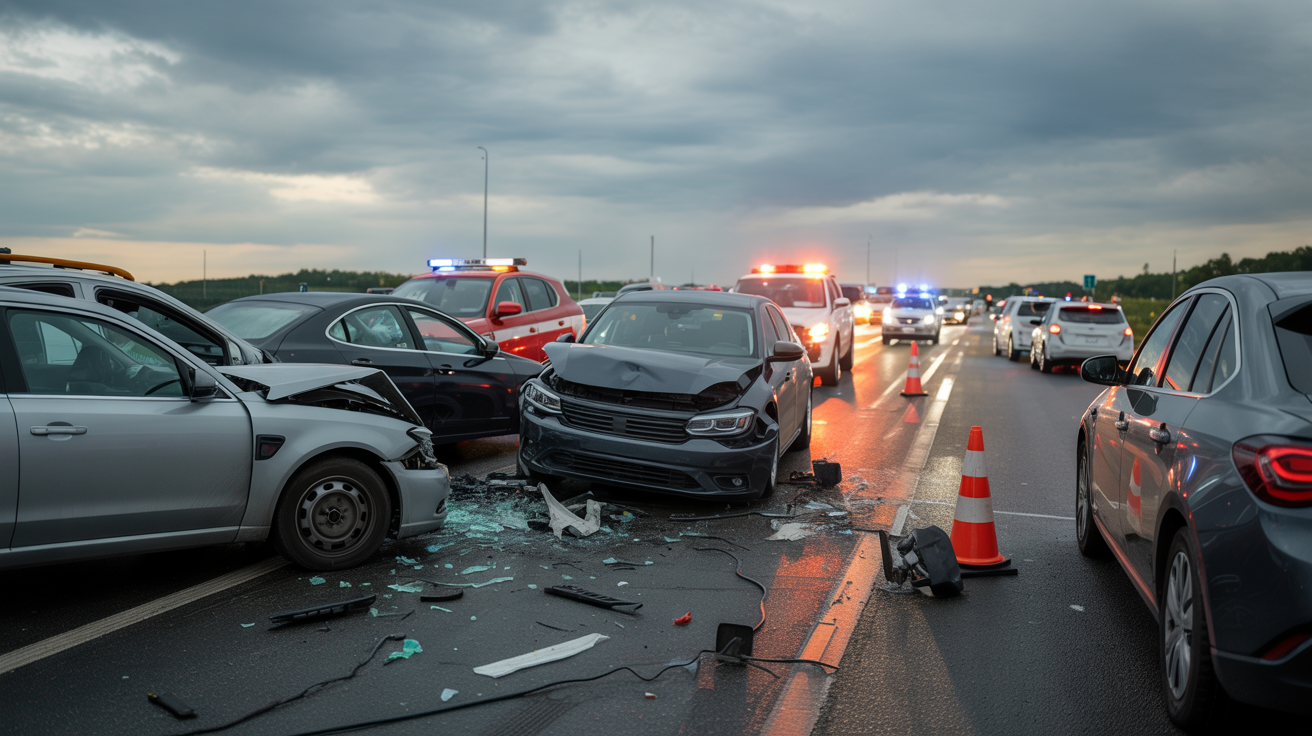
Just imagine it for a second. You’re driving, everything’s normal, and then brake lights, the screech of metal, and bam. In an instant, your commute has turned into a chaotic multi car pile up. In that moment when everything is a blur, one question is gonna cut through all that noise.
Learn More: Tampa Multi-Vehicle Accident Injury Lawyer
What in the world do you do now? Because believe me, what you do in those first few moments, it can change everything. Let’s get into So you might be looking at this thinking, okay, a three car pile up, it’s just a regular fender bender but with an extra car or two. Right?
You know, a bit messier but basically the same idea. Well, I’m here to tell you that could not be further from the truth. The second you have more than two vehicles involved, the whole situation, it just transforms.
Figuring out who’s at fault, dealing with injuries, the insurance claims, it all gets way, way more complicated. It really is a completely different game and the stakes are so much higher. So what is it that makes it so much more complex?
Well, it all boils down to the chain reaction problem. You’re not just looking at one collision. You’re trying to untangle this massive domino effect right there on the highway, figuring out how that one first mistake triggered a whole cascade of crashes.
So what are these triggers? What actually sets off this incredibly dangerous chain reaction? You know it’s almost never just one simple mistake. It’s usually a perfect storm of factors that turns a normal drive into a total disaster.
Let’s take a look at the usual suspects. And when you look at these, you can see how they all kind of feed into each other. Think about it. Distracted driving. Just a two second glance at your phone, and you’ve lost the one thing you need to prevent a pile up, your reaction time.
Now, let’s throw in some bad weather, maybe a classic Florida downpour where you can barely see. Then, an aggressive driver decides to weave into that blind spot, causing the first impact. And for the final piece of the puzzle? Another driver, maybe with bad brakes, who literally can’t stop.
And just like that, a two car problem becomes a four car nightmare. The impact of these pile ups, I mean, it goes so far beyond just crumpled metal and broken glass. The real cost isn’t measured in car parts. It’s measured in the long term, life altering consequences for the people caught in the middle of it all.
And this is where you see the true hidden toll of a crash. We are talking about chronic pain that can stick around for years, sometimes even leading to permanent disabilities.
And then there’s the psychological side. PTSD is very, very real. The sound of tires screeching can trigger terrifying flashbacks. On top of that, the financial devastation can just be crushing.
Medical bills start piling up, you’re losing income because you can’t work, and your ability to earn a living in the future could be seriously at risk. It’s a massive burden that touches every single part of your life. So this brings us to the million dollar question, right? In a chaotic mess where a bunch of drivers might have messed up, who’s actually at fault?
Who ends up paying for all of this? Well, here in Florida, there’s a specific legal formula for sorting this all out. And the key idea you need to know is called comparative negligence. Now in plain English, this just means that fault can be shared.
Investigators will look at everything and assign a percentage of the blame to each driver involved. And here’s the most important part, even if you are found to be partially at fault, you can still recover damages from the others. Let’s make this super clear with an example. Okay, imagine a three car accident.
Let’s say the investigators decide that driver A, who made a really aggressive lane change, was sixty percent at fault. Driver B, who was following way too close, gets thirty percent of the blame. And maybe you, driver C, were distracted for just a second, so they find you ten percent at fault. So here’s the absolute crucial point: because you are only ten percent at fault, you are still legally entitled to recover ninety percent of your total damages from the other two drivers’ insurance companies.
Having a little bit of the blame does not stop you from getting the compensation you need. That is so important to remember. Okay, knowing the law is one thing, but what you actually do in those first few minutes after a crash, that’s just as vital. So let’s run through your post crash playbook.
Think of these three steps as your absolute non negotiables. Number one, safety. Get yourself and others out of the way of traffic if you can. Number two, document everything.
Your phone is your best friend here. Take pictures of every car, every angle, the damage, skid marks, the road conditions, all of it. Why? Because you’re not just dealing with one insurance company anymore.
You’re dealing with several, and every single one is looking for evidence to shift the blame. Your photos become your proof. And number three, and this one is so crucial, get medical care right away. And why is getting medical care so important even if you feel fine?
Because adrenaline is an incredible thing. It floods your system right after a crash and can totally mask serious injuries. You might feel okay, but you could have internal bleeding, a concussion, or soft tissue damage that won’t show up for hours or even days.
Getting checked out immediately creates an official medical record that ties your injuries directly to the accident and that is absolutely critical for your claim. So taking those immediate steps is all about securing your recovery Because the end goal, the whole point of this entire process is to protect your future by making sure you get fair compensation for everything that was taken from you in that crash.
So what does fair compensation even mean? Well, it’s not just about getting a check to fix your car. It’s meant to cover all of your medical bills, both the ones you have now and any you might have in the future. It’s supposed to cover the paychecks you lost while you were out of work and any hit to your long term ability to earn. And it also includes compensation for the things that don’t have a price tag, The physical pain, the suffering, and the mental anguish that the crash has put you through. But, and this is a big but, there is a clock ticking. Here in Florida, you generally have just two years from the date of the accident to file a personal injury claim.
That number, too, is a hard deadline. If you wait too long, you could lose your right to any compensation forever, no matter how strong your case is. That clock is non negotiable. So really, it all comes down to this. A multi vehicle crash is pure chaos. But your actions in the hours and days that follow are what will ultimately define your future. So the question is, in that moment of chaos, are you prepared to protect it?

