
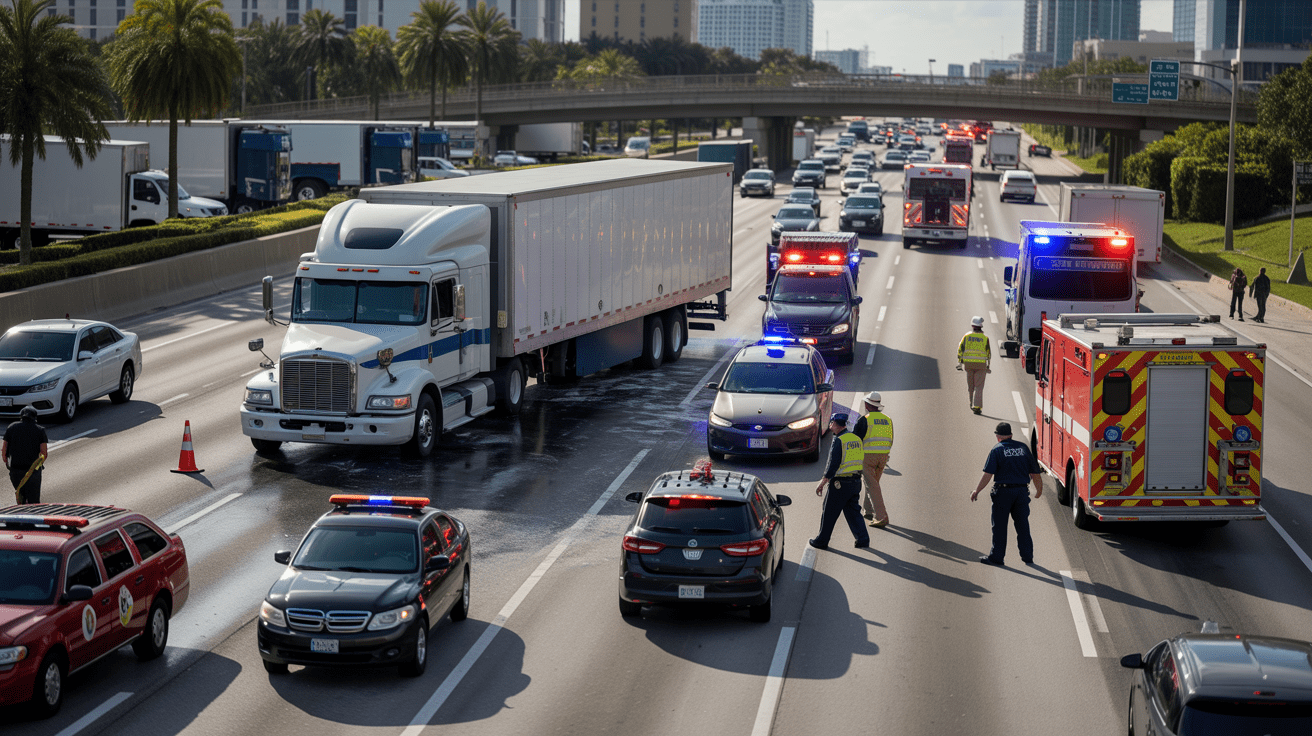
Alright. Let’s dive in. Today, we’re gonna unpack what really happens in the chaotic aftermath of a crash with a big rig. You know, it’s this whole world of hidden complexities and super high stakes that most of us, thankfully, never have to see.
Learn More: Fort Lauderdale Truck Accident Lawyer
So you see this question. A simple collision? Well, what is it that makes a crash with an eighty thousand pound truck such a illegal labyrinth? Because let’s be real, it’s not just a bigger car accident, not even close.
The answer? Well, it pulls back the curtain on this whole hidden world of regulations, crazy tech, and you guessed it, corporate responsibility. Okay. Think about a typical car crash.
Right? It’s usually pretty straightforward. You’ve got one or two people involved, some standard evidence, simpler insurance stuff. But a commercial truck crash?
Woah. It’s a whole different beast. Suddenly, you’re not just dealing with the other driver. You’re looking at multiple liable parties, a mountain of complex digital evidence, and this tangled, tangled web of both federal and state regulation.
All right, section one, the critical first steps. And that subtitle says it all. What happens at the scene matters most. I mean, where do you even begin in all that chaos?
It all comes down to these first steps. What you do in those first few minutes and hours can literally define everything that comes after. So in the middle of all that chaos, you’ve got to focus on three immediate priorities. First up, and this is non negotiable.
Ensure safety and medical care. That means calling nine eleven, obviously, but also getting yourself medically checked out. Even if you think you’re totally fine, adrenaline is a powerful thing and it can easily mask some really serious injuries. Okay, second, document the scene and evidence.
Pull out your phone and just start taking pictures of everything, the vehicles, any skid marks, and pay special attention to truck identifiers, you know, logos, DOT numbers, that kind of thing. Get witness info if you can. And third, notify insurers on your attorney. You gotta report it, but here’s the key.
Be really careful what you say. Just report the incident. Avoid giving any detailed statements about who’s at fault or how hurt you are, at least not right away. Okay.
Moving on. Section two is all about unraveling the liability puzzle, and the subtitle here is so important. It’s rarely just the driver’s fault. Once the dust settles at the scene, the focus shifts, and you start trying to figure out this giant puzzle of who’s actually responsible.
And that’s because in these cases, fault often extends way beyond the driver’s seat. It’s not just about one person’s mistake. It’s more like a domino effect. So you’re probably asking, who else could possibly be liable?
Well, the list is longer than you might think. You’ve got the trucking company itself, maybe for bad hiring practices or poor oversight. You’ve got the cargo loaders. What if they loaded the freight improperly?
That can be a huge factor. Then there’s the maintenance provider if there was a mechanical failure. Heck, it could even go all the way back to the truck or parts manufacturer if there was a defect. And don’t forget any other contractors who are involved in that one trip.
Which brings us to our third section, decoding the evidence. The subtitle here is the race to preserve digital clues. Because proving any of this complex liability, well, it all comes down to evidence. And in the world of modern trucking, that means you’re decoding this incredible trail of digital clues.
And believe me, it is an absolute race against time to get that data before it’s gone for good. So what are we talking about here? First up is the onboard black box data. Yeah.
Just like in an airplane. This little device is constantly recording crucial data. I’m talking speed, braking, how the engine is running, any sudden moves. It gives you a perfect second by second playback of exactly what the truck was doing right before the crash.
Then you’ve got something called an electronic logging device or ELD for short. This thing is a real game changer. It automatically records a driver’s time behind the wheel. Why does that matter?
Well, it’s all about enforcing those federal hours of service rules. You know, the ones designed to stop drivers from getting exhausted, which is a massive cause of accidents. That ELD data can show you in a heartbeat if a driver was on the road way longer than they were legally allowed. So you might be wondering, what stops a company from just deleting all this data?
That’s a great question. And the answer is a crucial legal tool called a spoliation letter. It’s basically a formal notice that gets sent to the trucking company, and it demands that they preserve all the relevant evidence. We’re talking logs, data, maintenance files, the whole shebang.
It essentially puts a legal freeze on everything, stopping them from destroying a single piece of evidence connected to the crash. Okay. So we’ve talked about the scene, the liability, the evidence, the who, and the how. Now let’s get to the why.
Section four, what’s actually at stake. This is where we measure the full human and financial impact of these accidents. When you hear about compensation from a claim, it’s not just some random big number. It’s actually broken down into different types.
First and most obviously, you have medical costs, not just for now, but for any future care you might need. Then there’s lost wages and earning capacity. That’s the money you lose from being out of work and maybe even the money you can’t earn in the future because of your injuries. Of course, you’ve got property damage to your vehicle.
And then there’s a big one that’s harder to put a number on, pain and suffering.
And you know, it’s so easy to get caught up in the legal details and forget the very real human cost. I think this quote really hits at home. Emotional effects may appear as persistent anxiety, irritability, sleep disruption, or emotional numbness that limits connection with family, co workers, and the community. These are the invisible injuries and they can be just as devastating if not more so than the physical ones. Okay, we have covered a ton of ground. The scene, the liability, the evidence, the stakes.
So for our final section, let’s talk about navigating your next move. We’re gonna boil it all down to the key takeaways from this whole thing. Look, if you take away only one single thing from all this, let it be this. In any truck accident, evidence is fragile and time is absolutely critical.
You could even say time is the enemy. That clock starts ticking the second the crash happens. And that really leads us to a final big picture question. As we’re looking ahead with technology advancing so fast, you know, better monitoring, even autonomous systems, who should be most responsible for preventing these accidents?
Where does the buck stop? Is it with the drivers themselves? Is it with the companies who own the trucks? Or is it up to the regulators to make the rules?
That’s really the central question we’re all going to have to wrestle with when it comes to the future of road safety.

