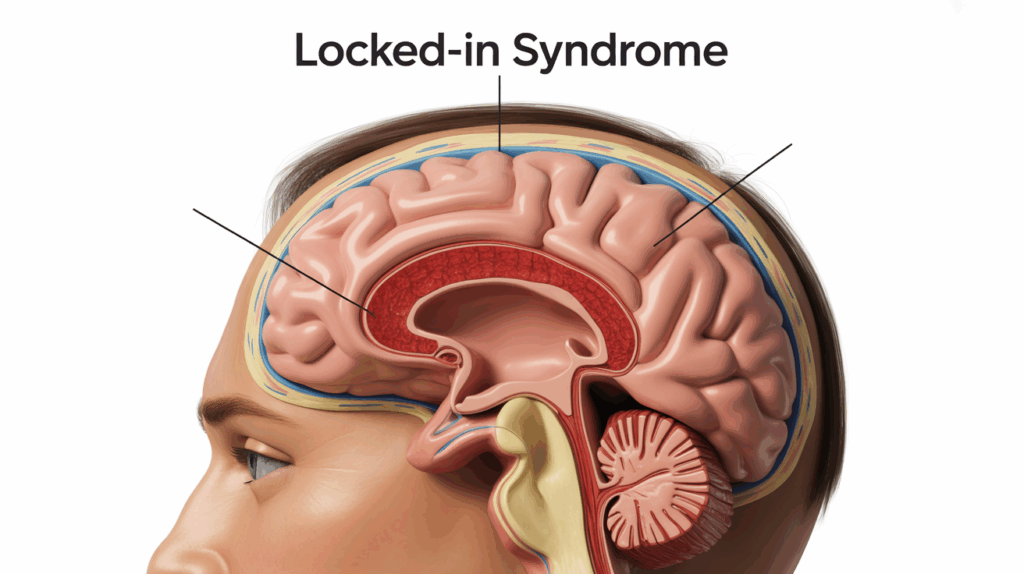
Today, we’re diving into one of the most profound and challenging conditions in all of medicine: locked in syndrome. We’re going to explore what it is, exactly how it happens, and the incredible medical legal fight that patients and their families have to take on.
Learn More: Florida Locked-in Syndrome Injury Lawyer
Just try to imagine that for a second. The entire communication network in your body just collapses. The brain is sending out all the right commands, but they simply never arrive. The only thing left is the flicker of an eye, the last open window to a mind that is still one hundred percent there.
And that really is the central question, isn’t it? It’s a reality that pushes every boundary we have in medicine, in law, and in our understanding of what it means to live with dignity when your physical world shrinks to almost nothing.
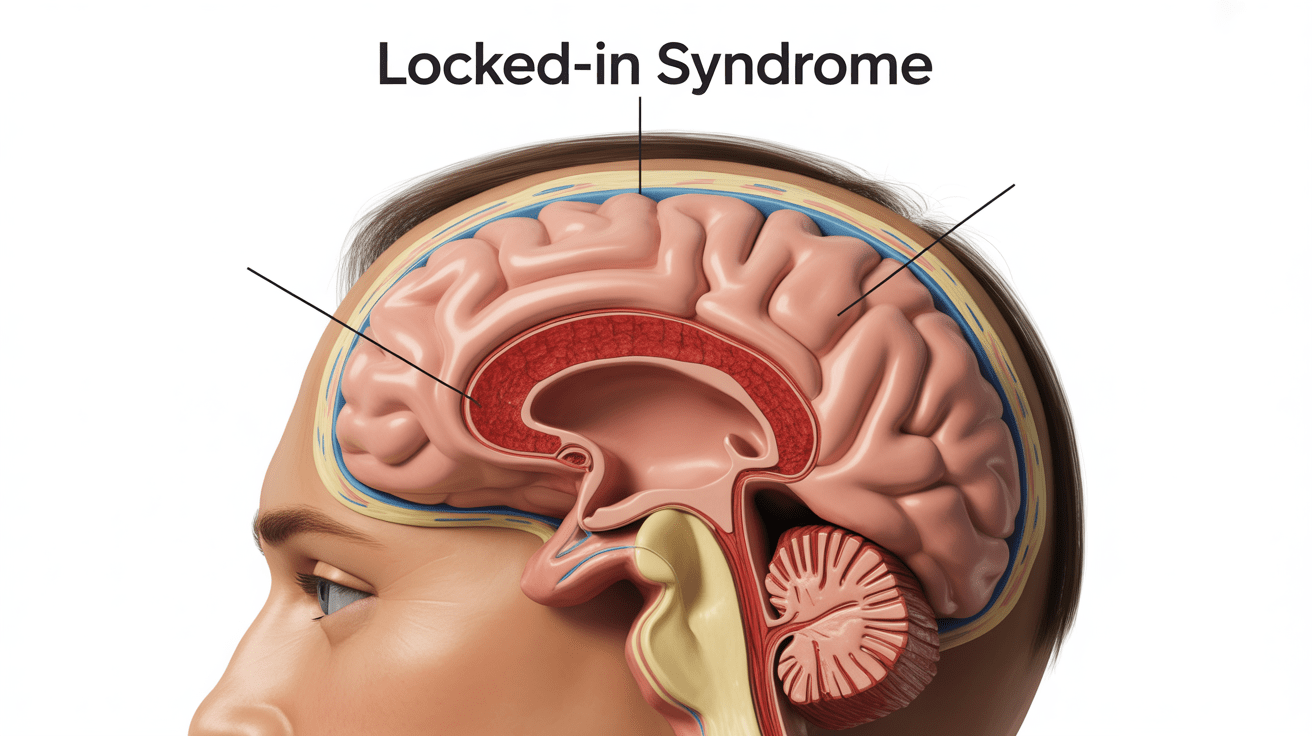
So first up, let’s get a really clear picture of this condition and uncover the devastating conflict at its very core. And here it is. This is the cruel paradox of locked in syndrome. On one side, you have complete paralysis of almost every single voluntary muscle.
But on the other, your cognition, your thoughts, your memories, your personality, your awareness, it’s all completely intact. You are still fully you on the inside, you just have no way to show it. So, how does something this catastrophic even happen? Well, it turns out it isn’t just one thing.
There are four main pathways that can tragically lead to a person becoming locked in.
The first one is direct physical trauma. Think of a specific part of your brainstem called the pons. It’s basically the central relay station for all of the brain’s motor signals. A really severe car crash, a bad fall, or an assault can damage this one area, essentially severing the connection between the brain’s command center and the body’s ability to follow orders.
The second cause, though, shifts from a tragic accident to a preventable error. In some of the most heartbreaking cases, medical malpractice, a mistake made during a surgery or in the ICU, can cause the exact same kind of devastating brainstem injury. And it’s often a terrible chain reaction, maybe a failure to properly monitor a patient’s breathing or blood pressure. This leads to a delay in someone stepping in to fix it. And in those critical loss moments, a lack of oxygen or blood flow causes permanent irreversible damage.
A stroke can also be the trigger, but it has to be in a very specific spot. See, if a blood clot blocks what’s called the basilar artery, it literally starves the brainstem of the oxygen it needs to work.
And the result is a sudden and total collapse of the body’s entire communication system.
And finally, the cause can actually come from the outside. Certain toxins, chemicals, or even a serious medication error can build up in the body to a point where they poison and damage those same vital neurological pathways, leading to the exact same state of paralysis.
Okay, so once the diagnosis is made, the entire focus shifts. It becomes a different kind of battle. A fight for a future. Now we’re going to look at the legal journey required to secure the massive resources needed to live with dignity and proper care. Now, this legal journey is a careful, methodical process. It all starts with preserving every piece of evidence.
Then, you have to bring in medical experts to prove exactly what happened. From there, a team builds a comprehensive plan for all future care. And that plan is what ultimately determines the amount of compensation that’s sought, either in a settlement or in a court verdict.
And when we talk about a legal award, it’s not just some big, abstract number. It’s based on an incredibly detailed blueprint called a life care plan. This plan covers everything: twenty fourseven nursing for breathing and feeding support, eye tracking technology just to communicate, and huge modifications to the home just to get through a single day. But the fight goes way beyond just the medical bills.
The law also tries to account for what are called noneconomic damages. This is the legal system’s way of acknowledging the profound intangible losses, things like pain and suffering, the loss of life’s simple joys, and something called loss of consortium, which recognizes the devastating impact on a person’s relationship with their spouse and family.
And this, of course, brings us to an almost impossible question. The legal system has to come up with a number, but how can anyone truly put a price tag on a life that has been so completely and permanently altered? It’s a question that really shows the gap between financial compensation and the deep human reality of it all. So finally, let’s look at what that compensation actually pays for. This is the practical day in day out reality of trying to rebuild a life after a locked in syndrome diagnosis.
So where does all that money go? Well, just look at this breakdown. Over half of it, fifty five percent, is dedicated to skilled, round the clock nursing care. That one fact alone just shows the incredible intensity of support that’s needed every single day, and it’s why that legal victory is so absolutely critical for long term survival and stability.
And so we come right back to where we started. To this central, heartbreaking conflict. You have an intact mind, full of awareness and emotion and thought, trapped inside a body that is completely paralyzed and depends on technology for every single interaction.
And the ultimate goal is to bridge that enormous gap with care, with technology, and with dignity. We’ll end on this thought. In a condition that’s defined by physical silencethe fight to be heardmedically, personally, and legallyit becomes everything.
It’s a battle that isn’t fought with muscles, but with the relentless advocacy of experts and loved ones, all to make sure that a voice for justice can still ring out loud and clear.