

The Law Offices of Anidjar and Levine help Titusville property owners document storm damage, review insurance policies, and address disputes over claim decisions. Hurricanes, hail, heavy rain, and falling trees can damage roofs, siding, windows, and interiors, while hidden moisture or structural problems may create lasting risks. We can help you organize photographs, inspection reports, repair estimates, and communications with your insurer to support your claim. Coverage depends on your policy’s terms, limits, exclusions, and deadlines. Below, we explain the issues and steps that may affect your claim. Learn more about our Titusville Personal Injury Lawyer services.
Main Takeaways
- A Titusville storm-damage lawyer can review your policy, claim decision, and options if your insurer delays, denies, or underpays.
- Document damage with dated photos, inspection reports, repair estimates, and copies of all insurer communications.
- Report damage promptly through your insurer’s required channels and track deadlines, inspections, and requests for information.
- Avoid unsafe areas, exposed wiring, and standing water; seek qualified inspections and temporary shelter when needed.
- Before signing a release or accepting payment, understand its effect and consider legal advice about your coverage and claim.


How We Can Help With Your Titusville Property Claim Storm & Weather Damage Injury Claim
When a storm damages your Titusville property, we can help you understand your insurance policy, document the loss, and pursue the benefits you’re owed. We’ll listen carefully to your concerns and explain practical next steps, so you can focus on protecting your family, employees, or community.
Our team reviews your policy’s relevant terms, exclusions, deadlines, and coverage limits through careful Policy Interpretation. We’ll help organize photographs, repair estimates, receipts, inspection reports, and other records that support your claim. This Claim Preparation can make it easier to present a clear, well-supported account of the damage and requested benefits.
We’ll communicate with the insurer, respond to questions, and identify issues that may affect the claim’s handling. If the insurer disputes your documentation or offers less than the covered loss warrants, we can explain your options and advocate for a fair review. Throughout the process, we’ll provide direct guidance, keep you informed, and treat your concerns with respect. Our goal is to help you seek the coverage your policy provides.
OUR CONSULTATIONSARE FREE
START YOUR FREE CASE REVIEW

Understanding Titusville Property Claim Storm & Weather Damage Injury Cases
Understanding a Titusville property claim after storm or weather damage starts with identifying what caused the loss and how your policy addresses it. We can help you review the policy’s coverage, exclusions, deadlines, and duties after a loss, then compare those terms with the insurer’s investigation and decision. A clear record of the damage, repair estimates, and communications can help you understand the issues and support a fair evaluation.
Claim denials may rely on disputed policy language, questions about the cause of damage, or documentation the insurer considers insufficient. We can examine the stated reasons, identify relevant evidence, and explain your options without promising a particular outcome. If the insurer’s valuation differs from yours, appraisal disputes may require careful review of the policy’s process, scope, and deadlines. We’ll help you assess whether that process fits your circumstances and prepare questions for the insurer. By understanding each step, you can make informed decisions and protect resources needed to restore your property and serve your community.
Common Causes of Titusville Property Claim Storm & Weather Damage
We often see Titusville property claims arise from hurricane winds that damage roofs, siding, and windows. Hail can puncture or dent exterior materials, while heavy rain may cause flooding and costly water intrusion. Lightning strikes and resulting power surges can also damage electrical systems and appliances.
Hurricane Wind Damage
Hurricane-force winds can damage Titusville homes by tearing off shingles, breaking windows, and driving rain into vulnerable areas. Roof Shingle Uplift may begin when gusts lift shingle edges, weaken their fasteners, and expose the roof deck. Once water enters, it can damage ceilings, insulation, and personal belongings. Windborne Debris Impact can also crack windows, puncture siding, or damage roof materials, creating openings that allow further water intrusion.
After a storm, we can help you document visible damage and preserve relevant records, including photographs, repair estimates, and insurer communications. A careful review may help distinguish wind-related damage from preexisting conditions and clarify what your policy covers. We’ll explain the claims process, assess whether the insurer’s decision reflects the available evidence, and help you pursue a fair resolution while you focus on protecting your household and community.
Hail Impact
When hail strikes a Titusville property, it can dent metal roofing, crack shingles, damage siding, and break windows. We help you understand how hail damage may affect your home and the evidence insurers need to assess a claim. Hailstone patterns across roofs, exterior walls, and nearby structures can help establish the storm’s path and the extent of impact. We also look for Shingle bruising, granule loss, and fractures that may not be obvious from the ground. Prompt documentation, including dated photographs and a professional inspection, can preserve important details before repairs alter the damage. As you work to protect your household and serve those who depend on you, we can explain policy requirements and respond to claim disputes. A careful review supports a fair, evidence-based evaluation of your losses.
Heavy Rain Flooding
Beyond hail damage, heavy rain can cause serious property losses in Titusville, especially when drainage systems are overwhelmed or water enters through roofs, windows, and foundations. Flooding may follow intense downpours, clogged storm drains, inadequate grading, or runoff from nearby properties. Even homes outside mapped high-risk areas can sustain water damage when local drainage capacity cannot keep pace with rainfall. Floodplain mapping can help us understand a property’s exposure, but it doesn’t determine whether a specific loss is covered. We can help you document the source and extent of damage, preserve repair estimates, and review your policy’s water-related provisions. Prompt reporting and careful records can support a clear claim. When flooding affects your home, we’ll work to protect your interests and pursue the benefits your coverage provides.
Lightning And Power Surges
Lightning can damage a Titusville home directly or send a power surge through electrical lines, harming appliances, wiring, and other equipment. Even when a strike hits nearby, the resulting surge may travel through utility connections and cause appliance damage that isn’t immediately visible. We recommend documenting affected property, saving receipts, and arranging a qualified inspection before replacing damaged systems. Photographs, repair estimates, and an inventory can help us present a clear account of your losses to the insurer. Surge protection may reduce future risks, but it can’t prevent every loss or determine whether a claim is covered. Review your policy’s terms, limits, and exclusions, and report damage promptly. If the insurer disputes the cause or value of repairs, we can help you understand available options and pursue a fair evaluation.
Don’t Wait. Call Our Florida Personal Injury Lawyers Now!


Legal Rights of Titusville Property Claim Storm & Weather Damage Injury Victims
Storm and severe weather damage can leave Titusville property owners facing costly repairs, disputed insurance claims, and uncertainty about their legal options. We can help you understand the protections your policy and Florida law may provide. You’re entitled to review the insurer’s decision, request an explanation for a denial, and challenge an estimate that doesn’t reflect covered damage. Your responsibilities may include promptly reporting the loss, documenting damage, and cooperating with reasonable claim requests.
Key rights and practical steps include:
- Request a complete copy of your policy and review coverage limits, deadlines, and Policy exclusions.
- Keep photographs, repair estimates, receipts, and all communications with the insurer.
- Ask for a written explanation when the insurer denies or underpays part of your claim.
- Consider appraisal rights when the value of a covered loss is disputed, as your policy permits.
We can help you assess available options and communicate clearly with the insurer. By pursuing a fair resolution, you can protect your household and preserve resources needed to care for others in your community.
Why Do Storm & Weather Damage Injuries Happen in Titusville?
Severe weather can damage a Titusville property through high winds, heavy rain, hail, flooding, or falling trees and debris. These events may expose occupants, visitors, and workers to hazards when roofs fail, windows break, or water enters living and work areas. Storm damage injuries can occur when people encounter unstable structures, slippery floors, electrical hazards, or debris during ordinary activities. We can understand these risks by considering both the force of the weather and the property’s condition before it arrives.
Inadequate Roof maintenance may leave shingles loose or flashing vulnerable, allowing wind and rain to worsen existing weaknesses. Poor drainage planning can direct water toward foundations, entrances, and walkways, increasing the chance of flooding and falls. Aging materials, neglected repairs, and nearby trees can also reduce a property’s resilience. Owners, managers, and insurers each have responsibilities that affect safety and recovery. When preventable conditions contribute to harm, we can examine how they combined with the storm to cause the injury.
What Should You Do After a Titusville Property Claim Storm & Weather Damage Injury?
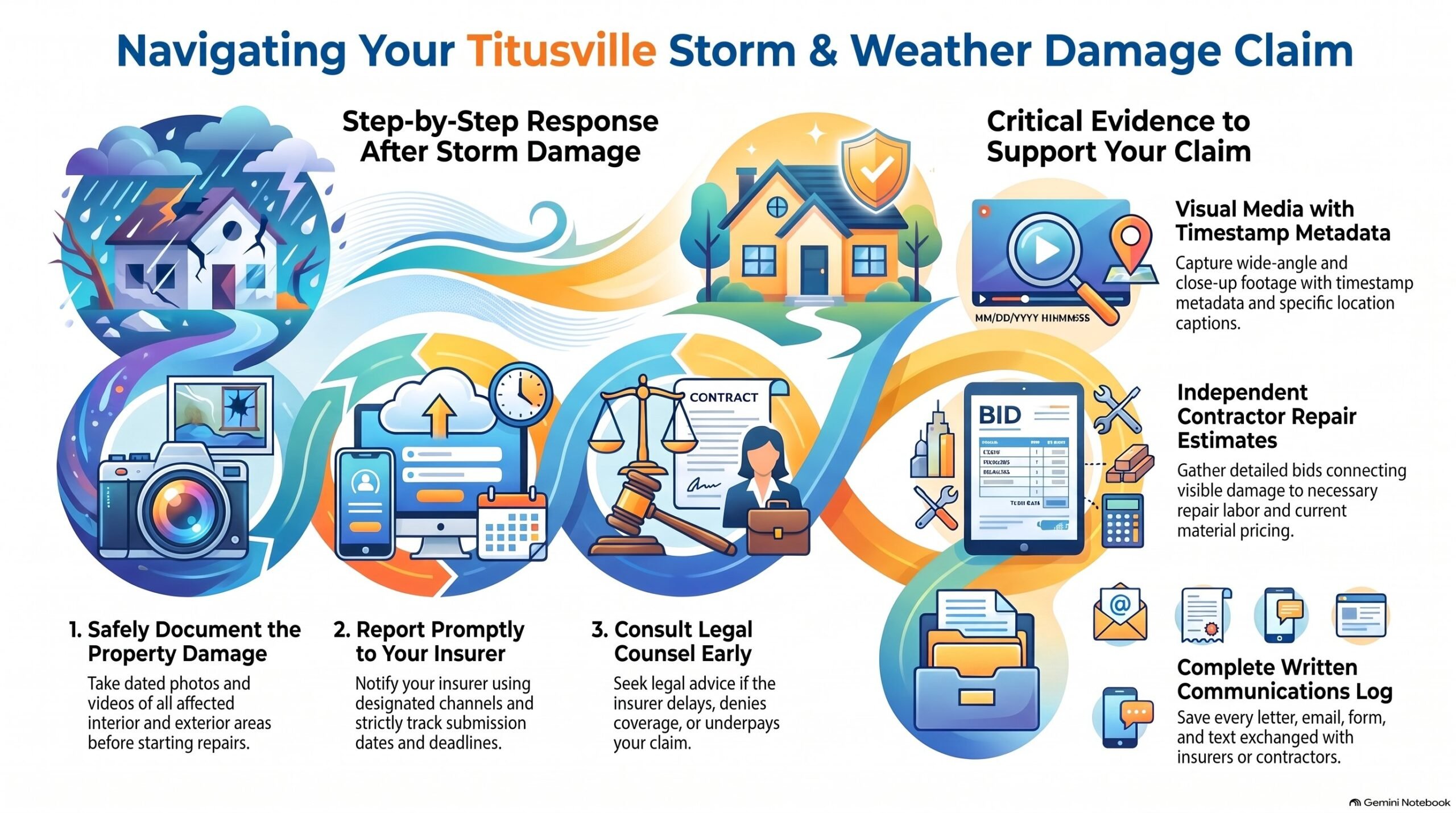
After storm or weather damage, we should document the property’s condition with clear photographs and records before making repairs, when it’s safe to do so. Notify your insurer promptly and keep copies of all communications and claim documents. If the insurer disputes or delays the claim, we can consult a lawyer to understand our options and protect our interests.
Document the Damage
When it’s safe, document storm and weather damage to your Titusville property as soon as possible. We can help you create a clear record that supports an accurate account of your losses and helps protect the people who depend on you. Take wide and close-up photographs or videos of each affected room, exterior area, and damaged item before cleanup or repairs begin. Include the date and location, and capture details such as water lines, broken windows, roof damage, and fallen debris. Make an Inventory checklist of damaged belongings, noting each item’s description, age, condition, and estimated replacement cost. Gather receipts, warranties, and other records that support Personal property valuation. Keep copies of all documentation in a secure location, and avoid altering or discarding damaged property until you’ve recorded it.
Notify Your Insurer
Once you’ve documented the damage, notify your insurer promptly and follow the policy’s reporting requirements. Prompt notification helps us create a clear record and begin the claim process without unnecessary delay. Use the insurer’s designated phone number, online portal, or written notice method, and provide the storm date, the affected areas, and a concise description of what you observed. Share copies of your photographs and records when requested, but keep the originals and save every message, form, and reference number. Ask the representative to explain the next steps, inspection arrangements, and any information they still need. Track deadlines by noting submission dates, response windows, and scheduled visits on a calendar. Timely, accurate communication helps us support our households and communities while protecting a complete claim record.
Consult a Lawyer
A lawyer can help you evaluate a storm damage claim if the insurer delays, disputes the damage, or offers less than the repairs may require. During a Legal consultation, we can review your policy, inspection reports, photographs, repair estimates, and communications with the insurer. We’ll explain potential options and help you understand deadlines before you decide how to proceed.
Attorney selection matters. Choose counsel with experience handling property insurance disputes and familiarity with Florida claims procedures. Ask how the lawyer will assess your case, communicate updates, and explain fees. Bring organized records to your meeting, and describe the damage and claim history accurately. We can also discuss whether further documentation or an independent inspection may support your position. Timely guidance can help protect your rights while you focus on restoring your property and assisting those who depend on you.
Don’t Wait. Call Our Florida Personal Injury Lawyers Now!
Critical Evidence in a Titusville Property Claim Storm & Weather Damage Injury Case
To support your storm-damage claim, we’ll focus on evidence that documents the loss, its cause, and your communications with the insurer.
Preserve these essential records:
- Photos and videos of the damage
- Local weather reports
- Repair estimates
- Communications with the insurer
Together, these materials can help us establish the extent of the damage and assess how the claim was handled.
Damage Photos and Videos
How clearly can photographs and videos show the damage a storm caused to your Titusville property? Prompt, careful documentation can preserve details that may change as cleanup and repairs proceed. We recommend photographing each affected area from wide angles and close range, including roofs, ceilings, walls, flooring, and damaged belongings. Record video walkthroughs that show how rooms connect and capture visible leaks or other ongoing conditions, while avoiding unsafe areas. Keep original files whenever possible; Timestamp metadata may help establish when images were created. Add concise image captions identifying locations, visible damage, and the date you documented it. These records can help us explain the scope of your loss and support a clear claim presentation. Accurate documentation helps reviewers understand what needs repair and why.
Weather Reports
Because weather conditions can change quickly, reliable reports may help establish what happened at your Titusville property and when. We can help you gather records from trusted sources, including the National Weather Service and local stations, to document rainfall, wind speeds, hail, and storm timing. Radar archives may show a storm’s path and intensity near your home, while forecast models can provide context about expected conditions. These records may help us assess whether a reported event aligns with the damage you documented in photos and videos. We’ll also compare the reports with your account and other available evidence, noting any gaps or conflicting information. Careful review can support a clear, accurate claim and help you advocate responsibly for your household and community. Preserve original reports and note their sources and dates.
Repair Estimates
Accurate repair estimates can help show the scope and cost of storm damage to your Titusville property. We can help you gather detailed assessments that connect visible damage to the work needed to restore your home or business. Ask qualified contractors to inspect affected areas, document necessary repairs, and explain their proposed methods. Contractor bids can help you compare options, while current material pricing supports realistic costs for roofing, flooring, windows, and other damaged components.
We should also preserve photographs, inspection notes, and invoices alongside each estimate. This organized evidence can help demonstrate why repairs are necessary and whether a proposed amount reflects the property’s condition. When estimates differ, we can review the assumptions, labor, and materials behind them. Careful documentation supports a fair evaluation and helps you protect the resources your family, employees, or community rely on.
Claim Communications
Clear claim communications can provide important evidence in a Titusville property damage case. We encourage you to keep a record of every message with your insurer, contractor, and other involved parties. Written Correspondence can document when you reported storm damage, what you disclosed, and how the insurer responded. Save emails, letters, claim forms, and text messages, including attachments and dates. These records may help us identify delays, inconsistent explanations, or requests that affected your claim.
Before giving Recorded Statements, review the facts and answer questions accurately. You can ask who will receive the statement and how the insurer will use it. Avoid guessing about damage or causes; explain what you know and distinguish it from what you don’t. We can help you organize communications, preserve relevant evidence, and respond clearly while supporting a fair resolution for everyone involved.
Long-Term Effects of Titusville Property Claim Storm & Weather Damage Injuries
We should assess long-term effects, since storm damage may conceal structural problems that worsen over time. Persistent water intrusion can continue to damage your property and create conditions for mold growth. We’ll also consider how mold-related health effects may affect you and your household.
Hidden Structural Damage
After a storm, damage to a Titusville property may extend beyond what you can see. We can help you spot signs of hidden structural damage before it threatens safety or complicates a claim. Concealed framing may include cracked supports, loosened connections, or weakened roof members that aren’t apparent during a quick inspection. Foundation shifting can also alter door alignment, create new cracks, or affect the stability of walls and floors. These changes may progress over time, increasing repair costs and disrupting a household’s ability to serve family members, neighbors, or customers. We encourage you to document visible changes and arrange a qualified structural assessment. A detailed report can link observed conditions to the storm and support a clear account of the damage when you file your property claim with the insurer.
Persistent Water Intrusion
Although stormwater may seem to recede, persistent moisture can continue damaging a Titusville property long after the weather clears. Water may remain beneath flooring, inside wall cavities, or around the foundation, gradually weakening materials and increasing repair costs. We can help you document these conditions promptly so the full scope of storm-related damage is clear. Moisture mapping can identify damp areas that a visual inspection might miss and guide targeted repairs. We should also review the source of intrusion, including damaged roofing, failed seals, or inadequate runoff control. Depending on the findings, drainage upgrades may help direct water away from the building and reduce the risk of repeat damage. Keep photographs, inspection reports, and repair estimates organized. Clear records support a thorough property claim and help protect the resources your household needs.
Mold-Related Health Effects
Lingering moisture from storm damage can create conditions for mold growth, which may affect a household’s health over time. When we help you assess a property claim, we consider not only visible damage but also the possible effects of prolonged exposure. Mold can trigger Respiratory irritation, including coughing or wheezing, and allergic reactions such as sneezing, itching, or skin irritation. People with asthma, allergies, or weakened immune systems may face greater risks, while children and older adults may need particular care. Symptoms can persist if damp materials remain untreated or mold returns after incomplete repairs. We encourage you to document concerns, seek medical guidance, and promptly report suspected mold. Clear records of exposure, health effects, and repair needs can support a thorough claim and help protect everyone in your household.
Proving Liability in Titusville Property Claim Storm & Weather Damage Injury Cases
Proving liability in a Titusville storm-damage injury case requires more than showing that severe weather caused the harm. We must identify who had a duty to keep the property reasonably safe and determine whether that person or organization failed to meet it. Property owners, managers, and businesses may be responsible when they ignore known hazards, such as loose roofing, unstable trees, blocked drainage, or unrepaired structural damage.
Evidence can show what happened and whether the danger could have been prevented. We may examine maintenance records, inspection reports, photographs, repair invoices, weather data, and witness accounts. Negligent Maintenance may be relevant when an owner fails to address a hazard before a storm or neglects damage afterward. Contractor Liability may arise if careless repair work creates an unsafe condition that injures someone.
We’ll also assess how the hazard caused your injury and whether others share responsibility. Careful investigation helps us present a clear, evidence-based account and seek accountability for those affected.
Dealing With Insurance Companies After a Titusville Property Claim Storm & Weather Damage Injury
After identifying who may be responsible for a storm-related injury, we must also consider how insurers may evaluate the claim. We can help you communicate carefully with the property insurer while protecting your interests and supporting those who depend on you. Report the incident promptly, describe what happened accurately, and preserve photographs, repair records, medical documentation, and relevant correspondence. Before providing adjuster-recorded statements, we should review the facts with you so your account remains clear and complete. Avoid guessing about causes, injuries, or repair costs, and don’t sign releases or accept payment without understanding their effect. Insurers may question whether weather caused the damage, whether the property owner acted reasonably, or whether claimed losses are supported. We can examine policy language, identify missing evidence, and respond to requests with relevant documentation. If valuation disagreements arise, appraisal clause disputes may require careful review of the policy and the loss assessment. Our guidance can help you pursue fair consideration while keeping your focus on recovery and community responsibilities.
What to Expect During a Titusville Property Claim Storm & Weather Damage Injury Claim Process
We’ll start by evaluating the storm damage and reviewing your policy to identify any applicable coverage. Next, we’ll help you file the claim and organize the records needed to support it. We’ll then negotiate with the insurer and work toward a fair resolution.
Initial Damage Assessment
During the initial damage assessment, we document the storm’s effects on your property and identify conditions that may require prompt attention. We’ll ask you to describe when the damage occurred and what you observed, then compare your account with visible signs of impact. Photographs, videos, repair records, and a list of affected belongings can help create a clear record. Don’t enter areas with unstable structures, exposed wiring, standing water, or other hazards. We’ll emphasize Safety precautions and recommend contacting qualified professionals when conditions pose a risk. If damage makes your home unsafe, we can discuss temporary shelter and steps to protect people and property from further harm. A careful assessment helps you understand the damage and supports an organized response focused on your household and community’s well-being.
Policy Review And Coverage
Which parts of your storm or weather damage are covered depends on your policy’s terms, limits, exclusions, and any applicable deadlines. We can review the declarations page and full policy to identify covered property, insured causes of loss, and duties that may affect your claim. Pay close attention to Policy exclusions, including provisions for flooding, wear, or maintenance issues, because these terms can limit recovery. We’ll also assess coverage limits, deductibles, and any separate sublimits that may apply to roofs, personal property, or additional living expenses. If wording is unclear or provisions appear to conflict, we can explain how they may apply to your circumstances and identify questions for the insurer. A careful review helps you understand your options and make informed decisions while protecting the resources your household depends on.
Claim Filing And Documentation
After storm or weather damage, we can help you file a property claim with a clear, well-supported record of your losses. We’ll review your policy’s notice requirements and identify filing deadlines so you can submit your claim on time. Prompt reporting helps protect your rights and gives the insurer an opportunity to inspect the damage.
We’ll help you document affected areas with dated photographs, videos, repair estimates, receipts, and a detailed inventory of damaged belongings. Keep copies of all forms and communications, and note when you sent each item. If the insurer requests sworn statements or other records, we’ll explain what they require and help you prepare accurate responses. Don’t discard damaged materials before documenting them, unless safety requires removal. Careful records can support a complete claim and help your household recover while preserving resources for others who depend on you.
Negotiation And Resolution
Once we’ve documented your storm or weather damage, we’ll negotiate with the insurer using the evidence, repair estimates, and policy terms to support your claim. We’ll review the insurer’s response with you, explain any proposed settlement, and determine whether it covers repairs and related losses. If the insurer disputes the damage or its value, we’ll address those concerns with supporting records and clear policy analysis. When direct discussions don’t resolve the disagreement, Neutral mediation may provide a structured opportunity to reach an agreement with an impartial facilitator. If the dispute concerns the amount of loss, the appraisal process may offer another path, subject to your policy’s requirements. Throughout negotiations, we’ll keep you informed, protect your interests, and pursue a fair resolution so you can focus on restoring your property and serving those who depend on you.
Compensation for Titusville Property Claim Storm & Weather Damage Injury Damages
When a storm damages your Titusville property, the resulting losses may extend beyond repair costs. We can help you identify covered losses and present clear documentation to your insurer. Depending on your policy and the damage, compensation may include reasonable repair or rebuilding costs, debris removal, and expenses for protecting the property from further harm. Keep invoices, photographs, contractor estimates, and records of every communication so we can support your claim with reliable evidence.
If the damage makes your home unsafe or unlivable, your policy may provide for Temporary housing while repairs proceed. A storm can also disrupt a local business, forcing closures or limiting operations. We can help document business interruption losses and connect them to the covered event. Coverage depends on policy terms, exclusions, limits, and proof of loss. We’ll review those details with you, address disputed amounts, and pursue the benefits available under your policy so you can focus on restoring your property and serving your community.
Economic vs. Non-Economic Damages in Titusville Property Claim Storm & Weather Damage Cases
We’ll distinguish economic losses, such as repair costs and temporary housing expenses, from non-economic harm, including disruption to your daily life. Understanding both categories helps you assess the full impact of storm damage on your property and well-being. We’ll also explain how to document your losses to support your claim.
Economic Losses
Storm damage can create both economic and non-economic losses, but property insurance claims generally focus on documented financial harm. We can help you identify the costs your policy may cover and organize evidence to support your claim. These losses may include reasonable repair expenses, damaged materials, temporary protection, and costs to prevent further harm. If a rental property becomes unusable, Lost rent may qualify for coverage, subject to your policy’s terms and limits. For a business, business interruption losses may include income lost while storm damage prevents normal operations. Keep invoices, repair estimates, receipts, lease records, and financial statements, and document when the damage occurred and how it affected the property. We can review the policy language, assess the records, and pursue compensation that reflects your proven financial losses.
Non-Economic Harm
Property damage can cause stress, disruption, and loss of use, but these effects don’t automatically qualify as non-economic damages in a Titusville insurance claim. In most property claims, insurers focus on covered repair costs and other measurable financial losses. Emotional distress or diminished enjoyment may matter in certain circumstances, but a policy doesn’t necessarily cover these personal effects. We can help you distinguish between economic losses, such as repair expenses, and non-economic harm, while reviewing the policy language and applicable Florida law. This distinction matters because property insurance generally covers insured property and covered losses, not every hardship a storm can cause. If your circumstances involve serious personal impacts, we can explain whether another legal claim may be available. Our guidance helps you make informed decisions while protecting your household and community.
Documenting Damages
Accurate documentation helps establish which storm-related losses are measurable financial damages and which involve personal effects that a property policy may not cover. We can help you separate repair costs, damaged contents, and additional living expenses from the personal disruption a storm causes. Keep receipts, contractor estimates, invoices, and records of temporary mitigation, such as emergency tarping or water removal. Photograph affected areas before cleanup when safe, and preserve damaged materials until the insurer has a reasonable opportunity to inspect them.
A detailed Material inventory should identify each item, its age, condition, purchase price, and replacement cost when known. We should also record how damage has affected your household’s routines and responsibilities, even when those effects aren’t reimbursable under the policy. Clear, consistent records help us present your claim accurately and support fair consideration of covered losses.
Don’t Wait. Call Our Florida Personal Injury Lawyers Now!
When a Titusville Property Claim Storm & Weather Damage Injury Case Goes to Trial vs. Settlement
When a storm or severe weather damages your property in Titusville, we’ll assess whether settlement or trial offers the stronger path to resolving your claim. We’ll review the insurer’s position, the documented damage, repair estimates, and any dispute over the value or cause of the loss. A fair settlement may resolve your claim sooner and help you focus on restoring your home and supporting those who depend on you.
If negotiations stall or the insurer refuses to address the evidence, we may recommend taking the case to trial. Trial preparation includes organizing records, consulting qualified experts, and preparing you to explain how the damage affected your property. Careful preparation can also strengthen settlement leverage by showing that we’re ready to present a clear, supported case in court.
We’ll discuss the likely costs, timing, risks, and potential benefits of each option with you. Collectively, we can choose a path that reflects your priorities and pursues a just resolution.
Florida Laws That May Affect Your Titusville Property Claim Storm & Weather Damage Case
Florida law sets important deadlines and requirements that can shape how we pursue a Titusville storm or weather damage claim. These rules can affect notice, documentation, payment, and dispute resolution. We’ll help you understand your responsibilities so you can protect your property and focus on supporting your family and community.
- Prompt notice: Your policy may require timely notice and cooperation. We’ll review its terms and help you report damage accurately.
- Proof of loss: Insurers may request forms, estimates, photographs, or other records. We’ll organize evidence and respond carefully.
- Matching repairs: Florida matching statutes may affect whether an insurer must match damaged materials with the undamaged portions of your property.
- Appraisal: Policies may offer appraisal to resolve disagreements about the amount of loss. We’ll check applicable appraisal deadlines and explain the process before you act.
Florida’s insurance requirements can change, and policy language matters. We’ll assess the facts, identify relevant rules, and help you pursue a fair resolution without losing sight of your obligations.
The Statute of Limitations for Titusville Property Claim Storm & Weather Damage Injury Cases
Time limits can affect both a property damage claim and an injury claim arising from the same storm or weather event. In Florida, the deadline depends on the type of claim and the facts involved. Property owners generally must bring a breach-of-contract action against an insurer within five years after the breach, but policy terms may require earlier notice and supporting documentation. A Policy deadline isn’t the same as the statute of limitations, and missing either can jeopardize recovery.
If someone suffers an injury because storm damage created a dangerous condition, a separate negligence deadline may apply. Florida generally allows two years to file a negligence lawsuit, though exceptions can change that period. We should identify when the injury occurred, who may be responsible, and whether any special rules apply.
An appraisal clause may address disagreements over the amount of property loss, but it doesn’t automatically extend filing deadlines. Promptly preserving records and reviewing the policy can help protect claims while supporting those affected.
How a Titusville Property Claim Storm & Weather Damage Lawyer Can Help You
A Titusville property claim storm and weather damage lawyer can help us protect a claim while we address disputes over coverage, repair costs, or responsibility. We can explain policy language, organize supporting records, and communicate with the insurer so you can focus on restoring your property and supporting those who depend on you.
Our work may include:
- Reviewing the policy and claim correspondence to identify applicable coverage and exclusions.
- Gathering photographs, repair estimates, invoices, and expert assessments to document the damage.
- Addressing Coverage disputes by challenging unsupported denials or inadequate payment decisions.
- Explaining the appraisal process when the parties disagree about the amount of covered loss.
We can also assess whether the insurer followed required procedures and present a clear account of the loss. If negotiations don’t resolve the disagreement, we can explain your legal options and represent your interests. Throughout the matter, we’ll provide practical guidance, clarify risks, and help you make informed decisions without losing sight of your household’s needs or community responsibilities.
When to Contact a Titusville Property Claim Storm & Weather Damage Lawyer
When a storm damages your property, contact a Titusville property claim storm and weather damage lawyer if the insurer delays its decision, disputes coverage, or offers less than the documented repair costs. We can also help you assess your next steps when the claim process becomes unclear, or your repair needs cannot wait.
An early consultation can help before you submit a claim, especially if you’re unsure what evidence to preserve or how to describe the damage. Keep photographs, repair estimates, receipts, and all insurer correspondence organized. These records can help present an accurate account of your loss and support timely communication.
Pay close attention to coverage deadlines in your policy and any deadlines stated in insurer notices. Waiting too long to report damage or provide requested information may complicate your claim. If you’re helping family members, neighbors, or others manage storm losses, encourage them to review their policy promptly and seek guidance when questions arise. Acting early can help protect options while you focus on recovery.
Why You Need an Experienced Titusville Property Claim Storm & Weather Damage Lawyer
Storm damage claims can involve disputed causes, complex policy terms, and repair estimates that don’t reflect the full scope of the loss. We help you address these challenges with careful investigation and informed advocacy. An experienced Titusville property claim lawyer can review the damage, organize supporting records, and explain what your policy may cover. Clear Policy interpretation matters when insurers rely on exclusions, deadlines, or narrow readings of coverage to limit payment.
We can also assess whether an insurer’s estimate accounts for necessary repairs, hidden damage, and related expenses. When the parties disagree about the amount of loss, appraisal disputes may arise. We can help you understand the process, present evidence, and protect your interests as you seek a fair resolution. Our work gives you a knowledgeable advocate who can communicate with the insurer and respond to claim obstacles. That support lets you focus on your family, employees, or community while we pursue the benefits your policy provides.
How to Choose the Right Titusville Property Claim Storm & Weather Damage Lawyer for Your Case
Choosing the right Titusville property claim storm and weather damage lawyer can shape how effectively we investigate your loss and address disputes with the insurer. Look for counsel with experience in storm-related property claims, policy interpretation, and disputes over repair estimates or coverage decisions. Ask about the attorney’s credentials, relevant case experience, and approach to documenting damage and meeting claim deadlines. A qualified lawyer should explain available options without promising a particular result.
We also need to evaluate communication style. Choose someone who listens carefully, answers questions directly, and keeps us informed as the claim progresses. Clear communication helps us understand requests for records, evaluate settlement proposals, and make decisions that protect our household or business. Before hiring counsel, discuss fees, who will handle routine updates, and how the lawyer will coordinate with contractors or other professionals. By comparing these practical factors, we can select representation suited to our needs and pursue a fair resolution while maintaining our responsibilities to those who depend on us.
About The Law Offices of Anidjar & Levine
The Law Offices of Anidjar & Levine represents people pursuing property insurance claims, including disputes involving storm and weather damage.
We work to help homeowners understand their options, communicate with insurers, and pursue benefits they believe their policies provide.
When a storm damages your home, we recognize that the consequences can affect your safety, finances, and daily life.
Our firm’s history reflects a commitment to representing people facing difficult legal challenges.
We approach property claims with careful attention to the policy, the damage, and the insurer’s response.
We’ll explain the process, discuss practical next steps, and keep you informed as your matter progresses.
Attorney credentials and experience are important considerations when choosing counsel.
We encourage you to ask about the lawyers handling your claim, their background, and how they’ll address your circumstances.
Our team aims to provide clear guidance and responsive service, so you can make informed decisions while we work to protect your interests.

Frequently Asked Questions
Does Homeowners Insurance Cover Mold Discovered After Storm Damage?
Homeowners insurance may cover mold discovered after storm damage when a covered event, such as wind-driven rain, caused the moisture and you took reasonable steps to limit further damage. Storm-related mold coverage depends on your policy’s exclusions, limits, and reporting requirements. Mold remediation expenses may be covered if the mold resulted directly from the storm, but gradual leaks or delayed repairs are often excluded. We can help you document the damage and review your policy.
Can I Hire My Own Contractor to Inspect Storm Damage?
Yes, we can hire our own contractor to inspect storm damage, which can provide an Independent Damage Assessment. We should notify our insurer promptly, document visible damage, and arrange a qualified contractor’s inspection without delaying any required insurance inspection. Contractor Inspection Rights generally allow us to seek an independent evaluation, but our policy may set notice and cooperation requirements. We should review those terms and keep inspection reports, photographs, estimates, and repair records for our claim.
Will Filing a Storm Damage Claim Increase My Insurance Premium?
Filing a storm damage claim may affect your premium, but an increase isn’t automatic. We can help you review your policy, assess the damage, and understand how your insurer may consider your claim history when setting future rates. The premium impact can depend on your location, prior claims, insurer practices, and state rules. Before filing, we should weigh the documented loss against your deductible and discuss your options with your insurer.
What Should I Do if My Property Is Unsafe After a Storm?
If your property is unsafe after a storm, leave immediately and move everyone to a secure location. Avoid downed wires, damaged gas lines, standing water near electrical equipment, and other utility hazards; contact emergency services or utility providers when needed. We can help you locate emergency shelter through local authorities or relief organizations. Don’t reenter until officials confirm it’s safe. Document visible damage from a distance, then notify your insurer and follow its instructions.
Can I Reopen a Previously Closed Storm Damage Claim?
Yes, we may be able to help you pursue reopening a Closed Claim, but approval depends on your policy, claim history, and the reason for closure. New damage, overlooked losses, or a mistaken denial may support further review. We should promptly examine your insurer’s decision, policy terms, and evidence, including photographs and repair records. Supplemental Claim Deadlines can be strict, so contact your insurer quickly and preserve all documentation while we jointly assess your options.
—————————
Storm and weather damage can leave you facing costly repairs, disputed coverage, and uncertainty about what to do next.
We can review your policy, document the damage, communicate with the insurer, and explain your legal options.
Prompt action may help preserve evidence and protect your claim.
At The Law Offices of Anidjar and Levine, we work to hold insurers accountable and pursue the benefits you’re owed.
Contact us to discuss your Titusville property claim and how we can assist.
Learn more about a Titusville Personal Injury Lawyer.

