

The Law Offices of Anidjar and Levine can investigate whether inadequate hygiene, wound care, catheter practices, monitoring, or delayed treatment caused or worsened a nursing home resident’s infection. The review may include medical records, care plans, staffing documents, infection-control logs, and witness accounts. Florida claims generally require evidence of a duty, a breach, and resulting harm; regulatory violations alone do not establish liability. Prompt medical care and evidence preservation matter. For related legal guidance, visit our Tampa Personal Injury Lawyer page. The following sections explain potential rights, evidence, and legal options.
Main Takeaways
- A Tampa nursing home neglect lawyer can review records and assess whether inadequate care caused or worsened an infection.
- Potential failures include poor hygiene, wound or catheter care, missed assessments, delayed treatment, and inadequate monitoring.
- Seek prompt medical attention; call emergency services for severe symptoms such as breathing difficulty, sudden confusion, or loss of consciousness.
- Preserve medical records, care plans, medication logs, photographs, and a dated timeline of symptoms and staff responses.
- A lawyer can explain potential claims, evidence, deadlines, and options; report concerns to Florida’s Agency for Health Care Administration.


How We Can Help With Your Tampa Nursing Home Medical Neglect & Infections Injury Claim
When a Tampa nursing home resident develops an infection after receiving inadequate medical care, determining what went wrong can require a careful review of the facility’s actions. A legal team can help families understand available options and pursue a claim focused on the resident’s needs and dignity.
Attorneys may gather medical records, facility notes, and relevant communications to assess whether care met appropriate standards. They can also consult qualified professionals and organize evidence concerning the infection, treatment, and resulting harm. This work helps families make informed decisions without placing the burden of investigation entirely on them.
Clear Family communication remains important throughout the process. Counsel can explain developments, answer questions, and coordinate with relatives about priorities. Care planning may help identify ongoing medical needs and support practical decisions while a claim proceeds. Legal guidance can also address deadlines, document preservation, and discussions with insurers or facility representatives. By managing these steps carefully, a legal team can help families seek accountability while keeping the resident’s well-being central.
OUR CONSULTATIONSARE FREE
START YOUR FREE CASE REVIEW

Understanding Tampa Nursing Home Medical Neglect & Infections Injury Cases
Tampa nursing home medical neglect and infection cases examine whether a facility failed to provide appropriate care and whether that failure caused or worsened a resident’s infection. These claims focus on the resident’s condition, the care provided, and the connection between any lapse and resulting harm. Medical records, care plans, staff notes, and witness accounts may help clarify what happened and when.
Infection warning signs can include fever, new confusion, unusual weakness, pain, or changes in appetite and behavior. Prompt recognition and communication of these signs are important, particularly when a resident cannot clearly describe symptoms. A facility’s response may be assessed against applicable care standards and the resident’s individual needs.
Facility accountability depends on evidence, not assumption. A careful review may consider whether concerns were documented, reported, and addressed, and whether the resident received appropriate evaluation and treatment. Understanding these issues can help families seeking to protect a loved one’s dignity and support safer care for other residents.
Common Causes of Tampa Nursing Home Medical Neglect & Infections
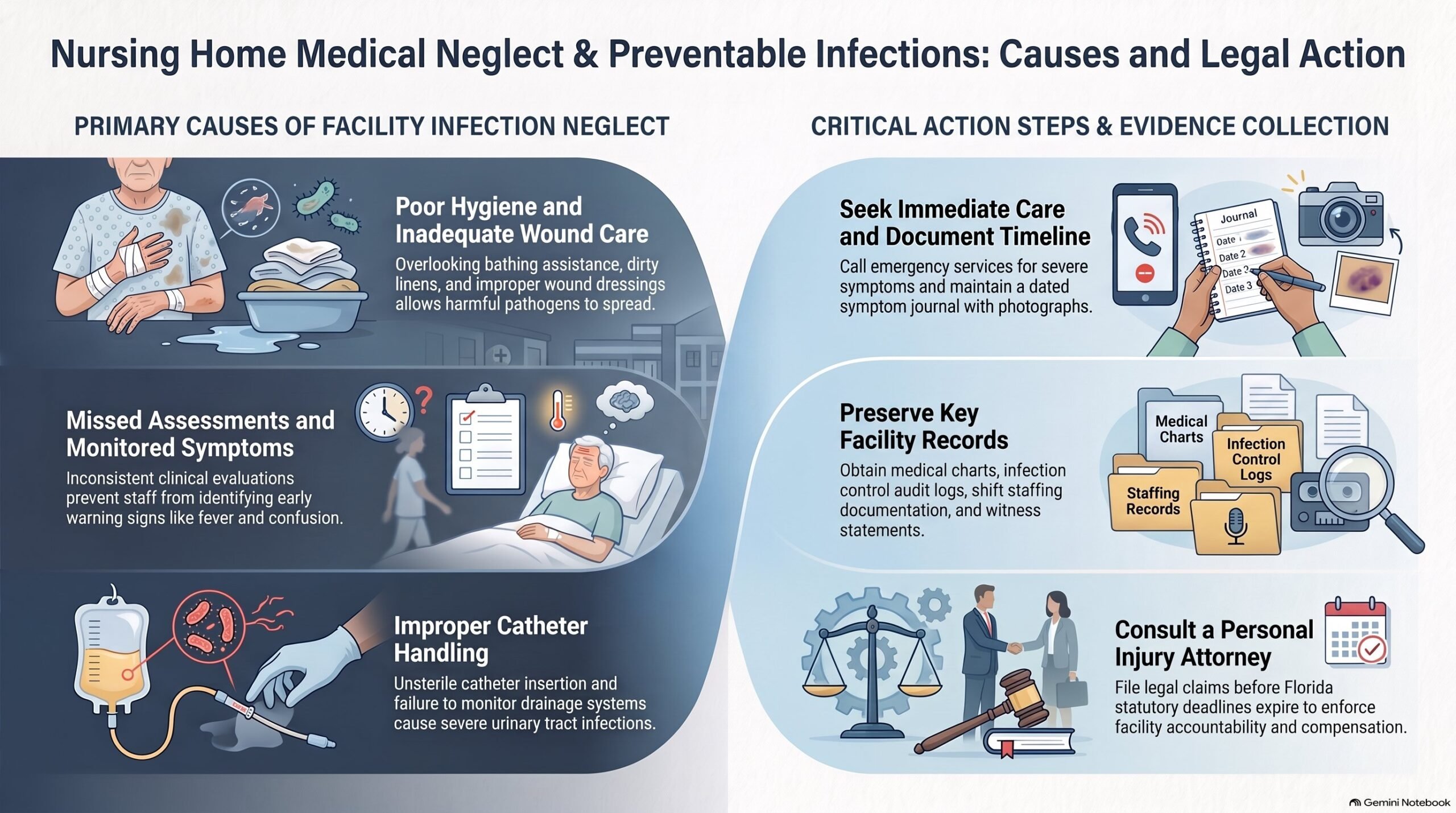
Common causes of nursing home infections include poor hygiene practices and inadequate wound care, which can allow harmful bacteria to spread or enter the body. Missed medical assessments may delay identifying and treating developing health problems. Improper catheter care can also increase infection risks, particularly when routine cleaning and monitoring are overlooked.
Poor Hygiene Practices
Poor hygiene practices in a nursing home can expose residents to preventable infections and signal broader failures in medical care. Residents who cannot bathe independently may depend on staff for regular Bathing Assistance, clean clothing, and basic grooming. When caregivers overlook these needs, bacteria and other pathogens can spread through close contact or contaminated surfaces. Facilities should maintain clear hygiene schedules, provide supplies, and monitor whether residents receive appropriate support. Linen Sanitation is also vital. Sheets, towels, and clothing should be changed and laundered promptly when soiled, with procedures that limit cross-contamination. Staffing shortages, inadequate training, or weak supervision can contribute to missed hygiene tasks. Persistent lapses may increase infection risks and affect residents’ comfort and dignity. Families and advocates can document concerns and seek clarification about facility practices.
Inadequate Wound Care
Inadequate wound care can allow minor skin injuries, pressure sores, or surgical wounds to worsen and become infected. Nursing home residents may face greater risks when staff do not clean wounds properly, protect surrounding skin, or follow established treatment instructions. Accurate Wound staging helps caregivers describe a pressure injury’s severity and select appropriate care. Dressing selection also matters because coverings must suit the wound’s location, drainage, and recovery needs. When staff use unsuitable dressings, change them inconsistently, or fail to maintain clean supplies, tissue damage and infection may result. Facilities should provide trained personnel, necessary materials, and clear wound-care procedures. Careful, respectful treatment can preserve residents’ comfort and dignity while supporting recovery. Families who observe worsening wounds or signs of infection may document concerns and seek guidance about the resident’s care.
Missed Medical Assessments
Missed medical assessments can prevent nursing home staff from identifying infections, dehydration, medication reactions, or other changes in a resident’s condition. When staff do not monitor residents consistently, early warning signs may go unnoticed, allowing manageable health concerns to worsen. Residents who have difficulty communicating symptoms may face particular risks, making careful observation and timely evaluation crucial.
Facilities should establish clear Assessment schedules based on each resident’s care plan, health status, and provider instructions. Staff should document observations, promptly report concerning changes, and ensure qualified clinicians evaluate residents when symptoms emerge. Clinical reassessments are also important after treatment begins or a resident’s condition changes, since an initial evaluation may no longer reflect current needs. Consistent assessments support informed care decisions and help protect residents from preventable complications, including infections that may require urgent medical attention.
Improper Catheter Care
Along with regular medical assessments, proper catheter care is necessary to reduce infection risks for nursing home residents. Staff should follow established hygiene procedures, use clean equipment, and handle the catheter carefully to protect residents from avoidable harm. Trained personnel must insert catheters using sterile technique, with a clear medical reason for placement and regular review of whether the device remains necessary. Poor hygiene, unnecessary catheter use, or improper handling can allow bacteria to enter the urinary tract and cause serious infections. Staff should also secure the tubing to prevent pulling, keep the drainage bag below bladder level, and avoid kinks that obstruct flow. Consistent drainage monitoring helps identify changes in urine, reduced output, leaks, or discomfort. Timely reporting and medical evaluation can support prompt treatment and safer care.
Don’t Wait. Call Our Florida Personal Injury Lawyers Now!


Legal Rights of Tampa Nursing Home Medical Neglect & Infections Injury Victims
When nursing home medical neglect leads to an infection or related injury, residents may have legal rights under Florida law. These protections may allow an injured resident or authorized representative to seek accountability and compensation when a facility fails to meet its duties. Resident rights include appropriate care, dignity, and access to medical attention. Regulatory oversight also establishes standards for licensed facilities and provides channels for reporting concerns.
Depending on the evidence and circumstances, potential legal options may include:
- Filing a complaint with the Florida Agency for Health Care Administration.
- Seeking records that document care, treatment, and the resulting injury.
- Pursuing a civil claim for eligible losses, such as medical expenses and pain.
- Consulting a lawyer to assess deadlines, evidence, and available remedies.
A claim generally requires proof that a responsible party breached a legal duty and that the breach caused harm. Prompt guidance can help families preserve records and understand their options. Legal action may also support safer care for other residents by encouraging facilities to honor their obligations.
Why Do Tampa Nursing Home Medical Neglect & Infections Injuries Happen?
Why do infections and related injuries occur in Tampa nursing homes? Residents may be more vulnerable because of age, chronic conditions, limited mobility, or weakened immune systems. These factors increase the consequences of lapses in routine care, making consistent prevention and timely treatment necessary.
Infections can develop when staff do not follow hand hygiene procedures, maintain clean living areas, or use proper wound and catheter care. Inadequate repositioning and assistance with bathing may also contribute to skin breakdown, pressure injuries, and infection. Poor nutrition, dehydration, and delayed medical attention can further weaken a resident’s ability to recover.
Facilities may also fail to monitor changes in a resident’s condition or communicate concerns to clinicians and family members. Recognizing Infection warning signs, such as fever, confusion, worsening pain, or unusual drainage, supports prompt evaluation. When staffing shortages, inadequate training, or weak infection-control practices persist, preventable infection risks may increase and residents can suffer serious harm.
What Should You Do After a Tampa Nursing Home Medical Neglect & Infections Injury?
After a suspected medical neglect injury or infection, the resident should receive prompt medical care to address immediate health risks. Family members should document symptoms, treatment, and communications with the facility and, when possible, preserve relevant records. They may also contact a nursing home neglect lawyer to discuss the circumstances and potential next steps.
Seek Immediate Medical Care
Prompt medical evaluation is essential if a nursing home resident shows signs of infection or has suffered harm from inadequate care. Staff or family members should arrange prompt assessment by a qualified medical professional, even when symptoms initially appear mild. Infections and untreated injuries can worsen quickly, particularly for residents with chronic conditions or weakened immune systems. Emergency symptoms, including difficulty breathing, sudden confusion, high fever, severe pain, or loss of consciousness, require an immediate call to emergency services. Responders can determine whether hospital transport is necessary and provide urgent treatment during transfer. If the condition is concerning but not immediately life-threatening, the resident should still receive timely evaluation by a clinician. Do not delay necessary care while responsibility is debated; the resident’s health and safety remain the priority throughout the response.
Document the Injury
Documenting the resident’s injury and symptoms can help preserve an accurate account of the care received and the harm that followed. A family member or other representative can create an Injury timeline that records when symptoms first appeared, changes in the resident’s condition, and when staff was notified. Note dates, times, names, and responses as precisely as possible. A symptom journal can describe pain, fever, confusion, skin changes, or other concerns, including their frequency and severity. Photographs may help show visible injuries or changes, provided they are taken respectfully and with attention to the resident’s privacy. Retain copies of discharge instructions, medication records, care plans, and relevant communications. Clear, organized documentation helps caregivers and medical professionals understand the sequence of events and supports continuity of care.
Contact a Nursing Home Neglect Lawyer
When a Tampa nursing home resident develops an infection or other injury that may involve inadequate medical care, the resident or a representative may benefit from consulting a nursing home neglect lawyer. A lawyer can review available records, incident reports, and communications with facility staff to assess whether care standards may have been breached. Prompt legal guidance may also help preserve relevant evidence and identify deadlines that could affect a claim.
During a Free consultation, the resident or representative can explain what happened and ask about possible next steps. The lawyer may discuss options for seeking accountability and compensation for medical expenses, pain, or other losses. If the matter warrants further action, legal representation can help manage communications, investigate the circumstances, and pursue a claim while the family remains focused on the resident’s care and well-being.
Don’t Wait. Call Our Florida Personal Injury Lawyers Now!
Critical Evidence in a Tampa Nursing Home Medical Neglect & Infections Injury Case
Evidence can help establish whether a nursing home failed to prevent, identify, or treat an infection. Relevant records may show what care was provided, how infection risks were managed, and whether staffing levels affected that care.
The following materials may be important in evaluating a Tampa nursing home medical neglect claim:
- Medical records
- Infection control logs
- Staffing documentation
- Witness statements
Medical Records
Medical records can reveal whether a Tampa nursing home recognized infection risks, responded to warning signs, and provided appropriate care. Entries may include assessments, symptoms, medication orders, treatment notes, physician communications, and changes in a resident’s condition. Collectively, these documents can help show whether staff acted promptly, followed clinical instructions, and informed the resident’s family when appropriate.
A careful review may also identify missing entries, unexplained delays, or differences between recorded care and the resident’s condition. Record retention matters because complete, dated records can preserve evidence needed to understand what happened and when. Privacy protections govern access and disclosure, and authorized representatives may request records under relevant rules. Families seeking to protect a loved one can preserve copies and note questions for qualified professionals. A focused review can support accountability and help identify whether care met the resident’s needs.
Infection Control Logs
Infection control logs can help establish whether a Tampa nursing home identified and addressed risks that may have contributed to a resident’s infection. These records may document symptoms, suspected sources, isolation measures, cleaning procedures, and notifications to appropriate decision-makers. A careful review can show whether the facility responded promptly and followed its infection prevention policies.
Log Audit Trails may reveal when entries were created or changed, helping reviewers assess the records’ completeness and reliability. Infection Trendlines can also show whether similar infections occurred among residents or in particular areas, potentially indicating a broader concern requiring investigation. These patterns may help clarify whether precautions were adequate and whether corrective steps followed. Preserving and comparing logs with other relevant records can support a fair assessment of the care provided and help protect residents from preventable harm.
Staffing Documentation
Staffing documentation can help determine whether a Tampa nursing home had enough qualified personnel to provide timely care and follow infection prevention procedures. Staffing records may show how many nurses and aides were assigned to each unit, their credentials, and whether vacancies or absences left a shift understaffed. Shift documentation can also clarify who was responsible for monitoring residents, administering medications, assisting with hygiene, and responding to changes in condition. These records may be compared with care plans, treatment notes, and infection control policies to identify gaps in supervision or delayed care. In an infection-related case, staffing levels may help explain whether staff had adequate time to perform hand hygiene, use protective equipment, and follow isolation measures. Accurate documentation supports a careful review of care and accountability for residents’ safety.
Witness Statements
When a Tampa nursing home resident develops an infection or suffers harm from delayed care, witness statements can help establish what staff observed and how they responded. Residents, family members, visitors, and employees may describe changes in condition, requests for assistance, hygiene concerns, or delays in contacting medical professionals. These accounts can help clarify when symptoms appeared and whether the facility followed appropriate procedures.
Witness credibility depends on a person’s opportunity to observe events, ability to recall details, and willingness to provide an accurate account. Statement consistency across interviews and supporting records may strengthen an account, while differences may require careful review rather than automatic dismissal. Investigators may compare statements with staffing documentation, medical records, and incident reports. Clear, timely accounts can help identify unanswered questions and support a fair assessment of whether neglect contributed to the resident’s injury.
Long-Term Effects of Tampa Nursing Home Medical Neglect & Infections Injuries
Medical neglect and infections in a Tampa nursing home can lead to chronic health complications that persist after the initial injury. Some residents experience lasting mobility limitations that affect their independence and daily care needs. Emotional distress or cognitive changes may also continue, requiring ongoing assessment and support.
Chronic Health Complications
Chronic health complications can emerge when nursing home neglect or untreated infections cause lasting damage to a resident’s body. An infection that spreads or remains untreated may impair organ function, weaken immune defenses, or worsen existing conditions. Dehydration, poor nutrition, and delayed medical attention can also contribute to persistent health problems that require ongoing care.
Residents may need careful chronic disease management after a preventable injury or infection, including regular monitoring and coordinated treatment. Providers should review prescriptions to identify medication interaction risks, especially when new drugs are added or a resident’s condition changes. Families and care teams can support safer outcomes by documenting symptoms, asking questions, and seeking timely clinical evaluations. Clear records may help determine whether appropriate care was provided and identify steps needed to protect the resident’s health and dignity.
Lasting Mobility Limitations
After an untreated infection or preventable injury, a nursing home resident may experience lasting mobility limitations that interfere with walking, transferring, or completing daily activities. Muscle weakness, joint stiffness, nerve damage, or prolonged bed rest can reduce balance and endurance. These impairments may increase fall risk and make residents more dependent on staff for bathing, dressing, and movement between rooms. A timely rehabilitation plan can help preserve function and reduce avoidable decline. Physical therapists may use Gait retraining to improve walking mechanics, strength, and stability. Occupational therapists can recommend adaptive equipment, such as walkers, transfer aids, or grab bars, to support safer movement. Care plans should reflect each resident’s abilities and medical needs, and staff should follow assistance instructions consistently. When neglect causes preventable harm, records can help clarify its impact on mobility.
Emotional and Cognitive Effects
When nursing home neglect or an untreated infection disrupts a resident’s health and routine, emotional and cognitive effects may persist beyond the immediate illness. Residents may experience Emotional distress, including anxiety, sadness, fear, or withdrawal from family and activities. These changes can follow painful treatment, loss of independence, or uncertainty about whether caregivers will respond to future needs. Some residents also develop cognitive decline, such as difficulty concentrating, remembering information, or making decisions. Infection, medication complications, dehydration, and prolonged isolation may contribute to these problems, although individual causes vary. Families and care teams can support residents by documenting changes, arranging appropriate medical and mental health evaluations, and maintaining familiar routines. Timely attention may help identify treatable conditions, preserve dignity, and reduce further harm. Persistent symptoms warrant professional assessment and careful follow-up.
Proving Liability in Tampa Nursing Home Medical Neglect & Infections Injury Cases
Proving liability in a Tampa nursing home medical neglect and infection case requires evidence that the facility failed to meet accepted standards of care and that the failure caused or worsened a resident’s injuries. Relevant records may include care plans, medication logs, infection-control procedures, staffing schedules, and clinical notes documenting changes in the resident’s condition. These materials can show whether staff recognized warning signs, followed physician instructions, and arranged timely treatment.
Medical experts may compare the facility’s actions with accepted nursing and infection-prevention standards. They can explain whether delayed assessment, poor wound care, missed medication, inadequate hygiene, or unsafe catheter practices contributed to an infection or its progression. Witness statements and inspection findings may also clarify what occurred.
Facility accountability depends on connecting the evidence to a specific breach and resulting harm. Regulatory violations may support a claim, but they do not automatically establish liability. A careful review can help families seek answers and protect residents from preventable neglect. Each case turns on its facts and applicable law.
Dealing With Insurance Companies After a Tampa Nursing Home Medical Neglect & Infections Injury
Once evidence of possible neglect or infection-related harm has been gathered, families may face questions from insurers representing the nursing home or its corporate owner. These discussions can shape how insurers understand the resident’s injuries, care needs, and financial losses. A family seeking to protect a vulnerable resident should respond carefully and keep records of calls, letters, and requests.
Insurance adjuster tactics may include asking for recorded statements, requesting broad medical authorizations, or suggesting that an early offer resolves the matter. Review such requests before responding, particularly when the resident’s condition is changing or the full impact of an infection remains unclear. Families should avoid speculation and share only accurate, relevant information.
Clear settlement communication helps reduce misunderstandings. Written correspondence can confirm what was requested, identify documents supplied, and preserve a record of the insurer’s position. A qualified attorney can assess proposed terms, explain potential consequences, and help ensure any resolution accounts for ongoing care needs and the resident’s dignity.
What to Expect During a Tampa Nursing Home Medical Neglect & Infections Injury Claim Process
A nursing home medical neglect and infection claim typically begins with an evaluation of the resident’s injuries, care history, and potential legal issues. The process then involves collecting medical records and other evidence, followed by filing a claim against the responsible parties. Resolution may come through settlement or litigation, with recovery focused on compensation for documented harm and related losses.
Initial Case Evaluation
How does an initial case evaluation begin after suspected medical neglect or an infection in a Tampa nursing home? During an initial consultation, an attorney typically asks the resident or family to describe the concerns, the resident’s condition, and the care provided by the facility. This discussion helps clarify the timeline, identify immediate health or safety needs, and understand what outcome the family hopes to achieve. Case screening then considers whether the reported circumstances may support a legal claim under Florida law, including whether the facility may have failed to meet its responsibilities. The attorney may explain potential legal options, deadlines, and practical considerations, while noting that an evaluation does not guarantee a particular result. Families can ask questions and decide whether to proceed. The focus remains on protecting the resident’s dignity and interests.
Evidence Collection
After an initial evaluation, evidence collection helps clarify what care the resident received and whether the facility may have failed to meet its responsibilities. Relevant records may include medical charts, medication administration logs, infection-control protocols, staffing schedules, and communications with family members. Photographs, incident reports, and notes documenting changes in the resident’s condition can also help establish a timeline. Evidence preservation is important because records may be altered, lost, or routinely discarded. A representative may request that the facility retain relevant documents and electronic data while gathering materials lawfully and respecting the resident’s privacy. Expert consultation can help assess whether the care provided met accepted standards and whether delays or omissions contributed to an infection or injury. This review supports a clearer understanding of the resident’s experience and the issues requiring further investigation.
Claim Filing
Once the evidence has been reviewed, filing a claim begins a formal process to seek compensation and determine whether the nursing home may be legally responsible. The resident or an authorized representative generally submits a written notice or complaint describing the alleged neglect, resulting infection, and harm. The filing identifies the parties involved and may include medical records, care plans, and other supporting documentation. Claim eligibility depends on the resident’s circumstances, the available evidence, and whether the facts support a legal basis for responsibility. Filing deadlines can limit the time available to act, so assess applicable time limits and any required notice procedures promptly. During the initial review, the facility or its insurer may request information and evaluate the allegations. Careful, accurate filings help protect the resident’s interests and support accountability for safe, dignified care.
Resolution And Recovery
After a claim is filed and reviewed, resolution may involve settlement negotiations, mediation, or a court decision, depending on the evidence and the parties’ positions. Each path requires careful consideration of medical records, facility policies, expert opinions, and the injured resident’s needs. Settlement options may provide compensation without a trial, while mediation can help the parties explore a mutually acceptable outcome. If negotiations do not resolve the dispute, a court may evaluate the evidence and determine responsibility and damages.
Any proposed resolution should account for documented losses, including treatment costs, ongoing care, and the effects of the infection or neglect. Recovery planning can help families and care providers identify needed services and protect the resident’s well-being. A lawyer can explain available choices, review proposed terms, and support informed decisions throughout the process.
Compensation for Tampa Nursing Home Medical Neglect & Infections Injury Damages
When nursing home medical neglect or an infection causes injury, compensation may address the resident’s resulting losses and harm. The amount depends on the evidence connecting the facility’s conduct to the injury and its consequences. Records of assessments, treatment, infection-control practices, and communications can help establish what occurred and whether reasonable care was provided.
Damage Calculation considers the resident’s medical needs, recovery, and documented effects on daily life. Relevant evidence may include hospital and physician records, care plans, photographs, and testimony from qualified professionals. A careful review can also identify future treatment or support needs related to the injury.
Settlement Valuation requires evaluating the strength of the evidence, applicable legal standards, and the likely course of recovery. No fixed amount applies to every case, and outcomes depend on the facts of each case. Families seeking accountability can preserve records and obtain guidance before accepting an offer. This process supports an informed resolution while keeping the resident’s dignity, safety, and well-being central.
Economic vs Non-Economic Damages in Tampa Nursing Home Medical Neglect & Infections Cases
Damages in Tampa nursing home medical neglect and infection cases may include economic losses, such as medical expenses and other measurable costs. Non-economic damages may address pain, suffering, and loss of dignity resulting from the resident’s injuries. Establishing both categories requires evidence connecting the neglect to the harm and documenting the resulting losses.
Economic Damages
In Tampa nursing home medical neglect and infection cases, economic damages compensate residents for measurable financial losses caused by substandard care. These losses may include hospital bills, physician fees, medication costs, diagnostic testing, and rehabilitation or specialized equipment expenses. Records such as invoices, treatment statements, and insurance documents can help establish the amounts incurred and connect them to the neglect or infection.
A resident may also require Future care, including ongoing nursing assistance, wound treatment, infection monitoring, or therapy. Medical assessments and care plans can help estimate these expected costs. If an injury prevents a resident from working, or a family caregiver must reduce work hours to provide necessary support, lost income may be relevant when supported by reliable documentation. Careful accounting allows families and legal representatives to present a clear, evidence-based measure of financial harm.
Non-Economic Damages
Alongside measurable financial losses, non-economic damages may address the physical pain, emotional distress, and loss of dignity a resident experiences because of medical neglect or an infection. These harms differ from expenses such as treatment costs or lost income because they concern personal suffering rather than financial impact. Pain and suffering may include discomfort from untreated wounds, complications, or prolonged illness. Emotional distress can involve fear, anxiety, sadness, or loss of trust after a resident’s needs are ignored. A serious infection may also disrupt sleep, independence, relationships, and participation in daily activities. Recognizing these effects acknowledges that residents merit respectful care and that neglect can affect more than physical health. The nature and availability of non-economic damages depend on the circumstances and applicable Florida law, including statutory limits.
Proving Your Losses
Establishing losses caused by nursing home medical neglect or infection requires evidence linking the resident’s harm to the facility’s conduct. Records may include medical charts, infection reports, photographs, witness statements, and expert opinions addressing how the neglect contributed to the injury.
Economic damages cover measurable financial losses. Documenting Expenses involves retaining invoices, pharmacy receipts, hospital bills, transportation costs, and records of services needed after discharge. These materials help show the financial impact of treatment and additional care.
Calculating Future Costs may require assessments from medical and financial professionals. Their evaluations can estimate ongoing treatment, rehabilitation, medication, personal assistance, or changes to the resident’s living arrangements. Non-economic damages address harm that lacks a direct price, such as pain, emotional distress, and reduced quality of life. A clear, organized account of both categories helps explain the resident’s needs and the support required to pursue accountability.
Don’t Wait. Call Our Florida Personal Injury Lawyers Now!
When a Tampa Nursing Home Medical Neglect & Infections Injury Case Goes to Trial vs Settlement
Whether a Tampa nursing home medical neglect and infection case proceeds to trial or settles depends on the evidence, the extent of the resident’s injuries, and the parties’ willingness to resolve the claim. Settlement may provide a more predictable resolution and avoid the time, expense, and uncertainty of a courtroom proceeding. It can also allow a family to focus on the resident’s care rather than prolonged litigation. However, settlement requires agreement on the claim’s value and terms.
If negotiations do not produce an acceptable offer, the case may proceed to trial. The parties present records, expert opinions, and trial testimony concerning the facility’s care and the resident’s resulting harm. A judge or jury evaluates the evidence, and in a jury trial, deliberations determine the outcome. A trial can provide a public determination, but no result is guaranteed. The decision to settle or proceed to trial depends on the available evidence, the risks of each path, and the family’s priorities for accountability and recovery.
Florida Laws That May Affect Your Tampa Nursing Home Medical Neglect & Infections Case
Florida law sets the standards that may shape a Tampa nursing home medical neglect and infection claim. The Florida Statutes address nursing home residents’ rights, facility duties, and remedies when inadequate care causes harm. Applicable rules may depend on the resident’s condition, the facility’s conduct, and the evidence linking a lapse in care to an infection or injury.
Key legal considerations may include:
- Residents’ rights to adequate care, dignity, and protection from neglect.
- Facility obligations to maintain appropriate staffing, supervision, and infection-control practices.
- Evidence showing whether a breach of duty caused or worsened the resident’s condition.
- Presuit requirements that may apply to claims involving medical negligence.
These rules can help families and advocates assess whether care met required standards and identify records or testimony needed to explain what occurred. Because statutory provisions and procedural obligations can vary by claim, legal review may clarify which rules apply. A careful evaluation can support accountability while respecting the resident’s dignity and needs.
The Statute of Limitations for Tampa Nursing Home Medical Neglect & Infections Injury Cases
How long a family has to pursue a Tampa nursing home medical neglect or infection claim depends on the facts and legal basis of the case. Florida law sets different filing periods for negligence, wrongful death, and medical malpractice claims. The applicable deadline may depend on when the injury occurred, when it was discovered, and whether the facility’s conduct falls within a special legal category.
Discovery deadlines can be especially important when an infection or untreated condition was not recognized promptly. Some claims also require presuit notice and investigation, which can affect the time available to file. Families should not assume that a delayed diagnosis automatically extends the filing period.
Tolling exceptions may apply in limited circumstances, including certain cases involving minors or concealment of facts. These rules are specific and do not extend every deadline. Missing the applicable limit can prevent a claim from proceeding, regardless of the seriousness of the harm. Timely attention helps preserve options to seek accountability and protect other residents.
How a Tampa Nursing Home Medical Neglect & Infections Lawyer Can Help You
When a nursing home resident develops an infection or suffers harm from inadequate medical care, a Tampa nursing home medical neglect and infections lawyer can assess whether the facility failed to meet its legal duties. The lawyer can explain available legal options and help families pursue a claim focused on the resident’s safety, dignity, and losses.
Legal support may include:
- Reviewing medical records, care plans, and facility policies to identify lapses in monitoring or treatment.
- Consulting qualified medical professionals to evaluate whether the care provided met accepted standards.
- Gathering evidence, such as infection-control records, staff communications, and witness accounts.
- Seeking compensation for medical expenses, pain, and other legally recognized harm.
Through careful investigation, counsel can clarify how a facility’s actions or omissions contributed to an injury. This work supports Facility accountability and may encourage safer practices for other residents. A lawyer can also help families by communicating with the facility, organizing detailed information, and presenting the resident’s interests in legal proceedings. The approach remains centered on evidence and the resident’s welfare.
When to Contact a Tampa Nursing Home Medical Neglect & Infections Lawyer
Prompt action matters when a nursing home resident shows signs of infection, worsening health, or inadequate medical attention. Families and other concerned individuals should seek guidance when a facility delays treatment, fails to notify them about a change in condition, or does not follow a care plan. Recognizing Early Warning Signs may include unexplained fever, confusion, untreated wounds, dehydration, or repeated infections. These concerns warrant prompt communication with the facility and, when appropriate, a medical professional.
A lawyer may be contacted when records, staff responses, or the resident’s condition raise questions about whether reasonable care was provided. Early consultation can help preserve relevant documents and clarify possible next steps, without requiring a family to reach a conclusion about fault beforehand. Choosing Legal Representation involves identifying counsel familiar with nursing home medical neglect and infection concerns in Tampa. Timely advice can help families protect a resident’s interests while they continue seeking appropriate care and answers from the facility.
Why You Need an Experienced Tampa Nursing Home Medical Neglect & Infections Lawyer
An experienced Tampa nursing home medical neglect and infections lawyer can help families assess whether a facility’s care fell below applicable standards and contributed to a resident’s harm. These cases may involve missed symptoms, delayed treatment, poor infection control, or inadequate monitoring. Attorney experience can help explain how medical records, care plans, staffing information, and expert opinions may clarify what occurred and whether the resident suffered preventable harm.
A lawyer can also help families understand legal rights and preserve relevant evidence while keeping the resident’s needs as the priority. This support may reduce the burden on relatives seeking answers and a safer care environment for others. When evidence supports a claim, legal action can promote facility accountability and encourage attention to practices that place residents at risk. A careful review may identify responsible parties and available remedies, while keeping the focus on the resident’s dignity, health, and well-being. Such guidance can help families pursue answers through a process grounded in facts and applicable law.
How to Choose the Right Tampa Nursing Home Medical Neglect & Infections Lawyer for Your Case
Selecting the right Tampa nursing home medical neglect and infections lawyer requires careful consideration of the lawyer’s experience, investigative approach, and ability to explain the legal process. Families seeking accountability for a vulnerable resident should assess whether counsel has handled cases involving untreated infections, medication errors, inadequate monitoring, or delayed medical care. Relevant experience can help an attorney identify records, witnesses, and expert opinions needed to evaluate a claim.
Review attorney credentials, including Florida licensure, disciplinary history, and experience with nursing home injury matters. A qualified lawyer should describe how the investigation will proceed, what evidence may be important, and which legal options could apply without promising a particular result. Clear client communication is also vital. The attorney should answer questions directly, provide reasonable updates, and explain costs and decisions in understandable terms.
During an initial consultation, families can ask who will manage the case and how concerns about the resident’s care will be addressed. Careful comparison helps families choose counsel prepared to pursue a fair, evidence-based resolution.
About The Law Offices of Anidjar & Levine
The Law Offices of Anidjar & Levine represents individuals and families in injury and negligence matters, including claims involving nursing home care.
The firm assists clients seeking answers when a resident suffers harm from inadequate medical attention, poor infection control, or other failures in care.
Its attorneys review available records, explain legal options, and help families understand the steps involved in pursuing a claim.
The firm’s history reflects its work on behalf of people facing serious injuries and the consequences of negligence.
In nursing home cases, the firm may investigate care decisions, staffing concerns, facility policies, and whether appropriate safeguards were followed.
Each matter depends on its facts, and no outcome can be guaranteed.
Community involvement is also part of the firm’s public presence.
By supporting local causes and engaging with communities, the firm seeks to contribute beyond legal representation.
Families evaluating counsel can ask about experience, communication practices, and how the firm would approach their loved one’s circumstances.
Frequently Asked Questions
Can a Nursing Home Be Cited for Infection-Control Violations Without Causing a Resident’s Infection?
Yes. A nursing home may be cited for infection-control violations even when no resident develops an infection. Regulatory inspection findings can identify failures to follow infection prevention protocols, such as inadequate hand hygiene, improper equipment cleaning, or unsafe isolation practices. Citations generally address noncompliance and potential risk, not proof that harm occurred. If a resident later becomes ill, that separate event may warrant review of the facility’s conduct and the circumstances surrounding the infection.
Are Families Entitled to Receive Notice When a Tampa Nursing Home Has an Infectious Disease Outbreak?
Families are not automatically entitled to direct notice of every infectious disease outbreak at a Tampa nursing home. Federal rules generally require facilities to inform residents and representatives about specified communicable diseases, such as COVID-19, and to provide timely updates when cases occur. Outbreak notification duties may also depend on Florida reporting requirements and public health guidance. Clear family communication is crucial, and representatives may ask the facility how it is protecting residents and sharing relevant information.
Can a Resident Be Transferred to Another Facility Because of Suspected Neglect or Infection?
Yes, a resident may be transferred when suspected neglect or infection makes continued placement unsafe, but the decision must follow applicable law and protect the resident’s rights. Transfer rights generally require proper notice, a documented reason, and information about appeal options, except when an emergency justifies immediate action. Families or authorized representatives should request medical records, discharge documents, and details about the receiving facility, while coordinating with clinicians to support continuity of care and safe emergency placement.
What Happens if a Resident Develops an Infection After Being Discharged From a Nursing Home?
If a resident develops an infection after discharge, prompt medical assessment can identify its cause and guide treatment. Report post-discharge symptoms, including fever, worsening pain, confusion, or wound changes, to a clinician without delay. Infection follow-up may include testing, medication, and review of discharge instructions. Records can help determine whether warning signs were missed or care was inadequate. A qualified attorney can assess whether the facility may bear responsibility.
Can a Nursing Home Retaliate Against Residents or Families for Reporting Unsafe Conditions?
A nursing home generally may not punish residents or families for reporting unsafe conditions, requesting care, or cooperating with an investigation. Federal and state retaliation protections may prohibit threats, reduced services, intimidation, or other adverse treatment. Complaint confidentiality may be available, although investigators might need identifying details to assess allegations. Families should document incidents, preserve communications, and report suspected retaliation to the appropriate state agency or ombudsman, seeking legal guidance when safety or care is affected.
—————————
Medical neglect and preventable infections can cause serious harm to nursing home residents and require careful investigation.
Families in Tampa should document concerns, seek appropriate medical care, and promptly review potential legal options.
An experienced nursing home injury lawyer can assess the available evidence, explain applicable rights, and pursue accountability where the facts support a claim.
The Law Offices of Anidjar and Levine can help families understand the next steps and protect a resident’s interests, and a Tampa Personal Injury Lawyer can provide guidance on available legal options.

