
The Law Offices of Anidjar and Levine helps injured Tampa policyholders challenge unfair insurance delays, denials, and low settlement offers when an insurer puts its interests ahead of a valid claim.
Our team reviews your policy, claim history, medical records, and insurer communications to identify bad-faith conduct and develop a focused strategy.
We can communicate directly with the carrier, preserve crucial evidence, and pursue damages when misconduct causes financial harm.
If your claim involves a crash, a Tampa Car Accident Lawyer can help you understand your rights, options, and next steps.
Main Takeaways
- A Tampa bad-faith insurance injury lawyer reviews policies, medical records, claim history, and insurer communications to identify unfair claim handling.
- Bad faith may involve unreasonable denials, delayed payments, lowball offers, incomplete investigations, or misuse of policy exclusions.
- Florida law requires insurers to investigate promptly, communicate honestly, and provide clear reasons for denials or reduced payments.
- Preserve claim evidence, including medical bills, insurer messages, receipts, missed work records, and daily notes about injury limitations.
- Speak with a lawyer before making recorded statements to avoid insurer questions that minimize harm, shift blame, or limit coverage.
How We Can Help With Your Tampa Bad Faith Insurance Injury Claim
When an insurer refuses to honor its obligations, we step in to protect your rights and pursue the compensation you’re owed. We review your policy, claim history, medical records, and insurer communications to identify unfair delays, improper denials, or undervalued payments. Our team examines policy exclusions and coverage gaps, then explains how they may affect your recovery without allowing the insurer to misuse them.
We build a focused claim strategy, gather supporting evidence, consult qualified professionals when needed, and communicate directly with the insurance company on your behalf. You can continue caring for your family, your health, and your community while we handle the legal burden. If negotiations fail, we prepare your case for litigation and pursue accountability through every available remedy. Our goal is to help you secure fair compensation, restore stability, and move forward with confidence after an insurer’s wrongful conduct has disrupted your life and service to others.
Understanding Tampa Bad Faith Insurance Injury Cases
Although every insurance dispute has unique facts, a Tampa bad faith insurance injury case generally begins with an insurer’s failure to handle a valid claim fairly, promptly, or honestly. We help you understand whether the insurer respected its duties while you focused on recovery, caregiving, and meeting daily obligations.
These cases often involve more than a simple disagreement about value. We review the policy, communications, medical records, and payment history to determine whether the insurer placed its interests ahead of yours. Unfair settlement practices may appear when an insurer undervalues documented losses, delays meaningful responses, or pressures you to accept less than the claim warrants. Claim investigation errors can also affect the outcome when adjusters overlook records, ignore witnesses, or fail to evaluate the full impact of an injury.
Common Causes of Tampa Bad Faith Insurance
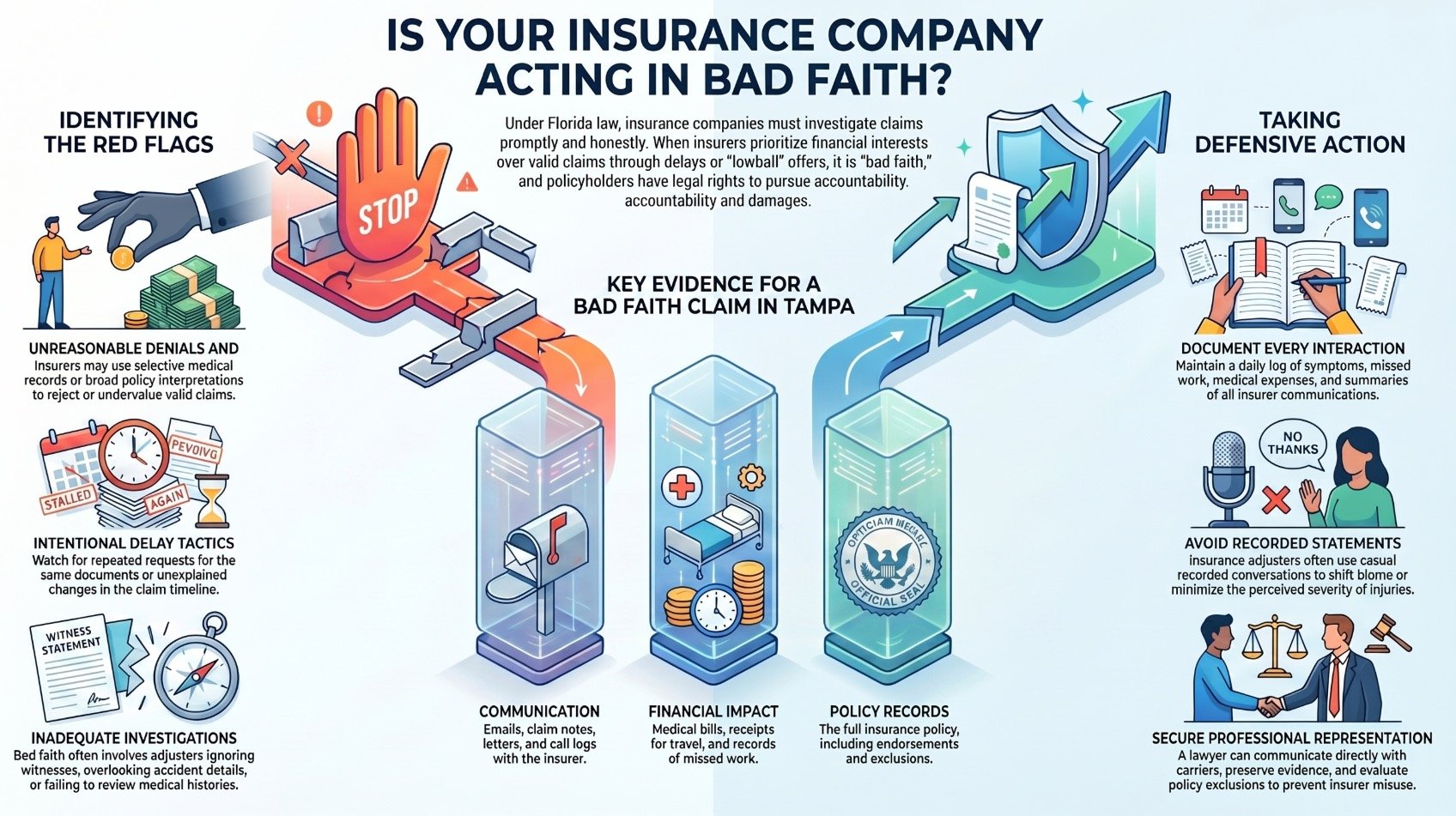
We often see bad-faith insurance when insurers deny valid claims without a reasonable basis, delay payments, or fail to conduct adequate investigations. We also recognize that lowball settlement offers can pressure you into accepting less than your claim may be worth. By identifying these tactics early, we can help you better understand whether an insurer has acted unfairly under Florida law.
Unreasonable Claim Denials
Because insurers control the claim process, an unreasonable denial can leave an injured person without the benefits they’re owed at a pivotal time. We often see denials based on incomplete reviews, selective use of medical records, or conclusions that ignore clear evidence of injury and loss. Unfair policy interpretations may also turn valid claims into rejected ones, especially when an insurer reads exclusions broadly and coverage duties narrowly. We help you identify whether the denial reflects a fair dispute or conduct that placed company interests above your lawful rights. Improper benefit calculations can also support wrongful denial when an insurer undervalues covered losses, then uses that reduced figure to reject payment. By examining the policy, evidence, and stated reasons, we pursue accountability on your behalf.
Delayed Payment Tactics
When an insurer delays payment without a valid reason, financial pressure can force injured people to accept less than they’re owed or wait while bills and losses continue to grow. We recognize how settlement delays can disrupt your recovery, your household, and your ability to serve those who depend on you. Delayed paperwork, repeated requests for the same documents, or unexplained changes in the claim timeline may signal improper insurer behavior. We examine whether the carrier acted promptly, communicated clearly, and honored its obligations once liability and damages were reasonably established. You should not have to endure unnecessary delay tactics while medical expenses, lost income, and daily needs remain unresolved. We help identify patterns of delay and pursue accountability when payment is wrongfully withheld.
Inadequate Claim Investigations
An insurer can’t fairly deny or undervalue an injury claim without first conducting a thorough, timely, and objective investigation. When adjusters ignore medical records, fail to interview witnesses, or overlook accident details, they place their own interests above the duty owed to you. We see inadequate investigations create unnecessary coverage disputes, especially when insurers rely on incomplete facts to question responsibility or limit benefits.
We help you identify what the insurer should have reviewed and whether it failed to pursue available information. Proper evidence preservation often includes photos, reports, treatment records, communications, and witness statements. If an insurer closes its file too quickly or selectively reviews evidence, we can challenge that conduct and seek to hold the company accountable under Florida bad-faith principles.
Lowball Settlement Offers
A lowball settlement offer can signal that an insurer values its bottom line over its duty to resolve a valid injury claim fairly. We examine whether the offer reflects medical costs, lost income, pain, future care, and Coverage limits. When an adjuster ignores evidence or pressures you to accept less, we recognize how that conduct can harm your recovery and limit your options.
We help you respond with a focused claim strategy, not a rushed decision. That means documenting losses, challenging unsupported valuations, and tracking legal timelines that may affect your rights. If the insurer refuses to negotiate in good faith, we can evaluate whether its actions support a bad-faith claim. Our purpose is to help you hold yourself accountable while protecting the resources you need to rebuild.
Legal Rights of Tampa Bad Faith Insurance Injury Victims
Because insurers hold significant power during the claims process, Tampa injury victims have legal rights that protect them from unfair delays, lowball offers, and wrongful denials. We help you understand those rights so you can stand firm, serve your family’s needs, and pursue the benefits your policy promises.
Florida law requires insurers to handle claims fairly, investigate promptly, and communicate honestly. We also watch Coverage dispute deadlines and claim filing requirements, because missed dates can affect your ability to recover compensation.
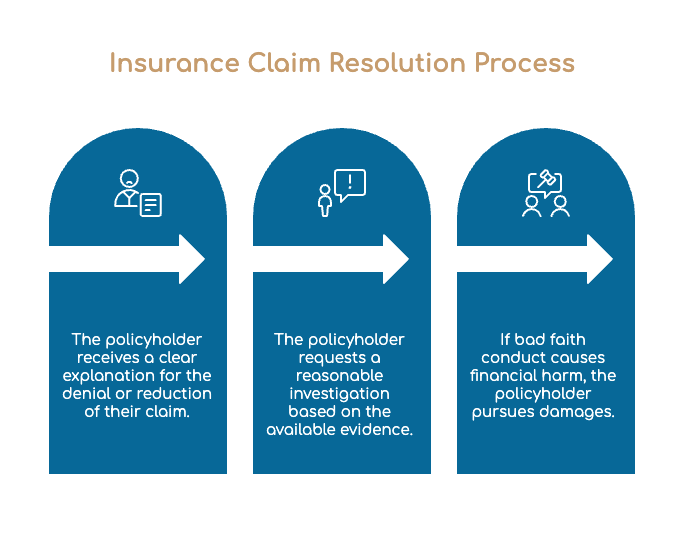
Your rights may include:
- Receiving a clear explanation for any denial or reduced payment
- Demanding a reasonable investigation based on the available evidence
- Pursuing damages when bad faith conduct causes financial harm
We encourage you to document communications, preserve medical records, and seek guidance before accepting any settlement. When an insurer fails to meet its obligations, we can help you respond with purpose, discipline, and a strong legal strategy to ensure accountability.
Why Do Tampa Bad Faith Insurance Injuries Happen?
Bad faith insurance injuries often happen when an insurer places its financial interests ahead of a policyholder’s valid claim, creating delays, denials, or inadequate payments that cause real harm. We see these problems arise when adjusters ignore evidence, undervalue medical losses, or pressure you to accept less than the claim merits. Insurers may also rely on vague insurance policy exclusions to avoid payment, even when the facts support coverage.
In injury claims, carriers sometimes misuse Comparative negligence by overstating your share of fault to reduce what they owe. This tactic can leave families, caregivers, and community members without the resources needed to recover and continue serving others. Bad faith may also result from poor claim investigations, missed deadlines, or internal practices that reward low settlements. When these choices disrupt care, income, and stability, the damage extends beyond paperwork. We recognize that fairness requires honest evaluation, timely communication, and respect for the promises made in the policy.
What Should You Do After a Tampa Bad Faith Insurance Injury?
After a Tampa bad faith insurance injury, we need to protect your claim from the start by documenting everything immediately, including communications, medical records, and claim details. We don’t recommend giving recorded statements to the insurer before you understand how your words may be used against you. We also urge you to contact a lawyer promptly, so we can evaluate the insurer’s conduct and preserve your rights.
Document Everything Immediately
When an insurer delays, denies, or undervalues an injury claim in Tampa, we need to preserve evidence before details fade or records become harder to obtain. We should track all medical visits, therapy sessions, prescriptions, referrals, and out-of-pocket costs because consistent records help show the full impact of the injury. We also need to preserve receipts for travel, medical devices, home assistance, and other necessary expenses. As we support your recovery and protect your rights, we should record communication with the insurer, including dates, names, claim numbers, and summaries of each exchange. We must document symptoms daily, noting pain levels, limitations, missed work, and the injury’s impact on caregiving, service, and normal responsibilities. These records provide a clear, reliable foundation for a bad-faith claim.
Avoid Recorded Statements
Before we give any recorded statement to an insurer, we should understand how quickly casual answers can be used to weaken a Tampa injury claim. Adjusters may sound courteous, yet their questions often seek details that limit coverage, shift blame, or minimize harm. We serve our families and communities best when we protect the truth with care, not haste.
Recorded Statement Risks include misstating dates, overlooking symptoms, guessing about fault, or describing pain before the full medical picture develops. We shouldn’t speculate, estimate, or agree to broad summaries. Instead, we can provide basic identifying information and request that all questions be submitted in writing. Careful Legal Strategy Planning helps preserve consistent facts, medical documentation, and the claim’s value. By pausing before speaking on record, we protect our ability to pursue fair treatment.
Contact A Lawyer
Why should we contact a lawyer promptly after a bad-faith insurance injury? We need guidance before the insurer shapes the record, minimizes harm, or continues a wrongful delay. When we involve counsel early, we preserve evidence, organize medical proof, and identify policy duties the insurer may have ignored. We also protect the people who depend on us because a careful legal strategy helps secure resources for treatment, stability, and ongoing service to their families or communities. A lawyer can communicate directly with the carrier, challenge unfair tactics, and build leverage in settlement through documented facts, deadlines, and legal pressure. We should not wait until frustration becomes a crisis. Prompt action allows us to pursue accountability with discipline, protect the value of our claim, and move forward with informed confidence.
Critical Evidence in a Tampa Bad Faith Insurance Injury Case
We help you build a bad-faith claim by identifying records that show what the insurer knew, when it knew it, and how it responded.
Core evidence often includes:
- Policy and claim documents
- Insurer communication records
- Medical treatment evidence and settlement demand proof
Together, these materials can show whether the insurer handled your Tampa injury claim fairly, promptly, and in good faith.
Policy And Claim Documents
When an insurer’s conduct becomes the focus of a bad faith claim, the policy and claim file often provide the clearest proof of what the company knew, what it owed, and how it responded. We review the full policy, endorsements, exclusions, limits, and conditions to identify the duties the insurer accepted when your claim arose. We also examine claim notes, coverage analyses, payment logs, recorded witness statements, and email claim summaries to determine whether the insurer evaluated the injury claim fairly and promptly. These materials may show missed facts, unreasonable interpretations, or delays that harmed you when help was needed most. By organizing these documents carefully, we can present a clear account of responsibility, protect your interests, and pursue accountability for conduct that failed to honor the insurer’s obligations.
Insurer Communication Records
Because communication records often reveal the insurer’s real-time decisions, they can become crucial evidence in a Tampa bad faith insurance injury case. We review emails, claim notes, letters, call logs, and internal messages to determine whether the insurer responded promptly, investigated fairly, and explained its position honestly. When we serve injured people, we look for delays, inconsistent statements, ignored evidence, or demands for information that has already been provided. Strong record-keeping helps preserve the timeline and shows whether the insurer placed its interests above your lawful claim. We also compare communications with witness statements to identify contradictions or proof that the insurer overlooked important facts. These records can demonstrate patterns of unfair handling and help us present a clear, reliable account of how the claim was managed from the beginning.
Medical Treatment Evidence
Medical treatment evidence often anchors a Tampa bad faith insurance injury case, since it shows the nature of the injury, the care required, and the insurer’s knowledge of the claim’s value. We review records, diagnostic imaging, prescriptions, referrals, surgical notes, therapy reports, and billing histories to connect your harm to the covered event. These materials help us show whether the insurer evaluated the claim with fairness, diligence, and respect for your needs. We also protect records from loss or alteration because missing evidence may support spoliation sanctions when neglect or misconduct harms the case. When medical issues require explanation, expert testimony can clarify causation, future care, impairment, and reasonable treatment costs. This evidence lets us serve you with accuracy, discipline, and accountability.
Settlement Demand Proof
After the insurer has a clear opportunity to settle, settlement demand proof can become central to a Tampa bad-faith insurance injury case. We look for the demand letter, delivery confirmations, policy-limit references, deadlines, releases, and any records showing the insurer knew the claim’s value. This evidence helps you serve the injured person’s interests by showing whether the insurer acted fairly when protection was possible. Our evidence strategy also examines emails, claim notes, adjuster logs, and supervisor reviews, because insurer recordkeeping often reveals what the company understood and when it understood it. If the insurer ignored a reasonable demand, delayed without cause, or failed to communicate, those records may support a bad-faith claim. We organize this proof carefully, so your claim presents a clear timeline.
Long-Term Effects of Tampa Bad Faith Insurance Injuries
We acknowledge that bad faith insurance conduct can affect you long after the initial injury, especially when delayed payments interfere with necessary medical care. We also recognize how mounting expenses, lost income, and unresolved claims can place serious financial strain on you and your family. We must also consider the emotional trauma that follows prolonged uncertainty, because stress, anxiety, and frustration can complicate your recovery.
Delayed Medical Recovery
When an insurer delays or wrongfully denies payment after a serious injury, your recovery can stall in ways that extend far beyond the original trauma. We often see delayed approvals interrupt therapy, expert evaluations, and follow-up testing, leaving you without timely guidance when your condition requires close attention. Misdiagnosis delays may occur when providers lack complete records or cannot order needed imaging. Insufficient care can allow pain, limited mobility, and complications to worsen, reducing your ability to recover safely and serve those who rely on you. Denial of treatment may prevent surgery, medication, or rehabilitation that could restore function. Lack of documentation also weakens continuity of care, because each provider needs accurate information to make sound decisions. We work to connect these delays to insurer misconduct and protect your recovery.
Financial Strain Impacts
Medical delays often create financial harm that lasts long after the initial denial. We understand that unpaid bills, lost income, and added transportation costs can limit how you care for your family and community. When an insurer acts in bad faith, you may drain savings, postpone needed treatment, or accept debt that should not be yours.
We help you assess coping strategies that protect necessary needs while preserving documentation. Careful records of invoices, wage loss, collection notices, and out-of-pocket expenses can support a stronger claim. We also explain legal options that may recover policy benefits, consequential damages, interest, and attorney’s fees when available. By acting promptly, we can confront the insurer’s conduct and pursue financial stability, so you can continue serving others.
Emotional Trauma Consequences
After an insurer delays or denies needed benefits, emotional trauma can become a lasting part of the injury. We often see you carrying fear, frustration, and mistrust while still trying to care for your family, work, and community. Bad faith conduct can intensify anxiety, disrupt sleep, and make medical recovery harder. We help you document these harms because emotional suffering merits the same careful attention as physical loss. Strong trauma restoration plans may include counseling, medical support, faith-based care, and practical guidance for daily stability. We also encourage healthy methods for coping with stress, especially when claim pressure affects relationships or service responsibilities. By addressing these consequences early, we protect your dignity, strengthen your claim, and support a more complete path toward recovery.
Proving Liability in Tampa Bad Faith Insurance Injury Cases
Because bad faith claims depend on more than a denied or delayed payment, proving liability in a Tampa bad faith insurance injury case requires a careful showing of what the insurer knew, what it failed to do, and how that failure harmed the injured person. We examine whether the carrier conducted a fair coverage investigation, reviewed medical evidence, and considered facts supporting timely relief. We also study claim documentation to identify ignored records, inconsistent explanations, or unreasonable demands placed on you.
Liability often turns on whether the insurer relied on policy exclusions honestly or used them to avoid responsibility. We measure the carrier’s conduct against its duty to act with reasonable care and good faith. When settlement negotiation opportunities existed, we asked whether the insurer protected your interests or exposed you to unnecessary loss. By building this record, we help show that the insurer’s conduct caused measurable harm.
Dealing With Insurance Companies After a Tampa Bad Faith Insurance Injury
When an insurer begins to control the pace of an injury claim, your communications can affect both the value of the claim and the strength of any later bad-faith case. We help you respond with care, accuracy, and purpose, so the record reflects cooperation rather than confusion. Every call, email, form, and medical update should support the preservation of truthful evidence, not give the insurer room to mischaracterize your injuries, treatment, or losses.
We also encourage you to avoid recorded statements without guidance, especially when adjusters ask narrow questions that omit important context. Our role is to help protect your interests while respecting the claim process and the people involved. Effective settlement negotiation strategies begin before a demand is made, through organized documentation, consistent messaging, and timely responses. When we communicate with insurers, we focus on facts, policy duties, and the real harm caused, so your claim remains clear, credible, and positioned for fair evaluation.
What to Expect During a Tampa Bad Faith Insurance Injury Claim Process
We begin your Tampa bad-faith insurance injury claim by reviewing the insurance policy and identifying conduct that may indicate the insurer failed to act fairly. We then gather claim evidence, including communications, medical records, payment history, and denial letters, to build a clear record of the insurer’s actions. If the insurer won’t resolve the claim properly, we negotiate from a position of strength or file suit to pursue the compensation you’re owed.
Reviewing The Insurance Policy
Before we evaluate whether an insurer acted in bad faith, we review the insurance policy governing the claim. We examine the declarations page, endorsements, definitions, coverage limits, duties after loss, notice requirements, and Policy exclusions that may affect your recovery. This step helps us understand what protection you purchased and what obligations the insurer accepted in return.
We also look for provisions that may support your position, including medical payments coverage, uninsured motorist coverage, or liability protection. As we review the policy with you, we explain each important section in clear terms so you can make informed decisions. Our goal is to serve you well by identifying available benefits, preserving your rights, and preparing the claim for the next stage.
Identifying Bad Faith Conduct
After we grasp the policy, we identify conduct that may show the insurer failed to handle your claim fairly and honestly. We look for claim-handling red flags, including unexplained delays, shifting reasons for denial, low offers without support, ignored communications, or failure to investigate available facts. These actions can harm you as you try to recover, support your family, and continue serving others responsibly.
We also explain evidence preservation tips without moving into collection steps. We urge you to avoid deleting emails, texts, voicemails, letters, claim portal messages, or payment records. We recommend noting dates of calls and keeping insurer communications in their original form. By identifying these patterns early, we can assess whether the insurer’s conduct may support a Tampa bad faith insurance injury claim under Florida law.
Gathering Claim Evidence
Once potential bad-faith conduct appears, our focus turns to gathering claim evidence showing what the insurer knew, when it knew it, and how it responded. We collect policy documents, claim correspondence, medical records, repair estimates, photographs, and property damage records to build a clear timeline. We also seek Witness statements from people who saw the injury, observed the aftermath, or communicated with the insurer. Each item helps us measure whether the carrier investigated fairly, evaluated the claim honestly, and communicated in good faith. We organize the evidence so you can understand how each fact supports your position. By serving your need for accountability with careful documentation, we help preserve proof, reduce uncertainty, and prepare the claim for the next stage.
Negotiating Or Filing Suit
When the evidence shows the insurer may have acted in bad faith, we move into negotiation with a clear demand, a documented timeline, and a precise explanation of the harm caused. We guide you through bad faith negotiation by presenting the facts firmly, protecting your credibility, and keeping your service to your family, patients, employees, or community in view. If the insurer responds responsibly, we work toward a resolution that reflects the full loss and the impact of the delay. If it refuses accountability, we prepare to file suit. Our litigation strategy may include targeted discovery, sworn testimony, expert support, and motions that expose unreasonable claim handling. We keep you informed, set practical expectations, and pursue the path that best advances your recovery.
Compensation for Tampa Bad Faith Insurance Injury Damages
If an insurer acts in bad faith, the financial harm often extends beyond the original injury claim. We help you pursue compensation that reflects the added burden created by unfair delay, inadequate investigation, or wrongful denial. Our role includes identifying how the insurer’s conduct affected your recovery, your obligations, and your ability to move forward with dignity.
We focus on evidence preservation from the start because claim files, letters, emails, adjuster notes, and payment histories may show whether the insurer failed to meet its duties. We also conduct careful damage valuation, connecting the insurer’s misconduct to measurable losses and legally recoverable harm. This process helps us present a clear demand or lawsuit that serves accountability, not merely compensation.
When we advocate for you, we aim to protect your rights while reinforcing fair treatment for others who depend on insurers to honor valid claims in times of need.
Economic vs Non-Economic Damages in Tampa Bad Faith Insurance Cases
We help you distinguish economic damages, such as medical bills and lost income, from non-economic damages, including pain, suffering, and emotional distress. In Tampa bad faith insurance cases, we assess how each category affects the full value of your claim. We also work to establish the value of the damage with clear records, expert support, and evidence showing the insurer’s conduct caused measurable harm.
Economic Damages Explained
In a Tampa bad faith insurance case, economic damages refer to the measurable financial losses caused by an insurer’s improper delay, denial, or underpayment of a valid injury claim. We look closely at medical bills, lost wages, reduced earning capacity, rehabilitation costs, out-of-pocket expenses, and other documented financial harm. These losses matter because they show how the insurer’s conduct affected your ability to recover, work, and meet basic obligations while trying to care for yourself and others.
We also examine Coverage verification records, payment history, policy limits, and settlement timelines to identify where the insurer failed to act responsibly. When we present economic damages, we rely on clear documentation, professional analysis, and organized evidence, so your claim reflects the full financial impact of the insurer’s bad faith.
Non-Economic Damages Explained
Unlike economic damages, non-economic damages address the human impact of a Tampa bad faith insurance case that doesn’t appear neatly on an invoice or wage statement. We consider how denied or delayed benefits affect your daily life, dignity, and ability to serve your family or community. These losses may include pain, emotional distress, inconvenience, loss of enjoyment, and the strain caused by an insurer’s refusal to act fairly. Comparative negligence can affect the overall claim, but it doesn’t erase the personal harm caused by bad-faith conduct. Non-economic damages often affect settlement value because they reflect consequences that financial records alone can’t capture. In serious cases, punitive damages may also be considered when misconduct shows reckless disregard for your rights and wellbeing under Florida law.
Proving Damage Value
Proving the value of damages requires more than stating that an insurer acted unfairly or caused hardship. We help you demonstrate measurable losses by documenting damage, including medical bills, wage records, repair estimates, expert reports, and future care projections. Economic damages need clear numbers, while non-economic damages require credible evidence of pain, limitation, emotional strain, and reduced quality of life.
In a Tampa bad-faith case, we also examine the insurer’s insurance valuation, comparing its offer to the evidence it had when it made its decisions. If the company ignored facts, delayed review, or undervalued your claim, that conduct matters. We evaluate policy limits, claim history, and all available coverage to present a complete picture of value that supports accountability and fair resolution.
When a Tampa Bad Faith Insurance Injury Case Goes to Trial vs Settlement
When an insurer refuses to resolve a valid injury claim fairly, we evaluate whether a Tampa bad-faith insurance case should be settled through negotiation or proceed to trial. We begin by measuring the proof, the client’s needs, and the insurer’s conduct. Settlement can protect your time, reduce uncertainty, and deliver resources that help you move forward while continuing to serve your family and community.
Trial may become necessary when the insurer ignores clear evidence or offers far less than the claim’s value. We assess Trial Risks, including delays, expenses, witness credibility, and the presentation of disputed facts in court. We also prepare for Jury Selection because jurors must understand both the injury and the insurer’s failure to act responsibly.
A focused Mediation Strategy can create Settlement Leverage before trial. We present damages clearly, expose weak defenses, and show readiness to litigate, encouraging the insurer to make a fair resolution.
Florida Laws That May Affect Your Tampa Bad Faith Insurance Case
Because Florida bad-faith law imposes strict duties on insurers, we evaluate each Tampa injury claim under the applicable statutes, deadlines, and claim-handling standards. We look for whether the carrier investigated fairly, responded to evidence, and placed your interests on equal footing with its own. When an insurer delays or undervalues a claim, those choices may harm an injured person who needs stability, treatment, and practical support.
Several Florida rules can shape our approach:
- Comparative negligence rules may reduce recovery if the insurer argues you share fault.
- Florida uninsured motorist coverage may provide benefits when an at-fault driver lacks adequate insurance.
- Policy language, notice duties, and settlement conduct may affect whether bad faith occurred.
We help you understand how these laws apply, gather the records that matter, and press the insurer to honor its obligations with care, accuracy, and accountability throughout your claim.
The Statute of Limitations for Tampa Bad Faith Insurance Injury Cases
Florida’s claim-handling rules matter, but timing can determine whether you preserve the right to pursue a bad faith insurance case. In Florida, limitation periods vary depending on the underlying claim, the policy, and when the insurer’s wrongful conduct becomes actionable. We must watch these dates closely, because a missed deadline can prevent recovery even when the insurer acted unfairly.
Bad faith issues often arise after an injury claim, a coverage dispute, or a judgment. That sequence affects when the clock may begin. We also consider tolling, notice requirements, and any statutory conditions that apply before filing suit. Comparative negligence defenses can also influence the underlying injury case, so timing and strategy should align from the start.
To serve your family, your caregivers, and others affected by the loss, we encourage prompt organization. An evidence preservation checklist should include policies, letters, emails, medical records, settlement demands, claim notes, and proof of deadlines. Early action protects options.
How a Tampa Bad Faith Insurance Injury Lawyer Can Help You
Protect your claim by involving a Tampa bad faith insurance injury lawyer who can evaluate the insurer’s conduct, identify missed duties, and build a record that supports accountability. We help you understand whether the carrier handled your injury claim with fairness, diligence, and respect for your rights. Our work can strengthen your position by organizing evidence, reviewing communications, and showing how delays or denials harmed you.
We focus on practical steps that serve both your recovery and the integrity of the claims process:
- Reviewing policy language, claim notes, denial letters, and settlement offers
- Comparing case timelines to reveal unreasonable delays or inconsistent handling
- Preserving witness statements, medical records, and proof of insurer misconduct
We also communicate with the insurer on your behalf, reducing confusion and protecting your ability to pursue relief. By presenting clear facts and documented harm, we help you seek accountability while staying focused on rebuilding your life and supporting those who depend on you.
When to Contact a Tampa Bad Faith Insurance Injury Lawyer
When an insurer delays, denies, or undervalues your injury claim without a clear and fair explanation, it’s time to speak with a Tampa bad faith insurance injury lawyer. We encourage you to act early, especially when the company stops responding, requests repeated documents, changes its position, or pressures you into accepting less than your losses justify.
You should also reach out when recorded evidence, medical records, witness statements, or repair estimates support your claim, yet the insurer refuses to give them proper weight. These warning signs matter because insurance deadlines can limit your options if you wait too long.
As people committed to helping others recover with dignity, we believe prompt guidance protects your voice and preserves important facts. If you suspect unfair treatment, contact us before giving additional statements, signing releases, or accepting payment. We can review the insurer’s conduct and help you decide your next step with clarity.
Why You Need an Experienced Tampa Bad Faith Insurance Injury Lawyer
Because bad faith claims involve more than a simple disagreement over payment, you need an experienced Tampa bad faith insurance injury lawyer who understands how insurers evaluate, delay, and defend injury claims. We understand that when you’re trying to protect your health, family, or community, an unfair denial can disrupt your ability to serve others responsibly.
We examine the insurer’s conduct, policy language, medical documentation, and communications to identify whether the company acted unreasonably. Evaluating coverage gaps helps us determine whether the insurer ignored benefits, exclusions, or duties that affected your recovery. Calculating claim values also matters because bad faith often involves more than unpaid bills; it may include lost income, future care, and the broader impact of delayed compensation.
With focused legal guidance, we help you preserve evidence, respond strategically, and pursue accountability when an insurer places its interests above its obligations to you.
How to Choose the Right Tampa Bad Faith Insurance Injury Lawyer for Your Case
Choosing the right Tampa bad faith insurance injury lawyer starts with finding a legal team that understands both injury claims and insurer misconduct. We look for counsel who can explain the case evaluation clearly, identify the insurer’s failures, and protect your right to fair treatment while you focus on recovery and serving those who depend on you.
We should ask how the lawyer builds an evidence timeline, handles document preservation, and challenges delayed, denied, or underpaid claims. A strong advocate will discuss Settlement strategy without promising results, set realistic client expectations, and explain how each decision supports your long-term needs.
You also earn clear communication boundaries, including who will update you, how often, and what information you must provide. When we choose carefully, we place your case in the hands of capable professionals, preserve essential evidence, and pursue accountability with discipline, compassion, and respect for the responsibilities you carry each day.
About The Law Offices of Anidjar & Levine
A careful lawyer selection process should lead us to a firm with proven systems, responsive service, and a record of disciplined handling of injury and insurance disputes. At the Law Offices of Anidjar & Levine, we focus on serving injured people with diligence, respect, and consistent communication. We recognize that bad faith insurance conduct can delay care, strain families, and undermine trust when help is needed most.
We bring Attorney resources to your matter, including investigative support, document review, and legal guidance tailored to the facts. During a free consultation, we listen to your concerns, explain potential options, and begin a case review designed to identify coverage issues, insurer conduct, and damages. From there, we build a claim strategy that supports accountability and fair compensation. We don’t treat your case as routine. We work to protect your interests, answer your questions, and help you move forward with confidence.
Frequently Asked Questions
Can I Switch Lawyers During a Bad Faith Insurance Case?
Yes, you can switch lawyers during a bad faith insurance case. We help you change attorneys respectfully, while protecting your claim, deadlines, and service-focused goals. Your new counsel typically reviews the fee agreement, case file, and litigation posture. If the case is in court, court procedure may require a substitution of counsel or judge approval. You shouldn’t delay because timing can affect strategy, evidence, and negotiations.
Are Bad Faith Insurance Settlements Taxable in Florida?
Some bad-faith insurance settlements in Florida may be taxable, depending on what the settlement compensates for. We encourage you to review the tax implications before distributing funds to your family, clients, or community needs. Payments for physical injuries are often non-taxable, while punitive damages, interest, or emotional distress unrelated to physical harm may be taxable. We recommend consulting a qualified tax professional and legal counsel before resolving your claim.
Will My Case Affect My Future Insurance Premiums?
Yes, your case can affect future policy costs, but the impact depends on your claim history, insurer practices, and whether you were at fault. We help you assess potential long-term effects before you make decisions, so you can protect your household and continue serving others responsibly. Insurers may review loss frequency, payouts, and risk factors, yet they must follow Florida law and policy terms when adjusting premiums.
Can Bad Faith Claims Involve Out-Of-State Insurance Companies?
Yes, bad-faith claims can involve out-of-state insurance companies when they issue, adjust, or deny coverage that affects you. We examine the jurisdiction over coverage denial to determine where the claim may proceed and which laws apply. Out-of-state insurer liability can arise when the company conducts business, handles claims, or causes harm in your state. We help you pursue accountability, protect your rights, and support fair treatment for those you serve.
Do I Need Expert Witnesses for a Bad Faith Claim?
You don’t always need witnesses, but expert testimony often strengthens a bad faith claim. We evaluate whether an insurance practices expert, damages expert, or medical professional can clarify standards, decisions, and harm. In our case strategy overview, we identify proof gaps, assess claim handling records, and determine whether experts will help you serve justice with credible evidence. We use witnesses when they advance your position, not merely to complicate proceedings.
—————————
If your insurer delayed, denied, or undervalued your valid claim, we’re ready to protect your rights. A Tampa bad faith insurance injury lawyer from The Law Offices of Anidjar and Levine can review your case, gather evidence, and pursue the compensation you’re owed.
If your case involves a crash, our Tampa Car Accident Lawyer can also help you understand your legal options. We understand how insurers operate, and we know how to hold them accountable.
Contact us today for a free consultation, and let us help you move forward with confidence.

