

A Pensacola storm and weather damage property claim lawyer assists policyholders with documenting losses, interpreting policy terms, and pursuing fair payment after hurricanes, wind, hail, water intrusion, or storm surge damage. The Law Offices of Anidjar and Levine may help organize repair estimates, preserve photographs and records, manage communications with insurers, and challenge delayed, undervalued, or denied claims. Counsel can also assess related injury issues tied to debris, unsafe repairs, or unstable conditions. For injury-related concerns, consult a Pensacola Personal Injury Lawyer. Additional guidance appears below.
Main Takeaways
- A Pensacola storm damage property claim lawyer can review your policy and pursue full payment for covered wind, water, hail, debris, and surge losses.
- Legal help can organize photos, repair estimates, inventories, and communications with insurers to present a stronger, better-documented claim.
- Lawyers can challenge delayed, denied, or undervalued claims by analyzing policy exclusions, the quality of the investigation, and the insurer’s valuation methods.
- Common claim issues include roof damage, water intrusion, broken windows, structural impacts, and hidden moisture that worsens over time.
- After a storm, document damage quickly, avoid unsafe areas, save receipts, and report losses promptly to protect your claim rights.


How We Can Help With Your Pensacola Storm & Weather Damage Property Claim or Injury Claim
When storm or weather damage disrupts a Pensacola property, legal representation can play a critical role in helping a policyholder pursue the full benefits available under the insurance policy. Counsel may evaluate policy language, organize repair estimates, document losses, and present a clear claim narrative that supports fair payment. This work often helps families, ministries, and community-minded owners restore safe spaces for those who depend on them.
An attorney may also manage communications with insurers, respond to requests for additional information, and identify gaps or inconsistencies in the carrier’s position. In denied coverage disputes, legal counsel can assess whether exclusions were applied correctly and whether the investigation was adequate. If payment remains delayed, reduced, or refused, counsel can develop appeal strategies grounded in policy terms, evidence, and procedural requirements. Through careful advocacy, a claimant is better positioned to protect property interests and continue serving tenants, neighbors, customers, and the broader Pensacola community.
OUR CONSULTATIONSARE FREE
START YOUR FREE CASE REVIEW

Understanding Pensacola Storm & Weather Damage Property Claim Injury Cases
Because storm and weather damage claims in Pensacola often involve both structural loss and related physical harm, understanding how these cases develop requires close attention to the event, the policy, and the resulting damages. These matters often require documentation showing how unsafe conditions, delayed repairs, or debris exposure contributed to an injury after the storm event.
A careful review typically considers medical records, photographs, repair estimates, witness statements, and insurer communications. Policy language may affect what losses are covered, how deadlines apply, and whether additional living expenses or personal property damage are included. In service-oriented communities, accurate claim handling supports recovery not only for individual households but also for neighbors who rely on stability and assistance.
People managing these cases may also benefit from Community cleanup resources and local weather preparedness efforts, which can reduce ongoing risks and support orderly recovery. Clear records and timely action often strengthen a claim and promote fair evaluation.
Common Causes of Pensacola Storm & Weather Damage Property Claim
Common causes of Pensacola storm and weather damage property claims often arise from powerful hurricane winds that tear away roofing materials, break windows, and compromise structural stability. These claims also frequently involve roof failures, water intrusion, hail damage, and debris impact, each of which can result in extensive and costly property damage. In coastal areas, flooding and storm surge pose additional risks of severe damage, often complicating both the scope of repairs and the insurance claims process.
Hurricane Wind Destruction
How extensively hurricane winds can damage a Pensacola property often becomes clear only after the storm has passed, as high-velocity gusts may tear away roofing materials, break windows, detach siding, and compromise structural components.
In service-minded communities, understanding the causes of wind damage helps property owners protect families, neighbors, and vulnerable residents. Hurricane-force pressure changes can loosen fasteners, shift framing connections, topple fences, and send debris into exterior walls, garages, and outbuildings. Careful documentation after the event supports an accurate insurance evaluation and promotes timely repairs that restore the property to safe use. Practical roof inspection tips include viewing the structure from the ground, noting missing shingles, bent flashing, displaced gutters, and nearby fallen limbs, while avoiding unsafe climbing. Prompt professional assessment often reveals hidden structural concerns that warrant immediate attention.
Roof And Water Intrusion
After a severe storm, roof damage and water intrusion frequently emerge as among the most costly threats to a Pensacola property claim. Missing shingles, lifted flashing, and compromised underlayment can allow rain to enter attics, ceilings, and wall cavities, where hidden moisture steadily worsens structural conditions and indoor air quality.
For those seeking to protect families, tenants, or congregations, early inspection often serves the broader good. Documentation of stained drywall, warped framing, and damaged insulation may support a clearer presentation of the claim. Carriers may also examine whether wind mitigation features were present and whether water barriers performed as intended. When disputes arise over the source, timing, or extent of moisture entry, careful evaluation by qualified professionals can help preserve evidence and promote fair treatment under the policy terms.
Hail And Debris Impact
When strong storm cells move across Pensacola, hail and wind-driven debris can inflict sudden damage on roofing, siding, windows, and exterior equipment. Even brief impacts may bruise shingles, crack seals, dent metal surfaces, and break protective barriers that preserve a structure’s integrity. Such damage often appears minor at first, yet later produces costly deterioration and hidden vulnerabilities.
Careful inspection serves property owners and the broader community by promoting timely repairs and accurate insurance reporting. Photographs, contractor findings, Roof leak evidence, and water intrusion documentation can help establish the storm-related cause and extent of loss. Records of damaged screens, skylights, gutters, air conditioning units, and fencing may also support a claim. Prompt evaluation is especially important because delayed repairs can allow small openings to worsen under ordinary weather conditions.
Flooding And Storm Surge
Because Pensacola’s coastal location exposes properties to heavy rainfall, tidal overflow, and hurricane-driven water movement, flooding and storm surge remain among the most destructive sources of weather-related property loss. Rising water can undermine foundations, damage electrical systems, ruin flooring, and contaminate interiors with debris, salt, and pollutants. Storm surge often worsens losses by forcing water into low-lying neighborhoods with little warning.
Property owners who seek to protect households and communities often review Pipe backup prevention measures, drainage capacity, and elevation vulnerabilities before severe weather arrives. They may also examine the causes of sewer overflows, since overwhelmed municipal systems and saturated ground can force contaminated water back into structures. When these events occur, careful documentation, prompt mitigation, and accurate policy review can support a stronger property damage claim and a more complete recovery.
Don’t Wait. Call Our Florida Personal Injury Lawyers Now!


Legal Rights of Pensacola Storm & Weather Damage Property Claim Injury Victims
Although storm and weather losses often create immediate financial and practical strain, Pensacola property owners and injury victims retain important legal rights that may affect the outcome of an insurance claim and any related personal injury case. Florida law may protect fair payment, timely communication, and good-faith handling. These rights often depend on a clear damages timeline, thorough claim documentation, and, when needed, persuasive expert testimony during insurance disputes.
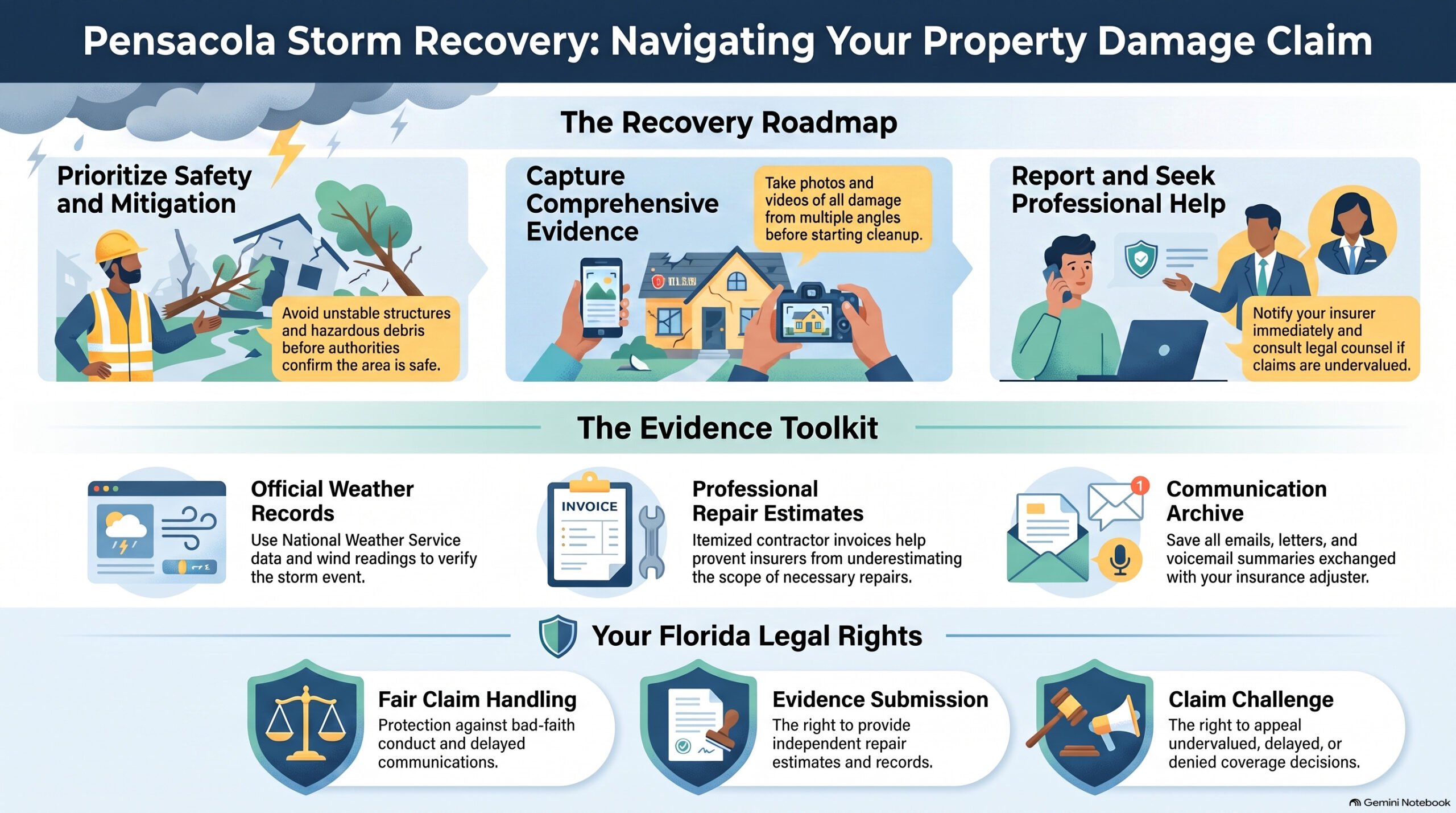
Florida law may safeguard storm victims through fair claim handling, timely communication, and strong documentation supporting recovery.
- The right to submit supporting records and repair estimates
- The right to request policy explanations and coverage decisions
- The right to challenge undervalued, delayed, or denied claims
- The right to seek compensation for covered property loss and injuries
- The right to pursue legal remedies when bad-faith conduct appears
Serving the community well often requires prompt action, careful recordkeeping, and respect for legal deadlines. When rights are preserved early, victims are better positioned to secure needed resources, maintain stability, and support others who depend on them during rebuilding efforts.
Why Do Pensacola Storm & Weather Damage Property Claim Injuries Happen?
Even after a storm has passed, many Pensacola storm-related injuries and property damage occur during the dangerous period of property inspection, emergency repairs, debris removal, and temporary relocation. Damaged roofs, weakened trees, broken glass, exposed wiring, flooded interiors, and unstable structures create hazards that may not be immediately visible to property owners, volunteers, or workers assisting others in need.
Injuries often happen because post-storm conditions are chaotic and physically demanding. A simple slip and fall may result from wet floors, mud, loose shingles, or hidden debris. Safety equipment mishaps can also contribute when ladders shift, protective gear fails, or tools are used in rushed conditions. Fatigue, poor lighting, limited access, and pressure to restore safe living conditions quickly may increase the risk. In many cases, individuals act with good intentions yet encounter preventable dangers while trying to protect their homes, support neighbors, and recover necessary property after severe weather events in Pensacola.
Don’t Wait. Call Our Florida Personal Injury Lawyers Now!
What Should You Do After a Pensacola Storm & Weather Damage Property Claim Injury?
After a Pensacola storm or weather-related property loss, the first priority is to protect personal safety and avoid further exposure to hazardous conditions. It is also important to thoroughly document all visible damage, including photographs, videos, and notes that may support a future claim. Once immediate concerns are addressed, the loss should be reported promptly, and appropriate professional or legal assistance should be considered.
Prioritize Safety First
When storm or weather-related damage causes an injury, the first priority should be personal safety and preventing further harm. Individuals should assess immediate dangers, move away from unstable structures, downed power lines, floodwater, and broken glass, and focus on avoiding hazards that could worsen injuries. Emergency preparedness includes knowing the exits, gathering critical medications, and helping children, older adults, and neighbors reach secure locations during a safe evacuation.
If injuries are present, prompt attention should follow first aid basics, including controlling bleeding, supporting possible fractures, and monitoring breathing until professional help arrives. No one should re-enter a damaged home or building until authorities declare it safe. A calm, organized response protects lives, supports community well-being, and reflects the practical care that storm recovery requires from every household member.
Document Storm Damage
Once immediate safety concerns have been addressed, careful documentation of storm damage and any related injury can help preserve a clear record of what occurred. Photographs should capture exterior and interior conditions from multiple angles, including damaged roofs, windows, walls, flooring, and personal belongings. Notes may identify dates, observed hazards, weather conditions, and visible physical symptoms connected to the event. A storm safety checklist can help organize observations and prevent important details from being overlooked during a stressful period. Receipts, repair estimates, temporary housing records, and inventories of damaged items may also strengthen the overall account. For tenants, renter documentation steps should include photographing leased spaces, listing affected property, and retaining copies of lease provisions that describe maintenance responsibilities, access rights, and coverage-related obligations after major weather events.
Report And Seek Help
Because timely reporting can affect both safety and the strength of a claim, storm-related injuries and property damage should be reported as soon as conditions permit. Individuals should contact Emergency contacts, notify local authorities, and inform the insurer without delay, especially when neighbors or vulnerable residents may also need assistance.
A prompt Medical evaluation helps identify hidden injuries and creates reliable physical records for treatment and claim support. Claimants should preserve discharge papers, repair estimates, and all correspondence, then request claim numbers and written confirmations. If an adjuster minimizes losses or delays communication, early legal guidance may help protect rights and prevent a denial of coverage. By acting carefully and consistently, affected parties place themselves in a stronger position to secure needed resources, support recovery, and continue serving others after a storm.
Critical Evidence in a Pensacola Storm & Weather Damage Property Claim Injury Case
In a Pensacola storm and weather damage property claim injury case, the strength of the claim often depends on the quality and timing of the evidence preserved. Immediate damage documentation, reliable weather reports, repair estimates, invoices, and a complete archive of insurance communications can help establish both the cause and the extent of the loss.
When these materials are organized early, they may materially improve the ability to support a disputed or undervalued claim.
- Photographs and videos taken immediately after the storm
- Official weather reports and dated storm records
- Written repair estimates from qualified contractors
- Invoices, receipts, and proof of related expenses
- Emails, letters, and claim notes exchanged with the insurer
Immediate Damage Documentation
Early documentation often determines whether a Pensacola storm or weather damage claim can be fully supported or unnecessarily disputed. Prompt collection of visual and physical evidence helps demonstrate the scope, location, and progression of loss before cleanup, temporary repairs, or deterioration significantly alter conditions.
Effective documentation may include wide-angle and close-up images, room-by-room video, inventory lists, and notes describing visible damage, unusual odors, standing water, or structural movement. Timestamped photo logs can strengthen the chronology, while preserving drone footage may assist when roofs, trees, or inaccessible areas are involved. Caregivers, neighbors, or volunteers who observed conditions may also provide useful statements. Preserving damaged materials, repair receipts, and mitigation records can further support the claim. Careful, organized documentation serves insurers, adjusters, and families seeking fair, responsible resolution after severe weather events.
Weather Reports And Records
Documented photographs and preserved materials are often strengthened by objective weather reports and related records that place the damage within a verified storm event. In Pensacola claims, these sources may include National Weather Service data, radar imagery, wind readings, rainfall totals, and local emergency alerts. Together, they support the reconstruction of the weather timeline and help connect specific conditions to the reported loss.
Such records can also clarify whether multiple storms affected the area, whether flooding followed wind damage, or whether preexisting conditions are being alleged. This objective framework may assist advocates who seek fair outcomes for property owners and families. It is especially useful when insurers raise questions about timing, causation, or insurance policy exclusions. Accurate weather records provide a disciplined foundation for evaluating the claim with care, consistency, and community-minded purpose.
Repair Estimates And Invoices
Because storm losses often become disputed at the valuation stage, repair estimates and invoices serve as crucial evidence in a Pensacola storm and weather damage property claim. Detailed contractor estimates can identify damaged components, necessary labor, material costs, and the scope of restoration needed to return a property to safe, functional condition. In Estimate Disputes, multiple written estimates may help show whether a carrier undervalued repairs or omitted important work. Itemized invoices can also strengthen a claim by confirming services performed, quantities supplied, and amounts actually charged after emergency mitigation or permanent repairs. A careful review of Invoice Accuracy is important, as errors, unexplained charges, or vague descriptions may reduce credibility. When prepared and preserved properly, these records support fair valuation and promote accountability for families and communities recovering after severe weather.
Insurance Communications Archive
When a storm and weather damage claim becomes contested, an organized archive of insurance communications can provide vital proof of what was reported, requested, acknowledged, delayed, or denied throughout the adjustment process. This record often includes emails, letters, text messages, claim notes, and voicemail summaries. By preserving dates, names, and responses, a claimant can better demonstrate patterns of delay, shifting explanations, or denied coverage. Such documentation may also strengthen a claim appeal by showing whether policy duties were satisfied and whether requested materials were previously submitted. In contractor disputes, communication logs can clarify who authorized inspections, repairs, or temporary mitigation services. Careful evidence preservation also supports those seeking fair outcomes for families, neighbors, and communities recovering from severe weather events, while reinforcing accountability during insurer review and settlement negotiations.
Long-Term Effects of Pensacola Storm & Weather Damage Property Claim Injuries
Storm- and weather-related injuries may cause lasting physical complications that persist well beyond the initial event, often affecting mobility, pain levels, and overall health. They may also create significant emotional and mental effects, including anxiety, stress, and disruption of daily functioning after the property damage and injury occur. Over time, these consequences frequently contribute to ongoing financial strain through medical expenses, reduced earning capacity, and continuing recovery needs.
Lasting Physical Complications
Although many injuries associated with the Pensacola storm and weather-related damage appear manageable in the immediate aftermath, some develop into lasting physical complications that interfere with mobility, endurance, and routine daily functioning. Chronic pain, joint instability, nerve irritation, respiratory limitations, and recurring inflammation may restrict a person’s ability to work, maintain a household, or assist others in the community. In these situations, careful evaluation becomes important because delayed symptoms often reveal a more serious condition than first believed. Medical documentation strategies help create a clear record of worsening limitations, physician findings, and treatment responses over time. Long-term treatment planning may include rehabilitation, specialist care, pain management, and adaptive support designed to preserve function. Thorough records and consistent care can strengthen a property claim by demonstrating ongoing physical consequences.
Emotional And Mental Impact
Long-term harm from the Pensacola storm and weather-related incidents is not limited to physical limitations, as many individuals also experience significant emotional and mental effects that persist well after the initial event. Trauma and anxiety may persist as survivors react to sudden noises, severe weather alerts, or reminders of damaged homes and disrupted routines. Sleep disruption is also common, reducing concentration, patience, and the ability to consistently care for loved ones. Some individuals withdraw socially, struggle with irritability, or experience a lasting sense of vulnerability that affects daily functioning and community involvement. In service-minded communities, recognizing these burdens is important because compassionate support can promote stability and recovery. Careful documentation of emotional symptoms may also help demonstrate the full extent of long-term harm tied to the incident and recovery process.
Financial Strain Over Time
A severe weather loss often creates financial pressure that extends far beyond the initial repair period. Property owners may face Budget impacts as insurance disputes, temporary housing needs, and replacement purchases accumulate. Even when visible damage seems limited, hidden moisture, structural concerns, and business interruptions can lead to long-term costs that undermine stability.
In many cases, ongoing expenses arise from loan payments, contractor fees, storage charges, and preventive measures taken to protect others from further harm. Delayed repairs may also accelerate deterioration, increasing future restoration costs and reducing a property’s usefulness. For families, ministries, and community-minded businesses, these losses can affect their ability to serve dependents, employees, and neighbors. Careful documentation and timely claim action often help reduce preventable financial strain in the aftermath of major storms.
Proving Liability in Pensacola Storm & Weather Damage Property Claim Injury Cases
In many Pensacola storm and weather damage injury cases, proving liability requires clear evidence that a property owner, business, insurer, or other responsible party failed to meet a legal duty under the circumstances. This often involves demonstrating a breach of the duty of care, such as neglecting repairs, ignoring known hazards, or failing to implement reasonable storm-preparedness measures before dangerous conditions caused harm.
Useful proof may include maintenance records, inspection reports, photographs, witness statements, weather data, and expert opinions linking the unsafe condition to the injury. When public property, drainage systems, or roadway hazards are involved, municipal liability may arise, requiring careful review of notice requirements and governmental responsibilities. Courts often examine whether the risk was foreseeable, whether reasonable steps could have reduced the danger, and whether that failure directly caused the injuries. A well-documented claim can help injured individuals pursue accountability while encouraging safer practices that protect the broader Pensacola community overall.
Don’t Wait. Call Our Florida Personal Injury Lawyers Now!
Dealing With Insurance Companies After a Pensacola Storm & Weather Damage Property Claim Injury
Once liability has been identified and supported with evidence, attention often turns to the insurance companies involved in a Pensacola storm and weather-damage property claim or injury. Insurers may request statements, records, estimates, and photographs, while carefully reviewing policy terms, exclusions, and notice requirements. Clear communication and organized submissions can help reduce confusion and support fair evaluation.
Effective handling often requires Policy timeline management, especially when multiple deadlines govern notice, inspections, supplemental materials, and responses to carrier correspondence. A claim documentation backlog can also hinder progress if repair invoices, medical records, or witness materials remain incomplete or scattered. Careful oversight helps ensure that information presented to insurers remains accurate, consistent, and service-focused. Professionals assisting injured property owners often emphasize respectful advocacy, thorough recordkeeping, and prompt follow-up. These practices can protect the claimant’s interests, encourage accountability, and promote outcomes that better support households, neighborhoods, and the broader Pensacola community after serious storm-related harm.
What to Expect During a Pensacola Storm & Weather Damage Property Claim Injury Claim Process
A Pensacola storm and weather damage property claim process generally begins with the initial claim filing, in which policyholders submit a notice of loss and supporting documentation to the insurer. It then moves to damage inspection and a negotiation timeline, during which the insurer evaluates the extent of the loss and discusses the claim’s value. The process concludes with either a settlement or a dispute, depending on the evidence presented and the insurer’s response.
Initial Claim Filing
After storm or weather damage is discovered, the initial claim filing typically begins with prompt notice to the insurance carrier, supported by basic facts about the loss, the date of the event, and the affected areas of the property. This first report often creates the framework for later communications and helps demonstrate compliance with Policyholder deadlines under the policy terms.
A careful filing usually includes claim forms, preliminary photographs, temporary repair receipts, and a concise description of conditions observed immediately after the event. Attention to evidence preservation is important, because damaged materials, communications, and expense records may support the claim’s accuracy and completeness. Many policyholders also keep a written timeline and copies of every submission. Early organization can reduce avoidable disputes and place the insurer on clear notice of the reported storm-related property loss.
Damage Inspection Steps
When storm-related property damage is reported, the inspection stage generally becomes the central fact-gathering step in the claim process. An adjuster or other qualified professional typically schedules a site visit, documents visible conditions, and gathers information to help clarify the scope of loss.
The process often begins with a Preliminary walkthrough of the exterior and interior, including roofing, windows, ceilings, flooring, and affected contents. Photographs, measurements, and notes are typically taken to preserve accurate observations. In many cases, moisture detection tools are used to identify hidden water intrusion behind walls or beneath surfaces. Inspectors may also review maintenance records, repair receipts, and weather-related evidence. A careful inspection helps responsible parties understand immediate safety concerns, needed mitigation, and the full extent of damage affecting the property.
Insurance Negotiation Timeline
Once the inspection record has been assembled, attention often shifts to the negotiation timeline following a Pensacola storm and weather-damage property claim. Insurers commonly review estimates, photographs, policy terms, and repair documentation before extending any revised position. During this period, adjuster timelines may vary based on storm volume, document completeness, and internal supervisory review.
For property owners focused on protecting households and restoring stability, organized communication can strengthen negotiation leverage. Clear records of expenses, temporary repairs, and contractor findings often help narrow disagreements early. If questions arise regarding scope, value, or exclusions, additional submissions may be requested before any formal Claim denial is issued. Careful follow-up, respectful persistence, and prompt responses generally support progress and keep the claim moving efficiently through the insurer’s evaluation process.
Settlement Or Dispute
Although many Pensacola storm and weather damage property claims resolve through negotiated payment, some proceed to dispute if the insurer and policyholder remain divided over the cause of loss, the scope of damage, or the value of repairs. During this stage, careful review of Policy language, estimates, photographs, and expert findings often shapes the next steps. A focused negotiation strategy may help narrow disagreements and encourage fair resolution without litigation. If settlement remains out of reach, the matter may proceed to appraisal, mediation, or court, depending on the insurance contract and the surrounding facts. Throughout the process, organized documentation and timely communication can support a stronger presentation of the claim. A lawyer may assist by clarifying obligations, challenging unsupported denials, and advancing a result that protects the policyholder and household’s recovery.
Compensation for Pensacola Storm & Weather Damage Property Claim Injury Damages
Because storm and weather-related property losses in Pensacola often extend beyond visible structural damage, compensation in a property claim may include a broad range of recoverable damages tied to the event and its aftermath. A careful settlement strategy often evaluates repair costs, emergency mitigation, temporary housing, debris removal, damaged personal property, and related out-of-pocket losses, while also measuring how policy limits may affect available recovery.
When a claimant suffers bodily harm during the storm, the compensation analysis may also consider injury-related losses arising from the same occurrence. An organized evidence checklist can help document photographs, contractor estimates, receipts, communications with insurers, and timelines showing when conditions worsened. In matters involving physical harm, medical documentation may support the connection between the event, the treatment received, and resulting limitations. A thorough claim presentation can place insurers in a stronger position to assess the full scope of covered damages and respond in a timely, service-minded manner.
Economic vs Non-Economic Damages in Pensacola Storm & Weather Damage Property Claim Cases
Pensacola storm and weather damage property claim cases often involve both economic losses, such as repair costs, temporary housing expenses, and lost personal property, and non-economic harm, including inconvenience, stress, and disruption to daily life. A clear distinction between these categories helps frame the full scope of damages that may be considered in a claim. The value of either form of damage typically depends on supporting records, expert assessments, and other evidence that connects the loss to the storm event.
Economic Loss Categories
When storm or weather damage affects a residence or commercial property, economic losses generally refer to the measurable financial harm associated with repairs, restoration, and related out-of-pocket costs. These categories often include structural repairs, roof replacement, water extraction, mold remediation, temporary protective measures, and damaged personal property or business equipment. They may also include relocation expenses, lost rental income, business interruption losses, code upgrade costs, and professional inspection or engineering fees. In many Pensacola claims, careful documentation helps clarify the amount owed and supports fair recovery for families, tenants, employees, and surrounding communities that depend on prompt restoration. Economic analysis may also address depreciation offsets, deductible calculations, and appraisal disputes, especially when insurers challenge the scope, pricing, causation, or necessity of specific repairs following severe weather events and related flooding.
Non-Economic Harm Examples
Economic losses measure the direct financial impact of storm and weather damage, but some disputes also involve non-economic harm that is less readily captured in invoices or repair estimates. These harms may arise when severe property loss disrupts daily stability, family routines, or a sense of safety within the home. Emotional distress can appear through anxiety, sleeplessness, grief, or ongoing fear during future storms. Pain examples may include stress-related headaches, loss of enjoyment in important activities, or strain on close relationships caused by prolonged displacement. In service-minded communities such as Pensacola, these effects can also burden caregivers, neighbors, and volunteers who help affected households recover. Recognizing non-economic harm encourages a fuller understanding of how storm damage can affect personal well-being, dignity, and the ability to continue serving others with consistency.
Proving Damage Value
Damage valuation in storm-related property claims depends on a clear, evidence-based showing of both financial loss and any compensable personal harm. Economic damages are commonly proven through Estimate Documentation, repair invoices, photographs, receipts, contractor opinions, and other Proof of Costs tied directly to the storm event. A careful Valuation Methodology helps distinguish covered damage from preexisting issues and later deterioration. Non-economic damages, when legally available, may require medical records, testimony, and documentation showing disruption, distress, or loss of normal use. Policy Limits Analysis is also crucial, because even well-supported losses may be affected by coverage caps, deductibles, exclusions, and deadlines. In service to affected families and communities, a disciplined presentation of evidence can strengthen credibility, support fair negotiation, and improve the likelihood of a full recovery.
When a Pensacola Storm & Weather Damage Property Claim Injury Case Goes to Trial vs Settlement
Although many Pensacola storm and weather damage property claim cases are resolved through negotiated settlement, some proceed to trial when liability, the extent of the loss, or the value of related injuries remains genuinely disputed. In these matters, careful evaluation of the evidence, witness credibility, and repair estimates often determines whether settlement leverage is sufficient to achieve a fair resolution without court intervention.
A trial may become necessary when an insurer or opposing party refuses to acknowledge documented damage, disputes causation, or downplays the human impact of displacement and injury. Settlement can conserve time, expense, and community resources, which often aligns with a service-minded desire to restore stability efficiently. However, trial may better serve justice when meaningful accountability cannot be reached through negotiation. The distinction between trial vs appeal is also important, because trial addresses factual disputes first, while any later appeal reviews alleged legal error rather than retrying the loss itself.
Florida Laws That May Affect Your Pensacola Storm & Weather Damage Property Claim Case
Beyond questions of trial or settlement, the outcome of a Pensacola storm- and weather-damage property claim may also be shaped by Florida statutes, policy-based deadlines, and procedural rules governing notice, coverage disputes, and the time allowed to bring legal action.
These rules can affect how families document losses, communicate with insurers, and preserve benefits intended to support recovery and stability after severe weather events.
- Prompt notice often matters under Florida insurance deadlines.
- Policy language may require inspections and sworn proofs.
- Homeowner disclosure duties can affect credibility and payment.
- Anti-assignment and mediation rules may influence the resolution of disputes.
- Bad-faith procedures involve specific statutory notice requirements.
Florida law may also regulate supplemental claims, appraisal demands, and insurer response obligations. Careful compliance helps protect the claim and supports fair treatment for households seeking to restore safe living conditions. A lawyer may evaluate policy terms, identify controlling statutes, and guide timely action while helping residents avoid preventable procedural mistakes.
The Statute of Limitations for Pensacola Storm & Weather Damage Property Claim Injury Cases
Because filing deadlines can determine whether a court will hear a claim at all, the statute of limitations is a central issue in Pensacola storm- and weather-damage property claim cases involving related injuries or disputed losses. Florida law may set different deadlines depending on whether the matter concerns property damage, personal injury, or contract issues tied to insurance coverage.
Careful attention to timing helps protect families, neighbors, and community resources after severe weather. Missing a deadline can weaken leverage during Insurance denial appeals and may bar recovery entirely. Claimants are often wise to preserve estimates, photographs, repair invoices, medical records, and correspondence as part of practical storm documentation tips. The date of loss, the date damage was discovered, and the insurer’s response can all affect how a limitations period is analyzed. Prompt review of policy language and relevant statutes supports informed decisions, responsible stewardship, and a more orderly path toward resolving contested storm-related claims fairly.
Don’t Wait. Call Our Florida Personal Injury Lawyers Now!
How a Pensacola Storm & Weather Damage Property Claim Lawyer Can Help You
When storm losses lead to disputed coverage, delayed payments, or undervalued estimates, a Pensacola storm and weather damage property claim lawyer can provide structured guidance throughout the claims process. Counsel may review policy language, organize proof of loss, and communicate with insurers so property owners can focus on family, neighbors, and community recovery. This assistance often supports fair documentation of Storm cleanup costs, emergency repairs, mold prevention measures, and resulting business interruptions. Legal guidance can also reduce confusion involving insurance deadlines, supplemental claims, and contractor disputes after major weather events.
- Reviews policy terms and exclusions carefully
- Coordinates estimates and supporting records
- Tracks insurance deadlines and required notices
- Addresses contractor disputes and payment issues
- Protects evidence tied to mold prevention
When to Contact a Pensacola Storm & Weather Damage Property Claim Lawyer
Property owners often benefit from legal guidance as soon as signs of resistance to claims, uncertainty, or significant loss appear. Early contact may be appropriate after a storm causes structural damage, roof leaks, flooding, fallen trees, or hidden moisture that threatens a home’s safety and its ability to serve others. It can also help when deadlines approach, inspections feel incomplete, or communication from an insurer becomes delayed or confusing.
A timely consultation may also be useful when temporary repairs, emergency lodging, or cleanup costs begin to exceed expectations. Families and caretakers often rely on an Evacuation checklist and practical damage-proofing tips before severe weather, yet legal guidance may still become necessary once losses are discovered and documented. Reaching out promptly can support organized records, preserve estimates, and reduce preventable mistakes during a stressful period. This step is often especially important when multiple policies, mortgage interests, or business-related property concerns are involved after major community-wide storm events.
Why You Need an Experienced Pensacola Storm & Weather Damage Property Claim Lawyer
Although many storm losses appear straightforward at first, insurance claims involving wind, rain, flooding, and hidden structural damage often become contested once the full scope of loss is evaluated. An experienced Pensacola storm and weather damage property claims lawyer helps ensure that policyholders are treated fairly and that vulnerable families, ministries, and community-serving organizations are not left bearing costs that should be covered.
Legal guidance is often indispensable when insurers dispute causation, undervalue repairs, or delay payment while vital needs continue. Counsel can organize evidence, interpret policy language, coordinate with qualified experts, and respond effectively to Insurance claim denials. This support promotes accuracy, protects legal rights, and reduces the risk that important damage will be overlooked.
A seasoned lawyer also helps keep settlement timelines from expanding unnecessarily. By presenting a well-supported claim and promptly addressing resistance, legal advocacy can increase the likelihood of a fuller recovery and help restore damaged properties.
How to Choose the Right Pensacola Storm & Weather Damage Property Claim Lawyer for Your Case
Selecting the right Pensacola storm and weather damage property claim attorney can materially affect how efficiently a claim is investigated, documented, and resolved. A careful evaluation should begin with the attorney’s experience handling storm-related losses, knowledge of insurance practices, and ability to present evidence clearly during negotiations or litigation.
Those seeking to protect households and communities should also assess responsiveness, professionalism, and transparency. A strong Client communication strategy helps ensure that deadlines, inspections, repair estimates, and insurer requests are explained promptly and accurately. Attention should also be given to creating a documentation checklist, since organized records often strengthen evidence of damage, causation, and financial loss. Reviewing case results, professional reputation, and willingness to provide a realistic assessment can further guide selection. The right attorney should combine legal skill with disciplined case management to help claimants pursue fair outcomes while reducing avoidable delays, confusion, and administrative burdens during a difficult recovery process.
About The Law Offices of Anidjar & Levine
When storm losses disrupt a home or business in Pensacola, The Law Offices of Anidjar & Levine provides legal representation to help policyholders address complex property insurance claims.
The firm evaluates damage, reviews policy terms, and develops a disciplined claims strategy to protect financial recovery after severe weather events.
Its work reflects a service-minded approach grounded in Local advocacy and careful attention to each client’s circumstances.
Attorneys and staff communicate clearly, gather supporting records, and challenge delays, underpayments, or unfair denials through organized preparation.
This steady guidance helps families, property owners, and business operators pursue benefits needed to restore stability and continue serving their communities.
The Law Offices of Anidjar & Levine also understands the practical pressures that follow storms, including repair costs, business interruption, and documentation demands.
By combining responsive counsel with thorough claim analysis, the firm offers dependable support to policyholders seeking accountability from insurers and meaningful progress toward recovery.
Frequently Asked Questions
Can I Reopen My Claim if Hidden Storm Damage Appears Later?
Yes, a claim may often be reopened if hidden storm damage is discovered later, especially when the late discovery is supported by inspections, photographs, and repair records. The policyholder should carefully review notice deadlines, policy language, and prior claim correspondence. Reopening claim rights depend on the insurer’s rules and the policy terms. Prompt documentation and clear communication help protect the household’s interests and support fair treatment for all parties involved during review.
Will Filing a Claim Increase My Homeowners Insurance Premium?
Yes, filing a homeowners insurance claim may increase a policy premium, though the claim impact varies by insurer, claim history, location, and loss type. A single weather-related claim does not always trigger a higher rate, especially when many neighbors experience similar damage. Insurers often review overall risk patterns when setting future premiums. Careful documentation and thoughtful reporting can help households protect resources while pursuing fair coverage for needed repairs and recovery.
Are Mold Remediation Costs Covered After Storm-Related Water Intrusion?
Mold remediation costs may be covered after storm-related water intrusion when the policy covers the water event and the homeowner acted promptly to prevent further damage. Coverage often depends on policy language, exclusions, and proof that hidden mold resulted directly from the storm. Insurers may issue a coverage denial if they believe delayed mitigation, long-term leaks, or maintenance issues caused the condition. Careful documentation helps families and communities seeking fair recovery.
Can I Choose My Own Contractor for Storm Damage Repairs?
Yes, a policyholder can usually choose their own contractor for storm damage repairs, subject to policy limitations and insurer procedures. Selection should focus on reputable contractors with proper contractor licensing, clear written estimates, and reliable references. Insurers may impose payment approval and documentation requirements before issuing reimbursement. Careful review of the policy, prompt communication, and thorough records help protect the claim and support responsible service to the affected property owner.
What if My Insurer Requires an Inspection Before Emergency Repairs?
If an insurer imposes an inspection requirement before emergency repairs, the policyholder should request prompt scheduling and written guidance immediately. Reasonable steps to protect people and prevent further damage are still generally expected, even before full approval. Careful photographs, videos, receipts, and contractor notes should be preserved. Clear communication serves all parties, supports the claim record, and helps demonstrate that any emergency repairs were necessary, limited, and performed in good faith.
—————————
Storm and weather damage claims in Pensacola may involve substantial property loss, insurance disputes, and strict procedural requirements.
A qualified lawyer can assess the damage, protect the claimant’s rights, and pursue fair compensation through negotiation or litigation when appropriate.
The Law Offices of Anidjar and Levine help property owners evaluate their claims and develop focused legal strategies.
For related legal guidance, consult a Pensacola Personal Injury Lawyer. Timely assistance may strengthen a claim and support a more effective financial recovery.

