

The Law Offices of Anidjar and Levine, an Orlando rideshare accident at-fault parties lawyer, investigates the collision, determines who caused the injuries, and identifies applicable insurance coverage. Potentially responsible parties may include the rideshare driver, another motorist, a vehicle owner, an employer, or additional entities. Liability analysis may involve app records, police reports, witness statements, vehicle data, photographs, and medical documentation. Florida comparative negligence can reduce compensation when multiple parties share responsibility. For additional guidance, contact an Orlando Personal Injury Lawyer to learn about legal rights, evidence preservation, insurance issues, and available remedies.
Main Takeaways
- An Orlando rideshare accident lawyer identifies responsible parties, including drivers, rideshare companies, vehicle owners, insurers, and other motorists.
- Liability depends on driver conduct, app status, passenger status, vehicle ownership, insurance policies, and applicable Florida coverage rules.
- Attorneys investigate distracted driving, speeding, impairment, unsafe pickups, vehicle maintenance, phone data, traffic footage, witnesses, and police reports.
- Florida’s comparative negligence may reduce compensation if the injured person or another party shares responsibility for the accident.
- Potential compensation may include medical expenses, lost income, property damage, pain and suffering, and future care needs.


How We Can Help With Your Orlando Rideshare Accident At-Fault Parties Injury Claim
After an Orlando rideshare accident, determining which parties may be legally responsible often requires a careful review of the collision, the drivers’ conduct, and the applicable insurance coverage. A legal team can help an injured person preserve evidence, organize medical records, and communicate with insurers while protecting the claim from premature resolution.
Counsel may investigate the rideshare driver’s actions, vehicle maintenance, employment status, and app activity to clarify available coverage. The team can also identify relevant witnesses, obtain reports, review photographs, and consult qualified professionals when technical questions arise. These services support informed decisions without placing unnecessary burdens on an injured individual or family.
Liability disputes may involve conflicting accounts, overlapping policies, or arguments concerning the driver’s status at the time of impact. Through careful Insurance negotiation, legal representatives can present documented losses and respond to attempts to minimize compensation. They can explain potential options, maintain organized communication, and pursue an appropriate resolution consistent with the client’s needs and applicable Florida law.
OUR CONSULTATIONSARE FREE
START YOUR FREE CASE REVIEW

Understanding Orlando Rideshare Accident At-Fault Parties Injury Cases
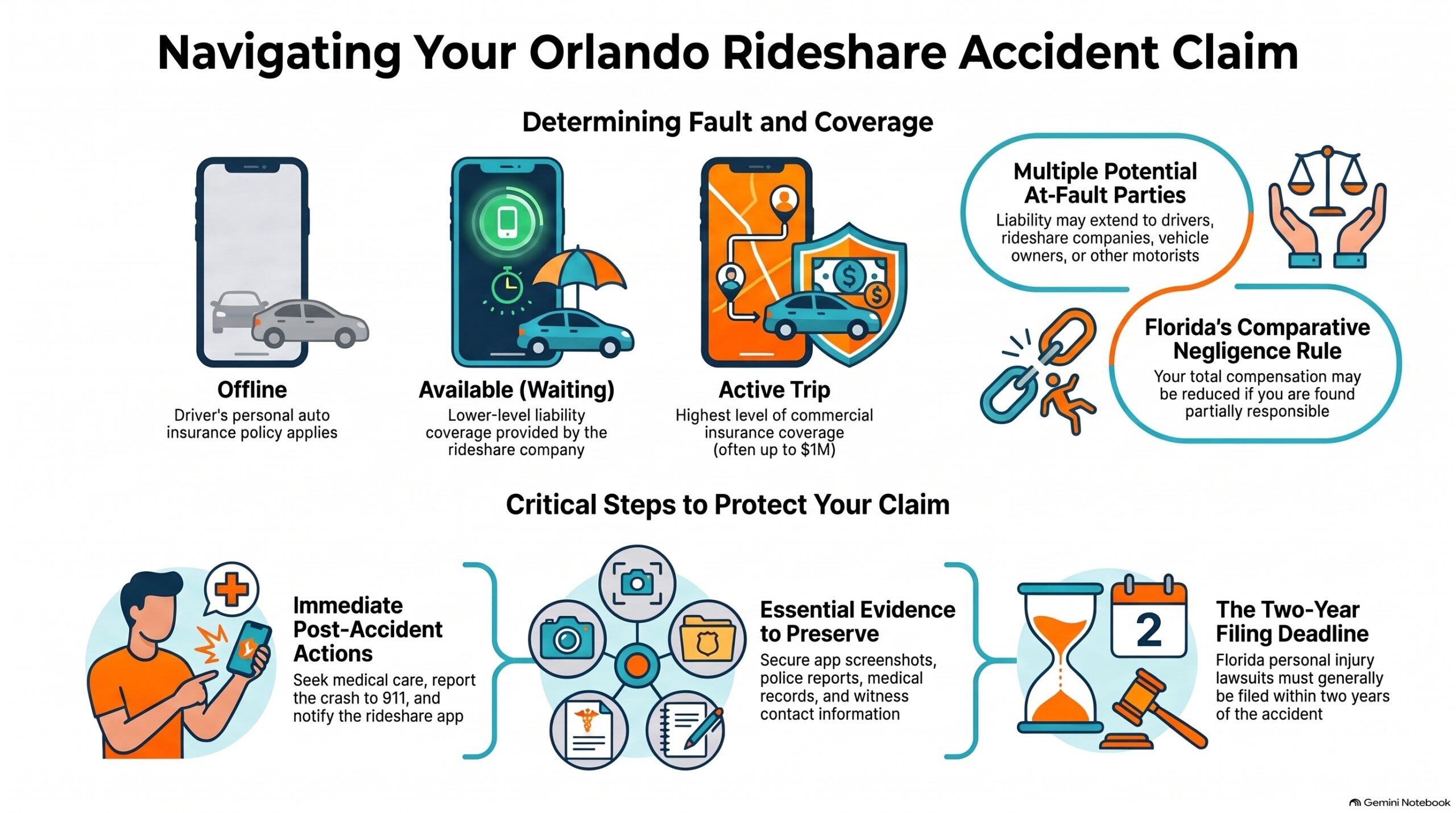
When a rideshare collision occurs in Orlando, identifying the at-fault parties requires more than determining which driver caused the impact. Injury cases may involve a rideshare driver, another motorist, a transportation company, an insurer, or additional responsible entities, depending on the driver’s status and the circumstances established by available evidence. Coverage can change while the driver is offline, waiting for a request, traveling to a passenger, or transporting that passenger. These distinctions influence which policy may respond and how damages are evaluated.
Comparative fault challenges arise when multiple parties contributed to the injuries, or when an injured person’s conduct is disputed. Florida’s comparative negligence rules may reduce recovery according to the assigned percentage of responsibility. Liability apportionment errors can in turn affect settlement values, litigation strategy, and access to medical compensation. A careful case assessment examines records, app data, vehicle ownership, insurance terms, witness accounts, and medical documentation. Clear legal guidance helps preserve evidence, identify applicable coverage, and support a fair allocation of responsibility for those seeking meaningful assistance.
Common Causes of Orlando Rideshare Accident At-Fault Parties
Common causes of Orlando rideshare accidents include distracted driving, speeding, reckless driving, and impaired operation of a vehicle. Unsafe passenger pickups, such as stopping in traffic lanes or failing to assess surrounding hazards, may also create significant risks. Identifying the applicable cause can help determine which parties may bear legal responsibility for resulting injuries.
Distracted Driving
Distracted driving is a significant cause of Orlando rideshare accidents, particularly when drivers use mobile devices, adjust navigation systems, eat, or divert their attention to passengers while driving. Phone notifications can distract from traffic conditions, even when a driver intends only to glance at them briefly. Entering directions, selecting a pickup location, or responding to a passenger may also compromise visual, manual, and mental focus. A driver who looks away while approaching a traffic light may miss a signal change, fail to notice a pedestrian, or overlook another vehicle’s movement. Rideshare companies and drivers have a responsibility to protect passengers, pedestrians, and other motorists by maintaining attention throughout each trip. Evidence such as application records, device data, witness accounts, and video footage may help identify distraction and establish responsibility.
Speeding And Reckless Driving
Speeding and reckless driving can turn an Orlando rideshare trip into a serious collision by reducing a driver’s reaction time and control of the vehicle. Excessive speed may increase crash forces, lengthen stopping distances, and limit a driver’s ability to respond to sudden changes in traffic. Reckless conduct, including aggressive lane changes, tailgating, or disregarding signals, can create hazards for passengers, pedestrians, and other motorists. Investigators may review vehicle data, witness accounts, traffic cameras, and police reports to determine whether these actions contributed to the collision. Speeding Liability may extend to the rideshare driver and, depending on the circumstances, other responsible parties. Documented Traffic Violations can support an injured person’s claim, although liability still depends on causation, applicable insurance coverage, and the specific facts surrounding the crash.
Impaired Driving
When a rideshare driver operates a vehicle while impaired by alcohol, drugs, or certain prescription medications, diminished judgment and delayed reactions can place passengers and others at substantial risk. Impairment may affect lane control, following distance, hazard recognition, and the ability to respond to changing traffic conditions. A rideshare company, driver, or another responsible party may face liability when negligent conduct contributes to a collision and resulting injuries. Evidence can include witness accounts, dashboard or platform records, arrest reports, and medical documentation. Sobriety checkpoints may produce observations or chemical results relevant to determining impairment, while toxicology testing can identify alcohol or drugs after a crash. An injured passenger should preserve available records and seek qualified legal guidance to evaluate fault, insurance coverage, and potential compensation.
Unsafe Passenger Pickups
Unsafe passenger pickups can create significant collision risks when a rideshare driver stops in an active traffic lane, blocks a travel lane, or pulls into an area not intended for passenger loading. Pickup coordination issues may cause passengers to enter traffic unexpectedly, while Safety policy violations can involve stopping near intersections, crosswalks, bike lanes, or restricted curbs. Drop-off location risks also arise when drivers choose poorly positioned areas that require passengers to cross moving lanes or step into roadway hazards. Driver waiting times may increase pressure to accept the first available stopping point rather than locate a safer space. Depending on the circumstances, liability may involve the rideshare driver, another motorist, a property owner, or a transportation company. Evidence such as app records, video, and witness accounts can clarify responsibility.
Don’t Wait. Call Our Florida Personal Injury Lawyers Now!


Legal Rights of Orlando Rideshare Accident At-Fault Parties Injury Victims
Injured victims involved in Orlando rideshare collisions may have legal rights to pursue compensation from any party whose negligence contributed to the crash.
Rights may include recovery for medical expenses, lost income, property damage, pain, and future care needs, subject to evidence and Florida law.
- Victims may pursue claims against the rideshare driver, another motorist, a vehicle owner, or an employer when applicable.
- Liability thresholds and nuances of insurance coverage can determine whether a driver’s personal policy, rideshare coverage, or another insurer must respond.
- Victims may preserve claims by obtaining medical evaluation, reporting the collision, collecting records, and avoiding premature settlement decisions.
Comparative-fault principles may reduce compensation when a victim shares responsibility, but they do not necessarily eliminate recovery. An attorney can assess available policies, identify responsible parties, communicate with insurers, and protect deadlines. Those assisting injured individuals should encourage prompt, accurate documentation and respectful legal guidance, while recognizing that each claim requires an individualized evaluation of fault, damages, and applicable coverage.
Why Do Orlando Rideshare Accident At-Fault Parties Injuries Happen?
Orlando rideshare accident injuries often occur because multiple drivers, passengers, and transportation companies interact within a fast-moving traffic environment, creating opportunities for negligence. Common causes include distracted driving, speeding, unsafe lane changes, impaired operation, fatigue, and failure to yield. Rideshare drivers may also cause collisions while accepting trips, following navigation instructions, or searching for passengers in crowded areas.
Passenger injuries can result from abrupt braking, poorly maintained vehicles, inadequate use of restraints, or a driver’s failure to account for weather and roadway conditions. Other motorists may contribute through careless actions, while rideshare companies may face questions involving screening, training, vehicle standards, or insurance coverage. A careful Rideshare Policies Review can clarify how responsibilities are allocated among drivers, companies, and insurers. App Safety Features, including trip tracking, driver identification, and emergency reporting tools, may reduce certain risks but cannot eliminate negligent conduct. Understanding these contributing factors helps injured individuals and their supporters evaluate accountability and pursue appropriate assistance.
What Should You Do After an At-Fault Orlando Rideshare Accident Injury?
After an injury in an Orlando rideshare accident, the injured person should seek immediate medical care, even if symptoms initially appear minor. The accident should be reported to law enforcement and the rideshare company, with accurate details provided to each. Photographs, witness information, medical records, and other evidence should also be preserved to document the injuries and circumstances.
Seek Immediate Medical Care
Prompt medical evaluation should be sought after a rideshare accident, even when injuries appear minor or symptoms are not immediately apparent. A qualified clinician can identify concussions, internal trauma, soft-tissue damage, and other conditions that may worsen without treatment. Medical personnel should receive a complete account of pain, dizziness, numbness, difficulty breathing, and any changes in physical or mental function. Emergency symptom documentation can create an accurate clinical record while guiding decisions about testing and immediate treatment. Individuals should follow all discharge instructions, obtain prescribed medication, and attend recommended medical appointments. Consistent follow-up care coordination helps prevent complications and supports recovery, particularly when symptoms develop after the collision. A trusted person may assist with transportation, appointment scheduling, and other practical needs while the injured individual focuses on recovery.
Report The Accident
Once immediate medical needs are addressed, the accident should be reported promptly to the appropriate authorities. In Orlando, calling 911 allows law enforcement and emergency responders to evaluate the scene, assist injured individuals, and prepare an official crash report. The rideshare passenger, driver, or other injured person should provide accurate, factual information without speculating about fault. Scene safety steps may include staying clear of traffic, moving only when necessary to avoid additional danger, and following emergency personnel’s instructions. If police do not respond, an involved person should ask how to complete the required report through the appropriate agency. When circumstances permit, collecting witness info can help authorities identify individuals who observed the collision. Reporting should remain courteous and complete, supporting everyone affected while preserving an accurate account for later legal review.
Document Evidence And Injuries
At the accident scene, the injured rideshare passenger, driver, or other affected individual should document visible conditions and injuries when it is safe to do so. Photographic proof collection may include evidence of vehicle damage, road conditions, traffic signals, weather conditions, surrounding property, and identifying information for the involved vehicles. A person should avoid disturbing evidence and should obtain witness names and contact details when possible. Medical evaluation should occur promptly, even when symptoms initially appear minor, because some injuries develop gradually. Medical records, prescriptions, treatment recommendations, travel expenses, and time missed from work support Injury cost documentation. Copies of rideshare receipts, app trip details, insurance communications, and repair estimates may also clarify responsibility and losses. Preserving organized records helps attorneys, insurers, and courts evaluate claims accurately while supporting fair recovery for affected individuals.
Don’t Wait. Call Our Florida Personal Injury Lawyers Now!
Critical Evidence in an Orlando Rideshare Accident At-Fault Parties Injury Case
Critical evidence may establish how the Orlando rideshare accident occurred, identify responsible parties, and document the resulting injuries.
Key sources include:
- Rideshare app records and police accident reports;
- Medical treatment documentation;
- Witness statements and available video footage.
Together, these materials can support liability findings and demonstrate the extent of the claimant’s damages.
Rideshare App Records
Rideshare app records can help establish the driver’s status, trip activity, and potential liability after an Orlando rideshare accident. These digital records may show whether the driver was offline, available for a request, en route to a passenger, or actively transporting someone when the collision occurred. Driver trip logs can also identify pickup and drop-off locations, timestamps, route information, and communications connected with the assignment. App screenshot retention is important because trip details may later change, disappear, or become difficult to access through an account. A person seeking to preserve evidence for an injured individual may save screenshots, download available receipts, and request formal records through appropriate legal channels. Counsel may use these materials to evaluate insurance coverage, identify responsible parties, and clarify the circumstances surrounding the claimed injuries and losses.
Police Accident Reports
Following an Orlando rideshare accident, the police accident report may provide important evidence about the collision, the drivers involved, and the initial account of what occurred. It may identify the rideshare driver, passengers, other motorists, witnesses, vehicle damage, roadway conditions, and citations issued at the scene. Although an accident report is not necessarily conclusive proof of fault, its observations can help establish a reliable timeline and guide further investigation. An attorney may compare the report with Dashcam footage, photographs, witness statements, and rideshare records to identify inconsistencies or confirm critical details. Investigators should review timestamps carefully, because dispatch entries, video recordings, and electronic trip information may reflect different stages of the event. Promptly obtaining the report can preserve evidence and support fair treatment for everyone affected.
Medical Treatment Documentation
When an Orlando rideshare accident causes injuries, medical treatment documentation can help establish the nature, severity, and progression of the harm claimed. Emergency department records, diagnostic images, physician notes, prescriptions, and therapy records may help link reported symptoms to the collision and document the care required. Consistent documentation also helps explain treatment recommendations, restrictions, and anticipated recovery. The injured person should attend follow-up appointments and follow medical instructions because gaps in care may create questions about whether symptoms continued or worsened. A symptom diary can record daily information on pain, mobility limitations, sleep disruption, medication effects, and interference with work or household responsibilities. Bills, receipts, and insurance statements further identify financial losses. Organized records allow legal counsel to evaluate damages and present a clear, evidence-based claim while supporting the injured person’s recovery.
Witness Statements and Video
Witness statements and video footage can provide important evidence in an Orlando rideshare accident injury case by clarifying how the collision occurred and identifying the parties involved. Statements from passengers, pedestrians, nearby drivers, and business employees may establish traffic signals, vehicle speeds, lane positions, and driver conduct. Investigators and legal representatives assess Eyewitness credibility by considering a witness’s location, visibility, attention, consistency, and relationship to those involved. Dashcam, surveillance, cellphone, and rideshare-app recordings may preserve events that witnesses cannot fully recall. Video authentication is important because reliable evidence should be traced to its source, preserved without alteration, and, when necessary, supported by metadata or testimony. Promptly identifying witnesses and requesting available recordings can prevent evidence from being lost. Such careful documentation assists injured individuals and promotes fair accountability among responsible parties.
Long-Term Effects of Orlando Rideshare Accident At-Fault Parties Injuries
Long-term injuries from rideshare accidents may produce chronic pain conditions that limit mobility, employment, and daily activities. Emotional trauma can also result in anxiety, depression, sleep disturbances, or post-traumatic stress symptoms requiring continued care. Ongoing medical expenses, including treatment, rehabilitation, medication, and expert services, can impose substantial financial burdens on injured individuals.
Chronic Pain Conditions
Chronic pain can develop after injuries caused by an at-fault Orlando rideshare driver, particularly when trauma affects the spine, joints, muscles, or nerves. Symptoms may persist for months or years, limiting mobility, sleep, work capacity, and participation in daily responsibilities. Conditions such as spinal injuries, nerve damage, intricate regional pain syndrome, and recurring headaches may require continuing medical evaluation. Treatment can include physical therapy, injections, assistive devices, and Medication management under appropriate supervision. Medical records should document pain intensity, functional limitations, prescribed care, and treatment response. Physicians may also assess whether symptoms are expected to improve, remain stable, or worsen, helping establish a realistic pain prognosis. Legal counsel can assist an injured person in organizing evidence of ongoing care and evaluating compensation for future medical needs, lost income, and related losses.
Emotional Trauma Effects
Emotional trauma can persist after injuries caused by an at-fault Orlando rideshare driver, particularly when the collision involves severe pain, disability, or a sudden disruption of daily life. Survivors may experience anxiety, intrusive memories, sleep disturbances, irritability, or difficulty concentrating. Some develop a persistent fear of driving, riding in vehicles, or traveling through the collision area. These reactions can affect employment, family responsibilities, social participation, and the ability to provide support to others. Post-accident counseling may help individuals identify trauma responses, develop coping strategies, and regain confidence in ordinary activities. Documentation from qualified mental health professionals can clarify the emotional consequences and support appropriate legal claims. Compassionate assistance from family members, advocates, and legal representatives may also help survivors pursue accountability while protecting personal dignity throughout recovery.
Ongoing Medical Expenses
Some Orlando rideshare accident injuries require medical care well beyond the initial emergency treatment. Follow-up appointments, diagnostic testing, physical therapy, surgery, and expert consultations may continue for months or years. Victims may also face Chronic medication costs for pain, inflammation, nerve damage, or related conditions. These expenses can increase when injuries limit employment or require assistance with daily activities. Medical providers may establish future rehab plans involving strengthening exercises, occupational therapy, mobility equipment, or periodic evaluations. Accurate documentation of treatment recommendations, invoices, prescriptions, and travel expenses helps demonstrate the injury’s long-term financial impact. An assessment should consider both current bills and reasonably expected care. Legal guidance can help identify responsible at-fault parties and pursue compensation intended to support continued recovery, preserve stability, and reduce the burden on injured individuals and their families.
Proving Liability in Orlando Rideshare Accident At-Fault Parties Injury Cases
To prove liability in an Orlando rideshare accident injury case, the injured party must establish who caused the collision and connect that conduct to the resulting damages. Evidence may include crash reports, photographs, vehicle data, traffic-camera footage, medical records, and testimony from witnesses or accident reconstruction professionals. The analysis should identify whether the rideshare driver, another motorist, a vehicle owner, or a maintenance provider breached a legal duty. Applicable negligence standards help determine whether careless conduct, such as speeding, distraction, or unsafe lane changes, caused the impact and injuries. The driver’s rideshare status and trip phase may also affect which parties bear responsibility, although each case depends on its facts. Florida’s comparative negligence rules require careful evaluation of comparative fault percentages when more than one person contributed to the collision. Counsel can organize evidence, preserve relevant records, and present a coherent account that supports fair treatment for the injured individual and those assisting with recovery.
Dealing With Insurance Companies After an Orlando Rideshare Accident At-Fault Parties Injury
When an Orlando rideshare accident causes injury, insurance companies may promptly seek statements, medical authorizations, and settlement discussions before the full extent of liability and damages is known. An injured person may benefit from limiting recorded statements, preserving accident evidence, and directing communications with the insurer through qualified counsel. Rideshare claims can involve the driver’s personal policy, a transportation network company’s coverage, and other responsible motorists’ insurers. Determining which policy applies may require examining the driver’s app status, vehicle use, policy language, and applicable Florida requirements. Counsel can also address Medical bill disputes by reviewing coding, payment records, liens, and whether charges accurately reflect necessary treatment. Coverage denial challenges may involve written explanations, policy interpretation, claim documentation, and timely appeals. Clear, organized medical records and correspondence can help protect the injured person’s interests while preventing premature concessions. Professional guidance also helps families focus on recovery and service to those affected rather than steering through insurer tactics alone.
What to Expect During an Orlando Rideshare Accident At-Fault Parties Injury Claim Process
An Orlando rideshare accident injury claim typically begins with identifying each potentially at-fault party and collecting evidence, including reports, medical records, photographs, and witness statements. The parties and their insurers then evaluate liability and damages while negotiating available insurance coverage. If negotiations do not provide adequate compensation, the injured person may pursue legal remedies for medical expenses, lost income, and other recoverable losses.
Identifying At-Fault Parties
Because rideshare collisions may involve several potentially responsible parties, identifying the at-fault drivers and applicable insurance policies is an important first step in an Orlando injury claim. Liability basics require examining each participant’s conduct, including the rideshare driver, another motorist, and, in limited circumstances, a vehicle owner or transportation company. The driver’s status at the time of the crash may determine whether personal coverage, rideshare coverage, or both could apply. Legal responsibility can also depend on traffic violations, negligent driving, vehicle ownership, and contractual insurance provisions. An attorney may clarify which parties should be included in a claim and whether coverage limits are sufficient for the injuries involved. This careful analysis helps protect injured individuals seeking fair treatment and supports informed decision-making throughout the claims process, while serving their families and communities.
Gathering Accident Evidence
A thorough evidence-gathering process forms the foundation of an Orlando rideshare accident injury claim. Investigators typically collect the crash report, photographs, medical records, witness statements, and available video footage. These materials can establish vehicle positions, traffic conditions, impact severity, and the injuries reported after the collision. Proof of driver negligence may include cell phone records, dispatch information, training records, and evidence of speeding, distraction, impairment, or unsafe lane changes. An attorney may request rideshare application records identifying the driver’s trip status and applicable vehicle owner information. Vehicle inspection records and maintenance histories can reveal mechanical factors requiring further review. In some cases, black box data may show speed, braking, turning, and other pre-impact conditions. Preserving evidence promptly helps protect accuracy and supports a careful evaluation of responsibility.
Negotiating Insurance Claims
Insurance negotiations begin after the available evidence and damages have been evaluated, with the responsible parties and applicable coverage identified. The claimant or representative submits a demand supported by medical records, wage information, repair estimates, and documented losses. Insurers review liability, policy limits, driver status, and whether the rideshare application was active at the time of the collision. Adjusters may request additional documentation, propose a lower settlement, or question treatment and causation. Understanding common Claim denial reasons, including late notice, excluded drivers, insufficient proof, or policy exclusions, helps clarify the insurer’s position. When coverage is contested, coverage dispute steps may include obtaining declarations pages, reviewing endorsements, requesting written explanations, and coordinating responses among insurers. Careful communication protects accuracy and preserves relevant evidence while negotiations continue. No settlement should be accepted before its terms and consequences are fully understood.
Pursuing Legal Compensation
When negotiations do not fully address the claimant’s losses, pursuing legal compensation may require a formal injury claim against the parties responsible for the Orlando rideshare accident. The process generally begins with investigating liability, collecting medical records, documenting lost income, and evaluating future care needs. An attorney may identify responsible drivers, rideshare companies, vehicle owners, or insurers whose conduct contributed to the collision. Careful claim valuation helps establish a settlement demand supported by evidence rather than speculation. If an insurer acts through bad-faith tactics, such as unreasonable delays or inadequate investigation, additional legal remedies may be available. Filing a lawsuit can initiate discovery, depositions, expert review, and court-supervised negotiations. Throughout the claim, counsel can protect the injured person’s rights while pursuing compensation that reflects medical expenses, reduced earning capacity, and other legally recognized losses.
Compensation for Orlando Rideshare Accident At-Fault Parties Injury Damages
Determining compensation for injuries sustained in an Orlando rideshare accident begins with identifying every party whose negligence contributed to the collision. Potentially responsible parties may include the rideshare driver, another motorist, a vehicle owner, or a transportation company, depending on the available evidence. Each party’s conduct, insurance coverage, and legal relationship to the trip can influence the recovery process. A careful Damages Assessment should review medical records, treatment recommendations, employment effects, and documented changes in daily functioning. It should also consider the accident’s continuing consequences and the support required by injured individuals and their families. When a fatality occurs, a Wrongful Death claim may permit eligible survivors to seek compensation under Florida law. Preserving evidence, obtaining crash reports, and communicating with insurers can help protect the interests of those affected. A qualified attorney may coordinate these efforts, identify applicable policies, and pursue a resolution that reflects the full extent of the harm caused by the responsible parties.
Economic vs. Non-Economic Damages in Orlando Rideshare Accident At-Fault Parties Cases
Economic damages may include medical expenses, lost income, property damage, and other measurable financial losses resulting from a rideshare accident. Non-economic damages address less tangible harm, such as pain and suffering, emotional distress, and diminished quality of life. Proving total losses generally requires organized records, medical documentation, employment evidence, and testimony establishing the accident’s full impact.
Economic Damages
A rideshare accident claim may include economic damages, which are measurable financial losses caused by the collision, as well as non-economic damages involving less tangible harm. Economic damages commonly include emergency transportation, hospital care, surgery, medication, rehabilitation, medical equipment, and other reasonable treatment expenses. A claimant may also seek reimbursement for lost wages when injuries prevent work or require reduced hours. If the collision causes a lasting impairment, damages may reflect diminished future earning capacity, including expected income, benefits, and career opportunities affected by the condition. Property damage, such as vehicle repairs or replacement, may also qualify when supported by records. Helpful evidence can include pay statements, tax documents, invoices, medical bills, employment records, and professional assessments. Careful documentation enables responsible compensation and helps protect an injured person’s financial stability.
Non-Economic Damages
Beyond documented financial losses, an injured rideshare passenger or other collision victim may recover non-economic damages for the personal effects of the accident. These damages can address physical pain, emotional distress, diminished enjoyment of life, permanent disfigurement, disability, and disruption of family relationships. Unlike medical bills or lost wages, they do not have a fixed market value. Their assessment depends on the injury’s severity, duration, treatment, prognosis, and effect on daily activities. Liability disputes may require careful presentation of testimony and other evidence showing how the collision changed the victim’s life. Non-economic recovery generally differs from punitive damages, which are reserved for exceptionally reckless or intentional misconduct rather than ordinary negligence. A fair evaluation recognizes each person’s suffering and supports meaningful assistance during recovery without overstating the claim.
Proving Total Losses
Establishing total losses in an Orlando rideshare accident requires separating measurable economic damages from non-economic harm while presenting both as consequences of the same collision. Economic damages may include emergency treatment, follow-up care, prescription costs, lost wages, reduced earning capacity, transportation expenses, and vehicle damage. Receipts, medical records, employer statements, repair estimates, and tax documents can substantiate these amounts. Non-economic damages involve pain, emotional distress, diminished enjoyment of life, and disruption of family responsibilities. Medical observations, personal journals, testimony from relatives, and treatment histories may help demonstrate their extent. Surveillance footage, photographs, app records, and witness accounts can connect the collision to the claimed losses and clarify fault among drivers, rideshare companies, or other parties. A complete presentation enables fair evaluation and supports responsible advocacy for injured individuals.
Don’t Wait. Call Our Florida Personal Injury Lawyers Now!
When an Orlando Rideshare Accident At-Fault Parties Injury Case Goes to Trial vs. Settlement
In an Orlando rideshare accident injury case, the decision to pursue settlement or proceed to trial depends on liability evidence, insurance coverage, injury severity, and the parties’ willingness to reach a fair resolution. A settlement can provide compensation sooner, reduce uncertainty, and spare injured individuals and families the demands of courtroom testimony. Attorneys may use medical records, witness accounts, photographs, and employment documentation to develop a settlement strategy that reflects the client’s losses and future needs.
Trial may become necessary when responsible parties dispute fault, undervalue damages, or refuse meaningful negotiations. Before recommending litigation, counsel generally evaluates the strength of available evidence, credibility concerns, projected expenses, and trial timelines. Although a verdict can provide a greater recovery, it also carries risk because the outcome rests with a judge or jury. Throughout either process, the legal team can help protect the client’s interests, communicate developments clearly, and pursue accountability while supporting the individual’s recovery and ability to serve family, work, and community.
Florida Laws That May Affect Your Orlando Rideshare Accident At-Fault Parties Case
Florida laws can affect nearly every aspect of an Orlando rideshare accident claim, including fault, insurance coverage, comparative negligence, and the time available to file a lawsuit. Several rules may determine which parties and policies are liable for an injured person’s losses.
Florida law can shape fault, coverage, liability, and filing deadlines in Orlando rideshare accident claims.
- Comparative Negligence: Florida generally reduces compensation according to an injured party’s assigned percentage of fault. Evidence regarding traffic decisions, seat belt use, and driver conduct may influence recovery.
- Insurance Requirements: Rideshare coverage may depend on whether the driver was offline, waiting for a request, traveling to a passenger, or transporting a passenger. The driver’s personal policy and the rideshare company’s policy may provide different protections.
- Florida Thresholds: Florida’s no-fault system may require an injured person to satisfy specific injury thresholds before pursuing certain non-economic damages. Medical documentation and qualified legal review can clarify whether those thresholds apply.
Understanding these provisions helps representatives serve injured individuals responsibly, identify potentially liable parties, and present accurate evidence during negotiations or litigation. Local counsel can evaluate policy language and applicable statutory duties.
The Statute of Limitations for Orlando Rideshare Accident At-Fault Parties Injury Cases
The statute of limitations sets the deadline for filing an Orlando rideshare accident injury lawsuit, making timely evaluation of potential at-fault parties and insurance coverage a necessary part of case preparation. In Florida, personal injury claims generally must be filed within two years of the accident, although exceptions may alter that period. Claims involving wrongful death, government entities, minors, or delayed discovery can involve different deadlines and procedural requirements.
Missing the applicable deadline may permanently bar recovery, regardless of injury severity or apparent liability. Comparative fault impacts the amount recoverable, but it does not usually extend the filing period. Potentially responsible parties may include rideshare drivers, other motorists, employers, vehicle owners, or insurance carriers, making early identification important.
Evidence preservation timelines also matter because electronic trip records, driver communications, surveillance footage, vehicle data, medical documentation, and witness recollections may become unavailable. Prompt attention supports fair evaluation of responsibility and protects the ability to pursue compensation that helps injured individuals and their families meet medical, financial, and daily needs.
How an Orlando Rideshare Accident At-Fault Parties Lawyer Can Help You
An Orlando rideshare accident at-fault parties lawyer can investigate the collision, identify all potentially responsible parties, and determine which insurance policies may apply. Through careful consultation with an attorney, counsel can explain available legal options and help an injured person understand how driver conduct, vehicle ownership, platform policies, and roadway conditions may affect rideshare liability.
The lawyer may also coordinate critical case development by:
- Securing records, photographs, witness accounts, trip information, and other materials through prompt preservation of evidence.
- Reviewing medical documentation and damage records to present a complete account of the injury’s financial and personal effects.
- Managing communications with insurers and pursuing fair insurance negotiation while protecting the claimant from misleading statements or premature settlements.
Counsel can assess competing accounts, identify coverage disputes, and organize evidence to support accountability. This assistance allows an injured individual to focus on recovery and family responsibilities while the legal team pursues the broader goal of securing a thorough, fair resolution from the responsible parties.
When to Contact an Orlando Rideshare Accident At-Fault Parties Lawyer
Prompt legal consultation is generally appropriate after a rideshare collision when injuries, disputed fault, significant property damage, or uncertain insurance coverage is involved. Early guidance can help preserve records, identify involved drivers, and clarify which insurer may receive notice. Witness names, photographs, medical records, app screenshots, and vehicle damage should be collected promptly because At-Fault Evidence Timing can affect how responsibility is evaluated. A lawyer may also be contacted when an insurance representative requests a recorded statement, offers a settlement, or delays the review of the claim. Under these circumstances, organized Insurance Dispute Steps may include reporting the collision, submitting supporting documentation, comparing policy positions, and documenting all communications. Consultation is especially important if a passenger, pedestrian, cyclist, or another driver requires assistance, as multiple claims may arise from a single event. Prompt attention supports orderly communication and helps protect the interests of those affected while facts remain available and coverage questions remain unresolved.
Why You Need an Experienced Orlando Rideshare Accident At-Fault Parties Lawyer
When liability or insurance coverage remains disputed, experienced legal representation can provide structured guidance and informed advocacy. A knowledgeable Orlando rideshare accident lawyer can identify every potentially responsible party, including drivers, rideshare companies, vehicle owners, and other entities whose conduct contributed to the collision. This broader review helps prevent incomplete claims and supports fair treatment for injured individuals.
Experience is especially valuable when Proving Damages requires medical documentation, employment records, expert opinions, and clear evidence connecting injuries to the crash. Counsel can organize these materials while addressing insurer efforts to minimize losses or shift responsibility. The lawyer can also examine trip records, platform communications, maintenance information, and safety policies to establish App Accountability when company systems or practices are relevant.
Effective advocacy allows an injured person to focus on recovery and continued service to family or community. It also promotes orderly communication, protects legal rights, and supports a reasoned evaluation of compensation rather than an uninformed settlement decision.
How to Choose the Right Orlando Rideshare Accident At-Fault Parties Lawyer for Your Case
Selecting the right Orlando rideshare accident at-fault parties lawyer requires careful consideration of the attorney’s experience with complex liability and insurance issues. A qualified lawyer should understand rideshare policies, employer responsibilities, comparative fault, and the evidence needed to identify every potentially responsible party. Experience with similar claims may help guarantee that injured individuals and their families receive informed guidance while protecting their ability to serve their communities and recover fairly.
During a Free consultation, the attorney should listen carefully, explain applicable legal principles, and provide an honest initial case evaluation. Questions about investigation methods, communication practices, expected timelines, and professional experience can help establish whether the relationship is appropriate. Clear explanations of contingency fee options also allow clients to understand costs before making decisions. Finally, the lawyer should describe a practical approach to legal strategy planning, including evidence preservation, insurance negotiations, and potential litigation. Careful comparison of credentials, responsiveness, and case preparation can support a well-informed choice during a difficult recovery period.
About The Law Offices of Anidjar & Levine
The Law Offices of Anidjar & Levine represents individuals injured in rideshare collisions and other motor vehicle accidents throughout Orlando.
The firm examines how a crash occurred, identifies potentially responsible parties, and evaluates available insurance coverage under applicable Florida law.
Its attorneys may review driver conduct, rideshare company policies, vehicle ownership, and evidence from the collision scene to determine which claims to pursue.
Because Florida no-fault rules generally require injured people to seek initial benefits through their own personal injury protection coverage, understanding policy requirements and available exceptions can be crucial.
Rideshare cases may involve multiple policies, changing coverage depending on whether a driver was logged into an application, awaiting a request, or transporting a passenger.
The firm provides case assessments, communicates with insurers, and works to protect clients’ legal interests during negotiations or litigation.
Its approach is centered on informed guidance, diligent preparation, and service to people seeking accountability after serious injuries.
Frequently Asked Questions
Can I Sue Uber or Lyft if the Rideshare Driver Was Not Logged Into the App?
A passenger may sue Uber or Lyft, but success is less likely when the driver was completely offline and not accepting rides. During that period, Uber Liability App Logging generally limits the company’s coverage, while Lyft Negligence Policies may similarly exclude liability. The driver’s personal insurance may apply, although policy exclusions can complicate recovery. Evidence about app status, trip acceptance, and company conduct is important. A qualified attorney can evaluate liability, coverage, and applicable state law.
What Happens if Multiple Vehicles Contributed to My Orlando Rideshare Accident?
When multiple vehicles are involved in an Orlando rideshare accident, investigators and insurers assess each driver’s conduct, including speeding, unsafe lane changes, or distracted driving. Comparative Negligence may reduce an injured person’s compensation according to that person’s percentage of fault. Shared Liability can require several drivers, vehicle owners, or insurance carriers to contribute toward damages. Because coverage may depend on the rideshare driver’s app status, prompt evidence preservation and legal evaluation are critical.
Can Undocumented Passengers Pursue Compensation After an Orlando Rideshare Accident?
Yes, undocumented passengers may pursue compensation after an Orlando rideshare accident. Undocumented status generally does not eliminate a person’s right to seek recovery for injuries caused by negligence. Available auto insurance coverage may address medical expenses, lost income, and related damages, depending on the circumstances. The passenger should preserve police reports, medical expenses documentation, treatment records, and witness information. Legal guidance can help protect rights while addressing immigration-related concerns confidentially and responsibly.
Will My Rideshare Accident Case Affect My Immigration Status or Employment?
A rideshare accident claim generally does not affect a person’s immigration status or employment. Seeking compensation for medical expenses, lost wages, or other damages is a lawful civil action, not evidence of immigration misconduct. However, immigration risk can arise from unrelated issues, including false statements, criminal conduct, or improper documentation. Employment policy may govern injury reporting, leave, and job protection. Legal counsel can help preserve rights while maintaining confidentiality and accuracy.
Can Family Members File a Wrongful Death Claim After a Fatal Rideshare Accident?
Yes, eligible family members may file a wrongful death claim after a fatal rideshare accident, but the applicable law determines who may recover and in what priority. Wrongful death eligibility commonly includes a surviving spouse, children, or parents, while other relatives may qualify under specific circumstances. They must provide proof of surviving beneficiaries, establish liability for the accident, and document financial or emotional losses. Prompt legal guidance can protect statutory deadlines and preserve material evidence.
—————————
Determining liability after an Orlando rideshare accident may require examining driver conduct, company policies, insurance coverage, and the actions of other involved parties.
Injured individuals should preserve evidence, obtain medical care, and avoid statements that could undermine their claims.
An experienced Orlando rideshare accident lawyer can identify at-fault parties, assess available compensation, and manage negotiations or litigation.
The Law Offices of Anidjar and Levine can help protect a victim’s legal interests, and their Orlando Personal Injury Lawyer can provide guidance throughout the process.

