

A Miami Beach property claim storm and weather damage lawyer at The Law Offices of Anidjar and Levine can help policyholders review coverage, document losses, and respond to disputed or insufficient claim payments. Storms may cause wind, rain, flooding, or debris damage, while unsafe conditions can also result in injuries. Prompt photographs, repair estimates, receipts, and insurer communications may support a claim. Legal guidance can clarify policy duties, exclusions, deadlines, and options under Florida law. For injury-related concerns, learn more about a Miami Beach Personal Injury Lawyer. The sections below explain these claims and related considerations.
Main Takeaways
- A Miami Beach property claim lawyer can review your policy, deadlines, exclusions, and insurer communications after storm damage.
- Document damage with photographs, repair estimates, receipts, and records of temporary measures taken to prevent further loss.
- Report damage accurately and promptly, and keep copies of submissions and written instructions from your insurer.
- A lawyer can help address denied, delayed, or underpaid claims and explain coverage disputes and available options.
- Storm-related injury claims may require evidence of unsafe conditions, responsible parties’ knowledge, maintenance, and resulting losses.
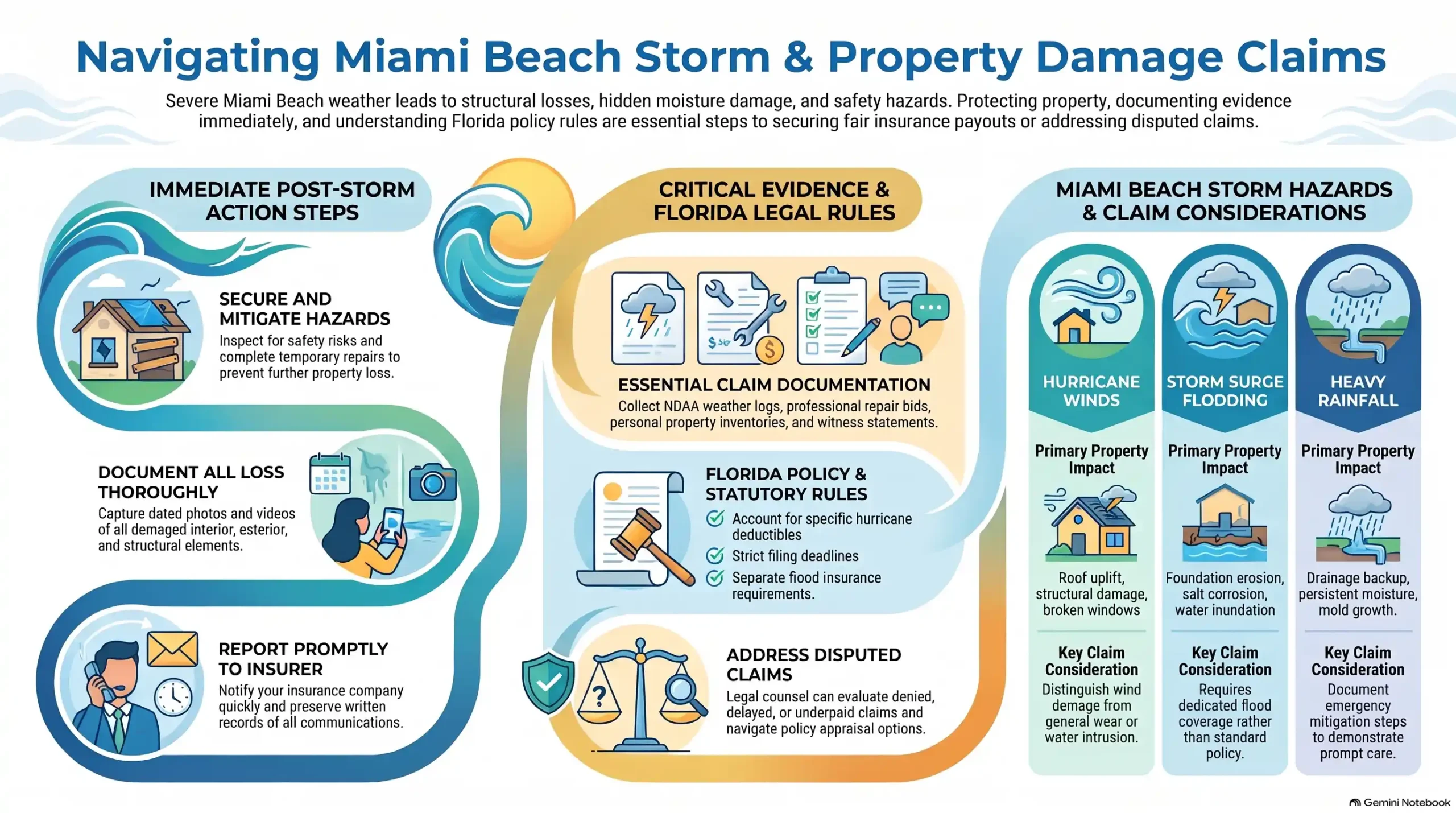


How We Can Help With Your Miami Beach Property Claim Storm & Weather Damage Injury Claim
When a storm damages a Miami Beach property, the resulting insurance claim can involve disputed coverage, delayed payments, or disagreements over repair costs. A property claim lawyer can help policyholders understand their options and pursue a fair review while keeping the needs of residents, employees, and others affected by the damage in view.
The process may begin with a careful Policy review to identify relevant duties, deadlines, limits, and coverage exclusions. Counsel can organize records, assess insurer communications, and help document damage and repair costs. When an insurer disputes a claim or offers an amount that does not reflect supported losses, a lawyer can explain available responses and communicate with the insurer on the policyholder’s behalf.
Legal guidance can also help property owners meet claim requirements and make informed decisions without overlooking obligations to those who rely on the property. Each matter depends on its policy language and facts. A lawyer can clarify those factors and outline practical next steps.
OUR CONSULTATIONSARE FREE
START YOUR FREE CASE REVIEW

Understanding Miami Beach Property Claim Storm & Weather Damage Injury Cases
Storm and weather damage claims in Miami Beach can involve more than disputes over property repairs, particularly when a damaged building creates unsafe conditions or contributes to an injury. These cases may require careful consideration of the property owner’s responsibilities, the injured person’s circumstances, and the insurance policy’s terms. A claim may address medical expenses, lost income, and other documented losses, while a separate property claim concerns covered repairs. The connection between damage and injury must be supported by reliable evidence, such as incident reports, photographs, medical records, and witness accounts.
Policy exclusions can limit coverage, and the specific wording of each policy matters. Insurers may also examine whether the property owner met applicable mitigation duties by taking reasonable steps to reduce further harm. Prompt documentation and communication can help clarify what occurred and preserve relevant information. A thorough review can identify disputed issues, explain available options, and support a fair resolution that recognizes the injured person’s needs without overstating the evidence.
Common Causes of Miami Beach Property Claim Storm & Weather Damage
Storm and weather damage to Miami Beach properties commonly results from hurricane winds, storm surge flooding, and periods of heavy rainfall. Wind-driven debris can also break windows, damage roofs, and compromise building exteriors. Identifying the cause of the damage can help clarify the scope of a property claim.
Hurricane Winds
Hurricane-force winds can damage Miami Beach properties by lifting roof materials, breaking windows, and driving rain into the building envelope. Roof uplift may loosen shingles, tiles, flashing, or other coverings, leaving interior spaces exposed to further weather damage. Windborne debris can puncture exterior walls and glazing, while pressure changes may strain doors and roof connections. Properly installed Hurricane shutters can help protect windows, but damage may still occur when components fail or openings are not fully secured. After a storm, property owners may document visible damage, arrange reasonable temporary protection, and retain receipts for related expenses. A careful inspection can identify less obvious problems, including displaced roofing and moisture intrusion. Claim documentation should distinguish wind damage from other causes and include photographs, repair estimates, and relevant maintenance records.
Storm Surge Flooding
When a hurricane pushes ocean water toward the shore, storm surge can inundate Miami Beach properties and cause extensive flooding. Rising coastal water may enter homes, businesses, garages, and shared facilities through doors, windows, and ground-level openings. The force of moving water can damage walls, flooring, electrical systems, and building foundations, while debris carried by the surge may worsen structural damage. Saltwater intrusion can corrode metal components, contaminate materials, and leave deposits that require specialized cleanup. Prolonged exposure may also encourage mold growth and impair indoor air quality. Surge can undermine shorelines and landscaping through coastal erosion, potentially destabilizing nearby structures and access routes. Property owners and managers who document water levels, affected materials, and repair needs can support accurate claim assessments and help guarantee that recovery addresses safety, habitability, and the needs of residents and visitors.
Heavy Rainfall
During periods of intense rainfall, Miami Beach properties can sustain water damage when drainage systems cannot carry runoff away quickly enough. Rainfall intensity may exceed the drainage capacity of streets, gutters, roof drains, and nearby stormwater infrastructure, allowing water to collect around buildings. If water enters through doors, windows, foundation openings, or damaged roofing, it can affect interior finishes, electrical systems, and personal property. Prolonged moisture may also contribute to mold growth and deterioration of building materials. Property owners and managers who document water entry, preserve damaged items when safe, and arrange prompt inspections can help protect occupants and support an accurate assessment. Claim evaluations may consider the storm’s conditions, maintenance history, and the observed path of water intrusion. Clear records can help insurers determine covered damage and necessary repairs.
Wind-Driven Debris
Strong winds can turn unsecured objects, tree limbs, and roofing materials into debris that strikes Miami Beach buildings. These impacts may crack windows, puncture roofs, damage siding, or compromise doors, allowing rain to enter and worsen interior losses. Debris impact pathways often begin with loose patio furniture, construction materials, or weakened branches carried across exposed yards and streets. Airborne object hazards can also arise when shingles, signs, or other building components detach during severe weather. Property owners and managers who secure outdoor items and maintain trees may reduce risks to residents, visitors, and neighboring structures. After an incident, photographs, repair records, and prompt temporary protection can help document damage and limit further harm. A careful assessment can distinguish wind-related impact from other storm damage and support an accurate insurance claim.
Don’t Wait. Call Our Florida Personal Injury Lawyers Now!


Legal Rights of Miami Beach Property Claim Storm & Weather Damage Injury Victims
Storm and severe weather damage can create significant legal and financial challenges for Miami Beach property owners and occupants. Florida law and the terms of an insurance policy shape the rights available after a covered loss. Policyholder rights may include submitting a claim, receiving a timely decision, and obtaining a clear explanation when an insurer limits or denies payment. Careful documentation can help owners, tenants, and community representatives protect those rights while supporting affected neighbors.
When a claim is disputed, relevant steps may include:
- Reviewing policy language, deadlines, exclusions, and notice requirements before responding to the insurer.
- Keeping photographs, repair estimates, receipts, and written communications organized to support the claimed loss.
- Seeking qualified legal guidance about coverage disputes, appeal options, and potential remedies under applicable law.
An insurer’s obligations depend on the policy and facts of the loss. Prompt, accurate communication can reduce avoidable delays and help ensure available benefits are assessed fairly. Legal counsel can explain procedures without guaranteeing an outcome.
Why Do Miami Beach Property Claim Storm & Weather Damage Injuries Happen?
Understanding why storm and severe-weather injuries occur can help Miami Beach property owners identify hazards and document how a loss affected occupants. Strong winds can break windows, dislodge roofing, and send debris into occupied spaces. Heavy rainfall may overwhelm drainage systems, causing water to enter buildings, weaken flooring, or create slippery surfaces. Flooding can also damage electrical systems and expose occupants to shock or fire hazards.
Some losses reflect conditions that existed before a storm. Poor maintenance, aging materials, or construction that does not meet the applicable building code may leave a property less able to withstand severe weather. Coastal erosion can undermine foundations and nearby structures, while salt air may accelerate corrosion of metal components. These vulnerabilities can increase the likelihood that a weather event causes structural failure or unsafe conditions.
Injuries may result from falling materials, collapsing surfaces, contaminated water, or disrupted utilities. Understanding these causes helps clarify how property conditions and weather forces combined to create risks for occupants and visitors.
What Should You Do After a Miami Beach Property Claim Storm & Weather Damage Injury?
After storm or weather damage, the property owner should promptly document affected areas with clear photographs and a written record of losses. Take reasonable steps to protect the property from further damage while preserving evidence and keeping records of related expenses. The owner should then promptly contact the insurer, report the damage accurately, and follow the policy’s claim procedures.
Document the Damage
Promptly documenting storm and weather damage can help preserve important evidence for a Miami Beach property claim. Once conditions allow safe access, the property owner should photograph and video each affected room, exterior area, and damaged item. Images should show both close details and wider views that establish location and scale. A dated Personal Property Inventory can list damaged belongings, their approximate age, purchase price, and replacement value; receipts or other available records may support those entries. The owner should also keep copies of repair estimates, inspection reports, and communications with the insurer. If the home cannot be occupied, records of Temporary Accommodation expenses, such as lodging and related receipts, may help substantiate additional costs. Organized documentation can assist adjusters, contractors, and others evaluating the claim and help make certain the reported losses are reviewed accurately.
Protect Your Property
Secure the property as soon as conditions permit to limit further damage and reduce safety risks. A responsible response begins with checking for hazards, including unstable structures, exposed wiring, standing water, and damaged gas lines. Occupants should leave unsafe areas and contact emergency services when there is immediate danger. Once conditions are safe, temporary measures such as covering openings, shutting off utilities when appropriate, and moving belongings away from water may help protect people and property. Any temporary repair should be reasonable and should not create additional hazards. Emergency planning can help residents identify evacuation routes, necessary supplies, and safe contacts before another severe weather event. Ongoing property maintenance, including clearing drains and inspecting roofs, may reduce vulnerability to future damage. These precautions support household safety and help protect neighbors and responders.
Contact Your Insurer
Once immediate safety concerns have been addressed, the property owner should notify the insurer of the storm or weather damage as soon as reasonably possible. Prompt notice allows the company to open a claim, explain required procedures, and arrange an inspection. The owner should provide accurate details about the date, location, and apparent cause of the damage without guessing about its extent or origin. Photographs, repair estimates, receipts, and a record of communications can help document the loss and support a clear review. A careful Policy review can clarify coverage, exclusions, notice duties, and any claim deadline stated in the contract. The owner should retain copies of submitted materials and request written confirmation of important instructions. Timely, organized communication can help the insurer assess the claim fairly and preserve resources for affected occupants and neighbors.
Don’t Wait. Call Our Florida Personal Injury Lawyers Now!
Critical Evidence in a Miami Beach Property Claim Storm & Weather Damage Injury Case
Reliable evidence can help establish the extent of storm damage, the conditions that caused it, and the resulting losses.
Essential records may include:
- Photographs documenting damage and affected areas.
- Weather records confirming the timing and severity of the event.
- Repair estimates and witness statements supporting the claimed losses and circumstances.
Storm Damage Photographs
Photographs taken soon after a storm can preserve important evidence of property damage before repairs or cleanup alter the scene. Clear images of roofs, windows, interior leaks, damaged belongings, and surrounding areas can help document the condition and extent of loss. Wide views establish context, while close-ups show specific damage and details such as cracks, stains, or displaced materials. Take images safely and without disturbing hazardous areas. Photo metadata may record when and where an image was created, helping establish its origin. Retain original files and store image backups securely to reduce the risk of loss or alteration. Consistent documentation can assist property owners, insurers, and professionals evaluating a claim, while supporting a fair process for those affected by storm damage.
Weather Event Records
Official weather event records can help establish the conditions surrounding storm damage in a Miami Beach property claim. NOAA storm archives may document storm tracks, wind speeds, rainfall totals, and official warnings relevant to the date and location of reported damage. Radar history records can show how a storm moved through the area and when intense precipitation or wind activity occurred. These sources may help clarify whether observed conditions match the reported event and support a reliable timeline. A property owner or representative can preserve relevant records and compare them with photographs, incident reports, and witness accounts. Accurate documentation can help insurers, investigators, and legal professionals evaluate a claim fairly. Because records may be updated or difficult to retrieve later, timely collection can help preserve useful evidence for all parties involved.
Repair Estimates
Detailed repair estimates can help establish the scope and cost of storm damage in a Miami Beach property claim. A clear estimate identifies affected areas, necessary materials, labor, and proposed repairs, creating a practical basis for evaluating the insurer’s assessment. Contractor bids can provide additional pricing information, especially when they explain the required work and distinguish urgent repairs from improvements. Scope comparisons may reveal whether an estimate omits damaged components or relies on repair methods that do not address the full loss. Consistent documentation, including photographs and invoices, can connect listed work to observed storm damage. Estimates should be reviewed for accuracy and reasonable local costs, and should avoid charges unrelated to the event. Reliable repair evidence can support a fair claim resolution and help property owners restore safe, usable spaces for residents and neighbors.
Witness Statements
While repair estimates document the cost and scope of storm damage, witness statements can provide independent accounts of how the damage occurred and whether unsafe conditions contributed to an injury. In a Miami Beach property claim, witnesses may describe when flooding began, whether debris or damaged structures blocked a walkway, and how quickly the property owner responded. Neighbor observations can help establish weather conditions and identify hazards before or after an incident. Statements from residents, visitors, maintenance workers, or first responders may also clarify the sequence of events and the injured person’s actions. A credibility assessment considers each witness’s opportunity to observe, consistency, possible bias, and agreement with photographs, records, or other evidence. Careful, timely interviews can preserve useful details and support a fair evaluation of responsibility, helping those affected pursue appropriate assistance.
Long-Term Effects of Miami Beach Property Claim Storm & Weather Damage Injuries
Storm and weather damage can cause structural deterioration that worsens over time if repairs are delayed or incomplete. Persistent moisture may lead to recurring damage and additional repair needs. These conditions can increase costs when necessary work is postponed.
Structural Deterioration
Structural deterioration can develop long after a storm or severe weather event, as moisture intrusion, wind damage, and repeated flooding weaken building materials over time. In Miami Beach, salt-laden air and severe weather can accelerate damage to concrete, steel, roofing, and load-bearing components. Small cracks may expand, connections may loosen, and foundation weakening can affect a building’s stability. Corrosion progression may reduce the strength of reinforcing steel and fasteners, increasing the risk of costly repairs or unsafe conditions. These changes can remain hidden until inspections reveal shifting walls, sagging floors, or compromised supports. Timely documentation and qualified assessments help property owners understand the extent of damage and preserve evidence for an insurance claim. Addressing structural deterioration also supports the safety of residents, workers, and others who rely on the property.
Persistent Moisture Damage
Persistent moisture can continue damaging a Miami Beach property long after severe weather has passed. Water trapped behind walls, beneath flooring, or within insulation may remain unnoticed while materials absorb moisture and gradually weaken. This concealed dampness can support Hidden mold growth, particularly in areas with limited ventilation. Mold and persistent odors may affect indoor air quality, creating concerns for occupants, visitors, and workers who rely on a safe environment. Moisture can also cause paint to blister, wood to swell, and finishes to deteriorate, even when visible storm damage appears minor. A qualified assessment can help identify affected areas and document conditions before they worsen. Property owners who promptly report suspected moisture damage can support a thorough claim review and help protect everyone using the building.
Delayed Repair Costs
When storm-related damage is not repaired promptly, the cost of restoring a Miami Beach property can increase over time. Persistent moisture may weaken building materials, encourage mold growth, and damage electrical or structural systems. As deterioration spreads, repairs that might have involved limited drying and replacement can require broader reconstruction. Delays may also complicate insurance documentation, making it important for property owners to record damage, mitigation efforts, and repair estimates. Residents displaced during restoration may need Temporary housing, while owners may seek emergency financing to cover urgent work or ongoing expenses. These pressures can affect families, tenants, and local businesses that depend on safe, usable buildings. Timely assessment and clear communication with insurers and qualified contractors can help limit further loss and support a more orderly recovery for everyone affected.
Proving Liability in Miami Beach Property Claim Storm & Weather Damage Injury Cases
Proving liability in a Miami Beach storm or weather damage injury case requires more than showing that severe conditions caused an accident. The injured person generally must establish that a property owner or another responsible party failed to take reasonable steps to protect visitors, workers, or residents from foreseeable hazards. Evidence may show that dangerous conditions existed and that the responsible party knew, or should have known, about them.
Relevant records can include inspection reports, maintenance logs, repair requests, photographs, weather data, and witness accounts. These materials may help establish Negligent Maintenance, such as leaving a roof leak, loose structure, or flooded walkway unaddressed. Building Code Violations may also support a claim when a property feature failed to meet applicable safety requirements and contributed to the injury.
A careful investigation can clarify how the hazard developed, whether reasonable precautions were available, and how the incident caused harm. This process helps injured people pursue accountability while supporting safer conditions for the wider community.
Dealing With Insurance Companies After a Miami Beach Property Claim Storm & Weather Damage Injury
After a storm-related injury on a Miami Beach property, insurance companies may investigate the incident and assess whether the policy covers the claimed losses. Their review may include the property’s maintenance records, photographs, witness accounts, and medical documentation. Injured visitors should provide accurate information and preserve relevant records, while avoiding assumptions about coverage or responsibility.
Policy language can distinguish between covered storm damage and losses attributed to excluded conditions, such as gradual deterioration. A Claim denial should identify the insurer’s stated reasons and the policy provisions supporting its decision. If the explanation conflicts with available evidence or policy terms, the injured person may request clarification and seek guidance from a qualified attorney.
Insurers must handle claims in accordance with applicable legal duties. Bad faith may arise when an insurer unreasonably delays, misrepresents coverage, or fails to conduct a fair review. Careful communication helps protect the injured person’s interests and supports a fair assessment, while allowing the insurer to address legitimate coverage questions responsibly.
What to Expect During a Miami Beach Property Claim Storm & Weather Damage Injury Claim Process
A storm or weather damage claim typically begins with promptly reporting the loss and documenting affected property, expenses, and any related injuries. The insurer then reviews the evidence and policy terms and may request additional information or an inspection. The process concludes with a decision on coverage and efforts to resolve the claim through payment, negotiation, or other available procedures.
Reporting the Damage
Prompt reporting is an important first step in a Miami Beach storm or weather damage claim. After addressing immediate safety concerns, the property owner or authorized representative should notify the insurer through its designated claims channel. The notice should identify the affected property, describe the general cause and timing of the damage, and provide reliable contact information. Prompt communication helps the insurer open a claim and explain applicable policy requirements, deadlines, and inspection procedures.
When urgent work is needed to prevent further harm, Emergency mitigation may be appropriate, subject to policy terms and reasonable safety precautions. The claimant should ask the insurer how to coordinate repairs before nonessential work begins. If the home cannot be safely occupied, the claimant should also inquire about temporary housing benefits and required approval. Clear, timely communication supports an orderly process and helps preserve resources for affected residents.
Documenting the Loss
Careful documentation helps establish the scope, cause, and timing of storm or weather damage to a Miami Beach property. Photographs and videos can record affected rooms, structural conditions, water intrusion, and damaged belongings before repairs or cleanup alter the scene. Dated images, contractor observations, and receipts for emergency work can help preserve a clear account of events. Property owners may also keep samples of damaged materials when safe and practical, while avoiding hazards such as unstable structures or exposed wiring.
An Inventory checklist can identify each affected item, its location, condition, approximate age, and purchase details. Receipts, warranties, and photographs may support contents valuation when original records are unavailable. Store organized copies securely and share them with appropriate representatives as needed. This careful recordkeeping can help owners provide accurate information and support a fair, orderly claim process.
Insurance Company Review
After a storm or weather-related property claim is submitted, the insurer typically reviews the reported damage, supporting records, and applicable policy terms. During this stage, an adjuster may inspect the property, compare observed conditions with photographs and repair estimates, and request additional information. A Claim file audit can help identify missing documents, inconsistencies, or questions about when and how the damage occurred. The insurer’s coverage interpretation considers policy language, exclusions, limits, and any applicable endorsements. These assessments may affect which losses are considered covered and what evidence is needed to evaluate them. Clear, organized communication can assist the review and reduce avoidable delays. Property owners serving family members, tenants, or community organizations may benefit from keeping records of insurer requests and responses. The review itself does not determine the final outcome.
Resolving the Claim
Once the insurer has reviewed the claim, resolution may involve a coverage decision, a proposed payment, or a request for further documentation. The property owner should compare any offer with repair estimates, photographs, inventories, and other records of storm or weather damage. If the payment appears incomplete, Claim negotiation may address disputed repair costs, depreciation, policy limits, or the insurer’s interpretation of coverage. Clear supporting evidence can keep discussions focused and help the parties assess the loss accurately. When disagreements remain about the amount of damage, the policy may provide an appraisal process for obtaining independent estimates. Appraisal generally addresses valuation rather than every coverage dispute, so policy terms and deadlines matter. Review a written settlement carefully before acceptance, particularly when additional damage may emerge during repairs.
Compensation for Miami Beach Property Claim Storm & Weather Damage Injury Damages
Storm and severe weather damage can leave Miami Beach property owners facing substantial repair costs, lost income, and other financial burdens. Compensation may help restore damaged buildings, replace covered personal property, and address reasonable expenses caused by a covered loss. The available recovery depends on the policy’s terms, exclusions, limits, deductibles, and the evidence supporting the claim.
When a home becomes unsafe or unusable, Additional living expenses may cover eligible costs for temporary housing and necessary needs while repairs proceed, subject to policy limits. Owners of rental properties may seek covered lost rental income, while businesses may pursue business interruption losses when storm damage disrupts operations. Documentation such as repair estimates, receipts, photographs, inventories, and financial records can help establish the amount and cause of claimed losses.
Prompt reporting and careful recordkeeping can support a fair review. A property claim lawyer may assess policy language, organize evidence, and challenge an inadequate valuation, helping owners pursue benefits while preserving resources needed for recovery and continued service to their households or communities.
Economic vs. Non-Economic Damages in Miami Beach Property Claim Storm & Weather Damage Cases
Storm and weather damage claims may include economic losses, such as repair costs, damaged belongings, and temporary housing expenses. Non-economic harm may also arise when property damage disrupts daily life or causes significant distress, though coverage depends on the policy and applicable law. Clear records, expert assessments, and other supporting evidence can help establish the extent and value of claimed damages.
Economic Losses
Economic losses are the measurable financial costs caused by storm or weather damage to a Miami Beach property. They may include repair expenses, replacement costs for damaged belongings, debris removal, and reasonable temporary measures needed to protect the building from further harm. Owners may also incur costs for inspections, permits, and professional services required to document or complete covered repairs. For commercial properties, Business interruption can create lost revenue when damage forces a temporary closure or limits operations. Supporting records, such as invoices, estimates, payroll documents, and financial statements, can help establish the amount and cause of these losses. A careful claim should distinguish storm-related expenses from routine maintenance or unrelated conditions. Clear documentation allows insurers to evaluate the requested compensation and helps property owners pursue recovery while restoring spaces used by residents, employees, and visitors.
Non-Economic Harm
While financial losses can be documented through repair bills and other records, non-economic harm refers to personal effects that are not measured by direct expenses. After a storm damages a home, residents may experience Emotional distress related to disruption, uncertainty, or loss of privacy. Temporary displacement and ongoing repairs can also affect routines, family interactions, and a person’s sense of security. Diminished enjoyment of the property may arise when rooms or outdoor areas cannot be used as intended. These effects differ from economic losses, such as repair costs or damaged belongings, because they concern quality of life rather than a direct financial amount. In a property claim, the availability and treatment of non-economic damages depend on applicable law and policy terms. This distinction helps clarify the range of harm a storm may cause.
Proving Damages
To establish damages in a Miami Beach property claim involving storm or weather damage, the available evidence must connect each claimed loss to the covered event and support its value. Economic losses may include repair costs, replacement materials, debris removal, temporary housing, and documented loss of rental income. Photographs, contractor estimates, invoices, receipts, inspection reports, and financial records can help substantiate these amounts. Damage valuation should distinguish storm-related harm from preexisting conditions and account for policy limits, deductibles, and applicable exclusions.
Non-economic harm may involve disruption, inconvenience, or loss of use, but recovery depends on the policy and governing law. Proof standards require credible, consistent evidence rather than unsupported estimates. A clear timeline and organized records can help insurers assess claims fairly and support property owners seeking a reliable resolution.
Don’t Wait. Call Our Florida Personal Injury Lawyers Now!
When a Miami Beach Property Claim Storm & Weather Damage Injury Case Goes to Trial vs. Settlement
When a storm or severe weather event damages property in Miami Beach, a claim may be resolved through settlement or proceed to trial if the parties cannot agree on responsibility or compensation. Settlement allows the property owner and insurer to reach terms without a courtroom decision. Negotiations may address repair costs, damaged belongings, temporary housing, and other documented losses. A resolution can provide a more predictable timeline, though the offered amount may not reflect the full impact of the damage.
If negotiations fail, trial gives each side an opportunity to present evidence and explain its position to a judge or jury. Records, photographs, expert assessments, and trial testimony may help clarify the cause and extent of the loss. Jury deliberations follow the presentation of evidence and arguments, after which a verdict may determine the outcome. Preparing for trial can require substantial time and expense. The choice between settlement and trial depends on the evidence, disputed issues, and the owner’s priorities. Both paths aim to resolve the claim fairly.
Florida Laws That May Affect Your Miami Beach Property Claim Storm & Weather Damage Case
The outcome of a Miami Beach storm or weather damage claim may depend on Florida laws governing insurance coverage, claim deadlines, and the evidence required to support a loss. Policy language and state requirements can shape how insurers assess covered damage, apply deductibles, and resolve disagreements. Understanding these rules can help property owners protect their interests, maintain accurate records, and communicate responsibly with insurers.
Florida laws and policy terms can shape storm claim coverage, deadlines, deductibles, and the evidence needed to support a loss.
- Coverage and documentation: Photographs, repair estimates, receipts, and professional assessments can help establish the damage and its connection to a covered storm event.
- Deductibles: Florida hurricane deductible rules may affect the amount payable after a qualifying hurricane loss. The policy’s terms and applicable law determine when the deductible applies.
- Disputes: A Florida policy appraisal provision may offer a process for resolving disagreements about the amount of loss. Appraisal generally addresses valuation, not every dispute about coverage or policy interpretation.
Because policy terms and facts vary, legal guidance can clarify available procedures and support fair, informed claim decisions. Careful review may also help property owners direct recovery resources toward repairs that protect residents, workers, and neighboring properties.
The Statute of Limitations for Miami Beach Property Claim Storm & Weather Damage Injury Cases
After storm or weather damage in Miami Beach, a property claim may involve legal deadlines that affect how long an owner has to bring a lawsuit. Florida law sets time limits for filing certain property insurance lawsuits, and the applicable period can depend on the claim’s circumstances and the policy involved. These Filing deadlines are separate from notice requirements for reporting damage to an insurer. Missing a deadline may prevent recovery through court, even when the damage is substantial.
The date from which a limitation period runs may also require careful review. A dispute can arise over when damage occurred, when it was discovered, or whether later events affected the claim. Policy exceptions, statutory changes, and specific policy terms may alter how a deadline applies. Owners who preserve accurate records of the storm, damage, communications, and repair estimates can support a clear timeline. Because deadlines may change and exceptions are fact-specific, prompt attention to the governing law is important to protect property interests and maintain accountability.
How a Miami Beach Property Claim Storm & Weather Damage Lawyer Can Help You
A Miami Beach property claim storm and weather damage lawyer can help property owners evaluate coverage, document losses, and address disputes with an insurer. Through Policy review, counsel can explain relevant provisions, exclusions, deductibles, and duties after a covered event. This guidance helps owners understand the basis for an insurer’s decisions and organize a clear response.
A Miami Beach property claim lawyer can clarify storm coverage, document damage, and help property owners respond to insurer disputes.
A lawyer may also coordinate evidence and assess the financial scope of damage. That work can support claim valuation and help guarantee that repair needs and related losses are presented accurately.
Assistance may include:
- Reviewing policy language and claim correspondence to identify coverage issues and clarify the insurer’s stated position.
- Organizing photographs, inspection findings, repair estimates, and receipts into a consistent record of property damage.
- Comparing the insurer’s assessment with documented repair costs and explaining disputed amounts through clear, supported submissions.
When to Contact a Miami Beach Property Claim Storm & Weather Damage Lawyer
Timely legal guidance may be appropriate when storm or weather damage raises questions about coverage, claim requirements, or the insurer’s assessment. A property owner may want to contact a Miami Beach property claim lawyer soon after discovering damage, especially when the source, extent, or repair needs are unclear. Early advice can help clarify what information to preserve and which steps may be necessary to present an accurate account of the loss.
Prompt notification to the insurer is important, but policy requirements and claim deadlines can vary. A lawyer may help review relevant policy language and identify dates or documentation requirements that could affect the claim. Legal guidance may also be useful if an insurer requests recorded statements, disputes the cause of damage, delays a response, or issues a payment that appears inconsistent with documented repairs.
Owners managing property for residents, tenants, or community members may seek guidance promptly to support responsible decisions. They should retain photographs, communications, estimates, and receipts while arranging necessary measures to prevent further damage.
Why You Need an Experienced Miami Beach Property Claim Storm & Weather Damage Lawyer
When storm damage leads to questions about coverage, causation, or repair costs, an experienced Miami Beach property claim lawyer can help property owners evaluate the insurer’s position and understand their options. Such guidance can support a fair process for families, tenants, employees, and others who depend on safe, functional buildings.
Storm claims may involve disputed assessments, delayed decisions, or disagreements about whether damage resulted from wind, flooding, or another covered event. A lawyer can review policy language, organize relevant records, and explain how exclusions, deadlines, and proof requirements may affect a claim. Careful Policy interpretation can clarify the scope of available benefits and identify issues requiring further evidence.
When coverage disputes arise, experienced counsel can communicate with the insurer, challenge unsupported conclusions, and seek a reasoned resolution. This assistance may help property owners pursue funds needed for repairs while reducing avoidable confusion. By addressing the claim with diligence and clear documentation, legal support can also help protect the people and communities relying on the property.
How to Choose the Right Miami Beach Property Claim Storm & Weather Damage Lawyer for Your Case
Selecting the right Miami Beach property claim storm and weather damage lawyer requires careful attention to the attorney’s experience with similar claims, knowledge of Florida insurance law, and approach to disputed coverage. A suitable attorney should understand how storms, wind, flooding, and related damage affect residential and commercial properties, and should be prepared to evaluate policy terms and claim documentation.
Review Attorney Credentials, including licensing, relevant practice history, and experience handling insurer disputes or litigation. Prospective clients can ask how the lawyer investigates damage, communicates with adjusters, and keeps clients informed. Clear answers help indicate whether the attorney’s process aligns with the property owner’s needs and responsibilities to occupants, tenants, or others affected by the loss.
The Fee Structure should be explained before representation begins, including how fees and case expenses are handled. A written agreement can clarify these terms and reduce uncertainty. Comparing several qualified lawyers on experience, communication, and proposed strategy may help property owners make an informed choice without relying solely on advertising or promises of a particular result.
About The Law Offices of Anidjar & Levine
The Law Offices of Anidjar & Levine represents property owners in insurance disputes, including claims involving storm and weather damage in Miami Beach.
The firm helps clients understand policy terms, document losses, and respond to insurer decisions.
Its attorneys can review claim records, explain available options, and pursue appropriate steps when coverage or payment is disputed.
Each matter depends on its facts, policy language, and applicable law, so a careful review is important.
Firm history provides context for the firm’s approach to legal representation.
Its work includes helping individuals and families address difficult legal and financial challenges.
In property claims, that service may involve communicating with insurers, organizing supporting evidence, and advocating for a fair evaluation of covered damage.
Community involvement reflects a commitment to serving people beyond individual cases.
For Miami Beach property owners, accessible guidance can help clarify next steps after severe weather disrupts a home or business.
The firm’s role is to provide informed legal support as clients make recovery decisions.

Frequently Asked Questions
Does Homeowners Insurance Cover Hurricane Damage to a Miami Beach Property?
Homeowners insurance may cover hurricane damage to a Miami Beach property, but coverage depends on the policy and the cause of loss. Wind damage is often covered, while flooding typically requires separate flood insurance. Policyholders should review windstorm coverage exclusions and Hurricane deductible requirements, which may apply as a percentage of the insured value. Promptly documenting damage and reporting the claim can help owners pursue benefits and support timely repairs for residents and others affected.
What Should I Do if My Insurer Denies My Storm Damage Claim?
If an insurer denies a storm damage claim, the policyholder should review the denial letter and policy to identify the stated reason and any appeal deadlines. They should preserve photographs, repair estimates, inspection reports, receipts, and all insurer communications as claim documentation. A written denial appeal should address each reason with supporting evidence. If the dispute remains unresolved, an independent adjuster or qualified attorney can assess coverage and explain available options.
Can I File a Claim for Damage Caused by a Neighbor’s Fallen Tree?
A property owner may file a claim for damage caused by a neighbor’s fallen tree, but coverage and responsibility depend on the circumstances. Tree ownership, the cause of the fall, and any prior notice of hazardous conditions can affect liability. The affected owner should photograph the damage, preserve repair estimates, and collect liability evidence, such as messages or inspection records. The owner should promptly notify the insurer and review applicable policy terms.
How Can I Protect My Property While Waiting for an Insurance Inspection?
Property owners can limit further loss by arranging reasonable Emergency repairs, such as covering exposed areas or shutting off water, while preserving damaged materials when safe. They should photograph and video each affected area before work begins, keep receipts, and maintain a dated record of actions and expenses. Damage documentation should distinguish temporary protection from permanent repairs. Notify the insurer promptly, and delay nonurgent work until inspection whenever practical.
Can I Reopen a Storm Damage Claim if Additional Damage Appears Later?
A storm damage claim may often be reopened or supplemented when additional damage appears, subject to the policy terms, deadlines, and the insurer’s procedures. The policyholder should promptly document the newly discovered damage with dated photographs, repair estimates, and relevant inspection records, then notify the insurer in writing. Because hidden damage may emerge during repairs, a qualified professional can help assess its cause and scope. Timely, accurate records support a fair review and help protect affected occupants.
—————————
Storm damage claims in Miami Beach can involve complex policy language, disputed causes, and strict deadlines.
Property owners should document damage, preserve relevant records, and understand the full scope of their losses before accepting a settlement.
The Law Offices of Anidjar and Levine can review a claim, explain available options, and address disputes with an insurer.
Timely legal guidance may help protect a property owner’s rights and support a fair evaluation of covered storm and weather damage.
Learn more about a Miami Beach Personal Injury Lawyer.

