

A Miami Beach car accident collision types lawyer can explain how rear-end, side-impact, head-on, rollover, and multi-vehicle crashes may affect an injury claim. Collision direction and force, vehicle damage, road conditions, and driver conduct can help clarify what happened and the potential injuries. Evidence may include photographs, witness accounts, police reports, and medical records. Miami Beach Personal Injury Lawyer services from The Law Offices of Anidjar and Levine may help preserve relevant evidence, communicate with insurers, assess documented losses, and identify deadlines. The following sections explain essential causes, rights, and legal options.
Main Takeaways
- Miami Beach car crashes may involve rear-end, side-impact, head-on, rollover, or multi-vehicle collisions.
- Collision direction, speed, vehicle size, and point of impact can affect injury severity and the evidence available.
- A lawyer can review crash reports, witness accounts, photographs, vehicle damage, and available video to assess liability.
- Document the scene and seek medical evaluation promptly; some injuries may not become apparent right away.
- Potential claims may involve negligent driving and compensation for medical expenses, lost income, pain, and ongoing limitations.


How We Can Help With Your Miami Beach Car Accident Collision Types Injury Claim
A Miami Beach car accident lawyer can help injured people pursue compensation after collisions involving rear-end impacts, side-impact crashes, head-on collisions, and multi-vehicle accidents. For people focused on supporting those harmed, effective representation can reduce the burden of managing an unfamiliar claims process. Local claim support may include explaining available options, organizing records, and communicating with insurers on a client’s behalf.
A lawyer can review medical documentation, repair estimates, lost-income information, and other evidence relevant to the claim. This careful preparation helps establish how the crash affected the injured person and what losses may be recoverable. The attorney can also identify deadlines, address requests for information, and assess settlement proposals against the documented harm.
Each matter requires a case strategy shaped by its evidence, circumstances, and the client’s needs. Counsel can provide clear updates and practical guidance while pursuing a fair resolution through negotiation or, when appropriate, litigation. This support allows injured people to focus on recovery while their legal interests receive attentive, informed representation.
OUR CONSULTATIONSARE FREE
START YOUR FREE CASE REVIEW

Understanding Miami Beach Car Accident Collision Types Injury Cases
Because each collision type creates distinct risks and evidence, understanding how a crash occurred can help clarify the issues in a Miami Beach injury case. The collision pattern may affect which injuries require evaluation and what records can help explain the harm. A careful review can also support a fair assessment of the needs of injured people and their families.
Side-impact collisions may expose occupants to force along the side of a vehicle, while rollover crashes can involve multiple points of contact and shifting occupant movement. These events may result in injuries that are not immediately apparent, making timely medical assessment important. The physical damage, vehicle positions, and available witness accounts can help establish how the impact unfolded.
Each case requires attention to its particular facts, injuries, and losses. Clear documentation can help decision-makers understand the effects on daily activities, treatment needs, and financial stability. This process supports informed discussions about responsibility and compensation while respecting the circumstances of those affected.
Common Causes of Miami Beach Car Accident Collision Types
Miami Beach collisions commonly result from distracted driving, speeding, reckless actions, and impaired driving. Failure to yield can also cause serious crashes, particularly at intersections and pedestrian crossings. Identifying these contributing factors helps clarify how a collision occurred and which safety obligations may have been disregarded.
Distracted Driving
How can a moment of inattention lead to a serious collision? In Miami Beach, drivers may encounter pedestrians, cyclists, and changing traffic conditions that require sustained attention. Phone distraction can draw a driver’s eyes from the roadway, hands from the wheel, or focus from surrounding hazards. Reading a message, adjusting navigation, or answering a call may delay recognition of a stopped vehicle or a person entering a crosswalk.
Dashboard technology can also divert attention when drivers enter destinations, change settings, or respond to alerts while moving. Even brief visual or mental distraction can interfere with safe decisions at intersections and in congested areas. Preventing these incidents requires drivers to set navigation before departure, silence nonessential notifications, and keep attention on the road. When a collision occurs, evidence may help establish whether distraction contributed to the harm.
Speeding and Reckless Driving
While distraction can take a driver’s attention from the road, speeding and reckless driving reduce the time and space available to respond to hazards. In Miami Beach, dense traffic, frequent intersections, pedestrians, and changing road conditions can make excessive speed especially dangerous. Speeding crash patterns may include rear-end impacts when a driver cannot stop in time, loss-of-control collisions, and severe intersection crashes. Aggressive actions such as tailgating, unsafe lane changes, and ignoring traffic signals can also place other road users at risk. These behaviors may support a finding of negligence when they contribute to a collision. Evidence can include witness statements, vehicle damage, roadway conditions, and available traffic or camera records. Reckless driving penalties may apply under Florida law, while injured people may pursue compensation through a civil claim. Prompt documentation can help clarify responsibility and support fair outcomes for those affected.
Impaired Driving
When alcohol, drugs, or certain medications impair a driver, reduced judgment, coordination, and reaction time can make a collision more likely. Impairment may affect a person’s ability to recognize hazards, maintain control, and respond appropriately to changing traffic conditions. Even when a driver appears composed, substances can compromise safe vehicle operation and place passengers, pedestrians, and other motorists at risk.
After a suspected impaired-driving crash, investigators may review witness accounts, available video, and police observations. DUI checkpoints and sobriety testing are among the measures authorities may use to identify suspected impairment, subject to applicable law. Chemical test results and other evidence may also help establish whether impairment contributed to a collision. A careful review can clarify the circumstances and support accountability, while helping injured people pursue appropriate assistance and understand their legal options.
Failure to Yield
Failure to yield occurs when a driver does not give another road user the right of way required by traffic laws or roadway conditions. In Miami Beach, these collisions may happen when motorists turn across oncoming traffic, enter intersections without stopping, or merge without checking for approaching vehicles. Right-of-way rules help determine which driver must wait, but confusion or inattention can lead to unsafe decisions. Poor intersection visibility, caused by parked vehicles, landscaping, or weather, may make it harder to see pedestrians, cyclists, and other cars. Drivers are expected to adjust their speed and approach cautiously when visibility is limited. A failure to yield can cause serious injuries, particularly to people outside a vehicle. Reviewing the circumstances, witness accounts, and available evidence can help clarify how the collision occurred and identify responsible parties.
Don’t Wait. Call Our Florida Personal Injury Lawyers Now!


Legal Rights of Miami Beach Car Accident Collision Types Injury Victims
The legal rights of Miami Beach car accident victims depend on how a collision occurred, the injuries sustained, and the evidence available to establish fault and damages. Victims may seek compensation from responsible parties for medical expenses, lost income, and other documented losses.
Their rights can vary with insurance coverage and the facts of each claim.
- Victims may file an insurance claim or pursue a civil action against an at-fault driver.
- Comparative negligence may reduce compensation when a victim shares responsibility, subject to Florida law.
- Uninsured motorists coverage may provide benefits when an at-fault driver lacks sufficient insurance.
- Injured people may request records, preserve evidence, and obtain legal advice before accepting a settlement.
- Families and community members can support victims by helping them access care and understand available resources.
Deadlines and policy terms can affect recovery. A qualified attorney can explain applicable procedures, assess evidence, and communicate with insurers. Prompt, informed action can help protect a victim’s interests while allowing attention to recovery and family responsibilities.
Why Do Miami Beach Car Accident Collision Types Injuries Happen?
Miami Beach car accident injuries often result from the force and direction of a collision, as well as the circumstances that caused it. Impact direction can determine which parts of a vehicle absorb the initial force and how occupants move inside the cabin. A frontal crash may expose occupants to sudden deceleration, while a side impact can place substantial force near the passenger compartment. Rear-end collisions may cause rapid neck movement, and rollover crashes can involve repeated impacts.
Vehicle design also affects injury risk. Seat belts, airbags, head restraints, and the strength of the passenger compartment may reduce harm, but they cannot prevent every injury. The size and weight of the vehicles involved, their speed, and the point of contact can influence the severity of the outcome. Road conditions, visibility, traffic flow, and driver actions may contribute to a crash or limit the time available to avoid one. Understanding these factors helps explain why injuries differ among people involved in similar collisions.
What Should You Do After a Miami Beach Car Accident Collision Types Injury?
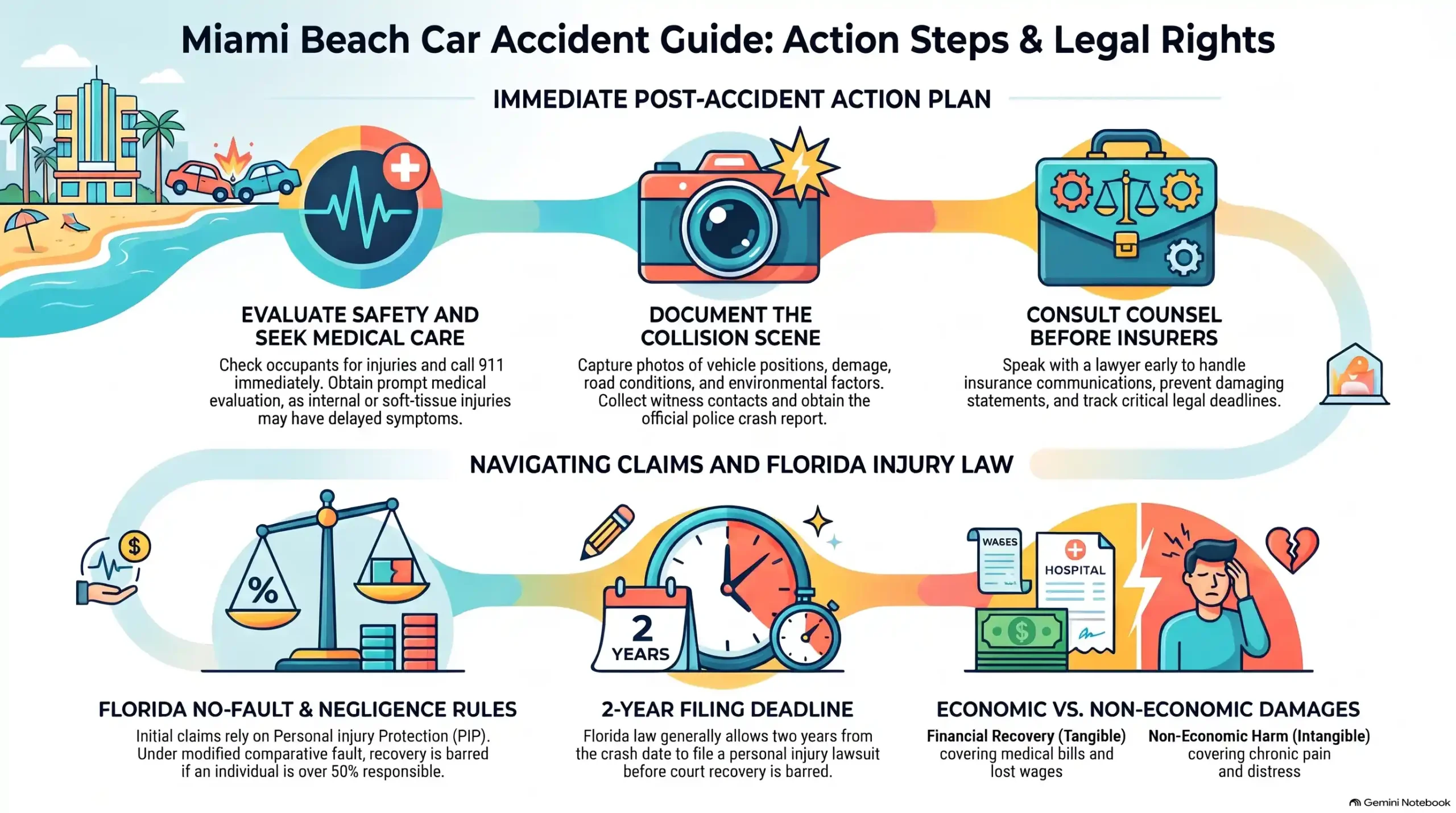
After a Miami Beach collision, those involved should first check for injuries and contact emergency services when needed. They should document the scene, vehicle damage, and relevant details while prioritizing safety. Once immediate needs are addressed, consulting a car accident lawyer can help clarify legal options and next steps.
Check for Injuries
Check for injuries as soon as the collision has stopped, but do not move anyone who may have a neck, back, or head injury unless an immediate danger requires it. A calm, careful response can protect everyone involved and help emergency personnel provide appropriate care. From a safe position, the driver should assess physical condition by asking whether anyone is hurt and observing for visible bleeding, confusion, difficulty breathing, or signs of shock. Even when injuries appear minor, occupants should avoid unnecessary movement and wait for trained responders. If anyone is unconscious, seriously injured, or struggling to breathe, the driver should call 911 immediately and follow the dispatcher’s instructions. When it is safe, the driver can offer reassurance and remain nearby without attempting treatment beyond their training. Prompt attention to possible injuries supports the well-being of all involved.
Document the Collision
Once immediate safety concerns have been addressed, the driver should document the collision while details remain clear and the scene is safe. Photographs can preserve the positions of vehicles, traffic signals, road markings, debris, and visible injuries. Vehicle damage documentation should include close-up and wider views of each affected area, along with images showing the vehicles’ locations relative to nearby streets or landmarks. If possible, the driver should record the time, weather, lighting, and road conditions. Witness names and contact information may help clarify what occurred, while a brief written account can capture observations before memories fade. A collision diagram may show each vehicle’s direction of travel, point of impact, and final position. These records can support accurate reporting and help those involved provide clear information to insurers and authorities.
Contact a Lawyer
When should a driver contact a lawyer after a Miami Beach car accident? A driver may seek legal guidance promptly when an injury requires treatment, fault is disputed, or an insurer requests a statement or settlement decision. Early advice can help preserve evidence, clarify deadlines, and prevent avoidable errors while the driver focuses on recovery and family responsibilities.
A prospective client can ask about attorney availability, relevant experience, and the steps involved in evaluating a collision claim. Many firms offer a Free consultation to review the known facts and explain possible options without requiring an immediate commitment. The driver should bring medical records, photographs, witness details, and insurance correspondence when available. A lawyer can also explain how communication with insurers may proceed and what information remains necessary. Careful, timely guidance supports informed decisions and helps protect the driver’s ability to pursue fair compensation.
Don’t Wait. Call Our Florida Personal Injury Lawyers Now!
Critical Evidence in a Miami Beach Car Accident Collision Types Injury Case
Evidence can help establish how a Miami Beach collision occurred, who may be responsible, and the extent of resulting injuries. Preserve important records and firsthand accounts promptly, as details may become harder to verify over time.
Crucial evidence may include:
- Police crash reports documenting the incident and initial observations
- Scene photographs showing vehicle damage, road conditions, and traffic controls
- Witness statements describing what occurred before and during the collision
- Medical records connecting reported injuries to the crash and documenting treatment
- Vehicle damage assessments that may help clarify the collision’s severity and mechanics
Police Crash Reports
How can a police crash report affect an injury claim after a Miami Beach collision? The report may document the collision’s location, date, involved parties, vehicle details, and statements gathered by responding officers. Insurers and attorneys can use this record to assess how a crash occurred, identify potential witnesses, and compare accounts. However, a report is not a final ruling on fault, and an officer’s conclusions may be challenged with other reliable evidence. Injured people should review the report for factual errors and obtain clarification when information is incomplete. Report filing deadlines may vary according to the circumstances and applicable Florida requirements. If a material error appears, the report amendment process may involve contacting the investigating agency and providing supporting information. Accurate records can help claims proceed fairly and responsibly.
Scene Photographs
Scene photographs can preserve details of a Miami Beach collision that may change or disappear before an investigation is complete. Images of vehicle damage, skid marks, debris, traffic signals, road conditions, and nearby signs can help clarify how different collision types occurred. Photographs should capture the broader roadway as well as close views of relevant damage, with Camera Angles that show distance, direction, and position. Consistent, well-lit images may help investigators and legal professionals assess whether physical evidence supports an account of the crash. Photo Metadata, including timestamps and device information, may help evaluate when and how images were created, although it does not establish accuracy by itself. Prompt, careful documentation can preserve useful evidence and support a fair assessment of injuries, responsibility, and the needs of those affected.
Witness Statements
While photographs document the physical scene, witness statements can provide independent accounts of how a Miami Beach collision unfolded. Witnesses may describe vehicle movements, traffic signals, road conditions, and events immediately before impact. Their observations can help clarify disputed collision details and support a careful assessment of responsibility. Witness credibility depends on factors such as the person’s vantage point, ability to observe, consistency, and possible bias. A neutral bystander may offer useful information, but each account should be evaluated in context rather than accepted without scrutiny. Prompt statement preservation can protect details that may fade over time. Investigators may record contact information, obtain written or recorded accounts, and note when and where each witness observed the crash. Respectful, accurate documentation serves all parties by preserving relevant evidence for fair review.
Medical Records
Medical records provide essential evidence linking injuries to a Miami Beach car accident and documenting the care required. They can show when symptoms began, how a condition changed, and whether treatment followed medical advice. Emergency department notes, diagnostic images, physician assessments, prescriptions, and therapy records may help explain the injury’s nature and impact. Consistent documentation can also clarify how a particular collision type, such as a rear-end or side-impact crash, affected the person.
Record organization helps present this evidence clearly. Arrange records by date and check for missing visits or conflicting details. Provider requests may be needed to obtain complete files, including billing statements and test results. Accurate records support fair evaluation of losses, help decision-makers understand the care involved, protect the injured person’s privacy, and preserve reliable evidence.
Long-Term Effects of Miami Beach Car Accident Collision Types Injuries
The long-term effects of a Miami Beach car accident can include chronic pain and reduced mobility that interfere with daily activities. Traumatic brain injuries may cause lasting changes in memory, concentration, or other cognitive functions. Emotional and psychological effects, including anxiety or post-traumatic stress, may also persist and require ongoing care.
Chronic Pain and Mobility
After a Miami Beach car accident, chronic pain and reduced mobility can persist long after visible injuries begin to mend. Collision forces may damage joints, muscles, or connective tissue, leaving a person with stiffness, weakness, or recurring discomfort. These limitations can affect walking, working, driving, and routine household tasks. Medical assessment helps identify the source of ongoing symptoms and guide appropriate care. Pain management may include prescribed treatment, physical therapy, and monitored changes in daily activity. A rehabilitation plan can also help restore strength and flexibility while reducing the risk of further strain. When movement remains restricted, mobility aids such as canes or walkers may support safer, more independent activity. Family members and caregivers can assist with transportation and daily needs, while preserving the injured person’s dignity and choices throughout recovery.
Traumatic Brain Injury Effects
When a Miami Beach car accident causes a traumatic brain injury, its effects may continue well beyond the initial collision. Depending on the injury’s severity, a person may experience persistent headaches, dizziness, fatigue, or difficulty with balance and coordination. Cognitive changes can affect memory, attention, processing speed, and the ability to manage everyday tasks. Post-traumatic amnesia may interfere with recalling events before or after the crash, while sensory processing changes can make light, sound, or movement harder to tolerate. These limitations may disrupt work, education, caregiving, and other responsibilities. Medical assessment and follow-up care can help identify ongoing symptoms and guide rehabilitation. When family members, colleagues, or caregivers understand these effects, they can provide practical support while respecting the injured person’s needs and promoting safer, more consistent recovery.
Emotional and Psychological Impact
Emotional and psychological effects may persist long after a Miami Beach car accident, even as physical injuries begin to recover. Survivors may experience anxiety, depression, sleep disruption, or post-traumatic stress, particularly after severe collisions or traumatic brain injuries. These effects can interfere with work, relationships, and daily activities, while remaining less visible than physical harm.
Emotional Triggers, such as traffic noise, intersections, or reminders of the crash, may cause distress and avoidance. Recognizing these responses can help survivors and their families seek appropriate support without judgment. Mental health professionals can assess symptoms and recommend treatment, including counseling or other clinically appropriate care. Consistent Coping Strategies, such as a gradual return to routine and support from trusted people, may assist recovery. Timely attention can protect well-being and help survivors maintain meaningful connections while adjusting to lasting changes.
Proving Liability in Miami Beach Car Accident Collision Types Injury Cases
Proving liability in a Miami Beach car accident case requires evidence showing how the collision occurred and which party’s conduct caused it. Investigators may examine police reports, witness statements, photographs, and roadway conditions to establish a reliable account. Traffic camera analysis can help determine vehicle movements, signal timing, and the sequence of events. Vehicle damage reconstruction may clarify the point of impact, direction of travel, and force involved. These findings can be considered alongside medical records and expert opinions to connect the collision with the injuries.
Liability may arise from speeding, distracted driving, failure to yield, unsafe lane changes, or other negligent conduct. In some cases, more than one person or entity may have contributed to the crash. A careful review of available evidence helps identify relevant responsibility and preserve an accurate record. This process supports injured people seeking accountability while promoting safer roads for everyone who lives in or visits Miami Beach. Each case depends on its specific facts and applicable law.
Dealing With Insurance Companies After a Miami Beach Car Accident: Collision Types and Injury
After a Miami Beach car accident, insurance companies may contact injured people to gather information and evaluate potential claims. Their representatives may request recorded statements, medical authorizations, photographs, or details about the collision. Injured people can respond carefully, provide accurate information, and avoid guessing about events or injuries that remain under evaluation. They may request information in writing and keep copies of correspondence.
An insurer’s interests may differ from those of an injured person, particularly when responsibility or the extent of harm is disputed. A lawyer can review communications, explain policy terms, and help protect a client from statements that could be misunderstood. Promptly preserving bills, treatment records, repair estimates, and other relevant documents can support clear communication.
Questions about Policy renewal or premium increases may also arise after a collision. These issues depend on the policy, insurer, and circumstances, so coverage terms should be reviewed rather than assumed. Careful, factual communication helps injured people address insurers while focusing on recovery and their responsibilities to others.
What to Expect During a Miami Beach Car Accident Collision Types Injury Claim Process
A Miami Beach car accident injury claim typically begins with an initial case review to assess the collision, injuries, and available evidence. Medical documentation helps establish the nature and extent of the injuries, while insurance negotiations address liability and potential compensation. The process concludes with claim resolution, which may involve a settlement or further legal action.
Initial Case Review
During an initial case review, a Miami Beach car accident lawyer typically examines how the collision occurred, the injuries involved, and the available evidence. This early case assessment helps identify potential liability issues and clarify which collision details may affect a claim. During an Attorney consultation, the lawyer may ask about the location, sequence of events, vehicles involved, and communications with insurers. The client can also learn about relevant deadlines, possible legal procedures, and the information needed to evaluate next steps. Witness accounts, photographs, police reports, and insurance correspondence may help establish a clearer account of the incident. The review is an opportunity to discuss concerns and understand the lawyer’s role. A careful, organized assessment supports informed decisions and helps the process proceed responsibly, including when pursuing fair compensation and protecting others’ interests.
Medical Documentation
Clear medical documentation can help connect injuries to a car accident and show how they affect a person’s health and daily activities. After a collision, an injured person may receive care from emergency clinicians, primary care providers, experts, or therapists. Consistent follow-up helps providers assess symptoms, identify changes, and recommend appropriate treatment. Records may include examination findings, diagnostic results, prescriptions, referrals, and notes about work or routine task limitations. Provider coordination can help guarantee that relevant clinicians understand the injury history and treatment plan. If a record contains an inaccurate date, symptom description, or other detail, request corrections through the provider’s established process. Keeping appointment summaries and treatment instructions organized can also support accurate communication. Complete, consistent documentation helps clarify the injury’s course and the care required during recovery.
Insurance Negotiations
Once treatment needs and supporting records are clearer, insurance negotiations can begin to address responsibility and the value of an injury claim. Insurers may review collision reports, photographs, witness accounts, medical records, and proof of lost income. Their assessment can differ from the injured person’s account, particularly when several vehicles or disputed traffic movements are involved. A lawyer may organize the evidence, communicate with adjusters, and explain how documented losses relate to the collision. Coverage disputes can arise over policy limits, exclusions, or which insurer must respond, so policy language and available records require careful review. Settlement timing depends on the completeness of the evidence, ongoing treatment, and the parties’ responses. Clear, timely communication can help keep discussions focused and support a fair assessment while protecting the injured person’s interests.
Claim Resolution
Claim resolution may involve a negotiated settlement or, when the parties cannot agree, a lawsuit and court proceedings. After reviewing evidence, medical records, and liability, the parties may assess the claim’s value and discuss compensation for documented losses. Settlement timelines vary based on injury severity, treatment progress, insurer responsiveness, and the complexity of the collision. A claimant may need to understand future care needs before evaluating an offer. If negotiations stall, mediation can provide a structured opportunity for the parties to reach an agreement with help from a neutral mediator. Mediation does not guarantee settlement, and unresolved disputes may proceed to litigation. Throughout the process, clear records and timely decisions can support an orderly resolution. Legal guidance can help claimants evaluate terms and understand the consequences of accepting an offer or pursuing court review.
Compensation for Miami Beach Car Accident Collision Types Injury Damages
Compensation after a Miami Beach car accident depends on the collision, the injuries sustained, and the losses those injuries cause. A rear-end crash, side-impact collision, or rollover may cause different injuries and require different evidence to show how the event affected the injured person. Relevant records can include medical evaluations, treatment plans, repair assessments, and documentation of time away from work. Careful Damage valuation helps connect the collision to the harm and supports a reasoned demand for recovery.
The process may involve insurer review, negotiations, or, when necessary, a court claim. Settlement timelines vary according to injury severity, clarity of fault, completeness of records, and the parties’ willingness to resolve disputed issues. A settlement should account for the known consequences of the collision and avoid premature conclusions while treatment is ongoing. Accurate information enables decision-makers to assess the claim fairly and helps injured people pursue the resources they need for recovery. Legal guidance can clarify available options, explain procedural requirements, and support informed decisions without promising a particular result.
Economic vs. Non-Economic Damages in Miami Beach Car Accident Collision Types Cases
After a Miami Beach car accident, economic damages may cover measurable losses such as medical bills, lost income, and vehicle-related expenses. Non-economic damages address less tangible harm, including pain, emotional distress, and reduced quality of life. Establishing either category requires evidence that connects the losses to the collision and supports their value.
Economic Losses
Economic losses in a Miami Beach car accident case are the measurable financial costs caused by the collision. They may include emergency treatment, hospital care, medication, rehabilitation, and other reasonable medical expenses. Repair or replacement costs for a damaged vehicle and necessary transportation expenses may also be recoverable. When injuries prevent a person from working, Lost wages can reflect income missed during recovery. If the injury limits future work or reduces a person’s ability to earn, diminished earning capacity may be considered. These losses are generally supported by records such as bills, pay statements, employer documentation, and professional assessments. Careful documentation helps establish how the collision affected the injured person’s finances and supports a fair evaluation of the claim. An attorney can organize evidence and pursue compensation while respecting the claimant’s circumstances.
Non-Economic Harm
Non-economic damages address the personal effects of a Miami Beach car accident that do not have a direct dollar value. Unlike medical expenses or lost income, these harms involve changes to a person’s comfort, independence, and daily life. Physical pain may continue after treatment ends, while emotional distress can affect sleep, concentration, and confidence. Loss of enjoyment may arise when injuries prevent someone from pursuing recreation, family activities, or community service that once gave life meaning. Relationship strain can also develop when pain or emotional changes disrupt communication and shared responsibilities with loved ones. These consequences matter because a person’s well-being extends beyond financial stability. In considering a claim, the distinction between economic and non-economic damages helps describe the broader impact of a collision on an injured person’s life and relationships.
Proving Damages
To establish damages in a Miami Beach car accident case, the injured person must connect the collision to both measurable financial losses and personal harms. Economic damages may include medical bills, rehabilitation costs, lost income, and property damage expenses. Records such as invoices, employment documents, and medical reports can help verify these losses. When injuries affect future earning capacity or require ongoing treatment, wage projections and assessments of Future care may clarify anticipated costs. Non-economic damages address harms that lack a direct price, including pain, emotional distress, and reduced ability to participate in daily activities. Medical evaluations, personal accounts, and testimony from people familiar with the injured person’s life may support these claims. Clear documentation helps decision-makers assess the full impact and determine compensation grounded in the evidence.
Don’t Wait. Call Our Florida Personal Injury Lawyers Now!
When a Miami Beach Car Accident Collision Types Injury Case Goes to Trial vs Settlement
After a Miami Beach car accident, an injury claim may resolve through settlement or proceed to trial, depending on the evidence, the parties’ positions, and the extent of the disputed issues. A settlement may provide a defined resolution without the uncertainty, expense, and time associated with a courtroom decision. The parties may negotiate after reviewing medical records, damage documentation, witness accounts, and other relevant evidence. Settlement timing can depend on how quickly the injury’s effects become clear and whether both sides can reach acceptable terms.
A case may proceed to trial when important facts or the value of the claim remain contested, or settlement discussions do not produce an agreement. Trial preparation can involve organizing evidence, preparing witnesses, and presenting a clear account of the collision and its consequences. A judge or jury then evaluates the evidence and reaches a decision. Each path calls for careful consideration of the injured person’s needs and priorities. Legal guidance can help assess the available options and support an informed choice throughout the process.
Florida Laws That May Affect Your Miami Beach Car Accident Collision Types Case
Florida law can shape how a Miami Beach car accident injury claim is evaluated, including the deadlines, evidence, and compensation rules that apply. These rules help determine which insurance benefits may respond and how responsibility is assessed. Understanding them can support informed decisions and help injured people focus on recovery and their responsibilities to family and community.
- PIP coverage: Florida’s no-fault system generally requires drivers to seek initial medical and wage-loss benefits through personal injury protection, subject to policy limits and eligibility requirements.
- Comparative negligence: A person’s compensation may be reduced by their share of fault. Under Florida’s modified comparative negligence rule, recovery is generally barred if that person is more than 50 percent responsible.
- Evidence: Medical records, photographs, witness accounts, and crash reports can help establish injuries, damages, and how a collision occurred.
- Insurance requirements: Florida law sets minimum auto insurance obligations, while available coverage may depend on the policies involved.
- Serious injuries: Claims exceeding PIP benefits may require evidence meeting Florida’s threshold for pursuing damages beyond those benefits.
The Statute of Limitations for Miami Beach Car Accident Collision Types Injury Cases
Deadlines can shape a Miami Beach car accident injury claim as substantially as insurance and fault rules. Under Florida law, a person generally has two years from the date of a negligence-based crash to file a personal injury lawsuit. Missing that period can prevent recovery through the courts, even when the injuries are serious, and another driver appears responsible. Filing deadlines may differ for wrongful death claims, claims involving government entities, or cases governed by other legal rules, so the facts and applicable law matter.
The discovery rule may affect when a limitations period begins in certain cases where an injury or its cause was not reasonably apparent. It does not automatically extend the deadline for an ordinary collision claim, and exceptions are limited. Evidence of the crash date, injury, and related treatment can help establish the relevant timeline. Timely attention to these requirements supports an orderly process and preserves the opportunity to seek accountability and compensation for harm caused by negligent driving.
How a Miami Beach Car Accident Collision Types Lawyer Can Help You
A Miami Beach car accident lawyer can help an injured person understand how the collision, available evidence, and applicable law affect a potential claim. Through an Attorney investigation, counsel may review crash reports, photographs, witness accounts, vehicle damage, and medical records to clarify how the collision occurred and who may be responsible. This careful work can support a fair process and help protect the interests of people harmed by negligent driving.
A lawyer may also:
- Identify potentially responsible drivers or other parties.
- Organize records that document injuries and related expenses.
- Consult qualified experts when technical analysis is needed.
- Communicate with insurers and assess settlement proposals.
- Develop a case strategy suited to the evidence and the client’s needs.
Legal counsel can explain available options, evaluate how fault rules may apply, and present supported arguments during negotiations or litigation. By handling complicated claim tasks, counsel may allow an injured person to focus on recovery while pursuing accountability and resources for documented losses.
When to Contact a Miami Beach Car Accident Collision Types Lawyer
Prompt legal guidance may be important after a Miami Beach car accident, particularly when injuries require treatment, fault is disputed, or an insurer requests a statement or offers a settlement. Early Consultation can help an injured person understand relevant deadlines and preserve records before evidence becomes difficult to obtain. Medical care should remain the priority, and documenting symptoms, expenses, and communications may support a clear account of the collision.
You may want to contact a lawyer soon after any crash involving significant injury, multiple vehicles, a commercial vehicle, or uncertainty about how the collision occurred. Legal input may also be useful when a person cannot work, needs ongoing treatment, or feels pressure to resolve a claim quickly. Attorney Selection can include reviewing a lawyer’s experience with the collision circumstances, communication practices, and fee terms. A timely discussion does not require a person to accept representation immediately. It can clarify available options, help protect the interests of those affected, and support informed decisions while the claim is being assessed.
Why You Need an Experienced Miami Beach Car Accident Collision Types Lawyer
An experienced Miami Beach car accident lawyer can assess how the collision occurred, identify potentially responsible parties, and determine which evidence may support a claim. This experience matters because crashes can involve complex roadway conditions, conflicting accounts, and injuries that aren’t immediately apparent. A careful investigation may preserve photographs, witness statements, vehicle data, and official reports before important details are lost.
Local knowledge can also help explain Tourist Driver Patterns, including unfamiliarity with one-way streets, congested routes, and pedestrian-heavy areas. Rental Vehicle Risks may raise additional questions about vehicle maintenance, insurance coverage, and the conduct of drivers using unfamiliar cars. An attorney can examine these issues while keeping the injured person’s needs central.
Clear documentation and informed analysis can help establish how a collision affected a person’s health, work, and daily responsibilities. By addressing legal and evidentiary concerns, experienced counsel can help injured people and their families focus on recovery and community commitments without overlooking important steps in pursuing fair compensation.
How to Choose the Right Miami Beach Car Accident Collision Types Lawyer for Your Case
Choosing the right Miami Beach car accident lawyer means evaluating whether the attorney has experience with your specific collision type and can explain how that experience applies to your case. A rear-end crash, sideswipe, or intersection collision may raise different questions about fault, evidence, and injury causation. Asking how the lawyer has handled comparable cases can clarify whether that background fits the circumstances.
Attorney Experience should also include the ability to investigate promptly, preserve relevant records, and communicate clearly with clients and others affected by the crash. A lawyer should explain the likely steps, possible challenges, and what information the client can provide to support a careful review.
Before making a decision, prospective clients can compare Fee Structures and request a clear explanation of costs, billing practices, and any expenses that may arise. They should also assess responsiveness and whether answers are direct and easy to understand. Careful questions help individuals choose representation aligned with their needs and pursue accountability through an informed process.
About The Law Offices of Anidjar & Levine
The Law Offices of Anidjar & Levine represents people injured in car accidents, including crashes in Miami Beach.
The firm assists clients seeking information and legal guidance after collisions involving rear-end impacts, side crashes, and other roadway events.
Its attorneys review available evidence, explain potential legal options, and communicate with insurers on a client’s behalf.
These services can help injured people understand the steps involved in pursuing a claim.
Firm History reflects the practice’s work representing injury victims and families in Florida.
The firm handles personal injury matters, including claims involving medical expenses, lost income, and other losses connected to a crash.
Each case depends on its facts, and no particular result can be guaranteed.
Attorney Recognition may include professional honors or memberships, which should be considered alongside experience, communication, and case handling.
People evaluating counsel can ask about an attorney’s background and approach.
The firm’s role is to provide legal representation while treating clients with respect and keeping them informed throughout the process.

Frequently Asked Questions
Which Types of Car Collisions Are Most Common on Miami Beach Roads?
Rear-end crashes, intersection collisions, sideswipes, and pedestrian vehicle collisions are among the most common incidents on Miami Beach roads. Heavy traffic, frequent stops, narrow streets, and substantial pedestrian activity contribute to these patterns. Miami Beach intersection crashes may involve drivers failing to yield, misjudging signals, or turning across another vehicle’s path. These risks affect residents, visitors, and pedestrians, making careful driving and attention to crossing areas vital to community safety.
How Do Side-Impact Collisions Differ From Head-On Crashes?
Side-impact collisions occur when one vehicle strikes another’s side, while head-on crashes involve vehicles traveling toward each other and colliding front to front. T-bone impact mechanics concentrate force near the struck vehicle’s doors, where occupants may have limited structural protection. By contrast, frontal crash forces act through the front of each vehicle and may be reduced by seat belts, airbags, and crumple zones. Both types can cause severe injuries, depending on speed and vehicle design.
Can a Low-Speed Rear-End Collision Cause Serious Injuries?
Yes, a low-speed rear-end collision can cause serious injuries, even when vehicle damage appears minor. Sudden movement may strain the neck and back, producing whiplash symptoms such as stiffness, headaches, or restricted motion. Delayed pain can develop hours or days later, so an absence of immediate discomfort does not rule out injury. Prompt medical assessment helps identify problems, guide treatment, and protect the person’s health while supporting an accurate record of the incident.
What Makes a Multi-Vehicle Pileup Different From a Typical Crash?
A multi-vehicle pileup differs from a typical crash because several vehicles may collide in rapid succession, creating overlapping causes and consequences. Chain reaction crashes can begin with one impact, then spread as drivers have limited time or space to respond. Secondary impacts may expose occupants to additional forces and complicate injury assessments. Investigators must determine each collision’s sequence, identify contributing actions, and distinguish the effects of separate impacts to support accurate findings.
How Can Vehicle Damage Patterns Help Identify a Collision Type?
Vehicle damage patterns can indicate the direction, angle, and sequence of impacts, helping investigators distinguish a rear-end crash from a sideswipe or head-on collision. Crumple zone analysis shows where force was concentrated and may reveal whether a vehicle absorbed one impact or several. Paint transfer clues can connect vehicles and suggest contact points. Investigators compare these observations with photographs, vehicle positions, and witness accounts to develop a careful, evidence-based reconstruction that supports fair outcomes.
—————————
Miami Beach car accidents can involve rear-end impacts, side collisions, head-on crashes, and other events that cause serious injuries.
Victims may have legal options, but evidence, deadlines, and Florida’s insurance rules can affect a claim.
Prompt medical care and careful documentation can help preserve important records.
The Law Offices of Anidjar and Levine can review the circumstances, explain potential next steps, and address questions about pursuing compensation.
Learn more from a Miami Beach Personal Injury Lawyer.
A timely consultation can help an injured person make informed decisions about the claim and its requirements.

