

At the Law Offices of Anidjar and Levine, we handle physical trauma claims with urgency and precision. We secure prompt medical evaluation, preserve critical evidence, and coordinate qualified experts to establish causation and document every loss. We notify responsible parties, track deadlines, and guard your claim against insurer tactics.
Our team quantifies medical costs, lost income, and non‑economic damages, preparing for negotiation or litigation as needed. Whether a vehicle collision, workplace accident, or unsafe property, we build a fact‑driven case for full compensation. For related cases, see our Birth Injury Lawyer resource. Continue to see how we protect your rights and recovery.
Key Takeaways
- Seek immediate medical evaluation to document injuries, start treatment, and create a clear record linking the incident to your symptoms.
- Preserve and collect evidence: photos, witness contacts, medical records, damaged items, and digital data like surveillance or vehicle telematics.
- File prompt incident reports and send preservation letters to at-fault parties, insurers, employers, or property owners; track deadlines and confirmations.
- A lawyer investigates liability, coordinates experts, calculates damages (medical bills, lost income, pain and suffering), and negotiates with insurers or litigates.
- Know your statute of limitations and tolling rules; missing deadlines can bar claims, especially in government or medical-related cases.

How We Can Help With Your Physical Trauma Injury Claim
Although every case is unique, we begin by evaluating the facts of your injury, identifying liable parties, and preserving critical evidence before it’s lost. We collect medical records, witness statements, and digital data, then align these materials with applicable laws and deadlines. We coordinate with your healthcare providers to document diagnoses, treatment plans, and future needs, ensuring your claim reflects the full scope of harm.
We guide you through care pathways and vetted rehabilitation options, helping you access services while maintaining clear documentation of progress and costs. We calculate damages with precision, including medical expenses, lost income, diminished earning capacity, and non-economic losses. We manage insurance negotiations with a disciplined strategy, countering low offers with substantiated demands and expert support when required.
If necessary, we prepare for litigation, drafting pleadings, conducting discovery, and presenting evidence persuasively. Throughout, we communicate consistently, protect your privacy, and keep the case moving, so you can focus on healing and stability.
Understanding Physical Trauma Injury Cases
With your claim strategy underway, we next focus on what defines a physical trauma injury case and how the law evaluates it. We assess whether another party owed you a duty of care, breached that duty, and caused measurable harm. We document injuries through medical records, expert opinions, and objective testing, linking each diagnosis to the incident. We also quantify losses, including medical expenses, lost income, diminished earning capacity, and pain and suffering.
We pay close attention to rehabilitation timelines, since they influence damages and future care planning. Accurate projections enable us to advocate for sustainable solutions that support your recovery and your ability to serve others. We anticipate insurance disputes by building a fact-driven record and countering arguments about pre-existing conditions or causation.
We preserve evidence promptly, comply with filing deadlines, and protect communications. Throughout, we align strategy with your long-term needs, ensuring the case reflects both legal standards and your practical path forward.
Common Causes of Physical Trauma Injuries
We often see physical trauma arise from motor vehicle collisions, workplace accidents, slip and fall incidents, and assaults or other violent acts.
We’ll outline how each cause typically occurs, what evidence tends to support liability, and which parties may be responsible.
Motor Vehicle Collisions
Consider the split second when a driver glances at a phone, misjudges speed, or ignores a traffic signal—motor vehicle collisions often start with preventable errors that produce severe physical trauma.
We see the consequences daily: fractures, spinal injuries, and traumatic brain injuries that alter lives in an instant. We investigate driver behavior, visibility, weather, and vehicle maintenance, then secure evidence before it disappears.
We analyze police reports, scene photographs, and dash cam footage, correlating impact dynamics with medical findings.
When road design contributes to hazardous conditions—such as poor signage, unsafe intersections, and inadequate lighting—we pursue the entities responsible. We consult reconstruction experts and physicians to quantify causation and future care.
Our focus is accountability and meaningful recovery, ensuring you receive thorough compensation for medical costs, lost income, and long-term rehabilitation.
Workplace Accidents
Although workplaces vary from construction sites to office towers, the forces that cause severe physical trauma are familiar: falls from heights, struck‑by incidents, caught‑in or between machinery, electrical exposure, repetitive strain, and unsafe lifting.
We investigate how these events occur, identify failures in hazard recognition, and pursue accountability.
We examine guardrail compliance, lockout procedures, tool maintenance, and supervision. We also analyze scheduling pressures that erode safety culture and lead to shortcuts.
When injuries arise, we gather records, interview witnesses, and secure expert opinions. We evaluate whether safety training was adequate, whether ergonomic assessments were performed, and whether reasonable accommodations were ignored.
We coordinate claims across workers’ compensation and third‑party liability, preserve evidence immediately, and enforce reporting deadlines. Our role is to protect your recovery and prevent recurrence.
Slip and Fall Incidents
Slip and fall incidents often stem from preventable hazards that property owners and managers should anticipate and correct. We see injuries arise from wet floors without warning signs, poor lighting in stairwells, loose carpeting, cluttered walkways, and uneven sidewalks that catch a foot at the wrong moment.
When a business or landlord fails to inspect, maintain, and repair, guests bear the risk of fractures, head injuries, and back trauma.
We act quickly to preserve evidence, securing incident reports, surveillance footage, and maintenance logs. We document conditions through photographs, witness statements, and expert analysis, establishing what should have been done and when. We also coordinate medical evaluations to connect injuries to the fall.
Our purpose is straightforward: hold negligent parties accountable and obtain the resources you need to recover.
Assaults and Violence
While unsafe premises can cause accidental injuries, violence on those same properties can inflict even more devastating harm. When assaults occur in parking lots, bars, apartment complexes, or schools, inadequate lighting, broken locks, and absent security can turn foreseeable risks into physical trauma.
We investigate prior incidents, security policies, surveillance coverage, and staffing to establish what a reasonable property owner should have done.
We also understand that prevention matters. Through community outreach and conflict de escalation training, stakeholders can reduce the likelihood of violent encounters. Still, when harm occurs, we act promptly. We gather medical records, interview witnesses, preserve video, and consult experts to quantify losses and prove causation. Our objective is accountability, safer communities, and full compensation for your medical care, lost income, and long-term recovery.
Legal Rights of Physical Trauma Injury Victims
Because physical trauma disrupts health, work, and stability, we need to ground every decision in a clear understanding of your legal rights. We safeguard victim rights by asserting your entitlement to medical care, wage replacement, and compensation for pain and long-term impairment. We also defend your privacy, your right to choose providers, and your ability to refuse premature settlements. When insurers challenge causation or necessity, we confront insurance disputes with documented evidence and authoritative opinions.
Your rights include remedies against negligent parties, claims for future losses, and access to the civil justice system. We coordinate benefits, prevent duplicative recoveries, and protect liens from eroding your net recovery.
To orient expectations, we emphasize:
- The right to prompt, accurate claim evaluation
- The right to full compensation supported by evidence
- The right to fair negotiation without coercion
- The right to pursue litigation when a settlement fails

Together, we enforce deadlines, preserve evidence, and hold accountable those responsible for your harm.
Steps to Take After a Physical Trauma Injury
After a physical trauma, we first seek immediate medical care to protect our health and create a timely record of injuries.
We then thoroughly document evidence, capturing photos, gathering witness information, preserving damaged items, and saving medical and expense records.
Finally, we report the incident and notify all necessary parties—insurers, employers, property owners, or authorities—to establish notice and support a clear claim pathway.
Seek Immediate Medical Care
In the critical moments following a physical trauma, we urge you to seek immediate medical care to protect your health and preserve your legal rights. An early assessment identifies hidden injuries, establishes a clear treatment plan, and anchors the timeline of your condition.
Prompt triage reduces complications, documents symptoms before they evolve, and supports continuity of care.
Tell providers exactly what happened, every symptom you feel, and any prior conditions. Follow discharge instructions precisely, schedule recommended specialists, and keep all appointments. If travel or mobility is difficult, arrange a telemedicine follow-up to maintain momentum in your recovery. We also suggest obtaining copies of visit summaries, prescriptions, and imaging orders.
Consistent care shows diligence, strengthens causation, and places your well-being at the center of every decision.
Document Evidence Thoroughly
Building a complete evidentiary record starts the moment an incident occurs, and we should approach it methodically to protect your claim.
We begin by photographing the scene, injuries, and property damage from multiple angles, while conditions are unchanged.
We secure names, roles, and contact details for witnesses, then record their statements promptly to preserve accuracy.
We collect medical records, diagnostic images, and treatment plans, organizing them chronologically to link harm to cause.
We preserve clothing, damaged equipment, and debris, labeling each item to maintain a clear chain of custody.
We also capture digital sources, including surveillance footage, vehicle telematics, and wearable data that reflect activity, heart rate, or impacts.
Finally, we back up all files and maintain a master index for swift retrieval.
Report and Notify Parties
With evidence secured and organized, we next protect your claim by reporting the incident promptly and notifying all responsible parties. We file formal incident reporting with employers, property owners, insurers, or law enforcement, ensuring the account is accurate, time-stamped, and complete. We identify every entity with a duty to respond, then deliver timely notice that preserves your rights and triggers coverage obligations.
We also coordinate victim notification where required, documenting communications to create a clear record of responsiveness and care. We confirm receipt of each notice, track deadlines, and follow statutory reporting rules to avoid disputes. When appropriate, we request preservation of evidence and surveillance footage. Our structured notices discourage retaliation, prevent spoliation, and establish a reliable foundation for liability, causation, and damages.
How a Physical Trauma Injury Lawyer Can Help You
Guide the aftermath of an injury with a focused legal advocate who protects your rights and maximizes your recovery.
We assess liability, preserve evidence, and build a clear narrative that connects conduct to harm. We coordinate medical documentation, aligning treatment records with legal standards, and we manage Insurance negotiation to prevent undervaluation.
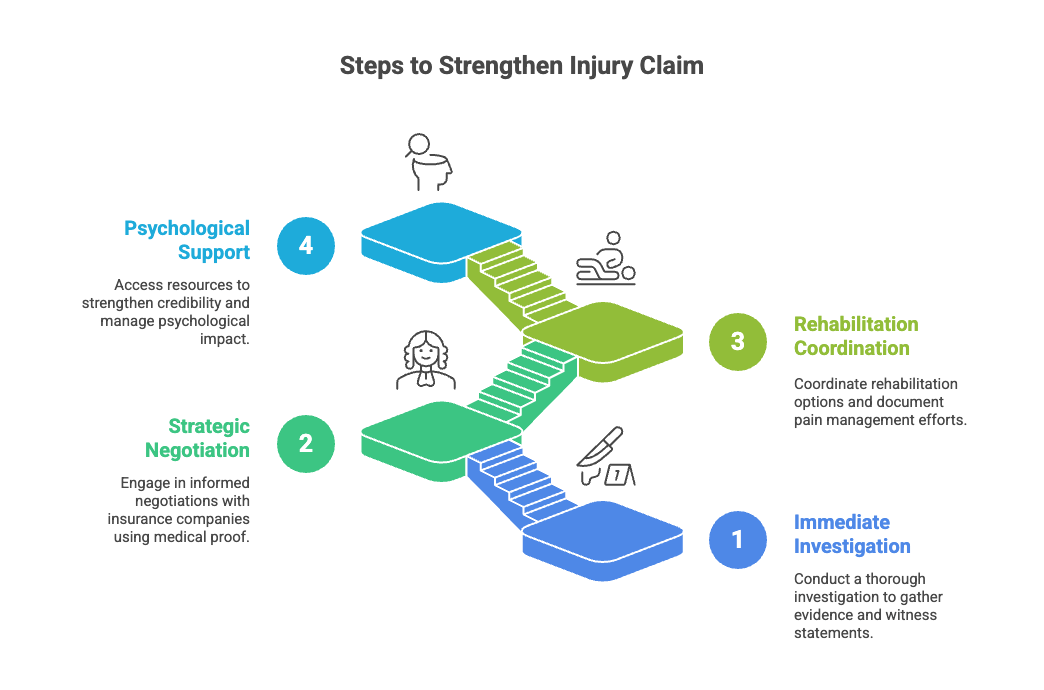
Our approach centers on practical care, integrating Rehabilitation options, Pain management guidance, and referrals for Psychological support, so your healing plan supports your claim.
We communicate with adjusters, employers, and medical providers, reducing burdens while you recover. We calculate damages with precision, including medical costs, lost income, and non-economic loss, then press for timely resolution. When needed, we litigate decisively and prepare you for every step.
- Immediate investigation, evidence preservation, and witness outreach
- Strategic Insurance negotiation informed by medical proof
- Coordination of Rehabilitation options and Pain management documentation
- Access to Psychological support resources that strengthen credibility
We stand with you, advancing your case while honoring your service to others.
Long Term Effects of Physical Trauma Injuries
As we assess long term outcomes, we must address chronic pain syndromes that limit mobility and function, often requiring ongoing treatment and careful documentation.
We also consider cognitive and emotional changes, including memory deficits, concentration problems, anxiety, and depression, which can hinder work, relationships, and independence.
These medical realities translate into significant financial and lifestyle impacts, such as reduced earning capacity, persistent care costs, and necessary accommodations that we plan for and pursue in claims.
Chronic Pain Syndromes
Although many injuries appear to “heal” on the surface, chronic pain syndromes can emerge and persist long after the initial trauma, reshaping daily life and long‑term health. We see clients who develop neuropathic pain, intricate regional pain syndrome, and widespread musculoskeletal pain that limits mobility, sleep, and work.
Understanding Pain neuroscience helps us explain how the nervous system can become sensitized, amplifying signals and prolonging suffering even when tissues have recovered.
We advocate early diagnosis, careful documentation, and Multidisciplinary rehabilitation that integrates medical care, physical therapy, graded activity, and evidence‑based pain education. We coordinate with specialists to secure durable treatment plans, appropriate medications, and interventional options when indicated. We also pursue compensation for ongoing care, adaptive equipment, and vocational supports, ensuring long‑term stability and dignity.
Cognitive and Emotional Changes
Even when physical wounds appear to resolve, trauma can leave lasting cognitive and emotional consequences that disrupt memory, attention, decision‑making, and mood.
We often see clients struggling to process information, organize tasks, and manage their emotions after a serious injury. These changes can strain relationships, complicate work or caregiving, and erode confidence, even in competent people.
We approach these challenges with structured evaluation, clear documentation, and coordinated care.
Cognitive rehabilitation can rebuild attention, executive function, and problem‑solving through targeted exercises and compensatory strategies.
We also emphasize Emotional resilience, strengthening coping skills, sleep routines, and stress management while connecting clients to counseling and peer support.
Financial and Lifestyle Impacts
While injuries may heal, the financial and lifestyle repercussions often persist, reshaping daily routines, long-term plans, and family dynamics.
We see budgets strain under medical bills, therapy costs, and transportation expenses, while lost income compounds the burden. Caregiving responsibilities can reduce work hours for loved ones, affecting stability for the entire household. We also plan for necessary Home modifications, adaptive devices, and accessible vehicles, which demand careful documentation and strategic funding.
We evaluate benefits, wage replacement options, and long‑term care needs, aligning each with realistic recovery timelines. We coordinate vocational assessments to support reentry to work or secure alternative roles.
We then project future costs, including attendant care and replacement services, to protect dignity, independence, and financial resilience throughout recovery and beyond.
Proving Liability in Physical Trauma Medical Malpractice Injury Cases
Build the case from the ground up by establishing duty, breach, causation, and damages with precision.
We begin by identifying the applicable standard of care and how a prudent practitioner would have acted.
Then we document the breach through records, timelines, and policies, aligning each departure with the injury sequence. Expert testimony is essential, as qualified experts translate complex medicine into clear, authoritative opinions on standard of care and causation.
We gather diagnostic data, operative notes, and nursing logs, then cross-check them against protocols and accepted guidelines.
When evidence suggests exclusive control by the provider, we may leverage burden shifting doctrines where permitted, compelling the defendant to explain the deviation. We also secure witness statements and preserve physical and digital evidence.
Finally, we connect the breach to specific harm using differential etiology, ruling out alternative causes.
This rigorous approach positions us to hold negligent actors accountable with integrity and accuracy.
Compensation for Physical Trauma Damages
With liability established through duty, breach, causation, and damages, we turn to the recovery you can pursue for physical trauma. We focus on securing full and fair compensation that sustains your healing and safeguards your future.
Economic damages include medical expenses, hospitalizations, surgeries, medications, rehabilitation, and assistive devices, as well as lost wages and diminished earning capacity. We also pursue funding for home or vehicle modifications and necessary long-term care.
Non-economic damages address pain, suffering, disfigurement, and loss of enjoyment of life. We advocate for psychological compensation to support counseling, trauma therapy, and related mental health care.
When scarring or deformity is present, we seek esthetic restoration, including reconstructive procedures and scar revision, to promote dignity and function.
We document every loss with expert evaluations, treatment plans, and credible testimony. We calculate future costs using life-care planning and actuarial projections. Our objective is thorough relief that honors your recovery and preserves your independence.
The Statute of Limitations for Physical Trauma Injury Cases
Before evidence fades and legal rights narrow, we need to address the statute of limitations that governs physical trauma claims. Every claim faces a filing deadline set by state law, and missing it can bar recovery entirely. We should identify the correct period early, because different injuries and defendants—such as public entities—may impose shorter or specialized limits.
We also evaluate when the clock starts. In many cases, the limitations period begins on the date of the injury; however, discovery tolling can delay accrual until a reasonable person would have discovered the injury and its cause. This doctrine often applies to latent harms, toxic exposures, or misdiagnoses.
We must also analyze statute exceptions. Minority, incapacity, fraudulent concealment, and defendant absence can pause or extend deadlines. Notice requirements, especially for government claims, may arise within weeks. By documenting promptly, preserving records, and calendaring milestones, we protect the claim’s viability and your ability to secure full relief.
Why You Need an Experienced Physical Trauma Injury Lawyer
Time limits and notice rules set the pace, but securing the result you deserve requires strategy, evidence control, and skilled advocacy that only an experienced physical trauma injury lawyer provides.
Deadlines drive the case, but winning demands strategy, evidence control, and seasoned physical injury advocacy.
We recognize the medical, financial, and human stakes, and we align our work with your need to serve family and community. We investigate early, preserve records and devices, and coordinate with experts to define the causal chain and quantify losses with precision.
We set clear client expectations, explaining risks, timelines, and key decision points, so you can make informed choices with confidence. We counter insurer tactics, frame liability with authoritative evidence, and protect you from recorded statements that distort the record. Our settlement strategies use damages modeling, policy analysis, and mediation leverage to maximize value without sacrificing future needs.
If trial becomes necessary, we’re prepared with demonstrative proof, credible witnesses, and focused themes that speak to duty and harm. Throughout, we communicate promptly, manage costs, and pursue remedies ethically and relentlessly.
How to Choose the Right Physical Trauma Injury Lawyer for Your Case
Although many attorneys advertise their experience with injuries, choosing the right physical trauma lawyer requires a deliberate evaluation of credentials, resources, and a good fit.
We start by verifying licensure, disciplinary history, and results in comparable trauma cases.
We examine courtroom experience, expert networks, and access to investigators and medical experts, because serious injuries demand resilient support.
We request client interviews or testimonials that demonstrate responsiveness, diligence, and clear communication.
We also assess strategic alignment, ensuring the lawyer values service, dignity, and accountability.
We insist on transparent fee structures, written engagement terms, and a clear explanation of costs, liens, and contingencies.
We compare projected timelines, litigation readiness, and settlement philosophy, inquiring about how the firm will measure success beyond a single metric.
We evaluate caseloads and staffing to ensure you’re available for quick updates and thorough preparation.
Finally, we choose counsel who listens carefully, explains options plainly, and commits to protecting our interests while treating every stakeholder with respect.
About the Law Offices of Anidjar and Levine
Having outlined how to evaluate a physical trauma lawyer’s credentials, resources, and fit, we now introduce the Law Offices of Anidjar and Levine. This firm aligns with those standards in practice.
We focus on responsive advocacy, clear communication, and disciplined case management because your recovery and rights demand consistent attention. Our team coordinates medical documentation, preserves evidence, and negotiates strategically with insurers, while preparing every matter for trial when necessary.
We measure our work by results and by service. Client Testimonials highlight timely updates, compassionate guidance, and diligent pursuit of fair compensation.
Our attorneys collaborate with investigators and medical experts, ensuring that complex injuries receive thorough analysis. We respect your time and needs, offering accessible scheduling and prompt follow‑through.
Our Office Location is convenient to major transportation, and we leverage secure digital tools for clients who prefer remote meetings. We welcome your questions, explain options plainly, and commit to decisive, ethical representation.

Frequently Asked Questions
Can I Switch Lawyers in the Middle of My Physical Trauma Case?
Yes, you can switch lawyers mid-case. As part of your client rights, you may change attorney if trust erodes, strategy falters, or communication fails.
We’ll advise you to review your fee agreement, request your file, and notify the court if litigation is pending. We coordinate a smooth shift, protect deadlines, and address any liens for prior work.
Let’s guarantee your representation aligns with your goals and serves others with diligence and integrity.
How Do Contingency Fees Work if My Case Settles Quickly?
Contingency fees still apply in an early settlement, but the percentage split may be lower if the agreement has tiered rates.
We typically deduct our agreed fee from the gross recovery, then subtract case costs, and you receive the remainder.
If prior counsel worked on the file, they may share in the fee without increasing your total percentage.
We’ll explain timelines, provide written accounting, and make certain the arrangement aligns with your service-focused goals.
Will Pursuing a Claim Affect My Disability or Workers’ Comp Benefits?
Yes, it can. Pursuing a claim may trigger a benefits offset, reducing disability or workers’ comp payments to prevent double recovery. We must follow strict claim reporting rules, notify insurers, and coordinate liens and subrogation.
We’ll verify your policy terms, settlement structures, and timing, then design strategies—such as net‑recovery allocations or Medicare set‑asides—to preserve eligibility. We also monitor income thresholds and periodic payments, ensuring compliance while maximizing your overall, lawful compensation.
Can I Claim for Injuries Worsened by a Preexisting Condition?
Yes, we can often claim for injuries worsened by a preexisting condition. The law generally accepts the “eggshell plaintiff” principle, provided we prove medical causation linking the incident to the aggravation. We gather records, expert opinions, and timelines to distinguish baseline status from post-incident deterioration.
Comparative negligence may reduce recovery if your actions contributed, but it doesn’t bar claims. We focus on clear documentation, objective testing, and consistent treatment histories to substantiate damages.
Do I Need to Pause Social Media During My Injury Claim?
Yes, we should pause social media during an injury claim. Posts, photos, tags, and comments can become online evidence, sometimes misinterpreted to challenge credibility or damages. Even strict privacy settings don’t fully shield content from discovery or screenshots.
If pausing isn’t feasible, avoid discussing the incident, injuries, activities, or treatment, and ask friends not to tag us. We should document offline, communicate carefully, and seek guidance before sharing anything that could affect the case.
—————
We’re ready to protect your rights, guide your claim, and pursue the compensation you deserve.
Our team evaluates liability, preserves critical evidence, and negotiates strategically—prepared to litigate when necessary.
We’ll manage deadlines, deal with insurers, and coordinate your care so you can focus on recovery. If you’ve suffered physical trauma, don’t wait.
Contact the Law Offices of Anidjar and Levine for a free consultation, explore your options with our Birth Injury Lawyer, and let our experience, resources, and commitment work for you.

