

At Law Offices of Anidjar and Levine, we help brain injury victims secure immediate medical care, preserve vital evidence, and coordinate top medical and forensic experts. We document symptoms, obtain imaging, interview witnesses, and issue preservation letters to protect your rights.
We quantify damages—including medical costs, lost wages, and long-term care—and negotiate assertively with insurers while preparing for trial.
We also manage deadlines and statute issues to safeguard your claim.
Learn how we build causation, prove liability, and pursue full compensation to protect your future.
For related support, see our Birth Injury Lawyer resources.
Key Takeaways
- Provide immediate guidance on medical care, evidence preservation, and issuing preservation letters to protect rights and strengthen causation proof.
- Coordinate neuroimaging, neuropsychological testing, and expert reviews to link incident mechanics to diagnosed brain injuries.
- Collect and organize medical records, therapy notes, and symptom logs to document deficits, timelines, and rule out alternative explanations.
- Build damages models covering medical costs, lost wages, diminished earning capacity, and long-term life‑care needs with economists and planners.
- Negotiate or litigate with organized proof, including expert testimony, to secure settlements or verdicts reflecting lifetime impacts and non‑economic damages.
How We Can Help With Your Brain Injury Claim
From the outset, we take control of your brain injury claim by investigating the incident, preserving vital evidence, and coordinating your medical documentation.
We interview witnesses, obtain surveillance or dashcam footage when available, and work with qualified experts to establish causation and the full scope of harm. We also manage communications with insurers, protecting you from tactics that minimize losses or delay fair resolution.
We build a thorough damages picture that reflects present and future needs. We document medical care, lost income, diminished earning capacity, and required home modifications, then align those findings with appropriate neurorehabilitation options.
We coordinate with treating providers to make certain therapy plans, medications, and assistive technologies are properly substantiated. Recognizing the burden on loved ones, we integrate family caregiver support into our case strategy, including respite needs and training costs.
Throughout, we provide clear updates, meet deadlines, and prepare settlement demands or litigation with precision, guaranteeing your claim proceeds efficiently and decisively.
Understanding Brain Injury Cases
Although every matter is unique, understanding brain injury cases begins with knowing how the law connects negligent conduct to specific, medically supported harm. We link facts to medicine, then medicine to damages, so a judge or jury can see causation and scope.
We gather thorough records, interview treating clinicians, and retain experts who translate intricate findings into clear, admissible opinions.
We connect negligence to medically proven harm, translating complex evidence into clear, persuasive causation and damages.
We rely on neuroimaging advances to corroborate symptoms that might appear subtle at first glance. Diffusion and functional studies can reveal disruption, while neuropsychological testing measures deficits that impair work, learning, and daily life.
We document both acute care and long-term needs, integrating rehabilitation innovations that improve outcomes yet carry costs insurers often dispute.
We also quantify losses beyond medical bills, including reduced earning capacity and life-care requirements.
Throughout, we preserve evidence, meet deadlines, and present organized proof. Our role is to build a case that honors your recovery while securing the resources it requires.
Common Causes of Brain Injuries
As we examine common causes of brain injuries, we often see patterns that begin with motor vehicle collisions and extend to falls and slip incidents in homes, businesses, and public spaces.
We also assess injuries arising from sports and recreation impacts, where inadequate safety measures or negligent supervision can elevate risk.
In addition, we evaluate workplace and industrial accidents, focusing on failures in training, equipment, or compliance that may establish liability.
Motor Vehicle Collisions
Crashes on our roads stand out as a leading cause of traumatic brain injuries, and the forces involved can be devastating. We see concussive and diffuse injuries from rapid deceleration, airbag deployment, and secondary impacts.
Symptoms may be subtle at first, then intensify with headaches, memory lapses, and post crash fatigue that undermines recovery and work capacity.
We act quickly to preserve evidence, document injuries, and protect your rights. We secure scene photos, download black box data, and coordinate vehicle telemetry analysis to reconstruct speed, braking, and impact angles.
We interview witnesses, align medical findings with crash dynamics, and retain biomechanical and neurological experts.
Our goal is clear: establish fault, prove causation, and obtain resources for acute care, rehabilitation, and long‑term support.
Falls and Slip Incidents
Even when a fall seems minor, the impact can transmit significant forces to the brain, leading to concussions, contusions, or diffuse injuries. We see this after missteps on uneven sidewalks, wet staircases, or cluttered corridors, where a momentary loss of traction results in a violent head jolt.
We encourage prompt medical evaluation, because symptoms can be delayed, subtle, or easily confused with fatigue.
When we investigate, we document hazards, inspect lighting and handrails, and secure surveillance footage before it’s overwritten. We gather incident reports, witness statements, and maintenance records to establish notice and duty of care.
We also coordinate expert assessments to link mechanism of injury to deficits. Our role is to protect your recovery, quantify losses, and hold negligent parties accountable with precision.
Sports and Recreation Impacts
On fields, courts, trails, and rinks, sports and recreation can generate sudden forces that jolt the brain, producing concussions, contusions, and more complex traumatic injuries.
We see these harms across Youth sports, adult leagues, and weekend pursuits, where speed, contact, and falls elevate Recreational risks.
Concussion prevention begins with rule enforcement, skilled coaching, and prompt removal from play after any head impact.
Helmet safety matters, yet no helmet prevents all brain injuries, so we pair Protective equipment with proper technique and conditioning.
We counsel families on Water safety protocols for swimming, diving, and boating, where shallow-water impacts and collisions cause devastating trauma.
When negligence, faulty equipment, or inadequate supervision contribute to injury, we investigate, preserve evidence, and pursue accountability to safeguard the broader community.
Workplace and Industrial Accidents
While recreational activities can jolt the brain with unexpected impacts, the workplace presents a different spectrum of hazards that frequently lead to traumatic brain injuries.
We see falls from heights, struck-by incidents, and equipment malfunctions as persistent workplace hazards that demand vigilant prevention.
In industrial settings, confined spaces, inadequate lockout procedures, and missing guards magnify risk, particularly where schedules compress training and oversight.
When industrial negligence occurs, the harm is preventable and often severe. We investigate safety compliance, supervision, and maintenance records, then preserve evidence before it’s altered or lost.
We collaborate with medical experts to document cognitive, emotional, and vocational impairments, ensuring damages reflect long-term needs. Our role is to hold employers, contractors, and manufacturers accountable, while guiding you toward resources that support meaningful recovery.
Legal Rights of Brain Injury Victims
Because a brain injury can upend every facet of life, understanding your legal rights is essential to protecting your health, finances, and future.
We’ve the right to seek full compensation for medical care, lost income, and long‑term support, and we’re entitled to respectful treatment throughout the process.
With focused victim advocacy, we guarantee your voice is heard by insurers and liable parties, and we pursue remedies under negligence and disability laws.
We also safeguard privacy, preserve evidence, and hold institutions accountable for unsafe practices.
We stand beside you, enforce deadlines, and insist on transparent communication, so your rights remain intact.
Steps to Take After a Brain Injury
After a brain injury, we act quickly to protect health and legal options, starting with immediate medical care to stabilize the condition and create a clear record.
We then document symptoms, medical visits, time off work, and all related costs to preserve evidence and quantify damages.
Finally, we consult an experienced attorney to evaluate liability, manage insurers, and position the claim for a timely and strong resolution.
Seek Immediate Medical Care
Recognizing the urgency of a potential brain injury is vital, and seeking immediate medical care should be your first step.
When symptoms emerge after a fall, collision, or blast, we shouldn’t wait and see. We encourage you to call emergency services or go to the nearest emergency department, where clinicians can perform an immediate assessment to identify life-threatening complications.
Early evaluation enables prompt stabilization, including airway protection, bleeding control, and monitoring of neurological status.
Even mild symptoms can mask serious harm, so we advocate caution and rapid action. Tell providers exactly what happened and when, and request imaging if recommended.
Swift care not only protects health, it preserves important evidence of causation and timing.
Document Symptoms and Costs
Even as medical care begins, we should start documenting every symptom and expense to protect health and legal interests.
Rigorous symptom tracking helps us capture headaches, dizziness, memory gaps, light sensitivity, sleep disturbances, mood changes, and any cognitive slowdowns. We should log onset times, duration, triggers, and severity scores daily, and preserve photos, messages, and calendars that reflect limitations.
Parallel to this, precise expense documentation matters. We should save itemized bills, receipts, and explanations of benefits for hospital visits, diagnostics, prescriptions, therapies, transportation, home care, and adaptive equipment.
We also record missed work, reduced hours, and lost opportunities, supported by employer statements and pay records. Consistent, dated entries create a credible narrative, align with medical findings, and support necessary accommodations and services.
Consult Experienced Attorney
Why consult an experienced brain injury attorney now? We move quickly to protect evidence, preserve your rights, and build a strategy that supports your medical recovery and financial stability.
Early counsel helps us coordinate records, interview witnesses, and secure experts before memories fade or deadlines pass. We explain options clearly, outline realistic timelines, and set expectations with candor.
We urge you to vet reputation and results, reviewing client testimonials and verified case outcomes. Ask about fee structures, costs for experts, and how expenses are advanced, so there are no surprises.
We provide transparent engagement letters, define communication practices, and commit to regular updates. With focused experience in brain injury litigation, we align legal action with your care plan, safeguarding access to treatment, wage support, and long‑term resources.
How a Brain Injury Lawyer Can Help You
From the outset, a brain injury lawyer steps in to protect your rights, organize vital evidence, and drive your claim forward with precision.
A brain injury lawyer protects your rights, organizes evidence, and advances your claim with precision.
We evaluate medical records, accident reports, and expert opinions, then build a strategy that honors your goals and supports your recovery.
Our role is to coordinate the claim, manage deadlines, and negotiate assertively, so you can focus on healing and service to those who depend on you.
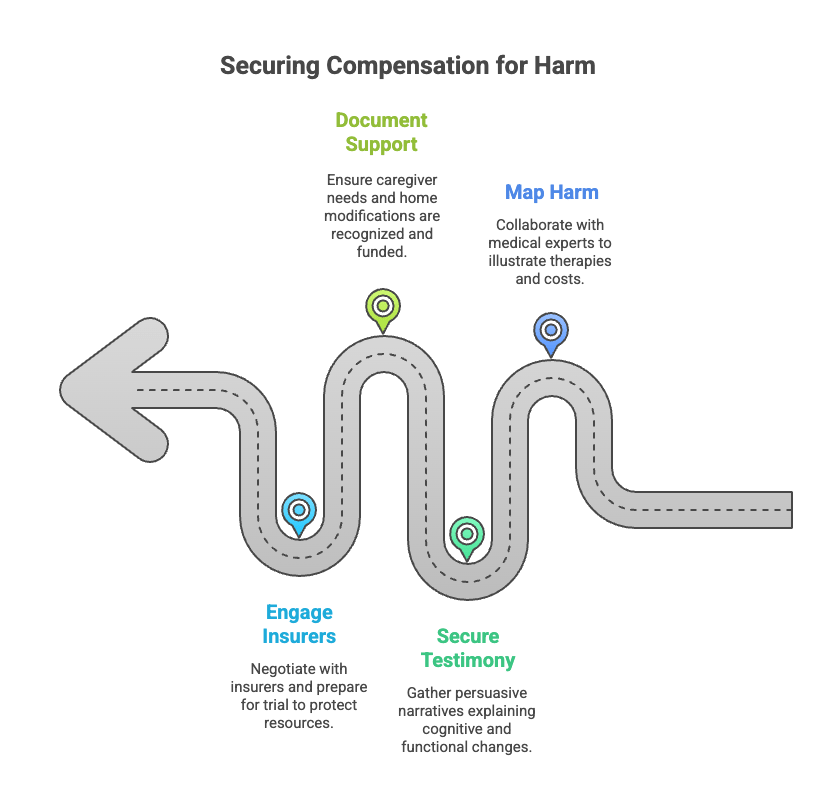
- We map the full scope of harm with medical experts, illustrating therapies, rehabilitation options, and projected costs through clear timelines and visuals.
- We secure testimony that explains cognitive and functional changes, translating intricate findings into persuasive, fact-based narratives.
- We document caregiver support needs, home modifications, and transportation, ensuring these indispensable services are recognized and funded.
- We engage insurers and defendants with precise demands, counter low offers with evidence, and prepare for trial when necessary, protecting your voice and future resources.
Long Term Effects of Brain Injuries
As we assess long-term outcomes after a brain injury, we must address cognitive and memory decline that can impair work, learning, and daily independence.
We also examine emotional and behavioral changes, including mood instability, irritability, and reduced impulse control, which can strain relationships and complicate rehabilitation.
In addition, we consider chronic pain and fatigue, persistent symptoms that limit endurance, increase medical needs, and affect overall quality of life.
Cognitive and Memory Decline
Though some symptoms fade after the initial trauma, cognitive and memory decline can persist for months or years following a brain injury and often disrupt daily life and work. We see clients struggle to focus, process information, and recall recent events, which undermines independence and productivity.
These deficits can hinder scheduling, medication adherence, and safe decision‑making, especially for those committed to serving others.
We coordinate care that prioritizes Cognitive rehabilitation and Memory retraining, guided by neuropsychological evaluations. Structured exercises, external aids, and compensatory strategies help rebuild skills and reduce errors.
We document progress, barriers, and care needs to support appropriate benefits, workplace accommodations, and long‑term planning. When negligence caused the injury, we pursue resources to fund treatment, assistive technology, and community support so you can move forward with dignity and purpose.
Emotional and Behavioral Changes
Even when physical recovery appears steady, emotional and behavioral changes can endure after a brain injury and strain relationships, employment, and community life.
We often see mood swings, irritability, anxiety, and depression arise as the brain heals, disrupting daily routines and community service roles.
Reduced impulse control can lead to abrupt comments, risk-taking, or poor judgment, which may jeopardize workplace standing or volunteer commitments. Loved ones may misinterpret these shifts as indifference or defiance, when they’re symptoms of neurological disruption.
We help clients document these changes through clinical evaluations, caregiver journals, and employer observations, creating a clear record of impact.
With credible evidence, we pursue therapy access, counseling, and supportive accommodations, including supervision plans and communication protocols. Togetherness, we protect dignity, reinforce safety, and sustain purposeful engagement.
Chronic Pain and Fatigue
Living with chronic pain and fatigue after a brain injury can be as disabling as the initial trauma, often persisting long after visible wounds heal.
We see clients struggle to keep commitments, care for family, and maintain employment because their energy evaporates quickly. Sleep disturbance compounds these problems, disrupting healing and mood, and worsening cognitive load.
We work with medical teams to document symptoms, track functional limits, and pursue thorough pain management.
That plan often includes medication oversight, physical therapy, behavioral strategies, and accommodations at work or school.
We also secure evaluations that connect headaches, neuropathic pain, and post-exertional fatigue to the injury, not to unrelated causes.
Proving Liability in Brain Medical Malpractice Injury Cases
While every brain injury case turns on its facts, proving liability in medical malpractice demands a disciplined, evidence‑driven approach that links a provider’s deviation from the standard of care to the patient’s neurological harm.
We begin by securing records, timelines, and witness statements, then isolating where medical negligence occurred.
We compare the provider’s actions to accepted protocols, focusing on diagnostic delays, surgical errors, medication mismanagement, or inadequate monitoring.
We retain qualified experts to deliver expert testimony that defines the applicable standard, explains the breach, and traces how that breach caused the brain injury.
These experts interpret imaging, chart entries, and essential‑sign trends, translating intricate data into clear causation. We also document foreseeability and rule out alternative explanations using differential analysis.
Chain‑of‑custody practices, audit‑trail reviews, and preservation letters protect pivotal evidence. Finally, we align facts with governing statutes and institutional policies, ensuring admissibility and credibility. Our method positions your claim on firm, verifiable footing.
Compensation for Brain Damages
From the outset of a brain injury claim, we focus on securing full and fair compensation that reflects the injury’s true lifetime impact. We document every loss with disciplined precision, valuing medical care, future treatment, and attendant support.
We incorporate a neuropsychological assessment to quantify cognitive and behavioral changes, then translate those findings into concrete economic and non-economic damages.
We calculate lost wages, diminished earning capacity, and the cost of vocational rehabilitation when returning to prior work isn’t feasible. We include long-term therapies, medications, adaptive technology, home modifications, and transportation.
We also pursue compensation for pain, suffering, loss of enjoyment of life, and the burden placed on caregivers.
To support these claims, we collaborate with treating physicians, life care planners, and economists, assembling a thorough damages model.
We present evidence that clarifies the connection between the injury and each loss, ensuring the settlement or verdict aligns with the client’s needs today and in the years ahead.
The Statute of Limitations for Brain Injury Cases
Because deadlines can quietly determine the outcome of a claim, we treat the statute of limitations as a vital first issue in any brain injury case.
Each state sets a filing period, often two or three years, and courts strictly enforce it. We identify the applicable deadline immediately, then map every step backward to make certain precise, timely action.
Brain injuries can mask symptoms, so the clock may begin under the delayed discovery rule when a reasonably diligent person would have recognized the injury and its cause.
We document medical timelines, diagnostic gaps, and causal links to support delayed discovery when appropriate. We also evaluate tolling exceptions, which may pause the clock for minors, incapacitated clients, or defendants who conceal wrongdoing or leave the jurisdiction.
Our approach is disciplined and service‑oriented. We gather records swiftly, preserve evidence, and give notice to potential defendants. By controlling timing, we protect your rights and preserve leverage for resolution.
Why You Need an Experienced Brain Injury Lawyer
Even before the legal process begins, an experienced brain injury lawyer anchors your case in the medical and factual realities that drive outcomes.
Even before litigation, a skilled brain injury lawyer grounds your case in medical and factual realities.
We coordinate closely with treating physicians, document deficits with precision, and translate intricate findings into compelling proof of liability and damages.
We move quickly to preserve evidence, secure expert opinions, and prevent insurers from shaping the narrative against you.
We also address the full scope of losses. That means projecting lifetime care needs, integrating rehab planning, and valuing lost earning capacity with credible methodologies.
We build a record that supports in-home services, adaptive equipment, and specialized therapies, ensuring continuity of care.
Because recovery affects the entire household, we elevate family support as a compensable and practical priority. We guide caregivers on documentation, connect you with community resources, and pursue damages that reflect the burden and resilience of loved ones.
In negotiations and at trial, our focused advocacy turns meticulous preparation into leverage, safeguarding your future.
How to Choose the Right Brain Injury Lawyer for Your Case
Although many attorneys advertise brain injury experience, choosing the right lawyer requires targeted evaluation of credentials, resources, and results.
We should begin by verifying board certifications, trial histories, and published verdicts that reflect intricate neurological harm.
Next, we assess whether the firm partners with medical experts, life-care planners, and vocational analysts, since these resources drive case valuation and recovery planning.
We recommend scheduling private consultations to gauge communication, case strategy, and responsiveness. During these meetings, we ask who’ll handle day-to-day work, how often we’ll receive updates, and what investigation steps will occur in the first thirty days.
We also compare fee structures, including contingency percentages, litigation costs, and transparency in expense accounting.
References from former clients and peer reviews add context to professionalism and integrity.
Finally, we consider alignment with our service values: a lawyer should prioritize dignity, long-term wellbeing, and timely action, while demonstrating meticulous preparation and principled negotiation.
About the Law Offices of Anidjar and Levine
Delivering focused advocacy for people with traumatic brain injuries, the Law Offices of Anidjar and Levine couples seasoned litigation experience with deep medical resources to pursue full and fair compensation.
We approach each case with disciplined preparation, clear communication, and a service mindset that centers your recovery.
Our attorneys coordinate with neurologists, life-care planners, and rehabilitation experts, ensuring that evidence reflects the full scope of harm and future needs.
Our firm history reflects steady growth grounded in results and accountability. We’ve built systems that prioritize prompt updates, careful documentation, and strategic negotiation, while preparing every matter as if it will go to trial.
Client testimonials consistently recognize our accessibility, thorough case analysis, and commitment to follow-through.
We measure success by restoring stability and dignity for injured clients and their families. We investigate liability, quantify lifetime damages, and pursue insurers and negligent parties with resolve, so you can focus on healing while we handle the legal burden.

Frequently Asked Questions
Can a Brain Injury Case Affect Immigration Status or Visa Renewals?
Yes, it can, depending on the circumstances. We assess how a brain injury affects admissibility, public charge determinations, work authorization, and continuity of lawful status.
Immigration consequences may arise if prolonged treatment disrupts employment, travel, or required filings. Visa implications include medical inadmissibility findings, gaps in status, or inability to meet visa conditions.
We document medical necessity, maintain timely filings, request accommodations, and coordinate with counsel to protect eligibility and preserve renewal options.
How Do Social Media Posts Impact a Brain Injury Claim?
Social media posts can undermine a brain injury claim by creating digital evidence that contradicts reported symptoms or limitations.
We should assume insurers and defendants will scrutinize photos, comments, location tags, and timelines.
Posts may also waive aspects of medical privacy if they reference treatment or recovery.
We recommend pausing public activity, tightening settings, and avoiding discussions about the incident, injuries, or activities, while preserving existing content to maintain integrity and comply with evidentiary rules.
Are Contingency Fees Different for Pediatric Brain Injury Cases?
Yes, contingency fees can differ for pediatric brain injury cases. We often use a sliding scale, reflecting intricacy, long-term needs, and court oversight.
Because a minor’s recovery requires protection, a guardian ad litem may be appointed, and courts frequently review and approve fees. We structure fees to prioritize the child’s future care, align incentives, and guarantee transparency.
We’ll explain projected costs, risks, and recovery paths, then tailor fee terms to serve the child’s best interests.
Can I Pursue Claims Across Multiple States for One Injury?
Yes, we can often pursue claims in multiple states, but success depends on multistate jurisdiction and the governing choice of law.
We assess where defendants reside, where the injury occurred, and where pivotal decisions were made.
We then evaluate statutes of limitations, damages caps, and procedural rules to select the best forum.
Coordinating filings prevents duplicative recovery, preserves consistency, and protects your interests.
We’ll map strategy early to align venues, evidence, and timelines.
How Are Structured Settlements Taxed in Brain Injury Cases?
Structured settlements are generally tax exempt for compensatory damages, so you won’t owe federal income tax on periodic payments or the growth inside the annuity.
We guarantee the agreement preserves tax treatment by avoiding constructive receipt and prohibiting acceleration.
If portions cover punitive damages, interest, or non-injury claims, those amounts may be taxable.
We coordinate with administrators and accountants, align payment schedules with care plans, and document allocations to safeguard long-term, compliant support.
——–
We’re ready to guide you through every stage of a brain injury claim, from investigation and evidence gathering to negotiation and trial.
We’ll protect your rights, pursue full compensation, and coordinate with medical experts to substantiate your losses.
Time limits apply, so prompt action matters. If you or a loved one suffered a brain injury, contact the dedicated team at Anidjar & Levine. We’ll evaluate your case, explain your options, and build a strategy tailored to your goals.
or related matters, see our Birth Injury Lawyer services.

