

The Law Offices of Anidjar and Levine help injured victims after commercial truck crashes on Jacksonville roads and highways by preserving evidence, assessing liability, and addressing insurance issues. These cases may involve driver fatigue, unsafe lane changes, poor maintenance, cargo problems, hazardous road conditions, or company safety violations. Legal support may include securing police reports, driver logs, electronic data, photographs, witness statements, and medical records. The sections below explain key claim issues, victim rights, and how a Jacksonville Personal Injury Lawyer may help protect an injured person’s potential recovery.
Main Takeaways
- A Jacksonville truck accident lawyer can investigate roadway conditions, driver conduct, vehicle maintenance, cargo handling, and company safety practices.
- Critical evidence may include police reports, witness statements, photographs, video footage, driver logs, inspection records, and electronic truck data.
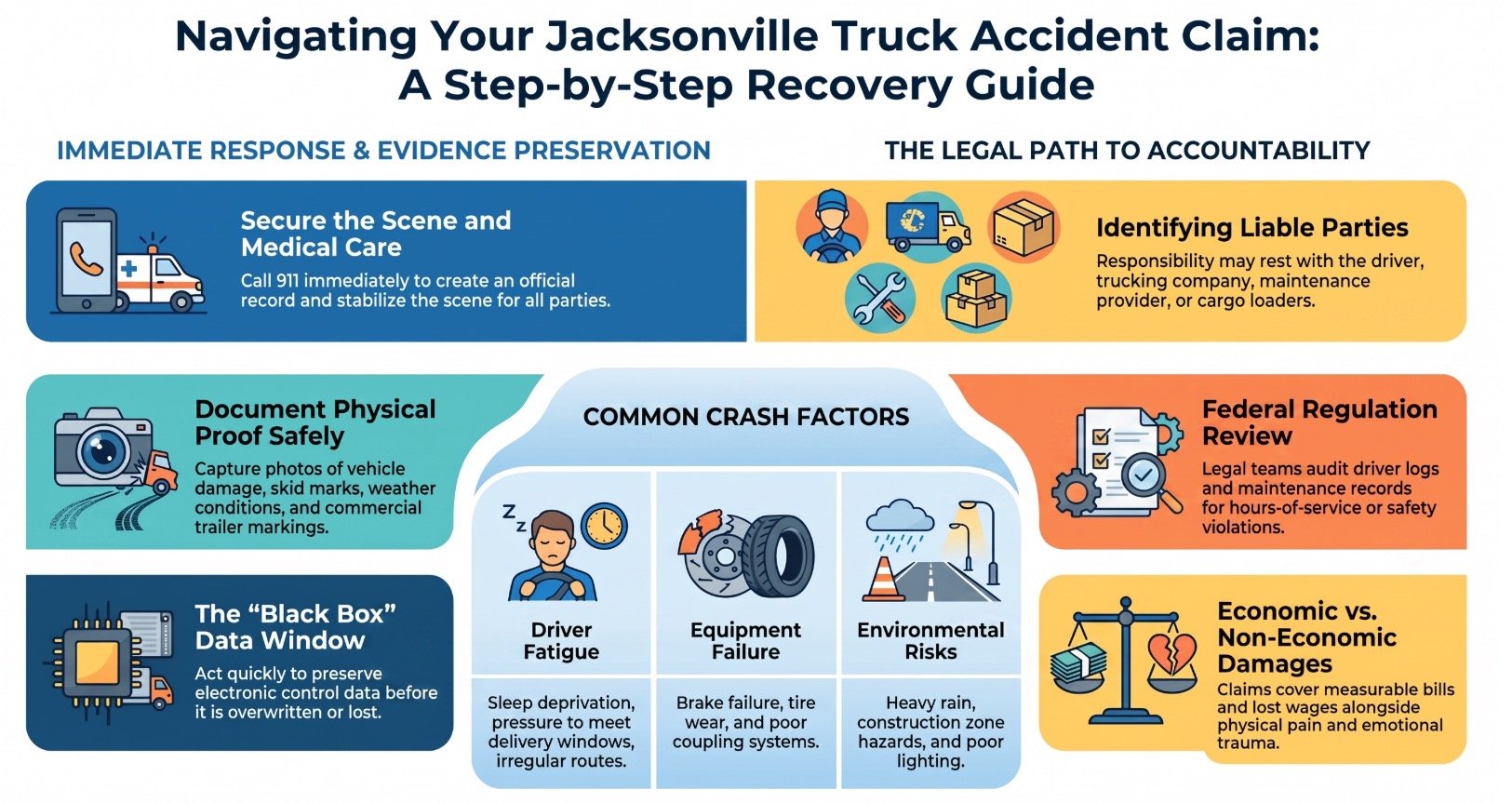
- Potentially liable parties may include the truck driver, trucking company, maintenance provider, cargo loader, or public entity responsible for unsafe roads.
- Common crash factors include fatigue, speeding, distracted driving, brake failure, tire defects, heavy rain, poor lighting, and construction zone hazards.
- Injury victims should call 911, get medical care, document the scene safely, and preserve evidence before insurers or trucking companies dispute liability.
How We Can Help With Your Jacksonville Truck Accident Roads & Highways Injury Claim
After a serious truck crash on Jacksonville roads or highways, an injury claim often requires immediate attention to evidence, liability, insurance coverage, and the collision’s long-term consequences. A law firm can assist by organizing urgent Evidence preservation steps, including securing police reports, witness information, vehicle data, maintenance records, driver logs, photographs, and available video footage. This careful work helps protect the injured person’s ability to seek compensation while supporting accountability and public safety.
Counsel may also communicate with insurers, trucking companies, medical providers, and other involved parties, reducing pressure on the injured person and family caregivers. Skilled guidance can help identify insurance claim pitfalls, such as recorded statements, premature settlement offers, disputed medical needs, or attempts to shift fault. By evaluating damages, coordinating documentation, and preparing negotiations or litigation, the legal team provides structured advocacy for those focused on recovery, stability, and the well-being of others.
Understanding Jacksonville Truck Accident Roads & Highways Injury Cases
Many Jacksonville truck accident roads and highways injury cases involve more than a single driving error, because commercial collisions often arise from overlapping factors such as traffic conditions, vehicle weight, cargo handling, driver fatigue, maintenance practices, and company safety policies. These matters require careful review of the roadway setting, the vehicles involved, and each party’s conduct before, during, and after the crash.
Injury claims may also turn on legal issues specific to Florida courts, local procedures, and the collision location. Jurisdiction-specific defenses can affect how responsibility is disputed, how evidence is interpreted, and how damages are evaluated. Traffic control compliance may also become important when determining whether drivers, carriers, or others followed applicable signals, signs, lane restrictions, or routing rules. A measured analysis helps injured people, families, caregivers, and community members understand accountability while supporting fair, service-minded efforts to restore safety and stability after serious harm.
Common Causes of Jacksonville Truck Accident Roads & Highways
Truck accidents on Jacksonville roads and highways often arise from preventable factors that create serious risks for motorists. Common causes include driver fatigue, distracted driving, improper truck maintenance, and hazardous road conditions, each of which may affect fault and liability. Understanding these factors helps clarify how collisions occur, why injuries may be severe, and what evidence may be relevant in an injury claim.
Driver Fatigue
Because long-haul and regional delivery schedules often place intense demands on commercial drivers, fatigue remains a significant cause of truck accidents on Jacksonville roads and highways. Sleep deprivation can reduce alertness, impair judgment, and slow reaction time when traffic slows, weather changes, or roadway hazards appear. Trucking fatigue may arise from irregular routes, overnight driving, loading delays, or pressure to meet delivery windows. For communities committed to serving injured motorists and promoting safer travel, this issue requires careful attention. Effective risk management strategies include lawful scheduling, rest breaks, driver monitoring, and company policies that discourage unsafe hours behind the wheel. When fatigue contributes to a collision, investigators may review logs, electronic data, dispatch records, and carrier practices to determine accountability and prevent further harm.
Distracted Driving
On Jacksonville roads and highways, distracted driving remains a serious hazard when commercial drivers take their eyes off traffic conditions, vehicle control, or changing roadway risks. Phone distraction can delay reactions to congestion, work zones, merging vehicles, and sudden stops, creating severe danger for motorists, passengers, pedestrians, and roadside workers. Texting violations are especially concerning because even brief visual, manual, or mental distraction may cause lane drift, missed signals, unsafe following distances, or failure to brake in time. Distracted commercial drivers operating large trucks put others at heightened risk because of vehicle size, stopping distance, and limited maneuverability. A thorough investigation may review call records, in-cab technology, witness accounts, and crash data to determine whether distraction contributed to harm and to support accountability for injured individuals in Jacksonville communities.
Improper Truck Maintenance
Driver inattention is not the only danger that can make large commercial vehicles unsafe on Jacksonville roads, as poor maintenance can also create conditions for serious crashes. Trucking companies and maintenance providers must keep vehicles in reliable operating condition, because worn components can place motorists, passengers, and roadside workers at risk. Brake Failure Prevention requires scheduled inspections, prompt repairs, and careful documentation, especially for vehicles carrying heavy loads through busy corridors. Tire Wear Inspections are also crucial, since uneven tread, low pressure, or damaged sidewalls can reduce control and increase stopping distance. When maintenance duties are ignored, a preventable mechanical problem may become evidence of negligence. Careful review of service records, inspection reports, and repair histories can help identify failures that contributed to a Jacksonville truck accident.
Hazardous Road Conditions
Hazardous road conditions can increase the likelihood of Jacksonville truck accidents, especially when large commercial vehicles must react to sudden changes in traffic flow, visibility, or pavement quality. Uneven pavement, standing water, debris, poor lighting, and faded lane markings can reduce a driver’s ability to guide, brake, or maintain control. Weather pattern impacts, including heavy rain, coastal winds, fog, and sudden storms, may further increase stopping distances and limit visibility on major routes. Construction zone hazards also create serious risks when lanes narrow, barriers shift, signage is unclear, or workers and vehicles operate near traffic. Those who serve injured individuals should consider how roadway design, maintenance practices, and temporary traffic controls contributed to a collision. Carefully reviewing these conditions can help identify responsibility and support informed legal action.
Don’t Wait. Call Our Florida Personal Injury Lawyers Now!
Legal Rights of Jacksonville Truck Accident Roads & Highways Injury Victims
After a serious truck crash on Jacksonville roads or highways, injury victims may have the right to pursue compensation when another party’s negligence caused or contributed to the collision. These rights may include recovery for medical care, lost income, reduced earning ability, pain, and long-term support needs. Families who serve injured loved ones often benefit from understanding available legal protections early.
Important rights and steps may include:
- Seeking immediate medical evaluation and documenting all treatment.
- Requesting Evidence preservation before records, vehicle data, or roadway proof are lost.
- Gathering witness statements from drivers, passengers, responders, or nearby observers.
- Consulting legal counsel to evaluate fault, insurance coverage, and filing deadlines.
Victims may also have rights against multiple responsible parties, depending on the facts. A careful claim can help protect dignity, stability, and access to needed care while pursuing accountability through the civil justice system.
Why Do Jacksonville Truck Accident Roads & Highways Injuries Happen?
Understanding legal rights is only part of evaluating a serious truck injury claim; the cause of the crash often determines who may be held responsible. On Jacksonville roads and highways, truck crashes may result from driver fatigue, speeding, distracted driving, impaired judgment, or unsafe lane changes. Commercial carriers may also contribute through poor hiring practices, inadequate training, unrealistic delivery schedules, or failure to inspect and maintain brakes, tires, lights, and coupling systems.
Road conditions can also play a significant role. Weather-related factors, including heavy rain, fog, standing water, and reduced visibility, may increase stopping distances and make large trucks harder to control. Construction zone hazards, such as narrowed lanes, sudden traffic shifts, unclear signage, and uneven pavement, can create added danger for truck drivers and nearby motorists. Identifying these causes helps clarify whether responsibility may rest with a driver, trucking company, maintenance provider, cargo loader, contractor, or another accountable party.
What Should You Do After a Jacksonville Truck Accident Roads & Highways Injury?
After a Jacksonville truck accident on roads or highways, an injured person should call 911 immediately to secure emergency medical assistance and create an official record. If safe, document the crash with photographs, witness information, and any other details. Then contact a lawyer to evaluate liability, preserve evidence, and protect the injured person’s legal interests.
Call 911 Immediately
When a truck accident occurs on a Jacksonville road or highway, call 911 immediately. Emergency dispatch can send law enforcement, fire rescue, and medical personnel to stabilize the scene and protect injured motorists. A prompt call helps responders assess first-aid needs, control traffic hazards, and arrange transport for anyone needing urgent care. Those who can help should stay calm, provide the exact location, describe visible dangers, and follow dispatcher instructions until help arrives. Reporting the crash also creates an official record, which may later support injury and insurance matters. If it can be done safely, bystanders may take photos of the scene without interfering with emergency work. Quick notification serves everyone affected and reduces the risk of further harm.
Document The Crash
If it is safe to do so, documenting the crash can help preserve important details before vehicles are moved, debris is cleared, or conditions change. A person may take photos of witness statements, road markings, traffic signs, skid marks, spilled cargo, weather conditions, and the positions of all vehicles. Vehicle damage documentation should include close and wide images, visible license plates, company markings, trailer numbers, and any damaged safety equipment. Those assisting should avoid obstructing emergency responders, entering dangerous lanes, or disturbing evidence. Witnesses may record names, phone numbers, and brief observations respectfully and accurately. Notes should also identify the time, location, direction of travel, and visible injuries. Careful documentation can support truth, accountability, and fair treatment for everyone affected by a serious truck collision.
Contact A Lawyer
In the days following a Jacksonville truck accident, contacting a lawyer can help protect an injured person’s rights before crucial evidence is lost or insurance communications become difficult to manage. Legal counsel can review crash reports, identify responsible parties, and preserve records from trucking companies, roadway agencies, and insurers. This guidance supports injured individuals and families who are trying to recover while also caring for others affected by the crash. A lawyer may help request medical records, document treatment needs, and evaluate how injuries affect work, mobility, and daily responsibilities. Counsel also manages contact with the insurer, reducing the risk of statements being used unfairly. Through negotiating settlement offers, a lawyer seeks compensation that reflects medical costs, lost income, long-term care, and the full consequences of the roadway collision.
Critical Evidence in a Jacksonville Truck Accident Roads & Highways Injury Case
Critical evidence in a Jacksonville truck accident injury case can establish how the collision occurred, who may be responsible, and whether safety rules were violated.
Critical materials often include:
- Police crash reports
- Truck driver logs
- Electronic control data
- Roadway condition evidence
Each category may help clarify liability, preserve important facts, and support a well-documented injury claim.
Police Crash Reports
After a serious truck crash, a police crash report often becomes one of the first essential documents reviewed in a Jacksonville injury claim. This report may identify the parties, vehicles, roadway conditions, citations, witness names, and the officer’s preliminary observations. For injured people and those assisting them, it can help organize early facts and guide a careful investigation. However, the report should not be treated as the final answer, because later evidence may clarify or correct initial conclusions. Prompt review may also support Spoliation preservation efforts, especially when dashcam footage, traffic camera recordings, or vehicle data could be lost. A lawyer may compare the report with physical evidence, medical records, and witness statements to build a clearer account of fault and damages. Such review can strengthen negotiations.
Truck Driver Logs
When a tractor-trailer collision raises questions about fatigue, speed, or compliance, truck driver logs can become central evidence in a Jacksonville injury case. These records may show hours driven, rest periods, duty status, and route activity before the crash. Careful review can reveal whether federal hours-of-service rules were followed or whether dispatch pressure contributed to unsafe decisions. Driver logs accuracy is especially important when injured people, caregivers, and advocates seek a truthful account of what happened. Attorneys may compare logs with receipts, delivery records, toll data, and witness statements to identify gaps or inconsistencies. Truck scheduling practices may also show whether a carrier encouraged unrealistic deadlines. Promptly preserving these records helps protect families, support accountability, and guide responsible recovery after a serious roadway collision.
Electronic Control Data
Beyond truck driver logs, electronic control data can provide a more precise record of how a tractor-trailer operated in the moments before and during a Jacksonville roadway collision. This information may include speed, braking activity, throttle use, engine status, and sudden changes in movement. Black box data can help clarify whether a driver reacted appropriately, followed safe operating practices, or failed to respond in time. ELD reporting may also support or challenge claims about hours of service, vehicle movement, and compliance with federal safety rules. In a serious injury case, preservation of this data is critical because systems may overwrite or lose information. Careful review allows those serving injured individuals and families to build a more accurate account of fault, accountability, and preventable harm.
Roadway Condition Evidence
On Jacksonville roads and highways, the physical condition of the roadway can become crucial evidence in determining how a truck accident occurred. Investigators may examine pavement defects, standing water, faded lane markings, debris, shoulder drop-offs, construction zones, and visibility limitations. Photoset documentation can preserve these conditions before repairs, weather changes, or traffic movement alter the scene. Measurements, maintenance records, and inspection histories may help show whether a hazard contributed to loss of control, delayed braking, or unsafe maneuvering. Witness statements can also clarify how the roadway appeared before and during the crash, especially when official reports contain limited detail. Careful review of roadway condition evidence supports fair accountability, protects injured persons, and assists those committed to serving the community through diligent legal evaluation and responsible safety analysis.
Long-Term Effects of Jacksonville Truck Accident Roads & Highways Injuries
Truck accident injuries on Jacksonville roads and highways can produce long-term complications, including chronic pain conditions that interfere with work, sleep, and daily responsibilities. Reduced mobility issues may also arise, limiting independence and increasing the need for medical care, rehabilitation, or assistive support. Emotional trauma impacts, including anxiety and stress responses, can further affect recovery and the overall value of an injury claim.
Chronic Pain Conditions
Following a serious collision on Jacksonville roads or highways, chronic pain conditions may develop from injuries to the spine, joints, muscles, or nerves that do not fully resolve with initial treatment. Persistent pain can affect sleep, concentration, emotional stability, and the ability to care for or serve others. These conditions may require ongoing medical evaluations, diagnostic testing, physical therapy, injections, or Medication management tailored to the injured person’s symptoms. Consistent injury documentation is critical, as records can show the source, duration, and severity of pain over time. In truck accident claims, chronic pain evidence may help demonstrate future medical needs and lasting personal losses. Careful assessment can also distinguish accident-related pain from preexisting conditions, supporting a more accurate understanding of long-term harm.
Reduced Mobility Issues
Persistent pain after a Jacksonville truck accident may also limit how the body moves, especially when injuries affect the spine, hips, knees, shoulders, or lower extremities. Reduced mobility can interfere with walking, lifting, driving, standing, climbing stairs, and performing personal care or work duties. For those serving injured clients, document these limitations through medical records, therapy notes, functional assessments, and physician restrictions. Ongoing treatment may include rehabilitation, assistive devices, injections, or surgery, while Medication side effects may further affect balance, alertness, or endurance. When mobility loss continues, long-term disability planning may become necessary to address income, home modifications, transportation needs, and future care. Careful evaluation helps identify the full impact of movement restrictions and supports a claim reflecting lasting physical limitations.
Emotional Trauma Impacts
Often, the emotional trauma caused by a Jacksonville truck accident can persist long after physical injuries begin to stabilize. Survivors may experience anxiety, sleep disruption, irritability, depression, or fear when approaching highways, intersections, or commercial vehicles. Post-crash PTSD can affect employment, family roles, medical recovery, and trust in daily travel, especially when the collision involved severe injury or loss. These effects may emerge over time and require attentive observation by caregivers, advocates, and service providers. Compassionate support can include referrals to licensed counseling, structured medical follow-up, and practical survivor coping strategies, such as journaling, controlled breathing, and gradual exposure under professional guidance. Recognizing emotional harm as a serious consequence helps ensure victims receive respectful assistance, documented care, and a recovery plan addressing both visible and hidden injuries.
Don’t Wait. Call Our Florida Personal Injury Lawyers Now!
Proving Liability in Jacksonville Truck Accident Roads & Highways Injury Cases
Proving liability in a Jacksonville truck accident case requires a careful review of how the crash occurred, which parties had control over the truck or roadway conditions, and whether their conduct violated applicable safety duties. Fault may rest with a driver, trucking company, maintenance provider, cargo loader, or public entity responsible for unsafe road design or neglected hazards. Investigators often examine driver logs, inspection records, electronic data, photographs, witness accounts, roadway conditions, and police findings to determine whether careless conduct contributed to the injuries.
Comparative negligence may also affect the case, as Florida law considers whether more than one party shared responsibility for the collision. Evidence preservation may also be crucial, because records, vehicle data, and physical proof can be lost or altered soon after a crash. A disciplined liability review supports injured people, their families, and those serving them by identifying accountable parties and promoting a just, fact-based resolution.
Dealing With Insurance Companies After a Jacksonville Truck Accident Roads & Highways Injury
After liability is identified, communication with insurance companies becomes a major part of a Jacksonville truck accident roads and highways injury claim. Insurers may represent the truck driver, motor carrier, cargo company, or other involved parties, and each may seek to limit financial responsibility. Careful communication helps protect the injured person from statements that may be taken out of context or used to reduce payment.
A lawyer may review correspondence, evaluate coverage positions, and respond to requests for records with appropriate caution. This is especially important when policy disputes arise between insurers, or when a Wrongful denial prevents access to available benefits. Serving the injured person well requires patience, accuracy, and a clear understanding of insurance practices.
Insurance discussions should remain focused on documented losses, medical needs, and applicable coverage. By managing these communications professionally, counsel helps preserve the claim’s value while reducing confusion during a difficult recovery period.
What to Expect During a Jacksonville Truck Accident Roads & Highways Injury Claim Process
A Jacksonville truck accident injury claim typically begins with an initial case evaluation, where we review liability, damages, and available insurance coverage. The process then moves into evidence collection, including crash reports, medical records, witness statements, and trucking company records, followed by structured insurance negotiation stages. If a fair settlement cannot be reached, the claim may proceed toward litigation, where settlement discussions can continue or the case may advance to trial.
Initial Case Evaluation
Typically, the initial case evaluation in a Jacksonville truck accident injury claim begins with a detailed review of how the crash occurred, where it happened, and what evidence may be available from the roadway, vehicles, drivers, and trucking company. The attorney considers road conditions, traffic patterns, driver conduct, cargo issues, and potential safety violations. This early assessment helps determine whether the injured person may have a viable claim and which parties may bear responsibility. Faulty brake claims may require attention to maintenance history, inspection duties, and signs of mechanical failure. The evaluation also identifies the need to preserve witness statements early, because timely accounts can support a fair understanding of events. The evaluation further addresses medical impact, insurance coverage, filing deadlines, and the client’s practical needs with dignity, care, and service-focused guidance.
Evidence Collection Process
Once the initial evaluation identifies the likely issues in a Jacksonville truck accident claim, the evidence collection process focuses on securing proof before it is lost, altered, or destroyed. This stage may involve obtaining police reports, vehicle damage records, medical documentation, driver logs, maintenance files, and electronic data from the truck. Surveillance footage from nearby businesses, traffic cameras, or roadway systems may help clarify vehicle movements and road conditions. Attorneys also gather eyewitness statements while memories are fresh and details remain clear. Attorneys may send preservation letters to trucking companies, cargo handlers, or other responsible parties to protect crucial records. Careful documentation supports a clear understanding of fault, injuries, and losses, helping injured individuals and their families pursue accountability with dignity and purpose.
Insurance Negotiation Stages
After preserving and reviewing key evidence, the insurance negotiation stage generally begins with a clear presentation of liability, damages, and supporting documentation. The claimant’s representative may submit medical records, wage information, crash reports, photographs, and expert findings to support a measured demand. A policy coverage review helps identify available commercial trucking, employer, cargo, or excess policies that may affect recovery. During this phase, insurers assess fault, causation, treatment needs, and financial losses, while monitoring the Insurance claims timeline for response deadlines and required documentation. Communication should remain organized, respectful, and service-focused, especially when injured persons need stability and guidance. Adjusters may request clarification or challenge portions of the demand, making careful documentation and consistent advocacy necessary before later claim decisions are addressed.
Settlement Or Trial
Evaluate settlement options carefully when negotiations reach a point where the insurer has made a final offer or meaningful compromise appears possible. In Jacksonville truck accident claims, counsel may compare the offer with medical costs, lost income, future care, liability disputes, and trial risks. This review supports informed decisions that respect the injured person’s needs and the duty to serve family and community responsibly.
Pretrial strategy becomes important when settlement remains inadequate. Attorneys may strengthen settlement leverage through expert reports, witness preparation, evidence preservation, and clear proof of damages. If trial offers a better path toward fair accountability, the case may proceed before a judge or jury. If settlement provides timely, sufficient relief, resolution may protect resources while still honoring the harm suffered.
Compensation for Jacksonville Truck Accident Roads & Highways Injury Damages
Recovering compensation after a Jacksonville truck accident on roads and highways may involve claims for medical expenses, lost income, reduced earning capacity, pain and suffering, property damage, and long-term rehabilitation needs. A lawyer may evaluate how the crash has affected the injured person’s ability to work, serve family members, contribute to the community, and maintain daily responsibilities with dignity.
Compensation requests often require organized records, credible testimony, and careful presentation of economic proof, including bills, wage statements, repair estimates, and medical documentation. These materials help show the financial strain caused by the collision and support a fair demand from insurers or liable parties.
Non-economic impact costs may also be considered when injuries disrupt mobility, independence, sleep, or emotional stability. In serious truck accident cases, legal counsel may seek damages that reflect immediate losses and future care needs, while protecting the injured person’s right to accountable compensation under Florida law.
Economic vs Non-Economic Damages in Jacksonville Truck Accident Roads & Highways Cases
Damages in Jacksonville truck accident roads and highways cases generally fall into economic and non-economic categories. Economic damages may include medical bills, lost income, and vehicle repair costs, while non-economic damages may address pain, suffering, emotional distress, and loss of enjoyment of life. Proving the value of each category requires organized evidence, credible documentation, and a clear connection between the truck accident and the claimed losses.
Economic Damage Examples
After a serious truck collision on Jacksonville roads or highways, economic damages refer to the measurable financial losses tied to the crash. These losses may include emergency treatment, hospital stays, surgery, rehabilitation, prescription costs, medical equipment, and transportation to appointments. They can also cover lost wages, reduced earning capacity, vehicle repair or replacement, rental costs, and necessary household assistance. An Insurance coverage review may help identify available benefits, policy limits, and payment sources for urgent needs. Medical bill forecasting can also support accurate evaluation of future care, including follow-up treatment, therapy, and long-term support. For service-minded families, documenting these expenses carefully helps protect the injured person’s stability while allowing caregivers and advocates to make informed decisions rooted in responsibility, accuracy, and practical recovery planning.
Non-Economic Damage Examples
Financial records show only part of the harm caused by a serious truck collision on Jacksonville roads and highways, because many losses affect the injured person’s daily life in ways that do not appear on an invoice. Non-economic damages may include physical pain, emotional distress, anxiety while traveling, sleep disruption, disfigurement, loss of enjoyment, and strain within family relationships. A devoted caregiver may no longer serve others with the same strength, patience, or independence. These harms can be influenced by a Witness statement describing changed behavior, a credibility assessment of reported symptoms, liability challenges raised by insurers, and possible fault apportionment among drivers or companies. Such examples reflect human consequences that extend beyond medical bills or lost income, yet remain central to fair civil recovery after catastrophe.
Proving Damage Value
Proving damage value in a Jacksonville truck accident case requires organized evidence that separates measurable financial losses from personal harms that do not have a fixed market price. Economic losses may include hospital bills, rehabilitation expenses, lost wages, reduced earning capacity, and vehicle replacement costs. Future medical documentation can credibly support anticipated surgeries, therapy, medication, and long-term care needs. Non-economic damages require different proof, including physician opinions, pain journals, witness statements, and evidence showing how injuries limit daily service, family responsibilities, and community participation. Attorneys and insurers may apply settlement valuation methods that compare medical severity, recovery time, fault evidence, and lasting impairment. Careful documentation helps present a complete claim, allowing decision-makers to evaluate both financial loss and human harm fairly and accurately.
When a Jacksonville Truck Accident Roads & Highways Injury Case Goes to Trial vs Settlement
While many Jacksonville truck accident injury cases resolve through settlement, some require trial when the parties cannot agree on liability, damages, or the claim’s full value. Settlement may provide injured people and their families with a more predictable resolution, reduced delay, and less public exposure. A trial, however, may become necessary when an insurer undervalues medical needs, lost income, pain, or long-term care.
An effective Negotiation strategy often begins with strong evidence, credible expert opinions, and a clear presentation of how the crash changed the injured person’s life. Counsel may continue discussions while preparing for court, ensuring the case remains positioned for either outcome. The trial timeline can involve pleadings, discovery, depositions, motions, mediation, jury selection, and presentation of evidence. Those serving injured clients must weigh certainty, risk, cost, and accountability, while pursuing a result that supports recovery, dignity, and practical needs after a serious truck collision.
Florida Laws That May Affect Your Jacksonville Truck Accident Roads & Highways Case
Because Florida law controls many aspects of a Jacksonville truck accident roads and highways case, injured parties must understand how state statutes and procedural rules may affect liability, compensation, and the time available to act.
These rules help courts evaluate conduct, allocate fault, and protect those harmed by unsafe commercial driving.
- Florida comparative negligence may reduce recovery if the injured person shares responsibility for the crash.
- State insurance requirements can influence available compensation, especially when multiple vehicles or policies are involved.
- Evidence rules may affect how crash reports, medical records, and expert opinions are presented.
- Federal trucking regulations may support liability findings when carriers violate safety duties, driver qualification rules, or maintenance standards.
A careful legal review can identify every responsible party, including drivers, motor carriers, contractors, or maintenance providers. This approach supports accountability while helping injured individuals, families, and caregivers pursue fair relief with dignity, order, and a service-minded focus.
Don’t Wait. Call Our Florida Personal Injury Lawyers Now!
The Statute of Limitations for Jacksonville Truck Accident Roads & Highways Injury Cases
One strict deadline can determine whether an injured person may pursue compensation after a Jacksonville truck accident on roads or highways. In Florida, most negligence claims arising from crashes must be filed within two years from the date of the collision. Missing this deadline can bar recovery, even when injuries are severe, and liability appears clear.
This filing period matters because truck accident cases often involve extensive records, including crash reports, medical documentation, maintenance histories, driver logs, and evidence tied to federal trucking rules. Time can affect whether these materials remain available and reliable. Families seeking to serve and protect an injured person should recognize that delay may weaken the ability to present a complete claim.
Comparative negligence may also affect a case’s value when multiple parties share fault. However, the statute of limitations controls whether the claim may proceed at all, making timely action critical after a Jacksonville roadway or highway truck accident.
How a Jacksonville Truck Accident Roads & Highways Injury Lawyer Can Help You
After the filing deadline, the next concern is how an injured person can protect the claim from the outset. A Jacksonville truck accident roads and highways injury lawyer can guide the injured person through a disciplined process, focused on proof, accountability, and practical recovery.
This support helps preserve facts while reducing preventable mistakes.
- Investigates roadway conditions, driver conduct, vehicle maintenance, and carrier practices that may explain how the crash occurred.
- Preserves records, photographs, black box data, witness accounts, and medical documentation within vital evidentiary timelines.
- Evaluates Negligence defenses, including claims that the injured person caused or contributed to the collision.
- Communicates with insurers, trucking companies, and opposing counsel while keeping the injured person’s service-focused goals in view.
Through this work, counsel can organize complex information, present damages clearly, and pursue fair compensation professionally, while allowing the injured person and family to focus on recovery.
When to Contact a Jacksonville Truck Accident Roads & Highways Injury Lawyer
In the days after a serious truck crash, timely legal guidance can be critical to protecting evidence, meeting deadlines, and avoiding early missteps. An injured person, a family member, or a caregiver should consider contacting a Jacksonville truck accident roads and highways injury lawyer as soon as medical needs are stable. Early contact helps preserve evidence, including photographs, vehicle data, inspection records, witness accounts, and roadway conditions, before they change or are lost.
This timing is especially important when the crash involved Nighttime visibility, construction zones, poor lighting, merging traffic, or interstate congestion. These conditions may require timely review before memories fade and physical details change. A lawyer can also help ensure that communications with insurers, trucking companies, and investigators remain accurate and measured. For those seeking to serve and protect an injured loved one, early consultation provides structure, reduces avoidable risk, and keeps the claim aligned with legal requirements from the start.
Why You Need an Experienced Jacksonville Truck Accident Roads & Highways Injury Lawyer
Because truck crashes on Jacksonville roads and highways often involve layered facts, an experienced injury lawyer can provide the focused analysis needed to identify responsibility and protect the injured person’s claim. Commercial vehicle cases may include driver fatigue, unsafe loading, poor maintenance, employer negligence, or violations of safety rules. A lawyer familiar with these issues can evaluate records, preserve evidence, and address insurers that may seek to reduce accountability.
Experience also matters when injuries disrupt a person’s ability to work, care for family, or serve the community. Careful case development helps connect medical needs, financial losses, and long-term effects to the harm caused. A sound Negotiation strategy can support a fair resolution while keeping the matter prepared for litigation if needed. In fatal crashes, counsel can explain wrongful death options with clarity and respect, helping surviving families understand the civil remedies available during a difficult period of loss.
How to Choose the Right Jacksonville Truck Accident Roads & Highways Injury Lawyer for Your Case
Selecting the right Jacksonville truck accident roads and highways injury lawyer requires attention to experience, resources, and the lawyer’s ability to manage complex commercial vehicle claims from the beginning. A qualified attorney should understand federal trucking rules, Florida traffic laws, insurer practices, and the realities injured people and their families face.
The selection process should begin with a Victim consultation that allows the lawyer to listen carefully, identify immediate needs, and explain the case path. The lawyer should also use an evidence checklist to preserve crash reports, driver logs, maintenance records, witness statements, and roadway details before they are lost.
A thorough liability assessment is critical when multiple parties may share fault, including drivers, carriers, maintenance providers, or cargo handlers. The attorney should also complete a careful damages calculation that reflects medical care, lost income, reduced capacity, pain, and future needs, while supporting the client’s recovery with steady guidance.
About The Law Offices of Anidjar & Levine
When a truck accident case demands careful investigation and steady legal guidance, The Law Offices of Anidjar & Levine represents injured people in Jacksonville and throughout Florida. The firm assists clients after collisions involving commercial trucks, interstate carriers, and intricate roadway conditions, with attention to both immediate needs and long-term recovery.
Its legal team evaluates each Truck accident timeline to identify critical deadlines, responsible parties, insurance issues, and medical documentation needs. This structured approach helps protect claims while clients focus on treatment, family obligations, and restoring stability.
The firm also emphasizes Evidence preservation steps, including securing crash reports, witness information, vehicle data, photographs, maintenance records, and carrier documents when available. By acting promptly, the team supports a thorough review of liability and damages.
Prompt evidence preservation can strengthen a truck accident claim and support a thorough review of liability and damages.
Through client-centered service, organized case management, and persistent advocacy, The Law Offices of Anidjar & Levine serves injured individuals with professionalism, diligence, and respect.

Frequently Asked Questions
Can Truck Accident Claims Involve Out-Of-State Trucking Companies?
Yes, truck accident claims can involve out-of-state trucking companies when a carrier operates across state lines or employs nonresident drivers. Cross-state liability may require review of federal regulations, insurance coverage, corporate records, and jurisdictional rules. Evidence preservation is essential, including driver logs, maintenance files, electronic data, and dispatch communications. Those assisting injured individuals should act promptly to identify responsible parties and pursue obligations diligently.
Do Jacksonville Truck Accidents Require Federal Trucking Regulation Review?
Yes. Jacksonville truck accidents often require federal trucking regulation review because interstate carriers, drivers, and maintenance practices may fall under FMCSA standards. A careful review can identify hours-of-service violations, inspection failures, cargo securement issues, or unsafe hiring practices. Florida Evidence Preservation is also important to protect logs, electronic data, and maintenance records. Federal Safety Audits may provide further insight, helping responsible advocates serve injured people with accuracy, diligence, and accountability.
Can Poor Road Design Affect My Truck Accident Claim?
Yes, poor road design can affect a truck accident claim by helping determine liability for impact. Investigators may examine lane width, curve layout, drainage, construction zones, and signage visibility to assess whether unsafe conditions contributed to the crash. When traffic safety failures are documented, responsibility may extend beyond the drivers to public agencies, contractors, or maintenance entities. Careful evidence review supports a fair evaluation and helps injured persons seek accountability.
Are Highway Construction Zones Treated Differently in Truck Accident Cases?
Yes, highway construction zones are often treated differently because reduced lanes, shifting traffic patterns, warning signs, and worker safety rules may affect liability standards. Investigators may examine whether the truck driver, construction contractor, government agency, or another motorist failed to act responsibly. Work zone injuries often require careful review of traffic control plans, speed limits, signage, and maintenance duties, especially when safety measures were intended to protect vulnerable workers and travelers.
Can Black Box Data Be Deleted After a Truck Accident?
Yes, black box data can be overwritten or lost after a truck accident, unless it is promptly preserved. This Electronic Evidence often records speed, braking, and engine activity, which may assist those serving injured parties. Deletion Limits depend on the device, carrier practices, and legal preservation duties. Once notice is given, destruction may carry serious consequences, especially if the data was relevant to evaluating fault and safety compliance.
—————————
Truck accident claims arising from Jacksonville roads and highways often involve complex legal and factual issues. Injured victims may need guidance regarding liability, evidence, insurance negotiations, and potential compensation. An experienced Jacksonville Personal Injury Lawyer can assess the circumstances, protect the claimant’s rights, and pursue compensation that reflects the full extent of the injuries and losses. The Law Offices of Anidjar and Levine provide legal support for individuals seeking accountability after serious truck accidents.

