

The Law Offices of Anidjar and Levine help Jacksonville nursing home residents and families investigate financial exploitation and theft, including missing funds, unauthorized transfers, coerced withdrawals, and stolen property. Legal support may involve preserving bank records, reviewing facility documents, documenting losses, and identifying who had access to accounts or valuables. A lawyer can also help coordinate reports to facility leadership, Adult Protective Services, or law enforcement while pursuing civil recovery and accountability. For related legal guidance, visit our Jacksonville Personal Injury Lawyer page. The sections below explain residents’ rights, warning signs, and recommended next steps.
Main Takeaways
- A Jacksonville nursing home financial exploitation lawyer can investigate suspicious withdrawals, missing property, unauthorized transfers, or misuse of benefits.
- Legal help may preserve bank records, admission documents, facility communications, receipts, inventories, and witness statements.
- Claims can address theft by staff, unrestricted account access, family coercion, document changes, or exploitation of cognitive decline.
- A civil action may seek financial recovery, accountability for the facility, and protections against further loss or retaliation.
- Families can report concerns to facility leadership, Adult Protective Services, law enforcement, and consult counsel promptly.


How We Can Help With Your Jacksonville Nursing Home Financial Exploitation & Theft Injury Claim
When financial exploitation occurs in a Jacksonville nursing home, the consequences often extend beyond stolen funds or missing property. A legal team can help families protect a vulnerable resident by identifying suspicious transactions, preserving records, and coordinating a focused claim. This support may include reviewing account histories, facility communications, admission paperwork, and property inventories for signs of misuse or concealment.
Documenting losses is a key step because accurate records help show what was taken, when it was taken, and who may have had access. Attorneys may also assist in obtaining statements from residents, relatives, staff members, bank personnel, or other witnesses who can clarify the events. When needed, they can communicate with insurers, care providers, and responsible parties while the family remains focused on the resident’s safety and dignity. Through organized advocacy, a claim can seek accountability, the recovery of losses, and measures to prevent further harm.
OUR CONSULTATIONSARE FREE
START YOUR FREE CASE REVIEW

Understanding Jacksonville Nursing Home Financial Exploitation & Theft Injury Cases
Although financial exploitation may appear less visible than physical abuse, it can cause serious harm to a nursing home resident’s security, independence, and overall well-being. In Jacksonville nursing home cases, exploitation or theft may involve the misuse, concealment, or taking of a resident’s money, property, benefits, or legal authority. These matters require careful review because the harm often extends beyond account balances. A resident may lose access to needed care, experience fear, or become dependent on others after personal resources are depleted.
An injury case may examine whether a facility, employee, visitor, fiduciary, or other person violated duties owed to the resident. Criminal charges may address unlawful conduct, while civil liability may focus on financial recovery, institutional responsibility, and protection from further loss. Families, advocates, and care professionals best serve residents by recognizing these cases as serious breaches of trust that require prompt, organized, and compassionate legal attention.
Common Causes of Jacksonville Nursing Home Financial Exploitation & Theft
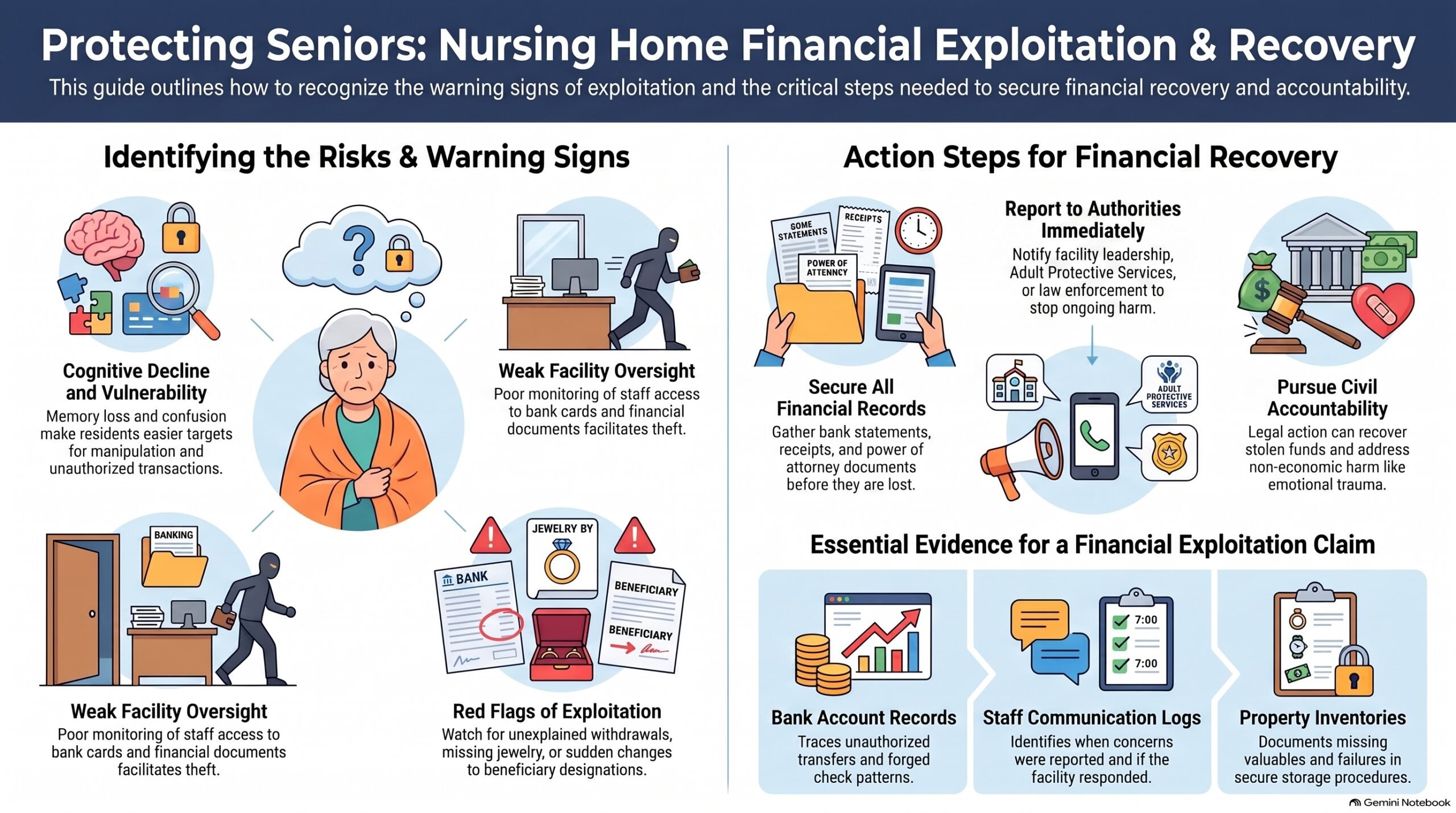
Common causes of Jacksonville nursing home financial exploitation and theft often involve weak safeguards, poor staff oversight, and unrestricted access to residents’ personal accounts. In some cases, pressure or manipulation by family members may lead to improper transfers, coerced withdrawals, or unauthorized changes to financial documents. Residents experiencing cognitive decline face heightened risk, particularly when trusted individuals misuse confusion, dependency, or diminished capacity for personal gain.
Poor Staff Oversight
Poor staff oversight can create an environment in which financial misconduct goes unnoticed, especially in facilities that fail to monitor employees’ access to residents’ money, personal property, bank cards, or financial documents. When supervisors do not review handling practices, reconcile records, or respond promptly to irregularities, vulnerable residents may be exposed to theft or coercive conduct. Staff accountability failures can also weaken ethical service standards, allowing small discrepancies to become repeated harm. In some cases, payment authorization issues arise when charges, withdrawals, or purchases are processed without proper review from responsible personnel. A well-managed facility should maintain clear reporting channels, consistent audits, and prompt corrective action. Strong oversight supports residents’ dignity, protects family trust, and reflects a commitment to responsible care and stewardship.
Unrestricted Account Access
Weak oversight becomes especially dangerous when facility personnel or third parties gain unrestricted access to a resident’s bank accounts, debit cards, checkbooks, online credentials, or benefit payments. Without strict limits, monitoring, and documentation, routine assistance can turn into unauthorized withdrawals, altered payment arrangements, or unexplained transfers. Account verification issues may prevent residents, advocates, or responsible agencies from detecting irregular activity before serious losses occur. In some cases, Staff access abuse involves using a resident’s trust, confusion, or dependence to obtain PINs, signatures, or passwords under the appearance of help. Facilities serving vulnerable adults should maintain clear financial boundaries, secure records, and require independent review of any account-related involvement. Caregivers and administrators must recognize that access without accountability creates conditions where exploitation can occur quietly and persistently.
Family Member Pressure
When a resident depends on relatives for visits, transportation, or emotional support, family member pressure can become a significant source of financial exploitation. A relative may request loans, gifts, account access, or changes to beneficiary designations, presenting the demand as repayment for care or loyalty. This Obligation pressure can make a resident feel responsible for solving another person’s financial problems, even when the request undermines personal security. In nursing home settings, staff and advocates should recognize patterns such as repeated urgent calls, sudden withdrawals after family visits, or fear when discussing money. Financial coercion may be subtle, including guilt, threats of isolation, or promises of continued attention. Careful documentation, respectful questioning, and prompt reporting help protect residents while preserving dignity and family relationships when possible through appropriate oversight and legal intervention.
Cognitive Decline Abuse
As cognitive decline progresses, a nursing home resident may become more vulnerable to financial exploitation because memory loss, confusion, and impaired judgment can make suspicious conduct harder to recognize. Residents with dementia or similar conditions may forget prior transactions, misunderstand account changes, or rely heavily on others for routine decisions. This dependence can create opportunities for caregiver manipulation, especially when access to checkbooks, benefit cards, or personal identification is poorly monitored. Cognitive impairment may also contribute to care consent issues, where a resident appears to approve financial decisions without fully understanding their impact. Staff, relatives, and advocates serving older adults should watch for sudden withdrawals, altered documents, or unexplained gifts. Careful reporting, documentation, and protective intervention can help preserve dignity, autonomy, and financial security.
Don’t Wait. Call Our Florida Personal Injury Lawyers Now!


Legal Rights of Jacksonville Nursing Home Financial Exploitation & Theft Injury Victims
Residents of Jacksonville nursing homes have legal rights that protect their money, property, benefits, and financial decision-making from misuse, coercion, or theft. These rights include freedom from exploitation, access to personal financial records, and the ability to seek civil remedies for losses. Families, advocates, and care professionals should respond with discipline and compassion, prioritizing dignity while preventing further harm.
Key protections and actions may include:
- Reporting procedures through facility leadership, Adult Protective Services, or law enforcement.
- Victim safety measures, including restricted account access and supervised contact.
- Evidence preservation involving bank records, receipts, account statements, and correspondence.
- Legal consultation urgency when assets, benefits, or decision-making authority are at risk.
- Restitution claims seeking recovery of stolen funds or improperly transferred property.
These rights support accountability and help caregivers serve vulnerable residents responsibly. Timely action may also preserve claims and protect the resident’s remaining resources.
Why Do Jacksonville Nursing Home Financial Exploitation & Theft Injuries Happen?
Although financial exploitation can occur in many care settings, Jacksonville nursing home residents may face heightened risk because illness, cognitive decline, isolation, and dependence on others can limit their ability to detect or stop improper conduct. These conditions may create opportunities for dishonest employees, visitors, relatives, or outside parties to misuse access to personal belongings, bank information, benefit payments, or legal documents.
Exploitation often develops where oversight is weak, and accountability is inconsistent. Patterns of staff negligence, such as failing to secure valuables, ignoring unusual account activity, or allowing unauthorized persons to influence residents, can allow theft to continue unnoticed. Facilities may also overlook patient vulnerability signals, including confusion about money, sudden fearfulness, missing property, or unexplained changes in financial control.
In many cases, exploitation is not a single event, but a gradual breach of trust. Care environments must remain attentive, organized, and ethically grounded to protect residents who rely on others for safety.
What Should You Do After a Jacksonville Nursing Home Financial Exploitation & Theft Injury?
After suspected financial exploitation or theft in a Jacksonville nursing home, prompt action can help protect the resident’s assets and preserve evidence. Financial records should be secured, suspicious activity should be reported to the appropriate authorities or facility administrators, and further access to accounts should be restricted when possible. Legal help may also be necessary to assess liability, recover losses, and address any ongoing risk to the resident.
Secure Financial Records
At the first sign of financial exploitation or theft in a Jacksonville nursing home, financial records should be secured and preserved before accounts, documents, or transaction histories are altered or lost. Family members, guardians, or advocates should gather bank statements, canceled checks, receipts, credit card records, ledgers, admission agreements, and records connected to any patient trust account. Careful Forensic documentation helps establish what assets existed, who accessed them, and when suspicious activity occurred. Preserving the bank trail may reveal unauthorized withdrawals, forged signatures, improper charges, or unexplained transfers. Copies should be stored safely, with dates noted and originals protected from damage or removal. These financial safeguards support accountability, protect the resident’s dignity, and help responsible parties evaluate whether trusted caretakers honored their obligations. Accurate records also assist counsel.
Report Suspected Exploitation
Once financial records are secured, suspected exploitation should be reported promptly to the proper authorities and facility leadership. A concerned family member, guardian, or advocate may notify the nursing home administrator in writing, request an internal review, and preserve all responses. Reports may also be made to Adult Protective Services, the Florida Department of Children and Families, law enforcement, or appropriate regulatory agencies when theft, coercion, or neglect appears likely.
Clear reporting supports vulnerable residents and helps prevent further harm. The report should identify dates, names, account activity, caregiver documentation, missing property, and suspicious transfer patterns. Copies should be kept in a secure location, along with confirmation numbers or written acknowledgments. Timely reporting creates accountability, preserves evidence, and encourages swift intervention to protect the resident’s safety and dignity.
Contact Legal Help
When suspected financial exploitation involves a Jacksonville nursing home resident, legal help should be contacted as soon as urgent safety concerns and reporting steps are addressed. An attorney can review account records, facility communications, powers of attorney, and witness statements to determine whether civil claims may exist. Prompt guidance also supports Evidence preservation, including bank statements, receipts, surveillance requests, care plans, and written complaints, before documents disappear or memories fade.
Legal counsel may coordinate with family members, guardians, investigators, and protective agencies while keeping the resident’s dignity at the center. Victim support may include pursuing restitution, stopping unauthorized access to funds, challenging improper transfers, and seeking compensation for related harm. Early legal involvement helps responsible parties understand deadlines, protect rights, and take measured action against facilities, employees, or outsiders involved in theft.
Critical Evidence in a Jacksonville Nursing Home Financial Exploitation & Theft Injury Case
Significant evidence in a Jacksonville nursing home financial exploitation or theft case often establishes who had access, what was taken, and whether warning signs were ignored.
Essential materials may include:
- Bank account records
- Missing personal property inventories
- Power of attorney documents
- Staff communication logs
- Facility incident reports
These records can help clarify patterns of unauthorized control, unexplained losses, and potential failures by caregivers or administrators.
Bank Account Records
Bank account records often provide the clearest financial trail in a Jacksonville nursing home financial exploitation or theft case, especially where suspicious withdrawals, unauthorized transfers, forged checks, or unexplained changes in spending patterns are alleged. A careful review of bank statements may reveal whether funds were diverted, whether payments benefited the resident, and whether transactions matched the resident’s known needs and capacity. The account transaction history can also show timing, frequency, location, and recipients of transfers, helping responsible advocates identify conduct that may have been hidden from family members or guardians. These records may be compared with care invoices, authorizations, signature cards, and powers of attorney. When preserved promptly, they help protect vulnerable residents, support accountability, and provide a reliable foundation for evaluating financial harm.
Missing Personal Property
Why does missing personal property matter in a Jacksonville nursing home financial exploitation or theft case? Lost jewelry, clothing, electronics, cash, or keepsakes may reveal patterns of neglect, misconduct, or intentional taking. Careful documentation helps show when an item was last seen, who had access to it, and whether the facility responded appropriately. Inventory sheets, admission records, photographs, receipts, and family reports can connect missing belongings to broader concerns about supervision and trust. Facility surveillance may identify unauthorized entry, suspicious handling of possessions, or failures in secure storage procedures. Staff accountability is also central, since caregivers and administrators must protect residents’ dignity, property, and safety. For families seeking to support vulnerable loved ones, these details may help with a timely investigation and a stronger claim for recovery.
Power Of Attorney
When a resident’s finances are controlled through a power of attorney, that document can become central evidence in a Jacksonville nursing home financial exploitation or theft case. It identifies the appointed agent, the scope of authority, and any limits placed on banking, property, or benefit decisions. Reviewing signatures, dates, notarization, and witness information may reveal whether the authority was properly created or later misused. Power of attorney records may also be compared with Advance directives to determine consistency in the resident’s expressed wishes and capacity concerns. For families and advocates committed to protecting vulnerable residents, these documents support fraud prevention by clarifying who had lawful access to funds. Careful examination can help distinguish authorized assistance from self-dealing, coercion, or unauthorized transfers.
Staff Communication Logs
Beyond formal authority documents, staff communication logs may reveal how financial concerns surfaced inside a Jacksonville nursing home. These records can show when residents reported missing cash, questioned withdrawals, or expressed fear about a caregiver, roommate, or relative. They may also document staff observations, including unusual visitors, pressure to sign papers, or repeated requests for access to personal belongings. In a financial exploitation claim, communication log reviews help establish timing, notice, and whether the facility responded with appropriate care. Consistent entries may support concerns raised by family members, while gaps or altered notes may suggest neglect of reporting duties. When combined with visitor witness statements, these logs can clarify patterns of access, vulnerability, and institutional awareness, helping advocates protect residents with diligence, respect, and accountability.
Don’t Wait. Call Our Florida Personal Injury Lawyers Now!
Long-Term Effects of Jacksonville Nursing Home Financial Exploitation & Theft Injuries
Financial exploitation or theft in a Jacksonville nursing home may create lasting financial instability, particularly when stolen assets were intended to fund housing, medication, or medical supervision. The resulting emotional trauma can reduce a resident’s sense of security, trust, and independence, often compounding existing health concerns. When resources are depleted, access to appropriate care may be reduced, increasing the risk of further harm and long-term decline.
Lasting Financial Instability
Although the immediate loss of money or property may be discovered first, lasting financial instability often becomes the most damaging consequence of nursing home financial exploitation in Jacksonville. Stolen savings, altered accounts, unpaid bills, or trust account fraud can disrupt care plans, housing security, and access to necessary support. Lasting effects may include depleted retirement funds, damaged credit, tax complications, and reduced eligibility for benefits. Families who seek to serve and protect vulnerable residents may also face probate disputes when improper transfers, changed beneficiary designations, or suspicious withdrawals affect an estate. These financial injuries can require careful document review, coordinated advocacy, and timely legal action. Restoring stability may involve recovering assets, correcting records, and holding responsible parties accountable under Florida law for exploitative conduct.
Emotional Trauma Impacts
Lasting financial instability can also create deep emotional wounds for Jacksonville nursing home residents, especially when the exploitation involves betrayal by a caregiver, staff member, relative, or trusted representative. Such misconduct may leave an elder questioning personal judgment, safety, and the intentions of those offering assistance. Trauma symptoms can include withdrawal, sleep problems, agitation, shame, and heightened confusion, particularly when the resident depends on others for daily support. Fear and distress may remain long after the theft is discovered, affecting communication with family, advocates, and facility personnel. For those committed to helping vulnerable adults, these emotional consequences require careful attention, respectful listening, and prompt documentation. Recognizing psychological harm helps ensure that financial exploitation is addressed as a serious violation of dignity, trust, and personal security.
Reduced Care Access
When stolen funds are used to pay for critical support, Jacksonville nursing home residents may face reduced access to care, affecting their health, safety, and daily stability. Financial exploitation can interrupt payment for prescriptions, therapy, transportation, or personal assistance, creating Medication shortages and preventable decline. Facilities or third-party providers may impose care denial when accounts appear unpaid, even when the resident is not responsible for the loss. Unresolved theft may also contribute to staffing shortages, because limited resources strain supervision, hygiene support, and response times. Service delays can follow, leaving residents waiting for wound care, mobility help, nutrition services, or medical evaluations. For families and advocates committed to protecting vulnerable adults, these disruptions underscore the need for prompt action to preserve dignity, continuity of care, and basic safety.
Proving Liability in Jacksonville Nursing Home Financial Exploitation & Theft Injury Cases
Proving liability in Jacksonville nursing home financial exploitation and theft cases requires a careful review of financial records, facility policies, staff conduct, and the resident’s capacity to manage personal affairs. Attorneys may examine bank statements, account withdrawals, altered checks, missing valuables, power of attorney documents, and records of purchases made without clear benefit to the resident. This review helps determine whether a caregiver, employee, visitor, or facility failed to protect the resident’s assets.
Evidence Preservation is important because financial abuse can be hidden or explained away as confusion or family conflict. Facility logs, surveillance footage, admission paperwork, inventory sheets, and written complaints should be secured promptly. Photo Documentation may also support claims involving missing property, damaged storage areas, or visible neglect tied to financial misconduct. Liability may arise when a facility ignores warning signs, fails to supervise staff, or permits access to funds without proper safeguards and accountability.
Dealing With Insurance Companies After a Jacksonville Nursing Home Financial Exploitation & Theft Injury
After financial exploitation or theft is discovered at a Jacksonville nursing home, insurance companies may become involved through facility liability coverage, employee dishonesty policies, or claims arising from negligent supervision. These insurers often review records closely, seeking gaps that could limit payment. Families and advocates serving vulnerable residents should understand that adjusters may question account histories, authorization forms, reporting delays, and staff access to funds.
Underreporting patterns can complicate coverage because repeated small losses may appear unrelated unless organized evidence shows a broader failure. Document restoration may be necessary when bank records, receipts, resident trust account ledgers, or care file notes are missing or altered. Common reasons for insurance denials include alleged lack of proof, policy exclusions, late notice, or disputes over whether the facility’s conduct caused the loss. A careful claim appeal strategy can address these defenses, preserve supporting evidence, and present the resident’s financial harm in a clear, responsible manner.
What to Expect During a Jacksonville Nursing Home Financial Exploitation & Theft Injury Claim Process
A Jacksonville nursing home financial exploitation and theft injury claim typically begins with an initial case evaluation, where the facts, losses, and potential liability are reviewed. The process then proceeds through evidence gathering, including financial records, facility documents, witness statements, and related medical or care records. Depending on the strength of the claim, the matter may proceed through settlement negotiations or, if a fair resolution is not reached, to litigation and trial.
Initial Case Evaluation
When a suspected financial exploitation or theft claim first reaches a Jacksonville nursing home lawyer, the initial case evaluation focuses on identifying what was taken, how the loss occurred, and who may be legally responsible. The lawyer may consider the resident’s capacity, facility access to funds, staff conduct, and any warning signs reported by family or advocates. A Financial timeline review helps place withdrawals, account changes, missing property, or unusual transactions in context. This early assessment also addresses potential civil claims, reporting duties, and urgent protective measures for the resident’s welfare. Evidence preservation steps may be discussed to prevent loss of records or communications, without conducting a full investigation. The goal is to determine whether legal action can protect the resident and support proper accountability.
Evidence Gathering Process
During the evidence-gathering process, a Jacksonville nursing home financial exploitation and theft lawyer works to secure records that may show how money, property, or legal authority were misused. This may include bank statements, facility ledgers, receipts, admission documents, powers of attorney, emails, call logs, and surveillance materials. Preservation of records is often a priority because missing or altered documents can weaken a claim. The lawyer may also review timelines, interview witnesses, and compare spending patterns before and after the suspected misconduct. Forensic accounting basics can help identify unusual withdrawals, forged checks, unauthorized transfers, or payments made without clear benefit to the resident. Careful documentation supports accountability while respecting the dignity of vulnerable adults and the responsibilities of those entrusted with their care.
Settlement Negotiation Steps
Once evidence has been collected and the potential losses are clearer, settlement negotiations may begin with a formal demand that outlines the alleged financial exploitation or theft, the supporting records, and the compensation sought. The demand may include a Damages calculation based on missing funds, unauthorized transfers, altered accounts, fees, and related expenses. A restitution focus helps keep the discussion centered on restoring the resident’s resources and protecting future care needs. The nursing home, insurer, or responsible party may respond with questions, denials, or a counteroffer. Counsel may then clarify records, address defenses, and evaluate whether proposed terms serve the resident’s welfare. Any agreement should be reviewed carefully, including payment timing, confidentiality, release language, and safeguards intended to prevent further financial harm.
Litigation And Trial
If settlement efforts do not resolve the dispute, litigation may begin with the filing of a formal complaint in the appropriate Jacksonville court, identifying the alleged financial exploitation or theft, the parties involved, and the legal basis for recovery. The nursing home and other defendants then respond, and the court establishes deadlines. During discovery, attorneys may request financial records, care plans, staffing documents, bank information, and internal communications. A Discovery motion may be necessary when records are withheld or incomplete. Counsel also develops a deposition strategy for administrators, caregivers, financial agents, witnesses, and family members. These steps help clarify responsibility and protect the resident’s dignity. If trial becomes necessary, evidence is presented to a judge or jury, who determines liability, damages, and any appropriate remedies under Florida law.
Compensation for Jacksonville Nursing Home Financial Exploitation & Theft Injury Damages
When a nursing home resident in Jacksonville suffers financial exploitation or theft, compensation may include recovery of stolen funds, reimbursement for unauthorized charges, restoration of misused assets, and damages for the broader harm caused by the misconduct. These claims may address forged checks, coerced transfers, improper withdrawals, diverted benefits, or charges imposed beyond the terms of the lawful nursing contract.
A careful compensation review may also consider whether the exploitation affected eligibility for public benefits, raised Medicaid recovery concerns, or resulted in penalties linked to asset transfers. Counsel may examine account records, admission paperwork, billing histories, and communications to identify each loss and trace funds. In some cases, compensation may require action against staff members, facility operators, third-party vendors, or others who enabled the abuse. The goal is to protect the resident’s dignity, restore financial stability, and support families who seek accountability while serving a vulnerable loved one’s best interests.
Economic vs Non-Economic Damages in Jacksonville Nursing Home Financial Exploitation & Theft Cases
Damages in Jacksonville nursing home financial exploitation and theft cases may include both economic losses and non-economic harm, depending on the facts of the misconduct. Economic damages often involve stolen funds, unauthorized charges, altered accounts, or other measurable financial losses that can be supported through records. Non-economic damages may address the emotional distress, loss of security, and diminished trust that often follow financial abuse of a vulnerable resident.
Economic Damages Explained
Economic damages in Jacksonville nursing home financial exploitation and theft cases refer to the measurable financial losses caused by misconduct, including stolen funds, unauthorized withdrawals, forged checks, coerced transfers, missing personal property, altered beneficiary designations, and improperly obtained access to accounts. These losses are documented in bank records, receipts, facility ledgers, estate documents, and Trust accounting records, which show what was taken and who benefited. Courts may consider restitution damages to restore the resident, estate, or family to the position held before the wrongful conduct occurred. Victim testimony may also help explain missing items, unusual transactions, or changes in financial control. Property recovery can include the return of belongings, the recovery of funds, the correction of account ownership, or the repayment for assets that cannot be restored, always focused on accountable financial repair.
Non-Economic Harm
Although financial exploitation is often measured through missing money or property, non-economic harm reflects the personal injury caused by betrayal, fear, humiliation, loss of independence, and emotional distress. In nursing home settings, such harm may be especially severe because the resident often relied on the wrongdoer for care, transportation, medication support, or daily reassurance. Loss of dignity can arise when a resident feels deceived, controlled, or treated as a source of funds rather than a person deserving respect. Emotional distress evidence may include observations from family members, caregivers, counselors, physicians, or facility staff, as well as changes in sleep, appetite, social engagement, or willingness to trust others. These harms matter because compassionate elder care requires recognizing injuries that do not appear on financial records alone.
Proving Financial Losses
Every financial exploitation claim depends on a clear showing of what was taken, how it was taken, and how the loss affected the nursing home resident. Economic damages may include missing funds, unauthorized withdrawals, altered checks, unpaid bills, or transferred property. Non-economic damages may involve fear, humiliation, loss of security, and emotional distress linked to the exploitation. Careful Evidence preservation is crucial, including bank records, account statements, receipts, contracts, emails, surveillance footage, and facility notes. Witness testimony from staff, relatives, accountants, or other residents may help explain suspicious conduct and changes in the resident’s condition. A thorough review can separate legitimate spending from improper depletion. By documenting both measurable losses and personal harm, the claim can reflect the resident’s full injury and support meaningful accountability.
When a Jacksonville Nursing Home Financial Exploitation & Theft Injury Case Goes to Trial vs Settlement
When a Jacksonville nursing home financial exploitation or theft case develops, the decision to pursue a settlement or proceed to trial depends on the strength of the evidence, the extent of the resident’s losses, and the conduct of the responsible facility or individual. Settlement evaluation factors often include bank records, witness statements, facility documentation, insurance coverage, and the likelihood of recovering stolen funds. A fair resolution may protect an elderly resident from added stress while securing needed compensation.
Differences in trial strategy become important when responsibility is denied, records are incomplete, or the wrongdoing shows a pattern of disregard. At trial, the evidence must be organized to explain how the loss occurred, who benefited, and why the resident was vulnerable. Attorneys may prepare testimony from family members, caregivers, financial professionals, and facility staff. Whether through settlement or trial, the central purpose remains service to the harmed resident and accountability for those entrusted with care.
Don’t Wait. Call Our Florida Personal Injury Lawyers Now!
Florida Laws That May Affect Your Jacksonville Nursing Home Financial Exploitation & Theft Case
Settlement and trial decisions in a Jacksonville nursing home financial exploitation or theft case are often shaped by the Florida laws that define resident rights, financial abuse, facility duties, and available remedies. These laws may guide how evidence is collected, how responsibility is evaluated, and how vulnerable residents are protected from further harm.
Important legal considerations may include:
- Resident rights under Florida nursing home regulations
- Mandatory reporting duties for suspected exploitation
- Medicaid reporting obligations involving improper asset transfers
- Facility recordkeeping, billing, and trust account requirements
- Florida penalties for theft, neglect, or exploitation of an elderly person
A careful legal review may also consider whether staff, administrators, outside caregivers, relatives, or financial agents contributed to the loss. For families and advocates focused on serving the welfare of an elderly resident, these laws provide a framework for accountability. They may also help determine whether civil claims, regulatory complaints, or criminal referrals are appropriate.
The Statute of Limitations for Jacksonville Nursing Home Financial Exploitation & Theft Injury Cases
In Jacksonville nursing home financial exploitation and theft cases, the statute of limitations can determine how long an injured resident, family member, guardian, or estate has to pursue legal action. Florida deadlines may vary based on the legal theory, the date the loss was discovered, and whether fraud, conversion, negligence, or breach of fiduciary duty is alleged. Missing the applicable deadline can prevent recovery, even when wrongdoing appears clear.
Criminal versus civil proceedings may involve different timelines and purposes. A criminal investigation may seek punishment, while a civil claim may seek compensation for stolen funds, unauthorized transfers, or related harm. Families who serve vulnerable residents should act promptly, without waiting for a criminal case to conclude.
Early evidence preservation steps are often crucial. Bank records, facility account ledgers, powers of attorney, receipts, emails, care notes, and witness statements may help establish when exploitation occurred and when it reasonably should have been discovered.
How a Jacksonville Nursing Home Financial Exploitation & Theft Lawyer Can Help You
How can legal counsel help after suspected theft or financial exploitation in a Jacksonville nursing home? A lawyer can guide families, guardians, and concerned advocates through a structured review of what happened, who had access, and which safeguards failed. This support may include:
Legal counsel can help families assess suspected nursing home theft, preserve key evidence, and identify failed safeguards.
- Evidence preservation, including records, receipts, account statements, and facility communications.
- Witness interviews with staff, residents, visitors, and others who observed concerning conduct.
- Nursing home oversight analysis to identify lapses in supervision, reporting, or resident protection.
- POA verification to confirm whether a power of attorney was valid, limited, misused, or forged.
- Coordination with investigators, insurers, and civil courts to pursue accountability and recovery.
A Jacksonville nursing home financial exploitation and theft lawyer can help protect the resident’s dignity while reducing confusion for those in caregiving roles. Legal guidance may also clarify damages, trace missing funds, and support safer care arrangements moving forward.
When to Contact a Jacksonville Nursing Home Financial Exploitation & Theft Lawyer
When warning signs suggest a resident’s money, property, or authority documents have been misused, legal counsel should be contacted as soon as the concern is reasonably identified. Delays may allow records to disappear, accounts to change, or improper influence to continue. Families, guardians, and concerned staff should seek guidance when unexplained withdrawals, altered beneficiaries, missing valuables, unpaid bills, or sudden changes in access to funds are discovered.
Prompt attention is also important when a resident appears confused, pressured, isolated, or afraid to discuss financial matters. Family caregiver documentation, including dates, conversations, account notices, photographs, and copies of facility communications, can help preserve an accurate timeline. Concerns may also require reporting of financial abuse to the appropriate agencies or law enforcement, especially when ongoing harm is suspected. Contacting a Jacksonville lawyer early can help concerned parties understand the immediate protective steps they can take while honoring the resident’s dignity, safety, and right to respectful care.
Why You Need an Experienced Jacksonville Nursing Home Financial Exploitation & Theft Lawyer
Early action can preserve evidence, but experienced legal guidance is often needed to determine what the evidence means and how to respond effectively. In nursing home financial exploitation and theft matters, records may involve bank activity, facility billing, powers of attorney, medication purchases, and unexplained property transfers. A seasoned Jacksonville lawyer can coordinate a focused legal investigation, identify responsible parties, and evaluate whether misconduct involves staff members, outside visitors, fiduciaries, or negligent facility practices.
Experience also matters because victim protection must remain central while financial issues are reviewed. Vulnerable residents may need safeguards against continued pressure, retaliation, or unauthorized access to accounts. Counsel can help with evidence preservation, communication with institutions, and support for reports to appropriate agencies without disrupting necessary care. Damages calculation may require review of stolen funds, lost benefits, fees, and related harm. Through careful legal action, families can seek accountability while honoring the resident’s dignity and security.
How to Choose the Right Jacksonville Nursing Home Financial Exploitation & Theft Lawyer for Your Case
Selecting the right lawyer for a Jacksonville nursing home financial exploitation or theft case requires careful attention to relevant experience, investigative resources, and the attorney’s approach to protecting vulnerable residents. Families should look for counsel who understands elder abuse laws, financial records, facility procedures, and the warning signs of coercion, forgery, or improper account access.
A qualified attorney should clearly explain applicable time limits, including deadlines that may affect the ability to pursue compensation or accountability. During an initial consultation, the lawyer should welcome the client’s questions and provide direct answers about evidence, communication, and the expected progress of the case.
The attorney’s case strategy should reflect the resident’s dignity, safety, and financial recovery, while also addressing potential facility negligence or third-party misconduct. Families should also review fee structures in advance, including whether representation is contingency-based. Careful selection helps ensure the case is handled with diligence, compassion, and disciplined legal judgment from the beginning.
About The Law Offices of Anidjar & Levine
The choice of legal counsel can substantially affect how a nursing home financial exploitation or theft claim is investigated, documented, and pursued.
The Law Offices of Anidjar & Levine represents clients in Jacksonville with a focus on accountability, careful preparation, and service to vulnerable residents and their families.
Its legal team reviews suspicious transfers, missing property, altered documents, and caregiver conduct to identify potential civil claims and responsible parties.
The firm’s approach reflects disciplined case management and an understanding of Professional Malpractice Standards when misconduct involves fiduciaries, administrators, or other professionals.
Attorneys may coordinate records review, witness interviews, and Evidence Preservation Techniques to protect bank statements, facility records, communications, and surveillance materials before they are lost or changed.
For families seeking to protect an elder’s dignity and resources, the firm offers guidance focused on practical action, informed decision-making, and pursuing appropriate financial recovery through negotiation or, when necessary, litigation.
Frequently Asked Questions
Can Medicaid Investigate Nursing Home Financial Exploitation in Jacksonville?
Yes, Medicaid authorities may investigate suspected nursing home financial exploitation in Jacksonville, particularly when resident funds, eligibility, or provider conduct is implicated. Agencies may review records, interview staff, and coordinate with Adult Protective Services or law enforcement. Caregivers and facilities must follow reporting requirements when abuse or theft is suspected. Findings can lead to repayment demands, civil penalties, provider sanctions, or criminal referral, helping protect vulnerable residents and public resources.
Can Stolen Funds Be Recovered After a Resident Passes Away?
Yes, stolen funds may be recovered after a resident passes away, through probate recovery, estate claims, or related civil actions. An executor or personal representative may pursue executor remedies to recover misappropriated assets for the rightful heirs, subject to evidentiary requirements, deadlines, and inheritance limits. Those assisting vulnerable families should preserve records, report suspected theft, and promptly seek legal guidance, as delays can affect recovery options and accountability under applicable law.
Are Family Members Liable for Exploiting a Nursing Home Resident?
Yes, family members may face criminal liability when they misuse access, durable power of attorney, or caregiving trust to exploit a nursing home resident. Conduct involving forged checks, coerced transfers, bank fraud, or concealment can also trigger civil penalties. Those serving under legal authority must honor their guardianship duties and act in the resident’s best interests. After death, probate recourse may allow the estate to pursue recovery on behalf of heirs or intended beneficiaries.
Can Financial Exploitation Affect a Resident’s Medicaid Eligibility?
Yes. Financial exploitation can affect Medicaid eligibility by altering reported assets, causing unexplained transfers, or disrupting required documentation. These eligibility effects may delay approval, trigger penalties, or lead to denial if the funds appear to be gifted rather than stolen. A resident’s advocates should gather bank records, report suspected theft, and request proper review. Careful documentation helps protect benefits while supporting the resident’s dignity, stability, and access to necessary long-term care.
Do Jacksonville Nursing Homes Have to Monitor Residents’ Accounts?
Yes, Jacksonville nursing homes must safeguard residents’ funds when managing them, including maintaining proper account documentation and providing regular statements. Facilities should separate resident money from operating funds, maintain accurate records, and support trustee oversight when another person controls finances. Staff serving vulnerable residents must report irregularities, unexplained withdrawals, or missing property. Careful monitoring protects dignity, preserves benefits, and helps families identify financial exploitation before losses become severe or difficult to recover.
—————————
Financial exploitation in a nursing home can cause lasting harm, including lost assets, reduced security, and diminished trust.
Victims and their families may have legal options when theft, coercion, or improper account access occurs.
A Jacksonville nursing home financial exploitation and theft lawyer can evaluate the evidence, identify liable parties, and pursue appropriate compensation.
The Law Offices of Anidjar and Levine offer experienced guidance for families seeking accountability and protection after suspected financial abuse.
Learn more from a Jacksonville Personal Injury Lawyer.

