

The Law Offices of Anidjar and Levine helps people injured in Gainesville truck crashes investigate hours-of-service violations, preserve vital evidence, and pursue full compensation from every responsible party.
Our work includes securing electronic logs, dispatch records, video footage, maintenance files, and witness statements before crucial evidence disappears.
We connect fatigue, missed breaks, and unsafe schedules to the collision, then present a well-documented claim for damages.
We also guide settlement decisions and trial preparation, and the sections below explain how that process works. Learn more from our Gainesville Truck Accident Lawyer team.
Main Takeaways
- A Gainesville truck accident lawyer can investigate whether hours-of-service violations and driver fatigue contributed to the crash and your injuries.
- Early action helps preserve ELD data, logbooks, dispatch records, black box data, and surveillance footage before critical evidence is lost.
- A strong claim compares electronic logs, fuel receipts, GPS records, and witness statements to uncover falsified logs or missed rest breaks.
- Liability may extend beyond the driver to the trucking company, broker, cargo loaders, or maintenance providers who ignored safety obligations.
- An attorney can document damages, handle negotiations with insurers, and prepare for trial if fair settlement offers are not made.


How We Can Help With Your Gainesville Truck Driver Hours of Service Violation Injury Claim
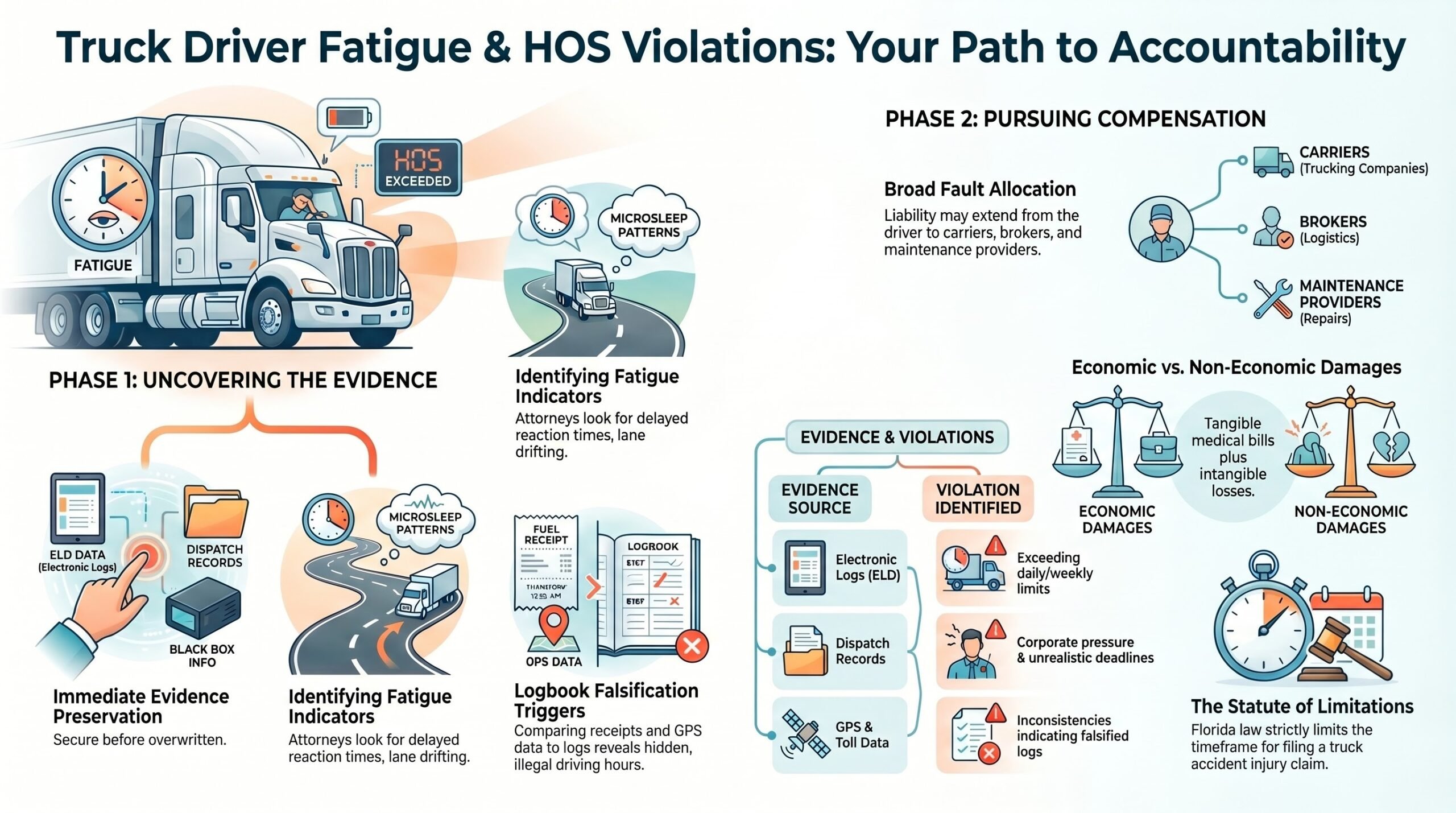
When a truck driver exceeds federal hours-of-service limits, fatigue can impair judgment, slow reaction time, and lead to devastating crashes, and it’s clear how to build a claim that addresses those failures directly.
We help you pursue accountability with careful investigation, disciplined documentation, and prompt action. We gather logbooks, electronic data, dispatch records, maintenance files, and witness statements to show how preventable conduct caused harm. We also identify all liable parties, including carriers and insurers, so your claim reflects the full scope of losses.
Throughout the case timeline, we explain each step, answer questions, and prepare your matter for strong negotiation or trial. Our work includes evaluating medical expenses, lost income, future care, and the impact on your daily service to others. If compensation issues involve driver compensation structures or unsafe delivery pressures, we examine those facts closely. By presenting clear evidence and a well-supported demand, we work to protect your rights and seek a recovery that serves your family and community.
OUR CONSULTATIONSARE FREE
START YOUR FREE CASE REVIEW

Understanding Gainesville Truck Driver Hours of Service Violation Injury Cases
Because hours-of-service violations often involve both federal safety rules and detailed factual disputes, we approach these Gainesville truck accident cases by examining how the driver’s schedule, rest periods, and employer demands contributed to the collision. We look closely at whether the crash reflects driver exhaustion, incomplete records, or pressure to stay on the road beyond lawful limits.
To understand these injury cases, we gather and compare electronic logging data, dispatch communications, fuel receipts, GPS records, and witness statements. We use logbook audits to identify inconsistencies between reported driving time and actual activity. We also evaluate whether a carrier’s supervision, training, or delivery expectations ignored safety obligations.
This careful review helps us present a clear account of what happened and why it matters. When we build these cases, we do so with a commitment to accountability and service, because protecting injured people and promoting safer trucking practices strengthens the wider Gainesville community over time.
Common Causes of Gainesville Truck Driver Hours of Service Violation Injuries
We often see hours-of-service violations lead to serious crashes when driver fatigue impairs judgment, slows reaction time, and increases the risk of preventable errors. We also find that missed rest breaks and intense pressure to deliver on time can push truck drivers beyond safe operating limits, even when federal rules say otherwise. As we review these cases with you, we also examine logbook falsification issues, because inaccurate records can hide dangerous driving patterns that contribute to devastating injuries.
Driver Fatigue Risks
Driving while exhausted creates one of the most serious hazards in commercial trucking, and we often see the damage that follows when hours-of-service limits are ignored. Fatigue reduces judgment, slows reaction time, and weakens a driver’s ability to track traffic, weather, and sudden hazards around a large truck.
When a driver operates while sleep-deprived, the danger extends far beyond ordinary tiredness. It is clear that fatigue can impair vehicle guidance, braking decisions, and lane maintenance, placing everyone nearby at risk. Even a brief lapse can trigger a devastating collision, especially when microsleep risk causes a driver to lose awareness for several seconds.
As we serve injured people and their families, we recognize that these crashes often stem from preventable choices that prioritize productivity over public safety and human well-being on Florida roads.
Missed Rest Breaks
Too often, missed rest breaks set the stage for serious truck collisions by leaving drivers mentally and physically depleted long before a shift ends. When drivers skip lawful pauses, sleep deprivation can deepen, attention can narrow, and reaction times can slow at the very moments when vigilance matters most.
We know these violations do more than break safety rules; they endanger families, coworkers, and everyone who shares Gainesville’s roads. Without regular breaks, a driver may experience circadian disruption, reduced judgment, and increasing physical strain, especially during long or irregular shifts. We help readers understand how these patterns contribute to preventable crashes and serious injuries.
By identifying missed rest breaks early, we can better protect our community, support accountability, and advocate for safer practices that honor the well-being of every person on the road.
Pressure To Deliver
Often, pressure to deliver on time pushes truck drivers to exceed hours-of-service limits, shorten required breaks, or stay behind the wheel when fatigue has already begun to impair safe judgment. When companies prioritize schedules over safety, everyone on Gainesville roads faces greater risk. Deadline pressure can come from tight routes, loading delays, and unrealistic dispatch expectations that leave no room for lawful rest.
Client demands may also encourage drivers to keep moving despite exhaustion, weather hazards, or heavy traffic. It’s clear many drivers want to serve others by delivering vital goods, but no shipment is worth a preventable crash. When carriers reward speed over compliance, they create conditions in which serious injuries become far more likely. We help families hold negligent parties accountable and promote safer transportation practices for all.
Logbook Falsification Issues
Concealing hours behind false records is one of the clearest signs that a driver or carrier knew service limits weren’t being followed and chose to hide the risk. When logbooks are altered, omitted, or recreated after a crash, we often find a pattern of fatigue, unsafe scheduling, and ignored warnings.
Electronic logging has reduced some abuse, but falsification still appears through disconnected devices, off-duty mislabeling, or supporting documents that do not match mileage and fuel receipts.
We help you uncover those inconsistencies because accurate records protect everyone on the road. Audit triggers, dispatch messages, GPS data, toll records, and inspection reports can reveal whether a driver exceeded lawful limits. By tracing those facts carefully, we can show how hidden hours contributed to preventable injuries in and around Gainesville and serious harm.


Legal Rights of Gainesville Truck Driver Hours of Service Violation Injury Victims
When a truck driver exceeds federal hours-of-service limits and causes a crash, we can pursue compensation for the full extent of your losses under Florida law. You may have the right to recover damages for medical care, lost income, reduced earning capacity, pain and suffering, and property damage. If your injuries happened while serving others on the job, workers’ compensation may also affect available benefits and claims.
Your legal rights can include claims against the driver, trucking company, cargo loaders, maintenance providers, or other responsible parties. We work to protect your Privacy rights while building a strong case supported by records, electronic logging data, witness statements, and expert analysis.
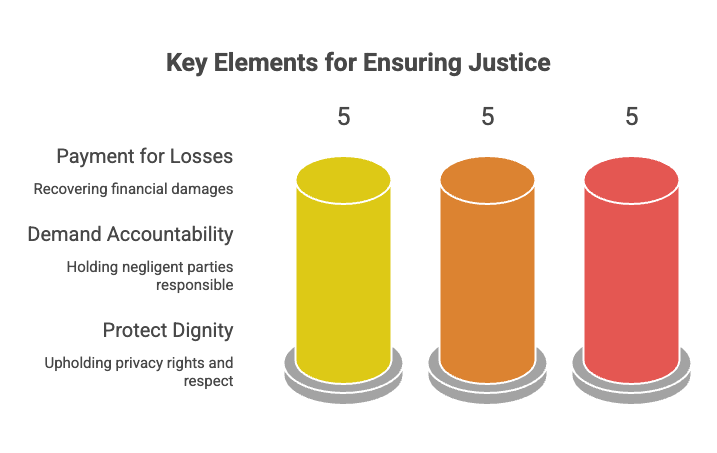
We focus on accountability and fair results.
- Seek payment for present and future losses
- Demand accountability from all negligent parties
- Protect dignity through respect for your Privacy rights
Florida law limits filing time, so preserving your rights matters. We stand ready to help.
Steps to Take After a Gainesville Truck Driver’s Hours of Service Violation Injury
After a Gainesville truck driver’s hours of service violation injury, we urge you to seek immediate medical care, because prompt treatment protects both your health and the record of your injuries. We also recommend that you preserve crash evidence, including photographs, witness statements, and any communications related to the collision, as these details can become crucial later. As soon as possible, we can help you contact a truck accident lawyer, so you can protect your rights and begin building a strong claim.
Seek Immediate Medical Care
Seeking prompt medical attention should be our first priority after a Gainesville truck crash tied to hours-of-service violations, because a timely evaluation protects both your well-being and your legal claim. Even if symptoms seem minor, we should seek treatment immediately, since injuries such as concussions, internal bleeding, and soft-tissue damage may worsen without warning.
When we obtain an urgent evaluation, physicians can identify hidden harm, begin care, and create records that connect the collision to your injuries. Following medical advice, attending follow-up visits, and reporting new symptoms also show that we take recovery seriously.
By acting quickly, we honor our responsibility to ourselves and those who depend on us, while giving our legal team a clear understanding of the physical impact this crash has had on your life and future well-being.
Preserve Crash Evidence
We should move quickly to preserve crash evidence because essential proof in a Gainesville truck accident involving hours-of-service violations can disappear within hours or even days. We can help by photographing vehicle damage, skid marks, road conditions, cargo spills, and visible injuries as soon as it is safe.
We should also preserve video from dash cameras, nearby businesses, traffic cameras, and homes before systems overwrite it. If personal items, torn clothing, or damaged car parts remain at the scene, we should carefully secure the debris and document where each item was found.
We can ask witnesses for names and contact information, and note anything the truck driver said about fatigue, delivery schedules, or rest breaks. By protecting this evidence early, we strengthen the truth and better serve everyone affected by the crash.
Contact A Truck Accident Lawyer
Prompt legal guidance should follow closely behind evidence preservation, because a Gainesville truck accident involving hours-of-service violations often requires immediate action to protect records, identify liable parties, and prevent insurers from shaping the narrative before the facts are clear.
When we contact a truck accident lawyer, we create a path toward accountability that can also protect those who depend on us. During client intake, we can share medical updates, witness information, and concerns about lost income or future care. Counsel can send preservation letters, review logbooks and electronic data, and assess whether the driver, carrier, broker, or maintenance provider bears responsibility.
We should also ask clear questions about communication, case strategy, and fee structures, so we appreciate how representation works. Early legal support helps us serve our families well as we pursue a fair, fact-driven recovery.
How a Gainesville Truck Driver Hours of Service Violation Lawyer Can Help You
When a truck driver exceeds the federal hours of service limits, we can investigate whether fatigue, logbook errors, or company pressure contributed to the crash and use that evidence to strengthen your claim. We review electronic logging devices, dispatch records, maintenance files, and witness statements to identify violations and establish accountability.
Our work also examines fatigue management practices and failures in rest scheduling that may reveal preventable safety breakdowns.
- We preserve crucial evidence before it disappears.
- We link hours-of-service violations to the collision.
- We pursue full compensation through strategic negotiation or litigation.
Long-Term Effects of Gainesville Truck Driver Hours of Service Violation Injuries
We often see these injuries continue long after the crash, affecting your health, your work, and your financial stability. You may face chronic pain complications and lasting neurological damage that limit daily activities and require ongoing medical care. We also recognize the emotional and financial strain these long-term effects can place on you and your family.
Chronic Pain Complications
Living with chronic pain after a truck crash can alter nearly every part of a person’s daily life, especially when hours-of-service violations contributed to a fatigued driver’s delayed judgment or loss of control. We often see Chronic pain limit mobility, reduce independence, and strain a person’s ability to work, care for family, and serve others consistently.
Over time, persistent pain can affect posture, stamina, and emotional resilience. Many people also experience Sleep disruption, which deepens fatigue, weakens concentration, and makes routine responsibilities harder to manage. We recognize that ongoing discomfort may require repeated treatment, physical therapy, medication, and practical support at home.
When we evaluate these losses, we consider not only present suffering but also the long-term impact on daily function, relationships, and a person’s capacity to contribute meaningfully to their community.
Lasting Neurological Damage
Uncertainty often defines the aftermath of a truck crash that causes neurological harm, because symptoms may persist long after other injuries appear to stabilize. We often see victims struggle with headaches, dizziness, memory lapses, and changes in concentration that interfere with daily responsibilities and service to others. A serious brain injury may also disrupt speech, balance, sleep, and sensory processing.
As we help you understand these effects, we recognize that some neurological complications emerge gradually. Cognitive decline can limit judgment, learning, and reaction time, making once-routine tasks unsafe or exhausting.
Nerve damage may also produce weakness, tremors, numbness, or coordination problems that continue for years. By identifying lasting neurological damage early, we can better document its scope and support the care and resources your recovery may require.
Emotional And Financial Strain
Pressure often builds long after a truck crash, as serious injuries disrupt income, strain family responsibilities, and place new demands on a household’s time and finances. When a wage earner cannot return to work, we often see Financial instability spread throughout daily life, from mortgage payments to transportation and medical care.
We also recognize how constant caregiving, pain, and uncertainty can create Emotional burnout for injured people and the relatives who step in to help. As bills increase and routines change, families may feel isolated, overwhelmed, and unable to plan for the future with confidence.
We help you understand that these burdens are not minor aftereffects. They are serious losses that merit careful documentation, compassionate support, and a legal strategy focused on protecting your family’s long-term stability and dignity.
Proving Liability in Gainesville Truck Driver Hours of Service Violation Injury Cases
Because hours-of-service violations often leave a trace in electronic logs, dispatch records, fuel receipts, and driver communications, we can build liability by comparing what the trucking company reported with what actually occurred on the road. We review driver logbooks, black box data, GPS history, weigh station entries, and delivery timestamps to identify inconsistencies that show excessive driving, missed rest breaks, or falsified records.
We also work to connect those violations to the crash and your injuries. That means gathering witness statements, crash reports, surveillance footage, and medical records, then aligning them with the driver’s schedule and condition. In some cases, fatigue biomarkers may support the conclusion that exhaustion impaired judgment, reaction time, or attention.
We may also use expert testimony from accident reconstruction authorities, sleep experts, or trucking safety professionals to explain how regulatory violations contributed to the collision. By assembling clear, credible proof, we help you pursue accountability in a way that serves both your recovery and public safety.
Dealing With Insurance Companies After a Gainesville Truck Driver’s Hours of Service Violation Injury
In the aftermath of a truck crash, insurance companies often move quickly to limit what they pay, even when hours-of-service violations suggest clear fault. We help you respond carefully, because adjusters may seek statements that weaken your position or minimize the harm you suffered. Our role is to protect your voice while keeping communication focused, accurate, and evidence-based.
We also work to make certain insurers evaluate the full impact of your losses, including medical needs, missed income, and the disruption to your family’s daily life. Through disciplined policy negotiation, we challenge low offers and press for fair treatment grounded in the facts. We also monitor claim timelines closely, because delays can create added pressure when you are trying to recover and care for others.
By staying organized, documenting every exchange, and advocating with purpose, we help you deal with insurance companies from a position of strength, clarity, and service to your household.
What to Expect During a Gainesville Truck Driver Hours of Service Violation Injury Claim Process
We guide you through each stage of a Gainesville truck driver hours of service violation injury claim, beginning with an initial claim evaluation and a close review of the available evidence. We then assess hours-of-service records, address liability issues, and negotiate with opposing parties from a fact-based position. If a fair resolution isn’t offered, we prepare your case for settlement discussions or trial.
Initial Claim Evaluation
When you begin a Gainesville truck driver hours-of-service violation injury claim, we’ll usually start by reviewing the crash facts, your injuries, and any signs that the driver or carrier violated federal rest and driving-time rules. We listen carefully to understand how the collision affected your health, work, and family responsibilities.
During this initial evaluation, we’ll ask questions, identify potentially responsible parties, and outline the next steps in a clear, practical way. We may review medical records, witness statements, photographs, crash reports, insurance information, and your account of what happened.
Our goal is to assess whether the claim shows negligence and meaningful damages. We also explain timelines, communication expectations, and how we can provide steady guidance as you focus on recovery and supporting those who depend on you.
Hours Of Service Evidence
Building a strong hours-of-service case usually starts with securing records showing how long the truck driver had been on duty, driving, and resting before the crash. We work quickly to preserve electronic logs, dispatch records, fuel receipts, toll data, weigh station reports, and onboard computer information before anything is lost.
We also examine supporting evidence that may confirm fatigue or rule violations, including cell phone activity, GPS history, maintenance files, surveillance footage, and witness statements. In some cases, biometric monitoring data or in-cab systems can help us compare reported rest periods with actual activity.
By gathering these materials early, we can build a clear timeline and better understand whether the driver, carrier, or both failed to follow federal safety rules meant to protect everyone on the road and in our community.
Negotiation And Liability
Because liability in a truck crash often turns on the details of a driver’s schedule and the carrier’s safety practices, negotiation usually begins with a careful review of who violated the hours-of-service rules and how that failure contributed to the collision.
We use logbooks, electronic data, dispatch records, and witness accounts to evaluate Fault allocation between the driver, trucking company, and any other responsible parties. If a carrier encouraged unsafe driving hours, ignored warning signs, or failed to monitor compliance, that conduct can strengthen your position.
We then present a clear account of the violations, the crash sequence, and the harm you suffered. This organized approach creates Settlement leverage by connecting safety failures to legal responsibility. Throughout this stage, we keep you informed, answer questions promptly, and focus on accountability that supports your recovery and service to your family and community.
Settlement Or Trial
After we’ve assembled the evidence and presented a well-supported claim, the case typically moves toward either settlement discussions or trial preparation. We guide you through both paths with steady counsel, so you can make informed decisions that protect your future and support those who depend on you.
If the insurer negotiates in good faith, we evaluate offers against your medical costs, lost income, and long-term needs. We explain likely settlement timelines, prepare counteroffers, and keep pressure on the defense. If negotiations stall or undervalue your losses, we shift to trial strategies designed to present a clear, credible case.
We prepare witnesses, organize records, and anticipate defense arguments.Throughout this stage, we remain focused on accountability, fair compensation, and the practical steps needed to help you move forward and continue serving others.
Compensation for Gainesville Truck Driver Hours of Service Violation Injury Damages
Pursuing compensation for injuries caused by a truck driver’s hours of service violations requires a clear accounting of every loss the crash has created. We help you document treatment costs, rehabilitation needs, lost income, reduced earning capacity, property damage, and the practical burdens that affect your household and ability to serve others.
We also work to protect the value of your claim from avoidable setbacks. That includes gathering driver logs, electronic data, witness statements, and medical records that connect fatigue-related misconduct to your injuries. We explain payout timelines, prepare you for insurer tactics, and address medical liens so valid claims do not consume more of your recovery than necessary.
When future care is likely, we consult qualified professionals to project those expenses with care and credibility. Our goal is to present a complete, well-supported demand that reflects the full scope of harm and positions your case for a fair resolution under Florida law and through every stage.
Economic vs Non-Economic Damages in Gainesville Truck Driver Hours of Service Violation Cases
We can separate damages in Gainesville truck driver hours of service violation cases into economic and non-economic losses, and each category affects your claim in different ways. We use economic damages to measure tangible financial harm, such as medical bills, lost income, and future care costs, while non-economic damages address pain, suffering, and other personal losses that don’t come with a fixed price.
To recover full compensation, we must present clear evidence that proves both the amount of your financial losses and the real impact the injury has had on your life.
Economic Damages Explained
Clarity matters when we evaluate damages in a Gainesville truck driver hours-of-service violation case, because the law separates losses into economic and non-economic categories. Economic damages cover measurable financial harm that we can document with records, bills, estimates, and employment information. They often include medical expenses for emergency care, hospitalization, rehabilitation, medication, and follow-up treatment.
We also examine lost wages when injuries keep you from working, and future earnings if lasting limitations reduce your ability to earn income later. If the crash damaged your vehicle or other personal property, property damage may also be recoverable through repair estimates or fair market value evidence.
By carefully organizing these losses, we help you present a clear claim that reflects the practical financial impact of a truck driver’s hours-of-service violation on your life and family.
Non-Economic Losses Overview
Recognition of non-economic losses matters just as much as calculating medical bills and lost income, because a serious truck crash can alter daily life in ways that invoices don’t capture. When we serve injured people in Gainesville hours-of-service cases, we look beyond the receipts to the human impact of harm.
Non-economic damages address suffering that does not come with a fixed price, including physical pain, emotional distress, loss of companionship, mental anguish, and reduced quality of life. These losses often affect how you sleep, work, care for family, and participate in your community.
Pain valuation helps us describe those experiences in a structured, credible way, without reducing your life to numbers alone. By recognizing these harms, we advocate for a fuller picture of what the collision has taken from you and your loved ones.
Proving Damage Value
Establishing damage value in a Gainesville truck driver’s hours of service violation case requires more than listing losses, because every category of harm must be supported with reliable proof. We help you organize records that show medical expenses, lost income, future care needs, and property loss, including repair estimates and market depreciation.
We also prove non-economic damages through consistent evidence of pain, emotional distress, disability, and reduced quality of life. Your treatment history, daily limitations, and testimony from family members can strengthen that claim. In serious cases, expert testimony from physicians, vocational professionals, or economists helps connect the crash to long-term consequences and fair compensation.
By presenting clear documentation and credible witnesses, we build a damages case that reflects the full impact of the collision and supports meaningful recovery for you and your family.
When a Gainesville Truck Driver’s Hours of Service Violation Injury Case Goes to Trial vs Settlement
Although many Gainesville truck driver hours-of-service violation injury claims resolve through settlement, we prepare every case as if it will proceed to trial because the strength of that preparation often shapes the outcome. When insurers see clear liability, well-documented damages, and credible witnesses, they are often more willing to negotiate fairly and avoid the uncertainty of a courtroom verdict.
Still, some cases must be tried. If a carrier denies fatigue, disputes causation, or minimizes the harm done, we may recommend presenting the case to a jury. Trial allows us to use jury selection to identify fair-minded jurors and to present expert testimony on driver fatigue, logging violations, medical needs, and future losses.
Settlement can provide faster resolution and reduce stress, but a trial may be necessary to pursue full accountability. We help you weigh each path carefully, guided by evidence, risks, and the practical impact on your family, your recovery, and the people who depend on you.
The Statute of Limitations for Gainesville Truck Driver Hours of Service Violation Injury Cases
Because filing deadlines can control whether you recover anything at all, we evaluate the statute of limitations in Gainesville truck driver hours of service violation injury cases at the outset of our work.
These statute deadlines set the outer boundary for bringing a claim, and missing them can bar compensation for medical costs, lost income, and other losses your family may shoulder after a serious collision.
We also examine whether any filing exceptions may apply, because not every case follows the same timeline. The facts can matter greatly, including the injured person’s age, the date injuries were discovered, the identity of responsible parties, and whether a wrongful death claim is involved. We review records carefully, preserve crucial evidence, and track each controlling date with discipline.
By addressing limitations issues early, we help protect your right to pursue accountability and financial recovery, while honoring the broader goal of securing resources that support your recovery, stability, and ability to serve others.
When to Contact a Gainesville Truck Driver Hours of Service Violation Lawyer
When a collision suggests that a truck driver may have stayed on the road beyond federal hours-of-service limits, we recommend contacting a Gainesville truck driver hours-of-service violation lawyer as soon as possible. Prompt action after a post-accident event helps protect records that may clarify what happened and when the driver last rested.
We encourage early notification because legal timing can affect access to logbooks, electronic data, dispatch communications, fuel receipts, and maintenance records. We also know that witness preservation matters, since memories can fade and physical evidence may change quickly. If injuries prevent immediate outreach, a family member may begin the process on your behalf while you focus on recovery and caring for others.
Reaching out early also helps us identify deadlines, coordinate document requests, and reduce avoidable delays. Even if the fault is still uncertain, a timely consultation can provide direction, protect important information, and support your effort to seek accountability with care, respect, and service.
Why You Need an Experienced Gainesville Truck Driver Hours of Service Violation Lawyer
Since trucking companies and their insurers often move quickly to shape the record after a crash, you need an experienced Gainesville truck driver hours of service violation lawyer who understands how to secure, interpret, and present the evidence effectively. Our team understands how logbooks, electronic data, dispatch records, and maintenance files can reveal unsafe scheduling and prevent vital proof from disappearing.
When hours-of-service violations contribute to serious harm, Experienced counsel helps connect those violations to driver fatigue, poor supervision, and broader company practices. We build a clear claim that reflects the full impact on you and those who depend on your care and service. As experienced negotiators, we address insurers from a position of preparation, not guesswork.
That preparation strengthens settlement discussions and supports trial readiness if the other side refuses accountability. With focused legal guidance, we pursue fair compensation while helping protect safer conduct on Gainesville roads for families, workers, and our shared community.
How to Choose the Right Gainesville Truck Driver Hours of Service Violation Lawyer for Your Case
Although many firms handle truck accident claims, the right Gainesville truck driver hours of service violation lawyer for your case should have direct experience uncovering fatigue-related evidence, preserving electronic records, and proving how safety rule violations caused substantial harm.
As we evaluate counsel, we should look for a record of investigating logbooks, electronic logging devices, dispatch records, and black box data. We should also ask whether the lawyer understands local regulations, federal trucking standards, and how those rules affect liability. A strong attorney will explain the process clearly, communicate promptly, and treat your concerns with respect.
We should also consider courtroom readiness, negotiation skills, and access to qualified experts who can connect the exhausted driver to the collision. It helps to review results from similar cases and assess whether the firm examines drivers’ reputations, the company’s hiring practices, and prior safety issues. When we choose carefully, we place your case in the hands of capable professionals and strengthen your path toward accountability and recovery.
About The Law Offices of Anidjar & Levine
Guided by a client-centered approach, we at the Law Offices of Anidjar & Levine represent injured people in Gainesville with focused advocacy and careful attention to the facts that drive trucking claims.
We recognize that hours of service violations can reflect broader safety failures, and we work to uncover records, timelines, and conduct that may support your case.
Our firm’s history reflects a sustained commitment to helping injured Floridians pursue accountability and practical relief after serious collisions.
We prepare every matter with care, communicate directly, and remain available when questions arise.
That service-focused model helps families make informed decisions during difficult periods.
Client testimonials often describe our responsiveness, professionalism, and steady guidance from investigation through resolution.
While every claim turns on its own facts, we bring disciplined preparation and a clear sense of purpose to each case.
When you turn to us, we aim to protect your interests and advance your recovery with diligence and respect.
Frequently Asked Questions
Can Truck Driver Logbooks Be Altered to Hide Hours-Of-Service Violations?
Yes, truck driver logbooks can be altered to hide hours-of-service violations, and we want you to know the signs. Drivers or carriers may create falsified entries, edit electronic records, or engage in document tampering to conceal excess driving time. We can help you understand how investigators compare logbooks with fuel receipts, GPS data, dispatch records, and toll information. Those comparisons often reveal inconsistencies that point to violations and support accountability.
Do Black Box Records Help Prove Driver Fatigue After a Truck Accident?
Yes, we can use black box records to help prove driver fatigue after a truck accident. These records may show changes in speed, braking patterns, wheel inputs, and driving duration, all of which can indicate reduced driver vigilance. We also compare that data with logbooks, GPS records, and dispatch communications to identify inconsistencies. When we serve injured people, we rely on this evidence to build a clear, credible case for accountability.
Are Trucking Companies Required to Retain Electronic Logging Device Data?
Yes, trucking companies must retain certain electronic logging device data for required periods, and we can help you understand what that means for your case. Federal rules require electronic retention of duty status records and supporting documents, and carriers must preserve data integrity throughout storage and transfer. If a crash occurred, we’ll work to identify what should be present, promptly request preservation, and evaluate whether missing records may indicate noncompliance or concealment.
Can Weather Conditions Affect Hours-Of-Service Compliance Investigations?
Yes, weather conditions can affect hours-of-service compliance investigations, and we help you understand how. Investigators often examine weather exemptions, road closures, and visibility impacts when reviewing a driver’s decisions and log accuracy. We also look at whether conditions genuinely prevented safe travel or merely delayed delivery. If severe weather justified extended driving, supporting records, dispatch communications, and electronic logging data can strongly influence the outcome of an investigation for you.
Do Federal Hours-Of-Service Rules Differ for Intrastate Florida Truck Drivers?
Yes, federal hours-of-service rules can differ for intrastate Florida truck drivers, because Florida may apply State exemptions and specific operating limits within its borders. We should help you review whether federal standards, Florida regulations, or both govern a driver’s schedule. Local enforcement agencies often examine logbooks, route distance, and vehicle type. When we serve others through careful compliance review, we protect safety, accountability, and lawful transportation practices across Florida.
—————————
If you were hurt in a truck crash involving hours of service violations, the Law Offices of Anidjar & Levine is prepared to protect your rights and pursue the compensation you may be entitled to.
These cases often require prompt investigation, careful evidence collection, and a clear understanding of federal trucking regulations.
Our team guides clients through each stage of the process with focused, experienced representation.
Contact our Gainesville Truck Accident Lawyer to discuss your Gainesville truck accident claim and legal options today.

