

Law Offices of Anidjar and Levine helps Gainesville truck accident victims secure black box data before it’s lost, altered, or overwritten. By sending preservation letters, coordinating forensic downloads, and comparing electronic records with driver logs, maintenance files, medical records, and crash evidence, we build a clear timeline and strengthen liability claims.
We also handle insurers, protect your statements, and pursue full compensation for medical costs, lost income, and long-term harm. Learn more from a Gainesville Truck Accident Lawyer. The sections below explain how this process can affect your case.
Main Takeaways
- A Gainesville truck black box accident lawyer acts quickly to preserve ELD and event data recorder evidence before it is overwritten or lost.
- Prompt medical care, photos, and documenting the truck, trailer, and carrier help support your claim and protect critical evidence.
- Proper forensic retrieval, authentication, and chain of custody are essential to make black box data reliable and admissible.
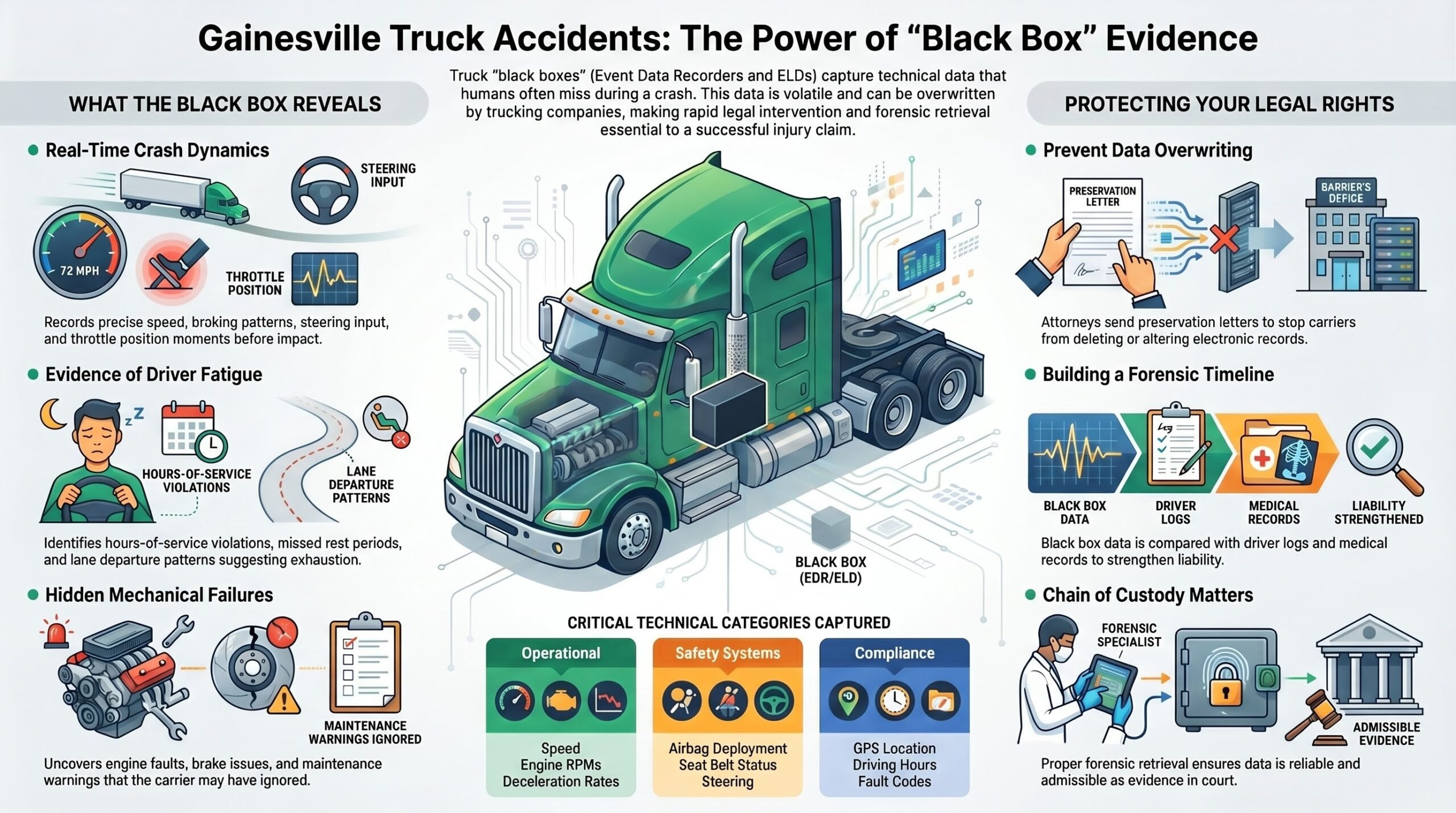
- Black box data can reveal speed, braking, steering, hours-of-service issues, mechanical warnings, and other causes of the crash.
- An attorney compares black box records with logs, maintenance records, witness testimony, and medical evidence to establish liability and damages.


How We Can Help With Your Gainesville Truck Black Box Accident Injury Claim
Protecting crucial evidence is often the first step in a Gainesville truck black box accident claim, and we move quickly to do it. We send preservation notices, secure electronic records, and coordinate with qualified experts who can recover and interpret critical data before it is altered, overwritten, or lost.
We also build your claim with discipline and care. We gather logbooks, maintenance records, inspection reports, and witness statements, then compare them with black box information to identify inconsistencies and strengthen your position. Throughout this process, we emphasize data privacy and protect sensitive records with rigorous handling practices.
We believe client communication is part of service, so we provide clear updates, answer questions promptly, and explain each step in practical terms. Our role is to shoulder the legal burden so you can focus on recovery and serving those who depend on you. When insurers challenge liability or damages, we respond with organized evidence, credible analysis, and steady advocacy on your behalf.
OUR CONSULTATIONSARE FREE
START YOUR FREE CASE REVIEW

Understanding Gainesville Truck Black Box Accident Injury Cases
When we break down Gainesville truck black box accident injury cases, we focus on how electronic data can clarify what happened before, during, and after a collision. This information may show speed, braking, engine activity, steering input, and other Event Data that helps us appreciate the sequence of impact. By studying those records carefully, we can better evaluate injuries, timelines, and the overall seriousness of the event.
We also examine how the data were collected, preserved, and interpreted. Sensor Calibration matters because even reliable systems must be reviewed for accuracy, context, and consistency with physical evidence. We compare electronic records with photographs, roadway marks, vehicle damage, medical findings, and witness accounts.
That balanced approach helps us serve injured people and their families with diligence and respect. When we grasp the technology and its human consequences together, we are better positioned to pursue accountability and protect those who depend on us.
Common Causes of Gainesville Truck Black Box Accident Injuries
As we assess the causes of a Gainesville truck black box accident injury, we often find crucial evidence of driver fatigue, speeding, and hard braking in the recorded data. We also look for signs that overloaded or unbalanced cargo contributed to the crash, because shifting weight can quickly undermine a truck’s stability. When we review mechanical failure data, we can better demonstrate how equipment problems may have directly contributed to the collision.
Driver Fatigue Evidence
Often, evidence of driver fatigue plays a central role in Gainesville truck accident claims because exhaustion can impair judgment, slow reaction time, and increase the risk of severe collisions. We examine black box data, electronic logs, dispatch records, and driver schedules to identify missed rest periods, extended driving hours, and circadian disruption.
We also look for micro sleep detection indicators, lane departures, inconsistent wheel inputs, and delayed responses that suggest a driver was operating while dangerously tired. When we connect those findings with witness statements, cellphone activity, fuel receipts, and delivery demands, we build a clear timeline for you.
That timeline helps show whether a carrier ignored safety rules or pressured a driver beyond legal limits. By carefully presenting fatigue evidence, we work to protect injured people and strengthen accountability throughout our Gainesville community.
Speeding And Hard Braking
Frequently, black box data reveals that speeding and hard braking are closely linked in Gainesville truck accident cases because excessive speed reduces stopping distance and forces abrupt braking that can destabilize a loaded truck.
When we review electronic records, we often see dangerous speeding dynamics followed by sudden deceleration moments before impact. Those patterns help us explain how a preventable collision developed and why serious injuries occurred.
We use this evidence to serve injured people and families with clarity and purpose. Black box entries may show vehicle speed, throttle input, and whether the driver exceeded safe braking thresholds under traffic or weather conditions. By connecting those facts to road conditions and witness accounts, we can present a clear picture of negligence and support your effort to pursue accountability, safety improvements, and fair recovery after a crash.
Overloaded Or Unbalanced Cargo
Examine overloaded or unbalanced cargo closely, and black box data can help show how a truck became difficult to control before a crash in Gainesville. When weight is poorly distributed, a driver may struggle to steer, stop, or keep the trailer stable through traffic and turns.
We use this evidence to serve injured people and families with care and precision. Black box records may reveal sudden speed changes, guiding corrections, or rollover patterns consistent with overloaded trailers or cargo shifting. Those facts can support a broader investigation into loading practices, route demands, and whether safety rules were ignored.
When we connect data with witness accounts and evidence from the scene, we can build a clearer picture of why the truck became hazardous. That clarity helps us pursue accountability and seek results that protect both our clients and the community.
Mechanical Failure Data
Mechanical failure can make a truck dangerous even when the cargo weight appears proper, and black box data may help show when equipment problems contributed to a Gainesville crash. We examine records for warning signs involving brakes, handling, tire pressure, and engine diagnostics. These entries can reveal whether a truck experienced faults before impact and whether the driver or carrier had notice.
We also look at maintenance histories and sensor calibration issues that may have distorted safety readings. When systems fail, a fully loaded truck can become difficult to control, placing families, workers, and others at risk. By tracing mechanical events using black-box information, we work to identify preventable failures and support accountability. That careful review helps us serve injured people and pursue answers grounded in reliable evidence for your case and your recovery.


Legal Rights of Gainesville Truck Black Box Accident Injury Victims
When we look into a Gainesville truck accident, black box data can play a central role in protecting an injured victim’s legal rights. We use this evidence to help establish liability, challenge incomplete narratives, and support fair compensation. At the same time, privacy concerns and data ownership can affect who may access, preserve, and interpret the information.
Black box data can be pivotal in a Gainesville truck accident claim, but access, ownership, and privacy issues may shape its legal use.
We also recognize that injured victims merit respect, transparency, and lawful treatment throughout the claims process. Black box records may strengthen a case by showing speed, braking, steering input, and hours of operation before impact.
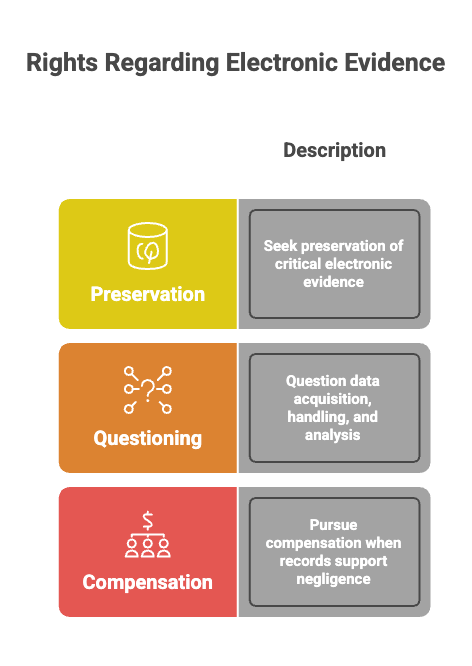
Key legal rights often include:
- the right to seek preservation of critical electronic evidence
- the right to question how data was obtained, handled, and analyzed
- the right to pursue compensation when records support negligence
Steps to Take After a Gainesville Truck Black Box Accident Injury
After a Gainesville truck black box accident injury, we should seek immediate medical care so that your injuries are documented, and your health remains the first priority. We also need to quickly preserve black-box evidence because that data can clarify how the crash occurred and support your claim. From there, we should contact a truck lawyer who can protect your rights, secure crucial records, and guide you through the next steps.
Seek Immediate Medical Care
Seek medical attention at once, even if your injuries seem minor, because prompt evaluation protects both your well-being and your legal claim. After a truck collision, we should call 911, accept urgent transport if responders recommend it, and follow through with emergency or same-day care. Some injuries worsen quietly, and delayed symptoms often appear hours or days later.
When we serve our families and community, we also serve them by taking our health seriously. We should describe every episode of pain, dizziness, limitation, and emotional change to medical providers, then follow treatment instructions carefully. Medical records connect the crash to your injuries, document their progression, and show that you acted responsibly. If we wait, insurers may argue that something else caused the harm or that the injury was not severe.
Preserve Black Box Evidence
Preserving black box evidence should become a priority as soon as your immediate medical needs are addressed. We should act quickly because electronic logging devices and event data recorders can be overwritten, damaged, or lost as part of routine company practices.
We can help protect this information by documenting the truck’s identity, photographing the scene, and noting the carrier’s name, trailer number, and any responding agency. If possible, we should request that the vehicle and its electronic systems remain untouched to reduce the risk of data corruption.
We should also keep our own records organized, including medical updates, witness names, and crash-related communications, because clear documentation supports accountability. Careful preservation limits disputes, discourages legal chain-breaking, and helps ensure the facts remain available to those seeking justice and meaningful community protection.
Contact A Truck Lawyer
At this stage, we should promptly contact a truck lawyer to protect crucial evidence, manage communications with insurers and trucking companies, and assess the full scope of the claim. Legal counsel helps us preserve black box data, obtain records, and prevent avoidable mistakes.
When we act quickly, we strengthen our ability to serve our family and community by pursuing accountability with care and discipline. A lawyer can coordinate witness interviews, review driver logs, maintenance files, and crash reports, and identify every liable party.
We also gain guidance on medical documentation, deadlines, and damages that may not be obvious at first. During settlement negotiation, counsel can advocate for fair compensation while we focus on recovery and supporting those who depend on us. Early legal help protects both our rights and our future.
How a Gainesville Truck Black Box Accident Lawyer Can Help You
When a trucking collision upends your life, we can step in quickly to secure black box data, analyze what it shows, and use it to build a stronger claim on your behalf. Our role is to protect essential evidence before it disappears and connect the facts to a clear legal strategy that serves your best interests.
We focus on the steps that often matter most:
- Prompt Data retrieval from the truck’s electronic systems and related records
- Careful review of speed, braking, hours of service, and crash timing
- Strategic use of findings in negotiations, litigation, and liability analysis
We also work with qualified experts, preservation letters, and discovery tools to hold carriers accountable. By organizing technical evidence into a persuasive narrative, we help you understand what happened and what options are available. Our objective is straightforward: to pursue fair compensation with discipline, accuracy, and service-centered advocacy while you focus on your recovery and your family’s immediate needs.
Long-Term Effects of Gainesville Truck Black Box Accident Injuries
We often see truck accident injuries create lasting problems that extend far beyond the initial recovery period. You may face chronic pain, cognitive and emotional changes, and serious limits on your ability to return to work or maintain the same earning capacity. As we discuss these effects, we’ll explain why documenting them carefully can make a meaningful difference in your claim.
Chronic Pain Challenges
Persistence often defines chronic pain after a Gainesville truck black box accident, turning injuries that seemed manageable at first into lasting physical limits, disrupted sleep, and reduced ability to work or handle daily tasks. We often see pain linger in the back, neck, shoulders, or joints, especially when nerve damage, spinal trauma, or orthopedic injuries are involved.
Effective pain management may require coordinated care, physical therapy, medication oversight, and consistent medical follow-up. Sleep disruption can intensify fatigue, slow physical restoration, and make routine responsibilities harder to sustain. As we help you understand these challenges, we also recognize how chronic pain can affect caregiving, employment, and community service.
By carefully documenting symptoms and pursuing appropriate treatment, we can better protect your health, stability, and long-term recovery after a serious collision.
Cognitive And Emotional Impact
Although physical injuries often receive immediate attention after a Gainesville truck black box accident, cognitive and emotional consequences can quietly shape a person’s long-term recovery. We often see survivors struggle with concentration, decision-making, and Memory disruption, which can affect daily routines, relationships, and confidence in serving their families and communities.
Emotional injuries may appear as anxiety, depression, irritability, sleep disturbance, or Emotional numbness, leaving people feeling disconnected from others and from their own sense of purpose. These effects merit careful documentation and compassionate treatment, just like visible injuries. When we help you recognize these changes early, we create stronger support systems, encourage appropriate medical care, and build a clearer picture of how the collision altered your life. That understanding can strengthen both recovery and legal recovery over time.
Reduced Work Capacity
Losing the ability to work at full capacity can become one of the most disruptive long-term consequences of a Gainesville truck black box accident injury. We often see injured people struggle with reduced productivity after pain, mobility limits, or neurological symptoms interfere with routine tasks. Even dedicated workers may need more breaks, modified duties, or fewer hours.
When Diminished stamina affects concentration, lifting, driving, or standing, your earning ability can decline over time. We appreciate that work is often tied to serving others, supporting family, and maintaining dignity.
That is why we help document medical restrictions, vocational losses, and future limitations with care and precision. By connecting black box evidence to the crash and your lasting impairments, we build a stronger claim for compensation that reflects your reduced work capacity and future needs.
Proving Liability in Gainesville Truck Black Box Accident Injury Cases
Establishing liability in Gainesville truck black box accident injury cases often begins with the vehicle’s electronic data, because it can reveal speed, braking, engine activity, and driver inputs in the moments before impact. We use that information to build a clear timeline and compare it with driver logs, inspection records, witness statements, and evidence from the scene, so you can understand how the crash occurred.
From there, we focus on black-box authentication to confirm that the data is complete, reliable, and legally admissible. Careful data interpretation helps us identify unsafe conduct, including hard braking, delayed reaction, speeding, or hours-of-service violations. We also examine whether the trucking company failed to maintain the vehicle, supervise the driver, or preserve vital records.
When electronic data aligns with physical evidence and testimony, it can strongly support liability against every responsible party. Our goal is to present facts that serve your recovery and help hold negligent actors accountable under Florida law, with confidence.
Dealing With Insurance Companies After a Gainesville Truck Black Box Accident Injury
When insurance companies get involved after a Gainesville truck black box accident injury, we act quickly to protect your claim and control the flow of information. We handle insurer calls, review policy language, and prevent adjusters from using incomplete statements against you.
By organizing records early, we strengthen your position and keep communications accurate, respectful, and focused on your recovery and service to your family.
We also use black box data to challenge disputed facts and support fair claim negotiation. Insurers often move fast to limit exposure, so we respond with documented evidence, careful valuation, and a clear strategy. We explain settlement timelines in practical terms, helping you make informed decisions without pressure.
If an insurer requests broad medical releases or recorded statements, we step in and narrow the scope. Our role is to protect your rights, reduce avoidable stress, and pursue an outcome that reflects the full impact of the truck accident on your life.
What to Expect During a Gainesville Truck Black Box Accident Injury Claim Process
As we guide you through a Gainesville truck black box accident injury claim, we’ll explain how black box data must be preserved quickly and how the investigation timeline can affect your case. We’ll also show you how insurers and attorneys evaluate medical evidence to measure the full extent of your injuries and losses. From there, we’ll outline what you can expect during settlement negotiations and, if necessary, litigation.
Black Box Data Preservation
Locking down black box data early can shape the direction of a Gainesville truck accident injury claim because this electronic evidence may show speed, braking, engine activity, and other vital details from the moments before impact.
We act quickly to help you protect that evidence before it is lost, overwritten, or mishandled. Our approach often includes sending preservation requests that address data retention duties and identify the vehicle, carrier, and onboard systems involved. We also work to secure appropriate access for forensic extraction, ensuring the information is collected reliably and remains useful.
By carefully preserving this material, we place your claim on a stronger footing and support a fair review of what happened. This step can protect the truth, encourage accountability, and help us serve you and your family well.
Claim Investigation Timeline
After we preserve black box evidence, the investigation typically moves into a structured timeline that helps shape a Gainesville truck accident injury claim. We begin by confirming the data chain, identifying every custodian, transfer, and download to protect reliability. Next, we compare onboard records with police reports, driver logs, dispatch communications, and scene documentation.
We then build a forensic timeline that places speed, braking, hours of service, and vehicle movement beside witness statements and company records. This step helps us identify gaps, conflicts, and potential safety violations.
As deadlines approach, we send follow-up requests, consult qualified reconstruction and electronics professionals, and prepare a clear claim narrative. Throughout the process, we keep you informed, answer questions promptly, and work efficiently so your claim can support accountability and service to those harmed.
Medical Evidence Evaluation
Because medical proof often determines both the value and direction of a truck accident claim, we evaluate it carefully once the early liability evidence is in place. We review records, physician notes, diagnostic studies, and treatment timelines to understand how the collision affected your health and daily functioning.
We also compare symptoms with crash mechanics, sometimes consulting experts in forensic biomechanics and imaging interpretation when injuries are disputed or intricate. This helps us assess causation, severity, and future care needs with discipline and fairness. As we organize this evidence, we look for consistency across emergency care, follow-up treatment, and rehabilitation progress.
Our goal is to present a clear medical picture that honors your experience, supports responsible decision-making, and helps those evaluating the claim understand the full human impact of the injuries sustained.
Settlement And Litigation
When the medical evidence and black box data begin to align, we can usually evaluate whether a truck accident claim is positioned for settlement or whether litigation will be necessary to secure a fair result.
From there, we guide you through negotiations with a clear purpose: protecting your recovery while honoring the broader impact this claim may have on your family and community. We develop mediation strategies that address liability, damages, and future care needs, then present the evidence with discipline and credibility. If the insurer responds reasonably, we focus on structuring settlements that support long-term stability and responsible financial planning.
If resistance continues, we prepare for litigation, conduct discovery, challenge weak defenses, and advocate in court. At each stage, we remain committed to service, accountability, and achieving a result that reflects the full measure of harm.
Compensation for Gainesville Truck Black Box Accident Injury Damages
Securing full compensation in a Gainesville truck accident case often depends on what the truck’s black box reveals about speed, braking, hours of service, and other crucial driving data. When we use that evidence effectively, we can show how the collision happened, identify responsible parties, and strengthen every settlement negotiation.
Clear black box data may also counter efforts to unfairly shift blame or minimize the claim’s value, even when an insurer focuses on its insurance premium exposure rather than your recovery.
We work to connect the recorded data with witness statements, driver logs, inspection records, and crash reconstruction findings. That approach helps us present a well-supported claim that reflects the true impact of the accident and the accountability required by law.
By building a disciplined case early, we place you in a stronger position, whether the matter is resolved through negotiation or proceeds to trial. Our goal is to pursue compensation that supports stability, responsibility, and long-term recovery.
Economic vs Non-Economic Damages in Gainesville Truck Black Box Accident Cases
We can separate damages in Gainesville truck black box accident cases into economic losses, such as medical bills, lost income, and future care costs, and non-economic losses, such as pain, suffering, and reduced quality of life.
We also need to show you how non-economic losses are valued, since they don’t come with fixed invoices or receipts. Black box evidence can strengthen both categories by helping us prove how the crash occurred, who is responsible, and why the full extent of your losses warrants compensation.
Economic Damage Categories
Distinguishing economic from non-economic damages gives us a clear framework for valuing a Gainesville truck black box accident claim. We focus first on measurable financial losses that directly follow the collision. These often include emergency care, hospitalization, surgery, rehabilitation, medication, medical equipment, and anticipated treatment costs.
We also calculate lost wages when injuries prevent you from working, along with diminished capacity and future earnings if your long-term ability to provide for others has changed.
Property damage is another crucial category, including vehicle repair or replacement, towing, storage, and damaged personal items. In severe cases, economic damages may also cover household services, transportation to appointments, and necessary home modifications. By documenting each expense carefully, we build a claim that accurately reflects the real financial impact, with discipline and a service-minded purpose.
Non-Economic Loss Valuation
Although non-economic losses don’t come with receipts or invoices, they often represent a substantial part of a Gainesville truck black box accident claim. We help you understand how these damages reflect human harm, including physical pain, emotional distress, disability, disfigurement, and lost enjoyment of daily life.
When we pursue non-economic damages, we focus on careful pain assessment and quality-of-life valuation. We examine how injuries affect your sleep, relationships, mobility, independence, and ability to care for others. We may use medical records, treatment history, mental health observations, and testimony from family members to present a clear picture of your losses.
Because these harms are deeply personal, valuation requires judgment, consistency, and credibility. Our goal is to present your experience with dignity and advocate for compensation that reflects its real impact.
Black Box Evidence Impact
Data from a truck’s black box can shape both the economic and non-economic sides of a Gainesville truck accident claim by showing how the crash happened and how severe the impact was. We use speed, braking, guidance, and engine records to connect force of impact to medical costs, lost income, future treatment, and property loss. The same evidence can also support pain, suffering, disability, and loss of enjoyment of life by confirming a violent collision.
When we present this evidence, we must protect data integrity from collection through analysis so the record remains reliable and persuasive. We also address privacy concerns with care, because serving injured people means respecting their rights while pursuing accountability. Clear black box findings often strengthen negotiations, expert opinions, and courtroom presentations for fair recovery.
When a Gainesville Truck Black Box Accident Injury Case Goes to Trial vs Settlement
When a Gainesville truck accident case involves black box evidence, we evaluate early whether the facts support a strong settlement position or whether a trial will be necessary to secure full compensation. We review speed data, braking activity, driver hours, and maintenance records to measure liability, damages, and the insurer’s willingness to act fairly.
If the black box clearly confirms negligence and the defense responds reasonably, we often pursue a settlement to deliver timely resources for your recovery and your family’s stability. If the carrier disputes fault, minimizes injuries, or ignores compelling electronic data, we prepare the case for trial with discipline and purpose. At that stage, jury dynamics matter because jurors may respond strongly to objective truck data and credible testimony.
We also assess litigation costs, witness strength, and the risk of post-trial appeals. Our goal is always service through sound judgment, pursuing the path that best protects your interests and the accountability your case merits.
The Statute of Limitations for Gainesville Truck Black Box Accident Injury Cases
Strong evidence and a clear trial strategy still mean little if a claim is filed too late. In Gainesville truck-black-box accident cases, filing deadlines determine whether injured people may pursue compensation at all. We must evaluate the governing limitation period early, because courts generally enforce these rules strictly, even when harm is severe, and the evidence appears compelling.
We also need to weigh whether any exception changes the timeline. In limited circumstances, discovery tolling may apply when pivotal facts about the injury or its cause could not reasonably have been known immediately. Black box data can help clarify timing, fault, speed, braking, and driver conduct, but preserving that evidence does not extend to every deadline.
We should act with discipline, document each relevant date, and confirm how Florida law applies to the specific claim. By respecting these timelines, we protect the ability to seek accountability and resources that help families and communities rebuild after serious truck collisions.
When to Contact a Gainesville Truck Black Box Accident Lawyer
It’s best to reach out to a Gainesville truck black box accident lawyer as soon as possible after a collision, because early legal action helps us protect vital electronic evidence before it’s altered, overwritten, or lost.
We should make contact once medical needs are addressed and basic accident reporting is complete. Prompt action allows us to send preservation notices, gather records, and coordinate next steps while details remain fresh. The timing of the legal consultation also helps us respond to insurance inquiries with care and avoid preventable mistakes.
If you’re facing serious injuries, disputed fault, or a trucking company’s rapid response team, we should connect immediately. Even when post-accident stress makes decisions difficult, early guidance can create order and reduce uncertainty. We can help you understand what information to keep, what deadlines may apply, and how to move forward in a way that supports your recovery and protects the interests of everyone who depends on you.
Why You Need an Experienced Gainesville Truck Black Box Accident Lawyer
Because black box data often becomes the focal point of a truck accident claim, we need an experienced Gainesville truck black box accident lawyer who can secure that evidence, interpret it accurately, and use it to build a clear, well-supported case. Without prompt action, vital data may be lost, overwritten, or challenged by powerful trucking companies and insurers.
When we serve injured people and their families, experience matters because every detail can affect accountability and recovery. An attorney with deep knowledge of truck black box evidence can connect data points to driver conduct, vehicle performance, and federal safety obligations. That insight strengthens our legal strategy and helps us present facts with confidence and precision.
It also supports client trust, because you merit honest guidance, careful preparation, and steady advocacy throughout the claims process. By relying on proven experience, we protect important evidence, answer disputed claims effectively, and pursue results that reflect both justice and responsible service to others.
How to Choose the Right Gainesville Truck Black Box Accident Lawyer for Your Case
When we choose a Gainesville truck black box accident lawyer, we should first look for proven experience in commercial vehicle litigation and electronic evidence. We should ask how the lawyer preserves black-box data, works with reconstruction experts, and challenges trucking companies’ defenses. A strong record in truck injury claims often shows disciplined preparation and practical knowledge.
We should also evaluate lawyer communication from the first consultation onward. Clear updates, prompt responses, and honest explanations help us make informed decisions and serve our families well during a difficult time. Fee transparency matters just as much. We should understand contingency terms, case costs, and whether expenses are paid from a settlement or a verdict.
Finally, we should choose counsel that treats people with respect and approaches each case with diligence. When a lawyer listens carefully, investigates thoroughly, and explains a realistic strategy, we can move forward confidently and pursue accountability together with purpose, integrity, and trust.
About The Law Offices of Anidjar & Levine
After identifying the qualities we should look for in truck accident counsel, we can consider what The Law Offices of Anidjar & Levine offers to injured people and their families in Gainesville.
We recognize that a serious truck collision can disrupt every part of your life, so we focus on clear guidance, prompt communication, and practical support from the first call onward.
Our firm’s history reflects a commitment to representing injured Floridians with diligence and respect.
We investigate black box evidence, build strong claims, and pursue compensation that helps families recover and continue serving their communities.
We also value community involvement, because legal advocacy should extend beyond the courtroom and reflect genuine care for the people we serve.
When we represent you, we work to protect your rights, explain each step, and reduce the burdens that often follow a catastrophic crash.
Our goal is to deliver dependable counsel that honors your needs and advances justice with integrity.
Frequently Asked Questions
Can Black Box Data Be Deleted or Overwritten After a Truck Accident?
Yes, black box data can be deleted or overwritten after a truck accident, especially if the vehicle returns to service or repairs begin. We should act quickly to protect data integrity and prevent loss. If data has changed, file recovery may still help preserve important evidence for those affected. We can guide you in securing the truck, sending preservation notices, and pursuing timely access to the recorder before vital information disappears.
Who Owns the Truck’s Black Box Data After a Collision?
Usually, the trucking company or vehicle owner controls the truck’s black box data after a collision, because Truck ownership often determines initial rights and Data custody. However, we should know that other parties, including insurers, investigators, or courts, may lawfully access or preserve it. If you’re seeking to protect evidence and serve those harmed, we’d act quickly to request preservation, prevent loss, and clarify who may obtain the records.
Are Truck Black Boxes Required in All Commercial Vehicles?
No, truck black boxes aren’t required in all commercial vehicles. We should understand that federal mandates apply to certain safety equipment, but not every truck must carry an event data recorder. In practice, some carriers use voluntary installations to monitor driver performance, maintenance, and crash information. If you’re evaluating a specific vehicle, we can review its model year, manufacturer standards, and regulatory category to determine whether a black box was required.
What Types of Data Does a Truck Black Box Record?
Truck black boxes record operational and crash-related data that help us provide clear evidence. They often capture speed, engine RPMs, throttle position, brake application times, sudden deceleration, navigation inputs, seat belt use, and airbag events. Many systems also store driving hours, fault codes, and GPS location data. We use this information to accurately reconstruct events, identify safety failures, and support informed decisions after a collision.
Can Black Box Evidence Be Used in Criminal Investigations Too?
Yes, we can use black box evidence in criminal investigations, too, especially when it helps establish speed, braking, handling, and driver actions before a crash. We often see this data support criminal prosecutions involving reckless driving, DUI, or vehicular homicide. We must also address privacy concerns, because investigators generally need lawful access to the device and its records. When properly obtained, this evidence can serve victims and strengthen accountability for everyone.
—————————
Truck black box data can be crucial to proving fault, preserving evidence, and establishing the full extent of your losses after a serious collision.
We understand how to investigate these cases, protect your rights, and pursue the compensation you may be entitled to recover.
If you’ve been injured in a Gainesville truck accident, a Gainesville Truck Accident Lawyer from the Law Offices of Anidjar & Levine is prepared to act quickly and advocate for your interests.
Contact us today to discuss your claim.

