

The Law Offices of Anidjar and Levine help injured individuals in the Florida Panhandle evaluate liability, preserve evidence, and address complex insurance matters. A Florida Personal Injury Lawyer may investigate crashes, unsafe premises, workplace incidents, or boating accidents; review medical records; document financial losses; and communicate with insurers. Claims generally require proof of duty, breach, causation, and measurable damages, while comparative negligence may reduce recovery. Because filing deadlines and evidence can be decisive, prompt legal review is important. Further information explains available protections, case factors, and how to select qualified counsel.
Main Takeaways
- A Florida Panhandle injury lawyer evaluates liability, negligence, causation, damages, and potential comparative fault under Florida law.
- Legal support can preserve evidence, interview witnesses, review incident reports, and coordinate communications with insurance companies.
- Common cases include vehicle crashes, slip-and-falls, workplace injuries, boating accidents, and defective equipment claims.
- Attorneys help document medical expenses, lost income, rehabilitation, future care needs, property damage, and broader injury effects.
- Prompt legal review helps identify responsible parties, protect survivors’ rights, and address deadlines that may limit filing a lawsuit.
How We Can Help With Your Florida Panhandle Injury Claim
When a Florida Panhandle injury claim involves disputed liability, serious medical conditions, or complex insurance issues, an experienced injury lawyer can provide structured legal guidance from the initial investigation through resolution. Counsel may preserve evidence, interview witnesses, review incident reports, and coordinate communications with insurers, helping protect the claimant’s interests while reducing avoidable procedural errors.
A lawyer can also evaluate medical records, employment information, and other documentation relevant to Proving Damages. This assessment may address treatment costs, lost income, future care needs, and the broader effects of an injury without overstating the available recovery. Clear documentation helps present the claim credibly and in an organized way.


During Negotiating Settlements, counsel can analyze insurance coverage, assess proposed offers, and respond to pressure tactics with informed recommendations. If negotiations do not produce a fair result, the lawyer can explain available procedural options and prepare the claim for further action. Throughout the process, professional guidance supports responsible advocacy and helps injured individuals pursue appropriate compensation.
Understanding Florida Panhandle Injury Cases
OUR CONSULTATIONSARE FREE
START YOUR FREE CASE REVIEW

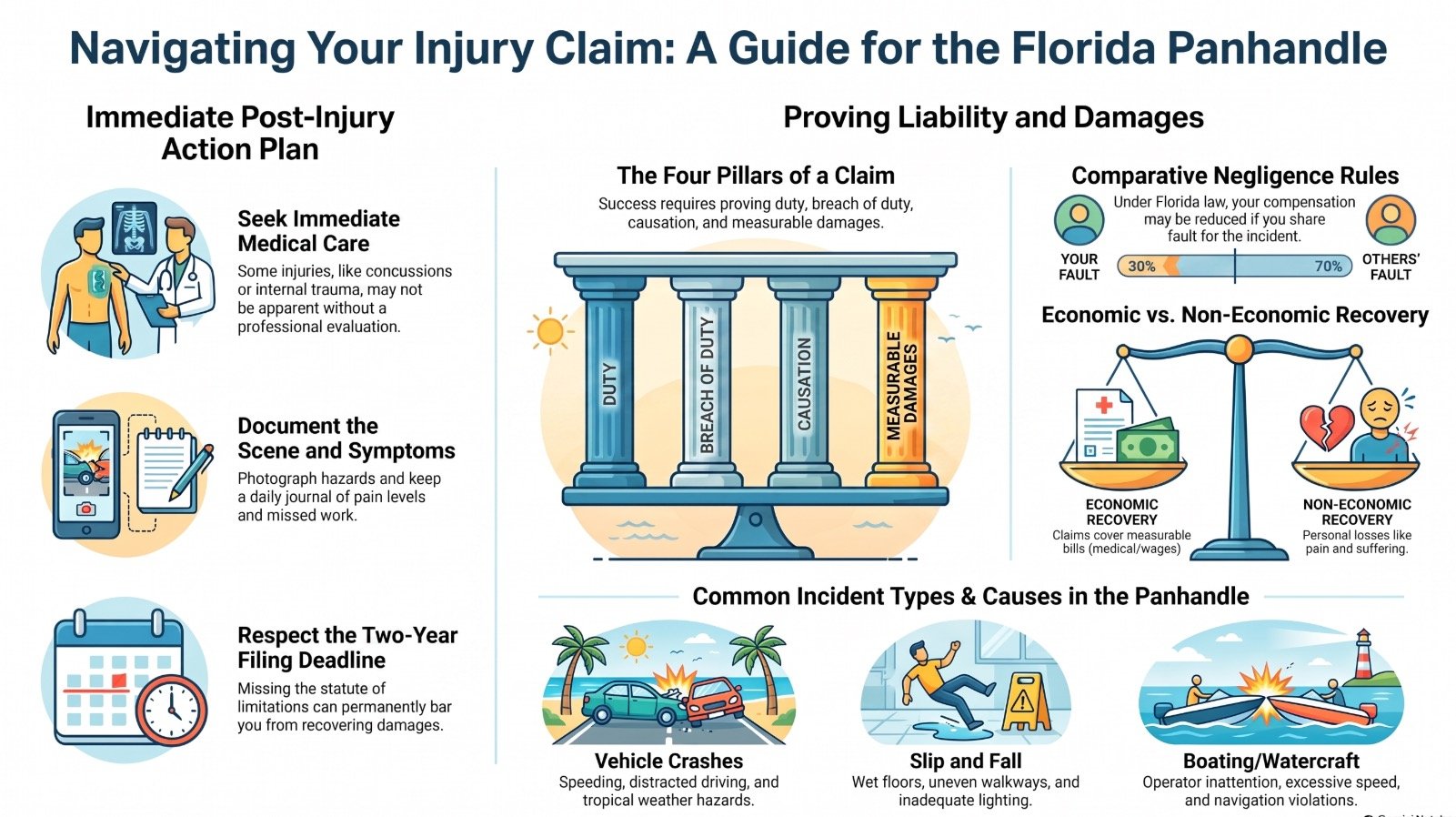
Florida Panhandle injury cases generally arise from accidents or unsafe conditions that cause physical harm, financial losses, or both. Understanding these claims requires examining what happened, who owed a legal duty, and whether they breached that duty. Negligence basics include proving a responsible party failed to act with reasonable care, that the failure caused the injury, and that measurable damages resulted. Evidence may include medical records, photographs, witness accounts, incident reports, and employment documentation. Florida’s comparative fault rules can affect recovery when an injured person’s conduct contributed to the incident. A court may assign percentages of responsibility and reduce compensation accordingly. Injury cases also involve filing deadlines, insurance communications, and evaluations of current and future losses. Careful documentation helps clarify the facts and supports fair treatment. Legal professionals serving injured individuals generally assess liability, preserve evidence, explain available options, and pursue compensation consistent with the established facts and applicable Florida law.
Common Causes of Florida Panhandle Injury
In the Florida Panhandle, personal injuries commonly result from car and truck crashes, slip and fall accidents, workplace incidents, and boating or watercraft collisions. Each circumstance may involve different safety obligations, insurance issues, and evidence requirements. Identifying the cause of an injury is crucial to evaluating potential liability and available legal remedies.
Car And Truck Crashes


Car and truck crashes are a common source of serious injuries throughout the Florida Panhandle, often resulting from distracted driving, speeding, impaired operation, unsafe lane changes, and violations of traffic laws. Commercial vehicles may cause especially severe harm because of their size, weight, cargo, and stopping distance. After a collision, investigators review vehicle damage, roadway evidence, witness accounts, electronic records, and driver conduct to support fault determination. Establishing traffic fault can affect a claim for medical expenses, lost income, property damage, and other legally recognized losses. Florida’s comparative negligence rules may reduce recovery when an injured person shares responsibility for the event. Insurance coverage also requires careful evaluation, including applicable policies, coverage limits, exclusions, and potential claims against employers or vehicle owners. Prompt legal assistance can help preserve evidence and protect injured individuals.
Slip And Fall Accidents
When property owners or managers fail to address hazardous conditions, slip and fall accidents can cause significant injuries throughout the Florida Panhandle. Common hazards include wet floors, uneven walkways, inadequate lighting, loose carpeting, broken stairs, and debris left in areas visitors can access. Under premises liability basics, an injured person may need to show that the responsible party knew, or reasonably should have known, about a dangerous condition and failed to correct it or provide adequate warning. Documentation can include photographs, incident reports, witness statements, medical records, and evidence of prior complaints. Landlord responsibilities may include maintaining shared areas, repairing unsafe conditions, and informing tenants or guests of known risks. Timely legal guidance can help preserve evidence, clarify applicable duties, and support a fair evaluation of resulting losses.
Workplace Injuries
Workplace injuries can result from unsafe conditions, inadequate training, defective equipment, overexertion, falls, vehicle collisions, and exposure to hazardous substances across the Florida Panhandle. Employers must establish workplace safety procedures, provide appropriate protective equipment, and maintain premises that reasonably protect workers from foreseeable harm. Regular equipment maintenance can reduce mechanical failures, while effective safety training helps employees recognize risks and perform tasks correctly. Hazard reporting systems let workers identify dangerous conditions before incidents occur, especially in construction, manufacturing, agriculture, healthcare, and service industries. When an injury happens, prompt medical attention and accurate documentation can help clarify its cause and support necessary benefits. A Florida Panhandle injury lawyer may evaluate whether negligence, unsafe practices, inadequate supervision, or violations of workplace regulations contributed to the employee’s losses and recovery needs.
Boating And Watercraft Accidents
Boating and watercraft accidents are common sources of serious injury in the Florida Panhandle, where recreational vessels, fishing boats, personal watercraft, and commercial operations share coastal waters, bays, and inland waterways. Collisions, operator inattention, excessive speed, impaired boating, defective equipment, and inadequate safety instruction can cause traumatic injuries or fatalities. Passengers and other boaters may suffer harm when an operator violates navigation rules or fails to respond to changing conditions. Investigations may involve vessel maintenance records, witness accounts, electronic data, and applicable maritime regulations. An injured person may pursue compensation for medical expenses, lost income, rehabilitation, and continuing care. Families facing fatal incidents may have grounds for wrongful death claims. Careful legal review can also address insurance denial tactics and identify responsible operators, owners, manufacturers, or employers.
Don’t Wait. Call Our Florida Personal Injury Lawyers Now!
Legal Rights of Florida Panhandle Injury Victims
Florida Panhandle injury victims generally have the right to secure compensation for medical expenses, lost income, property damage, pain and suffering, and other losses caused by another party’s negligence or wrongful conduct. These rights help injured individuals and families pursue accountability while protecting access to necessary care.
Florida Panhandle injury victims may pursue compensation for medical costs, lost income, property damage, pain and suffering, and other losses.
- Victims may document injuries, expenses, and related losses to support a civil claim.
- They may consult counsel before accepting settlements or making statements to insurers.
- Families should understand wrongful death eligibility when an injury proves fatal.
- Claimants must evaluate Comparative negligence defenses, which may reduce recoverable damages under applicable Florida law.
Time limits can restrict when a lawsuit may be filed, making prompt legal review important. A representative may also identify responsible parties, preserve evidence, calculate future losses, and communicate with opposing insurers. Qualified legal guidance can help ensure that claims are presented accurately and that vulnerable victims receive fair consideration throughout the process. Survivors may qualify for separate damages and procedural protections.
Why Do Florida Panhandle Injuries Happen?
Why do injuries occur across Florida’s Panhandle? Several conditions can create preventable risks for residents, visitors, and workers. Motor vehicle collisions often result from speeding, distracted driving, impaired operation, unsafe lane changes, or failure to yield. Heavy tourism and unfamiliar drivers may increase congestion, particularly near beaches, interstates, and rural highway intersections.
Weather-related road hazards also contribute to crashes. Tropical storms, sudden downpours, standing water, reduced visibility, and high winds can make roads difficult to travel. Flooding may conceal damaged pavement or debris, while intense sunlight can impair a driver’s vision. In workplaces, injuries may arise from inadequate training, defective equipment, falls, unsafe lifting, or insufficient protective measures.
Effective Traffic safety education tips can help communities recognize these dangers, including maintaining safe distances, adjusting speed, remaining attentive, and using appropriate restraints. Property owners, employers, and motorists each have responsibilities to reduce foreseeable hazards. When they neglect those duties, serious injuries may result, affecting individuals and families throughout the Panhandle.
What Should You Do After a Florida Panhandle Injury?
After a Florida Panhandle injury, the injured person should seek immediate medical care, even when symptoms initially appear minor. Document the injury and surrounding circumstances through medical records, photographs, witness information, and other reliable evidence. A personal injury lawyer can help protect your legal rights and determine the right next steps.
Seek Immediate Medical Care
When an injury occurs, treat prompt medical evaluation as a priority, even if symptoms initially appear minor. Some conditions, including internal trauma, concussions, or soft-tissue damage, may worsen without immediate attention. A qualified healthcare professional can assess the injury, provide appropriate treatment, and identify complications that may not be apparent to an untrained observer.
If emergency symptoms are present, such as severe bleeding, difficulty breathing, loss of consciousness, chest pain, or suspected spinal injury, emergency contact should occur immediately through 911. Until responders arrive, individuals should follow basic First Aid Steps, including controlling bleeding with gentle pressure and avoiding unnecessary movement of the injured person. Follow medical instructions carefully, and do not delay prescribed follow-up care. Prompt treatment supports recovery and protects the person’s well-being.
Document The Injury
Thorough documentation can preserve important evidence following a Florida Panhandle injury. The injured person should photograph visible wounds, property damage, hazardous conditions, and the surrounding area as soon as reasonably possible. Images should include wide views and close details, with dates and locations recorded when available.
A written account can support proving damages by identifying what occurred, where it happened, and who witnessed the event. Keep names, contact information, incident reports, and insurance details in a secure location. Receipts for medical care, transportation, medication, repairs, and related expenses may also demonstrate financial losses.
Documenting symptoms in a daily journal can clarify pain levels, limitations, emotional effects, missed work, and routine changes. The individual should retain medical instructions and follow prescribed care, while avoiding speculation or altered records that could undermine accuracy.
Consult A Personal Injury Lawyer
Preserving photographs, records, and symptom notes can help an injured person evaluate the strength of a potential claim with a Florida Panhandle personal injury lawyer. A timely consultation allows counsel to identify responsible parties, explain applicable deadlines, and recommend steps that protect the injured person’s interests. Legal guidance may also reduce communication problems with insurers, particularly when adjusters seek recorded statements or question the extent of an injury. An attorney can investigate evidence, assess damages, and respond to insurance claim denials with supporting documentation and legal arguments. The lawyer may further coordinate medical lien management, helping ensure that treatment providers’ claims are addressed without unnecessarily reducing a potential recovery. Individuals should provide complete, accurate information and avoid signing settlement documents before understanding their legal consequences. Serving others begins with informed, careful action.
Critical Evidence in a Florida Panhandle Injury Case
Evidence can establish how an injury occurred, who may be responsible, and the extent of resulting losses.
A Florida Panhandle injury lawyer may evaluate the following records and accounts to support a well-documented claim:
- Accident scene photographs
- Medical treatment records
- Witness statements
- Insurance and police reports
Accident Scene Photos
Photographs taken at an accident scene can establish critical facts in a Florida Panhandle injury case, particularly when conditions change or physical evidence is removed. Images may show vehicle positions, road defects, weather, lighting, traffic controls, property damage, and visible injuries soon after an incident. A person documenting the scene should capture wide views, close details, and identifying landmarks without disturbing evidence or creating additional danger. Preserve original files with their metadata, and organize copies for legal review. Witnesses can sometimes provide useful photographs, but record each image’s source and timing. These materials may support medical documentation and clarify insurance communication by providing objective context. Prompt collection also helps attorneys evaluate liability, disputed facts, and potential witnesses before relevant evidence disappears.
Medical Treatment Records
Medical treatment records provide a detailed account of the injuries, symptoms, diagnoses, and care associated with an accident in a Florida Panhandle injury case. These documents may include emergency evaluations, imaging results, physician notes, prescriptions, therapy records, and follow-up assessments. They also help establish when symptoms began, how conditions progressed, and whether treatment recommendations were followed.
Accurate records also connect the reported injuries to the accident and document medical expenses, limitations, and anticipated future care. A complete file can accordingly support insurance negotiation by giving adjusters reliable evidence rather than unsupported assertions. They can also strengthen a settlement strategy by clarifying liability-related damages, assessing the seriousness of the harm, and identifying ongoing needs. Promptly obtaining records, preserving bills, and addressing gaps or inconsistencies helps guarantee that an injured person’s claim is presented fairly and responsibly.
Witness Statements
Witness statements can provide important, independent accounts of how an accident occurred and what followed immediately afterward. Observers may clarify the sequence of events, describe visible hazards, and explain how the injured person responded. Their recollections can also identify conditions that physical evidence alone cannot establish. Attorneys typically preserve statements promptly because memories can change over time. A careful interview records each witness’s contact information, vantage point, specific observations, and any uncertainty regarding those observations. Statements should remain accurate and should not be shaped to support a preferred outcome. When consistent with medical documentation, witness accounts can strengthen a factual presentation of liability and harm. They may also assist counsel during settlement negotiations by addressing disputed events with credible, firsthand detail. Their cooperation helps protect fair treatment.
Insurance And Police Reports
Insurance and police reports provide contemporaneous records that can support an account of an injury-causing incident in the Florida Panhandle. They may document location, timing, involved parties, observed conditions, statements, citations, and apparent injuries. Although neither report automatically establishes liability, discrepancies or omissions can affect negotiations and litigation. An injured person should obtain report numbers, request complete copies, and promptly identify factual errors through appropriate channels. Medical record tips include telling healthcare providers how the incident occurred, describing symptoms accurately, and preserving discharge instructions, bills, referrals, and diagnostic results. Evidence preservation should also include photographs, damaged property, correspondence with insurers, and claim-related recordings. Statements to adjusters should remain truthful and limited to known facts, because speculative comments may be taken out of context. Careful organization helps counsel serve the injured person efficiently.
Don’t Wait. Call Our Florida Personal Injury Lawyers Now!
Long-Term Effects of Florida Panhandle Injuries
Florida Panhandle injuries may produce lasting consequences, including chronic pain, reduced mobility, and permanent disability. These conditions can also affect emotional and mental health, contributing to anxiety, depression, or diminished quality of life. Ongoing medical expenses, rehabilitation, medication, and assistive care may create substantial financial burdens over time.
Chronic Pain and Disability
When an injury in the Florida Panhandle causes chronic pain or lasting disability, its effects may extend well beyond the initial medical treatment. Ongoing symptoms can limit mobility, reduce work capacity, and interfere with routine responsibilities. A person may require additional procedures, prescription medication, physical therapy, assistive equipment, or modifications to the home and workplace. Coordinate effective pain management with qualified medical providers and document it consistently. Disability documentation can establish functional limitations, treatment history, expected duration, and the need for continuing care. Medical records, employment information, and professional assessments may help demonstrate how the injury affects earning ability and daily activities. Evaluating these long-term consequences requires attention to both present needs and reasonably foreseeable expenses. Legal guidance can help preserve evidence and pursue compensation for appropriate future losses.
Emotional and Mental Health
Emotional and mental health effects may persist long after physical injuries from a Florida Panhandle accident have recovered. Individuals may experience anxiety, depression, irritability, sleep disruption, or trauma symptoms that interfere with work, relationships, and daily responsibilities. Some develop a fear of driving, heightened alertness, or distress when they encounter reminders of the event. These effects can be hard to recognize, especially when attention stays focused on visible injuries or physical limitations. Therapy support may help individuals mend the experience, identify harmful thought patterns, and rebuild a sense of safety. Mental health professionals can also recommend coping strategies, including structured routines, relaxation techniques, and supportive communication. Family members, caregivers, and community advocates can assist by listening without judgment and encouraging appropriate care. Documentation of emotional changes may clarify their effect on recovery and quality of life.
Ongoing Medical Expenses
Ongoing medical expenses can continue well after an injury initially appears to have stabilized. Florida Panhandle injury victims may require follow-up examinations, prescription medication, physical therapy, adaptive equipment, or future surgery. These costs can affect household stability and should be evaluated before resolving any claim. Medical bills documentation, including invoices, treatment records, insurance statements, and mileage logs, helps establish the scope of past and anticipated care. Physicians may provide opinions regarding prognosis, necessary treatment, and likely future expenses. A Florida Panhandle injury lawyer can organize this evidence and consult qualified experts when long-term care requires detailed forecasting. During settlement negotiation tactics, the projected value of future treatment should be supported by reliable medical evidence rather than assumptions. Careful preparation helps protect injured individuals and supports responsible compensation decisions.
Proving Liability in Florida Panhandle Injury Cases
To prove liability in a Florida Panhandle injury case, the injured party generally must establish that another person or entity owed a legal duty, breached that duty, and caused the resulting injuries and losses. Negligence standards depend on the circumstances, including whether the claim involves a vehicle collision, unsafe property, defective equipment, or professional services. Evidence may include photographs, surveillance footage, incident reports, witness statements, medical records, and testimony from qualified experts. The injured party carries the burden of proof, generally requiring a showing that the defendant’s conduct more likely than not caused the harm. Comparative fault may also affect recovery if evidence indicates that multiple parties contributed to the incident. A careful investigation can preserve relevant evidence, identify responsible parties, and clarify how the conduct created an unreasonable risk. Presenting organized, credible proof allows decision-makers to evaluate the claim fairly while supporting accountability and the injured person’s legitimate effort to obtain appropriate compensation.
Dealing With Insurance Companies After a Florida Panhandle Injury
When an injury occurs in the Florida Panhandle, insurance companies often become involved before the injured person understands the full extent of the harm or financial loss. Understanding how insurance adjusters operate can help families protect accurate information and preserve fair treatment. Adjusters may request recorded statements, medical authorizations, photographs, employment records, or other documents. Their role is to evaluate the claim for the insurer, not to provide independent guidance to the injured person. Statements should consequently remain factual, limited, and consistent with available evidence.
Common claim denials include alleged lack of coverage, disputed fault, delayed treatment, preexisting conditions, and assertions that injuries are less serious than reported. An injured person should maintain medical records, expense documentation, correspondence, and notes concerning insurer communications. A Florida Panhandle injury lawyer may review policy language, identify unfair evaluation practices, and communicate with the carrier on the client’s behalf. Prompt legal guidance can reduce misunderstandings while supporting respectful, informed advocacy for individuals and families facing financial strain.
What to Expect During a Florida Panhandle Injury Claim Process
A Florida Panhandle injury claim typically begins with an initial case evaluation to assess liability, damages, and available legal options. The process then involves gathering evidence, communicating with insurers, and negotiating a potential settlement based on the documented losses. If negotiations do not produce a fair resolution, the matter may proceed to trial.
Initial Case Evaluation
What happens during an initial case evaluation can shape how a Florida Panhandle injury claim proceeds. The attorney typically reviews the incident’s basic circumstances, reported injuries, medical treatment, insurance information, and the client’s immediate concerns. This discussion helps determine whether the facts support a potential claim and identifies deadlines that may affect legal rights. The attorney may explain available options, likely challenges, and the responsibilities involved in pursuing compensation while protecting the client’s interests. Case strategy planning begins with clarifying the client’s goals, evaluating practical risks, and establishing appropriate communication. This stage also covers evidence preservation, including the importance of retaining relevant records and avoiding conduct that could weaken credibility. The evaluation is not a promise of recovery, but it provides a disciplined foundation for informed decisions and compassionate service.
Evidence Gathering
During evidence gathering, a Florida Panhandle injury attorney works to establish how the incident occurred, who may be responsible, and how the injuries affected the claimant’s life. This process may include collecting accident reports, photographs, surveillance footage, witness statements, medical records, employment information, and relevant communications. The attorney may also review property conditions, vehicle damage, safety procedures, or other facts that clarify the event. Careful damages documentation records treatment, prognosis, income loss, out-of-pocket expenses, and limitations on daily activities. These materials support an informed Insurance claim strategy by connecting the conduct, injuries, and resulting losses. The claimant can assist by preserving documents, following medical recommendations, recording symptoms, and promptly identifying witnesses. Investigators or qualified professionals may be consulted when technical evidence requires additional evaluation.
Insurance Negotiations
Once you have assembled the relevant evidence and damages documentation, insurance negotiations give you a structured, supported way to present your claim. A representative may prepare a demand package explaining liability, medical treatment, lost income, and other losses. Clear proof of damages helps establish the claim’s value and addresses questions before they become obstacles. The insurer may request additional records, challenge causation, or dispute documentation related to treatment, expenses, or employment effects. If denied medical coverage has shifted costs to the injured person, document those payments and explanations carefully. A policy limits review can help identify available coverage and conditions that affect evaluation. Communications should remain accurate, organized, and professional. Counsel may respond to requests, correct misunderstandings, and protect the claimant’s interests throughout the negotiation process.
Settlement Or Trial
If insurance negotiations do not resolve the claim, the injured person may evaluate whether to accept a settlement or pursue a personal injury lawsuit. A settlement can provide faster compensation and reduce uncertainty, but its terms should reflect medical expenses, lost income, future needs, and an accurate damages calculation. Counsel may use negotiation tactics to address disputed liability, insurance limits, and attempts to minimize losses. If litigation becomes necessary, evidence preservation is crucial. Medical records, photographs, witness accounts, accident reports, and communications can support the claim through discovery, mediation, and trial. In a Wrongful death matter, surviving family members may seek legally recognized losses through the personal representative. Carefully comparing risks, costs, timing, and probable recovery helps the injured person make an informed decision while protecting others affected by the event.
Compensation for Florida Panhandle Injury Damages
What compensation may be available for an injury in Florida’s Panhandle depends on the nature of the harm, the circumstances of the incident, and the losses the injured person can prove. A claim may seek payment from a negligent driver, property owner, employer, manufacturer, or another responsible party. Available recovery can also depend on insurance coverage, comparative fault, and whether evidence establishes legal responsibility. Wrongful death claims may permit eligible survivors to pursue compensation connected to a family member’s fatal injuries, subject to Florida law and applicable filing requirements. In liability disputes, medical records, incident reports, witness accounts, and other documentation can help clarify what occurred and who should be held accountable. A careful evaluation may identify responsible parties and preserve supporting evidence before deadlines expire. Because each injury presents distinct facts, qualified legal guidance can help an injured person or family understand potential remedies, communicate with insurers, and pursue a fair resolution while serving their long-term interests.
Don’t Wait. Call Our Florida Personal Injury Lawyers Now!
Economic vs Non-Economic Damages in Florida Panhandle Injury Cases
Florida injury damages generally include economic losses, such as medical expenses, lost income, and rehabilitation costs. Non-economic damages may compensate for pain and suffering, emotional distress, and reduced quality of life. Applicable Florida damage limits and case-specific factors can affect the amount ultimately recoverable.
Economic Damage Categories
Economic damages in Florida Panhandle injury cases compensate an injured person for measurable financial losses caused by the accident. These losses commonly include medical bills for emergency treatment, hospitalization, rehabilitation, prescriptions, and necessary follow-up care. Economic proof may consist of invoices, receipts, insurance records, physician statements, and other documentation connecting expenses to the injury. A claimant may also seek wage loss when the injury prevents work, reduces hours, or requires unpaid medical leave. Employment records, pay statements, and employer verification can help establish that amount. When an injury affects the ability to work over time, damages may include diminished future earnings. Qualified financial or vocational professionals may evaluate career history, earning capacity, and anticipated work limitations. Careful documentation helps ensure that compensation reflects actual financial harm and supports informed service to injured individuals.
Non-Economic Damage Types
Although non-economic damages do not arise from invoices or pay records, they compensate injured individuals for serious personal losses that cannot be measured precisely in dollars. Recoverable categories may include physical pain, emotional distress, mental anguish, disfigurement, disability, loss of enjoyment, and diminished quality of life. In fatality claims, wrongful death damages can address survivors’ grief, loss of companionship, and the absence of guidance or support. Evidence may include medical testimony, personal accounts, treatment records, and family members’ observations. A claimant’s efforts to follow medical instructions or otherwise reduce ongoing harm may constitute mitigation evidence. Comparative negligence can reduce recovery when the injured person contributed to the incident, making careful factual analysis crucial. Punitive compensation is distinct and requires proof of exceptionally wrongful conduct, not merely personal suffering.
Florida Damage Limits
Limits on damages depend on the type of compensation sought and the circumstances of the injury claim. Economic damages generally cover measurable losses, including medical expenses, rehabilitation, lost income, and necessary future care. Non-economic damages address pain, emotional distress, disability, and diminished quality of life, which require persuasive evidence rather than fixed invoices.
Florida law may impose specific limits in certain claims, particularly cases involving governmental entities or medical negligence. Applicable insurance coverage can also affect practical recovery, even when proven damages exceed policy limits. Careful evidence preservation and complete medical documentation help establish both economic and non-economic losses. A claimant may also need to consider comparative fault, available assets, and settlement timelines when evaluating resolution. Because damage rules vary by claim type, professional legal review can protect an injured person’s interests and support fair treatment throughout the process.
When a Florida Panhandle Injury Case Goes to Trial vs Settlement
When liability, damages, and insurance coverage remain disputed, a Florida Panhandle personal injury case may proceed to trial rather than settle. Liability disputes often require testimony, documents, and careful presentation of how the incident occurred. A settlement may provide a faster, more predictable resolution, allowing an injured person to address medical needs and other obligations without prolonged litigation. However, a trial may be appropriate when an insurer offers inadequate compensation or refuses reasonable responsibility.
Expert witnesses can explain medical conditions, future treatment, lost earning capacity, accident reconstruction, or other disputed issues. In certain cases involving intentional or particularly reckless conduct, parties may also seek punitive damages, subject to applicable requirements and judicial review. Trial timelines vary based on court schedules, motions, discovery, and case complexity. Counsel generally evaluates costs, evidentiary strengths, recovery risks, and the client’s objectives before recommending settlement or trial. This process supports informed decisions and helps preserve a claimant’s ability to serve family and community responsibilities.
Florida Laws That May Affect Your Florida Panhandle Injury Case
Florida law can meaningfully influence how a Panhandle injury claim is evaluated, negotiated, or litigated.
Several legal principles may determine available recovery and guide responsible service to an injured person:
- Comparative Fault Rules: A claimant’s damages may be reduced when evidence shows that the claimant contributed to the incident. Careful fact development can clarify each party’s responsibility.
- Negligence Standards: The evidence generally must establish a duty, a breach, causation, and measurable damages. Medical records, witness accounts, and accident documentation can support that analysis.
- Insurance Requirements: Florida’s coverage rules may affect which policies respond and whether to examine additional sources of compensation. Policy language and exclusions require close review.
- Damage Limitations: Rules concerning economic losses, noneconomic harm, liens, and certain defendants can influence case valuation and settlement strategy.
A lawyer serving Panhandle communities can help preserve evidence, communicate with insurers, and present a claim consistent with applicable law. The phrase Statute of Limitations also signals a pivotal timing issue, although specific filing deadlines are addressed separately. Legal guidance promotes informed decisions and protects the claimant’s interests.
The Statute of Limitations for Florida Panhandle Injury Cases
In Florida Panhandle injury cases, the statute of limitations establishes the period in which an injured person generally must file a lawsuit. Under Florida law, personal injury claims typically must be filed within two years after the accident, although exceptions can alter that deadline. Medical negligence, wrongful death, claims involving government entities, and cases involving minors may follow different rules or notice requirements. Missing the applicable deadline can result in dismissal, even when evidence supports liability and damages.
The limitations period may begin on the injury date, when the injury was discovered, or under another legally recognized event, depending on the claim. Insurance discussions generally do not extend the filing deadline. Early attention helps preserve records, witness recollections, and medical documentation needed to calculate damages. It also permits informed attorney selection based on experience with the specific claim type and applicable deadlines. Because a missed deadline can permanently bar recovery, timely legal evaluation remains crucial for protecting an injured person’s interests.
How a Florida Panhandle Injury Lawyer Can Help You
After confirming the applicable filing deadline, an attorney can help protect the injured person’s claim through each stage of the legal process. A Florida Panhandle injury lawyer may investigate liability, preserve evidence, and communicate with insurers while the injured person focuses on recovery and family responsibilities.
- Claim documentation: Counsel can organize medical records, wage information, photographs, witness statements, and other evidence supporting damages.
- Insurance negotiations: An attorney can address insurance delays, evaluate settlement offers, and challenge a Wrongful denial through documented legal arguments.
- Liability analysis: Legal review can identify responsible parties, applicable coverage, and facts needed to establish negligence or another basis for recovery.
- Dispute management: Counsel can clarify fee disputes, explain litigation risks, and pursue a resolution consistent with the client’s interests.
When to Contact a Florida Panhandle Injury Lawyer
Prompt legal guidance is often most valuable before an injury claim becomes difficult to prove or resolve. A Florida Panhandle injury lawyer may be contacted soon after an accident, particularly when injuries require substantial treatment, fault is disputed, or an insurer requests a recorded statement. Early assistance can help preserve evidence, identify responsible parties, and protect deadlines that may affect recovery.
Legal counsel may also be appropriate when medical bills accumulate, wages are lost, or an insurer proposes a settlement before the full extent of harm is known. A lawyer can review communications and address a wrongful denial without allowing procedural issues to undermine a legitimate claim.
Useful documentation tips include obtaining medical records, retaining receipts, photographing injuries and property damage, recording missed work, and keeping correspondence with insurers. Sharing these materials promptly supports an accurate evaluation. Contact is especially important when another party’s conduct caused serious harm or when you’re unsure of the next step.
Why You Need an Experienced Florida Panhandle Injury Lawyer
An experienced Florida Panhandle injury lawyer provides informed guidance when liability, insurance coverage, and damages are disputed. Such counsel helps injured individuals understand their rights while protecting the interests of families, workers, and community members affected by preventable harm. A seasoned attorney can investigate the incident, preserve relevant evidence, identify responsible parties, and address procedural requirements that may otherwise weaken a claim.
Legal experience also supports accurate evaluation of medical expenses, lost income, rehabilitation needs, and lasting limitations. Through Expert damages analysis, the lawyer can present a complete picture of present and future losses rather than relying on initial insurance estimates. Knowledge of insurance tactics is equally important because adjusters may seek recorded statements, minimize injuries, delay payment, or encourage an inadequate settlement.
An experienced advocate handles communications, develops evidence-based arguments, and pursues fair compensation through negotiation or litigation when necessary. This support lets injured people focus on recovery and caring for those who depend on them while their legal interests receive careful, informed protection.
How to Choose the Right Florida Panhandle Injury Lawyer for Your Case
Selecting the right Florida Panhandle injury lawyer requires careful consideration of the attorney’s experience, resources, communication practices, and record of handling cases similar to the injury involved. A prospective client should examine whether the lawyer has managed claims involving comparable injuries, disputed liability, insurance negotiations, or litigation. During the Case evaluation process, the attorney should explain potential legal theories, required evidence, foreseeable challenges, and possible outcomes without promising a specific result.
Clear communication is equally important. The lawyer should describe how updates will be provided, who will answer questions, and what decisions require the client’s approval. Attention to the Evidence collection timeline can also distinguish a well-prepared advocate, because medical records, witness accounts, photographs, employment documentation, and other materials may become harder to obtain as time passes. Clients should review the fee arrangement, responsibilities, professional standing, and proposed strategy before signing an agreement. A lawyer who demonstrates diligence, transparency, and respect for the client’s circumstances is better positioned to pursue a responsible resolution.
About The Law Offices of Anidjar & Levine
The Law Offices of Anidjar & Levine represents individuals pursuing compensation after serious accidents and personal injuries in Florida. Its work centers on helping injured people understand their rights, evaluate available legal remedies, and pursue accountability from responsible parties.
The firm’s Law Firm Background includes representation in cases involving motor vehicle collisions, premises incidents, workplace injuries, wrongful death, and other circumstances that may create substantial medical, financial, and personal consequences. Attorneys assess the facts of each claim, identify applicable insurance coverage, and develop strategies based on the evidence.
Legal Team Experience supports clients throughout negotiations, litigation, and related procedural requirements. The firm’s attorneys and support professionals communicate important developments clearly while preparing claims to address medical expenses, lost income, property damage, pain and suffering, and other legally recognized losses. Through this service-oriented approach, the firm seeks to reduce administrative burdens and help individuals and families make informed decisions during challenging periods following an accident or injury.
Frequently Asked Questions
Do Florida Panhandle Injury Lawyers Offer Free Consultations?
Many Florida Panhandle injury lawyers offer free initial consultations, allowing prospective clients to discuss circumstances, potential claims, and available legal remedies without upfront consultation charges. During that meeting, the attorney typically explains the basics of the fee structure, including whether representation involves contingency payment options. Under a contingency arrangement, the lawyer generally receives a percentage of any recovery rather than an hourly fee. Prospective clients should confirm costs, expenses, and agreement terms before proceeding.
How Much Does Hiring a Florida Panhandle Injury Lawyer Cost?
Hiring a personal injury lawyer commonly involves no upfront payment. Many firms use contingency fee options and receive an agreed percentage of any settlement or court award only if the case succeeds. The percentage may vary depending on when the matter resolves and whether litigation becomes necessary. Clients should also ask about case expenses, such as filing and expert fees. Reputable attorneys explain billing transparency practices through written agreements before representation begins.
Can I Change Injury Lawyers During My Florida Panhandle Case?
Yes, an injured person can generally change lawyers during an ongoing case, but they should evaluate the decision carefully. Switching counsel may require notifying the current attorney, reviewing the representation agreement, and addressing any outstanding fees or liens. The new lawyer must obtain the case file, understand deadlines, and protect the client’s interests without disrupting proceedings. Because procedures vary, prompt consultation with replacement counsel helps ensure an orderly transfer and continued service.
What Should I Bring to My Initial Injury Lawyer Consultation?
An initial injury lawyer consultation should include identification, insurance information, incident reports, and a concise timeline of events. The prospective client should bring Medical records, bills, prescription details, and documentation of missed work or other financial losses. Accident photos, witness names, relevant correspondence, and prior settlement offers may clarify liability and damages. A written list of questions, including fee arrangements, case strategy, and communication practices, supports an efficient, informed evaluation.
Will My Florida Panhandle Injury Case Require My Personal Appearance?
Personal appearance is not always required in a Florida Panhandle injury case. The injured person may need to attend depositions, medical examinations, mediation, hearings, or trial, depending on the dispute and court orders. Counsel can explain likely courtroom attendance and identify case strategy options, including settlement or alternative dispute resolution. Attendance requirements vary, so the individual should follow legal instructions carefully, remain available for preparation, and avoid communicating independently with opposing parties or insurers.
—————————
When an injury occurs in Florida’s Panhandle, timely legal guidance can help protect a victim’s rights and support a well-prepared claim. Florida Personal Injury Lawyer services from The Law Offices of Anidjar and Levine include evaluating the circumstances, identifying responsible parties, and pursuing compensation for medical expenses, lost income, and related damages. Because deadlines and evidence requirements can affect recovery, injured individuals should consult a qualified Florida Panhandle injury lawyer promptly. Experienced representation provides informed advocacy throughout negotiations, litigation, and every stage of the legal process.

