

The Law Offices of Anidjar and Levine helps motorcycle accident victims in Daytona Beach investigate crashes, identify potentially liable drivers, trucking companies, or other parties, and preserve key evidence.
A lawyer may review photographs, traffic footage, witness accounts, vehicle data, driver logs, maintenance records, and medical documentation.
They can also calculate medical costs, lost income, property damage, pain and suffering, and future care needs while handling insurers and pursuing litigation when necessary.
For more information about truck accident claims, visit the Daytona Beach Truck Accident Lawyer page to learn about legal rights, case evaluation, and selecting qualified representation.
Main Takeaways
- A Daytona Beach motorcycle truck accident lawyer investigates the crash, identifies liable parties, and preserves critical evidence.
- Attorneys review blind spots, lane changes, speeding, distraction, road conditions, and vehicle maintenance to determine how the collision occurred.
- Immediate medical treatment and consistent records help connect injuries, expenses, limitations, and future care needs to the crash.
- Lawyers handle insurers, challenge low settlement offers, document damages, and negotiate compensation for medical bills, lost income, and pain.
- If negotiations fail, an attorney can prepare the claim for litigation using photographs, witnesses, traffic footage, electronic data, and expert analysis.
How We Can Help With Your Daytona Beach Motorcycle Truck Accident Injury Claim
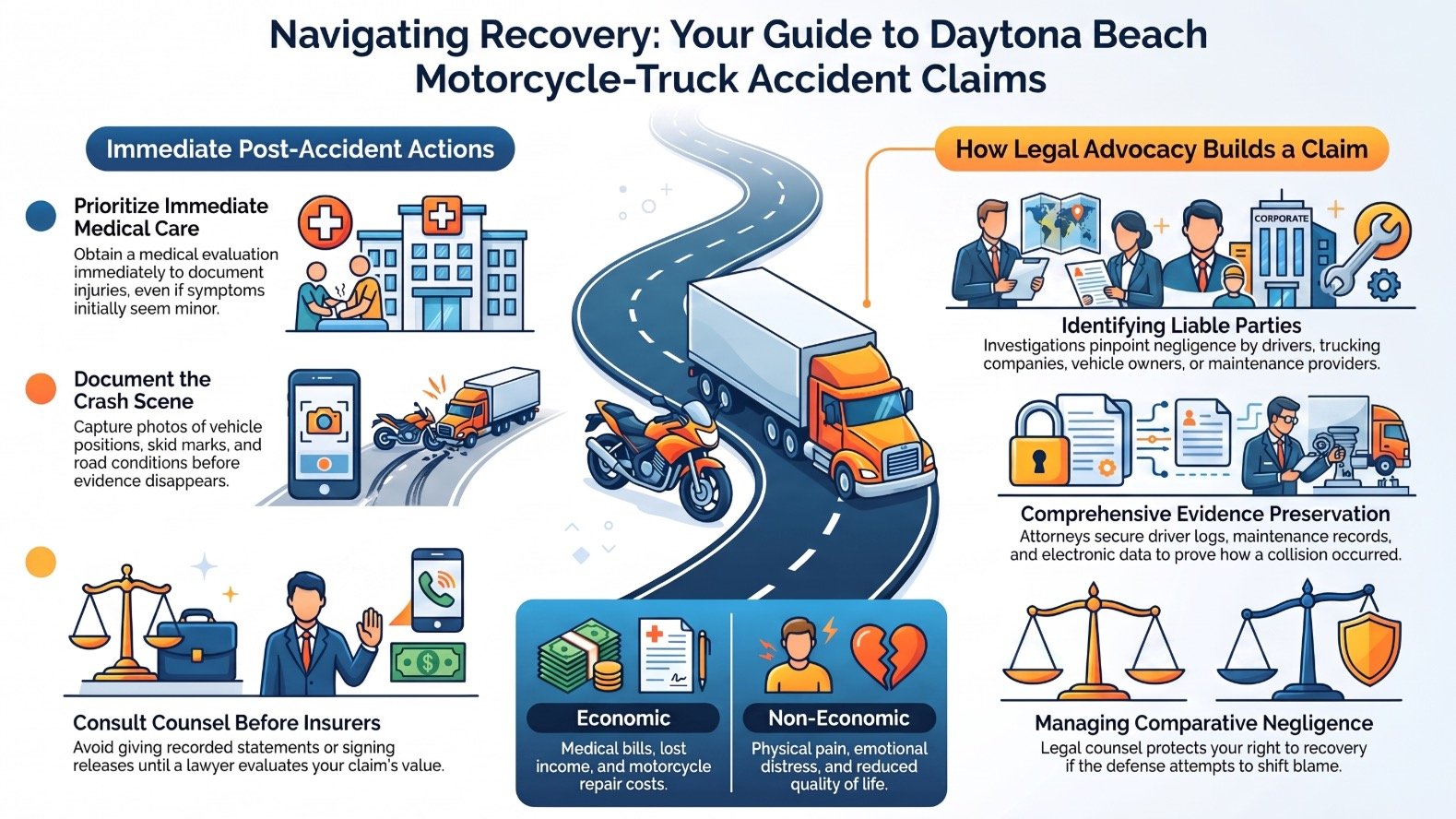
A Daytona Beach motorcycle truck accident lawyer can help an injured rider pursue a claim by investigating the collision, identifying liable parties, and documenting the full extent of the resulting losses. Counsel may collect photographs, traffic-camera footage, witness statements, vehicle data, and relevant trucking records before evidence disappears. Careful injury documentation can connect medical conditions to the crash and establish treatment needs, lost income, rehabilitation costs, and other damages. A lawyer may also communicate with insurers, review proposed settlements, and address insurer tactics intended to minimize responsibility or pressure an injured rider into an early decision.
By organizing the claim and explaining available options, legal counsel can help the rider make informed choices while medical providers focus on recovery. Representation may include preparing demand materials, responding to disputes, and pursuing appropriate legal remedies when negotiations fail. This assistance supports a fair process and helps protect the rider’s interests throughout the claim.
Understanding Daytona Beach Motorcycle Truck Accident Injury Cases
Understanding a Daytona Beach motorcycle truck accident injury case requires examining how the collision occurred, who owed a legal duty, and how that duty may have been breached. The analysis may include vehicle damage, traffic records, witness accounts, medical documentation, and photographs from the scene. It also considers whether the rider’s injuries resulted from the truck’s conduct or from another legally significant factor.
The Impact of road conditions may affect visibility, traction, stopping distance, or the ability to avoid a hazard. However, those conditions do not automatically excuse negligent conduct, and their legal relevance depends on the available evidence. Liability may involve a driver, trucking company, vehicle owner, maintenance provider, or another responsible party.
Damages can include medical treatment, lost income, rehabilitation, property damage, pain, and diminished quality of life. Florida injury payouts vary according to liability, insurance coverage, injury severity, and documented losses. A careful evaluation helps protect injured riders while promoting fair accountability and informed service.
Don’t Wait. Call Our Daytona Beach Truck Accident Lawyers Now.
Common Causes of Daytona Beach Motorcycle Truck Accident
Common causes of Daytona Beach motorcycle-truck accidents include driver blind spots, unsafe lane changes, speeding, and reckless operation. Distracted truck drivers may also fail to detect nearby motorcycles or respond appropriately to changing traffic conditions. Examining these factors can help clarify how a collision occurred and identify potentially responsible parties.
Driver Blind Spots
When truck drivers fail to detect motorcycles in their blind spots, collisions can occur with little warning, particularly during lane changes, merges, and turns. Large trucks have extensive areas beside, behind, and immediately in front of the cab that mirrors may not fully reveal. Motorcyclists can become obscured by trailer structures, poor visibility, or surrounding traffic, increasing the risk of contact when a driver does not confirm the roadway is clear. Lane Monitoring requires attentive mirror use, properly adjusted equipment, and awareness that motorcycles may remain hidden for several seconds. Reduced lighting, glare, rain, and fatigue can further impair recognition. Night Safety is especially important because motorcycles may be harder to identify at a distance. Careful scanning and patience help drivers protect vulnerable road users and prevent avoidable harm.
Unsafe Lane Changes
Unsafe lane changes are a significant cause of Daytona Beach motorcycle truck accidents, particularly when a commercial truck executes a lane move across lanes without adequately checking surrounding traffic. Motorcycles can remain difficult to see near a truck’s side or rear, and an abrupt merge may leave the rider insufficient space to respond. Failure to signal, improper mirror use, or neglecting to account for a motorcycle’s position can contribute to a collision. Investigators may examine Dashcam Footage, turn-signal records, vehicle damage, roadway markings, and electronic data to determine how the movement occurred.
Witness Statements may also clarify whether the truck entered the motorcycle’s lane, crossed a marked boundary, or forced evasive action. Careful documentation can help injured individuals and their families seek appropriate support and accountability after a crash.
Speeding And Recklessness
Excessive speed and reckless driving can greatly increase the risk and severity of Daytona Beach motorcycle truck accidents. When a truck travels too quickly, its greater weight and longer stopping distance can make emergency braking difficult. A motorcycle rider may suffer catastrophic injuries even when a collision occurs at a moderate difference in speed.
Reckless driving examples include aggressive passing, tailgating, racing, abrupt actions, and ignoring traffic signals or posted limits. These actions can reduce a driver’s ability to respond safely to changing roadway conditions and can place nearby motorcyclists in immediate danger. Effective speeding enforcement may help deter dangerous conduct, while documented violations can provide important evidence after a crash. Investigators may review vehicle data, witness accounts, roadway markings, and collision damage to determine whether excessive speed or recklessness contributed to the accident.
Distracted Truck Drivers
Distracted truck drivers may fail to recognize motorcycles, maintain lane position, or respond promptly to changing traffic conditions, creating a serious risk of collision in Daytona Beach. Cellphone distraction can divert attention through texting, calls, navigation, or other handheld activities, even when traffic appears predictable. Drivers may also become distracted by onboard technology, food, paperwork, passengers, or events outside the vehicle. Driver fatigue presents a related danger because reduced alertness can slow reaction times and impair judgment in intricate roadway situations. When a commercial truck approaches a motorcycle, brief inattention may prevent adequate following distance, safe lane changes, or timely braking. Investigating these factors may help clarify how a crash occurred and whether safety rules were violated. Recognizing distraction supports informed assistance for injured riders and their families.
Legal Rights of Daytona Beach Motorcycle Truck Accident Injury Victims
Daytona Beach motorcycle truck accident injury victims have legal rights that may include pursuing compensation for medical expenses, lost income, property damage, pain and suffering, and other accident-related losses. These rights can help injured people obtain necessary treatment, support dependents, and regain stability after a devastating collision. A claim may involve the truck driver, trucking company, insurers, or other responsible parties, depending on the evidence.
Victims may benefit from preserving records and seeking informed guidance before making statements or accepting settlements. Florida comparative negligence can affect recovery when multiple parties share responsibility. DMV insurance filings and other coverage documents may help identify available insurance and financial resources.
- Families may secure continued care and household support.
- Injured riders may protect their dignity and financial future.
- Accountability may encourage safer treatment of vulnerable road users.
A timely evaluation can clarify deadlines, liability issues, damages, and procedural requirements. Legal assistance can also help serve victims by presenting their experiences accurately while pursuing fair compensation through negotiation or litigation when appropriate.
Why Do Daytona Beach Motorcycle Truck Accident Injuries Happen?
Motorcycle truck accident injuries often result from the significant difference in size, weight, and handling between commercial trucks and motorcycles. Trucks require more distance to stop, have extensive blind spots, and may swing widely during turns. A motorcyclist traveling alongside a trailer can remain unseen when a driver changes lanes, merges, or exits a roadway.
Unsafe speed, distraction, fatigue, and following too closely can further reduce reaction time. Road conditions, including standing water, uneven pavement, and debris, may destabilize a motorcycle more readily than a passenger vehicle. Inadequate Rider safety practices, such as improper lane positioning or limited visibility, can increase exposure to serious collisions. Helmet selection also affects the severity of head injuries when a crash occurs.
Mechanical failures represent another concern. Poor truck maintenance may contribute to brake problems, maneuvering defects, or tire blowouts. Motorcycle defects, inadequate lighting, and worn tires can likewise impair control. Understanding these contributing factors helps identify preventable hazards and supports safer transportation practices for all road users.
What Should You Do After a Daytona Beach Motorcycle Truck Accident Injury?
After a Daytona Beach motorcycle truck accident, the injured motorcyclist should seek immediate medical care, even if symptoms initially appear minor. The crash scene should be documented through photographs, witness information, and relevant reports when possible. A motorcycle accident lawyer can then evaluate the circumstances, protect the motorcyclist’s legal interests, and guide the injury claim process.
Seek Immediate Medical Care
Because motorcycle–truck collisions can cause severe or delayed injuries, injured riders should obtain immediate medical care, even when symptoms initially appear minor. Emergency response steps may include accepting ambulance transportation, allowing clinicians to evaluate head, neck, spinal, internal, and orthopedic injuries, and following all recommended testing. Some trauma symptoms develop hours or days later, particularly after adrenaline masks pain. A medical examination creates a timely record of complaints, observed conditions, diagnostic results, and treatment instructions. Urgent first medical notes should accurately describe symptoms, pain levels, mobility limitations, medications, and any changes after the collision.
Riders should follow discharge directions, attend referrals, and promptly report worsening pain, confusion, weakness, breathing difficulty, or other concerning signs. Prompt care protects health and supports informed decisions about recovery and available assistance.
Document The Crash Scene
When conditions permit, an injured rider or another capable person should document the Daytona Beach crash scene before vehicles or debris are moved. Safety remains the priority, so no one should enter traffic lanes or approach unstable vehicles to obtain images. Useful evidence may include photographs of vehicle positions, roadway markings, skid marks, debris, traffic signals, lighting, weather conditions, and visible damage. Photo documentation tips include taking wide scene views, close images of motorcycle and truck damage, and multiple angles with a scale reference when practical. Witnesses can be asked for names and contact information, while their statements should be recorded only with permission. Evidence preservation steps also include saving relevant surveillance details, noting the exact location and time, and retaining damaged clothing or equipment without alteration.
Contact A Motorcycle Accident Lawyer
Prompt legal guidance can help an injured motorcyclist protect important rights after a Daytona Beach truck collision. A motorcycle accident lawyer can evaluate liability, preserve evidence, and explain procedures while the injured person focuses on recovery. Counsel may organize medical documentation, identify responsible parties, and communicate with insurers to reduce pressure during treatment. Legal representation can also address insurance denials, delayed payments, or efforts to shift blame onto the motorcyclist. An attorney can assess available damages, including medical expenses, lost income, rehabilitation costs, and pain-related losses. Based on the evidence, counsel may develop a settlement strategy designed to pursue fair compensation without unnecessary delay.
If negotiations fail, thorough trial preparation can position the claim for court. Prompt consultation allows witnesses, records, and vital deadlines to be addressed properly.
Critical Evidence in a Daytona Beach Motorcycle Truck Accident Injury Case
Critical evidence can clarify how the collision occurred, who may be responsible, and how severely the motorcyclist was harmed. Accident scene photos, police crash reports, medical treatment records, and testimony from witnesses or qualified experts may each reveal facts that protect an injured person’s claim. Preserving this evidence promptly is essential because lost details can weaken accountability and leave lasting injuries insufficiently documented.
- Accident scene photos may preserve skid marks, vehicle damage, road conditions, and the position of the motorcycle and truck before evidence disappears.
- Police reports and witness testimony can establish conflicting accounts, dangerous conduct, and the immediate circumstances surrounding the crash.
- Medical records and expert testimony may connect the collision to physical pain, emotional trauma, treatment needs, and future financial hardship.
Accident Scene Photos
Accident scene photographs can provide important, objective evidence in a Daytona Beach motorcycle truck accident injury case, particularly when vehicle positions, roadway conditions, traffic controls, and visible damage may change or disappear after the collision. Images may document skid marks, debris, lighting, weather, lane configurations, and damage patterns before cleanup or repairs alter the scene. A careful photographer can capture wide views, close details, road signs, barriers, and nearby surveillance cameras, while avoiding interference with emergency operations. Photographs of the motorcycle, truck, protective clothing, and helmet may help preserve evidence of impact forces and support consideration of helmet safety tips.
Images should be time-stamped when possible, stored securely, and accompanied by notes identifying location and perspective. Traffic stop procedures should not be inferred from photographs alone; scene evidence requires careful, impartial interpretation.
Police Crash Reports
Alongside photographs and other scene evidence, a police crash report may provide an early account of what occurred in a Daytona Beach motorcycle truck collision. Prepared by responding officers, the report may identify involved parties, roadway conditions, vehicle positions, citations, and preliminary observations regarding fault. It can also preserve Witness Statements, diagrams, and descriptions that might otherwise become difficult to obtain. Although a report is not conclusive proof, it may help organize Injury Documentation and direct further investigation. Consistent details can support comparisons with Medical Records, later testimony, and physical evidence without replacing those sources.
The report may also assist Damage Valuation by recording apparent vehicle damage, visible injuries, and circumstances relevant to lost use or property loss. Prompt review can reveal errors, omissions, or disputed accounts requiring clarification.
Medical Treatment Records
Medical treatment records provide essential evidence of the injuries sustained in a Daytona Beach motorcycle truck collision and the care required afterward. Emergency department reports, diagnostic imaging, physician assessments, prescriptions, and rehabilitation notes can document the condition from the initial evaluation through continuing treatment. These records help establish whether trauma caused fractures, neurological symptoms, soft-tissue damage, or other impairments.
They may also show recommended restrictions, missed appointments, treatment progress, and the anticipated need for future care. Consistent documentation can connect the collision to medical expenses and support a clear account of the injured person’s limitations. When properly organized, records become shared evidence for the parties and may assist insurance negotiations. Prompt authorization and preservation of complete files can help protect the individual’s interests while allowing appropriate care to continue.
Witness And Expert Testimony
Witness and expert testimony can add context to medical treatment records by explaining how the collision occurred and how the injuries have affected the injured person’s daily life. Eyewitnesses may describe traffic conditions, vehicle movements, lighting, and statements made after impact. Their accounts can help establish liability when supported by photographs, reports, and physical evidence. Witness credibility checks examine consistency, opportunity to observe, potential bias, and whether testimony aligns with independent records. A forensic accident reconstruction specialist may analyze skid marks, vehicle damage, roadway measurements, surveillance footage, and electronic data to determine speed, angles, and points of impact. Medical experts can connect diagnosed conditions to the crash and explain prognosis, treatment needs, and functional limitations. Together, reliable testimony can help decision-makers understand both responsibility and damages.
Long-Term Effects of Daytona Beach Motorcycle Truck Accident Injuries
Long-term injuries from a Daytona Beach motorcycle truck accident may result in chronic pain, reduced mobility, or permanent disability that affects a person’s ability to work and perform daily activities. Emotional and psychological trauma, including anxiety, depression, or post-traumatic stress, may also persist after physical recovery. Ongoing medical expenses can include treatment, rehabilitation, medications, assistive devices, and future care required to manage lasting conditions.
Chronic Pain and Disability
Persistent pain and disability can remain after the initial injuries from a Daytona Beach motorcycle truck accident have stabilized. Limited mobility, nerve damage, spinal conditions, and recurring pain may affect employment, household responsibilities, and basic daily activities. Some individuals require ongoing physical therapy, medication, assistive devices, or future surgery. Medical documentation should describe functional restrictions, expected duration, treatment needs, and the likelihood of permanent impairment. A careful legal review can help identify available compensation for continuing medical care, lost earning capacity, rehabilitation, and reduced ability to participate in ordinary activities.
Telling insurance myths may cause injured people to underestimate these damages or accept premature offers. A sound negotiating settlement strategy relies on complete records, qualified medical opinions, and realistic projections of future costs rather than immediate symptoms alone.
Emotional and Psychological Trauma
Emotional and psychological trauma may continue long after physical injuries from a Daytona Beach motorcycle truck accident have stabilized. Survivors may experience anxiety, depression, irritability, sleep disruption, or fear of riding and traveling near commercial vehicles. PTSD symptoms can include intrusive memories, nightmares, emotional numbness, heightened alertness, and avoidance of reminders associated with the collision. These effects may interfere with employment, relationships, independence, and participation in ordinary activities. Family members may also observe behavioral changes that the injured person does not recognize. Support from qualified mental health professionals can help identify trauma-related conditions and establish appropriate treatment.
Useful coping strategies may include counseling, structured routines, breathing exercises, trusted social connections, and gradual exposure under professional guidance. Early attention can promote recovery, dignity, and long-term emotional stability for survivors and those serving them.
Ongoing Medical Expenses
Although initial treatment may address the most urgent injuries, Daytona Beach motorcycle truck accident survivors can face substantial medical expenses for months or years afterward. Continuing costs may include rehabilitation, follow-up examinations, prescription medication, corrective procedures, mobility equipment, and in-home assistance. Some injuries require recurring therapy or specialized care, while others may limit employment and increase dependence on family members or community services. Financial assessments should account for projected medical needs rather than only bills already incurred. Records concerning the Impact of motorcycle helmets may help explain injury severity, while evidence of Vehicle maintenance violations could support responsibility for the collision.
A qualified legal professional can help identify medical experts, organize documentation, and pursue compensation designed to cover future care. Such assistance may protect access to treatment and reduce burdens on affected households.
Don’t Wait. Call Our Daytona Beach Truck Accident Lawyers Now.
Proving Liability in Daytona Beach Motorcycle Truck Accident Injury Cases
Proving liability in a Daytona Beach motorcycle truck accident injury case requires evidence showing that the truck driver, trucking company, vehicle owner, or another responsible party breached a legal duty and caused the collision. Useful evidence may include crash reports, photographs, traffic-camera footage, witness statements, vehicle data, and testimony from accident reconstruction professionals. Driver logs, maintenance records, cargo documentation, and company policies may help establish negligent hiring, training, supervision, or equipment maintenance. Medical records must connect the collision to the rider’s injuries and resulting losses. The defense may assert Comparative Negligence Defenses, alleging that the motorcyclist contributed to the crash through speeding, improper lane changes, or inadequate visibility.
Florida’s comparative-fault rules can affect recovery according to each party’s assigned responsibility. Insurance Denial Letters may also identify disputed facts or coverage positions that require careful legal evaluation. A thorough investigation preserves evidence, addresses conflicting accounts, and supports a fair determination of responsibility for the injured rider and family.
Dealing With Insurance Companies After a Daytona Beach Motorcycle Truck Accident Injury
Insurance companies often begin evaluating a Daytona Beach motorcycle truck accident claim immediately, making early communication and evidence preservation important. An injured motorcyclist should avoid giving a recorded statement or signing a release before understanding the claim’s potential value and legal consequences. Adjusters may request details that appear routine but could later be interpreted as admissions about speed, visibility, or responsibility.
Evidence preservation includes photographs, repair records, helmet information, traffic-camera footage, and accident reports. Independent witness statements can clarify vehicle movements when accounts conflict. Medical documentation should connect the collision to diagnosed injuries, treatment recommendations, limitations, and related expenses. Prompt, consistent care helps maintain a reliable record.
Insurers may also raise comparative fault, alleging that the rider contributed to the crash. A careful review of available evidence can address those allegations without speculation. A qualified legal representative may handle communications, protect the injured person from unfair pressure, and pursue a resolution that reflects the harm sustained. Clear, honest cooperation remains crucial throughout all interactions.
What to Expect During a Daytona Beach Motorcycle Truck Accident Injury Claim Process
A Daytona Beach motorcycle truck accident injury claim typically begins with an initial evaluation of the injuries, liability, and available insurance coverage. Evidence collection may include medical records, crash reports, photographs, witness statements, and other documentation supporting the claim. The process then commonly involves negotiations with insurers, followed by settlement or trial if the parties cannot reach a fair resolution.
Initial Claim Evaluation
During the initial claim evaluation, a Daytona Beach motorcycle truck accident lawyer examines the available evidence to determine whether the facts support a viable injury claim. The review typically considers reported injuries, medical treatment, insurance coverage, liability concerns, and potential deadlines without attempting to resolve every factual dispute immediately. Counsel may explain Insurance adjuster tactics, including requests for recorded statements, broad medical authorizations, or early settlement discussions that could affect the claim’s value. The lawyer also advises the injured person regarding evidence preservation steps, communication with insurers, and compliance with medical recommendations.
This evaluation helps identify responsible parties, anticipate defenses, and determine appropriate next actions. It may also clarify whether representation is suitable and what information the client should provide as the matter proceeds toward formal investigation and negotiation.
Evidence Collection Process
When a Daytona Beach motorcycle truck accident claim moves beyond its initial evaluation, counsel typically begins gathering and preserving evidence that may establish liability, the severity of the injuries, and the financial consequences of the collision. This work can include obtaining crash reports, photographs, video footage, witness statements, vehicle inspection records, medical documentation, and employment information. Attorneys may also examine roadway conditions, trucking logs, maintenance histories, and applicable safety rules. A carefully organized evidentiary record helps address liability disputes and supports a reliable case valuation. It can further inform settlement strategy by identifying strengths, weaknesses, and unresolved questions before any Insurance negotiation begins.
Throughout the process, counsel may coordinate with investigators, medical professionals, and accident reconstruction experts while protecting the injured person’s privacy and ensuring that relevant materials remain available for review.
Insurance Company Negotiations
Once the relevant evidence has been organized, insurance company negotiations typically become the next stage of a Daytona Beach motorcycle truck accident injury claim. Representatives review liability evidence, including crash reports, witness accounts, photographs, and vehicle data, while determining how fault may be allocated. They also examine medical billing, treatment records, lost-income documentation, and anticipated care to develop a settlement valuation. The insurer may request additional information, question the severity of injuries, or propose an amount that does not reflect the documented harm. Clear, timely responses can help protect the claimant’s interests and keep communications focused. Records of every contact should be maintained, particularly when delays, unreasonable demands, or misleading statements could suggest insurance bad faith. Professional guidance may help ensure that required information is presented accurately and completely.
Settlement Or Trial
Settlement or trial represents the point at which a Daytona Beach motorcycle truck accident injury claim moves toward resolution. After evidence, medical records, and liability assessments are reviewed, the injured motorcyclist may consider an insurer’s settlement proposal. Insurance negotiations can address medical expenses, lost income, property damage, rehabilitation, and future care needs. A settlement generally provides a defined outcome without the uncertainty, delay, and expense of courtroom proceedings. However, accepting an inadequate offer may leave important losses uncompensated.
If negotiations fail, the claim may proceed to litigation. During court strategy planning, counsel evaluates witnesses, expert testimony, legal arguments, and potential defenses before filing or responding to pleadings. Trial preparation may include depositions and evidence presentation. A judge or jury then determines liability and damages. Throughout either path, careful guidance helps protect the claimant’s interests and supports a fair, informed resolution for those affected.
Compensation for Daytona Beach Motorcycle Truck Accident Injury Damages
Victims injured in Daytona Beach motorcycle truck accidents may pursue compensation for medical expenses, lost income, property damage, pain and suffering, and other losses supported by the evidence. A thorough claim should identify each responsible party, including a truck driver, trucking company, maintenance provider, or insurer, when the facts establish legal responsibility. Motorcycle medical documentation can connect reported injuries to the collision and demonstrate the treatment required, including emergency care, rehabilitation, prescriptions, and follow-up evaluations. Pay records, employer statements, repair estimates, photographs, witness accounts, and accident reports may further substantiate the claimed losses.
The Insurance claim timeline can affect when notice, supporting records, negotiations, and legal action must occur. Because insurers may question causation, treatment gaps, or the extent of losses, prompt evidence preservation is important. A qualified Daytona Beach motorcycle truck accident lawyer can communicate with insurers, assess available coverage, protect the injured person’s interests, and pursue a resolution that reflects documented harm and applicable law.
Economic vs Non-Economic Damages in Daytona Beach Motorcycle Truck Accident Cases
Economic damages may include medical expenses, lost income, property damage, and other documented financial losses from the motorcycle truck accident. Non-economic losses address harm such as pain, emotional distress, disfigurement, and reduced quality of life, which require careful assessment rather than simple calculation. Comparing these damage categories helps establish a fair valuation based on the claimant’s evidence and circumstances.
Economic Damages Explained
When a motorcycle–truck collision causes financial losses, those losses are generally classified as economic damages and may be pursued separately from non-economic damages. These damages can include emergency treatment, hospital bills, medication, rehabilitation, medical equipment, and anticipated future care. They may also cover repair or replacement of the motorcycle, damaged protective gear, transportation expenses, and income lost during recovery. If injuries limit future earning capacity, financial projections and employment records may help establish the expected reduction. A careful claim evaluation requires organized documentation, including invoices, pay statements, tax records, repair estimates, and medical opinions. Insurance claim timelines should be monitored so deadlines do not impair recovery. Avoiding common evidence mishaps, such as missing receipts or inconsistent wage information, helps present a reliable, complete account of the claimant’s measurable financial harm.
Non-Economic Losses Assessed
Non-economic losses address the personal effects of a Daytona Beach motorcycle–truck collision that cannot be calculated through bills or pay records. They may include physical pain, emotional distress, diminished enjoyment of life, disfigurement, and loss of consortium. Assessment generally considers the injury’s severity, treatment duration, recovery prospects, and effect on family relationships, daily activities, and work-related functioning. Medical records, personal statements, testimony from relatives, and professional opinions can help establish these consequences without reducing them to financial receipts. Comparative Negligence may affect the recoverable amount if the motorcyclist is found partly responsible for the collision. Insurance Claim Timing also matters because delayed notice or incomplete documentation can complicate evaluation. A careful presentation allows decision-makers to recognize the human impact while maintaining a fair, evidence-based approach.
Comparing Damage Valuations
In a Daytona Beach motorcycle–truck accident case, damage valuation requires separate analysis of measurable financial losses and the broader personal consequences of the injuries. Economic damages may include emergency treatment, rehabilitation, medication, motorcycle repairs, lost wages, reduced earning capacity, and necessary future care. Records, employment documentation, medical opinions, and repair estimates help establish these amounts with reasonable precision. Non-economic damages address pain, emotional distress, disfigurement, loss of enjoyment, and diminished quality of life.
Their valuation depends on injury severity, recovery duration, lasting limitations, and credible descriptions of daily impact. Insurance negotiation tactics often attempt to minimize these less tangible losses, making organized evidence crucial. Counsel may evaluate witness statement accuracy, medical consistency, and the claimant’s conduct to present a balanced demand that serves the injured person’s interests while supporting a fair resolution.
When a Daytona Beach Motorcycle Truck Accident Injury Case Goes to Trial vs Settlement
Whether a Daytona Beach motorcycle-truck accident injury case proceeds to trial or settles depends on the strength of the evidence, the extent of the injuries, the parties’ willingness to negotiate, and the applicable insurance coverage. Settlement may provide a faster, more predictable resolution, allowing an injured person to address medical needs, lost income, and related obligations without the uncertainty of a courtroom. Negotiations can also preserve privacy and reduce the practical demands placed on the injured individual and family.
Trial may become necessary when liability or damages remain seriously disputed, or when negotiations do not produce a fair offer. Counsel may conduct Trial testimony preparation, organize medical and financial evidence, and identify witnesses whose testimony can clarify the collision and its consequences. Even when trial is possible, pretrial settlement leverage may encourage meaningful negotiations. The decision should reflect informed evaluation of risks, expected recovery, litigation costs, emotional burdens, and the individual’s priorities, with guidance focused on achieving a just and responsible outcome.
Florida Laws That May Affect Your Daytona Beach Motorcycle Truck Accident Case
Florida law can affect nearly every aspect of a Daytona Beach motorcycle-truck accident claim, including fault, available damages, insurance coverage, and the time for filing a lawsuit. Florida comparative negligence may reduce an injured motorcyclist’s recovery when evidence shows that the rider contributed to the collision.
Careful investigation can thus protect the interests of those facing serious harm.
- Helmet use may influence how insurers and courts evaluate injury-related damages.
- Florida’s motorcycle helmet requirements generally apply based on age, insurance coverage, and statutory conditions, making the specific facts important.
- Required insurance policies may not fully address medical expenses, lost income, permanent disability, or the needs of surviving family members.
Other Florida rules can affect evidence, vehicle liability, commercial trucking records, and the availability of compensation from multiple responsible parties. A truck driver’s conduct, an employer’s responsibility, roadway conditions, and maintenance failures may each require separate evaluation. Understanding these laws helps advocates serve injured people with diligence, honesty, and compassion while preserving claims and supporting fair accountability. Legal guidance can clarify how statutory rules interact with the accident’s documented facts.
The Statute of Limitations for Daytona Beach Motorcycle Truck Accident Injury Cases
The statute of limitations sets the deadline for filing a Daytona Beach motorcycle-truck accident lawsuit, and missing it can prevent an injured person from pursuing compensation in court. Florida law generally allows two years for many negligence-based personal injury claims, though the applicable period may vary according to the accident date, injury circumstances, and parties involved. Claims involving wrongful death, government entities, or minors can follow different requirements and deadlines. Insurance claim timelines are separate from court deadlines. An insurer’s investigation, settlement discussions, or delayed response typically does not extend the statute of limitations.
Consequently, an injured motorcyclist should identify all applicable deadlines before relying on ongoing negotiations. Comparative negligence rules may reduce a recovery when the injured person shares responsibility, but they generally do not eliminate the need to file promptly. Preserving medical records, crash reports, witness information, and other evidence can support timely evaluation. Careful attention to deadlines helps protect an injured person’s opportunity to seek accountability and financial relief.
Don’t Wait. Call Our Daytona Beach Truck Accident Lawyers Now.
How a Daytona Beach Motorcycle Truck Accident Lawyer Can Help You
After a Daytona Beach motorcycle-truck accident, a lawyer can help an injured motorcyclist evaluate liability, preserve evidence, and pursue compensation under applicable Florida law. Counsel may examine crash reports, vehicle maintenance records, driver logs, photographs, and witness accounts to establish how negligence caused the collision. The lawyer can also manage communications with insurers, calculate medical expenses, lost income, rehabilitation needs, and other recoverable damages, while protecting the client from pressured or incomplete settlements.
- A careful investigation can preserve the truth when evidence might otherwise disappear.
- Skilled advocacy can help secure treatment and financial stability for an injured family.
- Compassionate representation can give a vulnerable motorcyclist confidence during a difficult recovery.
If an insurer delays payment, undervalues a claim, or refuses coverage without justification, counsel may investigate potential Insurance Bad Faith. The lawyer can coordinate with medical providers, explain legal options clearly, and provide Emotional Support through attentive communication, while pursuing accountability for negligent parties and responsible companies. This service allows injured individuals and their families to focus on restoration and rebuilding.
When to Contact a Daytona Beach Motorcycle Truck Accident Lawyer
Prompt legal guidance is often most valuable when a motorcyclist has suffered serious injuries, faces disputed liability, or is contacted by an insurer seeking a statement or settlement. A Daytona Beach motorcycle truck accident lawyer may be contacted soon after the collision, before important evidence disappears and before recorded statements shape the claim. Early consultation can help identify applicable deadlines, preserve medical documentation, and clarify which parties may bear responsibility.
Insurance claim timelines can affect access to benefits, settlement negotiations, and a potential lawsuit. Waiting too long may allow evidence to weaken or procedural deadlines to expire. A lawyer can also explain Florida comparative negligence, which may reduce compensation when an injured rider is assigned part of the fault. Contact becomes particularly important when injuries require continuing treatment, wage loss is substantial, a truck driver’s conduct is questioned, or an insurer minimizes the claim. Timely advice supports informed decisions while protecting the injured person’s ability to pursue appropriate relief.
Why You Need an Experienced Daytona Beach Motorcycle Truck Accident Lawyer
Because motorcycle-truck collisions often involve severe injuries and disputed evidence, an experienced Daytona Beach motorcycle truck accident lawyer can provide essential guidance throughout the claim. The lawyer can preserve photographs, medical records, vehicle data, witness statements, and other evidence before it becomes unavailable. This assistance may clarify how truck-driver conduct, roadway conditions, visibility, or motorcycle positioning contributed to the crash.
Knowledge of Florida traffic rules also helps counsel evaluate right-of-way questions, lane changes, following distances, helmet requirements, and comparative negligence. The lawyer can communicate with insurers, identify applicable coverage, and address efforts to minimize the injured person’s losses. Careful attention to Insurance claim deadlines protects the opportunity to pursue compensation for medical care, lost income, rehabilitation, and other damages. Experienced representation also helps families understand legal procedures while they focus on recovery and service to those depending on them. By organizing intricate facts and presenting them accurately, counsel supports a fair, orderly resolution.
How to Choose the Right Daytona Beach Motorcycle Truck Accident Lawyer for Your Case
Selecting the right Daytona Beach motorcycle truck accident lawyer requires examining more than advertising or initial assurances. A qualified attorney should demonstrate experience handling collisions involving motorcycles, commercial vehicles, disputed responsibility, and serious injuries. The lawyer’s record of preparing evidence, consulting appropriate experts, and negotiating with insurers can indicate readiness to protect an injured person’s interests.
Clear Client communication is equally important. Prospective clients should understand who will provide updates, how questions are answered, and how significant decisions are made. The fee agreement should explain contingency fees, case expenses, and any financial obligations if recovery is unsuccessful.
Knowledge of Local court procedures may improve efficiency and help counsel anticipate filing requirements, scheduling practices, and courtroom expectations. During an initial consultation, the attorney should also explain a practical trial strategy while identifying the strengths and weaknesses of the claim. A careful selection process helps ensure the lawyer can serve the client responsibly, pursue fair compensation, and provide steady guidance throughout the legal process.
About The Law Offices of Anidjar & Levine
With a focus on personal injury representation, The Law Offices of Anidjar & Levine assists individuals involved in serious motorcycle and commercial truck collisions in Daytona Beach. The firm evaluates collision circumstances, identifies potentially responsible parties, and explains legal options available to injured riders and their families. Its attorneys may examine police reports, medical records, roadway conditions, vehicle damage, and commercial driver documentation when developing a claim. This preparation can help clarify liability and support requests for compensation involving care, lost income, property damage, and other accident-related losses.
For people seeking to serve injured community members, the firm’s approach reflects the importance of attentive communication and informed advocacy. Local Accident Resources may help individuals locate relevant reporting agencies, healthcare providers, and support services after a crash. Legal Consultation Planning can also organize questions, records, and timelines before an initial discussion with counsel. The firm’s representation is case-specific, and prospective clients should review available information carefully before pursuing legal action.
Frequently Asked Questions
Can I Afford a Daytona Beach Motorcycle Truck Accident Lawyer?
Affordability often depends on the lawyer’s payment options and the case’s circumstances. Many motorcycle truck accident attorneys work on a contingency-fee basis, meaning the client generally pays no attorney fee unless compensation is recovered. A free consultation allows an injured person to discuss potential costs, case strength, and available services before making a commitment. Fee agreements should be reviewed carefully, including responsibility for litigation expenses and any percentage deducted from the settlement or award.
Will My Motorcycle Accident Case Affect My Immigration Status?
A motorcycle accident case generally does not affect immigration status, particularly when the individual is pursuing compensation as an injured victim. However, circumstances such as criminal charges, false statements, or unresolved immigration violations may create concerns. A qualified attorney can provide Deportation risk analysis and case strategy planning while coordinating Insurance reporting implications with immigration counsel. Professional legal process guidance helps protect rights, preserve evidence, and ensure communications remain accurate throughout the claim.
Can Family Members File a Wrongful Death Claim After a Fatal Crash?
Family members may file a wrongful death claim after a fatal crash, but eligibility depends on state law, the survivor’s relationship, and applicable filing deadlines. A personal representative may bring the action for the estate and qualifying beneficiaries. Early Evidence preservation is crucial, including photographs, medical records, vehicle data, and witness accounts. The police investigation may provide valuable information, though it does not determine civil liability. Legal guidance can clarify rights and responsibilities.
What Happens if the Truck Driver Was Working for an Out-Of-State Company?
An out-of-state employer does not automatically avoid responsibility after a truck crash. Jurisdiction issues may determine which court can hear the case, which state’s law applies, and whether the company must respond in Florida. Company liability may arise when the driver was acting within employment duties, or when negligent hiring, supervision, maintenance, or scheduling contributed to the collision. Investigators typically examine contracts, insurance coverage, driver records, and corporate operations to identify responsible parties.
Can I Recover Damages if I Was Not Wearing a Helmet?
A person may recover damages even without a helmet, although the claim could be reduced. Under Florida’s Comparative negligence principles, the court may evaluate whether the rider’s decision contributed to the injuries and assess the helmet impact on medical losses. Liability for the truck driver or employer may still exist if negligence caused the crash. Evidence about speed, visibility, fault, and injury causation can materially influence the final recovery.
—————————
Motorcycle truck accidents can result in serious injuries, complex liability issues, and significant financial losses. Victims in Daytona Beach may need prompt medical attention, careful preservation of evidence, and knowledgeable legal guidance to protect their rights.
An experienced Daytona Beach motorcycle truck accident lawyer can assess the circumstances, identify potentially responsible parties, and pursue appropriate compensation through negotiation or litigation.
The Law Offices of Anidjar and Levine provides dedicated assistance, including support from a Daytona Beach Truck Accident Lawyer, to help injured clients understand their options and move forward with confidence.

