



Introduction
This document serves as an essential strategic guide for legal professionals navigating the complexities of truck accident claims in Jacksonville, Florida. These cases are fundamentally distinct from standard automotive claims, are governed by a dense matrix of federal and state regulations, often involve multi-party liability, and demand unique evidentiary approaches.
Learn More: Jacksonville Truck Accident Lawyer
A successful outcome hinges not on a single action, but on a disciplined, multi-phase strategy executed with precision from the moment a crash occurs. This analysis deconstructs the key phases of a successful claim—from initial evidence preservation and liability investigation to damages assessment and final resolution—providing a repeatable framework for achieving just and comprehensive outcomes for those harmed.
——————————————————————————–



1.0 The Critical Initial Phase: Evidence Preservation and Strategic Triage
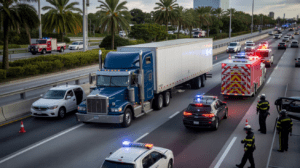
The strategic importance of the first 48 hours following a commercial truck accident cannot be overstated. Actions taken during this brief window are foundational to the entire claim. Critical evidence—from electronic data on the truck’s “black box” to physical markings on the roadway—is often transient and can be quickly lost, altered, or even legally destroyed. The speed and diligence applied during this initial phase directly impact the ability to reconstruct the event, establish liability, and counter the defensive tactics of motor carriers and their insurers.
Immediate Post-Accident Priorities
A methodical approach in the immediate aftermath is crucial. The following actions form the bedrock of a strong claim:
- Prioritizing Safety and Medical Care: The first priority is human well-being. Securing the scene and seeking an immediate medical assessment is crucial not only for the health of the victims but also for the legal claim. Prompt medical evaluation creates a clear record of injuries sustained in the crash, preventing insurers from later arguing that the harm was caused by a pre-existing or subsequent event.
- Systematic Scene and Witness Documentation: While memories are fresh and the scene is unaltered, systematic documentation is essential. This includes photographing vehicle positions, skid marks, debris fields, cargo spills, road conditions, and traffic signals from multiple angles. Equally important is gathering contact information from any witnesses and recording their initial observations. These contemporaneous accounts are invaluable for corroborating the facts and establishing a credible sequence of events.
- Prompt Notification to Insurers and Counsel: While notifying insurers is a necessary step, it must be handled with strategic caution. Providing basic facts about the time, location, and vehicles involved is appropriate, but providing recorded statements without legal guidance is a critical misstep. Early involvement of legal counsel prevents clients from making inadvertent admissions and initiates the formal evidence preservation process, including the issuance of spoliation letters to legally compel trucking companies to secure and maintain all relevant data and records.
Critical Evidence for Preservation
The following table outlines the key types of evidence in a truck accident claim and their strategic value in building a case for liability.
| Evidence Type | Strategic Significance |
| Black Box / EDR Data | Provides objective, time-stamped data on speed, braking, throttle input, and other vehicle dynamics immediately preceding impact. Crucial for countering driver testimony and proving unsafe maneuvers. |
| Driver Logs (Electronic & Paper) | Essential for proving driver fatigue and Hours-of-Service (HOS) violations under federal regulations. Comparing logs to other records can reveal falsification. |
| Dispatch Records & Notes | Reveals communication between the driver and the motor carrier. Can demonstrate pressure to meet unrealistic deadlines, knowledge of driver fatigue, or rerouting that contributed to the crash. |
| Maintenance & Inspection Files | Documents the vehicle’s service history. Incomplete or deferred maintenance can establish direct negligence on the part of the motor carrier if a mechanical failure (e.g., brake failure) caused the accident. |
| Camera Footage | Dash-cam or surrounding surveillance footage provides indisputable visual proof of the crash sequence, driver behavior, and road conditions. |
| Loading & Cargo Records | Bills of lading, weight tickets, and securement records are vital for proving improper loading, overloading, or unsecured cargo, which can destabilize a truck and lead to loss of control. |
With this critical evidence secured, the investigation can pivot from preservation to its next strategic objective: identifying every party in the commercial chain whose negligence contributed to the crash.
——————————————————————————–
2.0 Establishing Liability: A Multi-Dimensional Investigation
The core analytical challenge in a truck accident claim is moving beyond the simplistic, single-defendant model common in passenger vehicle collisions. Liability in the commercial trucking industry is rarely confined to the driver alone; it often extends through a network of corporate entities, each with specific duties and responsibilities. This section dissects the process of identifying all responsible actors and connecting their specific commercial duties to the direct cause of the crash.
The Spectrum of Potentially Liable Parties
A thorough investigation maps the responsibilities of every entity involved in the commercial transport operation. Potential defendants include:
- The Driver: The most direct actor, whose negligence may involve fatigue, distraction, impairment, speeding, or other direct violations of traffic laws and safety regulations.
- The Motor Carrier (Trucking Company): Liability often stems from negligent hiring, inadequate training or supervision, encouraging HOS violations to meet deadlines, or failing to properly maintain its fleet.
- The Shipper: The entity that owns the cargo can bear responsibility if it negligently loaded the trailer or failed to properly document hazardous materials, contributing to an unstable or dangerous load.
- The Broker: A freight broker who arranges the shipment may be liable if they negligently hired an unsafe or unqualified motor carrier to transport the goods.
- The Maintenance Provider: A third-party company responsible for vehicle maintenance can be held liable if its negligent repairs or inspections led to a mechanical failure that caused the crash.
The Investigative Process of Proving Liability
Constructing a cohesive liability narrative requires piecing together evidence from disparate sources. The investigative process involves meticulously cross-referencing records to expose systemic failures. For example, an attorney will compare the driver’s electronic logs with dispatch notes and delivery timelines to see if the company was pressuring the driver to violate federal Hours-of-Service rules. Similarly, a review of maintenance histories might be cross-referenced with post-crash vehicle inspections to prove that a known mechanical issue was ignored. By examining cargo inspections, bills of lading, and load securement records, the investigation can pinpoint whether a shipper or loading company created a hazard before the truck ever left the depot. This disciplined, evidence-driven approach transforms a simple crash into a clear picture of shared corporate negligence.
Identifying this network of liable entities is only half the battle; the next step is to deconstruct the specific operational failures—from driver fatigue to improper loading—that constitute their negligence.
——————————————————————————–


3.0 Deconstructing Causation: Linking Common Failures to Evidentiary Proof
While liability analysis answers who is responsible, causation analysis focuses on the more fundamental question of whythe crash occurred. A strong legal claim depends on demonstrating a clear and direct link between a specific failure—whether human error or mechanical breakdown—and the resulting harm. This section examines the most common causes of Jacksonville truck accidents and details the specific evidentiary strategies required to prove them in a legal setting.
Driver Fatigue and Hours-of-Service Violations
- Analysis: Federal regulations strictly limit the number of hours a commercial driver can operate a vehicle to prevent fatigue, which significantly slows reaction time and impairs judgment. Pressure to meet tight delivery schedules often leads drivers to skip required rest breaks or falsify their logs, creating a serious hazard on Jacksonville’s highways.
- Evidentiary Strategy: Proving fatigue-related negligence involves a detailed review of driver logs, dispatch records, and electronic logging data. Discrepancies between these sources can expose HOS violations. This evidence demonstrates that either the driver or the motor carrier, or both, prioritized delivery timelines over federally mandated safety protocols.
Distracted or Impaired Driving
- Analysis: A fully loaded commercial truck requires a significantly longer stopping distance than a passenger car. Even a momentary lapse of attention to use a cellphone or navigation screen can have catastrophic consequences. Similarly, impairment from alcohol, illegal drugs, or misused prescription medication dulls perception and slows decision-making, turning an 80,000-pound vehicle into an unguided missile.
- Evidentiary Strategy: Establishing distraction or impairment relies on collecting phone records, witness statements, and any available video footage. In cases of suspected impairment, toxicology results from post-accident testing are the definitive piece of evidence. This proof transforms a driver’s unsafe personal choice into a clear basis for legal liability.
Improper Loading and Securement
- Analysis: The stability of a commercial truck is highly dependent on how its cargo is loaded and secured. Uneven weight distribution, overloaded pallets, or inadequate tie-downs can cause the cargo to shift during transit. This can destabilize the entire vehicle, leading to a jackknife, rollover, or loss of control during routine maneuvers.
- Evidentiary Strategy: Proving this cause requires an examination of bills of lading, cargo inspection reports, and industry securement standards. This evidence helps identify whether the shipper, the driver, or another party failed in their duty to ensure the freight was properly documented, weighed, and secured, making them accountable for the resulting harm.
Speeding and Aggressive Maneuvers
- Analysis: Speeding dramatically increases a truck’s stopping distance and the severity of impact forces in a collision. Aggressive tactics like tailgating and improper lane changes are particularly dangerous, as they leave surrounding drivers with little to no time to react. These behaviors are often driven by pressure to meet deadlines, a culture of haste promoted by the motor carrier, or simple driver negligence.
- Evidentiary Strategy: Key evidence for proving speed includes electronic logging data and engine control records (from the truck’s “black box”). This objective data, combined with camera footage and witness testimony, can show that a driver prioritized speed over safety. A review of company policies can further reveal if the carrier incentivized or overlooked such dangerous driving.
By methodically linking specific evidence to a direct cause, the legal team transforms a collection of facts into a compelling and undeniable narrative of negligence. This clear narrative of liability and causation forms the essential foundation for calculating the full scope of a victim’s damages.
——————————————————————————–
4.0 Comprehensive Damages Assessment: Quantifying Short-Term and Long-Term Harm
The strategic objective of the damages assessment phase is to create a comprehensive, meticulously documented valuation of all harm suffered by the victim—physical, emotional, and financial. The goal extends beyond immediate costs to ensure that any settlement or verdict provides for the victim’s full recovery and addresses their future needs. A successful assessment leaves no category of loss unaccounted for.
Economic damages form the quantifiable backbone of the claim, encompassing all tangible financial losses. This valuation includes immediate medical bills, the projected costs of future treatment and rehabilitation, lost income from time away from work, and the loss of future earning capacity if the victim’s ability to perform their job is permanently diminished. It also includes property damage to the victim’s vehicle. These figures must be substantiated with reliable records and often require input from medical, vocational, and economic experts to ensure a complete and defensible calculation.
Beyond these tangible costs, a complete assessment must account for non-economic damages, which address the profound, intangible harm that does not come with an invoice. This includes compensation for physical pain and suffering, emotional distress, psychological trauma, disability, and the loss of enjoyment of life. In cases where a defendant’s conduct demonstrates a conscious or reckless disregard for safety—such as knowingly dispatching a fatigued driver or ignoring critical maintenance—punitive damages may also be pursued. These are intended not only to compensate the victim but also to punish the wrongdoer and deter similar conduct across the industry.
Evaluating the Long-Term Effects of Injuries
The true impact of a truck accident often unfolds over months and years. A thorough damages assessment must account for these lasting consequences:
- Chronic Pain and Disability: Many truck accident injuries result in chronic pain, nerve damage, or joint stiffness that impose permanent functional limitations. These disabilities can restrict a person’s ability to work, perform daily tasks, and live independently, requiring a valuation that includes long-term care and necessary accommodations.
- Emotional Trauma and PTSD: The psychological impact can be as debilitating as the physical injuries. Symptoms of post-traumatic stress disorder (PTSD), such as anxiety, intrusive memories, sleep disruption, and avoidance behaviors, can disrupt relationships, impair work performance, and fundamentally alter a victim’s sense of safety.
- Ongoing Medical Care Needs: Severe injuries rarely resolve with a short course of treatment. A comprehensive assessment must account for the long-term need for physical and occupational therapy, pain management, assistive devices (like wheelchairs or home modifications), and coordination of care among multiple specialists.
Once the full scope of damages has been meticulously calculated and documented, the legal team can move to the strategic process of demanding and securing that compensation from the responsible parties and their insurers.
——————————————————————————–
5.0 The Resolution Phase: Negotiation Tactics and Litigation Readiness
The most effective strategy for case resolution operates on a dual track: pursuing good-faith negotiation with insurers while simultaneously and rigorously preparing the case for trial. This approach creates critical leverage, demonstrating a readiness to litigate that prevents insurers from delaying or making undervalued settlement offers. It positions the claimant to negotiate from a position of strength, not desperation.
Core Components of a Disciplined Negotiation Strategy
A disciplined approach to negotiation is essential for countering the tactics of experienced insurance adjusters and defense counsel. Key components include:
- The Demand Package: The negotiation process begins with the submission of a comprehensive and well-supported demand. This package does not merely state a number; it tells the story of the case, presenting a clear narrative of liability and causation, supported by all relevant evidence, and a detailed breakdown of all economic and non-economic damages. A strong demand reflects the full scope of harm and future needs.
- Countering Insurer Tactics: Insurers often employ strategies of delay or attempt to minimize their policyholder’s responsibility. The effective response is not frustration, but firm advocacy backed by organized proof. Each attempt to downplay an injury or dispute a fact should be met with medical records, expert reports, or other concrete evidence that refutes their position.
- Managing Timelines and Expectations: A successful negotiation requires proactive management. This involves tracking all deadlines, setting clear expectations for responses, and consistently pushing the process forward. This discipline prevents the case from languishing and signals to the opposition that the claim will be pursued relentlessly, without compromising its value for the sake of a quick resolution.
The Strategic Role of Trial Readiness
Organizing trial preparation early is not a sign that negotiations have failed; it is a critical component of making them succeed. By lining up experts, preparing exhibits, and outlining witness testimony well before any trial date is set, a legal team signals its complete confidence in the case. This readiness demonstrates to the defense that they will face a well-armed and determined adversary in court, making a fair settlement a more attractive alternative to the risks and costs of litigation. This philosophy—preparing each case as if it will be tried—is the ultimate source of leverage in settlement negotiations.
This strategic process of resolution, however, must operate within a strict set of procedural rules that govern the timeline of a claim.
6.0 Navigating the Procedural Framework: Deadlines and Jurisdictional Nuances
Procedural diligence is paramount in litigation. Even the most meticulously prepared and factually compelling case can be permanently lost if fundamental legal rules, particularly the statute of limitations, are not strictly followed. A successful strategy must be built upon a foundation of unwavering attention to these administrative and jurisdictional requirements.
The Florida Statute of Limitations
In Florida, the law imposes a strict deadline for filing a personal injury lawsuit following a truck accident. Missing this deadline, known as the statute of limitations, will almost certainly result in the claim being permanently barred, regardless of how clear the defendant’s fault may be. It is critical to note that in cases where a crash results in a death, a separate, and potentially shorter, deadline applies to a wrongful death claim. While certain narrow, fact-specific exceptions (known as “tolling”) can sometimes extend the time to file, such as when a claimant is a minor, these situations are rare. Therefore, prompt action to preserve the right to sue is a non-negotiable aspect of case strategy.
The Strategic Value of Local and Regulatory Knowledge
Beyond universal deadlines, success in Jacksonville truck accident litigation is amplified by a deep understanding of local and regulatory nuances. Expertise in the Federal Motor Carrier Safety Administration (FMCSA) regulations and their Florida-specific counterparts is essential for identifying violations related to driver qualifications, vehicle maintenance, and cargo securement. Furthermore, knowledge of local Jacksonville roadways, common crash patterns, and the specific procedures of local courts provides a decisive advantage. This combined expertise allows a legal team to investigate more efficiently, build a stronger case, and navigate the legal system with a level of precision that can make the difference in a complex claim.
——————————————————————————–
Conclusion: Key Strategic Imperatives for Legal Professionals
The successful litigation of a Jacksonville truck accident claim is a masterclass in strategic discipline. This analysis reveals a clear set of imperatives that must guide the legal professional’s approach. First is the necessity of speed and precision in the initial evidence preservation phase, as the foundation of the entire case is laid in the first 48 hours. Second is the importance of depth in the liability investigation, moving beyond the driver to map the network of corporate responsibility that is the hallmark of the commercial trucking industry. Finally, the resolution phase demands a dual-track strategy of disciplined negotiation backed by an unwavering readiness for trial. By adhering to this framework—one that methodically links evidence to causation, quantifies the full scope of harm, and leverages procedural expertise—legal professionals can effectively pursue accountability, counter the formidable defenses of corporate carriers, and secure true justice for the victims of these devastating events.


We Can Help.