




You need a Miami baby delivery malpractice injury lawyer from Law Offices of Anidjar and Levine who’ll act fast to secure fetal monitoring strips, delivery and NICU records, and time-stamped documentation before it’s lost.
You’ll get guidance on immediate medical steps, help organizing expenses and symptoms, and careful management of hospital and insurer communications.
Your lawyer should coordinate qualified medical experts to prove a breach of the standard of care and damages, while meeting Florida’s strict pre-suit rules and deadlines.
Learn more by speaking with a Miami Medical Malpractice Lawyer.
Main Takeaways
- Hire an experienced Miami birth injury lawyer early to preserve fetal monitoring strips, records, timelines, and meet Florida malpractice notice requirements.
- Get immediate medical care for postpartum hemorrhage or newborn jaundice signs; timely treatment protects health and strengthens causation evidence.
- A strong case reviews prenatal, labor, delivery, and NICU records for missed fetal distress, delayed escalation, and delayed emergency C-section.
- Proving liability requires qualified medical experts to show standards-of-care breaches, link them to injury, and document damages and long-term needs.
- Preserve evidence now: keep discharge papers, photos/videos with metadata, and a written timeline of symptoms, staff names, alarms, and delays.
How We Can Help With Your Miami Baby Delivery Malpractice Injury Claim
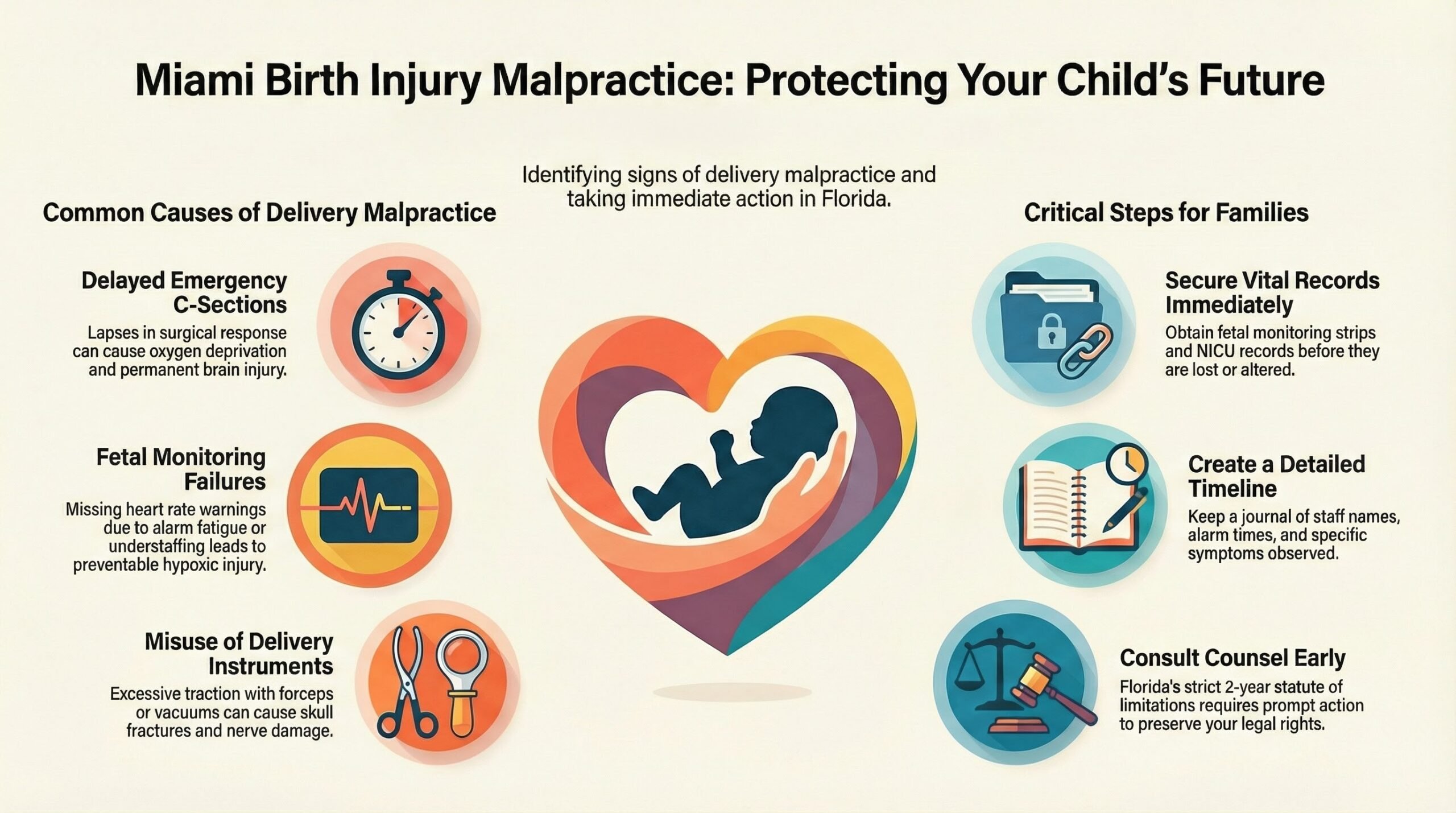
Take control of your claim by putting an experienced Miami baby delivery malpractice lawyer to work early. You’ll gain a disciplined plan for protecting records, preserving timelines, and communicating with insurers and hospitals so you don’t carry the burden alone.
You can focus on your child’s care while we coordinate the next steps with purpose and discretion.
You’ll receive clear guidance on documenting expenses, organizing medical information, and identifying the full impact on your family’s future.
We’ll manage calls, requests, and correspondence, and we’ll prepare your claim with careful attention to detail and deadlines.
You’ll also benefit from referrals to Community Resources that can assist with care coordination, transportation, and family support, and we’ll connect you with Support Groups where you can serve others and receive steady encouragement.
Throughout the process, you’ll get candid updates, practical options, and respectful advocacy at every stage.
Understanding Miami Baby Delivery Malpractice Injury Cases



Because delivery rooms move quickly and decisions can change by the minute, baby delivery malpractice cases in Miami often turn on whether the medical team met accepted standards of obstetric and neonatal care at each critical point. You’ll typically evaluate what was known at the time, what actions were taken, and whether safer, reasonable options were available.
Your focus stays on accountability and on protecting families who rely on healthcare professionals to serve with care and competence.
| What you review | Why it matters |
|---|---|
| Prenatal and labor records | Establishes timeline, risks, and responses |
| Monitoring and charting | Shows if warnings were recognized and escalated |
| Consent and communications | Clarifies what you were told, and when |
| Post-birth assessments | Connects early signs to later needs |
You may also face the psychological impact of uncertainty while weighing insurance implications, including coverage limits, liens, and settlement structure. A disciplined review supports clear, service-driven decisions for your child and community.
Common Causes of Miami Baby Delivery Malpractice Injuries
When you evaluate a potential birth injury case, you’ll often find that preventable errors during labor and delivery are at the center of the harm.
You may see issues such as a delayed emergency C-section, misuse of delivery instruments like forceps or vacuum extractors, or a failure to monitor and respond to fetal distress in time.
You should also consider medication and anesthesia errors, since improper dosing or timing can quickly place both mother and baby at serious risk.
Delayed Emergency C-Section
Although an emergency C-section is designed to prevent escalating harm, delays in ordering or performing it can quickly turn a manageable complication into a life-altering birth injury. When fetal monitoring shows distress, placental abruption is suspected, or labor stalls with worsening maternal status, you expect the team to act with urgency and coordination.
A Decision Delay may occur when staff dismisses warning signs, waits for additional approvals, or fails to escalate to an available surgeon and anesthesiologist. Transfer Logistics can also slow care, especially when you’re moved between units or facilities without a clear protocol, operating room readiness, or timely transport.
These lapses can prolong oxygen deprivation, increasing the risk of brain injury. By carefully reviewing timelines for families, you help identify preventable failures and reinforce safer standards.
Misuse Of Delivery Instruments
If your delivery team relies on forceps or a vacuum extractor, they must use those tools with strict technique and clear medical justification, not as a shortcut for poor positioning, prolonged labor, or inadequate planning.
When a provider applies excessive traction, repeats pulls beyond accepted limits, or uses the device at the wrong angle, your baby can suffer scalp lacerations, skull fractures, facial nerve injury, or brachial plexus damage.
You are also entitled to careful pre-use checks, because poor equipment maintenance can cause device slippage, sudden pressure changes, and avoidable tissue trauma.
Proper instrument sterilization is also important, as contaminated tools can introduce infection to the mother and child. If you serve families, insist on documented training, informed consent, and timely escalation when instruments aren’t working safely.
Failure To Monitor Fetal Distress
Because fetal oxygen levels can change quickly during labor, your delivery team must monitor fetal heart rate patterns continuously and respond to warning signs without delay.
When clinicians miss late decelerations, reduced variability, or repetitive bradycardia, your baby can suffer preventable hypoxic injury within minutes.
You’re entitled to care that treats monitoring as a service obligation, not a background task delegated without oversight.
Staffing shortages can leave one nurse covering multiple rooms, delaying chart review and bedside reassessment when tracings worsen.
Alarm fatigue can also dull urgency, causing repeated alerts to be silenced or normalized rather than investigated.
If the team fails to escalate concerns, call the physician, or initiate timely intrauterine resuscitation and delivery planning, you may face lasting consequences.
A lawyer can evaluate records to confirm lapses in surveillance and response.
Medication And Anesthesia Errors
Medication choices and anesthesia management can be just as time-sensitive as fetal monitoring, and a single dosing or administration mistake can rapidly change the course of a delivery.
When you entrust a team to medicate labor pain, induce contractions, or prevent infection, you rely on precise orders, careful labeling, and proper documentation.
Dosage miscalculations may depress a newborn’s breathing, prolong labor, or trigger dangerous drops in maternal blood pressure that reduce oxygen to the baby.
You may also face allergic reactions when staff fail to verify allergies, review prior records, or recognize warning signs as symptoms escalate.
If clinicians miss these safeguards, you can see preventable injury that affects your child’s future.
You can honor your family’s well-being by demanding clear communication and timely escalation of concerns.

Legal Rights of Miami Baby Delivery Malpractice Injury Victims
When a preventable delivery error harms your baby or you, Florida law gives you enforceable rights to pursue accountability and financial recovery.
You can seek compensation for medical care, future support, lost income, and non-economic harm, while insisting that providers meet professional standards.
You also hold privacy rights over sensitive records, and you can challenge improper disclosures while your claim proceeds.
Your legal protections often include:
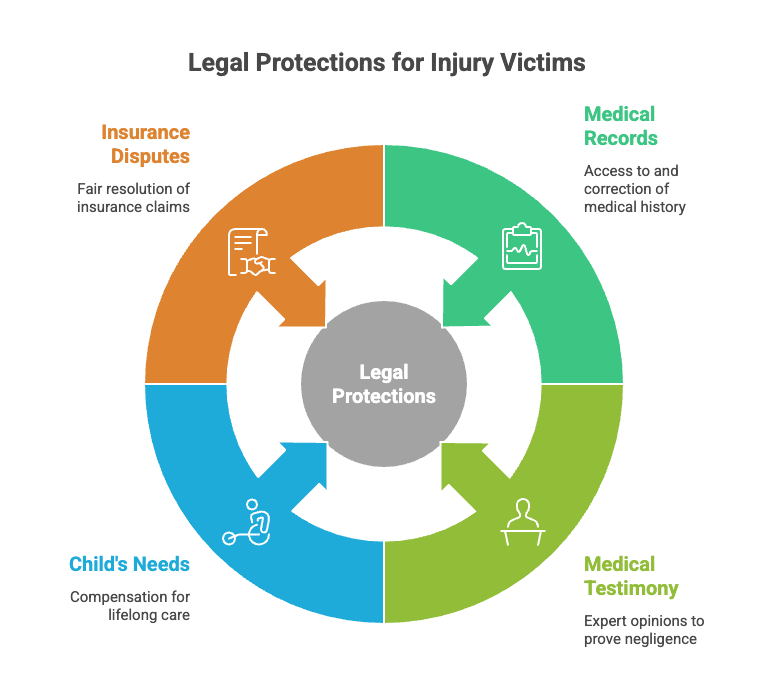
- Access to medical records and the right to correct certain inaccuracies
- The ability to prove negligence through qualified medical testimony
- The right to pursue damages for your child’s lifelong needs, when applicable
- A fair process to address insurance disputes, delays, and low settlement offers
Steps to Take After a Miami Baby Delivery Malpractice Injury
After a Miami baby delivery malpractice injury, you should seek immediate medical care to protect your child’s health and establish an accurate clinical record.
You’ll also need to document labor and delivery by securing discharge paperwork, fetal monitoring strips, operative reports, and any written communications you received.
As soon as you can, consult a malpractice lawyer who can preserve evidence, coordinate medical review, and guide you through Florida’s procedural requirements.
Seek Immediate Medical Care


Although you may feel pressured to “wait and see,” you should seek immediate medical care as soon as you suspect a delivery-related injury to you or your baby. Prompt evaluation protects life and function, and it also helps you stay strong so you can care for your family and serve others in your community.
If you experience heavy bleeding, dizziness, faintness, or worsening abdominal pain, ask for urgent assessment for postpartum hemorrhage and insist on timely treatment. If your newborn shows yellowing skin or eyes, poor feeding, unusual sleepiness, or high-pitched crying, request immediate screening for neonatal jaundice and related complications.
Use emergency services when symptoms escalate, and request consultation with appropriate experts. Early intervention can reduce preventable harm and support a safer recovery.
Document Labor And Delivery
Documenting labor and delivery creates a clear timeline of what occurred, who made key decisions, and how you and your baby responded at each stage.
As soon as you can, write down times, symptoms, medications, and staff names, and note when monitors alarmed or interventions changed.
Use Labor Journaling to capture what you heard, what you were told, and what you consented to, including any delays in evaluation or escalation.
Preserve paperwork, discharge instructions, fetal monitoring strips if provided, and copies of messages or portal updates.
If you have Birth Photography or videos, store original files, keep metadata, and avoid edits that could affect accuracy.
Ask a trusted family member to help you organize records so you can serve your child’s needs with clarity and integrity.
Consult A Malpractice Lawyer
When you suspect a preventable mistake during labor or delivery harmed your baby or you, consult a Miami medical malpractice lawyer as soon as practical so you can protect vital evidence and avoid early missteps.
You’ll receive guidance on preserving medical records, fetal monitoring strips, and timelines while memories are still fresh.
Your lawyer can manage communications with the hospital and insurers, so you don’t unintentionally limit your options or accept an inadequate offer. If travel or newborn care makes appointments difficult, ask about Telehealth Consults to keep the process moving promptly.
If you or a loved one needs interpretation, request Language Access to ensure clear consent, understand deadlines, and speak accurately. By acting early, you help your family and uphold safer care standards for others.
How a Miami Baby Delivery Malpractice Injury Lawyer Can Help You
Because a birth injury claim can affect your child’s future care and your family’s financial stability, a Miami baby delivery malpractice injury lawyer helps you take decisive, legally sound steps from the start.
You’ll gain a clear plan for evidence, communications, and next actions, so you can keep serving your family and community without losing focus.
Your lawyer reviews records, consults qualified medical experts, and identifies where accepted standards weren’t met.
You’ll also receive transparent guidance on Fee Structure and a realistic Case Timeline, allowing you to budget and plan without surprises.
- You protect your rights by meeting notice requirements and filing deadlines.
- You preserve critical evidence through record requests and formal letters to providers.
- You strengthen your claim by documenting damages and preparing credible testimony.
- You reduce stress by letting counsel handle insurers, hospitals, and settlement discussions.

You remain informed at each stage, and you make decisions based on verified facts and careful counsel.
Long-Term Effects of Miami Baby Delivery Malpractice Injuries
You may face long-term consequences after a Miami baby delivery malpractice injury, and these effects can shape your child’s health and daily functioning for years.
You’ll often see lifelong neurological impairments alongside developmental and learning challenges, which can affect mobility, communication, and academic progress.
You may also need ongoing medical care, including therapies, specialty visits, adaptive equipment, and long-term planning for support services.
Lifelong Neurological Impairments
Although some birth injuries resolve with early treatment, others cause lifelong neurological impairments that reshape a child’s development and your family’s long-term planning.
When oxygen deprivation, hemorrhage, or trauma damages the brain or spinal cord, you may face persistent motor impairment, seizure disorders, chronic pain, or sensory deficits that require coordinated, lifelong care.


You’ll likely rely on clinicians, structured therapy, and careful medication management, while still protecting your child’s dignity and autonomy. Neuroplasticity Research supports early, consistent rehabilitation and can guide decisions on therapy intensity and timing.
Assistive Technology, such as mobility devices, communication supports, and adaptive home modifications, helps you sustain participation in daily life. You also serve your community by advocating for access, safety, and responsible medical standards.
Developmental And Learning Challenges
When a delivery-related injury disrupts early brain development, the effects can extend well beyond physical milestones and into the classroom.
You may notice delayed speech, attention limits, memory gaps, or slower processing that makes reading, math, and following directions harder.
As you serve your child and advocate respectfully, document patterns, request timely evaluations, and collaborate with educators who can adjust instruction without lowering expectations.
Early Intervention can strengthen foundational skills and support self-regulation, which improves participation and confidence.
As your child enters new grades, School Integration becomes a practical goal, involving consistent routines, clear communication between home and school, and appropriate accommodations.
You can also promote social learning by coaching peer interaction and reinforcing progress with structured practice at home.
Ongoing Medical Care Needs
Managing ongoing medical care after a delivery-related injury often becomes a long-term responsibility, not a short episode of treatment.
You may coordinate healthcare providers, therapy sessions, medications, and durable medical equipment, while tracking progress and preventing complications.
You’ll also manage appointments around school and family routines, so consistent documentation and clear communication matter.
As needs change, you might arrange in-home nursing, adaptive therapies, and periodic evaluations, so your child’s plan stays current and effective.
You may need home modifications to support safe mobility and daily care, including accessible bathing, ramps, and room layouts that reduce risk.
When caregiving demands intensify, you can rely on respite services to protect your family’s stability, prevent burnout, and keep you able to serve your child with steady attention.
Proving Liability in Miami Baby Delivery Malpractice Medical Malpractice Injury Cases
To recover compensation in a Miami baby delivery malpractice case, you must prove liability with clear, well-supported evidence that the medical team’s actions fell below the accepted standard of care and directly caused your child’s injury.
You’ll begin by identifying where care departed from what competent providers would’ve done, such as delayed C-section decisions, improper fetal monitoring, or missed signs of distress.
You strengthen your claim through Record Authentication, ensuring prenatal, labor, delivery, and NICU documents are complete, time-stamped, and consistent across systems.
You’ll also rely on qualified experts to explain how the breach caused harm, using timelines that connect symptoms, interventions, and outcomes.
When patterns matter, Statistical Analysis can help demonstrate how the risk should’ve been recognized, and why safer alternatives were available.
You serve your family and your community by pursuing accountability through rigorous evidence, not speculation, so hospitals improve practices and future patients are protected.
Compensation for Miami Baby Delivery Malpractice Damages
How do you put a fair dollar value on a birth injury that may affect your child for decades? You start by documenting every loss carefully, because accurate compensation helps you secure resources while continuing to serve your family and community.
Damages often include past and future medical care, therapy, assistive technology, in-home nursing, and transportation, plus lost earning capacity and reduced quality of life.
You’ll also account for parents’ out-of-pocket expenses and the time required to coordinate long-term care.
To make an award last, consider structured settlements that deliver predictable payments for future milestones, reducing the risk of mismanagement and aligning benefits with ongoing needs. You should also evaluate tax implications, since certain portions may be treated differently depending on how the recovery is characterized.
A thorough plan protects your child’s stability and honors your commitment to responsible stewardship.
The Statute of Limitations for Miami Baby Delivery Malpractice Injury Cases
A strong damage plan only matters if you preserve your right to seek it. Florida’s filing deadlines can close that window faster than most families expect.
In most Miami birth injury and medical malpractice cases, you generally have two years from when you knew, or should’ve known, that malpractice caused harm. There is an outer limit that often bars older claims. Missing these Filing Deadlines can end your ability to pursue accountability, even when the injury is clear and the need is urgent.
Because your child’s condition may emerge over time, you should document symptoms, request complete medical records, and track critical dates from prenatal care through delivery and neonatal treatment.
Florida also requires pre-suit steps that consume time, so you can’t wait until the last minute to act. Be mindful of State Variations if care involves multiple providers or treatment across state lines, since jurisdiction choices can affect timing and notice rules.
Why You Need an Experienced Miami Baby Delivery Malpractice Injury Lawyer
Because birth injury cases turn on fast-moving medical decisions and dense documentation, you need a Miami baby delivery malpractice injury lawyer who’s handled these claims from investigation through trial.
You’re not only seeking compensation; you’re protecting a child’s future care plan, safeguarding your family’s stability, and promoting safer practices for other patients.
An experienced lawyer brings Medical Literacy to interpret fetal monitoring strips, medication timing, shoulder dystocia techniques, and NICU records, then translates them into clear legal theories.
You’ll rely on that skill to identify preventable delays, charting gaps, and deviations from accepted standards without guessing.
Local Knowledge also matters because Miami hospitals, insurers, and court procedures shape how evidence is obtained, experts are vetted, and deadlines are met.
With seasoned guidance, you can efficiently pursue accountability, promptly preserve essential records, and present damages that reflect lifelong therapy, assistive needs, and support services.

How to Choose the Right Miami Baby Delivery Malpractice Injury Lawyer for Your Case
Experienced representation sets the foundation, but you still need to select the lawyer who best fits your child’s birth injury claim and your family’s long-term goals.
Start by confirming the attorney focuses on birth trauma and medical negligence, and can explain prior results in comparable cases without exaggeration.
Evaluate their Communication Style, because you’ll rely on clear updates, timely callbacks, and practical guidance when decisions affect your child’s care.
Ask who’ll handle your matter day to day, how often you’ll receive status reports, and what tools they use to share records securely.
Next, weigh Local Reputation within Miami courts and the medical community, since familiarity with local procedures, experts, and hospital systems can strengthen case strategy.
Review independent peer feedback, disciplinary history, and trial readiness.
Finally, choose counsel who respects your values, supports your service-minded priorities, and pursues accountability with measured professionalism.
About the Law Offices of Anidjar and Levine
Steady advocacy matters when a delivery error changes your family’s future, and the Law Offices of Anidjar and Levine positions its practice to pursue medical accountability with discipline and focus.
You merit counsel that respects your values, listens without judgment, and acts with purpose when a newborn’s injuries demand immediate attention.
You’ll find a team shaped by firm history, grounded in client service and careful case building.
You can expect prompt communication, organized records management, and a strategy that aligns medical review, expert consultation, and clear deadlines.
You’re not asked to carry the burden alone, because the firm coordinates evidence, insurance correspondence, and litigation steps while you focus on care.
Community involvement also matters, and you’ll see that service extends beyond casework through support for local needs and responsible advocacy.
If your goal is justice that protects other families, you’ll have steady guidance from start to resolution.

Frequently Asked Questions
Will Filing a Claim Affect My Immigration Status or Public Benefits?
Filing a claim usually won’t change your immigration status or automatically reduce your public benefits.
You should still confirm Status Impact with a qualified immigration attorney, because individual histories and pending applications can create exceptions.
For Benefit Eligibility, cash assistance and means-tested programs may treat settlements or periodic payments as income or assets, so you’ll need careful reporting and planning.
You serve others best by documenting everything and seeking coordinated legal guidance.
Can I Pursue a Case if the Delivery Occurred at a Military Hospital?
Yes, you can pursue a case even if the delivery occurred at a military hospital, but you’ll usually proceed through FTCA claims, not standard state malpractice rules.
You must file an administrative claim first, meet strict deadlines, and document harm carefully.
Expect jurisdiction issues, including where you can file suit and which law applies.
If you’re seeking accountability to protect others, you’ll need counsel familiar with federal procedure.
How Are Attorney’s Fees and Case Costs Handled in These Cases?
You’ll typically handle attorney’s fees through contingency fees, meaning you don’t pay unless you recover compensation, and the fee comes from the recovery.
You’ll also address case costs, including filing fees, records, and expert costs needed to prove medical negligence and damages. Your lawyer often advances these expenses, then seeks reimbursement from any settlement or verdict, so you can focus on protecting your child and serving your family’s future.
What if I Signed Hospital Consent Forms or Arbitration Paperwork?
Signing hospital consent or arbitration paperwork doesn’t automatically bar your claim, but it can affect your options. You should evaluate Arbitration Enforceability, since some clauses fail if they’re unclear, overly broad, or improperly presented.
You may also have rights tied to Consent Withdrawal, especially if pressure, lack of capacity, or incomplete disclosure influenced your signature. Gather all documents, note when and how you signed, and promptly request a review to protect others.
Can Grandparents or Guardians File if the Parents Are Unavailable?
Yes, grandparents or guardians can sometimes file, but you must satisfy standing requirements and show custodial rights under the applicable court orders or statutes.
If parents are missing, incapacitated, or legally unable to act, you can often step in as the child’s legal representative or seek appointment through the court.
You should gather custody papers, guardianship letters, and proof you’re acting in the child’s best interests.
Consult counsel promptly.
—————————
If you suspect a delivery error harmed your child, you can’t afford delays or uncertainty.
You should document what happened, secure medical records, and speak with the Law Offices of Anidjar and Levine or a Miami Medical Malpractice Lawyer who can evaluate causation, damages, and liability under Florida law.
With experienced counsel, you can pursue compensation for current treatment, future care, and related losses while protecting your family’s rights.
You’ll gain clear guidance, strong advocacy, and a strategy built for results.


We Can Help.