

The Law Offices of Anidjar and Levine can investigate whether a motorist, vehicle owner, employer, or roadway entity contributed to a Golden Beach motorcycle collision. The review may include crash reports, witness accounts, photographs, medical records, vehicle data, and road conditions. Florida’s comparative negligence rules may reduce compensation based on an injured person’s share of fault, and recovery is generally barred when that share exceeds 50 percent. Learn more from a Golden Beach Personal Injury Lawyer, including possible claims, deadlines, fees, and next steps.
Main Takeaways
- A Golden Beach motorcycle accident lawyer can investigate the crash and identify everyone who may share responsibility.
- Potentially at-fault parties may include a driver, vehicle owner, employer, or entity responsible for unsafe roadway conditions.
- Evidence such as crash reports, witness accounts, photos, vehicle data, and medical records can help establish how the collision occurred.
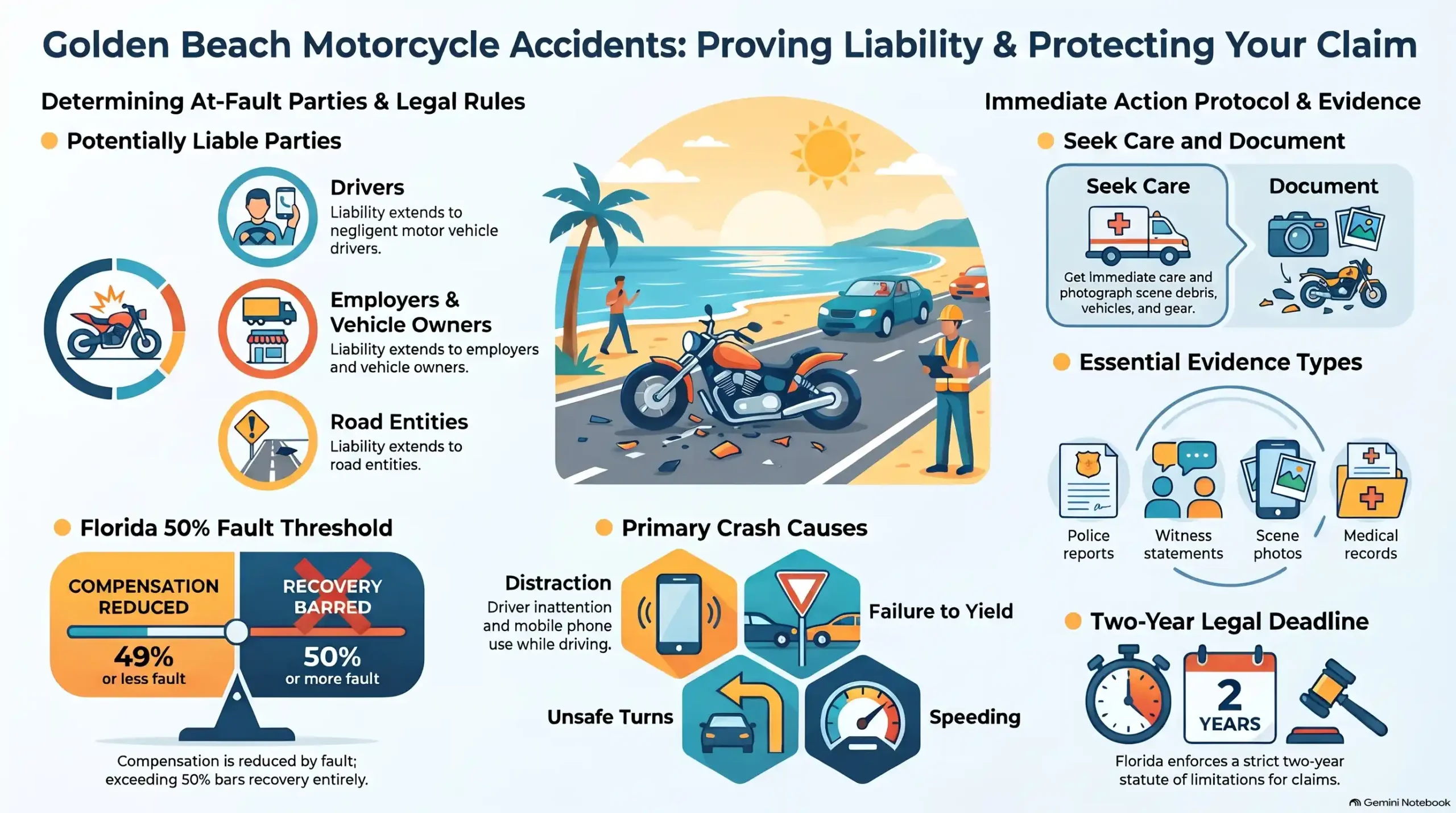
- Florida’s comparative negligence rules may reduce compensation based on your share of fault; responsibility above 50 percent generally bars recovery.
- A free consultation can help you understand possible claims, evidence to preserve, fees, and filing deadlines.


How We Can Help With Your Golden Beach Motorcycle Accident At-Fault Parties Injury Claim
After a Golden Beach motorcycle accident, identifying every party whose negligence contributed to the crash can be essential to pursuing compensation. A dedicated legal team can help injured riders and families manage the claim process while protecting their interests and reducing avoidable burdens.
Counsel can review available records, assess the documented losses, and communicate with insurers on the client’s behalf. The team may also gather relevant evidence, organize medical and financial documentation, and prepare a clear presentation of the claim. These services allow clients to focus on recovery and family responsibilities while their legal representatives address procedural demands.
A Free consultation can give a prospective client an opportunity to discuss the circumstances, understand possible next steps, and ask questions without an initial fee. If representation proceeds, contingency fees may allow payment for legal services to depend on a recovery, subject to the agreed terms. The firm can explain those terms clearly, provide updates, and pursue a fair resolution with diligence, respect, and care throughout the process.
OUR CONSULTATIONSARE FREE
START YOUR FREE CASE REVIEW

Understanding Golden Beach Motorcycle Accident At-Fault Parties Injury Cases
Understanding a Golden Beach motorcycle accident injury case begins with determining how the collision occurred and which parties may have contributed to it. A careful review identifies the people or organizations whose conduct may have played a legally relevant role, rather than assuming responsibility rests with one driver. Depending on the evidence, potentially responsible parties may include a motorist, an employer, a vehicle owner, or an entity responsible for roadway conditions. Each claim requires an individualized assessment of applicable duties, actions, and resulting harm.
Useful evidence can include collision reports, photographs, witness accounts, medical records, and available roadway or vehicle documentation. These materials help establish a reliable account and support fair consideration of the injured person’s needs. Motorcycle safety culture and Golden Beach road design may provide context for evaluating the setting, but they do not alone determine fault. A measured investigation can clarify responsibility, preserve relevant information, and help those affected pursue appropriate remedies while respecting the interests of everyone involved.
Common Causes of Golden Beach Motorcycle Accident At-Fault Parties
Motorcycle crashes in Golden Beach may result from distracted drivers or drivers who fail to yield the right of way. Unsafe lane changes can also place riders at risk, particularly when motorists do not check for nearby motorcycles. Speeding and reckless driving may further contribute to collisions and help establish which parties may be at fault.
Distracted Drivers
Distracted driving is a common cause of motorcycle crashes in Golden Beach because drivers may fail to notice riders while using a phone, adjusting navigation, or attending to other tasks. Phone distraction can divert a driver’s eyes, hands, or attention from the road, reducing the ability to recognize a motorcycle in time. Dashboard interaction, including changing audio settings or entering a destination, can also interrupt a driver’s focus. Even brief lapses may prevent a motorist from responding safely to traffic conditions. Investigators may review witness accounts, vehicle data, and available video to determine whether distraction contributed to a collision. Establishing the cause can help injured riders pursue accountability and support safer roads for all. Drivers who remain attentive protect not only themselves, but also the people traveling around them.
Failure to Yield
A driver’s failure to yield can cause a serious motorcycle crash when they turn across a rider’s path, enter a roadway without checking for approaching traffic, or ignore a stop or yield sign. These actions may leave a motorcyclist with little time or space to avoid impact. At intersections, drivers must observe traffic controls and assess approaching vehicles before proceeding. A rider’s smaller profile may make the motorcycle harder to notice, but it does not remove the driver’s duty to yield when required. Intersection right-of-way can be central to determining how a collision occurred and which parties may bear responsibility. Evidence such as witness accounts, roadway conditions, and available video may help clarify whether turning vehicle negligence or another failure to yield contributed to the crash.
Unsafe Lane Changes
Unsafe lane changes can cause a serious crash when a driver moves into a motorcycle’s path without checking mirrors and blind spots or signaling in time. A motorcycle’s smaller profile may make it harder for motorists to notice, particularly when it occupies a Blind Spot beside or behind a vehicle. Drivers should check mirrors, look over their shoulders, and signal before moving between lanes. They must also observe Lane Markings and avoid crossing solid lines or changing lanes where prohibited. A collision may occur when a driver fails to verify that the adjoining lane is clear, forcing a motorcyclist to brake, swerve, or fall. Evidence such as witness accounts, vehicle damage, and roadway markings can help establish how the movement occurred. Careful investigation may identify responsible parties and support injured people seeking fair compensation.
Speeding and Reckless Driving
When a driver exceeds a safe speed or operates a vehicle recklessly, the risk of a serious motorcycle collision can increase. In Golden Beach, speeding may reduce a driver’s ability to notice a motorcycle, judge its distance, or stop in time. Speed Limit Violations can also make a crash more severe because greater force is involved when vehicles collide. Reckless conduct, such as tailgating, abrupt movements, or ignoring traffic signals, may place riders and other road users in immediate danger. Street Racing Risks are especially serious on public roads, where high speeds and competitive driving leave little room to respond to changing conditions. Investigators may review witness statements, roadway evidence, and available video to determine whether a driver’s conduct contributed to a collision. Establishing responsibility can help injured people pursue appropriate compensation and support safer roads for the community.
Don’t Wait. Call Our Florida Personal Injury Lawyers Now!


Legal Rights of Golden Beach Motorcycle Accident At-Fault Parties Injury Victims
Although a motorcyclist may be found partly or wholly responsible for a Golden Beach crash, that finding does not automatically eliminate the right to seek compensation for injuries. Florida’s comparative negligence rules may reduce damages according to the injured person’s share of fault. However, a person found more than 50 percent responsible for a crash generally cannot recover damages in a negligence action under current law. Each claim depends on the evidence and applicable deadlines.
“Fault may reduce compensation after a Golden Beach motorcycle crash, but it does not always eliminate the right to recover damages.”
An injured rider may protect legal rights by taking these steps:
- Obtain medical care and retain records documenting treatment, expenses, and lasting effects.
- Preserve relevant evidence, including photographs, witness details, and insurance communications, without making unsupported statements about fault.
- Consult a qualified attorney promptly to assess liability, potential claims, and filing deadlines.
Accurate information also supports fair outcomes for everyone affected. Motorcycle safety education and helmet use awareness can help communities promote responsible riding and informed decisions. Legal guidance can clarify available options while respecting the rights of other injured parties and those who may share responsibility.
Why Do Golden Beach Motorcycle Accident At-Fault Parties Injuries Happen?
Golden Beach motorcycle accident injuries can occur when a rider’s actions, another road user’s conduct, or hazardous roadway conditions contribute to a collision. Riders may lose control by speeding, following too closely, or misjudging a turn. Inexperienced operation and distraction can also reduce reaction time, leaving little opportunity to avoid a hazard.
Other motorists may fail to yield, change lanes without checking blind spots, or turn across a motorcycle’s path. Because motorcycles are smaller and less visible than passenger vehicles, drivers may overlook them, particularly in heavy traffic. Roadway Visibility can decline at night or during rain, making it harder for all road users to identify hazards and judge distance.
Mechanical problems, including worn tires, faulty brakes, or defective lights, may also contribute. Regular Motorcycle Maintenance can help identify issues that affect handling and stopping ability. Poor pavement, loose gravel, standing water, and obstructed signs create additional risks. Understanding these contributing factors helps communities promote safer roads and recognize how preventable conduct can cause serious injuries.
What Should You Do After a Golden Beach Motorcycle Accident At-Fault Party Injury?
After a Golden Beach motorcycle crash, an injured person should seek prompt medical care, even if symptoms initially appear minor. They should document the scene, injuries, and available witness information while preserving relevant records. Consulting a lawyer can help clarify potential at-fault parties and protect the person’s legal interests.
Seek Medical Care
Prompt medical evaluation is essential for anyone injured in a Golden Beach motorcycle accident, even when symptoms seem minor or delayed. A qualified clinician can identify hidden injuries, assess their severity, and recommend appropriate treatment. Delaying care may allow conditions such as head trauma, internal bleeding, or fractures to worsen without obvious warning signs. Emergency services should be contacted for severe pain, difficulty breathing, confusion, or loss of consciousness. Otherwise, an injured person should seek prompt evaluation at an emergency department or medical office and explain all symptoms and how the crash occurred. Following the provider’s instructions supports recovery and helps prevent complications. Follow-up appointments allow clinicians to monitor recovery and adjust care when needed. Medication management should follow professional guidance, including directions about dosage, timing, and possible interactions.
Document the Crash
Once immediate medical needs are addressed, documenting the crash can help preserve an accurate account of the Golden Beach motorcycle accident and the injuries involved. If it is safe, the injured rider or a trusted companion can photograph the scene, including vehicle positions, visible damage, traffic signs, road conditions, and Roadway Debris. Images of Helmet Damage and torn clothing may also help show the impact’s severity. Record names and contact details for witnesses, along with the responding officer’s information and any incident number. The rider can write down what happened while memories are still clear, noting the time, location, weather, and sequence of events without guessing at uncertain details. Keep medical records, receipts, and photographs in one place. Careful documentation supports an accurate account and may help protect others from similar hazards.
Contact a Lawyer
When should an injured rider contact a lawyer? As soon as practical after receiving necessary medical care, the rider can seek legal guidance before speaking with insurers or signing documents. Early advice may help preserve evidence, identify responsible parties, and prevent avoidable errors while the rider focuses on recovery.
A lawyer can review crash records, witness accounts, medical documentation, and insurance communications to assess potential claims. The rider should provide accurate information and retain copies of relevant materials, including photographs and repair estimates. Questions about fees, case procedures, and attorney availability should be addressed directly during an initial discussion.
Many firms offer a Free consultation, allowing an injured rider to explain the circumstances and learn about possible next steps without an immediate commitment. Prompt, informed guidance can also support a fair process that respects everyone affected by the collision.
Don’t Wait. Call Our Florida Personal Injury Lawyers Now!
Critical Evidence in a Golden Beach Motorcycle Accident At-Fault Parties Injury Case
A strong Golden Beach motorcycle accident injury claim may depend on evidence that clarifies how the crash occurred, who may be responsible, and the extent of the injuries.
Crucial evidence commonly includes:
- Police accident reports and photographs of the scene
- Witness statements describing the collision
- Medical records documenting injuries and treatment
Police Accident Reports
How can a police accident report help establish who caused a Golden Beach motorcycle crash? The report may document the responding officer’s observations, statements from involved parties and witnesses, roadway conditions, and any citations issued. These details can provide an initial account of how the collision occurred and identify issues requiring further investigation. However, a report is not a final determination of legal fault, and an officer may not have witnessed the crash. Its conclusions should be assessed alongside medical records, testimony, and other reliable evidence.
Report access may be available through the police department or other agency that handled the response, subject to applicable procedures. If the report contains an error or omission, you can request corrections through the agency. Prompt review helps preserve accurate information and supports a fair assessment of responsibility.
Scene Photographs
Photographs taken at a Golden Beach motorcycle crash scene can preserve details that may change or disappear before investigators complete their review. Images may document vehicle positions, roadway conditions, skid marks, debris, traffic signs, and visible damage. These details can help clarify how the collision occurred and which parties may have contributed to it. Photographers should capture broad views of the scene as well as close images of relevant evidence. Different Camera Angles can show distances, sightlines, and the relationship between vehicles and road features. Image Metadata, including timestamps and location information, may help establish when and where photographs were taken, though its accuracy should be verified. Organized, unaltered copies can support a careful review and help those responsible for serving injured people assess the available evidence fairly.
Witness Statements
Witness statements can provide an independent account of a Golden Beach motorcycle collision and help clarify how it occurred. People who saw the crash may describe vehicle movements, traffic signals, road conditions, and events immediately before impact. Their observations can help identify which parties may have contributed to the collision and support a fair assessment of responsibility.
Witness credibility depends on factors such as the person’s opportunity to observe, consistency, and potential bias. A careful review distinguishes direct observations from assumptions or details learned later. Investigators may record each witness’s contact information and account promptly, while memories remain clear. Statement preservation is important because recollections can fade, and witnesses may become difficult to reach. Respectful, neutral questions can help preserve accurate accounts and ensure relevant evidence is available to those evaluating the claim and determining appropriate next steps.
Medical Records
Medical records provide essential evidence in a Golden Beach motorcycle accident injury case by documenting the nature, severity, and timing of a person’s injuries. Emergency department notes, diagnostic images, treatment plans, and follow-up reports can connect reported symptoms to the collision and show how injuries developed. A well-organized Medical chronology helps clarify when symptoms appeared, what care providers recommended, and whether treatment remained consistent. These records may also document limitations affecting work, mobility, or daily responsibilities, helping decision-makers assess the injury’s practical consequences. Provider coordination can reduce documentation gaps and support accurate communication among treating professionals. Records should be collected lawfully and reviewed for completeness, including relevant pre-accident history. Careful preservation protects reliable evidence and helps guarantee that a claim reflects documented medical needs rather than unsupported assumptions about injury or recovery.
Long-Term Effects of Golden Beach Motorcycle Accident At-Fault Parties Injuries
Injuries from a Golden Beach motorcycle accident may lead to chronic pain that requires ongoing treatment and affects daily activities. Lasting mobility limits can interfere with work, independence, and routine responsibilities. These physical effects may also contribute to emotional distress and financial strain for injured riders and their families.
Chronic Pain
Chronic pain can persist long after a Golden Beach motorcycle crash, affecting a person’s mobility, sleep, work, and daily activities. Injuries to nerves, muscles, joints, or other tissues may cause ongoing discomfort even after initial treatment ends. Symptoms can include aching, burning, sensitivity, or recurring pain that varies in intensity. Sleep disruption may worsen fatigue and make it harder to concentrate or maintain regular responsibilities. Pain management often requires coordinated care, such as medical evaluations, prescribed treatment, and counseling on safe ways to manage symptoms. Consistent records of pain levels, treatment, and effects on daily life can help providers assess progress and guide care. When another party’s negligence caused the crash, documentation may also help explain the lasting harm and support a fair assessment of related losses.
Lasting Mobility Limits
Lasting mobility limits may develop after a Golden Beach motorcycle accident, restricting a person’s ability to walk, stand, climb stairs, or perform routine tasks. Injuries to the legs, pelvis, spine, or nervous system can interfere with balance, strength, and coordination. Some people regain function through rehabilitation, while others face lasting restrictions that require changes to daily routines. A careful assessment can identify practical needs and guide appropriate support. Adaptive equipment, such as walkers, wheelchairs, or transfer aids, may help a person move more safely and maintain independence. Accessible housing may also be necessary when stairs, narrow doorways, or unsuitable bathrooms create barriers. Family members, caregivers, and service providers can coordinate assistance, arrange home modifications, and support safe participation in community activities. These measures address functional needs while respecting each person’s abilities and preferences.
Emotional and Financial Strain
When a Golden Beach motorcycle accident causes serious injuries, its effects may extend beyond physical limitations and place sustained pressure on emotional well-being and household finances. Persistent pain, disrupted sleep, and reduced independence can contribute to anxiety, frustration, or depression. These challenges may affect relationships and make it harder for an injured person to participate in family, work, or community responsibilities.
Medical appointments, rehabilitation, medication, and lost income can strain savings over time. Household Budgeting may become necessary to prioritize necessary expenses, adjust spending, and plan for continuing care. Family members who provide daily assistance may also face added work and personal demands. Without respite or support, Caregiver Burnout can develop, affecting both the caregiver’s health and the quality of care. Recognizing these long-term pressures can help families seek appropriate resources and maintain stability.
Proving Liability in Golden Beach Motorcycle Accident At-Fault Parties Injury Cases
Proving liability in a Golden Beach motorcycle accident case requires evidence that identifies the responsible party and establishes how that party’s conduct caused the crash and resulting injuries. Investigators may review police reports, photographs, traffic camera footage, vehicle damage, and witness statements to determine how events unfolded. Medical records can connect the collision to specific injuries and document the care required.
Accident reconstruction may help clarify speed, visibility, vehicle positions, and points of impact when accounts differ. A careful review can also identify whether a driver, property owner, manufacturer, or another party contributed to the harm. Florida’s comparative negligence rules may affect recovery if an injured rider is found partly responsible, so the evidence should address each party’s conduct rather than assume fault.
Preserving records and obtaining reliable witness accounts can support a fair assessment. A thorough, evidence-based investigation helps clarify responsibility and provides a sound basis for pursuing accountability while respecting the needs of everyone affected by the crash.
Dealing With Insurance Companies After a Golden Beach Motorcycle Accident At-Fault Parties Injury
After a Golden Beach motorcycle accident, insurance companies may investigate the crash and assess claims from injured riders and other parties. Their adjusters may review police reports, photographs, medical records, witness accounts, and vehicle damage to evaluate responsibility and losses. Although insurers handle claims as part of their business, their financial interests may differ from those of injured people seeking fair support and recovery.
An injured rider may be asked to provide recorded statements or sign medical authorizations. Before responding, the person should understand how statements and documents could affect the evaluation. Clear, accurate information can help prevent misunderstandings, while speculation about fault or injuries may complicate discussions. A lawyer can communicate with insurers, organize relevant records, and address requests without overstating the evidence.
Policy limits also matter because available coverage may restrict potential payment, even when losses are substantial. Identifying applicable policies and understanding their terms can help injured riders and families make informed decisions. Careful communication supports a fair review while preserving the focus on recovery and community well-being.
What to Expect During a Golden Beach Motorcycle Accident At-Fault Parties Injury Claim Process
A Golden Beach motorcycle accident injury claim typically begins with an initial case review to assess the evidence and identify potentially at-fault parties. The claim is then developed through investigation, documentation of injuries and losses, and evaluation of available insurance coverage. Depending on the evidence and settlement discussions, the matter may resolve through an agreement or proceed to trial.
Initial Case Review
During an initial case review, a lawyer examines the motorcycle crash, the reported injuries, and the available evidence to identify potentially responsible parties. The Initial consultation typically includes a discussion of the injured person’s account, medical care, financial losses, and immediate concerns. The lawyer may review photographs, witness information, police reports, and other available records, while noting what remains uncertain. This case evaluation helps clarify the claim’s current strengths, limitations, and information needs without promising a particular result. The lawyer can explain relevant procedures, expected timelines, and the client’s role in preserving records and attending appointments. A careful review also considers how pursuing a claim may support recovery and help protect others from preventable harm. Further investigation may be recommended before reaching any conclusions.
Identifying At-Fault Parties
Determining who may be legally responsible for a Golden Beach motorcycle crash requires examining how it occurred and how each party’s actions contributed. A driver may be at fault for unsafe turns, speeding, distraction, or failing to yield. Responsibility may also involve a motorcycle operator or another road user whose conduct contributed to the collision. In some cases, a vehicle owner or maintenance provider may share responsibility if neglected Vehicle maintenance caused a mechanical failure. A government agency or contractor could be considered when roadway hazards, such as poor signage or unrepaired pavement, played a role, subject to applicable legal requirements. The review may also consider whether multiple parties contributed to the event. Identifying potential responsibility helps clarify whose actions require further examination and supports a fair process for those affected.
Building Your Claim
Once potential at-fault parties have been identified, the claim process focuses on documenting how the crash occurred, the injuries sustained, and the losses connected to them. Medical records, treatment notes, wage information, and repair estimates can help establish the scope of harm. Evidence Preservation is important because photographs, vehicle data, witness details, and roadway conditions may change or become unavailable. A careful record of communications and expenses can also support an accurate account of the incident. The Claim Timeline depends on factors such as the investigation, medical progress, and responses from involved parties. The injured person may need to provide information, attend evaluations, and follow recommended care. Organized documentation helps those evaluating responsibility understand the facts and evaluate the claim consistently, while allowing the injured person to focus on recovery and daily responsibilities.
Settlement or Trial
After the evidence and losses have been documented, the claim may proceed through settlement negotiations or, if no agreement is reached, to trial. During settlement negotiations, the parties exchange information and assess responsibility, medical expenses, lost income, and other documented harm. An injured rider may receive an offer, but any proposed amount should be reviewed against present costs and reasonably anticipated needs. A claim representative can explain available options and help the injured person make an informed decision without pressure. If negotiations do not produce a fair resolution, Trial Preparation begins. This may include organizing records, identifying witnesses, preparing testimony, and presenting evidence about how the crash occurred and affected the rider. A judge or jury then evaluates the evidence and determines liability and damages. Each stage requires careful preparation and clear communication.
Compensation for Golden Beach Motorcycle Accident At-Fault Parties Injury Damages
Compensation for injuries in a Golden Beach motorcycle accident may cover medical expenses, lost income, reduced future earning capacity, pain and suffering, and other losses supported by the evidence. A claim may include treatment already received and reasonably anticipated care, such as rehabilitation, medication, or follow-up appointments. Provider records can help establish the nature of the injuries and the services required.
Property losses may also be considered. Motorcycle repair costs or the motorcycle’s fair value if it cannot be repaired may be supported by estimates, invoices, and inspection records. Helmet replacement value and the cost of damaged riding equipment may also be relevant when documented.
A person seeking recovery may need to show how the collision caused each claimed loss and provide reliable supporting evidence. Pay records, employment information, medical documentation, and photographs can help clarify the impact. Careful evaluation can support a fair resolution while helping injured riders and their families address practical needs after a serious crash. The amount depends on the facts and applicable law.
Economic vs Non-Economic Damages in Golden Beach Motorcycle Accident At-Fault Parties Cases
In Golden Beach motorcycle accident cases, economic losses may include medical expenses, lost income, and other documented financial costs. Non-economic damages address harm such as pain, emotional distress, and reduced quality of life. Establishing either category requires evidence linking the losses to the crash and supporting their extent.
Economic Losses
Economic losses are the measurable financial costs caused by a motorcycle accident, while non-economic damages address harms such as pain, emotional distress, and loss of enjoyment of life. In Golden Beach, an injured rider may seek compensation for documented expenses and income losses linked to the collision. These losses can include emergency care, hospital treatment, rehabilitation, medication, motorcycle repair, and other reasonable out-of-pocket costs. Lost wages may be recoverable when injuries prevent a rider from working during recovery. If the injuries limit the ability to perform a job or require a lower-paying position, diminished earning capacity may also be considered. Pay records, invoices, medical documentation, and employer statements can help establish the amount of damages and the connection to the accident. Careful records support a fair assessment and help make certain responsible parties are held accountable.
Non-Economic Harm
Although financial losses can be measured through bills and income records, non-economic harm reflects the personal effects of a Golden Beach motorcycle accident. These damages address changes in a person’s well-being that do not have a direct price. They may include physical pain, emotional suffering, and reduced ability to take part in ordinary activities. Emotional Distress can arise from the accident itself, ongoing treatment, or concern about lasting limitations. Loss of Enjoyment may describe the diminished ability to pursue hobbies, maintain relationships, or participate in community and family life. The effects vary by person and may continue after physical injuries have stabilized. Recognizing these harms acknowledges that recovery involves more than replacing income or paying medical expenses. Non-economic damages distinguish personal consequences from measurable financial losses in an accident claim.
Proving Damages
To recover compensation after a Golden Beach motorcycle accident, an injured person must support each claimed loss with relevant evidence. Economic damages include measurable financial losses, such as medical bills, rehabilitation costs, lost wages, and motorcycle repair expenses. Receipts, invoices, pay records, and insurance statements can provide reliable documentation of damages. When injuries require continuing care, medical opinions and treatment plans may help establish future expenses and reduced earning capacity. Non-economic damages address harms without a direct price, including pain, emotional distress, and loss of enjoyment of daily activities. Personal accounts, treatment records, and statements from people familiar with the injured person’s condition may help demonstrate these effects. Clear, consistent evidence allows decision-makers to assess the full impact of the crash and distinguish supported claims from estimates. Careful records can also assist those evaluating responsibility and fair compensation.
Don’t Wait. Call Our Florida Personal Injury Lawyers Now!
When a Golden Beach Motorcycle Accident At-Fault Parties Injury Case Goes to Trial vs Settlement
A Golden Beach motorcycle accident injury case may resolve through settlement or proceed to trial, depending on the evidence, the parties’ positions, and the potential value of the claim. Settlement can provide a defined outcome without the uncertainty, expense, and delay associated with a courtroom dispute. Negotiations may address compensation for documented losses while allowing the parties to avoid a public hearing. Any proposed agreement requires careful review to determine whether its terms reasonably address the injured person’s needs.
A trial may become necessary when the parties cannot agree on responsibility or the value of the claim. Each side presents evidence and questions witnesses, while the injured person may provide courtroom testimony. Courtroom testimony preparation helps confirm that accounts are clear, accurate, and responsive to questions. The Jury deliberation process follows presentation of the case and closing arguments. A decision then rests with the jury. The choice between settlement and trial depends on the circumstances, available evidence, and the injured person’s informed priorities.
Florida Laws That May Affect Your Golden Beach Motorcycle Accident At-Fault Parties Case
Florida law can shape how responsibility and compensation are determined after a Golden Beach motorcycle accident. Several rules may affect an injured rider’s claim and the duties of other involved parties. Understanding these requirements can help claimants present accurate information and support fair outcomes for everyone affected.
- Helmet Requirements: Florida generally requires riders under 21 to wear helmets. Older riders may ride without one if they carry qualifying medical insurance. Helmet use or nonuse may become relevant to injury evidence, but it does not automatically determine who caused a crash.
- Comparative fault: Florida’s modified comparative negligence rule may reduce compensation when an injured person shares responsibility. A claimant found more than 50 percent at fault generally cannot recover damages, so carefully reviewing conduct and evidence is important.
- Insurance Thresholds: Motorcycle insurance rules differ from those for passenger vehicles. Riders should not assume personal injury protection applies. Available coverage may depend on the policies held by drivers and other parties, as well as the circumstances of the collision. Clear documentation can assist responsible resolution.
The Statute of Limitations for Golden Beach Motorcycle Accident At-Fault Parties Injury Cases
Even when the parties responsible for a Golden Beach motorcycle accident are identified, an injured person must act within Florida’s legal deadlines to preserve a claim. Florida generally allows two years from the date of a crash to file a negligence lawsuit for bodily injury. This Filing deadline makes timely attention important, particularly when injuries require ongoing care or several parties may share responsibility. A separate deadline may apply to wrongful death claims, generally measured from the date of death.
Limitations exceptions can affect how a deadline is calculated. For example, a defendant’s absence from Florida or deliberate concealment may alter the period in limited circumstances. Special rules may also apply when an injured person is a minor or legally incapacitated, although exceptions are fact-specific and should not be assumed. Insurance claims and settlement discussions do not necessarily pause the court deadline. Missing the applicable period can prevent recovery, even when evidence supports responsibility. Accurate records of the crash date and related events can help protect a fair opportunity to seek compensation.
How a Golden Beach Motorcycle Accident At-Fault Parties Lawyer Can Help You
Identifying every responsible party after a Golden Beach motorcycle accident can require careful investigation and coordination. A lawyer can examine the collision, preserve relevant evidence, and assess how each person or organization may have contributed. This work supports fair accountability while helping injured riders and their families pursue the resources they need for recovery.
- Investigating the scene: Counsel may review police reports, photographs, witness accounts, and vehicle damage. Local traffic patterns can provide context about congestion, turning movements, or roadway conditions that shaped the crash.
- Assessing visibility and conduct: An attorney can evaluate motorcycle visibility, sight lines, lighting, and driver actions. This analysis may help distinguish a rider’s conduct from another motorist’s failure to observe or yield.
- Identifying additional parties: Depending on the evidence, responsibility may involve an employer, vehicle owner, manufacturer, or public entity. Counsel can organize records, communicate with insurers, and explain how potential claims relate to documented losses.
When to Contact a Golden Beach Motorcycle Accident At-Fault Parties Lawyer
After a Golden Beach motorcycle accident, contacting a lawyer promptly can help preserve evidence and clarify which parties may be responsible. Early consultation is especially useful when injuries require treatment, witnesses may be difficult to locate, or vehicles and road conditions could change. A timely discussion can help the injured person understand practical next steps while attention remains focused on recovery and family responsibilities.
A lawyer may also explain deadlines for potential claims and identify records worth preserving, such as photographs, medical documents, and insurance communications. Waiting for a complete diagnosis or final repair estimate is not always necessary before seeking guidance. Initial conversations can clarify whether further information is needed and what services are available.
Before choosing counsel, the injured person can ask about the lawyer’s experience with motorcycle cases, communication practices, and fee structure. Clear answers help you make an informed decision without pressure. Prompt contact supports careful planning and helps protect the interests of everyone affected by the collision.
Why You Need an Experienced Golden Beach Motorcycle Accident At-Fault Parties Lawyer
An experienced Golden Beach motorcycle accident lawyer can assess the evidence, identify potentially responsible parties, and explain how Florida law may apply to the claim. This analysis can clarify whether a driver, vehicle owner, manufacturer, government entity, or another party contributed to the collision. An attorney familiar with motorcycle cases can preserve records, obtain witness statements, and review available photographs, reports, and physical evidence before important details are lost.
Local road hazards, including uneven pavement, obstructed signs, or unsafe work zones, may require careful investigation to establish their role in a crash. An experienced lawyer can also examine whether maintenance practices or roadway design warrant further inquiry. This work helps injured riders and their families pursue accountability while respecting the needs of everyone affected.
A strong understanding of motorcycle safety culture allows counsel to address unfair assumptions about riders and focus attention on documented facts. Clear legal guidance can reduce confusion, support informed decisions, and help clients seek fair compensation for medical costs, lost income, and other proven losses.
How to Choose the Right Golden Beach Motorcycle Accident At-Fault Parties Lawyer for Your Case
Choosing the right Golden Beach motorcycle accident lawyer requires more than reviewing advertisements or comparing fee structures. A careful evaluation should begin with Attorney Credentials, including Florida licensure, experience handling motorcycle injury claims, and a record of addressing disputed fault. The lawyer should explain how evidence such as crash reports, witness statements, and vehicle inspections may help identify every responsible party.
A useful consultation also shows whether the lawyer listens closely, answers questions clearly, and respects the injured person’s priorities. For clients who value service to others, professionalism includes communicating honestly and recognizing how an injury may affect family members, work, and the wider community. The lawyer should describe the expected process without promising a particular result.
Fee Structures should be explained in writing, including how costs and legal fees are handled if compensation is recovered. Before deciding, the client should review the agreement, confirm who will manage the case, and consider whether the proposed approach fits the claim’s needs.
About The Law Offices of Anidjar & Levine
The Law Offices of Anidjar & Levine represents people injured in accidents, including motorcycle crashes in Golden Beach.
The firm helps clients identify responsible parties, understand their legal options, and pursue compensation for documented losses.
Its work may include reviewing crash reports, gathering evidence, communicating with insurers, and preparing claims for negotiation or litigation.
Firm history provides context for the firm’s approach to injury cases.
Since its establishment, the practice has represented individuals and families affected by accidents and other serious injuries.
Its attorneys coordinate with clients and relevant professionals to assess the circumstances of a crash and explain the steps involved in a claim.
Attorney credentials and professional experience are relevant when evaluating legal representation.
The firm’s lawyers handle personal injury matters, including motorcycle accident claims, and can address questions about liability, deadlines, and available evidence.
For people focused on serving others, clear communication and careful attention to a client’s needs can help make the legal process more manageable after a serious collision.

Frequently Asked Questions
Can I Recover Damages if I Wasn’t Wearing a Helmet During the Crash?
Yes, an injured rider may still recover damages for a crash without a helmet, depending on the circumstances and applicable law. The helmet law determines whether helmet use was legally required. Under comparative negligence, a court may reduce compensation if the rider’s failure to wear a helmet contributed to the injuries, but it does not necessarily bar recovery. Liability for causing the crash and responsibility for injury severity are assessed separately. A local attorney can evaluate the claim.
What if the At-Fault Driver Fled the Scene?
If the at-fault driver fled, the injured rider may still pursue compensation through an insurance claim or other available legal options. Promptly reporting the collision, seeking medical care, and preserving hit-and-run evidence, such as witness details, photographs, and nearby camera footage, can help identify the driver. If the driver remains unknown or lacks insurance, uninsured motorist coverage may apply, depending on the policy. An attorney can review coverage and filing deadlines.
Can a Passenger File a Claim After a Golden Beach Motorcycle Accident?
Yes, a passenger injured in a Golden Beach motorcycle accident may file a claim against any party whose negligence contributed to the crash, including the motorcycle operator or another driver. Passenger Injury Claims may seek compensation for medical costs, lost income, and other legally recognized losses. Shared Fault Rules may affect recovery if the passenger’s own conduct contributed to the injuries. Evidence, insurance coverage, and applicable deadlines should be reviewed promptly to protect the claim.
Will My Motorcycle Accident Claim Affect My Insurance Premiums?
A motorcycle accident claim may affect insurance premiums, but the outcome depends on fault, policy terms, claim history, and state rules. An at-fault claim is more likely to lead to insurance rate increases than a claim involving another responsible party. The insurer may also consider the claim at policy renewal, which can affect your renewal rate. Reviewing coverage and asking the insurer how a specific claim could affect the policy can help clarify potential consequences.
Can I Pursue Compensation if the At-Fault Driver Has No Insurance?
Yes, compensation may remain available when the at-fault driver has no insurance. The injured person can seek benefits through their own Uninsured motorist coverage, if included in the policy, and personal injury protection may help pay eligible medical expenses regardless of fault. They may also pursue a claim directly against the driver, although recovery can depend on that person’s assets. Promptly reviewing coverage, records, and deadlines can protect available options.
—————————
Determining who caused a Golden Beach motorcycle accident requires careful review of the evidence, applicable law, and each party’s conduct.
Injured riders may have the right to seek compensation, though deadlines and insurance procedures can affect a claim.
The Law Offices of Anidjar and Levine can investigate potential at-fault parties, explain available legal options, and communicate with insurers.
Learn more from a Golden Beach Personal Injury Lawyer.
Prompt legal guidance can help preserve evidence and support informed decisions about pursuing recovery for accident-related losses.

