

A Golden Beach car accident injuries lawyer can investigate how a crash occurred, identify potentially liable parties, and explain your options for pursuing compensation. The Law Offices of Anidjar and Levine can help evaluate claims involving medical expenses, lost income, reduced earning capacity, pain, and other recognized losses, subject to Florida law and insurance terms. Prompt medical care and careful preservation of reports, photographs, and treatment records can support an accurate evaluation. Learn more from a Golden Beach Personal Injury Lawyer. The following sections explain common causes, injury claims, and considerations when choosing legal counsel.
Main Takeaways
- A Golden Beach car accident injury lawyer can assess whether another party’s negligence caused the crash and your injuries.
- Seek prompt medical care and follow recommended treatment, even when symptoms initially seem minor.
- Preserve police reports, photos, witness details, medical records, and insurance correspondence to support your claim.
- An investigation may examine driver conduct, road conditions, vehicle defects, traffic records, and available footage.
- Document pain, mobility limits, emotional effects, treatment, and expenses to help show how injuries affect daily life.


How We Can Help With Your Golden Beach Car Accident Injuries Claim
A Golden Beach car accident injuries lawyer can help an injured person pursue compensation by investigating the crash, identifying potentially liable parties, and organizing evidence of the resulting losses. This support lets the injured person focus on recovery while a legal professional manages key claim tasks.
The lawyer may gather available records, communicate with insurers, and explain the steps involved in seeking compensation. Clear guidance can help prevent avoidable delays and ensure requests for information receive timely attention. The lawyer can also review settlement proposals and explain their potential effects before the injured person decides how to proceed.
During consultation preparation, the injured person can collect relevant documents, such as accident reports, medical bills, photographs, and insurance correspondence. Sharing a clear account of the crash and its effects can help the lawyer assess the matter and identify needed information. Discussing the claim timeline can clarify expected milestones, deadlines, and responsibilities, helping the injured person make informed choices while receiving steady, respectful support throughout the process.
OUR CONSULTATIONSARE FREE
START YOUR FREE CASE REVIEW

Understanding Golden Beach Car Accident Injury Cases
When a collision in Golden Beach causes injury, the case generally turns on how the crash occurred, who may be legally responsible, and what losses resulted. A careful review connects available evidence with the injured person’s physical, financial, and practical needs. Relevant records may include police reports, photographs, witness statements, medical documentation, and insurance communications. In intricate cases, Crash reconstruction can help clarify vehicle movement, impact location, and timing. Inspection may also reveal whether vehicle defects contributed to the collision or worsened an injury. Establishing responsibility requires more than identifying a damaged vehicle; evidence must support a legally recognized duty, a breach, and a connection between that breach and the harm. Damages may include treatment costs, lost income, future care, and effects on daily activities. Timely evidence preservation can strengthen a fair assessment and help guarantee that an injured person’s circumstances receive serious consideration throughout the claims process.
Common Causes of Golden Beach Car Accident Injuries
Golden Beach car accidents may result from distracted driving, speeding, or other reckless behavior that reduces a driver’s ability to respond safely. Impaired driving can further compromise judgment and reaction time, increasing the risk of serious injuries. Unsafe road conditions may also contribute to collisions, particularly when drivers cannot avoid hazards in time.
Distracted Driving
Distracted driving is a common cause of serious car accident injuries in Golden Beach, as even brief inattention can prevent a driver from noticing hazards or reacting in time. Phone distraction can involve texting, calls, navigation, or checking notifications, each of which diverts attention from the road. Even hands-free conversations may reduce a driver’s focus on changing traffic conditions. Dashboard technology, including touchscreens and vehicle controls, can also draw a driver’s eyes and attention away from surrounding vehicles and pedestrians. These distractions may contribute to collisions at intersections, near crosswalks, or along busy local roads. Drivers have a responsibility to remain attentive and limit activities that interfere with safe vehicle operation. When a distracted driver causes a crash, injured people may face medical expenses, lost income, and other lasting consequences. Documentation can help clarify what occurred.
Speeding And Reckless Driving
Speeding and reckless driving can turn an otherwise manageable traffic situation into a serious collision in Golden Beach. Excessive speed reduces the time available to respond to changing road conditions, pedestrians, and nearby vehicles. It also increases stopping distance and impact force, raising the likelihood of severe injuries. Drivers who weave through traffic, follow too closely, or make abrupt lane changes create additional hazards for everyone sharing the road. These reckless actions may leave other motorists little room to avoid a crash. Local Speed enforcement can help discourage dangerous conduct, but prevention also depends on drivers choosing safe speeds and predictable actions. When a collision occurs, investigators may review vehicle damage, witness accounts, and roadway evidence to determine whether speed or unsafe driving contributed to the injuries sustained.
Impaired Driving
When a driver is impaired by alcohol, drugs, or certain medications, judgment, coordination, and reaction time can decline, increasing the risk of a serious collision in Golden Beach. Impaired drivers may misjudge distances, overlook traffic signals, or fail to respond promptly to changing conditions. Alcohol is a common factor, but prescription drugs, cannabis, and other substances can also affect safe driving, particularly when combined. These collisions can cause severe injuries to passengers, pedestrians, and people in other vehicles. Law enforcement may use DUI checkpoints and sobriety testing to identify suspected impairment and deter dangerous conduct. After a crash, an investigation may examine toxicology results, witness accounts, and available records to establish whether impairment contributed. Affected individuals may seek medical care promptly and preserve relevant evidence while pursuing appropriate legal guidance.
Unsafe Road Conditions
Impaired driving is one potential cause of a collision, but unsafe road conditions can also contribute to serious crashes in Golden Beach. Poorly maintained pavement, uneven surfaces, potholes, and faded lane markings may interfere with a driver’s ability to respond safely. Effective Roadway maintenance helps address these hazards and supports safer travel for residents, visitors, and emergency responders. Construction hazards can create additional risks when work zones lack clear signs, adequate lighting, safe barriers, or properly marked detours. Drivers may encounter sudden lane shifts or debris, while workers and pedestrians may be exposed to passing traffic. When a collision occurs, investigators may examine road conditions, maintenance records, warning signs, and construction plans to identify contributing factors. Careful documentation can help clarify responsibility and support those affected as they seek appropriate assistance and recovery.
Don’t Wait. Call Our Florida Personal Injury Lawyers Now!


Legal Rights of Golden Beach Car Accident Injury Victims
Car accident victims in Golden Beach may have the right to seek compensation when another party’s negligence causes their injuries. Florida law allows injured people to pursue damages for losses supported by evidence, subject to applicable deadlines and insurance rules. These rights can help victims obtain care and protect their families’ financial stability.
Golden Beach accident victims may pursue evidence-supported compensation when another party’s negligence causes injuries, subject to Florida law and deadlines.
Potential claims may include:
- Medical expenses, rehabilitation costs, and reasonably anticipated future treatment.
- Lost income and reduced earning capacity resulting from the injuries.
- Pain, suffering, and other legally recognized non-economic losses.
- Benefits under uninsured motorists coverage when an at-fault driver lacks adequate insurance, if the policy applies.
Comparative negligence may reduce compensation when an injured person shares responsibility; recovery can be barred if that person’s fault exceeds the threshold set by Florida law. Insurers may request statements or records, so careful documentation and informed communication can help preserve a claim. A lawyer can review coverage, explain procedural requirements, and assess available options. Timely action supports accountability while helping victims focus on recovery and their responsibilities to loved ones and community.
Why Do Golden Beach Car Accident Injuries Happen?
Understanding how crashes occur can help Golden Beach injury victims identify the circumstances that may support a claim. Collisions can result from driver inattention, speeding, impaired driving, unsafe lane changes, or failure to yield. These choices may become more dangerous on narrow roads, at busy intersections, or near driveways where vehicles enter traffic unexpectedly.
Seasonal traffic patterns can also affect crash risks. Increased visitors during holidays and peak travel periods may create congestion, unfamiliar driving behavior, and sudden stops. Rain and reduced visibility can further limit reaction time, while glare may obscure pedestrians, cyclists, or other vehicles.
Some crashes involve vehicle design factors, including limited visibility from blind spots, inadequate crash protection, or equipment failures. Road conditions, maintenance issues, and interactions among drivers, pedestrians, and cyclists may also contribute. Identifying the contributing circumstances helps clarify how an injury occurred and whether another party’s conduct or a vehicle defect played a role. Careful analysis can support a fair assessment of responsibility and community safety needs.
What Should You Do After a Golden Beach Car Accident Injury?
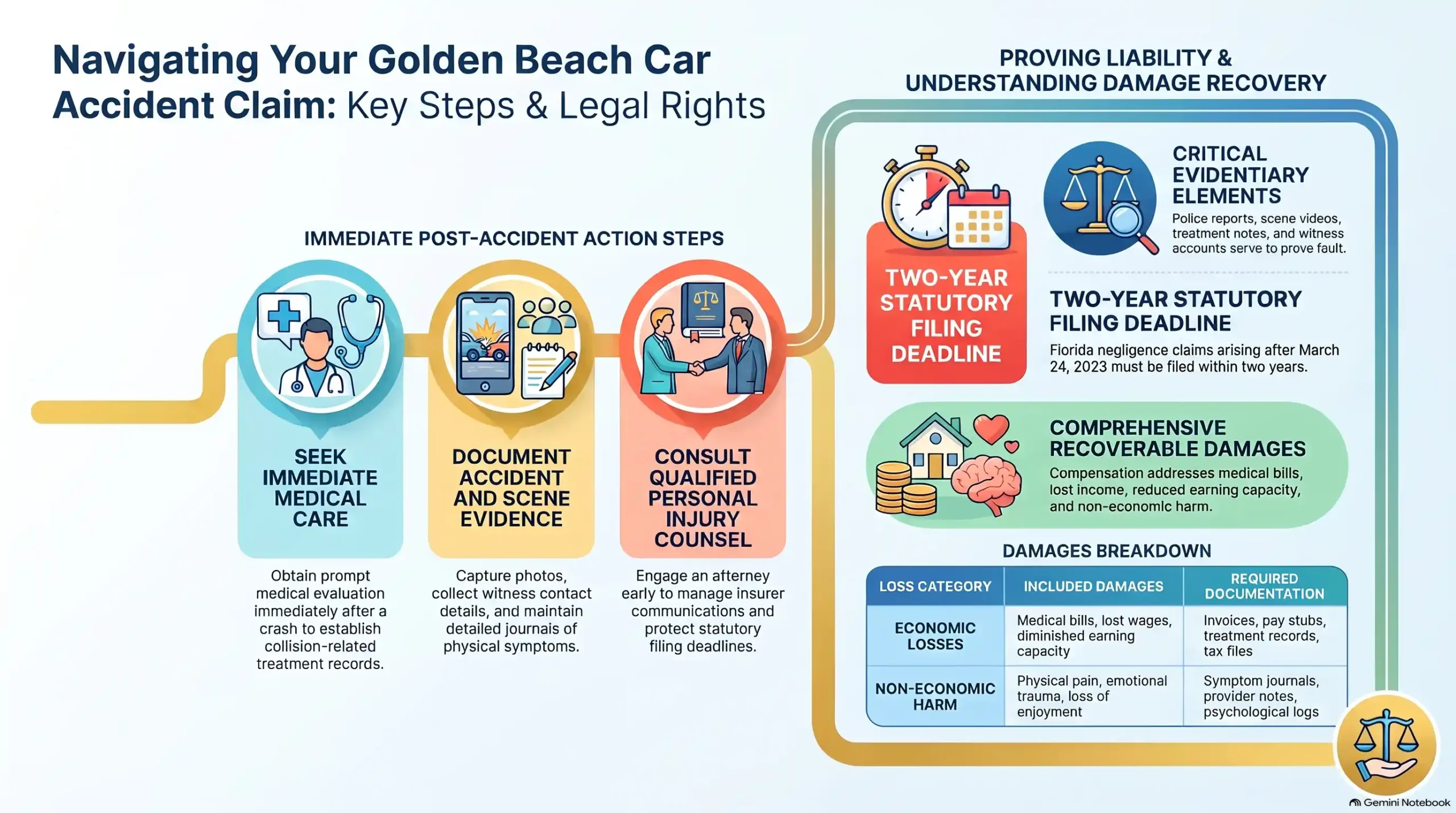
After a Golden Beach car accident, injured individuals should seek prompt medical care, even if their symptoms initially appear minor. They should document the scene, injuries, and related expenses to preserve relevant evidence. Consulting a qualified lawyer can help them understand their legal options and protect their interests.
Seek Immediate Medical Care
Even when injuries seem minor, anyone involved in a Golden Beach car accident should seek prompt medical evaluation. Some conditions, including head, neck, or internal injuries, may not cause clear symptoms right away. A timely assessment can identify concerns early and help prevent complications.
If a person has severe pain, difficulty breathing, confusion, heavy bleeding, or loss of consciousness, someone should call 911 without delay. An Emergency contact should provide the dispatcher with the location, describe the person’s condition, and follow instructions while help is on the way. Those nearby can assist by keeping the injured person as still and comfortable as possible, without moving them unless there is immediate danger.
After initial care, the clinician can explain appropriate treatment options and recommend follow-up visits. Promptly following medical guidance supports recovery and creates a clear record of accident-related care.
Document The Accident
Once immediate medical needs have been addressed, documenting the Golden Beach car accident can help preserve an accurate account of what occurred. If conditions allow, the people involved can record the date, time, location, weather, traffic, and sequence of events while details remain clear. Photographs may show vehicle positions, damage, road conditions, traffic signs, and visible injuries. Scene sketches can clarify distances, directions of travel, and points of impact when photographs do not capture the full layout. Collect names and contact information for witnesses, along with insurance and vehicle details. A written timeline reconstruction can organize observations and later developments, including symptoms or treatment. Records should distinguish firsthand observations from assumptions, and copies should be stored securely for accurate reference by those assisting with the recovery.
Contact A Lawyer
When should an injured person contact a lawyer after a Golden Beach car accident? Once immediate medical needs are addressed, the injured person may benefit from speaking with a qualified attorney. Early guidance can help preserve evidence, clarify insurance communications, and identify deadlines that may affect a claim. A lawyer can also explain practical next steps without interfering with medical care or recovery.
During an Initial consultation, the injured person can describe the collision, injuries, treatment, and available records. The attorney can assess potential legal issues, explain possible options, and outline what information may be needed. The person should ask about attorney availability, expected response times, fees, and who will handle the case. Choosing counsel who communicates clearly and treats the injured person with respect can support informed decisions and help protect the person’s interests while pursuing fair compensation.
Don’t Wait. Call Our Florida Personal Injury Lawyers Now!
Critical Evidence in a Golden Beach Car Accident Injury Case
A strong Golden Beach car accident injury case depends on evidence that documents how the crash occurred and the injuries it caused.
Crucial records and accounts may include:
- Police accident reports
- Photographs and videos of the scene, vehicles, and injuries
- Medical records
- Witness statements
Police Accident Reports
Police accident reports can provide important evidence in a Golden Beach car accident injury case by recording the responding officer’s observations, statements from drivers and witnesses, and scene details. These records may identify involved parties, note apparent injuries, and describe conditions that could help explain how a collision occurred. However, a report is not a final determination of fault, and it may contain incomplete or disputed information. Injured people and those assisting them should review the report for accuracy and preserve a copy for insurance or legal discussions. Access to the report may depend on the agency’s procedures, the requester’s relationship to the crash, and applicable privacy rules. If errors appear, correction procedures may allow a person to submit supporting information or request an amendment, though the original record may remain on file.
Photographs And Videos
Photographs and videos can preserve details of a Golden Beach car accident that may change or disappear before an investigation is complete. Images of vehicle damage, road conditions, traffic signs, debris, and visible skid marks can help clarify how a collision occurred. Wide views establish the scene, while close images document specific details. Camera angles matter because perspective can affect how distance, damage, and vehicle positions appear. When possible, take photographs from several viewpoints without disturbing evidence or entering unsafe areas.
Retain original files, and preserve metadata to help confirm when and where images were captured. Editing, cropping, or sharing compressed copies may reduce their evidentiary value. Witnesses and nearby businesses may also have relevant recordings, but footage can be overwritten quickly. Prompt, respectful requests can help preserve material that may support a fair assessment of responsibility and losses.
Medical Records
Because injuries may develop or worsen after a collision, medical records can provide vital evidence in a Golden Beach car accident injury case. These documents may show the initial diagnosis, symptoms, treatment decisions, and changes in a patient’s condition over time. Emergency department notes, imaging results, physician assessments, therapy records, and prescriptions can help explain the nature and extent of harm. A clear provider chronology can connect each stage of care and identify gaps or changes that require explanation. Accurate records may also help distinguish collision-related injuries from prior conditions and support a reliable account of medical expenses and future care needs. Patients should follow treatment recommendations and request copies of relevant files. Careful record retention protects this evidence and helps ensure responsible parties and insurers can assess the claim fairly.
Witness Statements
Witness statements can provide an independent account of how a Golden Beach car accident occurred and what followed. People who saw the collision may describe vehicle movements, traffic signals, road conditions, or events immediately afterward. Their observations can help clarify disputed details and support a fair assessment of injuries and responsibility.
Witness credibility depends on factors such as visibility, attention, consistency, and the witness’s relationship to those involved. A careful review can identify differences between accounts without assuming that every inconsistency makes a statement unreliable. Investigators may also compare statements with photographs, medical records, and other available evidence.
Statement preservation is important because memories can fade and witnesses may become difficult to reach. Recording contact information and obtaining a timely, accurate account can protect useful evidence. Respectful communication helps preserve the witness’s recollection while supporting a thorough review of the case.
Long-Term Effects of Golden Beach Car Accident Injuries
Car accident injuries may cause chronic pain that persists well beyond the initial recovery period. Some individuals also experience mobility limitations that interfere with daily activities and independence. Emotional trauma, including anxiety or distress, may further affect long-term well-being.
Chronic Pain
Chronic pain may persist long after a Golden Beach car accident, even when visible injuries have recovered. Injured people may experience ongoing soreness, burning sensations, or tenderness related to damage to muscles, joints, or nerves. Symptoms can vary in intensity, and pain flare-ups may occur during stress, cold weather, or ordinary daily activities. Persistent discomfort can also disrupt sleep, cause fatigue, and make it hard to concentrate, affecting work, family responsibilities, and overall well-being. A consistent record of symptoms, medical visits, and treatment responses can help healthcare providers assess the condition and recommend appropriate care. Prompt evaluation may identify treatable causes and support a coordinated recovery plan. When pain continues despite treatment, further medical review can clarify options and document lasting effects. Such documentation may also assist those seeking fair consideration of accident-related losses.
Mobility Limitations
When injuries from a Golden Beach car accident affect the spine, joints, or muscles, mobility limitations may continue after initial treatment ends. Reduced strength, restricted movement, or difficulty bearing weight can make walking, climbing stairs, and completing daily tasks challenging. Gait instability may increase the risk of falls, particularly when balance or coordination has been affected. Some individuals need physical therapy to rebuild strength, improve flexibility, and practice safer movement. Others may rely on assistive devices, such as canes, walkers, or braces, to move through their homes and communities more securely. Ongoing assessments can help determine whether treatment plans or equipment should change over time. When mobility restrictions interfere with work, caregiving, or routine responsibilities, documenting their duration and practical effects may help clarify the lasting impact of the injuries.
Emotional Trauma
Emotional trauma after a Golden Beach car accident can persist long after physical injuries have begun to recover. Survivors may experience anxiety, sleep disruption, low mood, or difficulty traveling in vehicles. These effects can interfere with work, family responsibilities, and relationships, even when physical recovery appears complete. Trauma triggers, such as traffic noise, intersections, or emergency sirens, may bring back distressing memories and intensify fear. Recognizing these responses can help survivors seek appropriate support without treating them as signs of weakness.
Qualified mental health professionals can assess symptoms and recommend counseling or other care. Practical coping strategies may include gradual exposure to feared situations, relaxation exercises, and support from trusted family members. A consistent treatment plan can promote recovery and help survivors regain confidence. When emotional symptoms persist, timely care may reduce their impact and support long-term well-being.
Proving Liability in Golden Beach Car Accident Injury Cases
Proving liability in a Golden Beach car accident injury case requires evidence that another party’s negligence caused the collision and resulting harm. The injured person must show that a driver or other responsible party failed to use reasonable care and connect that conduct to the claimed injuries. A careful investigation can help clarify what occurred and protect the interests of everyone affected.
Relevant evidence may include police reports, photographs, witness statements, vehicle damage, and medical records. Traffic signal timing records can help determine whether a driver entered an intersection against a signal or whether signal operation contributed to the crash. In collisions involving trucks or other work vehicles, commercial vehicle liability may depend on driver conduct, company policies, maintenance, or loading practices.
Investigators may also examine roadway conditions, surveillance footage, and electronic vehicle data. Promptly preserving evidence is important because records can be lost or vehicles repaired. A clear, well-supported account of the collision helps establish responsibility and promotes a fair assessment of the harm caused.
Dealing With Insurance Companies After a Golden Beach Car Accident Injury
After a Golden Beach car accident injury, insurance companies may contact those involved to gather information and evaluate potential claims. Their representatives may ask about the collision, injuries, treatment, and other circumstances. Injured people can respond accurately while avoiding speculation or statements that minimize their condition. Important details may be difficult to recall immediately, so reviewing available records can help promote clear communication.
Before providing Recorded Statements, an injured person may benefit from understanding how the information could be used. A representative may seek wording that limits the insurer’s responsibility, even when the person is trying to be helpful. Medical documentation, repair estimates, and correspondence should be kept organized and shared carefully.
Insurers may question liability, the extent of injuries, or the need for treatment. A Claim Denial or a settlement offer that does not address documented losses may require a considered response. Those assisting an injured person can encourage careful review, timely communication, and informed guidance, helping protect the person’s interests while preserving accurate information.
What to Expect During a Golden Beach Car Accident Injury Claim Process
A Golden Beach car accident injury claim typically begins with an initial case review to assess the circumstances, injuries, and potential legal issues. The process then involves collecting evidence and negotiating with insurers to determine whether a fair settlement can be reached. If negotiations do not resolve the claim, the parties may proceed to trial.
Initial Case Review
During an initial case review, a Golden Beach car accident injuries lawyer typically examines how the collision occurred, the available evidence, the injuries reported, and the insurance coverage involved. This Initial Case Assessment helps clarify the issues that may affect a claim and identify information still needed to evaluate its potential. During an Attorney Consultation, the injured person can explain the circumstances, describe medical concerns, and ask questions about the legal process. The lawyer may discuss possible liability, relevant deadlines, insurance communications, and the general steps involved in pursuing compensation. The review also helps determine whether the lawyer can provide appropriate representation and what support the injured person may need. No outcome is guaranteed; the assessment offers an informed starting point for decisions that may protect the person’s interests and support recovery.
Evidence Collection
Once the initial review identifies issues that require further investigation, evidence collection helps establish how the collision occurred and how it affected the injured person. A legal team may gather police reports, photographs, witness statements, and available video footage. Evidence preservation is important because vehicles may be repaired, physical conditions can change, and digital recordings may be erased. Medical records and treatment notes can document the injuries, care received, and effects on daily activities. Investigators may inspect the vehicles or collision location and consult qualified professionals when additional analysis is needed. Scene reconstruction can help explain vehicle movements, points of impact, and other circumstances surrounding the crash. Throughout this process, careful documentation supports an accurate account and helps protect the injured person’s interests while respecting the privacy and well-being of everyone involved.
Claim Negotiations
After the available evidence and medical information are reviewed, claim negotiations may begin with the insurance company. The insurer may assess responsibility, documented losses, treatment needs, and the consistency of the submitted records before responding to a demand. Negotiation timelines vary based on the complexity of the collision, the completeness of the documentation, and the insurer’s review process. A claimant may receive questions or requests for additional information, which can affect the pace of discussions. Careful responses help maintain an accurate record and support a fair evaluation of the injuries and related expenses. Counteroffer strategies may include explaining disputed amounts with supporting records and clarifying how injuries affect daily responsibilities. A measured, evidence-based approach can help keep discussions focused and respectful while the parties assess the claim’s value and address outstanding concerns.
Settlement Or Trial
When negotiations do not resolve a Golden Beach car accident injury claim, the parties may consider settlement or proceed to trial. A settlement may provide compensation without a court decision, but its terms should be reviewed carefully before acceptance. The injured person generally gives up the right to pursue further payment for covered losses once the agreement is finalized.
If the claim proceeds to trial, both sides present evidence about fault, injuries, and financial losses. Witnesses may provide courtroom testimony, and records or expert opinions may help explain the impact of the collision. After hearing the evidence and instructions from the judge, jurors begin Jury deliberations and decide whether liability is established and what damages, if any, are appropriate. The process can take time, and the result is not guaranteed. Carefully reviewing available options can support informed decisions and fair treatment.
Compensation for Golden Beach Car Accident Injuries: Injury Damages
Compensation for Golden Beach car accident injuries may cover both financial losses and the personal effects of an injury. The amount available depends on the evidence, the nature of the harm, and how the collision has affected the injured person’s daily life. Records such as medical bills, treatment plans, and employment documents can help establish the scope of a claim.
Recoverable losses may include reasonable medical expenses, rehabilitation costs, and Lost income resulting from time away from work. When injuries limit a person’s ability to return to the same occupation or earn at a prior level, diminished earning capacity may also be considered. Documentation from medical providers and, when appropriate, vocational or financial professionals can support these claimed effects.
Compensation may also account for pain, emotional distress, and limitations on ordinary activities. A careful assessment considers both current consequences and reasonably supported future needs. By presenting a clear account of the injury’s impact, a claimant can seek a resolution that reflects the harm and supports recovery.
Economic vs Non-Economic Damages in Golden Beach Car Accident Injuries Cases
Economic damages in Golden Beach car accident cases may include medical expenses, lost income, and other measurable financial losses. Non-economic damages address harm such as pain, emotional distress, and reduced quality of life. Clear documentation helps establish the extent and value of both categories.
Economic Losses
Car accident injuries in Golden Beach can create both immediate expenses and lasting financial consequences. Economic losses are measurable costs and income reductions linked to an injury. They may include ambulance services, emergency care, hospital stays, medication, rehabilitation, and necessary medical equipment. Records such as bills, treatment plans, and payment receipts can help document these expenses.
Lost wages may arise when an injured person cannot work during recovery. Pay statements, tax records, and employer documentation can help establish missed income. If an injury limits the person’s ability to perform prior duties or reduces future work opportunities, diminished earning capacity may also be considered. This calculation can require evidence about medical restrictions, employment history, and expected career progression. Careful documentation helps clarify the financial effects of an accident and supports an accurate assessment of compensation sought for these losses.
Non-Economic Harm
Unlike medical bills or lost wages, non-economic damages address the personal effects of injuries from a Golden Beach car accident. These losses may include physical pain, emotional distress, and the disruption of ordinary activities. A serious injury can limit a person’s ability to participate in family routines, community service, or other meaningful pursuits, resulting in a Loss of Enjoyment. Persistent symptoms may also affect patience, communication, and shared responsibilities, contributing to Damaged Relationships with family members or friends. Unlike economic losses, these harms do not have a direct market value, so their assessment requires careful consideration of how the injury has changed the person’s daily life. Recognizing non-economic harm helps guarantee that an injury claim reflects more than financial costs and acknowledges the broader effects on the injured person and those who support them.
Damage Documentation
A well-documented claim distinguishes measurable financial losses from the personal effects of an injury. Economic damages may include medical bills, rehabilitation costs, lost wages, and necessary transportation expenses. An expense ledger can organize these amounts by date, provider, and purpose, while receipts, invoices, pay records, and insurance statements provide supporting proof. Records should be kept current and checked for accuracy.
Non-economic damages address harms that do not have a direct price, such as pain, emotional distress, and limits on daily activities. A Timestamped journal can record symptoms, treatment effects, missed family responsibilities, and changes in routine as they occur. These entries may help explain the injury’s impact alongside medical records and witness accounts. Careful documentation enables a clear, credible presentation of both financial needs and personal consequences, supporting fair consideration of the injured person’s circumstances.
Don’t Wait. Call Our Florida Personal Injury Lawyers Now!
When a Golden Beach Car Accident Injury Case Goes to Trial vs. Settlement
When negotiations do not produce a fair resolution, a Golden Beach car accident injury case may proceed to trial, where a judge or jury evaluates the evidence and determines liability and damages. Trial Preparation involves organizing medical records, witness statements, photographs, and other evidence that explains how the collision affected the injured person. The process may also include preparing witnesses to answer questions clearly and accurately.
A settlement can resolve a claim without a courtroom decision. It may provide compensation sooner and reduce the uncertainty, expense, and demands of a trial. However, the injured person generally gives up the right to pursue additional payment for the same claim after accepting a settlement. The proposed amount should accordingly be assessed against documented losses and anticipated needs.
At trial, each side presents evidence and arguments. Jury Deliberations follow, and the verdict may differ from either party’s expectations. The choice between settlement and trial depends on the evidence, the offer, and the injured person’s priorities. Careful guidance can help support a decision that protects recovery and future well-being.
Florida Laws That May Affect Your Golden Beach Car Accident Injuries Case
The decision to settle or proceed to trial may depend in part on Florida laws governing fault, insurance benefits, and filing deadlines. These rules can shape available compensation and the evidence needed to protect an injured person’s interests. Understanding them also helps families make informed choices while balancing recovery with responsibilities to others.
- Florida’s no-fault system generally requires drivers to seek initial medical benefits through personal injury protection coverage, regardless of who caused the crash.
- Florida no-fault thresholds may affect whether an injured person can pursue damages for pain and suffering; qualifying injuries must meet statutory criteria.
- Under comparative negligence rules, a person’s recovery may be reduced by their share of responsibility. Florida’s modified comparative fault law can bar recovery when fault exceeds 50 percent.
- Liability coverage, policy limits, and evidence of another party’s negligence may influence the amount recoverable.
Because legal rules and insurance terms can interact, a careful review of records, medical findings, and applicable policies can clarify options. Accurate guidance supports fair decisions and helps injured people preserve resources needed for treatment, family care, and community commitments.
The Statute of Limitations for Golden Beach Car Accident Injury Cases
Although medical treatment and insurance claims may take months to resolve, Florida law sets strict deadlines for filing a car accident injury lawsuit. For most negligence claims arising from crashes on or after March 24, 2023, the filing period is two years from the date the cause of action accrues. Earlier accidents may fall under a different limitations period, so the accident date matters.
Deadline calculation can depend on when the injury claim legally arose and whether special circumstances apply. A claim against a government entity may also require notice within a shorter period before a lawsuit can proceed. Missing an applicable deadline can bar recovery, regardless of the injury’s severity or the effort to resolve the matter through insurance.
Tolling exceptions may pause or alter the limitations period in limited circumstances, such as when a claimant is a minor or legally incapacitated. Because exceptions are fact-specific, promptly reviewing dates and records helps preserve the ability to seek accountability and support affected people.
How a Golden Beach Car Accident Injuries Lawyer Can Help You
A Golden Beach car accident injuries lawyer can help an injured person assess potential claims, preserve evidence, and address communications with insurers. Attorney guidance can clarify how available records, medical documentation, and witness accounts relate to a claim. The lawyer may also explain legal options in clear terms, helping the injured person make informed decisions while focusing on recovery and family responsibilities.
A car accident lawyer can help preserve evidence, explain legal options, and manage insurer communications while you focus on recovery.
A lawyer’s work may include:
- Gathering crash reports, photographs, and other relevant evidence.
- Organizing medical records and documenting injury-related expenses.
- Reviewing insurance policies and evaluating settlement proposals.
- Developing case strategy based on liability, losses, and supporting proof.
This support can reduce avoidable errors and help confirm that important information is presented accurately. When a claim involves disputed fault or significant injuries, careful preparation may be especially important. A lawyer can communicate with insurers on the client’s behalf and seek a resolution supported by the evidence. These services can also help an injured person maintain stability and continue meeting responsibilities to loved ones and the wider community.
When to Contact a Golden Beach Car Accident Injuries Lawyer
After a car accident in Golden Beach, contacting a lawyer promptly can help preserve evidence and clarify the steps involved in pursuing a claim. Early consultation may be useful even when injuries seem minor, since some symptoms develop over time and initial records can be important. A lawyer can explain what information to gather and how to document medical care, expenses, and communication related to the collision.
It is also prudent to seek legal guidance before signing a settlement or giving a recorded statement if the consequences are unclear. Legal deadlines may limit the time available to file a claim, and applicable time limits depend on the circumstances. Waiting can make it harder to locate witnesses, obtain records, or preserve physical evidence. A person should first address urgent medical needs and follow professional treatment advice, then consider contacting counsel as soon as practical. Timely action can help protect available options while allowing an informed assessment of next steps for the injured person and those who depend on them.
Why You Need an Experienced Golden Beach Car Accident Injuries Lawyer
An experienced Golden Beach car accident injuries lawyer can help an injured person assess the claim, preserve relevant evidence, and understand how Florida law may apply to the collision. Experience matters because injury claims can involve disputed fault, intricate medical records, and deadlines that affect recovery. Counsel can organize documentation, communicate with insurers, and explain which losses may be included in a claim, allowing the injured person to focus on treatment and family responsibilities.
A lawyer familiar with local court procedures can also prepare filings, meet procedural requirements, and address disputes efficiently if negotiations do not resolve the matter. Careful communication helps ensure the client understands important developments, available options, and potential risks before making decisions. This guidance can support a fair process while protecting the injured person’s interests and reducing avoidable errors. By managing legal tasks with diligence, counsel can help clients pursue accountability and compensation without losing sight of their health, stability, and obligations to others.
How to Choose the Right Golden Beach Car Accident Injuries Lawyer for Your Case
Communication Style matters because clients need clear, timely explanations to make informed decisions. The lawyer should listen attentively, answer questions directly, and explain options without making unsupported promises. A person seeking counsel may consider whether the lawyer treats clients and others with respect, including witnesses and opposing parties. Before deciding, the injured person can compare several consultations, review engagement terms, and assess whether the proposed approach fits the case’s circumstances. These steps help identify counsel prepared to pursue the client’s interests responsibly.
About The Law Offices of Anidjar & Levine
The Law Offices of Anidjar & Levine represents people injured in car accidents, including those seeking legal assistance in Golden Beach.
The firm handles injury claims and helps clients understand the steps involved in pursuing compensation.
Its legal team can review accident details, explain available options, and communicate with insurers on a client’s behalf. Each case depends on its facts, and outcomes cannot be guaranteed.
Firm history provides context for the firm’s work and its focus on representing injured people.
The attorneys have experience with matters involving vehicle collisions and related injuries.
Their role includes evaluating evidence, addressing legal deadlines, and helping clients make informed decisions during a difficult period.
Community involvement is another aspect of the firm’s presence.
Through local outreach and service efforts, the firm seeks to support individuals and families beyond the legal process.
For Golden Beach residents, selecting counsel involves considering experience, communication, and whether the firm’s approach aligns with their needs.

Frequently Asked Questions
Can I Recover Compensation if I Was a Passenger in the Accident?
A passenger may recover compensation for injuries caused by another party’s negligence, including a driver, another motorist, or multiple parties. Passenger injury claims can cover medical expenses, lost income, and other eligible losses. Shared liability may affect how responsibility is assigned and how compensation is calculated, but it does not automatically prevent recovery. The passenger’s conduct and applicable state law may also matter, so a careful review of the accident evidence is important.
What if the At-Fault Driver Was Uninsured?
An uninsured at-fault driver does not necessarily prevent an injured passenger from recovering compensation. Uninsured motorist coverage may provide benefits for bodily injuries when the responsible driver lacks insurance, subject to the policy’s terms and limits. Personal injury protection may also cover eligible medical expenses and lost wages regardless of fault. The passenger should promptly notify applicable insurers, preserve accident records, and seek legal guidance to identify coverage options and meet filing deadlines.
Can I File a Claim if the Accident Involved a Rental Car?
Yes, an injured person may file a claim after an accident involving a rental car. Responsibility may rest with the driver, another negligent party, or, in limited circumstances, the rental company. Available Rental Coverage, including protection purchased with the rental or provided through a personal policy or credit card, may affect payment. Rental Liability rules vary, so review evidence, insurance terms, and deadlines promptly to protect the injured person’s rights and support fair compensation.
Will My Health Insurance Cover Treatment While My Claim Is Pending?
Health insurance may cover necessary treatment while an injury claim is pending, subject to the policy’s terms, deductibles, and network rules. Health Insurance Payments can help a patient obtain timely care without waiting for the claim to resolve. The insurer may later seek repayment from any settlement, depending on applicable law and plan provisions. Medical Bill Reimbursement should be documented carefully, and the patient should notify the health insurer and claim representatives about payments and outstanding charges.
Can I Still Pursue a Claim if I Felt Fine Immediately After the Crash?
Yes, a person may still pursue a claim even if they felt well immediately after a crash. Delayed injury symptoms, including pain or limited movement, can emerge hours or days later, so prompt medical evaluation is important. Medical documentation can connect reported symptoms to the collision and support a fair assessment of damages. A person should follow treatment recommendations, preserve relevant records, and avoid assuming that initial comfort means no injury or valid claim exists.
—————————
A serious car accident in Golden Beach can leave an injured person facing medical costs, lost income, and uncertainty about what to do next.
Prompt medical care, careful documentation, and timely legal guidance can help protect important evidence and preserve a potential claim.
The Law Offices of Anidjar and Levine can review the circumstances, explain available options, and handle communications with insurers.
Learn more about working with a Golden Beach Personal Injury Lawyer.
Each case depends on its facts, and an attorney can help assess the path forward.

