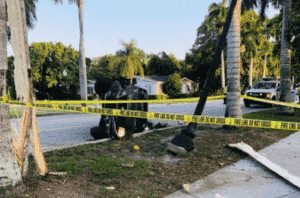

Impaired or distracted driving can cause serious car accidents in Country Club. Alcohol, drugs, fatigue, phone use, and navigation adjustments may affect a driver’s judgment, attention, or reaction time. A crash can lead to lasting physical injuries, emotional distress, and financial losses. Determining responsibility may require police reports, witness accounts, vehicle data, and medical records. Florida’s comparative negligence rules may affect recovery when fault is shared. The Law Offices of Anidjar and Levine can explain your legal options and steps to take after a collision. Learn more from a Country Club Personal Injury Lawyer.
Main Takeaways
- Impaired driving in Country Club can slow reaction time and impair judgment, coordination, vision, and alertness.
- Distracted driving includes texting, calls, navigation adjustments, and passenger interactions that divert attention from traffic.
- Fatigue, speeding, tailgating, unsafe merging, and failure to yield can also contribute to Country Club collisions.
- After a crash, check for injuries, call emergency services for urgent concerns, and document the scene when safe.
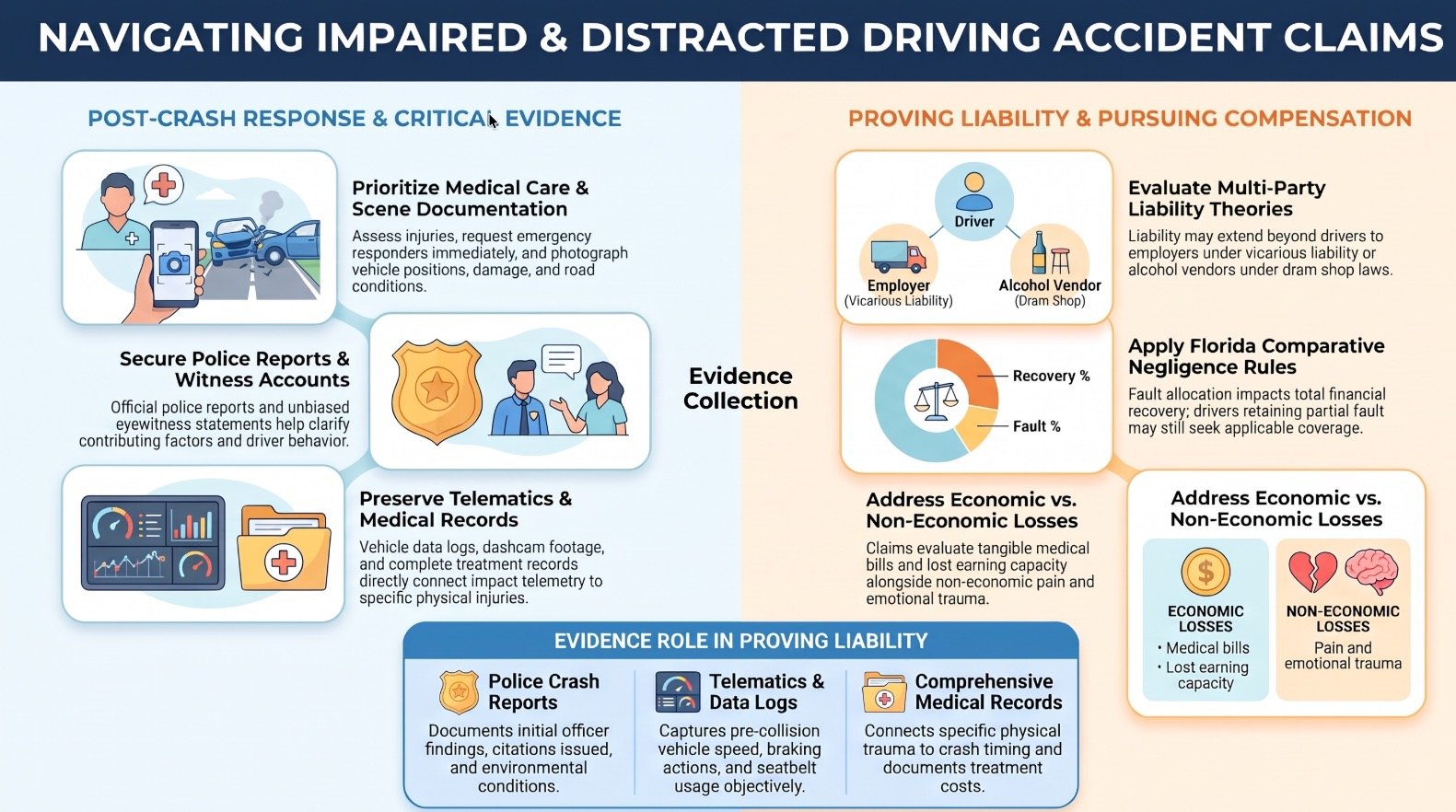
- Police reports, witness accounts, photos, video, vehicle data, and medical records may help assess fault and injuries.
How We Can Help With Your Golden Beach Car Accident At-Fault Parties Injury Claim
When a car accident at a Golden Beach country club involves impaired or distracted driving, identifying every responsible party can be essential to pursuing compensation. A legal team can help an injured person understand available options and take informed steps toward a fair resolution. Through a Legal Consultation, counsel can review the circumstances, explain relevant deadlines, and outline what information may support the claim.
Assistance may include gathering records, communicating with insurers, and organizing evidence related to the incident and resulting losses. Counsel can also assess whether the available facts support claims against individuals or entities whose conduct contributed to the harm. A thoughtful Claim Strategy can help keep the matter focused on the client’s needs while accounting for practical goals, such as medical care and financial stability.
Throughout the process, clear guidance can reduce uncertainty and help clients make decisions with confidence. This support allows injured people to concentrate on recovery while their representatives pursue accountability through appropriate legal channels.
Understanding Golden Beach Car Accident At-Fault Parties Injury Cases


Understanding a Golden Beach car accident injury case begins with determining how impaired or distracted driving contributed to the collision and resulting harm. Establishing responsibility requires examining reliable evidence, including crash reports, witness accounts, medical records, and available electronic data. These materials can help clarify the sequence of events and connect the conduct to specific injuries and losses.
OUR CONSULTATIONSARE FREE
START YOUR FREE CASE REVIEW

Liability may extend beyond the driver in circumstances supported by the facts. Vicarious Liability may apply when an employer is legally responsible for an employee’s conduct within the scope of assigned duties. Dram Shop Liability may also apply if a business served alcohol to a person when applicable law prohibited it, and that service contributed to the crash. Each theory has distinct legal requirements and must be evaluated carefully.
A thorough review also considers the injured person’s damages, such as treatment costs, lost income, and ongoing limitations. Clear documentation and timely legal guidance can help protect a claim while supporting fair accountability.
Don’t Wait. Call Our Florida Personal Injury Lawyers Now!
Common Causes of Golden Beach Car Accident At-Fault Parties
Common causes of Golden Beach car accidents include distracted driving and impaired driving, both of which can compromise a driver’s attention and judgment. Excessive speed and reckless conduct may also contribute to collisions and increase the severity of resulting injuries. Failure to yield is another frequent factor, particularly when drivers disregard traffic signals, signs, or other road users’ right of way.
Distracted Driving


Distracted driving is a significant cause of car accidents in Golden Beach, where a driver’s attention may shift from the road to a phone, navigation system, passenger, or other activity. Phone-related distraction can include texting, reading notifications, or making calls, each of which may divert a driver’s eyes and hands from vital driving tasks. Even brief inattention can prevent a timely response to changing traffic or pedestrians.
Cognitive distraction occurs when a driver’s thoughts focus on a conversation, work concern, or other matter instead of the road. Although the driver may look ahead, reduced concentration can impair hazard recognition and decision-making. Passengers and other road users may face increased risks when a driver fails to maintain attention. Drivers can help protect the community by putting devices away, setting navigation before departure, and pausing conversations when traffic demands focus.
Impaired Driving
Impaired driving occurs when alcohol, drugs, or certain medications reduce a driver’s ability to operate a vehicle safely. Alcohol impairment can affect judgment, coordination, reaction time, and the ability to recognize hazards. Even when a driver believes they remain capable, these effects may compromise decisions that protect passengers, pedestrians, and other road users. Prescription medications may also cause drowsiness, blurred vision, or slower responses, particularly when taken with alcohol or other substances. Drivers should review medication warnings and consult a qualified health professional about possible effects on driving. In Golden Beach, a collision involving an impaired driver may require careful examination of available evidence, including witness accounts and relevant records. Responsible choices help protect the wider community. Anyone concerned about another person’s condition should avoid riding with that driver and seek a safe alternative.
Speeding And Recklessness
When a driver exceeds a safe speed or acts recklessly, the risk of a serious collision can increase. In Golden Beach, Excessive Speed may reduce the time available to recognize hazards and respond safely, especially on busy streets or near pedestrians. Higher speeds can also make it harder to control a vehicle and may increase impact force in a crash. Reckless Actions, such as abrupt lane changes, aggressive passing, or tailgating, can place nearby road users in danger. These actions may reflect a disregard for traffic conditions and the safety of others. Investigators may review vehicle damage, witness accounts, roadway evidence, and available video to determine whether speeding or reckless conduct contributed to a collision. Careful documentation can help clarify responsibility and support those affected as they seek appropriate assistance.
Failure To Yield
Beyond speeding or reckless conduct, failure to yield can also contribute to car accidents in Golden Beach. Drivers who disregard another road user’s right of way may create sudden hazards for motorists, cyclists, and pedestrians. Yield sign violations can occur when a driver enters an intersection without checking for approaching traffic or fails to stop when conditions require it. Unsafe merging may also force nearby drivers to brake or swerve, increasing the risk of a collision. These incidents can happen near intersections, driveways, and busy roadways where traffic patterns change quickly. Determining responsibility often requires examining signals, vehicle positions, witness accounts, and other available evidence. Careful investigation can clarify how the crash occurred, support injured people seeking appropriate assistance, and promote accountability and safer conduct on local roads.
Legal Rights of Golden Beach Car Accident At-Fault Parties Injury Victims
Although a driver may be found at fault for a car accident in Golden Beach, that finding does not automatically eliminate the driver’s legal rights. An injured person may still seek fair treatment, accurate claim review, and access to applicable insurance benefits. Florida’s Comparative Negligence rules may affect recovery when responsibility is shared, while Vicarious Liability may apply when an employer or vehicle owner bears legal responsibility for another person’s conduct. These principles require careful consideration of the evidence and the parties’ relationships.
Being found at fault does not erase your rights; shared responsibility and legal relationships may affect how an injury claim is resolved.
At-fault injury victims may also take practical steps to protect their interests and support those affected:
- Obtain prompt medical evaluation and keep records of treatment, expenses, and any work limitations.
- Provide accurate information to insurers, preserve relevant documents, and avoid speculation about disputed facts.
- Consult a qualified attorney to understand deadlines, coverage, potential defenses, and options for resolving claims.
Respectful cooperation can help clarify responsibility without diminishing anyone’s rights. Legal guidance may also help injured drivers address their own losses while responding appropriately to claims brought by others.
Why Do Golden Beach Car Accident At-Fault Parties Injuries Happen?
In Golden Beach, injuries to drivers found at fault often occur because the same behaviors that cause a collision also expose occupants to sudden impact. Alcohol impairment can slow reaction time, weaken judgment, and affect coordination, making it harder to avoid a hazard or control a vehicle. Driver fatigue may similarly reduce attention and delay braking, while severe drowsiness can cause a driver to drift from a lane or miss changing traffic conditions.
Distraction is another common factor. Looking at a phone, adjusting navigation, or attending to passengers can take a driver’s eyes, hands, or focus from the road. Speeding and following too closely further limit the time and distance available to respond. When a vehicle strikes another car, a fixed object, or a pedestrian, occupants may sustain injuries from abrupt deceleration, restraint forces, or contact with the vehicle interior. The seriousness of harm depends on impact direction, vehicle protection, and individual circumstances. Fault does not prevent a driver from being injured.
What Should You Do After a Golden Beach Car Accident At-Fault Party Injury?
After a Golden Beach car accident, injured people should first check for injuries and contact emergency services when necessary. They should document the crash by recording relevant details, photographing the scene, and preserving available evidence. They should also identify potential at-fault parties, including drivers whose impaired or distracted behavior may have contributed to the collision.
Check for Injuries
After a Golden Beach car accident, checking for injuries should take priority over evaluating vehicle damage or determining fault. Those involved should assess themselves and others for visible wounds, pain, confusion, difficulty breathing, or signs of shock. Some serious conditions may not be immediately apparent, so do not assume anyone is unharmed simply because there is no visible injury. If someone is unconscious, bleeding heavily, experiencing severe pain, or having trouble breathing, emergency medical care should be requested without delay. Bystanders can help by contacting emergency services and calmly sharing the location and known symptoms. They should avoid moving an injured person unless an immediate danger, such as fire, makes movement necessary. Remaining attentive and offering reasonable assistance can help protect everyone’s well-being until trained responders arrive.
Document the Crash
When it is safe to do so, documenting a Golden Beach car accident can help preserve an accurate record of the crash. A careful record may assist emergency responders, insurers, and others who need reliable information to support those affected. Scene photography should capture vehicle positions, visible damage, skid marks, traffic signs, signals, road conditions, and relevant surroundings. Take photographs from several angles without entering traffic or disturbing hazards. If possible, a person at the scene can note the time, weather, lighting, and any immediate changes in conditions. Roadway measurements, such as distances between vehicles and fixed landmarks, may also clarify how the collision occurred. Notes should distinguish direct observations from estimates and should be made promptly, while details remain fresh. Store records securely and share them only with appropriate parties.
Identify At-Fault Parties
Who may be responsible for a Golden Beach car accident involving impaired or distracted driving depends on the available evidence and the circumstances of the crash. The driver who was intoxicated, using a phone, or otherwise negligent may be responsible for the resulting injuries. Other parties may also require review. If a commercial vehicle was involved, Commercial Vehicle Liability may extend to an employer or vehicle owner when work-related conduct, negligent hiring, or inadequate maintenance contributed to the collision. Dram Shop Liability may apply when a business unlawfully served alcohol to someone whose impairment later caused harm, subject to Florida law and the facts. Investigators can examine crash reports, witness accounts, vehicle records, and service evidence to identify responsible parties. Careful assessment helps injured people pursue accountability while protecting the interests of others affected.
Critical Evidence in a Golden Beach Car Accident At-Fault Parties Injury Case
Establishing fault and documenting injuries in a Golden Beach collision may depend on several forms of evidence, each offering a different perspective on how the crash occurred.
Crucial sources include:
- Police crash reports and witness statements that record observations and accounts of the incident.
- Medical records that document injuries, treatment, and related expenses.
- Vehicle data logs that may indicate speed, braking, or other actions before impact.
Police Crash Reports
A police crash report can provide an important early record of a Golden Beach collision, documenting details such as the vehicles involved, driver and witness statements, road conditions, and the responding officer’s observations. For an injured person seeking to understand what happened, the report may help identify possible contributing factors, including suspected impairment or distraction. It can also record citations, apparent damage, and whether emergency services attended. However, a report is not a final determination of fault, and an officer’s conclusions may not resolve every disputed issue. Report accuracy should be reviewed carefully, since errors or omissions may affect how the incident is understood. As Public records, reports may be requested through the appropriate agency, subject to applicable procedures. They can guide further investigation and help those supporting an injured person organize relevant evidence responsibly.
Witness Statements
When accounts differ after a Golden Beach car accident, witness statements may help clarify how the collision occurred and which parties may have contributed. Independent observers can describe vehicle movements, traffic signals, road conditions, and driver behavior before impact. Their accounts may be especially useful when impaired or distracted driving is suspected, but each statement should be assessed carefully. Eyewitness credibility can depend on the person’s vantage point, attention, distance from the crash, and consistency over time. Promptly preserving statements matters because memories may fade and contact information can become difficult to obtain. A careful record should include each witness’s name, contact details, and exact observations, while distinguishing firsthand knowledge from assumptions. Neutral, respectful interviews can support a fair assessment and help identify responsible parties without pressuring witnesses or overstating what they observed.
Medical Records
Although witness accounts may help explain how a collision occurred, medical records document the injuries and treatment that followed a Golden Beach car accident. Emergency department notes, diagnostic imaging, physician assessments, and therapy records can establish when symptoms appeared and how care progressed. These documents may help connect specific injuries to the crash and clarify the extent of resulting limitations. Consistent documentation also supports an accurate review of medical expenses and future treatment needs. Provider Coordination can help make certain that relevant records from hospitals, medical professionals, and rehabilitation professionals are complete and consistent. Records should be requested through proper channels, with attention to Medical Record Privacy and applicable consent requirements. Careful handling protects sensitive information while allowing authorized parties to evaluate the claim and identify support needed for the injured person’s recovery.
Vehicle Data Logs
Vehicle data logs can provide objective details about a car’s operation shortly before and during a Golden Beach collision. These records may help clarify whether a driver braked, accelerated, or maintained speed, offering context when impaired or distracted driving is suspected. An event data recorder may capture information such as vehicle speed, braking, and seat belt use around a crash, depending on the vehicle and the event. Vehicle telematics systems may also store location, trip history, or driving alerts. Access, retention, and accuracy vary, so records should be preserved promptly and reviewed by qualified professionals. When interpreted alongside medical records, witness accounts, and crash-scene evidence, these data can help identify responsible parties and explain how injuries occurred. Careful handling supports a fair assessment and informed decisions for those affected.
Long-Term Effects of Golden Beach Car Accident At-Fault Parties Injuries
Injuries from a Golden Beach car accident may have lasting effects beyond the initial recovery period. Some injured parties experience chronic physical pain and emotional trauma that disrupt daily activities and relationships. Continuing treatment and reduced ability to work may also create ongoing financial strain.
Chronic Physical Pain
Chronic physical pain can persist long after a Golden Beach car accident, particularly when an at-fault party’s negligence causes damage to the spine, joints, nerves, or soft tissue. Symptoms may include persistent soreness, burning sensations, stiffness, or pain that worsens with movement. These effects can interfere with work, household responsibilities, and a person’s ability to assist family or community members. A medical professional can assess the source of pain and recommend appropriate Pain management, which may involve medication, physical therapy, or other supervised care. Consistent treatment can help preserve function and reduce the risk of further complications. Some injured people also experience mobility limitations that make routine activities difficult or require adaptive support. Documenting symptoms, treatment, and daily restrictions can help clarify the injury’s lasting physical impact.
Lasting Emotional Trauma
A serious Golden Beach car accident caused by an at-fault party’s impaired or distracted driving can leave emotional effects that persist long after physical injuries begin to recover. Survivors may experience Post-Traumatic Stress, including intrusive memories, sleep disruption, heightened alertness, or distress when reminded of the collision. These reactions can affect concentration, relationships, and participation in daily activities. Driving Anxiety may also develop, making it difficult to ride in a vehicle, travel familiar roads, or resume independent routines. Family members and caregivers can offer practical support by listening without judgment and helping survivors access qualified mental health care. A timely assessment may clarify symptoms and guide appropriate treatment, such as counseling. Emotional recovery varies, and persistent or worsening distress warrants professional attention. Recognizing these effects supports compassionate care and informed recovery.
Ongoing Financial Strain
Emotional effects are only one part of the long-term burden that may follow a serious Golden Beach car accident caused by an at-fault driver. Medical treatment, rehabilitation, and reduced earning capacity can continue to affect an injured person’s finances long after the initial collision. When expenses rise while income falls, families may need to revise Household Budgeting plans, postpone necessary purchases, or rely on savings intended for other needs. Ongoing care can also create uncertainty about future costs, making it difficult to plan responsibly for dependents and household obligations. Credit Management may become more challenging if bills accumulate or payments are delayed. Careful records of expenses, insurance communications, and lost income can help clarify the financial impact. A qualified legal professional may explain potential avenues for seeking compensation from responsible parties.
Proving Liability in Golden Beach Car Accident At-Fault Parties Injury Cases
When a Golden Beach car accident involves impaired or distracted driving, proving liability requires evidence that identifies the responsible party and connects that party’s conduct to the crash and resulting injuries. Investigators may examine police reports, witness accounts, photographs, vehicle damage, and available surveillance or roadway footage. Medical records can document the injuries and help establish their connection to the collision. In suspected impairment cases, test results, officer observations, and applicable criminal records may provide relevant evidence. For distraction claims, phone records or other digital data may help show whether a driver was using a device at the time. The injured person’s conduct may also be considered under comparative negligence rules, which can affect how responsibility and damages are assessed. Clear documentation supports a fair evaluation of each party’s role and the harm caused. Insurance policy limits may influence the available recovery, but they do not determine who caused the crash. Careful evidence preservation helps protect the interests of everyone affected.
Dealing With Insurance Companies After a Golden Beach Car Accident At-Fault Parties Injury
After a Golden Beach car accident involving an at-fault driver, injured people may need to communicate with one or more insurance companies while documenting their losses. Organized records can help clarify the impact of the collision and support accurate discussions. Keep medical bills, treatment notes, repair estimates, wage information, and photographs in one place, and update them as circumstances change.
Insurance adjuster tactics may include requesting recorded statements, seeking broad medical authorizations, or offering an early payment before injuries are fully understood. Injured people can ask what information is needed, respond accurately, and avoid speculation about fault or recovery. They should review documents carefully before signing and retain copies of all communications.
Settlement negotiation strategies may involve presenting a clear account of documented expenses and other losses, supported by relevant records. A measured, respectful approach can help keep discussions focused and constructive. When questions arise about coverage, releases, or the value of a proposed settlement, qualified legal guidance may help protect the injured person’s interests.
Don’t Wait. Call Our Florida Personal Injury Lawyers Now!
What to Expect During a Golden Beach Car Accident At-Fault Parties Injury Claim Process
A Golden Beach injury claim typically begins by identifying every party whose actions may have contributed to the crash. Evidence such as police reports, witness statements, and medical records can support the claim filed against those parties. The process may then involve settlement negotiations based on liability, documented injuries, and related losses.
Identifying At-Fault Parties
Identifying the at-fault parties is a central step in a Golden Beach car accident injury claim, particularly when impaired or distracted driving may have contributed to the crash. Responsibility may rest with the driver whose conduct caused the collision, but other parties may also have legal obligations. For example, a vehicle owner who knowingly allowed an unsafe or unlicensed person to drive may face a claim under applicable law. Third-party liability may arise when another person or organization contributed to the circumstances leading to the crash. If the driver was working at the time, employer responsibility may depend on the driver’s duties and the connection between the trip and employment. Identifying each potentially responsible party helps ensure injured people receive fair consideration and that accountability reflects each party’s role in the harm.
Gathering Evidence
When fault is disputed in a Golden Beach car accident claim, gathering evidence helps establish how the collision occurred and which parties may be responsible. Investigators may review police reports, photographs, vehicle damage, and witness accounts to clarify the sequence of events. Evidence preservation is important because physical conditions can change and records may become unavailable. Drivers and passengers can help by keeping relevant documents and noting what they observed, while avoiding speculation about disputed facts. Surveillance footage from nearby businesses, homes, or traffic systems may show vehicle movements or events before impact. Such recordings can be overwritten, so timely requests may be necessary. Medical records can document injuries and connect them to the collision. A careful, organized evidence review supports a fair assessment of responsibility and helps protect the interests of everyone involved.
Filing an Injury Claim
After the evidence has been gathered, an injured person may begin a claim against the parties believed to be responsible for the Golden Beach collision. Claim Filing generally involves notifying the appropriate insurer and submitting required forms that describe the crash, injuries, and losses. The injured person may need to provide medical records, proof of expenses, and other supporting documents. Clear, accurate information helps insurers assess the claim and reduces avoidable delays. When several parties may share responsibility, each potential source of coverage may require separate notice and documentation. Deadline Tracking is crucial because legal time limits and insurance reporting requirements can differ. Missing a deadline may restrict available options, so records of notices, correspondence, and submission dates should be maintained. Careful organization supports a complete review and helps protect the injured person’s ability to pursue accountability.
Negotiating a Settlement
Once the injured person’s losses and supporting evidence are documented, settlement negotiations may begin with the at-fault parties’ insurers. The insurer reviews the claim, evaluates liability and damages, and may respond with an offer that does not reflect the full impact of the collision. A careful Demand strategy presents the documented medical expenses, lost income, property damage, and other supported losses, while accounting for future needs when appropriate. The injured person may negotiate directly or work through a representative, but should assess each offer against the evidence and likely recovery. If discussions stall, mediation can provide a structured opportunity to resolve disputed issues with a neutral facilitator. Mediation preparation includes organizing records, clarifying priorities, and considering possible compromises. Review any agreement carefully before acceptance and release of claims.
Compensation for Golden Beach Car Accident At-Fault Parties Injury Damages
Compensation for injuries caused by an at-fault driver in Golden Beach may cover medical expenses, lost income, reduced earning capacity, and pain and suffering. The available recovery depends on evidence linking the collision to the injuries and establishing their effects. Medical records, treatment plans, employment documentation, and statements from qualified professionals can help clarify the harm and support a fair assessment.
In cases involving impaired or distracted driving, evidence of the driver’s conduct may also affect the claim. Punitive Damages may be available in limited circumstances when the conduct meets Florida’s legal standard; they are not automatic and serve a different purpose from compensation for injury losses. Careful Loss Valuation considers the documented consequences of the crash and the injured person’s circumstances. A thorough review can help ensure the claim reflects the full scope of proven harm and supports a resolution that recognizes the person’s needs while respecting applicable legal requirements. Each case requires an individual assessment.
Economic vs Non-Economic Damages in Golden Beach Car Accident At-Fault Parties Cases
In Golden Beach car accident claims, economic losses may include medical expenses, lost income, and other documented financial costs. Non-economic damages address harms such as pain, emotional distress, and reduced quality of life. Establishing the at-fault party’s liability and supporting evidence for both categories are central to evaluating compensation.
Economic Losses
When a Golden Beach car accident involves impaired or distracted driving, the at-fault party may be responsible for both economic and non-economic damages. Economic losses are measurable financial costs tied to the collision and its effects. They may include emergency care, hospital treatment, rehabilitation, medication, and future medical services supported by evidence. Repair or replacement costs for a damaged vehicle and other property may also be included. If injuries prevent someone from working, documented Lost income may be recoverable. When lasting limitations affect the ability to earn at the prior level, reduced earning capacity may also be considered. Records such as medical bills, wage statements, repair estimates, and professional assessments can help establish these losses. Careful documentation supports accurate claims and helps injured people and their families seek appropriate financial recovery.
Non-Economic Harm
The effects of a serious car accident may extend beyond measurable financial costs. Non-economic harm concerns the personal consequences an injured person may experience after a collision in Golden Beach. Unlike medical bills or lost income, these damages do not have a direct price tag, yet they can substantially affect daily life and well-being.
Pain and Suffering may include physical discomfort, emotional distress, anxiety, or disruption to ordinary routines. The nature and duration of these effects can vary, depending on the injury and the person’s circumstances. Loss of Enjoyment may arise when injuries limit participation in hobbies, family activities, community service, or other meaningful pursuits. These harms recognize that recovery involves more than restoring finances. In evaluating potential damages, the person’s lived experience and lasting changes to quality of life may be considered alongside economic losses.
Proving At-Fault Liability
Establishing fault after a Golden Beach car accident requires evidence that another party’s conduct caused the collision and resulting injuries. Relevant proof may include police reports, witness accounts, photographs, vehicle data, and medical records. In impaired or distracted driving cases, evidence of intoxication, phone use, or another traffic violation can help explain how the crash occurred. The injured person must also connect the collision to documented losses, including medical expenses, lost income, and non-economic harm such as pain or reduced quality of life.
Comparative Negligence may affect recovery if the injured person’s actions contributed to the crash. A careful review can distinguish each party’s role and identify potential third-party liability, such as an employer’s responsibility for a driver acting within job duties. Accurate evidence supports fair assessment of fault and damages.
When a Golden Beach Car Accident At-Fault Parties Injury Case Goes to Trial vs Settlement
A Golden Beach car accident injury claim may resolve through settlement or proceed to trial, depending on the evidence, the extent of the injuries, and whether the parties can agree on responsibility and compensation. Settlement discussions may begin after the parties assess medical records, lost income, repair information, and other evidence of harm. A negotiated resolution can provide a defined outcome without the time and uncertainty of a courtroom proceeding. It may also allow injured people to focus on recovery and maintain responsibilities to family, work, and community.
If negotiations do not produce an acceptable agreement, the case may proceed to trial. Trial Preparation includes organizing evidence, preparing witnesses, and presenting a clear account of how the collision affected the injured person. Each side can challenge the other’s evidence and arguments before a judge or jury. Jury Verdicts may determine liability and damages, but outcomes cannot be guaranteed. The choice between settlement and trial depends on the specific facts, the parties’ positions, and the available evidence.
Florida Laws That May Affect Your Golden Beach Car Accident At-Fault Parties Case
Because Florida law can shape how fault and compensation are assessed, several legal rules may affect a Golden Beach car accident case. These rules help injured people understand available benefits and the responsibilities of drivers, insurers, and other parties.
Careful documentation can also support a fair evaluation of a claim.
- Florida comparative negligence may reduce an injured person’s recovery when they share responsibility for a crash. In many negligence cases, a party found more than 50 percent at fault cannot recover damages. Evidence such as witness accounts, photographs, and crash reports can help establish each party’s conduct.
- Florida’s no-fault system generally requires drivers to carry personal injury protection, or PIP coverage. PIP may pay certain medical expenses and lost wages regardless of fault, subject to policy limits and eligibility requirements.
- A driver who causes harm through impairment or distraction may face civil liability, and separate traffic or criminal consequences may apply. Insurers and courts assess the evidence and applicable law when determining responsibility and damages.
The Statute of Limitations for Golden Beach Car Accident At-Fault Parties Injury Cases
Timely action is important in Golden Beach car accident injury cases because Florida law sets deadlines for filing a lawsuit against an at-fault party. For many negligence claims, the general limitation period is two years from the date of the crash. Missing this deadline can prevent an injured person from pursuing compensation in court, even when the evidence supports the claim.
Filing deadlines may differ when a case involves a government entity, a fatal crash, or another special circumstance. Such matters can require earlier notice or follow separate statutory rules. Discovery rules may also affect when a deadline begins in limited cases, particularly when an injury or its cause could not reasonably be identified at once. These exceptions are fact-specific and should not be assumed to apply.
Promptly preserving records, medical documentation, and witness information can help clarify the timeline. Careful attention to statutory deadlines supports fair consideration of the injured person’s needs and helps ensure claims are evaluated under applicable law.
How a Country Club Car Accident Impaired & Distracted Driving Can Help You
When an impaired or distracted driver causes a crash in Country Club, the injured person may have grounds to seek compensation from the responsible party. A claim may help address financial losses and support recovery while encouraging safer conduct. When evidence shows negligence, compensation may cover medical expenses, lost income, vehicle damage, and other documented harm. A careful review can also clarify whether the driver, an employer, or another party may bear responsibility.
- Medical costs may include emergency care, treatment, rehabilitation, and future needs related to the collision.
- Income-related damages may account for missed work and reduced earning capacity, helping protect household stability.
- Evidence such as crash reports, witness accounts, and relevant Club Security records may support the claim. Venue Policies may also help establish what safety measures were in place, without automatically proving fault.
Pursuing accountability can serve the injured person and reinforce community expectations that drivers and venues take reasonable steps to prevent avoidable harm. The value of any claim depends on its facts and applicable law.
When to Contact a Country Club Car Accident Impaired & Distracted Driving
Prompt legal guidance may help preserve evidence and clarify available options after an impaired or distracted driving crash in Country Club. Contacting counsel soon after addressing medical needs can help an injured person understand time-sensitive responsibilities and avoid overlooking important steps. Immediate Consultation may be appropriate when a driver is suspected of impairment, phone use, or another distraction, or when the crash caused serious injury, disputed fault, or significant property damage.
Early contact can support Evidence Preservation. Relevant materials may include photographs, witness names, vehicle damage, medical records, and available video or electronic data. These items can become harder to obtain as time passes, particularly if vehicles are repaired, recordings are overwritten, or witnesses become difficult to reach. A person should keep documents and communications organized and avoid altering potential evidence.
Those involved should first call emergency services if anyone is injured or in danger, follow medical advice, and report the collision as required. Prompt legal guidance can help clarify next steps while keeping attention on recovery and responsibilities to others.
Why You Need an Experienced Country Club Car Accident Impaired & Distracted Driving
An experienced attorney can help an injured person assess the legal and practical issues that arise after an impaired or distracted driving crash in Country Club. These cases may involve disputed accounts, incomplete records, and questions about how the driver’s conduct caused the collision. Attorney Experience can help identify relevant evidence, such as witness statements, crash reports, phone records, or impairment testing, and explain how it may support a claim.
An attorney can also organize communications with insurers and help document medical expenses, lost income, and other losses. This support can reduce the burden on an injured person and allow greater attention to recovery and family responsibilities. Local Knowledge may help counsel understand area roads, traffic patterns, and procedures that can affect investigation and case preparation. Because each collision presents different facts, careful review is necessary before decisions are made about responsibility or compensation. Experienced legal guidance can promote a fair process while helping protect the injured person’s interests and access to appropriate resources.
How to Choose the Right Country Club Car Accident Impaired & Distracted Driving Attorney for Your Case
Choosing the right attorney for a Country Club impaired or distracted driving case requires careful comparison of experience, communication, and investigative approach. Attorney Selection should begin with confirming that a lawyer handles injury claims involving suspected impairment, phone use, or other driver inattention. Relevant experience can help counsel identify evidence needs and explain how local procedures may affect a claim.
A thorough Case Evaluation should address the collision circumstances, available records, injuries, and potential sources of compensation. The attorney should ask focused questions, review police reports and witness accounts, and consider whether vehicle data or nearby surveillance footage may clarify what happened. Clear communication also matters: clients should understand the process, likely challenges, and the information required to support their claim.
A suitable representative should treat the injured person with respect while pursuing accountability through careful preparation. Comparing several attorneys, reviewing their approach to similar cases, and discussing fees and case updates can help a client make an informed decision. The choice should reflect the case’s needs, not promises of a particular outcome.
Don’t Wait. Call Our Florida Personal Injury Lawyers Now!
About The Law Offices of Anidjar & Levine
For individuals comparing legal representation after a Country Club crash involving suspected impairment or distraction, the Law Offices of Anidjar & Levine provides legal services to people pursuing injury claims. The firm represents injured clients and their families, including people facing medical expenses, lost income, and uncertainty about recovery. Its work may include investigating a collision, gathering records, communicating with insurers, and explaining available legal options.
Attorney Background is an important consideration for anyone evaluating counsel. Prospective clients can review the attorneys’ qualifications, practice areas, and experience with injury claims to assess whether the firm’s services fit their circumstances. In impaired or distracted driving cases, careful fact gathering can help clarify how a crash occurred and what evidence may support a claim.
Firm History also offers context about a legal practice’s development and service approach. The firm describes its representation of clients across Florida and its commitment to pursuing compensation through negotiation or litigation when appropriate. Individuals can contact the firm to discuss case details and determine next steps.
Frequently Asked Questions
Can I File a Claim if I Was a Passenger in an Impaired-Driving Crash?
A passenger injured in an impaired-driving crash may generally file a claim against the driver responsible, even if that driver is a friend or relative. Passenger Injury Claims may seek compensation for medical expenses, lost income, and other documented losses. Comparative Fault Rules can affect recovery if the passenger knowingly contributed to the danger, such as by encouraging impaired driving. Applicable laws, deadlines, and available insurance vary by location, so prompt legal guidance can help protect the claim.
What if the At-Fault Driver Was Using a Prescription Medication?
A claim may be possible if the driver’s prescription medication impaired safe driving and caused the crash. Prescription medication impairment is assessed by examining the driver’s conduct, medical evidence, and applicable medication warning labels; taking a prescribed drug does not automatically establish fault. A passenger may seek compensation for documented injuries and losses, subject to local law. Preserving crash records, treatment documents, and available witness information can help clarify responsibility and support a fair claim.
Can a Bar or Restaurant Be Liable for Serving an Impaired Driver?
Yes, a bar or restaurant may be liable under Dram Shop Liability laws if it serves alcohol to a visibly intoxicated person who later causes injury. Liability depends on the state’s statutes and evidence, including service records, witness accounts, and the driver’s condition. Negligent Alcohol Service claims may also apply when an establishment serves a minor or violates other legal duties. An injured person should promptly consult an attorney about applicable deadlines and proof requirements.
How Does a Dashcam Help Document Distracted Driving?
A dashcam helps document distracted driving by preserving a time-stamped visual record of events before, during, and after a collision. Dashcam footage of phone use may show a driver looking at or handling a device, while Video evidence of driver distraction can establish timing, vehicle movements, and surrounding conditions. Such recordings may support an accurate investigation and help protect affected people, but their value depends on clear images, proper preservation, and compliance with applicable privacy laws.
Can I Pursue Compensation if the Impaired Driver Was Uninsured?
Yes, compensation may remain available when the at-fault driver lacks insurance. The injured person can review their own Uninsured Motorist Coverage, which may pay eligible medical expenses, lost income, and other covered damages, subject to policy terms and limits. A Personal Injury Lawsuit against the driver may also be possible, although recovery depends on the driver’s assets and ability to pay. Promptly preserving evidence and consulting a qualified attorney can help clarify available options.
—————————
Impaired or distracted driving can cause serious injuries, and identifying who is legally responsible requires a careful review of the evidence. Injured people in Country Club should preserve relevant records, seek appropriate medical care, and understand their legal options before accepting a settlement. The Law Offices of Anidjar and Levine can assess the circumstances, explain potential claims, and pursue compensation when the facts support it. Learn more from a Country Club Personal Injury Lawyer. Prompt legal guidance can help protect a victim’s rights and keep important deadlines from passing.