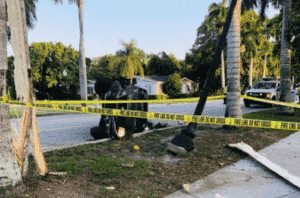
At-fault parties in a Country Club car accident may include a driver whose speeding, distraction, impairment, or failure to yield caused the collision. Another motorist, a vehicle owner, a rideshare company, or a public entity responsible for a hazardous road condition may also bear responsibility. Fault can be shared, and a driver’s rideshare app status alone does not establish liability. Police reports, witness accounts, photographs, and trip records can help clarify responsibility and available insurance. The Law Offices of Anidjar and Levine can explain how these details may affect your claim; learn more from a Country Club Personal Injury Lawyer.
Main Takeaways
- At-fault parties may include a rideshare driver, another motorist, a vehicle owner, or a party responsible for unsafe road conditions.
- Fault depends on evidence about how the crash occurred; a driver’s rideshare app status alone does not establish responsibility.
- Police reports, photos, witness accounts, vehicle damage, and available trip records may help clarify each party’s actions.
- More than one party may share responsibility, and a rideshare company’s liability is not automatic.
- Insurance coverage depends on the driver’s work status, applicable policies, and the circumstances of the crash.
How We Can Help With Your Golden Beach Rideshare Accident Injury Claim
After a Golden Beach rideshare accident, determining who is legally responsible can require a careful review of the crash and the driver’s status at the time. A focused Claim Review can help injured people understand available options while respecting the needs of everyone affected. Counsel may gather relevant records, communicate with insurers, and assess whether the rideshare driver, another motorist, or a company may bear responsibility. This work can reduce confusion and help ensure important information is considered before decisions are made.
A thoughtful Settlement Strategy should reflect documented losses, applicable coverage, and the circumstances of the collision. Legal representatives can explain proposals clearly, identify unanswered questions, and help clients make informed choices without pressure. They may also coordinate with medical providers and other professionals to obtain records needed to evaluate a claim. By managing deadlines and communications, counsel can allow injured individuals to focus on recovery and family responsibilities. Each claim requires an independent assessment, and no outcome can be guaranteed.
Understanding Golden Beach Rideshare Accidents Injury Cases


Understanding a Golden Beach rideshare accident injury case begins with identifying how the collision occurred, what injuries resulted, and which parties may be legally responsible. A careful review may consider the rideshare driver, another motorist, the rideshare company, or a public entity, depending on the evidence and applicable law. Each party’s role must be assessed separately rather than assumed from the driver’s app status alone.
OUR CONSULTATIONSARE FREE
START YOUR FREE CASE REVIEW

Rideshare insurance can affect available coverage, since policy terms may vary according to whether the driver was waiting for a request, traveling to pick up a passenger, or carrying one. Medical records, trip information, witness accounts, and other relevant documentation can help establish the injury’s connection to the crash and clarify potential coverage.
Municipal liability may also require consideration if a public entity’s conduct contributed to the incident, subject to specific legal requirements and deadlines. A thorough assessment helps injured passengers and other affected people understand their options and pursue accountability while protecting their ability to focus on recovery.
Don’t Wait. Call Our Florida Personal Injury Lawyers Now!
Common Causes of Golden Beach Rideshare Accidents


Golden Beach rideshare accidents may result from distracted drivers, speeding on local roads, or unsafe passenger pickups that obstruct traffic. Impaired driving also creates serious risks for passengers and other road users. Identifying the cause can help clarify how responsibility may be assigned after a collision.
Distracted Rideshare Drivers
Distracted rideshare drivers can cause serious collisions in Golden Beach when they divide their attention between traffic and app-related tasks. Phone notifications may prompt drivers to read messages, accept ride requests, or check passenger updates while the vehicle is moving. Even brief glances away from the road can delay a response to changing traffic conditions and put passengers, pedestrians, and other motorists at risk.
Navigation distractions can also contribute to crashes. Drivers may repeatedly look at a screen, adjust a route, or search for a pickup location instead of staying aware of nearby road users. These tasks are safer to address before travel or after stopping in a secure location. When a collision occurs, evidence such as app records, witness accounts, and video may help establish whether driver distraction contributed to the incident.
Speeding On Local Roads
When rideshare drivers exceed safe speeds on Golden Beach’s local roads, they have less time to respond to pedestrians, turning vehicles, and sudden traffic changes. Local speed limits reflect roadway conditions, nearby homes, and the presence of people walking or cycling. Drivers who disregard these limits may be unable to stop safely or maintain control when hazards arise. Speeding can cause severe injuries, property damage, and make it harder to determine how a collision occurred. A rideshare driver’s responsibility to transport passengers does not lessen the duty to protect other road users. Investigators may examine vehicle data, witness accounts, roadway evidence, and posted limits to assess whether speed contributed to a crash. Careful driving at appropriate speeds supports safer travel and helps preserve the well-being of the broader community.
Unsafe Passenger Pickups
Unsafe passenger pickups can create collision risks when rideshare drivers stop in travel lanes, block sightlines, or pull over where pedestrians and other vehicles cannot anticipate their movements. In Golden Beach, narrow streets, driveways, and busy access points may leave little room for sudden stops or door openings. Drivers who choose a safe location, signal clearly, and let passengers enter from the curb can reduce hazards for everyone nearby. Designated pickup zones help organize vehicle activity and limit conflicts with through traffic. When such zones are unavailable, drivers should assess curbside visibility before stopping and avoid locations near intersections, crosswalks, or obstructed views. Passengers can support safer service by waiting in accessible areas and following clear pickup instructions. These precautions protect riders, pedestrians, and other road users.
Impaired Driving Risks
Impaired driving can place rideshare passengers and other road users at serious risk in Golden Beach. Alcohol, cannabis, prescription medications, and other substances may reduce a driver’s judgment, coordination, and reaction time. A rideshare driver who operates while impaired can miss traffic signals, misjudge distances, or fail to respond to changing road conditions. Passengers, pedestrians, cyclists, and occupants of nearby vehicles may all suffer harm as a result.
Impaired Driver Liability depends on the circumstances, including evidence of impairment and the driver’s conduct. A rideshare company’s responsibility may also require review of applicable law and the facts. DUI Accident Prevention includes refusing to drive after using impairing substances, arranging alternative transportation, and reporting suspected impairment through appropriate channels. Prompt medical care, accurate documentation, and timely legal guidance can help affected people protect their interests and support accountability after a collision.
Legal Rights of Golden Beach Rideshare Accident Injury Victims
Golden Beach rideshare accident victims may have legal claims against the driver, another negligent motorist, or a rideshare company, depending on how the crash occurred and the driver’s status at the time. A careful review of trip records, insurance policies, and medical documentation can help clarify available options. Rideshare insurance coverage may vary according to whether the driver was offline, awaiting a request, or transporting a passenger. Passenger legal protections may allow injured riders to seek compensation when another party’s negligence caused harm.
- A passenger may preserve trip details and request records showing the ride’s status.
- A driver’s personal policy or the rideshare company’s policy may apply.
- An injured person may document treatment, expenses, and disruptions to daily life.
- Witness statements and official reports may help establish responsibility.
Claims can address eligible medical costs, lost income, and other documented losses. Timely legal guidance can help victims understand deadlines, communicate with insurers, and avoid overlooking relevant evidence. Those who support injured neighbors can encourage prompt care and careful recordkeeping while respecting each person’s choices. Responsibility depends on the evidence and applicable law.
Why Do Golden Beach Rideshare Accidents Injuries Happen?
The causes of Golden Beach rideshare accident injuries can help explain which parties may bear responsibility and what evidence may matter. Collisions may result from driver distraction, speeding, fatigue, impaired driving, or unfamiliarity with local roads. Rideshare drivers often rely on navigation apps and passenger requests, and divided attention can reduce their ability to respond to changing traffic conditions.
Dangerous intersections may increase crash risk when visibility is limited, signals are unclear, or vehicles make conflicting turns. Heavy traffic, sudden stops, and pedestrians crossing near pickup locations can also contribute to injuries. In some cases, vehicle maintenance failures, such as worn tires, defective brakes, or broken lights, may affect a driver’s ability to avoid a collision.
Responsibility may depend on the specific circumstances, including driver conduct, vehicle condition, road design, and the actions of other motorists. Careful evaluation of these factors can clarify how the incident occurred and which parties may have contributed.
What Should You Do After a Golden Beach Rideshare Accident Injury?
After a Golden Beach rideshare crash, injured passengers should seek prompt medical care, even if symptoms initially appear minor. Report the crash to law enforcement and the rideshare company, and record accurate details. Preserving photographs, witness information, medical records, and trip data can help document what occurred.
Seek Medical Care
Prompt medical evaluation is essential for anyone injured in a Golden Beach rideshare accident, even when symptoms seem minor or appear later. A timely assessment can identify hidden injuries and help prevent complications. The injured person should describe every symptom, explain when it began, and disclose relevant conditions or medications. A Prompt medical history gives clinicians useful context for selecting appropriate examinations and treatment. Emergency care may be necessary for severe pain, breathing difficulty, confusion, loss of consciousness, or suspected head, neck, or spinal injury. Otherwise, a qualified healthcare provider can determine the proper level of care. The patient should follow prescribed treatment instructions, retain copies of medical records, and attend all follow-up appointments. Consistent care supports recovery and creates a clear clinical record of accident-related injuries.
Report the Crash
When a Golden Beach rideshare crash causes an injury, the driver or another involved party should report it promptly to law enforcement, particularly if anyone is hurt or property is damaged. A timely report helps officials respond, assess immediate safety needs, and document the incident through a Police report. If an officer cannot attend, the involved parties should ask how to complete the required report through the appropriate agency.
The rideshare driver should notify the platform and follow its reporting procedures. Each driver, passenger, or other affected person should also provide an accurate account to the relevant insurer, without guessing about details or accepting blame. Prompt insurance notification can help clarify coverage and begin the claims process. Those involved should cooperate respectfully with responders and provide necessary information, supporting an orderly response for everyone affected.
Preserve Evidence
Preserving evidence can help establish how a Golden Beach rideshare crash occurred and who may be responsible. Evidence preservation should begin as soon as immediate medical needs are addressed. The injured person or a trusted representative can photograph vehicle damage, road conditions, traffic signs, visible injuries, and the crash location, if it is safe to do so. Names and contact details for witnesses may help clarify what happened. Digital documentation can include screenshots of the rideshare trip, driver and vehicle information, route details, receipts, and relevant communications in the app. Medical records and receipts should also be retained. The person should avoid altering or deleting relevant files and keep original copies securely stored. Promptly requesting that the rideshare company preserve trip data may help prevent important information from being lost.
Critical Evidence in a Golden Beach Rideshare Accident Injury Case
Important evidence can help establish what occurred during a Golden Beach rideshare accident and who may be responsible. Trip and driver app records may clarify the ride’s timing, route, and status, while witness accounts can provide independent observations.
Physical evidence from the scene and vehicles may help corroborate those details.
- A rideshare receipt showing pickup time, route, and trip status
- Driver app records reflecting activity before and during the ride
- Witness statements describing the collision and events that followed
- Scene photographs and vehicle damage documenting impact and road conditions
Rideshare Trip Records
Rideshare trip records can help establish who was responsible for a crash near a Golden Beach country club and which insurance coverage may apply. These records may show whether a driver had accepted a ride, was traveling to pick up a passenger, or was transporting someone when the collision occurred. That distinction can affect how responsibility and available coverage are evaluated.
A Trip Timeline can help compare the reported crash time with the ride’s start, pickup, and completion details. Platform Records may also identify the account associated with the trip and preserve relevant transaction information. When gathered promptly, these materials can help clarify disputed facts and support a fair review of an injured person’s claim. Careful preservation may also help insurers and legal professionals evaluate the incident and determine what further evidence is needed.
Driver App Data
Driver app data can help clarify what a rideshare driver was doing when a collision occurred near a Golden Beach country club. App activity logs may show when the driver logged in, accepted a ride, followed a route, or interacted with the platform. Driver status records can indicate whether the driver was available, transporting a passenger, or waiting for a request at the relevant time. These details may help establish whether the driver was engaged in rideshare work and whether platform activity affected the circumstances of the crash. Investigators may compare preserved app information with other reliable records to assess timing and identify possible inconsistencies. Because digital data can be altered or deleted, prompt preservation requests may be important. Careful review can support a fair assessment of responsibility and help injured people pursue appropriate remedies.
Witness Statements
Witness statements can help establish how a rideshare collision near a Golden Beach country club occurred and who may be responsible. Passengers, club employees, nearby residents, and other motorists may have observed the events before or after impact. Their accounts can clarify traffic signals, vehicle movements, driver conduct, and relevant conversations without relying solely on either driver’s recollection.
Witness credibility depends on factors such as the person’s opportunity to observe, consistency, and potential bias. Investigators may compare accounts with available records and ask neutral, focused questions. A witness should distinguish direct observations from assumptions and avoid coordinating recollections with others.
Prompt statement preservation can reduce the risk that memories fade or contact information is lost. Recording each account promptly, with the witness’s consent, may assist later review. These accounts can help clarify responsibility and support a fair response to those affected.
Scene And Vehicle Evidence
Physical evidence can help establish how a rideshare collision near a Golden Beach country club occurred and which parties may bear responsibility. Investigators may document vehicle positions, roadway conditions, debris, and visibility before the scene changes. Tire mark analysis can help indicate braking, turning, or loss of control, although marks must be interpreted alongside other evidence. Vehicle damage mapping records impact locations and patterns, which may clarify collision angles and whether drivers’ or witnesses’ accounts are consistent.
Photographs, measurements, and inspection records can preserve details for later review by insurers, attorneys, and qualified experts. Evidence may also identify whether a rideshare vehicle, another driver, or a hazardous roadway condition contributed to the crash. Careful documentation supports a fair assessment and helps injured people pursue accountability without overlooking facts relevant to everyone affected.
Don’t Wait. Call Our Florida Personal Injury Lawyers Now!
Long-Term Effects of Golden Beach Rideshare Accidents Injuries
Golden Beach rideshare accident injuries may cause chronic pain and reduced mobility, limiting a person’s ability to work or manage daily activities. Some individuals also experience lasting psychological trauma, including anxiety or fear related to travel. These effects can require ongoing medical care and create substantial expenses over time.
Chronic Pain and Mobility
When injuries from a Golden Beach rideshare accident do not resolve as expected, chronic pain and reduced mobility can become lasting consequences. Persistent discomfort may interfere with walking, lifting, driving, or completing routine responsibilities. Some injured people require ongoing medical evaluation to identify the causes of pain and adjust treatment as their condition changes. Chronic Pain Management may involve medication, therapeutic procedures, and coordinated care tailored to the individual’s needs. Mobility Rehabilitation can help restore strength, balance, and range of motion through supervised exercises and practical training. Progress may be gradual, and some limitations can remain despite consistent treatment. Family members, caregivers, and service providers can support recovery by respecting medical guidance and helping with necessary tasks. Accurate records of symptoms, treatment, and functional changes can also clarify the accident’s long-term effects.
Lasting Psychological Trauma
Psychological trauma can persist long after a Golden Beach rideshare accident, affecting sleep, concentration, mood, and daily routines. Some injured passengers develop anxiety, depression, or fear of traveling, while others experience intrusive memories or heightened alertness. These responses may interfere with work, relationships, and the ability to assist family members or serve their communities. Recognizing changes early can help individuals seek appropriate support without treating distress as a personal failing. Trauma counseling may provide structured strategies for managing symptoms, rebuilding confidence, and addressing accident-related fears. Support from trusted relatives and community members can also reduce isolation, as long as it respects the injured person’s needs and pace. Emotional recovery differs for each individual and may take time. Consistent care and understanding can help restore stability and participation in meaningful daily activities.
Ongoing Medical Expenses
Beyond psychological effects, a Golden Beach rideshare accident may leave injured passengers with medical needs that continue for months or years. Fractures, spinal injuries, and traumatic brain injuries may require follow-up appointments, rehabilitation, medication, or additional procedures. These costs can persist after initial insurance payments end, placing pressure on injured people and their families.
A careful assessment should account for Future treatment, not only bills already received. Physicians can document expected care, functional limitations, and the likelihood of further procedures. Records and estimates help clarify the financial impact when responsible parties and insurers evaluate a claim. Medical inflation may also increase the cost of ongoing care over time, making early projections incomplete. By preserving treatment records and seeking qualified guidance, injured passengers can support a more accurate accounting of expenses and protect resources needed for recovery and continued care.
Proving Liability in Golden Beach Rideshare Accident Injury Cases
Proving liability in a Golden Beach rideshare accident requires establishing how the crash occurred and which parties contributed to it. Evidence may include police reports, photographs, witness statements, vehicle damage, and available app or trip records. These materials can help clarify the driver’s actions, the timing of the ride, and the sequence of events.
Driver negligence may involve speeding, distraction, unsafe turns, or failure to yield. A careful review can also determine whether another motorist, a vehicle owner, or a party responsible for road conditions contributed to the collision. Employer liability may become relevant when a rideshare company’s conduct or legal responsibilities are connected to the driver’s actions, although the driver’s work status and applicable law matter.
Promptly preserving evidence can support a fair assessment and help protect the injured person’s ability to seek accountability. Medical records and consistent documentation of the incident may also help explain the harm caused. Each case requires a fact-specific investigation before responsibility can be determined.
Dealing With Insurance Companies After a Golden Beach Rideshare Accident Injury
After a Golden Beach rideshare accident, insurance coverage may depend on the driver’s status in the app when the collision occurred. A driver waiting for a request may have different coverage from one transporting a passenger. Injured people should identify the applicable insurer and provide accurate information while avoiding speculation about fault or injury severity.
Insurance adjuster tactics may include requesting recorded statements, seeking broad medical authorizations, or emphasizing early offers before the full effects of an injury are known. Each request merits careful review. Medical records and receipts should be organized, and communications should remain factual and consistent. A caregiver or supporter of an injured neighbor can help preserve documents and note important deadlines without speaking for the injured individual.
During settlement negotiations, the insurer may dispute responsibility, treatment needs, or the value of losses. Review any proposed agreement for scope and finality before acceptance. Independent legal guidance can help clarify coverage and protect informed decision-making.
What to Expect During a Golden Beach Rideshare Accident Injury Claim Process
A Golden Beach rideshare injury claim typically begins with promptly reporting the accident and documenting the circumstances. The parties involved and available evidence help establish who may be at fault before an injury claim is filed with the appropriate insurer. The process then proceeds through investigation and negotiation, ending in a settlement or other resolution.
Reporting the Accident
When a rideshare crash occurs in Golden Beach, prompt reporting helps preserve evidence and establish an accurate record of the incident. Contact emergency dispatch when anyone is injured, faces immediate danger, or needs urgent medical assistance. Responders can document conditions and coordinate appropriate care, helping protect everyone at the scene. Once safe, involved people should exchange contact and insurance details, record the rideshare driver’s and vehicle’s information, and note the time and location. Photographs of vehicle damage, road conditions, and visible injuries may support later review. The rideshare company should also be notified through its app or designated reporting channel. Notify your insurance company promptly, share factual information, and retain copies of relevant records. Timely, accurate reporting can support a fair claim process and help those affected receive appropriate assistance.
Identifying At-Fault Parties
Accurate reporting provides a foundation for determining who may be responsible for a Golden Beach rideshare crash. Investigators may review police records, witness accounts, photographs, vehicle damage, and available app data to establish how the collision occurred. This evidence can help distinguish Driver Negligence, such as speeding, distraction, or failure to yield, from conduct by another motorist. Responsibility may also involve a rideshare company or another business, depending on the driver’s work status, the company’s role, and applicable law. Employer Liability is not automatic; the relationship between the driver and the business must be assessed alongside relevant insurance coverage. In some crashes, several parties may share responsibility. Careful identification of each potentially responsible party helps guarantee that the circumstances are understood and that affected people receive clear, accurate information about the event.
Filing an Injury Claim
After identifying the potentially responsible parties, an injured person may begin a claim by notifying the relevant insurer and providing basic information about the crash and resulting injuries. In a Golden Beach rideshare collision, this may involve contacting the rideshare company’s insurer, another driver’s insurer, or both, depending on the circumstances. Claim Filing typically requires a clear account of when and where the crash occurred, who was involved, and what harm resulted. The claimant may need to submit available records, such as medical reports, photographs, witness details, and proof of expenses. Accurate, consistent information helps insurers assess the reported incident. Legal Deadlines also require attention because filing periods vary by claim type and circumstances. A claimant may seek qualified legal guidance to understand applicable requirements and preserve relevant evidence while focusing on recovery and personal responsibilities.
Resolving the Claim
Once a claim is submitted, the insurer reviews the available evidence to assess fault, coverage, and the extent of the reported injuries. In a Golden Beach rideshare accident, this review may include police reports, medical records, witness statements, trip details, and applicable insurance policies. The insurer may request additional documentation or question the parties before making an offer. Settlement negotiations can address medical expenses, lost income, and other documented losses. A claimant should evaluate any proposed amount against current costs and anticipated treatment before accepting it. If the parties cannot agree, mediation may provide a structured setting to discuss disputed issues with a neutral facilitator. Resolution may also require further investigation or legal proceedings. Throughout the process, accurate records and timely responses can help clarify the claim and support a fair outcome.
Compensation for Golden Beach Rideshare Accident Injury Damages
Compensation for injuries in a Golden Beach rideshare accident may cover medical expenses, lost income, reduced future earning capacity, and pain and suffering. The available recovery depends on the injuries, their effects, and the evidence connecting them to the collision. A claim may include treatment already received and reasonably anticipated care, such as rehabilitation, medication, or follow-up visits. Provider records can help document these needs and support a clear account of the injured person’s recovery.
Lost income may reflect missed work during treatment or recovery. When injuries limit the ability to perform prior duties or reduce future work opportunities, diminished earning capacity may also be considered. Documentation from employers and qualified professionals can help establish these effects.
Pain and suffering may address physical discomfort and the impact of injuries on daily activities and well-being. A careful evaluation should account for the person’s circumstances without overstating the claim. Promptly preserving records and seeking appropriate care can help ensure losses are presented accurately and the injured person receives fair consideration.
Economic vs Non-Economic Damages in Golden Beach Rideshare Accident Cases
In Golden Beach rideshare accident cases, economic damages may include medical bills, lost income, and other documented expenses. Non-economic damages address harms such as pain, emotional distress, and reduced quality of life. Establishing both damage types generally requires reliable records and evidence connecting the losses to the collision.
Economic Losses and Expenses
Economic losses in a Golden Beach rideshare accident include measurable expenses and financial harm caused by the crash, such as medical bills, lost wages, and vehicle damage. These costs may include emergency care, hospital treatment, medication, rehabilitation, and future medical services supported by professional evaluations. Medical bill reimbursement may depend on available insurance coverage, liability findings, and documentation linking treatment to the collision. Lost income recovery can address wages missed during recovery, while self-employed individuals may need business records to establish reduced earnings. Other recoverable expenses may include transportation to medical appointments, household assistance, and repair or replacement of damaged property. Receipts, invoices, pay records, tax documents, and repair estimates help substantiate a claim. Accurate records allow responsible parties and insurers to assess financial harm and determine appropriate compensation under applicable law.
Non-Economic Harm
Beyond documented expenses and lost income, a Golden Beach rideshare accident may cause non-economic harm, including physical pain, emotional distress, and loss of enjoyment of daily activities. These effects can persist even when medical treatment addresses visible injuries. Emotional distress may include anxiety, sleep disruption, or fear of traveling, affecting a person’s relationships and ability to participate in community life. Diminished enjoyment may arise when pain or mobility limits prevent someone from pursuing hobbies, family activities, or service to others. Unlike medical bills or missed wages, these losses do not have a fixed dollar amount. Their significance depends on how the accident changes the injured person’s daily experience and well-being. Recognizing non-economic harm helps ensure that a damages assessment accounts for the human consequences of a rideshare collision, not only its financial costs.
Proving Both Damage Types
Establishing damages in a Golden Beach rideshare accident case requires evidence of both measurable financial losses and less tangible personal harm. Economic damages may include medical bills, rehabilitation costs, lost wages, and vehicle repair or replacement expenses. Property damage can be supported with photographs, repair estimates, receipts, and the rideshare vehicle’s inspection records. Bodily injury claims require medical records linking diagnosed conditions and treatment to the collision, along with documentation of future care when appropriate.
Non-economic damages address pain, emotional distress, reduced mobility, and disruption to daily activities. Treatment notes, personal journals, and statements from relatives or coworkers may help show how injuries affect ordinary responsibilities and relationships. Consistent records strengthen both categories. Clear, organized evidence enables insurers, courts, and other decision-makers to assess the full impact and determine fair compensation for the injured person.
Don’t Wait. Call Our Florida Personal Injury Lawyers Now!
When a Golden Beach Rideshare Accident Injury Case Goes to Trial vs. Settlement
When a Golden Beach rideshare accident injury claim cannot be resolved through negotiations, the injured person may need to pursue a trial, where a judge or jury evaluates the evidence and determines liability and damages. Before that point, settlement negotiations may offer a practical way to reach a fair resolution without the time and uncertainty of court proceedings. The parties can assess medical records, witness accounts, photographs, and other evidence to understand the strengths and limits of their positions.
If negotiations do not produce an acceptable agreement, trial preparation becomes necessary. Counsel may organize evidence, identify witnesses, consult qualified experts, and prepare the injured person to explain how the collision affected daily life and recovery. At trial, each side presents its account, and the fact finder decides whether the evidence supports responsibility and compensation. A settlement can provide greater control over timing and outcome, while a trial may be necessary when meaningful disputes remain. The choice depends on case facts, priorities, and informed legal guidance.
Florida Laws That May Affect Your Golden Beach Rideshare Accidents Case
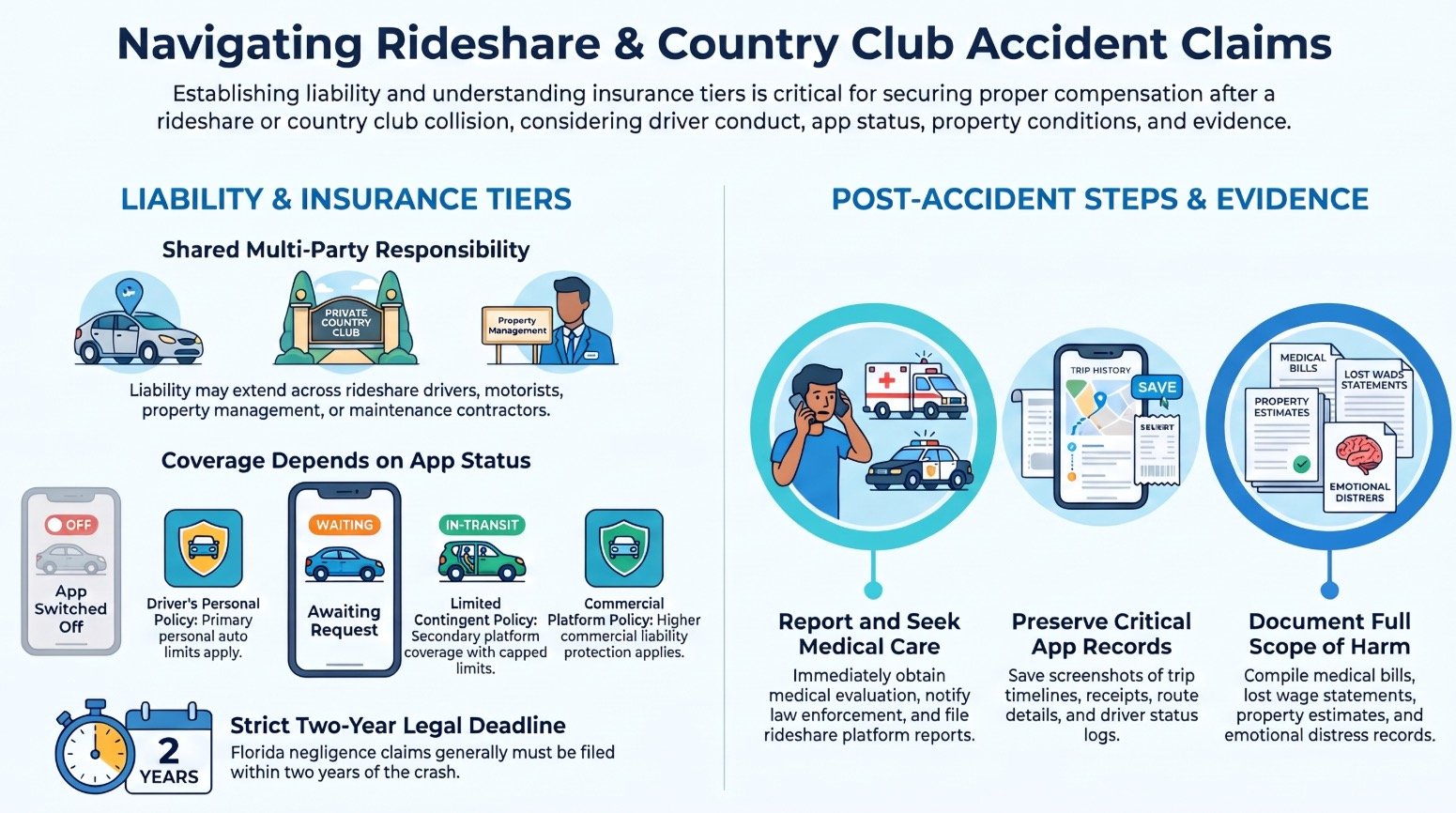
The outcome of a Golden Beach rideshare accident claim may depend on several Florida laws governing fault, insurance coverage, and filing deadlines. Florida’s no-fault system generally requires injured people to seek initial medical benefits through personal injury protection coverage, subject to policy limits and eligibility. Rideshare coverage may also change according to the driver’s app status.
Florida rideshare insurance can involve different limits when a driver is waiting for a request, traveling to a passenger, or carrying one.
- An app switched off may leave the driver’s personal policy primarily responsible.
- A driver waiting for a ride request may have limited contingent coverage.
- A passenger in transit may be protected by higher commercial policy limits.
- A crash scene may reveal evidence of shared responsibility, including signals, road conditions, and driver conduct.
Under comparative negligence rules, compensation may be reduced by an injured person’s share of fault. Careful evidence review can help establish responsibility and support fair treatment for everyone affected.
The Statute of Limitations for Golden Beach Rideshare Accident Injury Cases
After a Golden Beach rideshare accident, injured people generally have a limited time to file a lawsuit under Florida law. For most negligence claims, the deadline is generally two years from the date the cause of action accrues. Missing this period can prevent a court from hearing the case, regardless of the seriousness of the injuries or the importance of accountability.
Filing Deadlines may differ when a claim involves a government entity, a wrongful death, or another legal issue with separate notice or filing requirements. Those rules can impose shorter periods or additional steps, so the circumstances and potential defendants matter. A claim involving a rideshare driver or company may also raise questions about which parties and legal theories apply.
Tolling Exceptions can pause or alter a deadline in limited situations, such as when a claimant is a minor or legally incapacitated. These exceptions are fact-specific and should not be assumed. Promptly preserving records and confirming the applicable deadline can help protect the injured person’s opportunity to seek a fair resolution.
How a Country Club Car Accident At-Fault Parties Can Help You
Identifying the parties responsible for a Country Club car accident can help injured people understand which insurance policies may apply and where to direct a claim. A careful review can distinguish a driver’s negligence from a property owner’s responsibility, allowing each party’s role to be assessed fairly. This clarity can support an orderly claim and help preserve resources for medical care and recovery.
A careful review can clarify which insurance policies may apply and help injured people direct claims to the appropriate parties.
Relevant evidence may reveal whether responsibility rests with:
- A driver who ignored a stop sign near the clubhouse entrance.
- A valet who moved a vehicle carelessly through a crowded parking area.
- A maintenance contractor who left equipment obstructing a cart path.
- Club management, where Club liability or Negligent security may arise from unsafe conditions or inadequate protection.
Identifying these possibilities can also help witnesses and staff provide useful information without assigning blame prematurely. A fact-based assessment encourages accountability while respecting everyone involved. It can help injured people seek appropriate compensation and support safer practices for members, employees, guests, and future visitors.
When to Contact a Country Club Car Accident At-Fault Parties
Prompt notice can help preserve evidence and clarify which insurance policies may apply to a Country Club car accident. A person involved should contact the potentially responsible parties and their insurers as soon as immediate medical needs are addressed. This may include a driver, a club, a property manager, or another party whose conduct contributed to the collision. Early communication can help identify who controlled the vehicle or area and who may have relevant records.
Prompt Deadlines matter because insurance policies and state laws impose time limits for reporting incidents and pursuing claims. Waiting may complicate access to surveillance footage, witness accounts, vehicle data, and maintenance records. Evidence Preservation is especially important when a roadway, parking area, or club vehicle may be involved. The injured person should document available details and avoid altering or discarding relevant materials.
If injuries develop after the incident, the person should report them promptly and keep records of treatment. Timely contact supports accurate review and helps protect everyone’s interests.
Why You Need an Experienced Country Club Car Accident At-Fault Parties
When a country club car accident involves multiple drivers, private roads, or club-owned vehicles, determining responsibility can require careful investigation. An experienced attorney can identify every party whose conduct or policies contributed to the collision, including drivers, vehicle owners, employers, and property operators. This matters when a club’s traffic rules, maintenance practices, or event procedures may have affected safety.
A thorough Liability Analysis examines police reports, witness accounts, vehicle records, and relevant site conditions. It can clarify how negligence, insurance coverage, and shared responsibility apply, while preserving evidence before it is lost. If a shuttle or app-based ride was involved, knowledge of Rideshare Safety and commercial coverage can help distinguish the responsibilities of the driver, company, and vehicle owner.
Experienced legal guidance also helps injured people pursue fair compensation for medical costs, lost income, and other documented harm. By managing communications and deadlines, counsel can help clients focus on recovery and supporting their families and communities.
How to Choose the Right Country Club Car Accident At-Fault Parties for Your Case
Choosing counsel for a country club car accident case requires more than general personal injury experience. The right representative should understand how vehicle collisions on private grounds can involve drivers, property managers, contractors, and club operators. This knowledge helps identify every potentially responsible party and preserve evidence before it disappears.
A careful evaluation should include the lawyer’s experience investigating premises conditions, traffic controls, lighting, and vehicle access policies. These details may reveal whether Negligent Property Owners contributed to a collision or whether Club Liability may arise from unsafe operations. Counsel should also explain how fault is assessed, what records are needed, and how the client’s injuries and losses will be documented.
Effective representation requires attentive communication and respect for the injured person’s priorities. A suitable lawyer should provide clear updates, answer questions directly, and assess the case based on evidence rather than promises. This disciplined approach supports fair accountability and helps injured people pursue recovery while protecting the interests of those affected.
About The Law Offices of Anidjar & Levine
The Law Offices of Anidjar & Levine represents injured people in serious accident matters, including collisions on private property such as country club grounds. The firm assists clients seeking to understand who may be responsible, preserve relevant evidence, and pursue compensation under applicable law. In a country club collision, potential claims may involve a driver, property owner, or another party, depending on the circumstances.
Firm History provides context for the firm’s work and its focus on representing people affected by accidents. Its attorneys handle injury matters and can explain legal options, deadlines, and the steps involved in developing a claim. Attorney Credentials, including professional qualifications and relevant experience, may help clients assess whether counsel is suited to their needs.
The firm’s role includes reviewing available information, communicating with insurers, and advocating for clients throughout the process. Clear guidance can help injured people make informed decisions while they address recovery and other practical concerns. Each case depends on its specific facts and evidence.

Frequently Asked Questions
Can a Golf Cart Operator Be Liable for a Collision at a Country Club?
A golf cart operator can be liable for a collision when careless conduct, such as speeding, ignoring traffic rules, or driving while impaired, causes injury or property damage. Operator negligence must generally be connected to the harm, and the incident’s circumstances determine responsibility. Passenger injuries may also support a claim if unsafe operation contributed to them. Promptly documenting the scene and seeking appropriate medical care can help protect affected individuals and clarify what occurred.
Can a Country Club Be Responsible for Unsafe Parking Lots or Roadways?
A country club may be responsible for unsafe parking lots or roadways when it fails to take reasonable steps to address hazards it knew, or should have known, about. Parking lot maintenance may include repairing potholes, clearing debris, and ensuring adequate lighting. Roadway signage should clearly identify traffic patterns and potential dangers. Liability depends on the circumstances, applicable law, and whether the unsafe condition contributed to the collision. Accident victims may benefit from preserving evidence and seeking legal guidance.
Who May Be Liable if a Defective Vehicle Caused the Accident?
Liability for a crash caused by a defective vehicle may rest with the Vehicle manufacturer, a component supplier, or another party in the distribution chain. A repair shop may also be responsible if negligent work contributed to the defect. The injured person generally must show that a defect existed, caused the accident, and resulted in harm. Promptly preserving the vehicle, maintenance records, and crash evidence can help establish responsibility and support a fair resolution.
Can Multiple Parties Share Fault for a Country Club Car Accident?
Yes, multiple parties can share fault in a country club car accident. A driver, property owner, maintenance contractor, or vehicle manufacturer may each bear responsibility, depending on the circumstances and evidence. Under Comparative negligence rules, an injured person’s compensation may be reduced according to their share of fault. Joint liability may allow an injured person to seek damages from more than one responsible party, subject to applicable state law and the facts established.
Does Liability Change if the At-Fault Driver Was Working at the Time?
Yes, liability may extend beyond the driver when the collision occurred during work-related driving. Employer liability can apply if the driver was performing assigned duties or acting within the scope of employment, such as transporting guests or delivering supplies. However, an employer is not automatically responsible merely because the driver was on the clock. Investigators assess the trip’s purpose, the driver’s conduct, and applicable state law to identify responsible parties and support injured people.
—————————
Determining who caused a Country Club car accident may require reviewing the crash, available evidence, and each party’s conduct. An injured person may have a claim against one or more responsible drivers, and other parties may also bear liability depending on the circumstances. Prompt legal guidance can help preserve evidence, assess potential claims, and address communications from insurers. The Law Offices of Anidjar and Levine can review the facts and explain options for pursuing compensation under Florida law. Learn more from a Country Club Personal Injury Lawyer.