

The Law Offices of Anidjar and Levine can review a property insurance policy, assess reported damage, and explain coverage, exclusions, deadlines, and post-loss requirements. A lawyer may help organize photographs, repair estimates, inspection reports, and insurer communications, then address disputes over covered damage or claim value. For injury claims involving unsafe property conditions, counsel can explain evidence, potential responsibility, and available options. Learn more about working with a Port St. Lucie Personal Injury Lawyer. The information below outlines common property claim issues and practical steps for evaluating legal guidance.
Main Takeaways
- A Port St. Lucie property claims lawyer can review your policy, reported loss, and supporting evidence.
- A lawyer can explain coverage, limits, deductibles, exclusions, deadlines, and post-loss duties.
- Photos, inspection reports, repair estimates, receipts, and insurer correspondence can help document property damage.
- A lawyer can address disputes over covered damage, claim value, settlement offers, or policy appraisal procedures.
- Promptly document damage, take reasonable steps to prevent further loss, and keep organized records of claim communications.


How We Can Help With Your Port St. Lucie Property Claims Injury Claim
When a property-related injury occurs in Port St. Lucie, an attorney can help the injured person pursue a fair resolution while keeping practical needs in view. The legal team may review relevant insurance policies, incident records, photographs, repair estimates, and correspondence to identify available coverage and clarify the next steps. This careful assessment can help clients make informed decisions and reduce avoidable delays.
Policy exclusions may limit recovery, so counsel can examine the policy language and explain how specific provisions may affect the claim. If the insurer disputes the value of covered damage, the attorney can assess the basis for the disagreement and address appraisal disputes through the procedures available under the policy or applicable law. The team can also organize supporting documentation, communicate with insurers, and respond to requests for information. Throughout the process, clear guidance and respectful service help clients focus on recovery while their claim is handled with diligence and care.
OUR CONSULTATIONSARE FREE
START YOUR FREE CASE REVIEW

Understanding Port St. Lucie Property Claims Injury Cases
Port St. Lucie property claims injury cases involve more than documenting damage. They require a careful review of the insurance policy, the reported loss, and the evidence supporting the requested benefits. A clear understanding of these elements helps property owners make informed decisions while preserving resources for their families, employees, tenants, or neighbors who depend on them.
Claim appraisal is the process of evaluating the scope and value of covered damage. Relevant records may include photographs, repair estimates, inspection reports, and communications with the insurer. Consistent documentation can help clarify disagreements about the extent of loss and the reasonable cost of repairs.
Policy interpretation determines how the contract applies to the circumstances and claimed expenses. Coverage limits, exclusions, deadlines, and duties after a loss may affect the outcome. A qualified professional can explain these terms and identify questions requiring attention. With accurate information and organized records, claimants can pursue a fair resolution while remaining mindful of their responsibilities to others affected by the property loss.
Common Causes of Port St. Lucie Property Claims
Property claims in Port St. Lucie commonly arise from hurricanes and high winds, which can damage roofs, siding, and other structures. Roof leaks and water intrusion may cause additional damage, while flooding and storm surge can affect buildings and personal property. Fire and electrical damage are also frequent sources of claims, often requiring careful assessment of the loss.
Hurricane and Wind Damage
Hurricanes and severe windstorms can damage roofs, windows, siding, and other parts of a home, while wind-driven rain may cause additional interior harm. In Port St. Lucie, strong gusts and flying debris can also affect fences, exterior equipment, and detached structures. The extent of damage may depend on storm intensity, building condition, and the property’s exposure. After a storm, careful documentation can help owners communicate the loss clearly and support a property claim. Photographs, repair estimates, and records of damaged belongings may provide useful evidence. Policy terms, deductibles, exclusions, and reporting deadlines can affect how a claim is evaluated. Hurricane preparedness and wind mitigation measures, such as securing outdoor items and reinforcing vulnerable areas, may reduce risk. Prompt, accurate reporting can help property owners pursue repairs while protecting household safety and community well-being.
Roof Leaks and Water Intrusion
When water enters a home through a damaged roof, the resulting loss may extend beyond visible stains or dripping. Missing shingles, deteriorated flashing, cracked seals, and aging roof materials can allow moisture to travel into ceilings, walls, insulation, and framing. Plumbing vents and skylights may also create vulnerable points when their seals fail. Prompt Roof Leak Detection can help identify the entry point and limit further damage, while photographs, repair records, and inspection findings may support a property claim. Moisture Mapping can document how far water has spread, including areas that appear dry on the surface. A careful assessment may reveal hidden deterioration, mold risk, or weakened materials. Timely repairs and accurate documentation can help property owners protect their homes and provide insurers with clear information about the reported loss.
Flooding and Storm Surge
Beyond roof-related water intrusion, flooding and storm surge can cause extensive damage to homes and other buildings in Port St. Lucie. Heavy rainfall may overwhelm drainage systems, while rising waterways and coastal surge can push water into structures and surrounding properties. Floodwater can damage foundations, flooring, walls, appliances, and personal belongings, and contaminated water may require expert cleanup. Storm surge mapping helps identify areas exposed to coastal flooding and can inform risk assessments, though conditions may vary by property and storm. Floodplain design also affects how buildings manage water, including drainage, elevation, and protective features. After an event, owners may need to document visible damage, take reasonable steps to limit further harm, and review policy terms and exclusions. Clear records can help insurers and restoration professionals assess losses and coordinate appropriate assistance.
Fire and Electrical Damage
Fire and electrical damage can result from lightning strikes, faulty wiring, overloaded circuits, or malfunctioning appliances, causing losses that range from localized smoke damage to severe structural harm. In Port St. Lucie, these incidents may affect homes, businesses, and community facilities relied upon by residents. Identifying Electrical fire origins can help establish how a loss occurred and which areas require inspection. A qualified professional may assess wiring, appliances, and structural conditions, while preserving relevant records and photographs can support a property claim.
Even a contained fire can leave smoke and soot throughout a building, damaging surfaces, belongings, and ventilation systems. Prompt smoke contamination cleanup can limit further deterioration and reduce lingering odors, but repairs should follow a thorough assessment. Property owners serving tenants, customers, or neighbors may also need to arrange safe temporary access while restoration proceeds.
Don’t Wait. Call Our Florida Personal Injury Lawyers Now!


Legal Rights of Port St. Lucie Property Claims Injury Victims
Injured visitors in Port St. Lucie may have legal rights when unsafe property conditions cause physical harm. Premises liability law can require property owners or occupiers to use reasonable care to protect lawful visitors. A claim may seek compensation for documented losses, subject to evidence, applicable deadlines, and the circumstances of the incident. When negligent security contributes to an injury, the responsible party’s obligations depend on the specific facts and governing law.
Property owners may be responsible for visitor injuries caused by unsafe conditions or negligent security.
An injured person may consider these steps:
- Obtain prompt medical care and follow the treatment plan.
- Preserve photographs, incident reports, and contact information for witnesses.
- Keep records of medical expenses, missed work, and related losses.
- Consult a qualified attorney about deadlines, evidence, and available remedies.
These measures can help protect a claim while supporting an accurate account of the harm. Legal guidance may also help clarify whether an owner, manager, or another party bears responsibility. Pursuing a claim can support recovery and encourage safer conditions for other visitors.
Why Do Port St. Lucie Property Claims Injuries Happen?
Property-related injuries in Port St. Lucie often happen when a property owner or manager fails to address hazards that could have been identified and corrected. These incidents may occur in homes, businesses, apartment complexes, or public spaces, affecting residents, workers, customers, and visitors who rely on safe conditions.
Common causes include wet or uneven floors, loose handrails, broken stairs, poor lighting, and walkways obstructed by debris. Construction defects can also create dangerous conditions, such as unstable structures, improperly installed flooring, or inadequate barriers near elevated areas. Faulty wiring may lead to electrical burns, fires, or shocks, particularly when maintenance is neglected or repairs are performed improperly.
Some hazards arise suddenly, while others develop over time through inadequate inspections or delayed maintenance. Severe weather and heavy use can worsen existing weaknesses, but reasonable upkeep may reduce foreseeable risks. When property conditions are not managed responsibly, preventable injuries can result, imposing physical, financial, and practical burdens on affected individuals and their families.
What Should You Do After a Port St. Lucie Property Claims Injury?
After an injury on another person’s property, the injured individual should seek prompt medical care, even if symptoms initially appear minor. They should document the incident by recording relevant details, preserving evidence, and obtaining witness information when possible. Contacting a property claims lawyer can help clarify available options and protect the individual’s interests.
Seek Medical Care
Prompt medical care should be the priority after an injury on someone else’s property in Port St. Lucie. A prompt evaluation can identify injuries that may not be immediately apparent and help prevent complications. The injured person should describe symptoms accurately, explain how the incident occurred, and disclose relevant medical conditions to the treating provider. If emergency symptoms arise, such as severe pain, difficulty breathing, or loss of consciousness, emergency services should be contacted without delay.
Following the provider’s recommendations supports recovery and creates a consistent record of treatment. Follow up appointments allow clinicians to monitor progress, adjust care, and identify lingering effects. Medication management is also important; prescriptions should be taken as directed, and concerns about side effects or interactions should be discussed with a qualified medical professional. Timely, appropriate care helps protect health and supports others assisting with recovery.
Document the Incident
When it is safe to do so, documenting the incident can help preserve details that may otherwise be lost. The injured person or a companion can photograph the hazard, surrounding area, lighting, warning signs, and any visible injuries. Images should be taken from several angles without disturbing the scene or creating further risk. The person should also note the date, time, location, weather, and sequence of events while memories remain clear.
Names and contact information for witnesses, along with their brief accounts, may help clarify what occurred. Copies of incident reports, receipts, medical records, and related communications should be retained. Evidence preservation includes keeping damaged clothing or personal items in their original condition when practical. During adjuster correspondence, factual, consistent descriptions and copies of submitted materials can help maintain an accurate claim record.
Contact a Lawyer
Legal guidance can help an injured person understand whether a property owner or another party may be responsible and what steps could protect a potential claim. After documenting the incident, the injured person may contact a lawyer to discuss the circumstances, available evidence, and possible deadlines. Prompt advice can help preserve records, identify witnesses, and direct requests for relevant documents to the appropriate parties. A lawyer can also explain how medical records and treatment history may relate to reported injuries. During an initial discussion, the person can ask about experience with property claims, likely next steps, and potential costs. A Free consultation may allow an injured person to evaluate whether legal assistance is appropriate. Attorney availability may vary, so contacting a firm promptly can help clarify options while supporting a fair review of the incident.
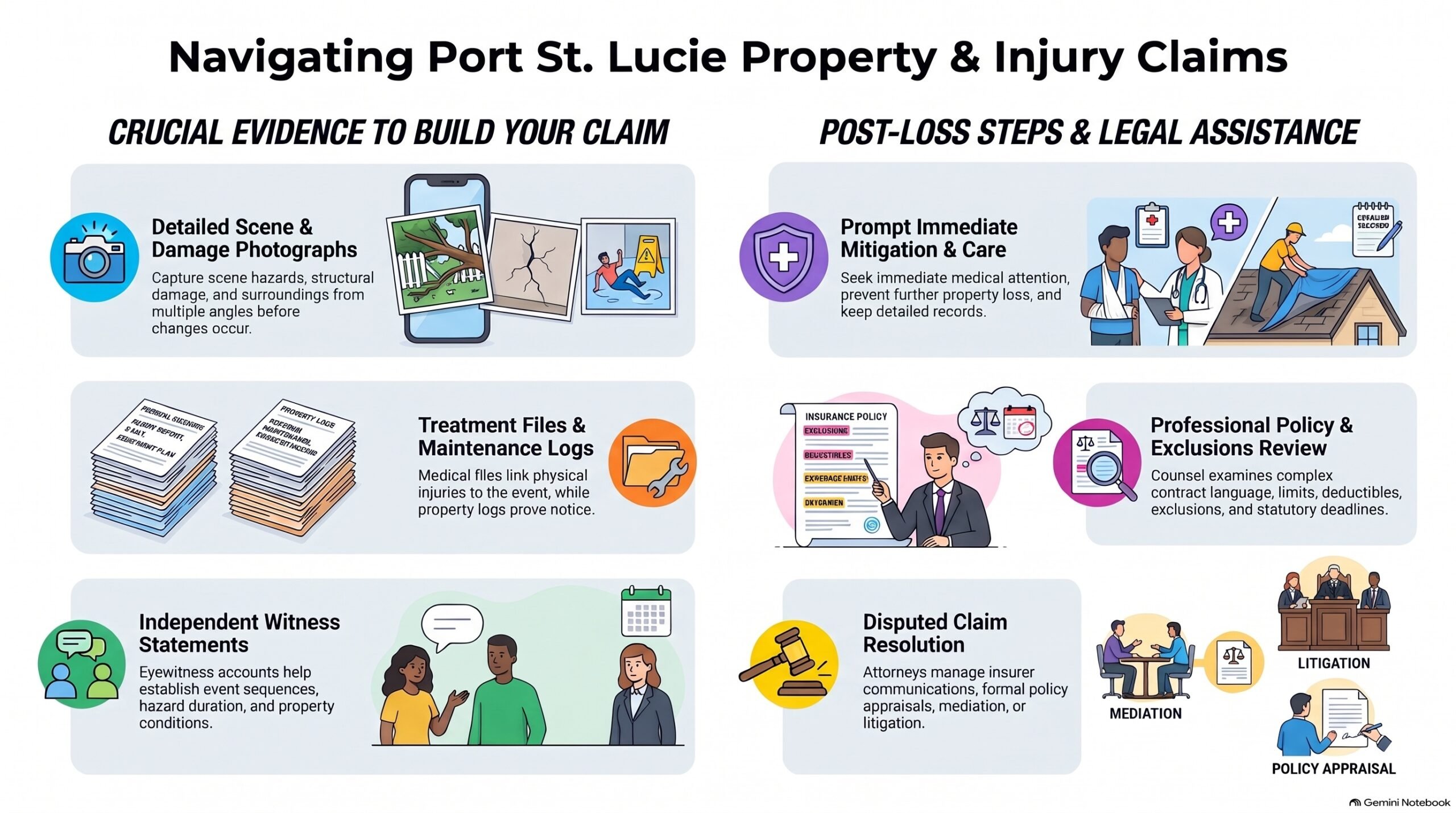
Critical Evidence in a Port St. Lucie Property Claims Injury Case
Evidence can help establish how an injury occurred, the extent of the harm, and whether a property owner knew of a hazardous condition. Relevant records and firsthand accounts may clarify disputed facts and support a claim.
Crucial evidence may include:
- Photos of the incident scene
- Medical treatment records
- Witness statements
- Property maintenance logs
Incident Scene Photos
Photographs taken soon after an incident can preserve details that may change or disappear before a property claim is investigated. Images may document a spill, damaged flooring, poor lighting, blocked walkways, or missing warning signs. These conditions can help explain how a hazard affected visitors and whether reasonable safety measures were in place.
Useful photographs show both the immediate area and its wider surroundings. Camera angles should capture the hazard’s position, nearby pathways, and relevant signs without altering the scene. Timestamp verification can help establish when images were taken and support a reliable sequence of events. Original files should be preserved, with copies kept securely and edits avoided. When possible, witnesses or staff can identify locations and conditions shown. Careful documentation may assist a fair review and help property owners address hazards that could endanger others.
Medical Treatment Records
Medical treatment records can establish the nature and extent of injuries after an incident on someone else’s property. They may document symptoms, diagnoses, imaging results, prescribed care, and changes in a person’s condition over time. These details can help connect an injury to the reported event and show how it affected daily activities.
Record organization is important. Dated records from emergency departments, physicians, therapists, and pharmacies can present a clear treatment timeline. Provider coordination may help obtain complete files and clarify gaps or inconsistent entries, subject to applicable privacy requirements. A claim may also rely on billing records to show the cost of care. Accurate, consistent documentation allows insurers and other reviewers to assess the evidence more fairly. Prompt attention to treatment and careful recordkeeping can support a thorough evaluation while helping injured people receive appropriate care and pursue a well-documented claim.
Witness Statements
Witness statements can provide an independent account of how an injury occurred on another person’s property. Eyewitness Accounts may clarify the sequence of events, identify hazards, and describe conditions present when someone was hurt. These observations can help explain whether a property condition contributed to the incident and how promptly assistance was offered. A witness may also confirm details that the injured person could not observe, particularly during a sudden fall or collision.
Neighbor testimony can be valuable when nearby residents saw the event or arrived soon afterward. Their statements may help establish timing, location, and the presence of other people, while offering context without replacing direct evidence. Each account should be recorded accurately, with the witness’s contact information and recollection preserved. Consistent, specific statements can help decision-makers assess a claim fairly and recognize the needs of those affected.
Property Maintenance Logs
Property maintenance logs can provide a time-stamped record of inspections, repairs, and reported hazards at a site where an injury occurred. These records may show whether the property owner followed maintenance schedules, responded to complaints, and addressed unsafe conditions within a reasonable period. In a Port St. Lucie property injury claim, consistent entries can help establish what staff knew and when they knew it. Missing entries or unexplained delays may raise questions about the care taken to protect visitors. Repair documentation, including work orders, invoices, and completion notes, can clarify whether a reported problem was corrected before the incident. A careful review also helps distinguish routine upkeep from actions taken after an injury. Preserving these materials promptly can support a fair assessment of responsibility and help injured people pursue appropriate remedies.
Don’t Wait. Call Our Florida Personal Injury Lawyers Now!
Long-Term Effects of Port St. Lucie Property Claims Injuries
Property-related injuries may have effects that persist well beyond initial treatment. Chronic pain and reduced mobility can interfere with daily activities, work, and long-term independence. Lasting emotional effects may also arise, including anxiety or distress associated with the incident.
Chronic Pain
Chronic pain can persist long after an accident on another person’s property, even when visible injuries have recovered. For injured individuals, ongoing discomfort may affect concentration, mood, and the ability to maintain ordinary routines. Symptoms can vary from steady soreness to sudden Pain Flareups triggered by activity, stress, or changes in weather. Sleep Disruption may follow when pain makes it difficult to rest, contributing to fatigue and reduced focus during the day. These effects can require continuing medical care, prescription treatment, or other approaches recommended by qualified providers. Documenting symptoms, appointments, and changes in daily functioning can help clarify the injury’s lasting impact. In a property claim, records linking persistent pain to the incident may support evaluation of future treatment needs and related losses, while medical professionals determine appropriate care.
Reduced Mobility
Persistent pain may also limit a person’s ability to move comfortably after an accident on another person’s property. Injuries to the back, legs, or joints can make walking, climbing stairs, standing, and completing routine tasks difficult. These Mobility limitations may continue after initial treatment, particularly when an injury affects balance, strength, or range of motion. A person may need a cane, walker, wheelchair, or assistance from others to move safely through daily environments. Accessibility barriers in a home, workplace, or public space can further restrict independence when ramps, handrails, or accessible routes are unavailable. The resulting needs may require home modifications, transportation support, rehabilitation, or ongoing care. Medical records and functional assessments can document these effects and help explain how reduced mobility changes a person’s daily activities and future needs.
Lasting Emotional Effects
Emotional effects can persist long after an injury on another person’s property has recovered physically. A person may experience anxiety, sleep disruption, or fear of returning to the location where the incident occurred. In some cases, Post traumatic stress can interfere with work, relationships, and ordinary activities, even when visible injuries have mended.
These effects may be difficult for others to recognize, but they can require sustained care and support. Counseling, medical treatment, and practical assistance from family or community members may help an injured person regain emotional resilience. A careful record of symptoms, treatment, and changes in daily functioning can also clarify the lasting impact of the event. Property injury claims may account for emotional harm when supported by appropriate evidence, helping affected individuals seek resources needed for recovery and continued participation in their communities.
Proving Liability in Port St. Lucie Property Claims Injury Cases
To prove liability in a Port St. Lucie property injury case, an injured visitor generally must show that a property owner or responsible party failed to use reasonable care and that the failure caused harm. The applicable Duty standards depend on the circumstances, including the visitor’s lawful reason for being on the property and the hazard involved. Owners may need to inspect their premises, correct dangerous conditions, or provide adequate warning when a hazard cannot be promptly removed.
Negligence proof often relies on evidence showing what the responsible party knew or reasonably should have known about the condition. Photographs, incident reports, maintenance records, witness accounts, and medical documentation can help establish how the hazard arose, how long it existed, and whether reasonable precautions were taken. Evidence must also connect the unsafe condition to the injury and resulting losses. Prompt documentation can preserve useful details and support a clear account of events. Careful investigation helps identify responsible parties and present the facts accurately, supporting fair consideration of the injured person’s claim.
Dealing With Insurance Companies After a Port St. Lucie Property Claims Injury
After liability evidence is gathered, communication with insurers can affect how a Port St. Lucie property injury claim is evaluated. Insurers may request statements, records, photographs, or other materials to assess responsibility and damages. A claimant should respond accurately, preserve relevant documents, and avoid speculation about events or injuries. Careful communication helps protect the interests of injured people while supporting a fair review.
Policy interpretation can determine whether coverage applies, which exclusions may matter, and what limits govern a potential payment. Policy language can be intricate, so a lawyer may examine the contract alongside the incident evidence before advising on a response. Adjuster tactics can include seeking recorded statements, questioning the cause or extent of harm, or presenting an early offer before the full impact is known. Such requests merit measured consideration rather than an immediate response. Clear records of medical care, repair costs, and related losses can help clarify the claim’s basis. Professional guidance can help make certain discussions remain factual and consistent with the claimant’s obligations.
What to Expect During a Port St. Lucie Property Claims Injury Claim Process
A property claim typically begins with an initial review of the loss, coverage, and circumstances surrounding the damage. Evidence collection then helps establish the scope of the loss, while settlement negotiations address the insurer’s proposed compensation. The process concludes when the claim is resolved through an agreement or another available course of action.
Initial Claim Review
During the initial review of a Port St. Lucie property claim, the insurer assesses the reported loss and determines how the policy may apply. This stage helps clarify the issues requiring attention and establishes a framework for the claim process. A careful Policy review considers applicable limits, deductibles, duties, and deadlines. The insurer may also examine coverage exclusions to identify circumstances that could restrict or prevent payment. These provisions should be interpreted in relation to the reported incident, rather than in isolation. The claimant may receive requests for clarification or notice of the insurer’s initial position. A property claims lawyer can explain policy language, identify disputed terms, and help the claimant understand available options. Clear guidance at this stage supports a fair process and helps protect the claimant’s ability to pursue appropriate benefits.
Evidence Collection
Evidence collection helps establish the nature and extent of property damage and supports the claim’s connection to the reported event. Photographs and videos can document damaged structures, belongings, and surrounding conditions before repairs alter the scene. Receipts, repair estimates, inspection reports, and proof of ownership may help show the loss’s scope and value. Evidence preservation is important, so damaged items and relevant records should be kept when practical. A dated inventory can identify affected property and describe its condition.
Witness names and contact details may also assist with clarifying how the incident occurred. During adjuster communications, the claimant may be asked to provide documents, answer questions, or arrange an inspection. Organized, accurate information helps the adjuster assess the reported loss and reduces confusion. Copies of submitted materials should be retained for reference throughout the claim review.
Settlement Negotiations
Settlement negotiations begin after the insurer reviews the reported damage, supporting records, and any inspection findings. The insurer may present Settlement offers based on its assessment of covered losses, policy terms, and applicable limits. A property owner can compare each offer with repair estimates, replacement costs, and documented expenses before responding. If the proposed amount appears incomplete, the owner may provide relevant records, explain disputed items, and request further consideration. A measured negotiation strategy relies on accurate documentation, clear communication, and a reasoned account of the property’s needs. Legal counsel may help assess policy language, identify gaps in the insurer’s evaluation, and communicate on the owner’s behalf. Throughout discussions, timely responses and organized records can support a fair review while helping the owner protect resources needed to maintain a safe, functional property.
Claim Resolution
Once the parties have reviewed the damage, policy terms, and disputed items, the claim may move toward resolution through an agreed payment, a further review, or another process allowed by the policy. A written settlement should identify the covered losses, payment amount, and any obligations that remain. If the insurer and property owner disagree about the value of damage, the policy may provide an Appraisal Process for obtaining independent assessments. Mediation Options may also help the parties discuss disputed issues with a neutral facilitator, though participation and outcomes depend on applicable rules and policy terms. Before accepting payment or signing a release, the claimant should understand what rights are affected and whether additional damage may be considered. Careful documentation and timely communication can support a fair resolution and help preserve resources needed for recovery.
Compensation for Port St. Lucie Property Claims Injury Damages
When unsafe property conditions cause an injury in Port St. Lucie, compensation may help an injured person address losses and regain stability. The available recovery depends on the facts, the severity of the harm, and evidence showing that a property owner or responsible party failed to maintain reasonably safe premises. A claim may involve medical expenses, necessary follow-up care, and other documented costs connected to the injury. In some cases, damaged personal belongings may also be considered, with Repair cost supported by receipts, estimates, or other reliable records.
Insurers may review the circumstances, assess responsibility, and question whether particular expenses are related to the incident. These coverage disputes can delay payment or affect the amount offered, making clear documentation important. Photographs, incident reports, witness accounts, and medical records may help explain what happened and support a fair evaluation. A property claims lawyer can review applicable policies, communicate with insurers, and identify evidence needed to pursue compensation. Careful claim preparation can support accountability while helping injured residents focus on recovery and community life.
Economic vs Non-Economic Damages in Port St. Lucie Property Claims Cases
Economic damages in Port St. Lucie property claims may include repair costs, replacement expenses, and other measurable financial losses. Non-economic damages address less tangible effects, such as disruption to daily life, when the law permits recovery for them. Clear records, photographs, receipts, and other supporting evidence can help document the losses claimed.
Economic Damages
Property damage can create financial losses that extend beyond the cost of repairing a home or replacing belongings. Economic damages are measurable expenses and income losses connected to a covered property claim. They may include reasonable repair or rebuilding costs, debris removal, temporary protection, and the replacement of damaged personal property, subject to policy terms and limits. If a residence becomes uninhabitable, Additional living expenses may cover qualifying costs such as temporary lodging and increased meal expenses while repairs proceed. Lost income may also be relevant when property damage interrupts a business or prevents an owner from earning income, though coverage depends on the policy and supporting evidence. Claimants can help document these losses by keeping invoices, receipts, estimates, and records of interrupted operations. Clear documentation assists insurers in evaluating the financial impact accurately.
Non-Economic Damages
Although property insurance claims primarily address measurable financial losses, damage to a home can also cause personal distress and disruption. Non-economic damages refer to harms that do not have a direct price, such as emotional distress, inconvenience, and diminished enjoyment of a person’s home. For example, displacement, loss of privacy, or prolonged disruption to household routines may affect residents’ sense of stability and well-being. These effects can be especially significant when damage limits a family’s ability to use necessary living spaces or welcome others into the home. However, property insurance policies generally focus on covered physical damage and related expenses, and they may not provide separate compensation for personal suffering. The availability of recovery depends on the policy language, the circumstances of the claim, and applicable Florida law. A qualified legal professional can explain how these issues may apply.
Documenting Your Losses
Clear records help distinguish measurable financial losses from personal effects that may not be separately covered under a policy. For economic damages, claimants should preserve receipts, invoices, repair estimates, and proof of payments for damaged belongings, cleanup, and temporary housing. An Inventory spreadsheet can list each item, its age, purchase price, condition, and estimated replacement cost. Photographs and videos taken before disposal can support those entries, while dated communications document notice to the insurer and responses received.
Non-economic effects, such as disruption, stress, or loss of use, may be harder to quantify and may not be recoverable under a property policy. A dated journal describing practical impacts can provide context, but it does not replace policy terms or financial evidence. Organized documentation helps adjusters evaluate the claim and enables counsel to identify disputed losses accurately.
When a Port St. Lucie Property Claims Injury Case Goes to Trial vs Settlement
Whether a Port St. Lucie property claims injury case proceeds to trial or settles depends on the evidence, the parties’ positions, and the practical risks of each option. Settlement can resolve a claim without a courtroom decision, allowing injured people and property owners to avoid the time, expense, and uncertainty of trial. A negotiated resolution may also provide a clearer path toward addressing medical needs, repairs, or other documented losses.
When the parties cannot agree on responsibility or compensation, trial may be necessary. Trial preparation involves organizing records, preparing witnesses, and presenting evidence that explains how the incident occurred and affected the claimant. The court or jury then evaluates the evidence, and jury verdicts may differ from either side’s expectations. A trial can offer an opportunity for a neutral decision, but its outcome is not guaranteed.
A lawyer can assess the strengths and limitations of each route, explain likely procedures, and help clients make informed choices consistent with their needs and responsibilities.
Don’t Wait. Call Our Florida Personal Injury Lawyers Now!
Florida Laws That May Affect Your Port St. Lucie Property Claims Case
The choice between settlement and trial is shaped in part by Florida laws governing property claims, liability, and available damages. These rules can influence how a dispute is evaluated and what evidence may support recovery.
A careful review can help property owners make informed decisions while protecting the interests of those who depend on them.
- Florida’s matching statute for property insurance claims addresses when insurers must consider matching undamaged materials to repaired or replaced areas, subject to statutory requirements and policy terms.
- Policy language and claim documentation help determine whether covered damage falls within the insurer’s obligations.
- Florida’s one way attorney fee rules for property claims have changed over time. Their application depends on the claim’s circumstances and governing law.
- Negligence principles may affect claims involving another party’s responsibility for property damage, while proof of causation and loss remains important.
Because statutes, policies, and case law can interact, each claim requires fact-specific analysis. Legal guidance can clarify applicable rules and help owners pursue a fair resolution without overlooking obligations to tenants, employees, or the wider community.
The Statute of Limitations for Port St. Lucie Property Claims Injury Cases
When an injury occurs in connection with property damage, the deadline to file a claim may depend on the legal basis of the case and the date the injury was discovered or sustained. Florida law sets different limitation periods for negligence, contract disputes, and other claims, so the applicable Filing Deadline cannot be determined from the property damage alone. A claim involving a dangerous condition, for example, may follow a different period from a dispute over insurance benefits. The date of loss, discovery rules, and any legal exceptions may also affect the calculation.
Insurance policies impose separate notice requirements that can apply before a lawsuit deadline. A Policy Notice provision may require prompt reporting of damage or injury, and delay could affect coverage even when the statutory period remains open. Claimants seeking to protect household members, tenants, or visitors should preserve records of the incident and note relevant dates. Because deadlines can change and exceptions are fact-specific, timely review of the governing law and policy terms is vital.
How a Port St. Lucie Property Claims Lawyer Can Help You
A Port St. Lucie property claims lawyer can help policyholders pursue a fair resolution while protecting the resources needed to restore a home or business. The lawyer reviews the claim, organizes supporting records, and explains the insurer’s obligations in clear terms. This guidance can also help clients make informed decisions that support their families, employees, tenants, or wider community.
A property claims lawyer can clarify coverage, organize evidence, and help policyholders pursue a fair resolution.
- Policy review: The lawyer examines policy language, exclusions, limits, and deadlines relevant to the reported loss.
- Coverage interpretation: The lawyer explains how provisions may apply to the damage and identifies disputed coverage issues.
- Evidence organization: Photographs, repair estimates, invoices, and expert findings can be arranged to present a coherent claim.
- Claim communications: The lawyer can prepare responses, address requests for information, and communicate with the insurer on the policyholder’s behalf.
When to Contact a Port St. Lucie Property Claims Lawyer
Prompt legal guidance may be important when an insurer delays a decision, disputes coverage, offers less than the documented repair costs, or requests statements and records that could affect the claim. A property owner may also contact counsel when damage is extensive, the cause is contested, or policy language is difficult to interpret. Early review can help clarify what information the insurer needs and what steps the policy requires.
Attention is especially important when Policy exclusions are cited to limit payment or when the insurer’s explanation does not match the policy wording. A lawyer can review the written decision and identify questions that should be addressed before the claim proceeds. Property owners should also check appraisal deadlines and other notice requirements, since missed dates may affect available options. Those coordinating repairs or assisting family members may benefit from guidance before signing releases, accepting a settlement, or making recorded statements. Timely advice can support informed decisions while preserving relevant records and meeting policy obligations.
Why You Need an Experienced Port St. Lucie Property Claims Lawyer
An experienced Port St. Lucie property claims lawyer can help property owners pursue a fair resolution after damage disrupts their homes, businesses, or ability to serve their communities. Insurance policies contain detailed provisions, exclusions, and deadlines that may affect a claim. Careful Policy interpretation helps clarify what the insurer must consider and what documentation may support the requested benefits.
When an insurer questions the cause or extent of damage, coverage disputes can delay repairs and place financial pressure on property owners. Counsel can review claim records, assess the insurer’s position, and explain the available options in clear terms. A lawyer may also organize evidence, communicate with the insurance company, and challenge an inadequate decision through appropriate procedures.
Experienced representation can help prevent avoidable errors, such as missed deadlines or incomplete submissions, while keeping the claim focused on documented losses. This support allows property owners to direct attention toward recovery and their responsibilities to family, employees, tenants, and neighbors.
How to Choose the Right Port St. Lucie Property Claims Lawyer for Your Case
Choosing the right Port St. Lucie property claims lawyer requires careful review of experience, communication, and approach. A suitable attorney should understand Florida property insurance disputes and have handled claims involving damage similar to the policyholder’s loss. Reviewing Attorney credentials, including licensing, relevant practice history, and disciplinary records, can help assess professional qualifications.
The lawyer should explain how the claim may proceed, what evidence could support it, and which deadlines may apply. Clear communication matters, especially when a property owner must coordinate repairs, protect household safety, or assist affected family members. The attorney should listen carefully, answer questions directly, and provide realistic expectations rather than promise a particular outcome.
Before signing an agreement, the policyholder should ask about fee structures, case expenses, and responsibility for costs if recovery is unsuccessful. Comparing written terms and discussing potential conflicts can support an informed decision. A thoughtful selection process helps property owners obtain knowledgeable guidance while preserving their ability to make decisions that serve their household’s needs.
About The Law Offices of Anidjar & Levine
The Law Offices of Anidjar & Levine represents clients in property insurance disputes, including claims involving damage to homes and other buildings.
The firm assists property owners seeking answers when an insurer delays, disputes, or underpays a claim.
Its work may include reviewing policy terms, organizing supporting records, communicating with insurers, and pursuing available legal remedies.
Firm history provides context for the firm’s approach to client service.
The attorneys have represented individuals and families in legal matters across Florida, including insurance disputes.
Their role is to explain the process, assess the available evidence, and help clients understand their options without promising a particular outcome.
Attorney credentials and experience are relevant when evaluating legal representation.
The firm’s lawyers handle claims involving property damage and insurance coverage, and they can address questions about deadlines, documentation, and next steps.
For Port St. Lucie property owners, the firm offers an opportunity to discuss a claim with counsel and determine whether legal assistance may support a fair review.
Frequently Asked Questions
Can I File a Property Damage Claim if I Rent My Home?
Yes, a renter may file a property damage claim, but the proper route depends on what was damaged and who owns it. Tenant insurance coverage may reimburse the tenant for covered losses to personal belongings, subject to policy limits and exclusions. For damage to the building, landlord responsibility generally involves repairs and claims under the owner’s policy. The tenant should document the damage, notify the landlord promptly, and contact the insurer to confirm coverage and reporting deadlines.
Does Homeowners Insurance Cover Damage From Mold or Gradual Leaks?
Homeowners insurance may cover mold damage when it results from a sudden, accidental event, such as a burst pipe, but coverage depends on the policy and any stated limits. Mold coverage is often restricted when moisture has persisted or maintenance was neglected. Leak exclusions commonly apply to gradual leaks, including slow plumbing drips or long-term roof seepage. Promptly reporting damage, documenting conditions, and reviewing policy language can help households understand coverage and address hazards that affect others.
Can My Insurer Cancel or Nonrenew My Policy After a Claim?
An insurer may cancel or nonrenew a policy after a claim, but it must follow applicable law and the policy’s terms. Florida’s policy cancellation rules generally restrict cancellation during an active policy term, except for specific permitted reasons. Nonrenewal rules govern decisions made at renewal and may allow nonrenewal under certain conditions, subject to notice requirements and other protections. The homeowner should review any notice promptly and seek qualified guidance if its basis is unclear.
What Should I Do if My Property Damage Claim Is Denied?
A property owner whose damage claim is denied should first Review the denial letter and identify the policy provisions, facts, or documentation cited as grounds. The owner can compare those reasons with the policy and gather estimates, photographs, inspection reports, and relevant correspondence. Next, Request claim reconsideration in writing, addressing each stated basis and providing supporting evidence. If the insurer maintains its decision, the owner may consult a qualified attorney or Florida’s insurance regulator about available remedies and deadlines.
Can I Reopen a Property Claim After Accepting an Insurance Settlement?
A property claim may sometimes be reopened after settlement, but the outcome depends on the Settlement release terms and applicable law. A release that fully resolves all known and unknown losses may prevent further payment. Newly discovered damage could support a request for reconsideration if it was not reasonably identifiable earlier, though coverage and deadlines still apply. The policyholder should review the settlement documents, preserve evidence, and promptly seek guidance from the insurer or qualified counsel.
—————————
A property injury claim can involve disputed liability, insurance delays, and evidence that may become harder to preserve over time.
A Port St. Lucie Personal Injury Lawyer can assess the circumstances, explain your legal options, and pursue compensation supported by the facts.
The Law Offices of Anidjar and Levine represents injured people in property-related claims and can help them understand the steps involved.
Prompt legal guidance may help preserve important evidence and ensure the claim is addressed within applicable deadlines.