

The Law Offices of Anidjar and Levine can help a parent or guardian assess a child’s injury, identify potentially responsible parties, and understand available legal options. The review may consider the child’s age, the circumstances, medical needs, and whether reasonable safety measures could have prevented harm. Families can preserve photographs, records, and witness information while prioritizing treatment. An attorney may also explain insurance communications, claim deadlines, and settlement procedures. Learn more from a Port St. Lucie Personal Injury Lawyer. The following sections outline common causes, legal rights, and ways to evaluate counsel.
Main Takeaways
- A Port St. Lucie child injury lawyer can assess potential liability and explain options for pursuing a claim on a child’s behalf.
- Parents or legal guardians generally represent minors, with the child’s interests and long-term needs remaining central.
- Prompt medical care and organized records can document injuries, treatment, expenses, and recovery needs.
- Preserve photos, videos, witness details, incident reports, and maintenance records; request relevant footage before it is overwritten.
- Before responding to insurer requests or signing releases, clarify their purpose and consider legal guidance.


How We Can Help With Your Port St. Lucie Child Injury Claim
When a child is injured because of another party’s negligence, the family may face medical decisions, unexpected expenses, and questions about legal responsibility. A child injury lawyer can help families address these concerns with careful guidance and attentive service. The process may begin with a Claim assessment, including a review of available records, incident details, and the child’s documented needs. This evaluation can identify practical next steps and clarify what information is needed to support a claim.
Legal counsel may communicate with insurers, organize relevant documentation, and explain developments in language the family can understand. This support can reduce administrative demands while caregivers focus on the child’s well-being. Family advocacy also means considering how an injury affects a child’s daily routines, education, and ongoing care, rather than viewing the matter only as a financial dispute. Counsel can help families assess proposed resolutions and make informed decisions, while treating each child’s circumstances with respect and care.
OUR CONSULTATIONSARE FREE
START YOUR FREE CASE REVIEW

Understanding Port St. Lucie Child Injury Cases
What distinguishes a child injury case is the need to assess both the incident’s circumstances and the child’s particular vulnerability. A careful review considers the child’s age, development, and ability to recognize or respond to danger. These developmental vulnerabilities may affect how an event is evaluated and what support the child needs during recovery.
The assessment also examines the available evidence, the extent of harm, and whether reasonable precautions could have reduced the risk. Medical records, witness accounts, and other documentation can help clarify the incident and its effects. Because children may struggle to describe what happened, information from caregivers and professionals can be especially important.
Child injury prevention remains as important as accountability. Identifying safety gaps may help protect other children and encourage responsible practices. A Port St. Lucie child lawyer can explain how local procedures apply, help families understand their options, and pursue a claim focused on the child’s needs and long-term well-being.
Common Causes of Port St. Lucie Child Injuries
Family law matters involving children in Port St. Lucie commonly arise from disagreements over parenting plans, including decision-making authority and time-sharing schedules. Relocation conflicts and child support issues may also require legal resolution when parents cannot agree. Concerns about a child’s safety can further prompt court involvement and careful review of the circumstances.
Parenting Plan Disputes
Parenting plan disputes often arise when parents disagree about time-sharing schedules, decision-making authority, holiday arrangements, or changes in a child’s needs. When disagreements persist, they can disrupt routines and make it harder for parents to provide consistent support. Clear communication and a focus on the child’s well-being may help resolve concerns before they become more serious.
Time-sharing schedules should reflect the child’s school, health, and daily care needs while allowing each parent meaningful involvement. As circumstances change, a parent may seek Parenting Plan Modifications to address new needs or correct arrangements that no longer work. Courts generally consider the child’s best interests when reviewing proposed changes, rather than a parent’s convenience alone. A child lawyer can explain relevant procedures, help clarify the issues, and support a fair process that keeps the child’s needs central.
Relocation Conflicts
Relocation conflicts can arise when a parent plans to move far enough to affect the existing time-sharing schedule or the child’s relationship with the other parent. Florida law generally requires a parent seeking to relocate with a child to provide formal notice and, when required, obtain consent or court approval. Relocation notice requirements matter because timely, complete information gives the other parent an opportunity to respond and helps the court assess the child’s needs. Disagreements may concern a proposed move’s distance, timing, reasons, or effect on contact with each parent. Interstate move disputes can be complicated when families must address travel arrangements, school changes, and both parents’ continued involvement. Courts consider the child’s best interests, including stability and meaningful relationships, before deciding whether to allow a relocation and under what conditions.
Child Support Issues
When financial circumstances change, child support disputes may arise over the amount, payment, or enforcement of an existing obligation. In Port St. Lucie, parents may disagree about income, childcare expenses, health insurance costs, or how parenting time affects financial responsibility. Accurate Child Support Calculations require reliable information about each parent’s resources and the child’s needs. A job loss, a substantial increase in earnings, or a change in the child’s expenses may support a request for a Support Modification, but the existing order generally remains in effect until a court changes it. Missed payments can also create arrears and prompt enforcement proceedings. Clear records and timely communication may help parents address concerns while keeping the child’s needs central. Legal guidance can clarify available options and help ensure requests and responses follow Florida procedures.
Safety Concerns
Safety concerns may affect custody and time-sharing decisions when a child faces risks such as abuse, neglect, domestic violence, substance misuse, or unsafe living conditions. Courts generally consider the child’s best interests and may review credible evidence about each household, caregiver, and proposed parenting arrangement. Relevant concerns can include inadequate supervision, exposure to dangerous individuals, unsecured firearms or medications, and failure to meet a child’s medical or educational needs. Everyday hazards also matter. Pool supervision is crucial when children have access to swimming areas, while playground hazards may require prompt attention to prevent avoidable injuries. A parent who identifies a risk can document specific incidents and communicate concerns through appropriate legal channels. A child lawyer can clarify available protections and present relevant information while keeping the child’s safety and well-being central.
Don’t Wait. Call Our Florida Personal Injury Lawyers Now!


Legal Rights of Port St. Lucie Child Injury Victims
Children injured in Port St. Lucie have legal rights that may help protect their health, education, and financial interests. A parent or legal guardian generally acts for a minor in pursuing an injury claim, while the child’s interests remain central. The family may seek guidance from a qualified attorney to understand deadlines, preserve records, and evaluate available remedies. Minor consent rules can affect medical decisions and should be reviewed with appropriate professionals. Schools may also need to evaluate reasonable school accommodations during recovery.
A parent or guardian can help protect a child’s rights, preserve important records, and seek support for recovery.
A child injury claim may involve rights to:
- Seek compensation for eligible medical expenses and related losses.
- Have a responsible adult communicate with insurers and legal representatives.
- Protect private information and carefully review proposed settlements.
- Request educational support while the child recovers.
Settlement approval procedures may apply when seeking compensation for a minor. Any resolution should account for the child’s future needs, not only immediate costs. Careful advocacy can help families make informed choices and support a child’s recovery with dignity.
Why Do Child Injuries Happen in Port St. Lucie?
Port St. Lucie child injuries can result from hazards at home, in schools, in parks, and in public spaces. Young children may be at risk because they are still developing coordination, judgment, and awareness of their surroundings. Falls are common, particularly where stairs, wet floors, uneven surfaces, or inadequate supervision create danger. Defective or poorly maintained Playground Equipment can also lead to falls, impact injuries, or entrapment, especially when it lacks age-appropriate design and regular inspections.
Traffic incidents are another concern. Speeding, failing to yield, or distracted driving can put children at risk near streets and crossings. Bicycle Safety also depends on helmets, well-maintained bicycles, and safe riding areas; without these protections, collisions and falls can cause serious harm. Other injuries may result from unsafe products, dog bites, sports activities, or negligent supervision. Understanding these preventable causes helps families, schools, businesses, and community organizations identify hazards and support safer environments for children.
What Should You Do After a Child Injury in Port St. Lucie?
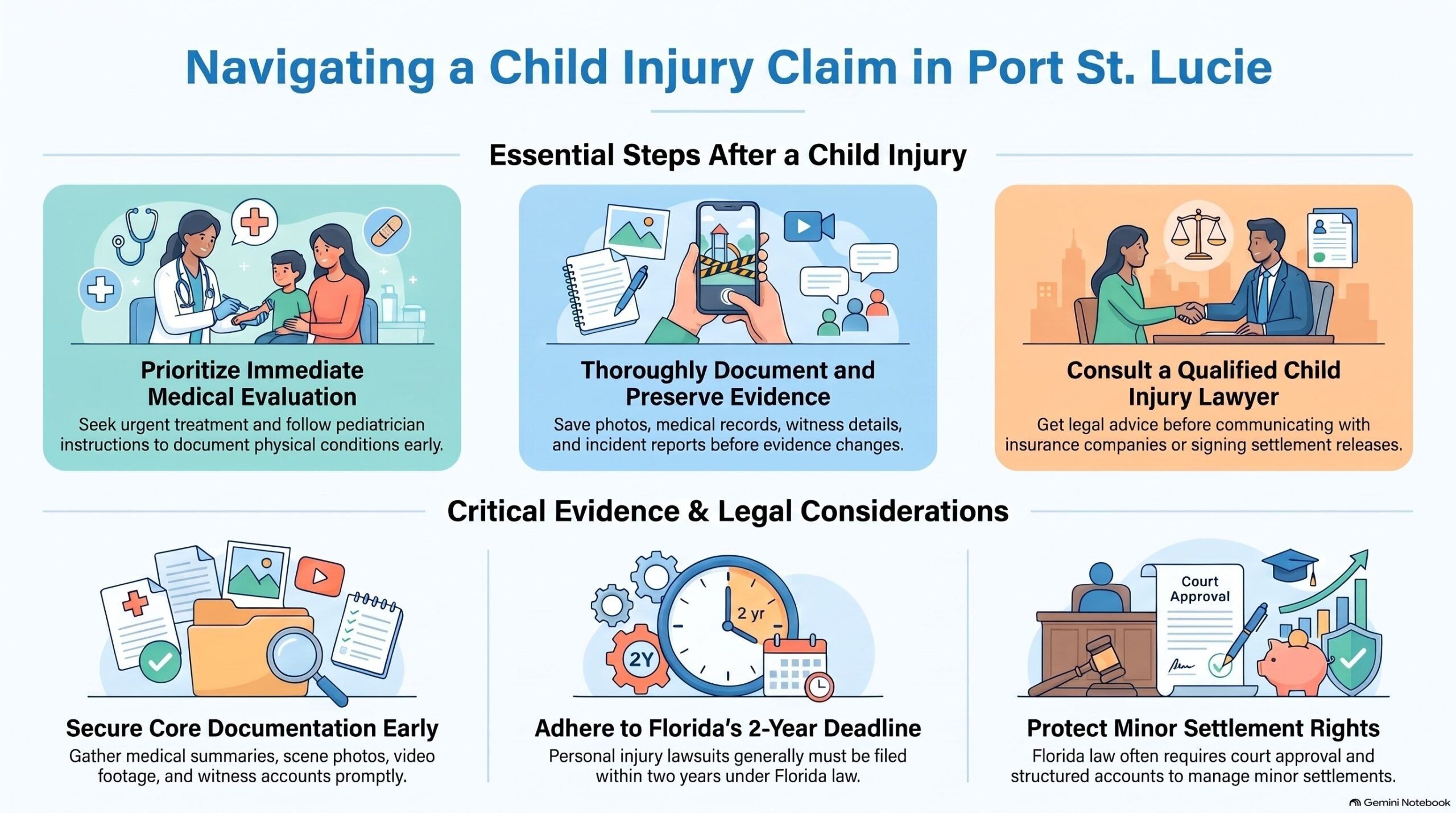
After a child is injured in Port St. Lucie, prioritize prompt medical care, even if the injury initially appears minor. The child’s family should document the injury and preserve relevant records, photographs, and witness information. A child lawyer can review the circumstances and explain potential legal options.
Get Medical Care
When a child is injured in Port St. Lucie, prompt medical attention should be the first priority. If the child has severe bleeding, difficulty breathing, loss of consciousness, or another urgent condition, a responsible adult should call 911 or seek emergency treatment immediately. For less serious injuries, the child should still see a pediatrician or other qualified healthcare professional promptly. Some conditions may not be obvious at first, and a clinician can assess symptoms, identify possible complications, and recommend appropriate care. Adults should describe how the injury occurred and share relevant health information so providers can make informed decisions. Following medical instructions, attending recommended follow-up visits, and monitoring the child’s condition can support recovery. Prioritizing care helps protect the child’s well-being and makes certain concerns receive appropriate attention.
Document the Injury
Once a responsible adult has addressed the child’s immediate medical needs, create a clear record of the injury and the circumstances surrounding it. The record should identify when and where the incident occurred, who was present, and what was observed before, during, and after the event. An Injury timeline can help organize these details while memories remain fresh. The adult should also preserve relevant photographs of visible injuries, the location, and any conditions that may have contributed to the incident. A symptom journal can track pain, behavioral changes, sleep disruption, and other developments over time. Keep medical visit summaries, discharge instructions, receipts, and communications about the incident in one place. Accurate, dated documentation supports consistent care and helps others understand the child’s needs.
Contact a Child Lawyer
A Port St. Lucie child injury may require prompt legal guidance, particularly when another party’s actions contributed to the harm. A family can contact a child lawyer to learn about available options, key deadlines, and steps to protect the child’s interests. Early advice can also help preserve records and coordinate communication with insurers or responsible organizations.
During an Initial consultation, the lawyer may review the circumstances, medical documentation, and questions about the child’s care and recovery. Families should ask about the attorney’s credentials, relevant experience with child injury claims, and how the lawyer will communicate with them. Clear answers can help caregivers make an informed decision without rushing.
A lawyer may explain potential claims and practical next steps, while the family remains responsible for prioritizing the child’s health, following treatment recommendations, and retaining relevant records.
Critical Evidence in a Port St. Lucie Child Injury Case
Evidence can help establish how a child was injured, the extent of the harm, and who may be responsible.
Essential materials may include:
- Medical records and reports
- Evidence from the incident scene
- Witness statements
- Photos and videos
Preserving these materials promptly supports a clear, reliable assessment of the case.
Medical Records and Reports
Medical records and reports provide essential documentation in a Port St. Lucie child injury case. They can establish the nature and severity of an injury, identify treatment needs, and show how a child’s condition changed over time. Relevant materials may include emergency department notes, physician assessments, diagnostic imaging, prescriptions, therapy records, and follow-up recommendations.
Record organization helps ensure documents are complete, dated, and arranged in a clear sequence. Accurate records can help a lawyer evaluate whether the reported injury aligns with the available medical evidence. Provider coordination may also help clarify treatment history, obtain missing records, and address questions about prognosis or ongoing care, subject to appropriate authorization and privacy protections.
Careful review supports informed decisions and helps ensure the child’s needs remain central throughout the legal process.
Incident Scene Evidence
Photographs, measurements, and witness observations can help establish the conditions surrounding a child’s injury in Port St. Lucie. Preserving the scene is important because repairs, cleanup, or ordinary use may alter the location before it is documented. When safe and appropriate, photographs should show both the overall area and relevant details, including hazards, lighting, barriers, and the child’s position. Measurements can record distances, dimensions, and sight lines that may clarify how an incident occurred. Debris mapping can document the location and distribution of broken materials or other objects, helping maintain an accurate record of the scene. Property records, maintenance logs, and inspection documents may also provide useful context about conditions at the time. Careful documentation supports a reliable assessment and helps responsible parties understand what changes may reduce future risks to children and others.
Witness Statements
Although physical conditions can change, witness statements may preserve details about how a child’s injury occurred in Port St. Lucie. A prompt account can clarify what happened before, during, and after the incident, including who was present and what actions were taken. Witnesses may include caregivers, teachers, staff members, or bystanders who observed relevant events. Their observations can help explain the circumstances and identify questions that require further investigation.
Witness Credibility depends on factors such as firsthand knowledge, consistency, and the ability to recall events accurately. Gather separate accounts without pressure or leading questions, especially when a child is involved. Statement Preservation is important because memories can fade, and witnesses may become difficult to locate. Recording dates, contact information, and the circumstances of each account supports a reliable review and helps protect the child’s interests.
Photos and Videos
Witness statements can describe an incident, while photos and videos may document the conditions surrounding it in Port St. Lucie. Images of a hazard, damaged equipment, visible injuries, or the surrounding area can help clarify how a child was hurt. A dated photograph taken soon after an incident may also show whether a dangerous condition changed before an inspection.
Photo Preservation matters because files can be lost, edited, or stripped of information that helps establish when and where they were created. Retain original files, back them up securely, and share them without alteration. Video Authentication may require confirming the recording’s source, date, continuity, and accuracy. Request relevant footage from businesses, schools, or public locations promptly, since routine systems may overwrite recordings. Careful handling supports a fair assessment and helps protect the child’s interests.
Don’t Wait. Call Our Florida Personal Injury Lawyers Now!
Long-Term Effects of Port St. Lucie Child Injuries
Child injuries may lead to chronic physical conditions that affect development, mobility, or daily activities. Some children also experience lasting emotional or behavioral changes that require professional support. When recovery involves ongoing treatment or assistance, families may face significant long-term care needs.
Chronic Physical Conditions
Some injuries sustained by children in Port St. Lucie can lead to chronic physical conditions that require care long after initial treatment ends. Damage to the brain, spine, bones, or internal organs may affect mobility, strength, coordination, or a child’s ability to complete everyday activities. Ongoing medical appointments, rehabilitation, medication, and tailored support can become part of the family’s routine. Managing chronic pain may require coordinated care from physicians and other qualified providers, with treatment adjusted as the child grows. Some children also need adaptive equipment, such as braces, wheelchairs, or modified home and school environments. These needs can create continuing expenses and practical demands for caregivers. Clear medical records and professional assessments can help families understand the child’s long-term care requirements and plan for appropriate support.
Emotional and Behavioral Changes
After a serious injury, a child in Port St. Lucie may experience lasting emotional and behavioral changes, even after visible wounds have mended. Pain, disrupted routines, and frightening memories can affect a child’s sense of safety and ability to manage stress. Emotional withdrawal may appear as reduced communication, loss of interest in familiar activities, or reluctance to spend time with friends. Other children may show irritability, anxiety, sleep difficulties, or fear of places and situations connected to the injury. Behavioral regression, such as renewed separation anxiety or difficulty with previously mastered skills, can also occur. These responses are not necessarily signs of defiance; they may reflect distress that the child cannot readily explain. Caregiver, educator, and professional support can help identify concerns and promote recovery while preserving the child’s dignity.
Long-Term Care Needs
When a serious injury causes lasting impairment, a child in Port St. Lucie may need ongoing support well beyond initial treatment. Long-term care can involve rehabilitation, expert visits, medication, assistive equipment, and help with daily activities. The child’s needs may change as they develop, so regular medical assessments and updated care plans are important.
Families may also need to adapt the home. Home accessibility improvements, such as ramps, wider doorways, or accessible bathrooms, can promote safety and independence. Care schedules should account for school, therapy, and the demands placed on family members. Respite care can give caregivers temporary relief while ensuring the child continues receiving appropriate supervision and support.
A thorough assessment of future care needs can help identify likely expenses and services. Legal guidance may help families document these needs and pursue compensation.
Proving Liability in Port St. Lucie Child Injury Cases
Proving liability in a Port St. Lucie child injury case requires identifying who had a duty to protect the child and whether that duty was breached. Negligence standards generally require evidence that a responsible person or organization failed to act with reasonable care, and that failure caused the injury. The applicable duty may depend on where the incident occurred, the child’s age, and the defendant’s relationship to the child.
Evidence can include incident reports, photographs, medical records, witness statements, and maintenance or supervision records. A careful review helps establish how the injury happened and whether reasonable precautions were available. In some cases, expert testimony may clarify safety practices or explain how the incident caused the child’s harm.
Comparative fault may also arise when several parties contributed to an injury. Because children are judged in light of their age and capacity, courts do not assess their conduct by adult standards. Accurate documentation and a clear factual timeline can support a fair evaluation.
Dealing With Insurance Companies After a Port St. Lucie Child Injury
Insurance companies may contact a family soon after a child is injured in Port St. Lucie. Their representatives may request statements, records, or permission to review medical information. Families can respond carefully, gathering relevant documents and confirming the purpose of each request before providing details. A parent or guardian should avoid guessing about events, minimizing the child’s condition, or signing documents without understanding their effect.
Clear communication about the claim helps keep discussions accurate and organized. Families may record dates, names, and the substance of conversations and direct inquiries to the appropriate adult. Information should remain factual and consistent with available records. If a request is unclear or appears to seek a broad release, the family can ask for clarification and consider obtaining legal guidance before responding.
Policyholder advocacy may help protect a family’s interests when coverage questions or settlement discussions arise. A child’s immediate care and privacy should remain priorities, and communications should not pressure caregivers to decide before they understand their options.
What to Expect During a Port St. Lucie Child Injury Claim Process
A Port St. Lucie child injury claim typically begins with an initial case review to assess the circumstances, potential liability, and available legal options. Evidence collection then helps establish how the injury occurred and the extent of the child’s losses. The process may proceed through settlement negotiations or, if no fair resolution is reached, court proceedings.
Initial Case Review
During an initial case review, a Port St. Lucie child injury lawyer considers the circumstances of the incident and the child’s reported harm. The attorney consultation gives a parent or guardian a chance to explain what happened, describe the child’s treatment, and raise concerns about recovery, expenses, and future needs. The lawyer may ask about the child’s age, where the incident happened, who supervised the child, and whether an insurance claim has been opened. Available case documentation, such as medical summaries and correspondence, can clarify the timeline and identify questions that need further attention. The review also addresses potential legal options, deadlines, and the roles of the family and legal team. Its purpose is to assess whether a claim may proceed and explain the next steps without promising a particular outcome.
Evidence Collection
As a child injury claim moves forward, evidence collection helps establish how the incident occurred, who may be responsible, and what harm the child sustained. The process may include gathering photographs, incident reports, witness statements, medical records, and relevant communications. These materials can clarify the conditions surrounding the event and document the child’s injuries and treatment.
Evidence Preservation is important because physical objects, digital files, or surveillance footage may be altered or lost over time. A lawyer may ask responsible parties to retain relevant records and materials. Chain-of-custody documentation records when evidence was collected, who handled it, and where it was stored, helping demonstrate its reliability. Careful organization also allows the child’s representatives to review information accurately and identify gaps. The process focuses on establishing a dependable factual record while protecting the child’s interests.
Settlement Negotiations
Once the available evidence and the child’s medical needs are better understood, settlement negotiations may begin with the insurer or another responsible party. The discussion may address responsibility for the injury, treatment costs, future care needs, and other documented losses. A careful Negotiation strategy relies on organized records and a realistic assessment of how the injury affects the child’s daily life and development. Because a child’s condition may change as treatment continues, Settlement timing can be important. Accepting an offer before medical needs are clear may leave future expenses unaddressed. The family’s representative can review proposed terms, explain available options, and seek a resolution that supports the child’s well-being. Under Florida law, any settlement involving a minor may require court approval, helping safeguard the agreement and ensure it serves the child’s interests.
Court Proceedings
If settlement negotiations do not resolve a child injury claim, the case may proceed to court in St. Lucie County. The process generally begins with filing a complaint and serving the responsible parties. Each side may exchange records, question witnesses, and request relevant evidence through discovery. Pretrial motions can address disputed evidence, legal issues, or whether to proceed with particular claims. These decisions help define what will be presented at trial.
If the case is not resolved before trial, both sides present evidence to a judge or jury. Records and courtroom testimony from qualified witnesses may explain the child’s condition, medical care, and effects on daily life. A parent or guardian may also provide relevant information. The court evaluates the evidence and applies the law to determine responsibility and, if appropriate, damages.
Compensation for Port St. Lucie Child Injury Damages
Compensation for a child’s injury in Port St. Lucie may account for the lasting effects of an accident and the resources needed to support recovery. The amount depends on the evidence, the injury’s nature, and the child’s individual circumstances. Medical records, professional assessments, and documented care needs can help establish the extent of the harm.
Because a child’s condition and needs may change over time, a claim may consider Future treatment, rehabilitation, and other anticipated support. Careful evaluation can help protect the child’s access to appropriate services without assuming that every projected expense will be accepted. When appropriate, structured settlements may provide payments over time rather than a single immediate distribution. Review any proposed arrangement with attention to the child’s long-term interests and applicable court requirements. A parent or guardian may seek guidance from a qualified attorney to understand the available options and ensure decisions prioritize the child’s well-being throughout the process.
Economic vs. Non-Economic Damages in Port St. Lucie Child Cases
Economic damages may include a child’s medical expenses, rehabilitation costs, and other measurable financial losses. Non-economic damages address harm such as pain, emotional distress, and reduced quality of life. Proving both categories requires evidence linking the child’s injuries to their effects and supporting the claimed losses.
Economic Losses
When a child is injured, damages may include both measurable financial losses and non-economic harm. Economic losses are expenses and income reductions that can be documented and reasonably connected to the injury. They may include emergency care, hospital treatment, medication, rehabilitation, medical equipment, and transportation to appointments. Families may also face out-of-pocket expenses for childcare, home assistance, or modifications needed to support the child’s recovery. If a parent must miss work to provide care or attend medical visits, Lost wages may be considered as part of the claim, subject to applicable law and evidence. Records such as invoices, receipts, employment documentation, and medical statements help establish these amounts. Careful accounting supports a fair evaluation of the resources needed for treatment and ongoing care while avoiding unsupported estimates.
Non-Economic Harm
Beyond documented expenses, a child injury claim may include non-economic damages for harm without a precise dollar value. These damages address the personal effects of an injury, rather than bills or lost income. Pain and suffering may include physical discomfort, emotional distress, fear, or disruption to a child’s sense of security. Loss of enjoyment may reflect difficulty taking part in play, school activities, hobbies, or relationships that were important before the injury. The nature and duration of these effects can vary with the child’s age, condition, and recovery. In Port St. Lucie cases, courts may consider non-economic damages alongside economic losses to reflect the broader impact on a child’s daily life. This compensation is intended to cover harm that financial records alone cannot describe.
Proving Child Damages
In Port St. Lucie, proving a child’s damages requires evidence that connects the injury to measurable financial costs and personal harm. Economic damages may include medical bills, rehabilitation, assistive equipment, and lost future earning capacity. Provider records, receipts, expert assessments, and testimony can help establish these losses. Because a child’s needs may change as development continues, projections should address likely treatment, educational support, and care over time.
Non-economic damages compensate for pain, emotional distress, disability, and reduced enjoyment of ordinary activities. These harms are harder to measure, so consistent medical documentation and observations from caregivers, teachers, or other trusted adults can provide important context. Damage valuation should account for both documented expenses and the injury’s lasting effects. Careful proof of future losses can support a fair assessment while helping protect the child’s long-term interests.
When a Port St. Lucie Child Injury Case Goes to Trial vs. Settlement
A Port St. Lucie child injury case may resolve through settlement or proceed to trial, depending on the evidence, the parties’ positions, and the child’s needs. Settlement can provide compensation without the uncertainty and added demands of a courtroom proceeding. However, assess an offer carefully against documented injuries, expected treatment, and the support the child may need over time.
Settlement timing can vary. Negotiations may begin after the injury’s effects are better understood, though some cases resolve earlier when responsibility and damages are clear. A family may benefit from guidance that keeps the child’s welfare central while evaluating whether proposed terms are adequate.
If the parties cannot reach an acceptable agreement, they may need to go to trial. Trial preparation includes organizing medical records, identifying witnesses, and presenting evidence about how the injury affects the child. A judge or jury then evaluates the case and determines the outcome. The process may take longer and involve greater uncertainty, so families should weigh these considerations with qualified legal counsel.
Don’t Wait. Call Our Florida Personal Injury Lawyers Now!
Florida Laws That May Affect Your Port St. Lucie Child Case
The decision to settle or proceed to trial is shaped partly by Florida laws governing injury claims involving children. Other legal rules may affect who can act for a child, how damages are handled, and what evidence a court considers.
Understanding these requirements can help families and professionals protect a child’s welfare while pursuing a fair resolution.
- A parent or court-appointed guardian generally represents a minor’s interests in an injury claim, subject to court oversight where required.
- Florida law may require judicial approval of certain settlements involving minors, particularly when the amount or proposed distribution triggers review.
- Comparative fault rules can affect recovery if evidence shows that a child or another party contributed to the incident; age and circumstances matter.
- Florida custody statutes and best interest factors may guide decisions about parental authority when caregivers disagree over legal steps.
These rules serve an important purpose: they place the child’s interests ahead of convenience or conflict. A Port St. Lucie child lawyer can explain which provisions apply and coordinate with caregivers to support informed, responsible decisions.
The Statute of Limitations for Port St. Lucie Child Injury Cases
When must a child injury claim be filed in Florida? In many cases, Florida law provides two years from the date of injury to bring a negligence lawsuit. However, the deadline can depend on the claim’s facts, the defendant, and when the injury or its cause became known. Missing the applicable deadline may prevent recovery, so families should treat filing dates as important from the outset.
Minority tolling does not automatically pause every deadline until a child turns eighteen. Florida law includes specific rules and exceptions, and the child’s age, the type of claim, and the responsible party may affect how time is calculated. Claims involving a public school, municipality, or other government entity can also require governmental notice within a much shorter period, often before a lawsuit may proceed. These notice requirements are separate from the general filing deadline and may involve strict procedures. Careful attention to both deadlines helps preserve a child’s opportunity to seek accountability and supports a fair resolution.
How a Port St. Lucie Child Lawyer Can Help You
Because filing deadlines and notice rules can vary, a Port St. Lucie child lawyer can help a family understand its options and protect a child’s interests after an injury. The lawyer may coordinate with caregivers, schools, medical providers, and insurers while keeping the child’s safety and needs central. Support may include:
A child lawyer can coordinate with caregivers, schools, providers, and insurers while keeping a child’s safety and needs central.
- Reviewing records, incident reports, and available evidence to clarify how the injury occurred.
- Explaining legal procedures and communicating with insurers on the family’s behalf.
- Documenting medical costs, future care needs, and other losses linked to the injury.
- Seeking School accommodations and services that support the child’s education during recovery.
A lawyer can also help families evaluate settlement proposals and assess whether compensation reflects the child’s needs over time. Where appropriate, the lawyer may work with qualified professionals to describe the injury’s effects and support emotional recovery. Clear guidance can reduce administrative burdens, allowing caregivers to focus on the child while they make decisions with informed attention to long-term well-being.
When to Contact a Port St. Lucie Child Lawyer
Prompt legal guidance may be important after a child is injured, particularly when the cause is disputed, medical needs are ongoing, or an insurer requests a statement or release. A family may also contact a Port St. Lucie child lawyer when a school, caregiver, business, or other party may have failed to provide reasonable protection. Early advice can help preserve records, identify key deadlines, and clarify what information to share while the child receives needed care.
Before scheduling a meeting, families can gather medical records, incident reports, photographs, correspondence, and a timeline of events. This consultation preparation helps the lawyer assess the circumstances and explain possible next steps. Questions about Attorney qualifications, experience with child injury matters, communication practices, and fees can help families make an informed choice. A prompt consultation may be especially useful when evidence could change or deadlines are approaching. Seeking guidance allows caregivers to focus on the child’s well-being while addressing legal concerns responsibly.
Why You Need an Experienced Port St. Lucie Child Lawyer
An experienced Port St. Lucie child lawyer can help protect a child’s interests when legal proceedings affect the child’s safety, stability, or future. These matters may involve sensitive family circumstances and decisions with lasting consequences. A lawyer familiar with child-related cases can explain relevant legal procedures, organize important information, and present concerns clearly to the court.
Effective Child advocacy requires careful attention to the child’s needs, not simply the positions of the adults involved. Counsel can help guarantee that a child’s welfare remains central while communicating respectfully with parents, caregivers, and other professionals. This support may reduce confusion and help families understand what to expect at each stage.
A lawyer can also provide practical family guidance by clarifying legal responsibilities and helping caregivers make informed decisions. When disputes arise, experienced representation can support constructive resolution where appropriate and advocate firmly when court intervention is necessary. With knowledgeable assistance, families can address difficult issues with greater clarity while keeping the child’s well-being foremost.
How to Choose the Right Port St. Lucie Child Lawyer for Your Case
Choosing the right Port St. Lucie child lawyer starts with identifying the case’s specific needs. Matters involving custody, support, visitation, or a child’s safety can require different experience and preparation. Careful selection helps ensure decisions remain focused on the child’s well-being and applicable legal standards.
Families can review Attorney credentials, including Florida licensure, relevant family law experience, and familiarity with St. Lucie County court procedures. They may ask how the lawyer has handled similar cases and what outcomes or challenges arose. Clear answers can help distinguish practical experience from general claims.
The lawyer’s communication style also matters. A suitable attorney should explain options in understandable terms, respond within reasonable timeframes, and keep clients informed about deadlines and developments. Families should assess whether the lawyer listens carefully, respects their concerns, and provides candid guidance, including when a requested approach may not serve the child’s interests. Comparing several consultations can help families make an informed choice with confidence.
About The Law Offices of Anidjar & Levine
The Law Offices of Anidjar & Levine represents clients in family law matters, including disputes that affect children and their families.
The firm provides legal guidance to parents and caregivers addressing issues such as parental responsibility, time-sharing, and child support.
These matters can shape a child’s daily life, so clear communication and careful preparation are important throughout the process.
The firm’s history reflects a practice serving individuals and families in Florida across a range of legal concerns.
The attorneys work to explain available options, outline relevant procedures, and help clients make informed decisions.
Their approach recognizes that each family’s circumstances require individual attention and that a child’s welfare remains central in many disputes.
The firm’s attorney philosophy emphasizes responsive service, practical guidance, and diligent representation.
Attorneys assess the facts, identify the issues that may affect a child, and pursue lawful solutions suited to the case.
By helping clients understand their responsibilities and choices, the firm supports informed participation in decisions affecting family life.

Frequently Asked Questions
Can a Child’s Injury Claim Affect Their Future Eligibility for Government Benefits?
A child’s injury claim can affect future eligibility for government benefits, depending on how settlement funds are received, held, and spent. A lump-sum payment may temporarily exceed asset limits for Supplemental Security Income and Medicaid eligibility. Structured payments or an appropriately established special needs trust may help preserve benefits, but requirements vary by program and circumstances. Before accepting or distributing funds, the family should consult a qualified attorney and benefits expert to protect the child’s long-term support.
Who Manages a Settlement Awarded to a Minor in Florida?
In Florida, a court-appointed guardian generally manages a settlement awarded to a minor, or the funds are placed in a restricted account until the child reaches adulthood. Courts typically require approval for settlements involving a minor, and the judge may decide how to protect and distribute the funds. A Guardian Appointment may be necessary when no suitable guardian of the property is already authorized. The arrangement safeguards the child’s interests and preserves funds for future needs.
Can Parents Recover Compensation for Time Missed From Work While Caring for an Injured Child?
Parents may recover compensation for wages lost while caring for an injured child, but eligibility depends on the facts, applicable law, and whether the care was reasonably necessary. Missed-work documentation, including employer statements, pay records, and medical instructions, can help establish the loss and its connection to the injury. Caregiver Wage Reimbursement is not automatic; a claim may require legal review to determine whether the child’s settlement or another responsible party can cover it.
Are Child Injury Settlements Subject to Taxes?
Child injury settlements are generally not taxable when they compensate for physical injuries or related medical expenses. Settlement Tax Treatment can differ for amounts designated as punitive damages, interest, or compensation for emotional distress unrelated to physical injury, which may be taxable. Any interest or investment income earned after the settlement is received may also be taxable as Taxable Investment Earnings. A tax professional can review the settlement terms and explain applicable reporting duties.
What Happens to a Child’s Settlement When They Turn 18?
When a child reaches 18, settlement maturity does not always mean immediate access to the entire award. The fund distribution depends on how the settlement was structured and any court orders governing the funds. Money held in a restricted account or trust may become available under specified terms, while an annuity may continue scheduled payments. The young adult should review the settlement documents and seek qualified legal or financial guidance before accessing funds.
—————————
A child injury can affect a family long after immediate medical needs have been addressed.
A Port St. Lucie child lawyer can review what happened, identify potentially responsible parties, and explain the family’s legal options.
Prompt attention may help preserve evidence and protect the child’s interests.
The Law Offices of Anidjar and Levine can assess a claim and guide families through the next steps with care and clarity.
Learn more about working with a Port St. Lucie Personal Injury Lawyer.

