

A Naples slip and fall pharmacies lawyer at The Law Offices of Anidjar and Levine can investigate how a customer was injured, identify potentially responsible parties, and assess whether the pharmacy took reasonable steps to address a hazard. The firm may help preserve surveillance footage, review inspection and maintenance records, organize medical documentation, and communicate with insurers. Potential compensation may include medical costs, lost income, rehabilitation expenses, and other documented effects. Each claim depends on its facts and evidence. Learn more from a Naples Personal Injury Lawyer.
Main Takeaways
- A Naples pharmacy slip-and-fall lawyer can investigate the hazard, identify potentially responsible parties, and explain how premises liability law may apply.
- Claims often depend on whether the pharmacy knew or should have known about the hazard and failed to take reasonable steps.
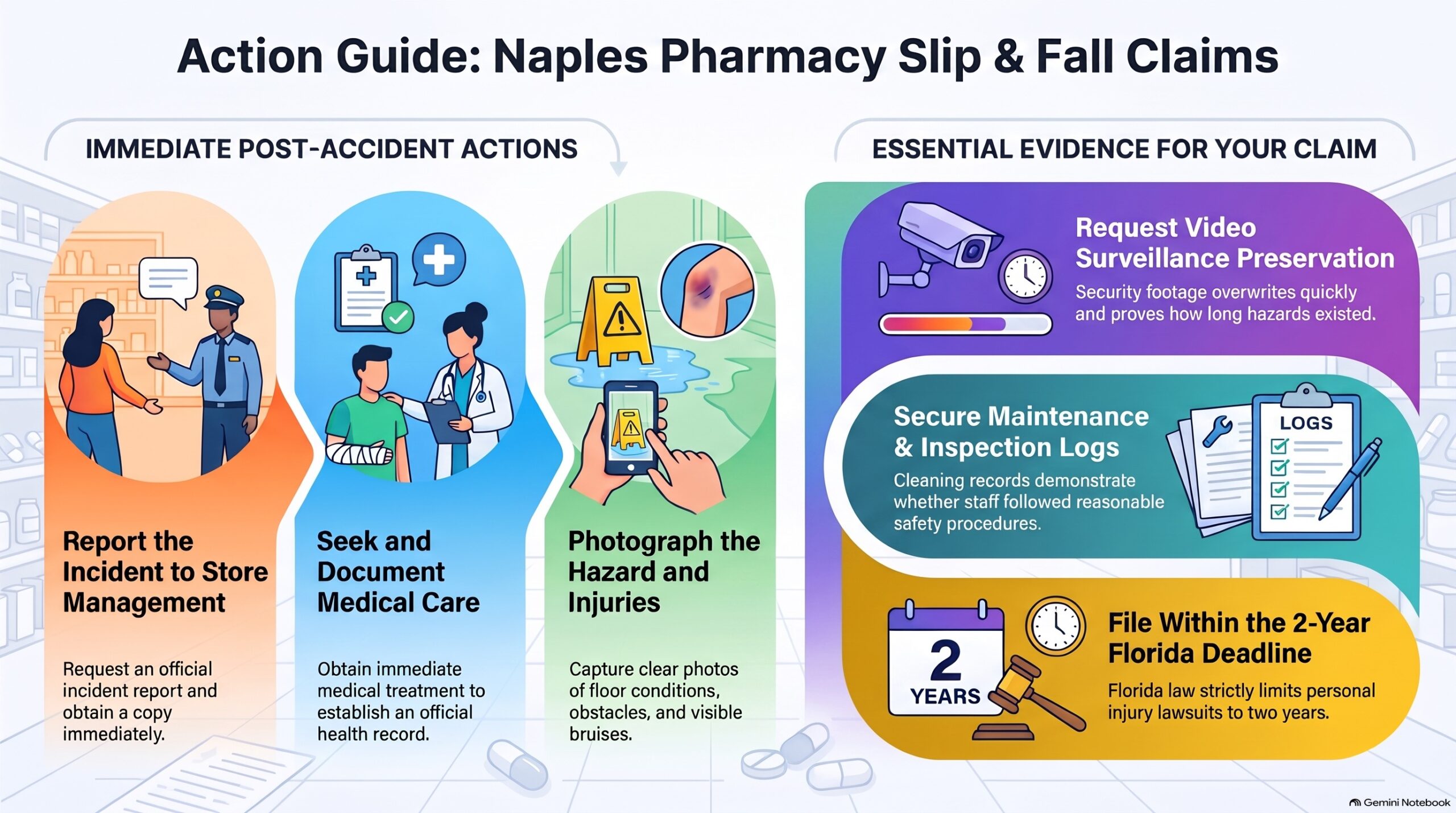
- Report the fall, seek medical care, collect witness details, photograph the scene, and request preservation of relevant surveillance footage.
- Inspection logs, incident reports, maintenance records, and medical documentation can help clarify what happened and support an injury claim.
- Compare lawyers’ experience, communication practices, and fees; no attorney can guarantee a particular outcome.


How We Can Help With Your Naples Slip & Fall Pharmacies Injury Claim
A Naples slip and fall lawyer can investigate a pharmacy injury claim, identify responsible parties, and pursue compensation for the injured person. Counsel can provide practical guidance while treating the client with respect and keeping the process focused on recovery. The work may include reviewing incident reports, photographs, witness accounts, and available video to clarify how the fall occurred. These steps can help establish Pharmacy liability and identify whether the pharmacy, a property owner, or another party may bear responsibility.
Claim preparation involves organizing relevant records, documenting losses, and communicating with insurers on the client’s behalf. Counsel may also obtain medical documentation and assess how the injury affects the person’s daily activities, work, and future needs. Clear, timely communication helps clients understand important decisions and available options. When settlement discussions don’t produce a fair resolution, the lawyer can pursue the claim through appropriate legal proceedings. This support lets injured people focus on recovery while their legal interests receive careful attention.
OUR CONSULTATIONSARE FREE
START YOUR FREE CASE REVIEW

Understanding Naples Slip & Fall Pharmacy Injury Cases
Understanding a Naples pharmacy slip and fall case begins with determining how the hazardous condition arose and whether the responsible party had a reasonable opportunity to address it. The analysis considers the property owner’s or operator’s control over the area, how long the condition existed, and what reasonable precautions were taken. Relevant evidence may include incident reports, photographs, witness accounts, maintenance records, and surveillance footage, when available.
Pharmacy safety policies and premises inspection schedules can help show how the business intended to identify and respond to unsafe conditions. How they were implemented in practice may also matter, including whether inspections were documented and whether reported concerns received timely attention. A claim generally requires evidence connecting a failure to use reasonable care with the injury and resulting losses. Medical records and other documentation can help establish that connection and describe the effects on the injured person. Each case depends on its specific facts, applicable law, and available evidence, so careful review is necessary before reaching conclusions.
Common Causes of Naples Slip & Fall Pharmacies
Pharmacy slip-and-fall hazards may include wet or spilled liquids, uneven flooring, and cluttered aisles. Poor lighting can also make hazards difficult for customers to see. Identifying these conditions helps clarify how preventable falls may occur in pharmacy settings.
Wet or Spilled Liquids
When liquids spill or accumulate on pharmacy floors, they can create slick, difficult-to-see hazards for customers and staff. Common Liquid Sources include leaking refrigerators, dripping umbrellas, beverage containers, cleaning solutions, and products that break or leak from shelves. Rainwater tracked inside may also collect near entrances, especially during wet weather. These Spill Hazards can be particularly concerning in busy aisles, where customers may be focused on selecting medication or seeking assistance rather than watching the floor. Pharmacies can reduce risks by promptly inspecting high-traffic areas, cleaning spills, and placing visible warning signs while floors dry. Staff should follow clear procedures for reporting and addressing liquid hazards, including documenting when they are found and corrected. Timely attention helps protect customers, employees, and others who rely on the pharmacy’s services.
Uneven Flooring
Uneven flooring can create trip hazards in Naples pharmacies, particularly in aisles and near entrances where customers may be focused on finding products or speaking with staff. Loose tiles, raised seams, worn carpet edges, and sudden changes in floor height can catch a customer’s foot and cause a fall. These conditions can develop through normal wear, moisture damage, or inadequate maintenance. Pharmacy operators can reduce risk by conducting regular flooring inspections and promptly addressing defects. Clear procedures help staff report damaged surfaces and direct customers away from affected areas until repairs are complete. Repair records can document when staff identified a hazard, what corrective work they performed, and whether they conducted follow-up checks. These records can show how the pharmacy monitored flooring conditions and responded to potential safety concerns.
Cluttered Aisles
Cluttered aisles can create trip hazards in Naples pharmacies when boxes, restocking carts, misplaced products, or other items obstruct customer walkways. These obstacles may force shoppers to change direction suddenly, step around merchandise, or traverse narrow passages while carrying purchases or assisting family members. Pharmacies must keep routes clear and arrange products so customers can move safely through the store. Staff should promptly remove packaging and return misplaced items to designated areas. Whenever possible, keep restocking carts outside active walkways, and secure or remove unstable display stands before they tip or obstruct passage. Blocked emergency exits pose an additional safety risk because they can impede evacuation during an emergency. When clutter contributes to a fall, the circumstances and the store’s response may warrant careful review.
Poor Lighting
Poor lighting can make hazards in Naples pharmacies difficult for customers to see, including wet floors, raised thresholds, loose mats, or items left in walkways. Dimmed aisles may also obscure changes in floor level and make it harder to read signs directing customers around cleaning or maintenance work. Burned-out bulbs near entrances, checkout areas, or restrooms can create uneven visibility, increasing the chance that a customer will miss an obstacle while carrying purchases or assisting another person.
Pharmacy operators can reduce these risks by regularly inspecting lighting, promptly replacing faulty bulbs, and maintaining consistent illumination throughout customer areas. When repairs temporarily affect visibility, clear warnings and accessible alternate routes can help protect visitors. If a fall occurs, the lighting condition, hazard location, and any reported maintenance issue may be relevant when evaluating how the incident happened.
Don’t Wait. Call Our Florida Personal Injury Lawyers Now!


Legal Rights of Naples Slip & Fall Pharmacy Injury Victims
When a customer is injured in a pharmacy slip and fall, the right to seek compensation depends on the accident’s circumstances and the store’s responsibility for the hazard. Florida premises liability law generally requires a customer to show that the pharmacy owed a duty of reasonable care, failed to meet that duty, and caused an injury. The customer’s conduct and available evidence may also affect a claim.
A pharmacy injury claim may address:
- Medical expenses, rehabilitation costs, and related treatment needs.
- Lost income or reduced ability to work during recovery.
- Pain, suffering, and other documented effects of the injury.
- Evidence such as incident reports, photographs, witness accounts, and medical records.
Prompt documentation can help preserve relevant information and clarify how the incident occurred. A claim should respect Patient privacy while obtaining necessary records, and any proposed resolution should account for pharmacy accessibility and other customers’ needs. Legal deadlines and case-specific facts can affect available options. An attorney can explain your rights and guide you through the process.
Why Do Naples Slip & Fall Pharmacies Injuries Happen?
Why do slip-and-fall injuries occur in Naples pharmacies? These incidents often result from preventable hazards that develop in busy retail environments. Spilled liquids, tracked-in rainwater, leaking refrigerators, and dropped products can make floors slick or create obstructions. Customers may focus on prescriptions, signs, or crowded aisles and miss a hazard before losing their balance.
Pharmacy staffing can affect how quickly employees identify and address spills, restock shelves, and monitor high-traffic areas. When staff members are busy dispensing medications or assisting customers, hazards may go unnoticed. Store maintenance also plays an important role. Worn flooring, uneven floor levels, poor lighting, and damaged mats can create unsafe walking conditions, especially for older adults or people with mobility limitations.
Some falls occur when merchandise, display stands, or delivery materials narrow aisles and block clear paths. Regular inspections, prompt cleanup, and adequate staffing can reduce these risks and help pharmacies keep customers safe.
What Should You Do After a Naples Slip & Fall Pharmacy Injury?
After a slip and fall in a Naples pharmacy, the injured person should promptly report the incident to store management and request that it be documented. They should seek medical care and preserve photographs, records, and other evidence of their injuries and the scene. A lawyer can assess the circumstances, explain available options, and help protect the injured person’s legal rights.
Report the Fall
Promptly reporting a fall to the pharmacy manager or another responsible employee creates an official record of the incident. The injured person should provide the approximate time and location, explain what happened, and identify any contributing conditions, such as a spill or obstruction. Prompt reporting gives the pharmacy time to respond quickly, address hazards, and preserve relevant information. The person should request that the incident be recorded and ask how to obtain a copy of any report. If employees or customers witnessed the fall, notifying them can help ensure their names and contact details are recorded while memories are fresh. The injured person should remain factual and avoid speculation about fault. If immediate medical attention is needed, getting care takes priority; someone else may notify the pharmacy on their behalf.
Document Your Injuries
Even if injuries seem minor, someone who falls in a Naples pharmacy should document them as soon as possible. Prompt records can help healthcare providers assess the condition and support accurate treatment decisions. The injured person should photograph visible bruises, cuts, swelling, or mobility aids, and avoid editing the images in ways that could obscure details. An Injury diary can record when symptoms began, how they change, and which daily activities become difficult. Consistent symptom tracking should include pain levels, dizziness, headaches, and any new concerns. Keep medical appointments, diagnoses, prescriptions, and discharge instructions in an organized file. If symptoms worsen or new problems appear, the person should seek appropriate medical care promptly. Clear, dated documentation helps preserve an accurate account of the injury and recovery.
Contact a Lawyer
Once immediate medical needs are addressed and injury records are organized, a person injured in a Naples pharmacy fall may benefit from consulting a lawyer. An attorney can explain how premises liability rules may apply and identify evidence that could clarify what caused the fall. Useful materials may include photographs, incident reports, witness details, medical records, and communications with the pharmacy.
During a Free consultation, the injured person can describe the event, ask about deadlines, and learn what information may be needed for a case review. The lawyer can assess potential responsibility without promising a particular result. Prompt legal guidance may also help preserve relevant evidence, such as surveillance footage or maintenance records, before it is lost. A person seeking to protect their interests can compare experience, communication practices, and fee arrangements before choosing representation.
Don’t Wait. Call Our Florida Personal Injury Lawyers Now!
Critical Evidence in a Naples Slip & Fall Pharmacy Injury Case
Evidence can help establish how a pharmacy slip-and-fall occurred and document the resulting injuries.
Essential materials may include:
- Incident reports
- Surveillance footage
- Witness statements
- Medical records
Promptly preserving this evidence can support a clear assessment of the claim.
Incident Reports
When a customer slips and falls in a Naples pharmacy, an incident report can document important details about the event and the store’s response. The report may identify the date, time, location, reported hazard, injuries, and employee actions. These details can clarify how the pharmacy addressed the incident and whether its account matches other evidence.
A person seeking to support an injured customer may request Report copies through appropriate legal channels. The document should be preserved in its original form, including any later additions or corrections. Staff interviews can help establish who prepared the report, what information was available, and whether employees observed relevant conditions. Prompt, respectful inquiries may also identify witnesses and preserve accurate recollections. Because reports may contain incomplete or disputed information, assess them alongside medical records, photographs, and other evidence.
Surveillance Footage
How can surveillance footage clarify a pharmacy slip-and-fall in Naples? Video may show the floor’s condition, whether a spill or obstruction was present, and how long the hazard remained before the incident. It can also document the fall and the surrounding area, helping establish a clearer timeline than written records alone.
Camera placement matters because a pharmacy’s recording system may not cover every aisle, entrance, or checkout area. Identify relevant footage promptly, as routine systems may overwrite recordings after a limited period. Video preservation requests can help prevent the loss of material that may support a fair review of the event.
A careful examination can reveal both helpful and unfavorable details. Reviewing available footage alongside incident records may help evaluate how the store responded and whether its safety practices were reasonable.
Witness Statements
Witness statements can clarify the circumstances of a pharmacy slip-and-fall in Naples by describing the floor’s condition, any visible hazards, and the events surrounding the fall. Customers, employees, and other observers may explain whether a spill, misplaced item, or warning sign was present. Their accounts can also establish how long a hazard appeared to remain and whether staff had an opportunity to address it. Witness credibility depends on factors such as the observer’s location, attention, consistency, and relationship to the parties. Statement timing matters because memories can fade, and details may become less precise over time. Promptly identifying witnesses and recording their observations can help preserve useful evidence. A careful account should distinguish what the witness personally saw from what others later reported, supporting a fair assessment of the incident.
Medical Records
While witness accounts may describe the pharmacy conditions surrounding a fall, medical records document the injuries and treatment that followed. These records may include emergency evaluations, diagnostic imaging, physician notes, prescriptions, and rehabilitation reports. Together, they help establish the nature and extent of harm and link reported symptoms to clinical findings.
A clear Treatment chronology can show when symptoms began, how they changed, and whether care was sought promptly. Consistent documentation may also clarify gaps in treatment or explain them through provider referrals, scheduling delays, or other circumstances. Records from each treating professional can reveal recommended care and progress over time.
For an injured person, complete records support an informed review of the claim and help ensure decision-makers consider the full medical picture. Accurate, organized documentation can support a fair assessment of losses and future care needs.
Long-Term Effects of Naples Slip & Fall Pharmacy Injuries
A pharmacy slip-and-fall can cause lasting effects that extend well beyond the initial injury. Some individuals experience chronic pain, reduced mobility, or neurological symptoms that interfere with daily activities. These challenges may also contribute to emotional distress and ongoing financial strain.
Chronic Pain And Mobility
When a pharmacy slip and fall causes lasting injuries, chronic pain and reduced mobility can affect a person’s ability to work, manage daily tasks, and maintain independence. Back, hip, knee, or shoulder injuries may make standing, walking, lifting, and reaching difficult. Persistent discomfort can also disrupt sleep and limit participation in family or community activities.
A consistent care plan may include physical therapy, prescribed treatment, and Pain management strategies tailored to the injury. Mobility aids, such as canes or walkers, may support a person as they rebuild strength and balance. These measures can help preserve independence and reduce the risk of further falls.
For those assisting an injured person, practical support with transportation, appointments, or household tasks can ease daily burdens. Medical records and treatment notes may also document ongoing limitations and recovery needs.
Lasting Neurological Effects
After a pharmacy slip and fall, a head or spinal injury may lead to lasting neurological effects, including persistent headaches, dizziness, numbness, weakness, or difficulty with balance and concentration. These symptoms can disrupt daily activities and may require ongoing medical evaluation. Memory impairment can affect a person’s ability to retain information, follow instructions, or manage familiar tasks. Sensory disruption, such as altered touch, tingling, or sensitivity to light and sound, may also persist after the initial injury. Effects vary with the injury’s location and severity, and some conditions may develop gradually. Medical records, diagnostic testing, and expert assessments can help clarify the nature and duration of neurological changes. Timely care supports informed treatment decisions and helps injured individuals stay safe and independent during recovery.
Emotional And Financial Strain
Long-term injuries from a slip and fall at a Naples pharmacy can create emotional and financial strain that extends beyond physical recovery. Persistent pain, reduced mobility, or neurological symptoms may limit a person’s ability to work, manage daily responsibilities, and participate in community life. These changes can contribute to anxiety, frustration, or isolation, particularly when recovery is uncertain. Household budget pressure may grow as income falls while medical bills, rehabilitation costs, transportation expenses, and home assistance needs continue. Family relationships can also strain when relatives take on caregiving duties or household tasks, especially without clear support. Practical assistance, open communication, and access to appropriate treatment may help families manage these demands. Documentation of expenses and lasting effects can also clarify the injury’s broader consequences when seeking legal guidance or compensation.
Proving Liability in Naples Slip & Fall Pharmacy Injury Cases
Proving liability in a Naples pharmacy slip-and-fall case requires evidence that the business failed to use reasonable care and that this failure caused the injury. A pharmacy may be responsible when a hazardous condition, such as a spilled liquid, dropped merchandise, or uneven flooring, creates an unreasonable risk for customers. The injured person generally must show that the pharmacy knew or should have known about the danger through reasonable care.
Records of cleaning schedules, inspection procedures, incident reports, and maintenance can help establish whether staff responded appropriately. Negligent inspection may be shown when employees fail to check aisles regularly or leave a reported hazard unaddressed. Photographs, witness accounts, and prompt scene documentation may also clarify how the fall occurred and whether the condition caused the injury. Pharmacy liability depends on the specific facts, including how long the hazard existed, how visible it was, and how the business responded. A careful review of the evidence can help identify responsibility and support fair accountability.
Dealing With Insurance Companies After a Naples Slip & Fall Pharmacy Injury
When a customer is injured in a Naples pharmacy slip and fall, the business’s insurer may contact the customer to gather information and assess the claim. The insurer’s representative may ask about the incident, the customer’s injuries, and any treatment received. A calm, factual response can help prevent misunderstandings, while speculation about the cause or extent of harm may complicate communication.
Before providing recorded statements or signing documents, the injured person may benefit from consulting a qualified attorney. Statements made soon after an incident can be reviewed later, and unclear or incomplete answers may be interpreted in ways that do not reflect the customer’s experience. The insurer may also request medical records or other personal information, so carefully review the scope of any authorization.
An insurer may discuss settlement options or explain Policy limits, but its interests can differ from the injured person’s needs. Careful communication helps protect accurate information and supports a fair, respectful exchange while the customer focuses on recovery and responsibilities to others.
What to Expect During a Naples Slip & Fall Pharmacies Injury Claim Process
A Naples pharmacy slip-and-fall claim typically begins with an evaluation of the circumstances, injuries, and potential liability. The process then involves gathering evidence, such as incident reports, witness statements, and medical records, before the parties assess possible settlement terms. If negotiations don’t resolve the dispute, the next step may be filing a lawsuit.
Initial Case Evaluation
What happens during an initial evaluation of a pharmacy slip-and-fall claim? The process begins with an Initial case review, in which an attorney considers the circumstances of the fall, the reported injuries, and the potential effects on the injured person’s daily responsibilities. This discussion helps clarify the client’s goals and whether legal representation may be appropriate.
A liability assessment then considers whether the pharmacy may have failed to maintain reasonably safe premises or address a hazardous condition. The attorney also reviews how the incident and injuries may relate to available legal claims, identifies unanswered questions, and notes possible challenges. The evaluation may include an explanation of relevant deadlines, the general claims process, and potential paths to resolution. No outcome can be guaranteed; the assessment provides a reasoned basis for deciding how to proceed.
Evidence Gathering
Evidence gathering helps establish how the pharmacy fall occurred, whether a hazardous condition existed, and how the incident affected the injured person. The process may begin with Scene Documentation, including photographs of the floor, spills, warning signs, lighting, and nearby displays. Witness names and contact information can help preserve independent accounts of what happened. The injured person’s shoes, clothing, and photographs of visible injuries may also provide relevant details. Preserving evidence matters because cleaning, repairs, or routine store operations can quickly change the scene. A lawyer may request incident reports, maintenance records, inspection logs, and available surveillance footage before those materials are lost or overwritten. Medical records can document the injuries and treatment received. Careful collection and organization of these materials helps clarify the facts and supports a thorough review of the claim.
Settlement Negotiations
Once the available records and other evidence clarify how the pharmacy fall occurred and the injuries involved, settlement negotiations may begin with the insurer or another responsible party. The injured person’s representative may present a demand outlining the facts, documented losses, and compensation sought. A sound Demand strategy accounts for medical expenses, lost income, future care needs, and the injury’s impact on daily activities. The insurer may accept the request, deny responsibility, or propose a different amount. Review each offer against the evidence and the injured person’s needs, rather than accepting it solely to resolve the matter quickly. If direct discussions stall, mediation may provide a structured setting for continued negotiation. Mediation preparation includes organizing records, evaluating proposals, and clarifying priorities while keeping the injured person’s recovery central.
Filing a Lawsuit
If settlement negotiations do not resolve a Naples pharmacy slip-and-fall claim, the injured person may file a lawsuit against the parties believed responsible. Complaint drafting identifies the defendants, explains the alleged unsafe condition, and describes how the fall caused injury and financial loss. The complaint must be supported by available evidence and comply with Florida procedural requirements. Filing the complaint begins the formal litigation process, after which defendants receive notice and an opportunity to respond. The parties may exchange records, answer written questions, and conduct depositions to clarify disputed facts. A court may also address motions or encourage further settlement discussions before trial. Throughout the case, careful preparation helps present the claim accurately and supports fair consideration of the injured person’s needs and the responsibilities of those involved.
Compensation for Naples Slip & Fall Pharmacy Injury Damages
Compensation after a pharmacy slip and fall in Naples may cover medical expenses, lost income, reduced future earning capacity, and pain and suffering when unsafe conditions caused the injury. A claim may also account for rehabilitation, prescription costs, and necessary assistance during recovery. The injured person generally must connect the losses to the fall and provide reliable supporting records.
Damage valuation considers the injury’s nature, treatment received, recovery outlook, and effects on daily responsibilities. Medical files, wage documentation, and statements from treating professionals can help establish the extent of harm. Clear evidence also helps show how the pharmacy’s conduct contributed to the unsafe condition.
Compensation sources may include applicable business liability insurance or, when appropriate, another responsible party’s coverage. The available recovery depends on the facts, policy terms, and evidence of responsibility. A careful review can help an injured person understand potential options and pursue a fair resolution while preserving resources needed for continued care and a safe return to ordinary activities.
Economic vs. Non-Economic Damages in Naples Slip & Fall Pharmacy Cases
In Naples pharmacy slip-and-fall cases, economic damages may include medical expenses and lost wages, while non-economic damages cover pain and suffering. Each category requires evidence that connects the claimed losses to the fall. Medical records, wage documentation, and other supporting evidence can help establish the extent of damages.
Medical Expenses And Lost Wages
After a slip-and-fall in a Naples pharmacy, an injured person may seek damages for both direct financial losses and the broader effects of the injury. Medical expenses may include emergency care, diagnostic tests, physician visits, physical therapy, and medication. Courts may also consider prescription costs and reasonable future treatment expenses when supported by medical records and professional assessments. Lost wages may arise when injuries prevent a person from working or require reduced hours. Pay records, employer statements, and medical documentation can help establish lost income and any impact on future earning capacity. Wage replacement benefits may offset some losses, but they do not necessarily cover all recoverable damages. Careful documentation clarifies the financial impact and supports an accurate claim, while non-economic damages address other consequences of the injury.
Pain And Suffering
Pain and suffering may be recoverable when a pharmacy slip and fall causes physical pain, emotional distress, or lasting limitations. These non-economic damages differ from economic losses, such as medical expenses and lost wages, because they address personal effects that do not have a direct price. A person may experience ongoing discomfort, reduced mobility, sleep disruption, or difficulty returning to ordinary activities. Emotional distress can include anxiety about walking in public spaces, frustration, or diminished enjoyment of daily life. The nature and duration of these effects vary with the injury and the individual’s circumstances. A careful Pain assessment considers how symptoms affect routine tasks, relationships, and independence over time. In Naples cases, a claim may seek fair compensation for these harms while recognizing the person’s dignity and the practical challenges of recovery.
Proving Your Damages
Proving damages in a Naples pharmacy slip-and-fall case requires evidence linking the fall to both financial losses and personal harm. Economic damages may include medical bills, prescription expenses, lost wages, and reduced earning capacity. Receipts, invoices, pay records, and medical opinions help establish these losses and show how the incident affected the injured person’s ability to work and meet daily responsibilities. Organize damage documentation consistently, including records of treatment, expenses, and missed work.
You may also recover future care costs when medical evidence supports the need for ongoing treatment, rehabilitation, or assistance. Non-economic damages address pain, emotional distress, and limits on ordinary activities. Personal accounts, treatment notes, and testimony from people familiar with the individual’s life can help explain these effects. Clear evidence enables fair evaluation and supports accountability to those harmed.
Don’t Wait. Call Our Florida Personal Injury Lawyers Now!
When a Naples Slip & Fall Pharmacies Injury Case Goes to Trial vs Settlement
A Naples pharmacy slip and fall claim may resolve through settlement or proceed to trial, depending on the evidence, the parties’ positions, and the extent of the injury. Settlement can provide a defined payment and avoid the uncertainty, time, and expense of a courtroom dispute. The parties may also consider settlement confidentiality, including whether the proposed terms restrict disclosure of the agreement. Any resolution should account for documented losses and the injured person’s continuing needs.
If negotiations do not produce acceptable terms, a trial lets each side present evidence, cross-examine witnesses, and ask a jury to decide responsibility and compensation. Jury deliberation dynamics can make the outcome difficult to predict, even when the evidence appears persuasive. A verdict may provide a clear decision, but appeals or collection issues can delay final recovery. The choice between settlement and trial depends on case-specific risks, available proof, and the claimant’s priorities. Careful evaluation helps support an informed decision while keeping the injured person’s well-being central.
Florida Laws That May Affect Your Naples Slip & Fall Pharmacy Case
Whether a Naples pharmacy slip-and-fall claim settles or goes to trial, Florida law shapes how courts determine responsibility and compensation. For injured customers and those supporting their recovery, several legal principles may guide how evidence and fault are evaluated.
Florida law governs how courts evaluate pharmacies’ responsibility and injured customers’ compensation in slip-and-fall claims.
- Premises notice: A customer generally must show the pharmacy knew or should have known about a dangerous condition and failed to address it. Evidence may include inspection records, employee observations, and how long the condition existed.
- Comparative negligence: If the customer’s conduct contributed to the fall, Florida’s comparative-fault rules may reduce recoverable damages. The assigned share of responsibility can affect compensation.
- Reasonable care: Property operators must take reasonable steps to maintain safe premises, including addressing hazards and providing appropriate warnings.
- Evidence and damages: Medical records, photographs, witness accounts, and proof of financial losses may help establish the injury’s cause and extent.
These rules make careful documentation important. Each case depends on its specific facts, including what the pharmacy knew, what precautions it took, and how the incident affected the injured person. A thorough review can clarify potential responsibility and support informed decisions.
The Statute of Limitations for Naples Slip & Fall Pharmacy Injury Cases
How soon an injured customer acts can affect the right to pursue a Naples pharmacy slip-and-fall claim. Florida law generally gives an injured person two years from the date of a negligence-based injury to file a lawsuit. Missing that deadline may prevent recovery, even when unsafe flooring or a spill caused the fall. This deadline makes prompt attention to records and dates important for customers seeking accountability and safer conditions for others.
Some circumstances may alter the filing period. Deadline Exceptions can apply when the injured person is a minor or legally incapacitated, or when a defendant’s conduct prevents discovery of relevant facts. These situations depend on specific legal requirements and do not automatically pause the clock. Claim Extensions may also be available under limited rules, but they should not be assumed. Separate notice deadlines can apply when a government entity is involved. Because deadlines vary by the facts, an injured customer should promptly verify the applicable period and preserve relevant information before time expires.
How a Naples Slip & Fall Pharmacies Lawyer Can Help You
After a pharmacy fall, legal counsel can help an injured customer assess the claim and take timely steps to protect relevant evidence. A Naples attorney may examine how the incident occurred, identify responsible parties, and explain how premises liability principles apply. This support can help an injured person pursue fair treatment while encouraging safer conditions for other customers.
A Naples attorney can assess a pharmacy fall, preserve evidence, and explain how premises liability principles apply.
Counsel may assist by:
- Gathering incident reports, photographs, witness accounts, and available surveillance footage.
- Reviewing records related to hazards, inspections, maintenance, and Pharmacy employee training.
- Coordinating with medical providers to document injuries and understand their effects.
- Evaluating whether store practices, including medication pickup safety procedures, adequately addressed foreseeable risks.
An attorney can also communicate with insurers, organize supporting documentation, and assess settlement proposals against the evidence and documented losses. These steps can reduce administrative burdens on an injured customer and help present a clear account of the event. By identifying safety concerns and preserving reliable records, legal review may also support accountability and help pharmacies improve protections for the community. The process remains focused on evidence, applicable law, and the customer’s documented needs.
When to Contact a Naples Slip & Fall Pharmacies Lawyer
Prompt legal guidance can help preserve evidence and clarify available options after a pharmacy fall in Naples. You may contact a Naples slip and fall pharmacy lawyer as soon as you address urgent medical needs, especially if injuries require treatment or the circumstances remain uncertain. Prompt Timing matters because surveillance footage, incident reports, and witness recollections may become harder to obtain over time.
A consultation may also be appropriate if a pharmacy disputes responsibility, requests a statement, or presents paperwork for signature. Before speaking with an insurer or accepting a settlement, the injured person can seek legal advice to understand the potential consequences. This step may help protect the person’s interests while keeping attention on recovery and family responsibilities.
Consultation Preparation can include noting when and where the fall occurred, identifying witnesses, and gathering photographs, receipts, medical records, and communications with the pharmacy. A lawyer can explain which information may be relevant and discuss deadlines that could affect a claim.
Why You Need an Experienced Naples Slip & Fall Pharmacies Lawyer
An experienced Naples slip and fall pharmacies lawyer can assess whether a pharmacy’s actions or property conditions contributed to a fall and explain the evidence needed to support a claim. Pharmacy incidents may involve wet floors, obstructed aisles, uneven surfaces, or hazards that were not promptly addressed. Determining responsibility can require reviewing inspection records, incident reports, photographs, witness accounts, and applicable safety duties.
Attorney Experience can help identify the key facts, preserve relevant evidence, and address disputes over how the injury occurred. An attorney familiar with premises liability claims can also explain potential damages, such as medical costs, lost income, and the effects of ongoing treatment. Local Knowledge matters because familiarity with Naples courts, procedures, and community resources can help clarify how a claim may proceed. This guidance can allow injured people to focus on recovery while pursuing fair accountability. Careful legal support may also help protect access to compensation needed for treatment and daily responsibilities.
How to Choose the Right Naples Slip & Fall Pharmacies Lawyer for Your Case
Choosing the right Naples slip and fall pharmacies lawyer requires careful consideration of the attorney’s experience with premises liability claims and pharmacy-related hazards. A qualified attorney should understand how spills, cluttered aisles, inadequate warnings, and other unsafe conditions can contribute to falls. When selecting an attorney, consider the lawyer’s ability to investigate promptly, preserve relevant evidence, and explain the legal process clearly.
During an initial consultation, prospective clients can ask about similar cases, communication practices, and how responsibility may be established. Preparing for the consultation can make that discussion more productive. The injured person should gather medical records, incident reports, photographs, witness details, and any correspondence with the pharmacy or its insurer. A concise timeline of the event and resulting treatment may also help the attorney assess the claim.
A careful comparison of experience, responsiveness, and approach can help you make an informed decision. The chosen lawyer should provide realistic guidance and treat the client’s concerns with respect.
About The Law Offices of Anidjar & Levine
The Law Offices of Anidjar & Levine represents injured people in premises liability matters, including slip-and-fall claims involving pharmacies and other businesses.
The firm works with clients to understand how an incident occurred, identify potentially responsible parties, and evaluate available evidence.
In pharmacy cases, relevant information may include inspection records, witness accounts, photographs, and details about the condition that caused the fall.
Firm history reflects a practice focused on representing individuals and families facing the consequences of serious injuries.
The attorneys handle claims involving insurance companies and explain legal procedures so clients can make informed decisions.
Their work may include investigating the scene, gathering records, and presenting a fact-based claim for damages.
Community involvement is another part of the firm’s public presence.
By supporting local organizations and service efforts, the firm maintains connections with the communities where clients live and work.
This background can help injured people assess whether the firm’s approach and services fit their needs after a pharmacy fall.

Frequently Asked Questions
Can I Sue a Pharmacy if I Fell While Picking up a Prescription?
A person may sue a pharmacy after a fall while collecting a prescription if unsafe conditions caused the injury and the pharmacy knew, or reasonably should have known, about the hazard. Pharmacy Spill Liability may involve wet floors, spills, or inadequate warnings. Prescription Pickup Hazards can also include cluttered aisles or obstructed walkways. The injured person should document the scene, seek medical care, and consult a qualified attorney about evidence, deadlines, and available options.
Does a Pharmacy Have to Provide Seating While Customers Wait?
A pharmacy generally isn’t required to provide seating just because customers wait, though local building codes or accessibility rules may require it. Waiting-area design should allow safe movement, and seating may be required when applicable standards govern the premises. Pharmacies must still take reasonable steps to address hazards, including obstructed walkways or unstable chairs. A customer injured by an unsafe condition may have legal options, depending on the facts and governing law.
Can I File a Claim if I Fell in a Pharmacy Parking Lot?
A person may file a claim after falling in a pharmacy parking lot if unsafe conditions caused the fall and the responsible party failed to take reasonable steps to address them. Parking lot liability depends on evidence such as photographs, witness accounts, incident reports, and medical records. Premises maintenance practices, including inspections and repairs, may also matter. Promptly document the hazard and seek legal advice to clarify your options and deadlines.
What if a Pharmacy Employee Witnessed My Fall but No One Else Did?
A pharmacy employee’s testimony may support a claim even if no other witnesses saw the fall. Witness Credibility can depend on the employee’s opportunity to observe events, consistency, and neutrality. The injured person should promptly request Incident Documentation, including an accident report, available surveillance footage, and the employee’s contact details. Medical records, photographs, and evidence of the hazardous condition may also help establish what happened and whether the pharmacy failed to take reasonable care.
Can a Family Member Handle My Claim if My Injuries Prevent Me From Doing So?
A family member may assist with a claim when injuries prevent the injured person from managing it, but authority depends on the circumstances. Temporary claim representation may require written authorization or a court-appointed representative, particularly if the person cannot communicate or make decisions. Medical decision authority is separate and does not automatically permit someone to pursue legal claims. The family should confirm the required documents with an attorney and preserve relevant records and deadlines.
—————————
A fall in a Naples pharmacy can lead to serious injuries, medical expenses, and uncertainty about legal options.
The circumstances of the incident, available evidence, and extent of harm may affect whether a claim can proceed.
An experienced premises liability lawyer can review these factors, explain applicable rights, and address communications with the property owner or insurer. T
he Law Offices of Anidjar and Levine can assess an injured person’s situation and discuss possible next steps based on the facts.
Learn more from a Naples Personal Injury Lawyer.

