

The Law Offices of Anidjar and Levine help injured motorcyclists and passengers in Indialantic assess who may be responsible for a crash and what evidence can support an injury claim. Depending on the circumstances, responsibility may involve a careless driver, a party that allowed a road hazard to persist, or multiple parties.
Florida’s comparative negligence rules may affect recovery if you share some responsibility. We can explain potential damages, insurance issues, and deadlines, and outline practical steps that may protect your claim. Learn more from an Indialantic Personal Injury Lawyer. The sections below explain these issues in more detail.
Main Takeaways
- A motorcycle accident lawyer in Indialantic can investigate the crash and identify potentially responsible parties.
- At-fault drivers may be liable for negligence, such as failing to check blind spots or yield before turning.
- A road owner or maintenance entity may share responsibility if a hazardous condition contributed to the crash.
- Injured riders and passengers may pursue separate claims, including against the motorcycle’s driver when appropriate.
- Evidence such as crash reports, photographs, witness accounts, and medical records can help establish fault and losses.
How We Can Help With Your Indialantic Motorcycle Accident At-Fault Parties Injury Claim
After a motorcycle crash in Indialantic, we can help identify the parties who may be responsible for your injuries and pursue a claim against them. We’ll listen carefully to your concerns, explain your options, and work to make the legal process easier to manage while you focus on recovery.
Our team can review available records, communicate with insurers, and organize evidence that supports your request for compensation. We’ll keep you informed, answer your questions, and help you make decisions with a clear understanding of what comes next. If you’re unsure about Claim Eligibility, we can assess the circumstances and explain how applicable rules may affect your claim.


We also discuss Attorney Fees before representation begins, so you understand the costs and payment arrangement. Our goal is to provide dependable guidance and pursue a fair outcome without adding unnecessary stress. Contact us to discuss your situation and learn how we may help with your injury claim.
Don’t Wait. Call Our Florida Personal Injury Lawyers Now!
Understanding Indialantic Motorcycle Accident At-Fault Parties Injury Cases
OUR CONSULTATIONSARE FREE
START YOUR FREE CASE REVIEW

Understanding a motorcycle injury case in Indialantic starts with determining how the crash happened, who may have contributed, and what losses you’ve suffered. We’ll examine available evidence, such as photographs, medical records, witness accounts, and crash reports, to build a clear account of the incident. This careful review helps us identify responsible parties and explain how their conduct affected your health and daily life.
Riders and passengers may have different legal interests. Passenger Rights can include seeking compensation from an at-fault driver, even when that driver operated the motorcycle carrying the passenger. We’ll assess each person’s role without assuming that a rider’s connection to you limits your options.


Helmet Standards may also matter when evaluating injuries and applicable legal arguments. Helmet use doesn’t automatically determine who caused a crash or erase a claim. We’ll consider the facts, applicable law, and documented losses collectively, then help you understand your choices and pursue a fair resolution with care and accountability.
Common Causes of Indialantic Motorcycle Accident At-Fault Parties
We often see motorcycle crashes in Indialantic caused by driver inattention, unsafe lane changes, and left-turning vehicles that fail to yield. Road hazards can also force riders into sudden evasive actions or cause them to lose control. We’ll explain how these circumstances contribute to collisions and may affect responsibility for resulting injuries.
Driver Inattention
Driver inattention can put motorcyclists at serious risk because a momentary lapse may prevent a driver from noticing a motorcycle or responding safely. Distracted driving includes more than phone use; eating, adjusting controls, or focusing on passengers can also divert attention from the road. Because motorcycles are smaller than cars, drivers may overlook them when scanning traffic or checking their surroundings. A delayed response can leave a rider with little time to avoid a collision, even when the rider follows traffic laws.
We can help you understand how inattention may have contributed to a crash by reviewing available evidence, such as witness statements, photographs, and relevant records. Identifying the cause can support accountability and help protect others from similar harm. If you’ve been injured, seek medical care promptly and preserve information about the incident.
Unsafe Lane Changes
When a vehicle changes lanes without checking its surroundings or signaling in time, a motorcyclist may have little room to avoid a collision. Drivers may overlook motorcycles because their smaller profile can make them harder to see in mirrors. A sudden merge can force a rider to brake sharply or move into nearby traffic, increasing the risk of serious injury.
We can help you understand how evidence may show whether a driver failed to use proper care. Blind Spot Checks and timely Lane-Change Signals are crucial before moving into another lane. Investigators may review witness accounts, vehicle damage, roadway conditions, and available video to clarify how the crash occurred. By examining these details, we can help identify responsible parties and explain your options. Prompt guidance can also help preserve important evidence and support your next decisions.
Left-Turn Collisions
At an intersection, a left-turning vehicle may cross a motorcycle’s path after misjudging its speed or failing to yield. Drivers turning across oncoming traffic must assess distance and speed carefully, since motorcycles can be harder to judge than larger vehicles. When a driver overlooks a rider or assumes there’s enough time to turn, a collision may follow. Understanding Left Turn Right of Way helps us identify whether a driver failed to yield as required under the circumstances. Intersection Visibility also matters: parked vehicles, glare, or obstructed sightlines may affect what a driver can see, but they don’t remove the need for careful observation. If you’ve been hurt, we can help you examine the available evidence, clarify each party’s actions, and pursue accountability while supporting your recovery and the needs of those who depend on you.
Road Hazards
Beyond intersection errors, road hazards can cause a rider to lose control or force another vehicle to swerve into the motorcycle’s path. In Atlantic, riders may encounter potholes, loose debris, uneven pavement, or standing water that reduces traction and stability. Avoiding potholes can require sudden evasive action, especially when traffic or parked vehicles limit a rider’s options. Gravel patches near intersections and driveways can also cause tires to slide during braking or turning. Drivers who fail to notice a motorcycle’s response may create a secondary collision. We can help injured riders and their families examine whether poor maintenance, inadequate warnings, or another party’s actions contributed to a crash. Promptly documenting the scene, road conditions, and witness accounts can preserve useful evidence and support a clear assessment of responsibility.
Legal Rights of Indialantic Motorcycle Accident At-Fault Parties Injury Victims
Motorcycle accident victims in Indialantic have legal rights that can help them pursue compensation and protect their interests after a crash. We can help you understand those rights and take informed steps while supporting your recovery and responsibilities to others. Florida law may allow injured riders and passengers to seek damages from parties whose negligence caused harm. Relevant claims may include medical expenses, lost income, and pain and suffering, subject to applicable rules and evidence.
- Preserve evidence: Keep medical records, photographs, witness details, and insurance correspondence. These materials can help establish the losses you’ve experienced.
- Understand coverage: We can review available insurance policies and explain deadlines that may affect your claim. Prompt action helps protect your options.
- Know specific protections: Helmet requirements may affect certain claims, but they don’t automatically erase a victim’s rights. Passenger rights also matter; an injured passenger may pursue a claim against a responsible driver.
We can assess your circumstances, explain potential remedies, and help you make choices that support your family and community.
Why Do Indialantic Motorcycle Accident At-Fault Parties Lawyer Injuries Happen?
Why do motorcycle accident injuries occur in Indialantic? Riders face risks when drivers overlook motorcycles, turn across their paths, or change lanes without checking blind spots. Busy roads, sudden stops, and distracted driving can leave little time to avoid a collision. Poor road conditions, including loose gravel, uneven pavement, and standing water, may also cause a rider to lose control.
Unlike people in enclosed vehicles, motorcyclists have limited protection during an impact. Protective Gear, such as a certified helmet, gloves, and abrasion-resistant clothing, can reduce some injuries, but it cannot prevent every serious harm. Rider Training helps us recognize hazards, manage turns, and respond to changing traffic, yet even experienced riders cannot control another driver’s choices.
By understanding these causes, we can better support safer roads for everyone. Drivers can watch carefully, allow motorcycles adequate space, and signal before turning or changing lanes. Communities also benefit when road hazards receive timely attention, and all road users act responsibly.
What Should You Do After a Indialantic Motorcycle Accident At-Fault Parties Lawyer Injury?
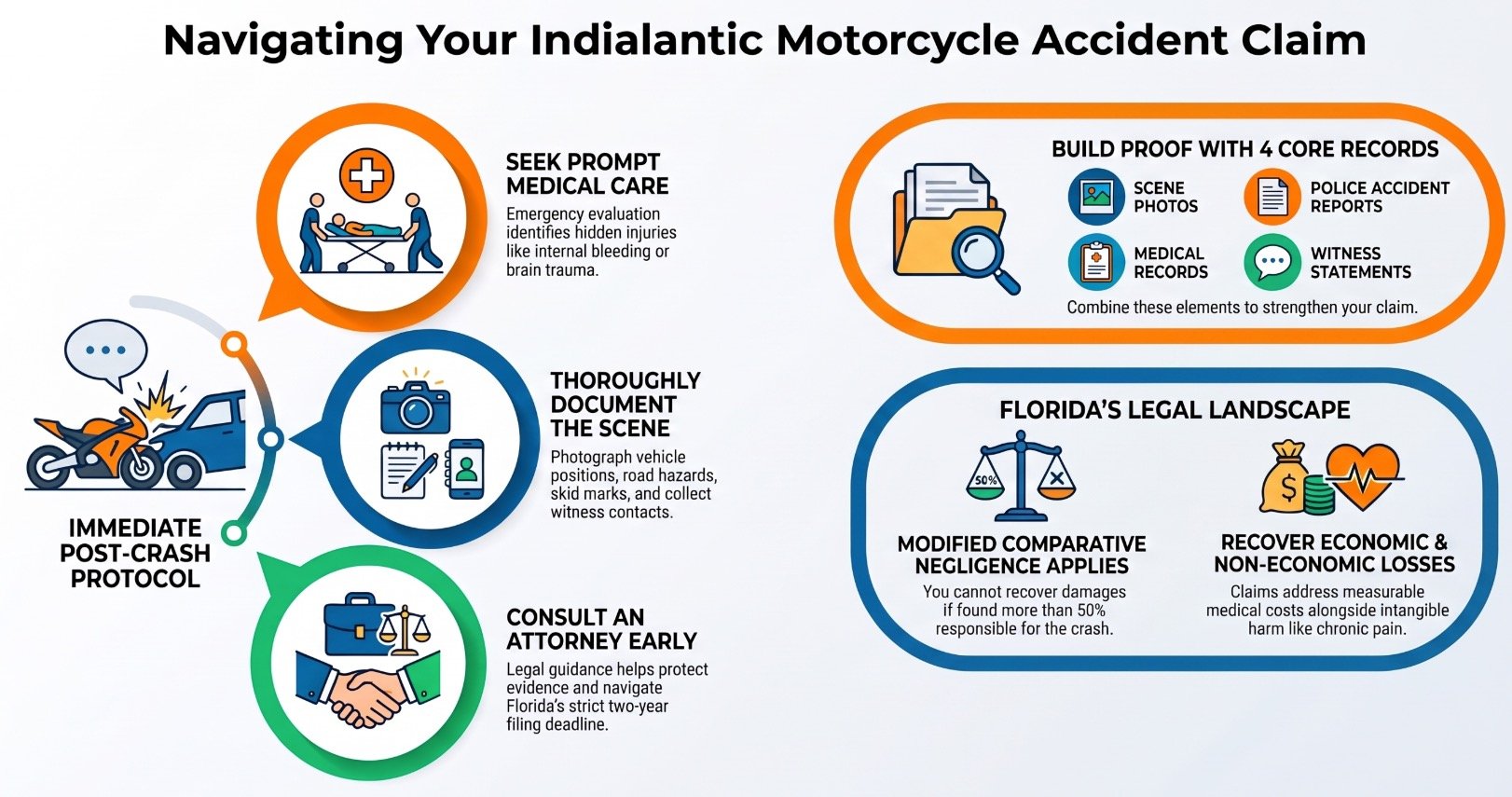
After a motorcycle injury, we should seek prompt medical care, even if symptoms seem minor, because some conditions may not appear immediately. Document the scene by taking photographs, collecting witness information, and keeping records of medical treatment. We should also contact an attorney to understand our legal options and protect our interests.
Get Medical Care
Even if you feel well after a motorcycle crash, seek medical care promptly because some injuries aren’t immediately apparent. Emergency evaluation can identify conditions that require urgent attention, including head trauma or internal bleeding. Call 911 if you or another person has severe pain, trouble breathing, confusion, or significant bleeding. Otherwise, arrange a prompt assessment at an emergency department or with a qualified medical professional.
Tell the provider how the crash happened and describe every symptom, even if it seems minor. Follow the recommended treatment plan, attend follow-up appointments, and ask questions when instructions aren’t clear. Consistent treatment coordination among your doctors helps address changing symptoms and supports your recovery. If you’re helping an injured loved one, offer practical support with appointments and care instructions while respecting their choices. Don’t delay care to handle other concerns.
Document The Scene
If you can do so safely, document the crash scene before vehicles or debris are moved. We can help preserve useful details by taking clear photographs from several angles. Photograph the positions of the motorcycle, other vehicles, road hazards, traffic signs, signals, and visible damage. Include wide views that show how the scene relates to nearby intersections or landmarks, then capture closer images of important details.
Record Skid Markers, debris, fluid spills, and any damaged property, noting where each appears in relation to the roadway. If witnesses are willing, ask for their names and contact information, and write down what they observed in their own words. Avoid entering traffic or approaching unstable vehicles to get a better image. If you can’t safely document the scene, ask a trusted person to help, while prioritizing everyone’s safety.
Contact An Attorney
Contacting an attorney promptly after a motorcycle injury can help you understand your legal options and protect important evidence. We can help you take the next steps while you focus on medical care and recovery. Preserve photographs, witness details, medical records, and insurance correspondence, and share them with counsel. Avoid guessing about fault or providing recorded statements to insurers before you understand your rights.
During an Initial Consultation, we can review how the collision happened, explain potential claims, and discuss deadlines that may apply. Bring available documents and prepare questions about fees, communication, and case strategy. Ask about Attorney Availability so you know who will respond to your concerns and how quickly. A careful discussion can help you make informed choices, protect your interests, and pursue fair treatment while keeping your recovery and responsibilities in view.
Critical Evidence in an Indialantic Motorcycle Accident At-Fault Parties Injury Case
To assess your motorcycle injury claim, we’ll preserve evidence that clarifies how the crash occurred and documents its effects. Essential sources include: 1. crash-scene photos and the police accident report; 2. medical records; and 3. witness statements. We’ll review these materials jointly to identify what supports your account and establish the extent of your losses.
Crash Scene Photos
Photographs taken at the crash scene can preserve details that may disappear before an investigation is complete. If you’re able, document the motorcycle, other vehicles, roadway, debris, skid marks, traffic controls, and visible injuries. Take wide views to show the overall setting, then closer images that capture damage and specific hazards. Consider Photo angles from several safe positions, since perspective can clarify distances and how vehicles came to rest. Preserve original files and image timestamps, which can help establish when photos were created. Don’t enter traffic or disturb evidence to obtain a picture; your safety and medical care come first. We can review available images with you, identify useful details, and seek additional evidence when needed. Careful documentation can help us explain what happened and support a fair resolution for you and others affected.
Police Accident Report
After an Indialantic motorcycle crash, the police accident report can provide an important early account of the incident. We can use it to identify the responding officer, document the reported location and time, and review statements, diagrams, and initial observations. These details may help us understand how the collision unfolded and identify information that needs further investigation.
Report access varies by agency, so we should contact the department that handled the crash and follow its request process. We can check the report for factual errors, missing details, or incorrect party information. If we find a problem, correction procedures may require submitting supporting documentation or asking the agency to add a supplemental statement. The report isn’t a final ruling on fault, but careful review can help us preserve evidence and advocate responsibly for everyone affected.
Medical Records
While the police report records initial observations, medical records document the injuries and treatment that follow an Indialantic motorcycle crash. We use these records to connect the collision with your diagnosis, care, and recovery needs. Emergency department notes, imaging results, prescriptions, and follow-up visits can show how symptoms developed and what treatment providers recommended. A clear treatment chronology helps us identify gaps, explain changes in your condition, and assess whether you need further care. We’ll also review billing statements and referrals to understand the financial impact of your injuries. Record access requires care: we’ll request relevant documents with your authorization and protect sensitive information. Complete, consistent records can support a fair claim and help us present your experience accurately. By organizing this evidence, we can advocate for the resources you need to move forward.
Witness Statements
Witness statements can clarify how an Indialantic motorcycle crash happened when the parties describe events differently. We can identify people who saw the collision, its immediate aftermath, or the road conditions. Their observations may help establish vehicle positions, traffic signals, speed, and each party’s actions before impact.
Witness credibility matters. We should consider a person’s view of the scene, ability to recall events, consistency, and any relationship to those involved. We shouldn’t assume that a confident account is accurate; careful comparison with photographs, medical records, and physical evidence can reveal gaps or support important details.
Prompt statement preservation can protect useful evidence. We can record contact information and request a clear, dated account before memories fade. If you witnessed a crash, sharing what you observed may help injured people pursue fair treatment and accountability.
Long-Term Effects of Indialantic Motorcycle Accident At-Fault Parties Injuries
As we assess the long-term effects of motorcycle injuries, we consider how chronic pain and lasting mobility limits may affect your daily activities and independence. We also examine emotional and cognitive changes that can affect relationships, work, and decision-making. Understanding these lasting impacts helps us present a clearer picture of your needs and losses.
Chronic Pain
Chronic pain can persist long after a motorcycle crash, even when visible injuries have mended. You may experience aching, burning, or sharp sensations that interfere with work, family responsibilities, and the service you provide. Pain management can involve medical evaluation, prescribed treatment, physical therapy, and careful monitoring of symptoms. We can help you document how pain affects daily activities and communicate its impact to your healthcare providers.
Sleep disruption may worsen discomfort and make it harder to concentrate, maintain relationships, or fulfill commitments. Keep a record of pain levels, treatments, missed activities, and sleep changes. This information can support your care and help establish the injury’s lasting effects. If an insurer questions ongoing symptoms, consistent medical records and clear documentation can help explain why your needs continue beyond initial recovery.
Lasting Mobility Limits
Lasting mobility limits can make routine activities difficult long after a motorcycle crash, even when initial treatment has ended. Stiffness, reduced strength, balance problems, or limited joint movement may affect walking, driving, and household tasks. We can help you understand how these restrictions influence your independence and ability to meet family, work, and community responsibilities.
Rehabilitation professionals may recommend therapy, home modifications, or Adaptive equipment, such as braces, walkers, or accessible controls. If your injuries prevent you from returning to your previous job, vocational retraining may help you develop skills for suitable work. Keep records of treatment, mobility challenges, and changes to your daily routine. These details can help document the support you need and the lasting effects of your injuries. A lawyer can review potential claims for future care, equipment, and lost earning capacity.
Emotional and Cognitive Effects
Motorcycle crash injuries can affect more than physical health, sometimes causing persistent changes in mood, memory, concentration, or sleep. These effects may follow a traumatic event or result from a brain injury, and they can disrupt work, relationships, and daily responsibilities. Post traumatic stress may involve recurring distressing memories, heightened alertness, or avoidance of reminders. Memory difficulties can make it harder to manage appointments, complete tasks, or participate reliably in family and community life.
We shouldn’t dismiss these changes as weakness or assume they’ll resolve without support. A medical professional can assess symptoms and recommend appropriate treatment, such as counseling or cognitive rehabilitation. If you’re helping an injured person, listen without judgment and encourage care while respecting their choices. Documenting symptoms and their effects on daily activities may also help us explain the full impact of the crash when seeking accountability.
Don’t Wait. Call Our Florida Personal Injury Lawyers Now!
Proving Liability in Indialantic Motorcycle Accident At-Fault Parties Injury Cases
To prove liability in a motorcycle injury case in Indialantic, we must show that another party failed to use reasonable care and that this failure caused the crash and your injuries. We begin by identifying each party whose actions may have contributed, such as a driver who turned without checking for motorcycles or a property owner who allowed a dangerous road condition to remain.
We gather evidence that can establish what happened, including crash reports, photographs, witness statements, medical records, and available video. Accident reconstruction may help clarify vehicle movements, impact points, and timing when the events remain disputed. We also examine whether a party violated a traffic law or ignored a known hazard.
Florida’s comparative negligence rules may affect recovery if you’re found partly responsible. We assess the evidence carefully and explain how fault could be allocated. By building a clear, supported account, we can pursue accountability and help you focus on recovery and supporting those who depend on you.
Dealing With Insurance Companies After an Indialantic Motorcycle Accident At-Fault Parties Lawyer Injury
After a motorcycle crash in Indialantic, insurance companies may contact you quickly to discuss the claim. We can help you respond carefully, protect your interests, and preserve your ability to focus on recovery and responsibilities to others. Adjusters may request details about the collision, your injuries, or your medical care. Before providing Recorded Statements or signing documents, consider how your words could affect the insurer’s evaluation. You can ask for questions in writing and take time to review requests.
We should also examine available coverage, including Policy Limits, because those limits may affect potential compensation. Avoid guessing about fault, minimizing symptoms, or accepting an early offer before understanding your losses. Keep copies of correspondence, bills, and other relevant records, and communicate accurately without speculation. If an insurer pressures you or disputes important facts, we can help you assess the response and explain your options. Careful communication supports a fair review while allowing you to make informed decisions for yourself and those who depend on you.
What to Expect During an Indialantic Motorcycle Accident At-Fault Parties Injury Claim Process
We’ll begin with an initial case review to assess your claim and identify the issues that may affect its outcome. Next, we’ll gather evidence to support your account and use it to guide settlement negotiations. We’ll explain each step as we work toward resolving your claim.
Initial Case Review
During the initial case review, we’ll assess how the crash happened, the injuries you sustained, and the available evidence to determine what steps may support your claim. At your Initial Consultation, we’ll listen to your account, answer your questions, and learn how the collision has affected your health, work, and daily responsibilities. This conversation helps us understand your priorities and the support you need while pursuing a fair resolution. We’ll then conduct a Case Evaluation, considering potential liability, the seriousness of your injuries, and the losses connected to the crash. We’ll explain your legal options, relevant deadlines, and what to expect as your claim moves forward. Our role is to guide you with care and clear advice, so you can make informed decisions while focusing on recovery and the people who depend on you.
Evidence Collection
A clear picture of the crash depends on reliable evidence gathered and preserved early in the claim process. We’ll help you identify records and physical details that may explain what happened and who was responsible. Our team may request the police report, photographs, witness statements, medical records, and available video footage. We can also document damage to your motorcycle and protective gear before repairs or disposal alter important details.
When appropriate, we may consult qualified professionals to examine vehicle data, road conditions, and impact patterns. Helmet telemetry may help show movement or impact forces, while skid analysis can offer insight into braking and travel paths. We’ll organize these materials carefully and seek additional evidence when gaps remain. Your prompt cooperation can help us preserve useful information and present your experience accurately as we investigate the injury claim.
Settlement Negotiations
Once we’ve reviewed the evidence and understand the full impact of your injuries, we can begin settlement negotiations with the insurer. We’ll calculate a Demand valuation by examining medical expenses, lost income, future care needs, and how the crash has affected your daily responsibilities. This careful assessment helps us present a supported request rather than an arbitrary figure. The insurer may respond with questions or a lower offer. We’ll explain what that response means, assess its strengths and weaknesses, and develop a counteroffer strategy grounded in the evidence. Throughout discussions, we’ll keep you informed and consider your priorities, including your ability to care for family and contribute to your community. You won’t need to handle insurer communications alone; we’ll advocate for your interests and provide clear guidance as negotiations progress.
Claim Resolution
When settlement negotiations resolve your motorcycle injury claim, we’ll review the proposed terms with you before you decide whether to accept. We’ll explain the payment amount, release language, and any deadlines, so you understand what signing means. If negotiations stall, we can reassess your Demand Letter, supporting evidence, and Mediation Strategy to determine whether mediation or another step may help. We’ll keep you informed and prepare you for each decision, while accounting for your recovery and responsibilities to family, work, and community. Once you approve a settlement, we’ll coordinate the required documents and address outstanding medical liens or bills from the proceeds. If we don’t reach an agreement, we’ll discuss your legal options and likely costs. Our role is to provide clear guidance, protect your interests, and help you make an informed choice.
Compensation for Indialantic Motorcycle Accident At-Fault Parties Lawyer Injury Damages
What compensation can injured motorcyclists in Indialantic pursue after a crash? We can help you identify losses connected to the collision and seek payment from the responsible party or insurer. The available recovery depends on the evidence, the severity of your injuries, and applicable insurance coverage.
Medical expense recovery may include emergency treatment, hospital care, medication, rehabilitation, and reasonably anticipated future care. Keep bills, treatment records, and provider recommendations so we can document how the crash affected your health. If injuries prevent you from working, records of missed time and reduced earnings can also support your claim.
You may also seek compensation for motorcycle repair costs or, when repairs aren’t practical, the vehicle’s covered value. Save repair estimates, photographs, and proof of ownership. We’ll review these materials, investigate how the crash occurred, and communicate with insurers on your behalf. By pursuing a well-supported claim, we can help you focus on recovery and meet your responsibilities to family and community.
Economic vs Non-Economic Damages in Indialantic Motorcycle Accident At-Fault Parties Lawyer Cases
We’ll distinguish economic losses, such as medical bills and lost income, from non-economic harm, including pain and reduced quality of life. Each category requires evidence that connects your losses to the motorcycle crash. We’ll explain how records, expert opinions, and other proof can help establish the damages you’re seeking.
Economic Losses
Economic losses are the measurable financial costs a motorcycle crash causes, and they form a distinct part of a claim alongside non-economic damages such as pain and suffering. We can help you identify and document these expenses so the claim reflects the practical impact of your injuries. Medical bills, rehabilitation costs, prescription expenses, and necessary medical equipment may qualify with supporting records. Lost wages can include income missed during recovery, while reduced earning capacity may address lasting limits on your ability to work or advance in your career. You can strengthen your claim with pay statements, tax records, employer information, invoices, and medical documentation. We’ll review how the crash affected your finances and help present clear evidence to insurers or other responsible parties to support a fair assessment of your economic losses.
Non-Economic Harm
Beyond documented financial costs, a motorcycle crash may cause non-economic harm that affects your daily life and well-being. These losses don’t come with invoices, yet they can change how you work, rest, and connect with others. You may experience ongoing pain, anxiety, disrupted sleep, or reduced independence while recovering. Painful memories of the collision can make travel stressful, and lost enjoyment may keep you from hobbies, family activities, or community service that once mattered to you. We can help you understand how these personal effects differ from economic losses, such as medical bills and missed wages. Non-economic damages recognize an injury’s human impact, not just its financial consequences. Every person’s experience is different, so we’ll listen carefully and discuss how the crash has affected your routines, relationships, and sense of well-being.
Proving Damages
To prove damages after a motorcycle crash in Indialantic, we must connect your losses to the collision and support them with reliable evidence. We’ll distinguish economic losses, which have measurable financial value, from non-economic harm, such as pain, emotional distress, and reduced enjoyment of life.
Medical Expense Documentation can include bills, treatment records, prescription receipts, and future care estimates. We’ll also gather wage statements, tax records, and employer information to show income lost during recovery. If your injuries limit your ability to work in the future, vocational assessments and medical opinions may help establish Lost Earning Capacity.
Your careful records can strengthen the claim and help us present a clear account of how the crash affected you and those who depend on you. We’ll assess each category without overstating the evidence.
When an Indialantic Motorcycle Accident At-Fault Parties Injury Case Goes to Trial vs Settlement
When a motorcycle injury claim in Indialantic can’t be resolved through negotiations, we may need to take the case to trial. We’ll explain what each option involves so you can make an informed decision while keeping your recovery and responsibilities in view.
A settlement can provide compensation without the uncertainty, time, and public demands of a courtroom. We’ll review Settlement Offers carefully, compare them with documented losses, and discuss whether they address your needs. You decide whether to accept; we’ll provide clear guidance without pressuring you.
We’ll compare settlement offers with your documented losses and explain your options, so you can decide without pressure.
If negotiations don’t produce a fair resolution, we can pursue trial. Trial Preparation may include organizing medical records, consulting qualified experts, preparing witnesses, and presenting evidence about how the crash affected your life. A judge or jury then evaluates the case, and the outcome isn’t guaranteed.
Throughout either path, we’ll keep you informed, prepare you for important decisions, and handle legal demands so you can focus on recovering and supporting those who depend on you. We’ll work toward a resolution that reflects your circumstances.
Florida Laws That May Affect Your Indialantic Motorcycle Accident At-Fault Parties Lawyer Case
Florida law can shape who bears responsibility for a motorcycle crash, what compensation may be available, and how long you have to bring a claim. We can help you understand rules that affect your choices and your ability to support others who depend on you.
- Florida generally follows modified comparative negligence. If you’re partly responsible, your compensation may be reduced by your share of fault; if you’re more than 50% responsible, you generally can’t recover damages.
- Helmet requirements depend on age and insurance coverage. Riders under 21 must wear helmets. Riders 21 or older may ride without one if they carry qualifying medical insurance. Helmet use and evidence about injuries can affect how insurers assess a claim.
- Florida prohibits lane splitting, or riding between lanes of traffic. A rider’s conduct, another driver’s actions, and available evidence can all matter when we evaluate liability.
We can review the circumstances, explain how these laws apply, and help you pursue a fair resolution while keeping your family’s needs in view.
The Statute of Limitations for Indialantic Motorcycle Accident At-Fault Parties Lawyer Injury Cases
After a motorcycle crash, the deadline to file an injury lawsuit may affect your ability to recover compensation. Florida law generally gives injured people two years from the crash date to bring a negligence claim. This Filing deadline is important, even when you’re focused on medical care, work, and supporting your family. If you miss it, a court may dismiss your case, leaving you without a legal path to seek damages.
Some circumstances can change when the time limit begins or how long it lasts. Under the Discovery rule, a claim involving an injury that wasn’t immediately apparent may raise questions about when you knew, or reasonably should’ve known, that the injury existed and related to the crash. Other exceptions may apply to minors or cases involving delayed discovery, but they depend on specific facts and legal requirements.
We encourage you to note important dates and preserve relevant records. Acting promptly helps protect your options and supports your ability to pursue accountability.
How an Indialantic Motorcycle Accident At-Fault Parties Lawyer Can Help You
A motorcycle accident lawyer can help you build a claim while you focus on your recovery. We can investigate the crash, explain your options, and pursue compensation for losses caused by another party’s negligence. Our work also helps protect your ability to support your family and continue serving your community.
- We gather police reports, witness statements, photographs, and medical records to establish how the collision occurred and document your injuries.
- We identify potentially responsible parties, assess available insurance coverage, and calculate damages, including treatment costs, lost income, and future care.
- We handle insurer communications, prepare evidence, and negotiate for a fair settlement or present your case in court when necessary.
We can also explain how safety evidence may affect a claim. Helmet selection and riding courses may be relevant when insurers assess conduct, but they don’t automatically determine fault. We’ll evaluate the facts carefully and help you understand how each issue applies to your circumstances, without losing sight of your recovery.
When to Contact an Indialantic Motorcycle Accident At-Fault Parties Lawyer
Contact a motorcycle accident lawyer as soon as you can, especially if you’ve suffered injuries, face disputed fault, or received a request from an insurer for a statement. Early guidance can help us protect your interests while you focus on recovering and meeting your responsibilities to family, work, and community. Don’t wait until you know the full extent of your injuries; some symptoms and expenses emerge over time, and important records can become harder to obtain.
Consultation timing matters when you’re unsure what to say, how to preserve evidence, or whether an offer fairly reflects your losses. We can review the circumstances, explain your options, and help you understand deadlines that may apply. You don’t need to have every document ready before reaching out. Ask about representation costs during your initial discussion, including how fees are structured and whether you’ll owe expenses if there’s no recovery. A clear conversation can help you decide whether representation fits your needs and circumstances.
Why You Need an Experienced Indialantic Motorcycle Accident At-Fault Parties Lawyer
An experienced Indialantic motorcycle accident lawyer can help us investigate the crash, preserve important evidence, and address disputes over fault or the extent of your injuries. After a collision, you may be focused on recovery while insurers seek statements or challenge your account. We can manage communications, organize records, and explain your options so you can make informed decisions without losing sight of your health and responsibilities.
Motorcycle cases may involve complicated questions about road conditions, vehicle conduct, protective gear, and medical needs. We can work with relevant professionals to clarify how the crash occurred and document the harm it caused. Strong Attorney credentials matter because legal training and experience can support careful case preparation and effective advocacy. Local familiarity also helps us understand Indialantic roads, nearby resources, and the practical context of a collision.
Don’t Wait. Call Our Florida Personal Injury Lawyers Now!
How to Choose the Right Indialantic Motorcycle Accident At-Fault Parties Lawyer for Your Case
Choosing the right Indialantic motorcycle accident lawyer means looking beyond general experience to assess how well an attorney can handle the specific issues in your case. We can begin by reviewing Attorney credentials, including Florida licensure, relevant trial experience, and a record of handling motorcycle injury claims. Ask how the lawyer investigates crashes, works with experts, and addresses disputes about fault or the extent of your injuries.
We should also consider communication style. A reliable attorney explains options clearly, answers questions, and keeps you informed as the case progresses. During an initial consultation, describe what happened and ask who will manage the work, how updates are provided, and what challenges may arise. Notice whether the lawyer listens carefully and treats your concerns with respect.
Finally, compare fee terms and representation plans before deciding. We can choose someone whose approach aligns with our needs and whose guidance helps us pursue fair compensation while focusing on recovery and responsibilities to those who depend on us.
About The Law Offices of Anidjar & Levine
When a motorcycle crash raises questions about liability and compensation, The Law Offices of Anidjar & Levine represents injured people in Florida. We work to help you understand your options and pursue a claim with care and diligence.
Our Firm history reflects a focus on representing people harmed by negligence. We recognize that a serious collision can affect your health, income, and family responsibilities. By listening to your concerns, we can explain the legal process and identify steps that may support your recovery.
When evaluating a firm, consider attorney credentials, relevant experience, and communication practices. Our attorneys handle injury claims and can investigate the circumstances of a motorcycle crash, gather records, and communicate with insurers on your behalf. We’ll discuss the facts of your case, explain potential challenges, and keep you informed as it proceeds.
Every case depends on its specific evidence and applicable law. We aim to provide clear guidance while treating you with respect throughout the process.
Frequently Asked Questions
Can I Recover Damages if I Wasn’t Wearing a Helmet During a Motorcycle Crash?
Yes, we may still help you recover damages if you weren’t wearing a helmet, but your compensation could be reduced. Florida helmet law exceptions generally allow riders age 21 or older to ride without a helmet if they carry required medical insurance. Under comparative negligence rules, insurers or courts may consider whether your choice contributed to your injuries, especially head injuries. We can review the crash evidence and explain your options.
Does Florida Require Motorcycle Riders to Carry Personal Injury Protection Insurance?
No. Florida generally doesn’t require motorcycle riders to carry personal injury protection insurance because motorcycles aren’t covered by the state’s no-fault PIP system. However, Florida motorcycle insurance requirements may include financial responsibility after certain crashes or convictions, and riders should review applicable rules before riding. PIP coverage exemptions mean you may need health insurance or other coverage for medical expenses. We can help you understand your options and protect your interests after a collision.
Can a Passenger File a Claim After a Motorcycle Accident in Indialantic?
Yes, we can help you pursue compensation after a motorcycle accident in Indialantic if another party’s negligence caused your injuries. You may file a claim against the rider, another driver, or an insurer, depending on the evidence and available coverage. Passenger liability may arise if your actions contributed to the crash, while shared fault can reduce your recovery under Florida law. We can review the circumstances and clearly explain your options.
What Happens if the At-Fault Motorcyclist Has No Insurance?
If the at-fault motorcyclist has no insurance, you may need to pursue compensation through your own policy or other available sources. We can help you review Uninsured motorist coverage, which may pay for certain injuries and losses if your policy includes it. Personal liability options may also exist, depending on the motorcyclist’s assets and circumstances. We’ll review the evidence, identify responsible parties, and explain practical next steps to protect your claim.
Can I Pursue a Claim for a Motorcycle Accident Involving a Rental Bike?
Yes, we can help you pursue a claim after a motorcycle accident involving a rental bike. Liability may rest with the rider, another driver, or, in limited circumstances, the rental company. We’ll review the Rental Agreement Liability terms, insurance coverage, maintenance records, and evidence of Rental Company Negligence. Preserve the agreement, photographs, medical records, and witness details. We can assess responsible parties and explain your options for seeking compensation.
—————————
After a motorcycle accident in Indialantic, identifying every responsible party and preserving evidence can strengthen your injury claim. We can investigate the crash, explain your legal options, and pursue compensation for medical costs, lost income, and other documented losses. Don’t assume an insurer will protect your interests or that fault is clear. Contact The Law Offices of Anidjar and Levine to discuss your circumstances and learn how we can help you take informed next steps. For more information, visit our Indialantic Personal Injury Lawyer page.

