

The Law Offices of Anidjar and Levine, a Jacksonville Personal Injury Lawyer firm, can investigate whether unsafe cargo securement, weight imbalance, maintenance failures, driver fatigue, or carrier rule violations caused a truck crash. Counsel may preserve driver logs, loading records, inspection reports, electronic data, photos, and medical documentation before evidence is lost. These records can help identify liable drivers, carriers, loaders, brokers, or maintenance vendors and support claims for medical expenses, lost income, pain and suffering, and long-term needs.
Main Takeaways
- A Jacksonville truck accident lawyer reviews crash reports, carrier records, driver logs, and loading documents to identify who is responsible.
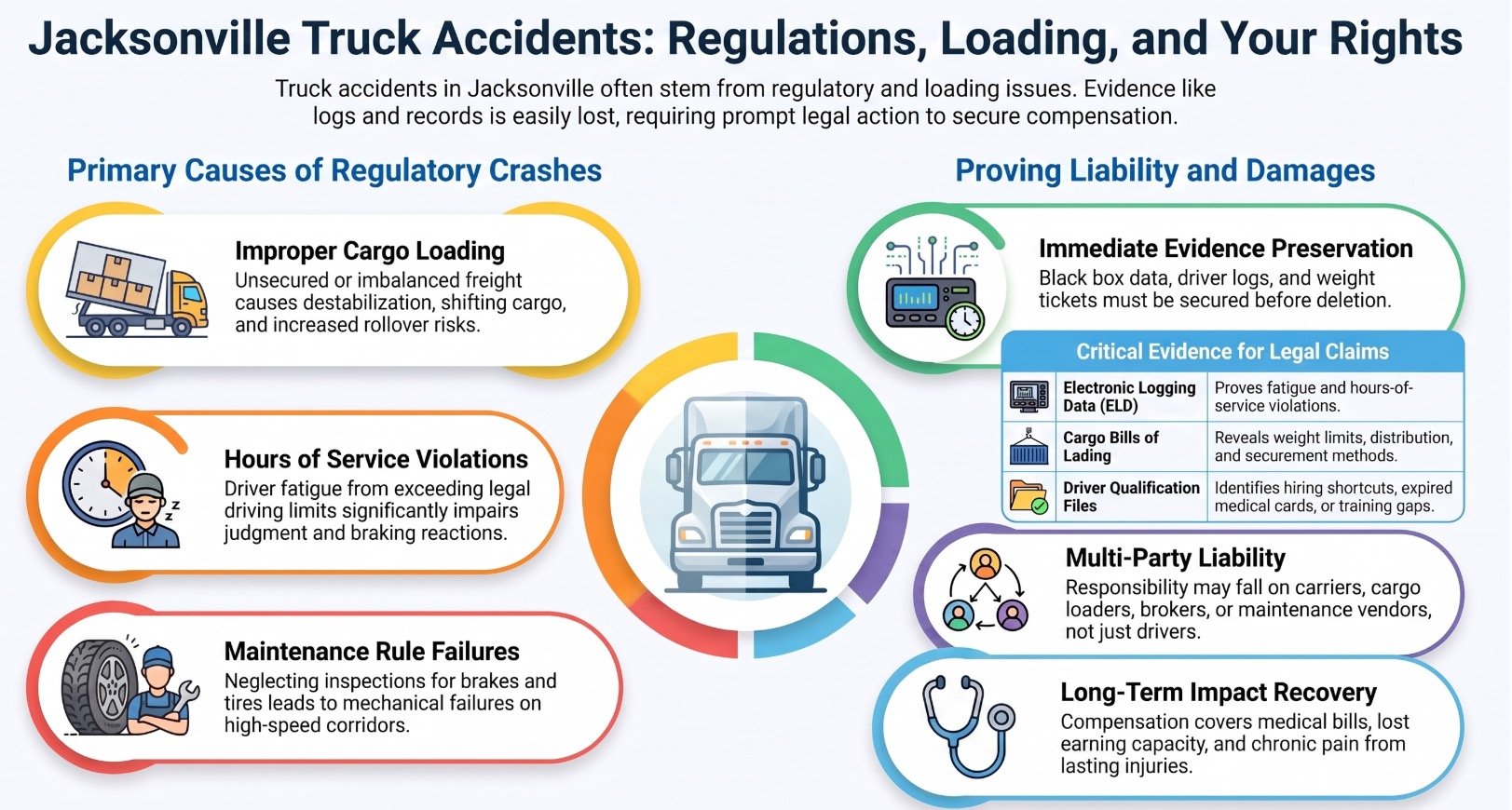
- Improper loading, unsecured cargo, weight violations, and missed inspections can cause cargo shifts, spills, rollovers, and severe injuries.
- Evidence preservation is critical before trucking records, electronic data, photos, or damaged equipment are altered or lost.
- Liability may involve drivers, motor carriers, cargo loaders, maintenance vendors, brokers, or safety oversight entities.
- A lawyer can pursue compensation for medical care, lost income, pain, reduced earning ability, and long-term support needs.
How We Can Help With Your Jacksonville Accident Trucking Regulations & Loading Injury Claim
When a truck accident involves suspected loading errors or violations of trucking regulations, a Jacksonville attorney can help identify the parties responsible and preserve the evidence needed to support the claim. Legal support may include reviewing crash reports, securing carrier records, consulting experts, and coordinating inspections before vital proof is altered or lost. Evidence preservation is often important when cargo shifts, unsecured loads, or maintenance concerns contributed to serious harm.
An attorney can also assist injured individuals by organizing medical documentation, calculating losses, and communicating with insurers on their behalf. This guidance may reduce the risk of insurance denial based on incomplete records, disputed causation, or claims that injuries were unrelated. For families and caregivers focused on helping an injured person recover, legal representation can provide structure and accountability. The attorney’s role is to pursue compensation diligently, protect deadlines, and ensure responsible parties answer for the harm caused.
Understanding Jacksonville Truck Accident Regulations & Loading Injury Cases
In Jacksonville, truck accident cases involving trucking regulations and loading injuries often require a careful review of how the vehicle was operated, maintained, and loaded before the crash occurred. These claims may involve commercial drivers, motor carriers, cargo loaders, maintenance providers, and companies responsible for safety oversight. A proper evaluation considers whether required procedures were followed and whether records support safe conduct.
Federal compliance audits, driver logs, inspection reports, and loading checklists may help clarify whether responsible parties met their duties. When records are incomplete, gaps in accident documentation can make the investigation harder, especially for injured people seeking fair treatment. Proving injury causation is also central, because the evidence must connect regulatory failures or loading errors to the harm suffered. Careful case review helps protect injured community members, supports accountability, and promotes safer practices for others who share Jacksonville’s roads with large commercial trucks each day.
Common Causes of Jacksonville Truck Accident Regulations & Loading
Common causes of Jacksonville truck accidents often involve preventable failures tied to cargo handling, regulatory compliance, and fleet oversight. Improper cargo loading, hours-of-service violations, maintenance rule violations, and driver training failures can create serious hazards on local roads and highways. These factors may help establish how a collision occurred, whether safety rules were ignored, and which parties may bear responsibility.
Improper Cargo Loading
Although cargo securement may appear routine, improper loading is a frequent factor in Jacksonville truck accidents because it can destabilize an 18-wheeler, extend stopping distance, and cause cargo to shift or spill into traffic. When freight is not balanced, improper weight distribution can make turns hazardous, increase rollover risk, and reduce a driver’s ability to respond safely. Select, inspect, and apply cargo restraint systems based on the load’s type, weight, and placement. A failure to use adequate straps, chains, blocking, or bracing may endanger motorists, pedestrians, first responders, and workers unloading the trailer. Careful loading practices reflect a duty to protect the community. In injury claims, records, inspections, and loading procedures may help identify responsible parties.
Hours Of Service
When a commercial driver remains on the road beyond lawful limits, fatigue can impair judgment, reaction time, lane control, and braking decisions. Hours of Service rules protect the public by requiring rest periods and limiting driving time for interstate and intrastate carriers. In Jacksonville truck accident cases, investigators may examine Florida HOS compliance to determine whether a carrier compelled a driver, ignored cautionary signs, or failed to enforce scheduling safeguards. Electronic log audits can reveal falsified entries, unaccounted-for gaps, excessive on-duty time, or patterns showing delivery demands were prioritized over safety. For injured people and their advocates, these records help identify preventable choices that placed others at risk. Careful review supports accountability, promotes safer practices, and helps ensure responsible transportation standards in Florida.
Maintenance Rule Violations
Because commercial trucks depend on complex mechanical systems, neglected maintenance can create serious risks on Jacksonville roads and highways. Brake defects, worn tires, faulty lights, guiding problems, and trailer equipment failures may prevent a driver from responding safely to traffic, weather, or roadway hazards. Federal and state inspection standards require carriers to identify, document, and correct unsafe conditions before vehicles remain in service. When companies delay repairs, overlook daily reports, or use inadequate maintenance records, they may endanger motorists, passengers, workers, and first responders. Maintenance duties also affect Load securement, since damaged tie-downs, broken anchor points, or defective trailer components can allow cargo to shift or fall. Careful review of repair logs, inspection histories, and post-crash evidence can reveal whether safety obligations were ignored before a preventable collision occurred.
Driver Training Failures
How can a driver safely manage an overloaded trailer, shifting cargo, or sudden traffic hazard without proper training? In Jacksonville trucking cases, inadequate instruction may leave drivers unprepared to inspect loads, recognize balance problems, follow securement rules, or respond to roadway emergencies. Training failures often reflect broader weaknesses in Safety culture, especially when companies rush new drivers into service or ignore recurring mistakes. Proper education should address federal regulations, route planning, braking distance, cargo checks, and communication with loading crews. When workplace oversight is limited, unsafe habits may continue until a serious crash harms motorists, passengers, or workers. For those committed to serving injured people, identifying training gaps helps reveal whether preventable decisions contributed to the collision and whether the carrier failed its duty of care.
Don’t Wait. Call Our Florida Personal Injury Lawyers Now!
Legal Rights of Jacksonville Truck Accident Regulations & Loading Injury Victims
After a serious truck accident involving unsafe loading practices or regulatory violations, injured victims in Jacksonville may have the right to pursue compensation from every party whose negligence contributed to the crash. These rights may include claims for medical care, lost income, reduced earning ability, pain, and long-term support needs. Prompt evidence preservation can protect loading records, inspection reports, driver logs, and electronic data before they change or are lost. When an Insurance dispute arises, careful documentation may help prevent unfair delay or undervaluation.
- A damaged trailer resting beside scattered freight
- Hospital bills stacked near discharge instructions
- A family vehicle marked by crushed metal and glass
- Caregivers coordinating appointments, transportation, and recovery needs
Victims may also seek accountability from carriers, cargo loaders, maintenance contractors, or other responsible entities. Legal guidance can help meet deadlines, manage communications, and treat those harmed with dignity while pursuing lawful recovery.
Why Do Jacksonville Accident Trucking Regulations & Loading Injuries Happen?
When commercial trucks move through Jacksonville’s ports, highways, and industrial corridors, loading failures and regulatory violations can turn routine transport into a serious hazard. These injuries often occur when companies rush departures, overlook weight limits, or assign loading tasks to workers without adequate training. A Cargo shift may happen when freight is unevenly distributed, stacked poorly, or left unsecured during turns, braking, or highway travel.
Improper restraints, including worn straps, weak tie-downs, or missing blocking materials, can allow heavy goods to move with dangerous force. Missed loading checks also contribute, especially when supervisors fail to confirm balance, securement, and compliance before a truck enters traffic. In many cases, the deeper issue is a weak safety culture, where speed, profit, or convenience receives more attention than protecting drivers, dockworkers, and the public. Responsible operations require careful planning, trained personnel, and consistent oversight, because every properly loaded truck helps safeguard the wider Jacksonville community.
What Should You Do After a Jacksonville Truck Accident Regulations & Loading Injury?
After a Jacksonville truck accident involving trucking regulations or loading issues, an injured person should seek immediate medical care to address injuries and create a clear treatment record. The accident scene should be documented with photographs, witness information, and available details about the truck, cargo, and roadway conditions. Contact a truck accident lawyer promptly, because regulatory violations and loading failures may require rapid investigation and preservation of crucial evidence.
Seek Immediate Medical Care
Immediate medical care is often essential following a Jacksonville truck accident involving trucking regulation violations or loading-related failures, even if injuries appear minor at first. Prompt evaluation helps identify internal trauma, concussion symptoms, spinal injuries, and complications that may worsen without treatment. Medical professionals can also support Pain monitoring, Medication safety, and early care coordination for vulnerable patients.
Hospitals and clinics should provide clear discharge planning, including follow-up appointments, activity limits, warning signs, and rehabilitation goals. This guidance helps injured individuals protect their health while reducing preventable setbacks. For caregivers, family members, and service providers, encouraging timely treatment reflects a responsible commitment to the injured person’s well-being. Consistent medical records may also clarify the nature, timing, and progression of truck accident injuries for later review.
Document The Accident Scene
Once you address safety and medical needs, documenting the accident scene can help preserve critical information about trucking regulation violations, cargo securement failures, and loading-related hazards. Photographs should capture vehicle positions, spilled cargo, skid marks, damaged equipment, license plates, and company markings. Images of traffic signals, lane patterns, and roadway hazards may clarify how the collision occurred and whether conditions increased the risk to others. Notes should include weather conditions, visibility, lighting, and any apparent signs of shifting freight or improper loading. Witness statements, when collected calmly and respectfully, may help establish what happened before emergency responders arrived. This information can support later review by investigators, insurers, and safety professionals seeking accountability, prevention, and fair assistance for injured individuals and affected families in Jacksonville.
Contact A Truck Lawyer
When a Jacksonville truck accident may involve trucking regulation violations, unsafe loading, or shifting cargo, contacting a truck accident lawyer can help preserve evidence and protect the injured person’s legal position. Counsel may promptly request driver logs, maintenance records, bills of lading, and loading documents before they change or are lost. A lawyer can also coordinate with investigators, medical providers, and family members, allowing the injured person to focus on recovery and service responsibilities. Careful review of Cargo securement tips and a Safety inspection checklist may reveal whether the carrier followed required practices before transport. Legal guidance can identify responsible parties, including drivers, motor carriers, loaders, brokers, or maintenance vendors. Early action supports timely notice, accurate claim valuation, and informed decisions about settlement or litigation after serious harm.
Critical Evidence in a Jacksonville Truck Accident Regulations & Loading Injury Case
Critical evidence in a Jacksonville truck accident trucking regulations and loading injury case often shows whether safety rules were followed before the crash occurred.
Key records may include:
- Driver qualification files showing training, licensing, and prior violations
- Electronic logging data reflecting hours of service and fatigue concerns
- Cargo loading evidence revealing weight balance, securement, and shifting freight
- Inspection and maintenance logs documenting brake, tire, and equipment condition
These materials can help establish fault, identify regulatory violations, and preserve a clear timeline of events.
Driver Qualification Records
In a Jacksonville truck accident involving trucking regulations or loading-related injuries, driver qualification records can help determine whether a motor carrier placed a safe, properly vetted driver behind the wheel. These files may include employment applications, license verification, medical examiner certificates, prior employer checks, road test results, and safety performance records. When reviewed carefully, they may reveal hiring shortcuts, ignored violations, expired medical clearance, or inadequate screening of drivers responsible for heavy loads. They may also show whether the carrier evaluated electronic driving qualifications, endorsements, and restrictions before assigning duties. After a serious crash, these records can assist those serving injured people by clarifying preventable risks, supervisory failures, and post-accident training requirements imposed or neglected by the company. Such evidence often supports accountability.
Electronic Logging Data
How can electronic logging data clarify the events leading to a Jacksonville truck accident involving trucking regulations or loading-related injuries? Electronic logging devices record driving time, duty status, location changes, and vehicle movement, creating a timeline that may reveal fatigue, hours-of-service violations, or improper dispatch pressure. In a careful investigation, cyber forensics can preserve raw device data, compare carrier records, and identify edits, gaps, or access irregularities. An ELD mismatch between logs, GPS points, fuel receipts, toll records, or engine data may show whether the driver exceeded lawful limits or reported inaccurate information. For attorneys representing injured people and their families, this evidence supports accountability by linking regulatory noncompliance to the crash sequence and helps protect truthful records from alteration, deletion, or misinterpretation during the claims process.
Cargo Loading Evidence
When a Jacksonville truck accident involves shifting freight, falling cargo, or loading-related injuries, cargo loading evidence can show whether the trailer was packed, balanced, secured, and inspected according to applicable safety rules. Relevant proof may include bills of lading, load diagrams, scale tickets, photographs, driver notes, dock records, and communications between shippers, brokers, carriers, and warehouse staff. These materials may reveal violations of cargo weight limits, uneven distribution, inadequate tiedowns, or rushed loading practices that endangered motorists and responders. Fleet safety audits may also identify repeated loading concerns, training gaps, or ignored corrective measures. In a loading injury case, carefully reviewing this evidence helps determine which parties contributed to unsafe transport and supports accountability focused on protecting the public with diligence and care.
Inspection Maintenance Logs
Cargo loading evidence often points to broader safety questions, including whether the truck and trailer were properly inspected, maintained, and cleared for service before the trip. Inspection maintenance logs may reveal missed service intervals, unresolved defects, or inadequate corrective action. In a Jacksonville truck accident case, these records help determine whether carriers honored duties meant to protect motorists, workers, and communities. Logs can show whether carriers examined, repaired, or ignored cargo-anchoring systems after prior warnings. They may also document each brake inspection, including dates, findings, mechanic notes, and decisions to keep the vehicle in operation. Incomplete, altered, or inconsistent records may support claims that safety responsibilities were neglected. Careful review of these documents helps establish accountability and promotes safer practices.
Don’t Wait. Call Our Florida Personal Injury Lawyers Now!
Long-Term Effects of Jacksonville Truck Accident Regulations & Loading Injuries
The long-term effects of Jacksonville truck accident trucking regulations and loading injuries may extend well beyond the initial collision or cargo-related event. Injured individuals can face chronic pain complications, reduced earning capacity, and ongoing medical needs that affect daily function and financial stability. These lasting consequences often require careful evaluation, particularly when determining the full scope of damages in a legal claim.
Chronic Pain Complications
Serious truck accident injuries involving trucking regulation violations or improper loading practices can develop into chronic pain conditions that persist long after the initial wounds appear to recover. Nerve damage, spinal trauma, crushed tissue, and joint injuries may produce ongoing pain that limits sleep, movement, and daily independence. When cargo shifts or safety rules are ignored, the resulting forces can cause injuries that require long-term oversight.
Care teams may recommend Medication management plans to control pain while reducing dependency risks, side effects, and harmful interactions. Physical therapy, mobility impairment rehab, and coordinated follow-up may help injured individuals preserve function and serve family or community responsibilities. Legal evaluation may also identify whether negligent loading, inspection failures, or regulatory violations contributed to lasting pain that requires continued treatment and support.
Reduced Earning Capacity
When truck accident injuries cause lasting physical limitations, reduced earning capacity may become one of the most significant long-term consequences. A worker who once lifted freight, drove long routes, managed loading tasks, or performed skilled labor may face permanent work restrictions that limit available employment. Lost income may include missed wages and the diminished ability to advance, accept overtime, or maintain prior responsibilities. In Jacksonville trucking cases, a careful review of job history, education, physical demands, and employer requirements can help measure future damages accurately. Vocational retraining may be considered when an injured person can no longer return to their former work but can serve in another capacity. These losses merit thorough evaluation, because financial stability often supports families, dependents, and continued participation in the community.
Ongoing Medical Needs
After a major truck accident, ongoing medical needs may extend far beyond emergency treatment and the initial recovery period. Survivors may require follow-up surgeries, physical therapy, pain treatment, neurological care, or mobility assistance for months or years. Medication management becomes critical when multiple prescriptions are used to control pain, inflammation, anxiety, sleep disruption, or other accident-related conditions. Care providers, family members, and advocates can help ensure treatment plans remain consistent, safe, and responsive to changing symptoms. Accurate disability documentation is also important, particularly when injuries limit employment, household responsibilities, or independent living. Medical records, expert evaluations, and functional assessments can clarify long-term limitations. In Jacksonville truck accident claims, these continuing needs help demonstrate the full impact of injuries caused by unsafe trucking or loading practices.
Proving Liability in Jacksonville Truck Accident Regulations & Loading Injury Cases
In Jacksonville truck accident cases involving trucking regulations and loading injuries, proving liability depends on showing how a specific act, omission, or regulatory violation caused the crash or contributed to the resulting harm. Investigators may review driver logs, inspection records, cargo securement practices, maintenance files, and loading procedures to identify failures that placed others at risk. A structured liability framework helps connect each responsible party, including drivers, carriers, loaders, brokers, or maintenance contractors, to the harmful conduct.
An Expert witness may explain federal and state safety standards, vehicle dynamics, or cargo movement in terms a court can understand. A safety audit can reveal patterns of noncompliance, while risk analysis may show that preventable dangers were known or should have been known. For injured people and those assisting them, careful proof preserves accountability, supports fair legal evaluation, and promotes safer practices within the trucking industry. Gather evidence promptly before records disappear.
Dealing With Insurance Companies After a Jacksonville Truck Accident Regulations & Loading Injury
Liability evidence often shapes how insurance companies evaluate a Jacksonville truck accident involving trucking regulations and loading injuries, but insurers may still dispute fault, causation, or the extent of damages. Adjusters may review driver logs, loading records, inspection reports, and medical documentation while seeking statements that limit the carrier’s exposure. Careful communication helps protect injured individuals, especially when they are focused on recovery, family duties, and service to others.
Negotiation tactics may include early settlement offers, requests for broad medical authorizations, or arguments that shifting cargo, maintenance failures, or regulatory violations did not cause the injury. Evidence preservation remains critical, because missing records can weaken accountability. Counsel can manage insurer contact, respond to disputed facts, and present organized proof of losses. A measured approach helps prevent rushed decisions and supports fair evaluation, while allowing the injured person and caregivers to concentrate on mending, stability, and responsible next steps after a serious crash.
What to Expect During a Jacksonville Truck Accident Regulations & Loading Injury Claim Process
A Jacksonville truck accident claim involving trucking regulations and loading injuries often begins with an initial case review, where we assess the facts, injuries, and available legal options. The process then typically moves to evidence collection, including records related to cargo loading, driver conduct, maintenance, and compliance with state and federal regulations. After evaluating liability, the claim may move toward settlement negotiations or, when necessary, trial.
Initial Case Review
Before a Jacksonville truck accident claim involving trucking regulations or loading injuries can move forward, the initial case review focuses on identifying how the crash occurred, which safety rules may have been violated, and what evidence must be preserved. During this stage, an attorney evaluates the reported facts, injury details, vehicle roles, and possible violations involving driver conduct, carrier duties, or loading practices. Cargo securement checks may be considered to determine whether shifting freight, overloading, or improper balance contributed to harm. We also assess witness statement collection early, especially when bystanders, workers, or first responders may clarify major events. This review helps protect injured people, support accountability, and guide informed decisions. It also allows counsel to explain potential claims, deadlines, and responsible parties with care.
Evidence Collection Process
Evidence collection begins with a focused effort to preserve materials that may show how the truck accident occurred and whether trucking regulations or loading practices were violated. Investigators may seek photographs, inspection records, driver logs, electronic control data, cargo documents, maintenance files, and communications involving dispatch or loading personnel. Prompt requests help prevent loss, alteration, or routine deletion of records that could assist injured persons and the communities supporting them. Witness statement preservation is also important because memories may fade and details about speed, lane position, cargo movement, or post-crash conditions may become less clear. Attorneys may also review company safety materials, training records, and Preventive compliance audits to identify relevant practices. This process supports an organized claim, grounded in reliable information rather than assumption or speculation.
Liability And Regulations
Once investigators secure and review the available records, the claim often turns to how liability is measured under trucking regulations, loading standards, and general negligence principles. Investigators may assess whether the driver, motor carrier, loader, maintenance provider, or another party failed to follow duties designed to protect the public. Regulatory violations, such as hours-of-service breaches, inadequate inspections, unsecured cargo, or improper weight distribution, can help establish fault when linked to the crash or injury. Careful evidence preservation remains important because logs, dispatch records, loading documents, and vehicle data may clarify who had control and knowledge. For injured individuals and their families, this stage focuses on accountability, safety obligations, and the practical link between rule compliance and preventable harm in Jacksonville trucking operations.
Settlement Or Trial
As the claim moves beyond investigation and liability analysis, settlement discussions often begin with a clear presentation of fault, damages, insurance coverage, and the regulatory failures tied to the collision or loading injury. The injured person’s representatives may submit medical records, wage documentation, expert opinions, and evidence of unsafe loading or trucking practices. Insurers may respond with Liability defenses, disputed injury claims, or insurance tactics intended to reduce payment. When negotiations serve accountability and fair restoration, settlement can resolve the matter without trial. If the offer fails to address the harm, litigation may continue through discovery, motions, mediation, and trial preparation. At trial, a judge or jury reviews the evidence and determines fault and compensation under Florida law.
Don’t Wait. Call Our Florida Personal Injury Lawyers Now!
Compensation for Jacksonville Truck Accident Regulations & Loading Injury Damages
When a truck accident involves regulatory violations or improper loading, compensation may hinge on the full scope of the injured person’s losses and the conduct that caused the crash. In Jacksonville, a claim may account for medical treatment, rehabilitation, lost income, diminished earning ability, and future medical costs tied to lasting injuries. Evidence of hours-of-service violations, overweight cargo, unsecured freight, or neglected inspection duties may strengthen the connection between negligence and damages.
Compensation also may address the serious impact on families when injuries prevent a person from providing care, guidance, or support. In fatal cases, Wrongful death damages may be pursued by eligible survivors, depending on Florida law and the facts involved. A careful damages evaluation considers records, expert opinions, and the needs of those affected. This process helps ensure that any recovery reflects both immediate burdens and continuing consequences, while supporting accountability for unsafe trucking practices in the community.
Economic vs Non-Economic Damages in Jacksonville Truck Accident Regulations & Loading Cases
Economic and non-economic damages serve different functions in Jacksonville truck accident cases involving trucking regulations and loading failures. Financial losses may include medical bills, lost income, and repair costs, while pain and suffering claims address physical suffering, emotional distress, and reduced quality of life. Proving these claims requires organized records, credible testimony, and evidence linking the damages to the crash.
Calculating Financial Losses
Calculating financial losses in Jacksonville truck accident cases requires a careful review of both measurable expenses and personal harm that cannot be reduced to invoices alone. Economic damages often include hospital bills, rehabilitation costs, prescription expenses, lost wages, reduced earning capacity, and property repair or replacement. Medical expense documentation is crucial because accurate records help connect treatment needs to the collision, loading failure, or regulatory violation.
Settlement valuation methods may also examine future care, vocational limitations, and the financial effect on a household that depends on the injured person’s service and stability. Non-economic damages are assessed separately, reflecting losses that affect daily function and dignity. A disciplined evaluation helps legal professionals present claims fairly, while honoring the injured person’s needs and the broader goal of responsible accountability.
Valuing Pain Impacts
After financial losses are identified through records and projections, pain impacts require a separate assessment that recognizes how an injury changes daily life beyond direct expenses. In Jacksonville truck accident cases involving trucking regulations or loading failures, non-economic damages may reflect physical discomfort, emotional strain, loss of mobility, disrupted sleep, and reduced ability to serve family or community needs. These harms are not measured by invoices, yet they can deeply affect dignity, patience, and independence. Comparative negligence factors may influence the final value when injured parties or other actors share responsibility. Evidence preservation techniques, including timely documentation of symptoms, activity limits, and treatment responses, help maintain a clear account of lived impact. Careful valuation separates measurable economic loss from human consequences while keeping the assessment fair and disciplined.
Proving Damage Claims
When damage claims arise from Jacksonville truck accidents involving trucking regulations or loading failures, proof must connect each claimed loss to the collision, the injury, and the responsible conduct. Economic damages require records such as medical bills, repair estimates, pharmacy receipts, and employer documentation. A careful wage loss calculation may include missed shifts, reduced hours, lost benefits, and diminished earning capacity. Non-economic damages require different proof, including medical narratives, therapy notes, caregiver observations, and testimony describing pain, limitations, and loss of normal life. Settlement valuation depends on both categories, but also on liability evidence, regulatory violations, cargo securement failures, and long-term prognosis. Thorough documentation helps decision-makers serve injured people fairly, while preventing unsupported demands from weakening legitimate claims or delaying accountable resolution. Evidence must be organized, verified, and consistently presented.
When a Jacksonville Truck Accident Regulations & Loading Injury Case Goes to Trial vs Settlement
Because truck accident claims involving regulations and loading failures often turn on complex evidence, the decision to settle or proceed to trial depends on liability disputes, injury severity, insurance limits, and the strength of documentation. Settlement may serve an injured person well when fault is clear, damages are supported, and the carrier or insurer recognizes the risk of a larger verdict. Settlement negotiation tactics often include presenting inspection records, loading evidence, medical findings, wage loss proof, and expert opinions in a structured demand.
A trial may become necessary when a trucking company denies responsibility, challenges causation, disputes medical needs, or offers compensation that does not reflect the harm. Trial strategy planning focuses on witness preparation, demonstrative evidence, expert testimony, and clear explanations of how unsafe loading or regulatory failures caused preventable injury. Counsel evaluates each path with discipline, seeking fair accountability while protecting the client’s dignity, recovery, and long-term needs through a careful process.
Florida Laws That May Affect Your Jacksonville Truck Accident Regulations & Loading Case
Florida law can shape a Jacksonville truck accident case from the earliest investigation through settlement negotiations or trial. State rules may influence fault allocation, available compensation, insurance obligations, and the duties of trucking companies that place heavy vehicles on public roads. Comparative negligence may reduce recovery when an injured person shares responsibility, making careful fact development important. Evidence preservation also matters, especially when service-minded families seek accountability and want to protect others from similar harm.
Key legal considerations may include:
- A damaged trailer resting under rain-dark clouds, raising questions about secure loading.
- Driver logs and dispatch records showing pressure, fatigue, or missed safety checks.
- Cargo straps, broken pallets, and scattered freight revealing preventable loading failures.
- Insurance files and maintenance records identifying who had control and responsibility.
These laws help determine whether a carrier, loader, broker, driver, or maintenance provider contributed to the crash. A thorough legal review can support fair resolution and broader roadway safety.
The Statute of Limitations for Jacksonville Truck Accident Regulations & Loading Injury Cases
In Jacksonville truck accident cases involving trucking regulations and loading failures, the statute of limitations sets a strict deadline for filing a lawsuit after an injury or wrongful death. Under Florida law, personal injury claims generally must be filed within two years from the date of the crash, while wrongful death claims usually run from the date of death. These deadlines protect orderly case administration, yet they can also affect families, caregivers, and community members seeking accountability after preventable harm.
Certain tolling exceptions may pause or extend the filing period, such as when an injured person is a minor, a defendant conceals relevant facts, or another legally recognized barrier exists. However, these exceptions are limited and fact-specific. Federal preemption may also influence claims involving interstate trucking standards, though it does not automatically remove Florida filing deadlines. Timely action preserves evidence, witness memory, and your ability to pursue relief in court.
How a Jacksonville Truck Accident Regulations & Loading Injury Lawyer Can Help You
After a serious truck crash, a Jacksonville truck accident trucking regulations and loading injury lawyer can help identify whether regulatory violations, unsafe cargo practices, or negligent carrier conduct contributed to the collision. This support often includes reviewing logs, maintenance records, load documents, and federal safety requirements with disciplined attention to detail.
A lawyer may serve the injured person and the wider community by building a careful record that promotes accountability, safer practices, and fair compensation.
- Scattered cargo on wet pavement, showing how improper loading can endanger families and responders.
- Torn inspection forms, revealing patterns hidden within carrier paperwork.
- Witness statements, deposition prep, organized to clarify what drivers, loaders, and supervisors knew.
- Evidence preservation, spoliation risk, addressed before records, truck data, or loading materials disappear.
When to Contact a Jacksonville Truck Accident Regulations & Loading Injury Lawyer
When signs of cargo shift, logbook irregularities, or carrier safety violations appear, an injured person should contact a Jacksonville truck accident trucking regulations and loading injury lawyer as soon as reasonably possible. Early contact supports post-accident preservation, including photographs, electronic control module data, driver records, and loading materials that may otherwise be altered or lost.
A timely consultation is also appropriate when medical needs, missed work, or family caregiving duties begin affecting daily life. In these moments, careful insurance documentation can help protect the person’s account of events and reduce confusion during claim review. Legal guidance may also be important when there are questions about cargo weight limits, tie-down practices, or whether a safety checklist review occurred before departure. Prompt action helps gather evidence while memories remain reliable and records are still available. This approach serves the injured person, their family, and the broader interest in safer transportation practices.
Why You Need an Experienced Jacksonville Truck Accident Regulations & Loading Injury Lawyer
Experienced legal guidance can be critical in a Jacksonville truck accident involving trucking regulations and loading injuries because these claims often depend on technical, time-sensitive evidence spread across several responsible parties. A lawyer may evaluate driver logs, inspection records, cargo securement data, maintenance files, and communications between carriers, brokers, loaders, and insurers. This careful review can show whether safety rules were ignored, cargo was improperly balanced, or a company placed efficiency above public safety.
An experienced attorney may also identify evidence preservation needs before records are lost, overwritten, or altered. That work supports injured people, families, and service-minded caregivers who rely on accountability to restore stability. Counsel can assess liability among trucking companies, loading contractors, vehicle owners, and other entities while preparing accurate claims. The lawyer may also review policy exclusions, coverage limits, and insurer defenses that could affect recovery after a serious collision.
How to Choose the Right Jacksonville Truck Accident Regulations & Loading Injury Lawyer for Your Case
How can an injured person identify the right attorney for a Jacksonville truck accident involving trucking regulations and loading injuries? Start by looking for experience in commercial vehicle cases, including federal safety rules, cargo securement standards, driver logs, and evidence preservation. A suitable lawyer should know how improper loading, shifting freight, or regulatory violations can affect liability and damages.
The injured person may also consider whether the attorney clearly explains legal options, respects the client’s goals, and maintains organized client communication plans. Consistent updates help families make informed decisions while focusing on recovery and supporting one another through practical challenges.
Strong representation also includes early case strategy meetings, careful review of police reports, maintenance records, black box data, and witness statements. The right attorney should be prepared to work with industry experts, carefully evaluate settlement offers, and pursue accountability from all responsible parties with diligence, service-minded purpose, and professional judgment.
About The Law Offices of Anidjar & Levine
For individuals injured in Jacksonville truck accidents involving trucking regulations or loading failures, The Law Offices of Anidjar & Levine provides legal representation focused on accountability, case preparation, and client support. The firm assists injured people and families by examining how carrier conduct, driver decisions, cargo securement, and regulatory compliance may have contributed to serious harm.
Its attorneys approach each matter with structured Legal investigation and careful evidence preservation, recognizing that trucking cases often depend on records, inspection reports, maintenance files, driver logs, and witness accounts. This work helps identify responsible parties and supports claims for medical expenses, lost income, pain, suffering, and other losses.
The firm’s role extends beyond litigation tasks. It seeks to reduce burdens on clients while protecting their rights and advancing their recovery interests. Through organized communication, diligent preparation, and attention to factual detail, The Law Offices of Anidjar & Levine serves injured clients seeking informed guidance after intricate truck accidents.

Frequently Asked Questions
Can Improper Loading Violate Federal Trucking Regulations?
Yes, improper loading can violate federal trucking regulations when cargo is unsecured, overweight, unevenly distributed, or not properly inspected. Such failures may show a Negligence of duty by drivers, motor carriers, loaders, or shipping entities responsible for safe transport. For those serving injured people, evidence preservation is critical, including bills of lading, inspection records, weight tickets, photographs, and electronic data that may confirm violations and support accountability.
Who Inspects Cargo Securement After a Jacksonville Truck Accident?
Cargo securement is typically inspected by responding law enforcement, commercial vehicle enforcement officers, insurance investigators, and qualified accident reconstruction or trucking safety experts. Their review may include straps, chains, seals, weight distribution, bills of lading, and driver records. Post-accident documentation is typically critical for determining whether loading practices contributed to harm. Cargo damage photos can further assist those serving injured parties, insurers, and courts by preserving accurate evidence for responsibility assessments.
Can Loading Dock Workers Be Liable for a Truck Accident?
Yes, loading dock workers can be liable when their conduct contributes to a truck accident. Investigators examine whether failure to secure cargo, unsafe loading methods, or docking negligence created a foreseeable danger. Liability may extend beyond employees to employers, warehouse operators, or third parties under contractor liability principles. Those representing injured people should preserve records, witness accounts, loading instructions, and inspection evidence to identify responsibility accurately and carefully.
Do Trucking Logbooks Show Cargo Loading Violations?
Yes, trucking logbooks may reveal cargo loading violations, though they rarely prove them on their own. Logbook entries can show timing, stops, delays, and duty status, which may indicate improper loading practices or ignored safety duties. Inspection records, weight tickets, bills of lading, and maintenance reports often provide stronger confirmation. A careful review helps determine whether responsible parties failed to protect drivers, dock workers, motorists, and the broader public from preventable harm.
Are Hazardous Materials Subject to Special Loading Rules?
Yes. Hazardous materials are subject to special loading rules designed to protect drivers, responders, and the public. Regulations may govern segregation from incompatible cargo, package securement, temperature controls, Spill containment, and documentation. Placard requirements also apply, helping others identify risks quickly during transport or emergencies. A careful reviewer would examine shipping papers, loading procedures, vehicle markings, and training records to determine whether safety duties were followed with precision.
—————————
Truck accidents involving regulatory violations or improper loading can result in serious injuries and complex liability disputes. Victims in Jacksonville may need legal assistance identifying responsible parties, preserving evidence, and pursuing compensation for medical expenses, lost income, and other damages. An experienced Jacksonville Personal Injury Lawyer can evaluate the claim, address trucking industry defenses, and guide injured victims through each step of the process. The Law Offices of Anidjar and Levine provides focused representation for those seeking accountability.

