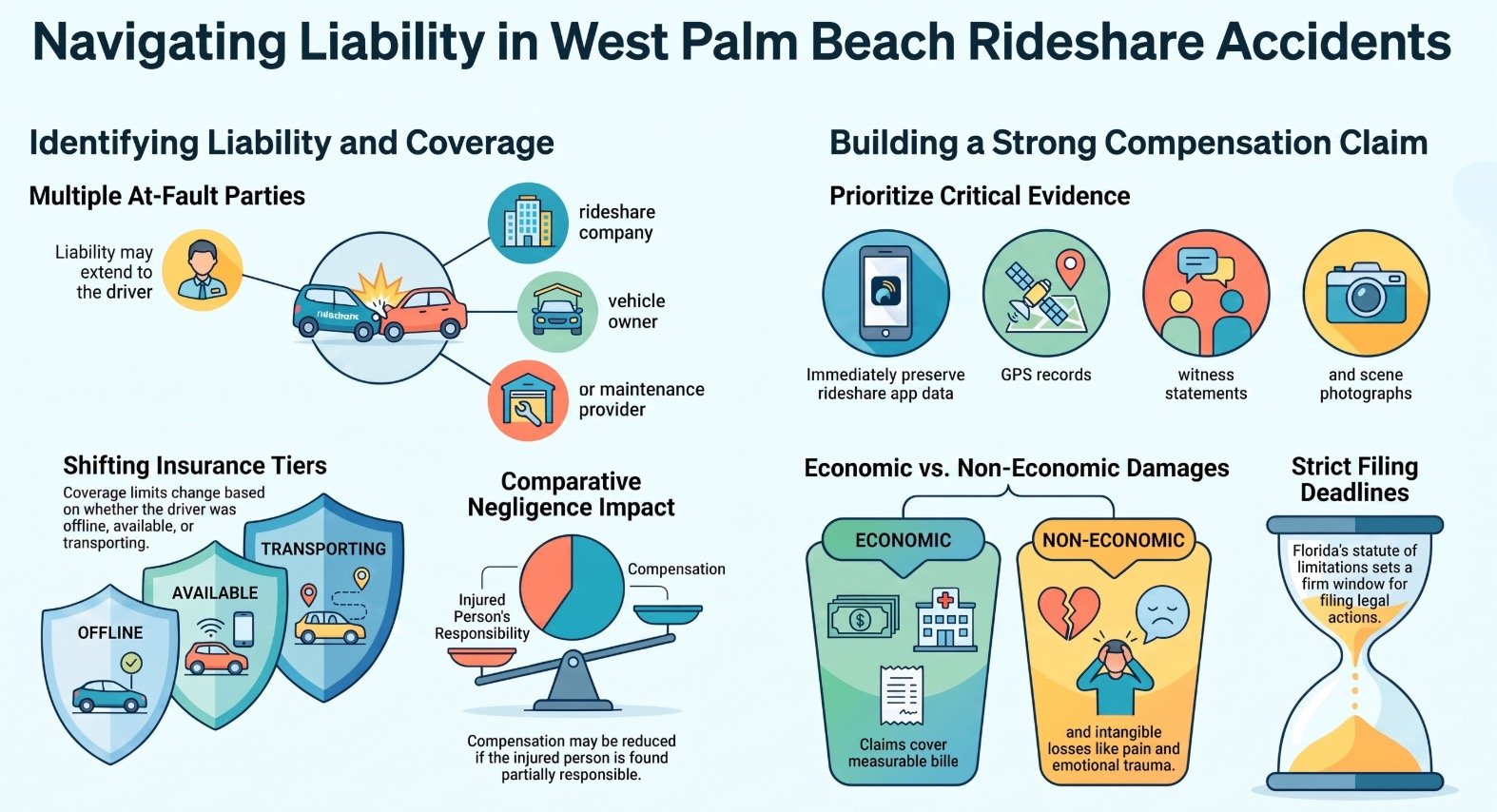
The Law Offices of Anidjar and Levine can investigate a rideshare accident to identify responsible drivers, vehicle owners, rideshare companies, and other potentially liable parties. The review may include app data, GPS records, witness accounts, traffic footage, medical documentation, and applicable insurance policies.
A West Palm Beach Personal Injury Lawyer can preserve evidence, address coverage disputes, communicate with insurers, and pursue compensation for medical expenses, lost income, property damage, pain, and continuing limitations.
Main Takeaways
- A West Palm Beach rideshare accident lawyer can investigate whether the driver, rideshare company, vehicle owner, or another motorist caused the collision.
- Liability analysis may consider crash reports, witness statements, vehicle damage, dashcam footage, phone records, and rideshare application data.
- Available insurance may depend on the driver’s application status, personal policy, rideshare coverage, and other applicable insurance policies.
- Comparative fault could reduce compensation if the injured person is found partially responsible for the crash.
- Legal guidance can protect evidence, address insurer communications, evaluate injuries, and pursue compensation for medical costs, lost income, and other losses.
How We Can Help With Your West Palm Beach Rideshare Accident At-Fault Parties Injury Claim
When a rideshare collision causes injury, determining legal responsibility is often more complicated than identifying the driver who caused the crash. A qualified legal team can help an injured person preserve evidence, communicate with insurers, and pursue compensation through a structured claims process. Assistance may include reviewing available insurance coverage, examining trip records, collecting witness statements, and evaluating medical records without prematurely deciding disputed liability questions. Careful Medical documentation tips can help clients maintain treatment histories, prescription information, diagnostic results, and records describing how injuries affect daily responsibilities.


Counsel may also address a Rideshare denial strategy when an insurer minimizes injuries, disputes coverage, or asserts that the driver was not working during the collision. The legal team can prepare clear submissions, track filing deadlines, and explain each procedural decision in accessible terms. This support allows injured individuals and their families to focus on recovery while their interests receive diligent, informed attention throughout the claim.
Understanding West Palm Beach Rideshare Accident At-Fault Parties Injury Cases
OUR CONSULTATIONSARE FREE
START YOUR FREE CASE REVIEW

Understanding a West Palm Beach rideshare accident injury case begins with identifying how the collision occurred, who contributed to it, and which insurance policies may apply. The analysis may involve the rideshare driver, another motorist, the rideshare company, or additional responsible parties. Each party’s legal responsibility depends on available evidence, including crash reports, witness statements, vehicle damage, medical records, and application status at the time of impact.
Comparative fault rules may reduce an injured person’s recovery if that person is found partly responsible. Insurance coverage disputes can arise when carriers disagree about whether a driver’s personal policy, rideshare coverage, or another policy must respond. Policy limits, exclusions, deductibles, and the driver’s work status may meaningfully affect compensation.


A careful case evaluation also considers the full extent of physical harm, treatment needs, lost income, and continuing limitations. Legal professionals serving injured community members can help preserve evidence, clarify liability, communicate with insurers, and pursue a fair resolution while protecting the claimant’s interests throughout the process.
Common Causes of West Palm Beach Rideshare Accident At-Fault Parties
Common causes of rideshare accidents include distracted driving, speeding, and other reckless conduct that places passengers and motorists at risk. Impaired driver behavior may further compromise judgment, reaction time, and vehicle control. Negligent vehicle maintenance, including failure to address defective brakes or worn tires, can also contribute to collisions and potential liability.
Distracted Rideshare Drivers
Distracted rideshare drivers frequently contribute to West Palm Beach collisions, particularly when drivers divert attention to navigation apps, passenger communications, or mobile devices. A driver may miss traffic signals, fail to recognize stopped vehicles, or react too late when attention shifts away from the roadway. Passenger requests, rideshare platform notifications, and attempts to adjust routes can create additional distractions. Establishing responsibility requires examining the circumstances surrounding the crash, including phone records, application data, witness accounts, and dashcam footage. Such evidence may clarify whether the driver was actively engaged in a work-related task or using a device for personal purposes.
Safety tips include securing devices before departure, using hands-free navigation, and pulling over when communications require sustained attention. Careful documentation can assist injured individuals and support fair accountability.
Speeding And Reckless Driving
Excessive speed and reckless driving can turn an ordinary rideshare trip into a serious collision, particularly on congested West Palm Beach roads. A rideshare driver who exceeds posted limits, follows too closely, changes lanes aggressively, or ignores roadway conditions may lose control and cause preventable injuries. These actions can also create significant intersection crash liability when a vehicle enters a crossing too quickly to stop or fails to yield. Traffic light violations, including running red lights or accelerating through yellow signals, frequently result in high-impact side collisions involving passengers, pedestrians, and other motorists. Investigators may review vehicle data, traffic-camera footage, witness statements, and citations to identify responsible conduct. Establishing fault can help injured individuals pursue compensation for medical care, lost income, and other accident-related losses through appropriate legal channels.
Impaired Driver Behavior
Impaired driving can make a rideshare trip dangerous when alcohol, illegal drugs, prescription medication, or other substances reduce a driver’s judgment, coordination, reaction time, or ability to remain alert. A driver may miss traffic signals, drift across lanes, misjudge distances, or respond too slowly to changing road conditions. Alcohol impairment indicators can include slurred speech, bloodshot eyes, the odor of alcohol, unstable movement, and inconsistent statements. Other impairment may show up as unusual behavior, drowsiness, confusion, or poor coordination. Following a crash, law enforcement observations, witness accounts, toxicology results, and sobriety test evidence may help establish whether substance use contributed to the collision.
Records from the rideshare company, passengers, nearby businesses, and responding officers can assist in identifying responsible parties and supporting injured individuals seeking appropriate legal remedies.
Negligent Vehicle Maintenance
When a rideshare vehicle is not properly inspected or maintained, mechanical defects can create serious risks for passengers, other motorists, and pedestrians. Worn brake pads, defective handling components, broken lights, and inadequate fluid levels may prevent a driver from responding safely to changing traffic conditions. Tire damage or improper inflation can also cause sudden loss of control, particularly on busy West Palm Beach roads. Liability may extend beyond the rideshare driver when a fleet operator, vehicle owner, or maintenance provider failed to perform required services or ignored known defects. Vehicle inspection records can help establish whether reasonable maintenance procedures were followed before the collision.
Tire failure investigations may also identify manufacturing defects, neglected repairs, or improper replacement practices. Preserving service documents, photographs, and electronic records can assist injured individuals seeking accountability and support.
Don’t Wait. Call Our Florida Personal Injury Lawyers Now!
Legal Rights of West Palm Beach Rideshare Accident At-Fault Parties Injury Victims
In a West Palm Beach rideshare accident, injured victims retain important legal rights even when another party appears responsible for causing the collision. Those rights help protect fair treatment, accountability, and access to necessary recovery resources.
- Victims may seek compensation for medical expenses, lost income, property damage, pain, and other legally recognized losses.
- They may investigate whether the rideshare driver, another motorist, a vehicle owner, or an insurance carrier is financially responsible.
- Comparative negligence basics matter because a victim’s partial contribution to an accident may reduce, rather than eliminate, potential compensation.
- Victims can request preservation of rideshare evidence, including trip records, application data, driver communications, video, witness information, and vehicle records.
Prompt medical attention, careful documentation, and timely communication with qualified legal counsel can help preserve these rights. Insurance representatives may seek statements or settlements before the full impact of injuries is understood. A lawyer can evaluate applicable coverage, protect evidence, and pursue a resolution that serves the victim’s long-term interests.
Why Do West Palm Beach Rideshare Accident At-Fault Parties Injuries Happen?
Rideshare accident injuries often stem from a combination of driver conduct, roadway conditions, vehicle defects, and the pressures of app-based transportation services. Drivers may speed, follow too closely, make unsafe lane changes, drive while distracted, or drive while fatigued. Frequent pickups, navigation demands, and performance expectations can increase those risks, particularly in congested West Palm Beach traffic.
Poorly maintained roads, construction zones, inadequate lighting, and sudden weather changes may also contribute to collisions. In other cases, defective tires, brakes, airbags, or other vehicle components can worsen injuries or cause an incident. Determining Rideshare liability may require examining whether the driver, another motorist, a vehicle owner, a maintenance provider, or the transportation company contributed to the harm. Insurance coverage and app accountability can depend on whether the driver was logged in, traveling to a passenger, or actively transporting one. These overlapping factors make accurate investigation critical for understanding how injuries occurred and which parties may bear responsibility.
What Should You Do After a West Palm Beach Rideshare Accident At-Fault Parties Injury?
After a West Palm Beach rideshare accident injury, the injured person should seek immediate medical care, even if symptoms initially appear minor. Documentation of the accident scene, injuries, vehicle damage, and witness information can help preserve important evidence. A rideshare attorney can clarify potential liability and available insurance coverage.
Seek Immediate Medical Care
Prompt medical evaluation should be a priority for anyone injured in a West Palm Beach rideshare collision, even when symptoms initially appear minor. A qualified clinician can identify hidden injuries, establish a baseline, and recommend treatment before conditions worsen. Individuals should inform medical personnel about every symptom, including pain, dizziness, numbness, or emotional distress, because delayed symptoms can affect recovery and legal claims. Emergency documentation should accurately reflect the reported injuries, examinations, diagnoses, and prescribed care.
After receiving initial treatment, each injured person should follow all instructions and attend scheduled appointments. Medical follow-up helps demonstrate consistent efforts toward recuperation and allows providers to monitor complications. Document prescribed medications, therapy, and activity restrictions carefully. Prompt, consistent care also supports informed decisions that protect the individual’s health and ability to serve family and community.
Document the Accident Scene
Because accurate evidence can clarify how a collision occurred, each injured person should document the West Palm Beach rideshare accident as soon as safety permits. Scene safety precautions should come first, including moving away from traffic when possible and avoiding unstable vehicles, leaking fluids, or other hazards. If medical needs require immediate attention, another responsible person may preserve information on the injured person’s behalf.
Photographs can record vehicle positions, roadway conditions, traffic controls, visible damage, and relevant surroundings. Images should be taken from multiple distances without disturbing physical evidence. When feasible, identify the rideshare vehicle, driver, passengers, license plates, and insurance information. Witness statement preservation is important; names, contact details, and brief accounts should be collected promptly. Notes should capture the time, location, weather, and sequence of events.
Consult a Rideshare Attorney
Once you’ve documented the accident scene, a rideshare attorney can help identify the parties responsible for the injury and determine which insurance policies may apply. A qualified attorney can review driver status, platform records, vehicle ownership, and applicable coverage limits. This analysis may clarify whether liability rests with the rideshare driver, another motorist, the rideshare company, or multiple parties. Prompt legal guidance is particularly valuable during Liability Disputes, when insurers may challenge fault or minimize damages. An attorney can also support Evidence Preservation by requesting trip data, surveillance footage, electronic records, witness statements, and medical documentation before materials disappear. With informed representation, an injured person can communicate more effectively with insurers, protect legal rights, and pursue appropriate compensation while focusing on recovery and continued service to others.
Critical Evidence in a West Palm Beach Rideshare Accident At-Fault Parties Injury Case
Establishing liability in a West Palm Beach rideshare accident often depends on preserving and evaluating the following evidence:
- Rideshare app records
- Driver background evidence
- Accident scene documentation
- Insurance policy details
Together, these materials can clarify the driver’s status, applicable coverage, accident circumstances, and potentially responsible parties.
Rideshare App Records
Rideshare app records can provide crucial evidence when determining which parties may be responsible for a West Palm Beach rideshare accident. These records may show whether a driver was offline, available, en route to a passenger, or transporting someone when the collision occurred. Trip timestamps, dispatch information, and route details can help establish the driver’s status and connect the crash to applicable insurance coverage. GPS Location data may clarify the vehicle’s movements, speed patterns, pickup location, and position near the reported impact. Because app information can change or disappear, prompt Data Preservation requests may be necessary. A qualified legal representative can seek relevant electronic records from the rideshare company, driver, and other custodians while protecting privacy interests. This evidence can support a fair investigation and help injured individuals identify potentially responsible parties.
Driver Background Evidence
Driver background evidence can help determine whether a rideshare driver, transportation company, or other party contributed to a West Palm Beach collision. Relevant records may include the driver’s licensing history, motor vehicle reports, commercial driving qualifications, training materials, and prior safety violations. Employment files can show whether the company conducted required screening or ignored warning signs before allowing the driver to transport passengers. Evidence concerning fatigue, substance use, medical restrictions, or unauthorized vehicle operation may also clarify responsibility, provided it is obtained lawfully and connected to the event. Eyewitness testimony can identify unsafe conduct or unusual behavior before the impact.
Surveillance footage from nearby businesses, residences, or transit facilities may corroborate those observations. These materials can help establish negligent hiring, retention, supervision, or independent driver liability.
Accident Scene Documentation
When a rideshare collision occurs in West Palm Beach, prompt accident scene documentation can preserve evidence that may later identify each at-fault party. Photographs should capture vehicle positions, visible damage, road conditions, skid marks, debris, signage, lighting, and nearby cameras before the scene changes. A dated record of weather, traffic flow, and roadway design can help clarify how the collision developed. Witness statement collection should include contact information and each observer’s independent description, without leading questions or speculation. Traffic light analysis may be necessary when conflicting accounts concern signal phases, turning movements, or right-of-way. Investigators can review intersection layouts, surveillance footage, and event data when available. Preserving these details supports accurate evaluation of conduct by rideshare drivers, other motorists, public entities, or additional responsible parties.
Insurance Policy Details
Because insurance coverage can change with the driver’s app status and trip phase, policy details are critical evidence in a West Palm Beach rideshare accident injury case. Investigators should obtain declarations pages, endorsements, policy numbers, and coverage communications from the rideshare company, driver, and other involved motorists. These records can identify applicable coverage limits and determine whether commercial, personal, or contingent insurance applies. The claim review should also address medical payment benefits, which may help cover treatment before fault is resolved. An Uninsured motorist provision could provide compensation when an at-fault driver lacks adequate insurance. Policy exclusions require careful evaluation because they may restrict protection for particular uses, drivers, vehicles, or circumstances. Preserving these documents allows an injured person’s representatives to coordinate claims accurately and serve the person’s recovery interests.
Don’t Wait. Call Our Florida Personal Injury Lawyers Now!
Long-Term Effects of West Palm Beach Rideshare Accident At-Fault Parties Injuries
Long-term injuries from a rideshare accident may cause chronic pain conditions that restrict mobility, employment, and daily activities. Emotional trauma can also produce persistent anxiety, depression, sleep disturbances, or other effects requiring professional care. These conditions may result in substantial long-term medical expenses, including treatment, medication, rehabilitation, and ongoing evaluations.
Chronic Pain Conditions
Chronic pain is a common long-term consequence of injuries sustained in rideshare collisions, particularly when damage involves the spine, joints, muscles, or nerves. Symptoms may persist after initial treatment, limiting mobility, sleep, employment, and daily responsibilities. Medical professionals can evaluate pain patterns, functional restrictions, medication needs, and the likelihood of permanent impairment. Consistent medical documentation supports treatment-timeline planning by identifying symptom changes and the services needed for ongoing care. Records may include examinations, imaging, physical therapy reports, prescriptions, expert opinions, and statements about practical limitations.
A rideshare accident attorney can organize this evidence to assess potentially responsible parties and pursue appropriate compensation. Compensation pain metrics may help describe severity, duration, treatment burdens, and loss of function without reducing the condition to a simple numerical calculation.
Emotional Trauma Effects
Emotional trauma can persist after a West Palm Beach rideshare accident, particularly when injuries involve disfigurement, disability, prolonged pain, or a substantial disruption to daily life. Affected individuals may experience anxiety, depression, nightmares, intrusive memories, irritability, or fear of traveling. These symptoms can interfere with relationships, employment, and participation in community activities, even when physical recovery progresses. Prompt evaluation by a qualified mental-health professional can identify post-traumatic stress and support an appropriate treatment plan. Counseling, trauma-focused cognitive behavioral therapy, and EMDR therapy may help reduce distress and restore confidence.
Documentation of symptoms, diagnoses, treatment recommendations, and functional limitations can clarify the accident’s lasting impact. Evidence preservation should include relevant medical records, personal observations, and witness accounts. Compassionate assistance can help affected individuals pursue recovery while protecting their legal interests.
Long-Term Medical Expenses
When injuries from a West Palm Beach rideshare accident require continuing care, medical expenses may extend well beyond the initial emergency treatment. Victims may need expert visits, physical therapy, prescription medication, assistive equipment, or future surgery. Some conditions also require home health services, transportation assistance, and periodic diagnostic testing. Estimating these costs requires careful review of treatment plans, expected recovery, and the pain prognosis provided by qualified medical professionals.
Medical documentation can establish the connection between the accident, ongoing limitations, and anticipated expenses. Records should include invoices, treatment notes, prescriptions, referrals, and expert opinions regarding future care. An assessment of lost earning capacity may also be relevant when medical needs interfere with employment. A qualified attorney can help organize evidence and seek compensation from legally responsible at-fault parties.
Proving Liability in West Palm Beach Rideshare Accident At-Fault Parties Injury Cases
Proving liability in a West Palm Beach rideshare accident requires establishing which party’s conduct caused the collision and identifying the insurance coverage available at the time. Potentially responsible parties may include the rideshare driver, another motorist, a vehicle owner, or a company whose negligence contributed to unsafe conditions. Evidence Preservation should begin promptly, including photographs, medical records, vehicle data, app trip information, traffic-camera footage, and police reports. Witness Testimony can clarify traffic signals, vehicle movements, driver behavior, and the sequence of impact. A careful Causation Analysis connects the identified conduct to the collision and demonstrates how the impact produced specific injuries.
Proving Damages requires organized documentation of treatment, lost income, disability, property damage, and anticipated medical needs. Attorneys serving injured individuals may consult accident reconstruction experts and medical professionals when disputed facts require expert interpretation. Establishing each element with reliable evidence helps protect accountability and supports a fair evaluation of the injured person’s legal claim.
Dealing With Insurance Companies After a West Palm Beach Rideshare Accident At-Fault Parties Injury
After a West Palm Beach rideshare accident, insurance communications should be handled carefully because coverage may depend on the driver’s app status, the parties involved, and the facts surrounding the collision. An injured person should identify every potentially responsible insurer, including the rideshare company’s carrier, the driver’s personal insurer, and any applicable commercial policy. Statements should remain accurate and limited to verified facts. Recorded interviews, broad medical authorizations, and settlement documents should not be provided without understanding their consequences.
Coverage may change depending on whether the driver was offline, available for trips, or transporting a passenger. A qualified attorney can review policy language, preserve evidence, and communicate with adjusters on the injured person’s behalf. Particular attention may be required when insurers engage in Bad Faith Handling, such as unreasonable delays or inadequate investigation. UM Coverage Disputes may also arise when the at-fault driver lacks sufficient insurance or cannot be identified. Careful advocacy helps protect recovery while treating all involved parties with fairness and respect.
What to Expect During a West Palm Beach Rideshare Accident At-Fault Parties Injury Claim Process
A rideshare injury claim generally begins by identifying each potentially responsible party, including drivers, rideshare companies, and other involved entities. The process then involves gathering accident evidence, negotiating with applicable insurers, and evaluating settlement offers based on the documented injuries and losses. If negotiations fail to provide fair compensation, the injured person may pursue legal recovery through a formal claim or lawsuit.
Identifying Responsible Parties
Determining which parties may be legally responsible is a major first step in a West Palm Beach rideshare accident injury claim. Responsibility may involve the rideshare driver, another motorist, the rideshare company, a vehicle owner, or an insurer. The driver’s conduct, including careless driving or impairment, often receives close review. Driver Employment Criteria may also affect whether the platform treats the driver as an independent contractor or employee, which can influence potential claims. The company’s role depends on the driver’s status, application period, and applicable insurance coverage. Platform Liability Limits may restrict when the company can be held directly responsible, even when its policy provides coverage. Maintenance providers, employers, and governmental entities may also share liability in particular circumstances. A qualified attorney can assess each party’s legal connection and pursue fair accountability for the injured person.
Gathering Accident Evidence
When a West Palm Beach rideshare accident claim involves disputed responsibility, counsel typically begins gathering evidence that can identify each at-fault party and connect that conduct to the reported injuries. This process may include obtaining crash reports, photographs, vehicle damage records, traffic-camera footage, and rideshare application data showing trip status and driver activity. Eyewitness testimony can clarify traffic signals, vehicle movements, and conditions immediately before impact. Counsel may also preserve electronic communications and request maintenance or employment records when vehicle defects or business practices are relevant. Medical records document diagnoses, treatment, restrictions, and the relationship between the collision and claimed harm.
Prompt collection helps prevent evidence from being lost or altered. Investigators may interview witnesses and inspect the roadway, while counsel organizes materials to present a clear factual account for all affected individuals.
Negotiating Insurance Claims
Insurance negotiations typically begin after the available evidence, medical documentation, and applicable coverage are reviewed to identify the parties responsible for compensable losses. An adjuster may request statements, bills, treatment records, and information about the rideshare driver’s status when the collision occurred. The claimant’s representative can organize these materials and present a claim settlement strategy addressing medical expenses, lost income, property damage, and documented future needs. Insurers may accept liability, propose a reduced payment, or dispute responsibility and coverage.
Carefully reviewing policy language can clarify whether the driver’s personal policy, rideshare company coverage, or another source applies. If a claim is denied, coverage denial appeals may require additional evidence and written explanations. Negotiations may involve several exchanges before a fair agreement is reached, while communications remain respectful, accurate, and focused on the injured person’s needs.
Pursuing Legal Compensation
Pursuing legal compensation begins with identifying each potentially liable party, documenting the injuries and financial losses, and selecting the appropriate claim or court action. A claimant may pursue coverage from the rideshare driver, the driver’s personal insurer, the rideshare company’s policy, or another negligent motorist. Medical records, wage documentation, photographs, witness accounts, and electronic trip information support liability and damages. Preserve evidence immediately because vehicle data, surveillance footage, and app records may be deleted or overwritten. Insurers may investigate, request statements, and evaluate settlement timelines before presenting an offer.
A Wrongful denial or inadequate payment can require insurance appeals, additional negotiations, or litigation. Legal counsel can coordinate communications, protect the claimant’s interests, and explain procedural deadlines. The process should prioritize accurate documentation and a fair recovery that supports medical care, stability, and service to others.
Compensation for West Palm Beach Rideshare Accident At-Fault Parties Injury Damages
Compensation for injuries in a West Palm Beach rideshare accident may depend on which party caused the collision, the driver’s status at the time, and the insurance coverage available under Florida law. A responsible party may include the rideshare driver, another motorist, a rideshare company, or an insurer whose policy applies to the trip. Identifying the applicable coverage requires examining whether the driver was offline, awaiting a request, traveling to pick up a passenger, or transporting one. Settlement value factors may include the severity of injuries, treatment duration, prognosis, liability evidence, available policy limits, and the claimant’s compliance with medical recommendations. The medical records importance cannot be overstated because consistent documentation can connect injuries to the crash and demonstrate necessary treatment.
Counsel may investigate vehicle data, photographs, witness accounts, and incident reports while communicating with insurers. Prompt legal guidance can help preserve evidence, identify all potentially responsible parties, and pursue a resolution that supports the injured person’s recovery and continuing needs.
Don’t Wait. Call Our Florida Personal Injury Lawyers Now!
Economic vs Non-Economic Damages in West Palm Beach Rideshare Accident At-Fault Parties Cases
Economic damages may include medical expenses, lost wages, property damage, and future financial losses resulting from a rideshare collision. Non-economic losses can involve pain and suffering, emotional distress, disability, and diminished quality of life. Establishing these damages generally requires organized documentation, medical evidence, employment records, and other proof connecting the losses to the accident.
Economic Damage Categories
When a rideshare collision causes injury in West Palm Beach, the damages claim may include both economic and non-economic losses, depending on the evidence and applicable insurance coverage. Economic damages address measurable financial harm tied to treatment, recovery, and disrupted employment. A Medical bills breakdown may include emergency services, hospital care, diagnostic testing, medication, rehabilitation, and reasonably anticipated future treatment. Records should identify each provider, service date, charge, payment, and remaining balance. Lost wages proof may include pay statements, tax records, employer verification, schedules, and documentation of missed work.
If injuries reduce future earning capacity, vocational assessments and medical opinions may help establish that projected loss. Property damage, transportation expenses, household assistance, and other necessary out-of-pocket costs may also qualify when supported by receipts and a clear connection to the collision.
Non-Economic Losses
Non-economic losses address the personal effects of a rideshare collision that cannot be measured through bills or employment records. They may include physical pain, emotional distress, inconvenience, disfigurement, loss of enjoyment, and limitations on family or community participation. These harms can affect an injured person’s independence, dignity, and ability to serve others in daily life. Unlike economic losses, they do not have a fixed market price. A non economic damages calculation accordingly considers the injury’s severity, duration, treatment impact, and effect on ordinary activities. Florida law does not impose a universal formula, and the appropriate value depends on the circumstances and available evidence. Pain suffering proof may include consistent medical documentation, personal descriptions, and observations from relatives or caregivers, without duplicating the separate analysis of liability or economic damages.
Proving Rideshare Accident Damages
Proving rideshare accident damages requires organized evidence showing both the financial costs of the collision and its effect on the injured person’s life. Economic damages may include emergency treatment, ongoing medical care, rehabilitation, prescription expenses, lost wages, reduced earning capacity, and necessary transportation or household assistance. Medical documentation should connect each claimed expense to injuries caused by the crash, while employment records can establish income losses.
Non-economic damages address pain, emotional distress, disability, disfigurement, and diminished enjoyment of life. Because these losses lack fixed prices, treatment notes, witness statements, personal journals, and testimony from qualified professionals may help describe their seriousness. Liability timelines also matter. They can clarify when a driver was logged into a rideshare platform, transporting a passenger, or operating independently, helping identify applicable insurance coverage and responsible parties. Consistent records allow decision-makers to evaluate compensation fairly and serve injured individuals responsibly.
When a West Palm Beach Rideshare Accident At-Fault Parties Injury Case Goes to Trial vs Settlement
A West Palm Beach rideshare accident injury case may be resolved through settlement negotiations or proceed to trial, depending on the strength of the evidence, the parties’ willingness to compromise, and the extent of the claimant’s losses. Settlement can provide a faster, more predictable resolution while reducing the demands placed on an injured person and family. A careful Settlement negotiation strategy may involve presenting medical records, wage documentation, testimony, and a structured account of future needs. If negotiations fail, the Rideshare trial process requires preparation for jury selection, opening statements, witness examination, evidentiary challenges, and closing arguments. A trial may allow a claimant to seek a fuller award when liability or damages remain disputed, but it also involves uncertainty, time, expense, and emotional strain.
Legal counsel can evaluate the evidence, communicate with opposing parties, and recommend an approach consistent with the claimant’s welfare. The claimant ultimately decides after receiving informed advice and weighing practical priorities.
Florida Laws That May Affect Your West Palm Beach Rideshare Accident At-Fault Parties Case
Florida law can materially shape how a West Palm Beach rideshare accident claim is evaluated, including available insurance coverage, fault rules, and deadlines for filing suit.
Several provisions may affect an injured person, the rideshare driver, passengers, and other motorists:
- Florida’s no-fault system may provide PIP Benefits for medical expenses and partial lost wages, subject to eligibility requirements and policy limits.
- Rideshare coverage can vary according to whether the driver was offline, awaiting a request, or transporting a passenger, making app status and policy language important.
- Comparative Negligence may reduce a claimant’s recovery when that person’s conduct contributed to the collision or resulting injuries.
- Financial-responsibility and bodily-injury rules may influence claims against negligent drivers, vehicle owners, transportation companies, or insurers.
Evidence such as crash reports, medical records, app data, witness statements, and photographs can clarify responsibility. A lawyer serving accident victims and their families can assess applicable statutes, coordinate communications, and pursue a fair resolution while accounting for Florida’s insurance and fault framework.
The Statute of Limitations for West Palm Beach Rideshare Accident At-Fault Parties Injury Cases
Because strict filing deadlines may bar otherwise valid claims, the statute of limitations is a central issue in West Palm Beach rideshare accident injury cases. Under Florida law, the deadline may depend on the claim, the parties involved, and whether the case concerns negligence, wrongful death, or another legal theory. Recent statutory changes can also affect the period available for filing, so an injured person should identify the applicable rule promptly.
The limitations period generally begins when the injury occurs, although limited exceptions may alter when the clock starts or pause it temporarily. Insurance communications do not necessarily extend the deadline, and settlement discussions should not replace filing a lawsuit.
Prompt organization can preserve critical evidence and support accurate damage calculations. Medical documentation, wage records, photographs, witness information, and rideshare records may help establish the injury and its financial consequences. A timely evaluation allows affected individuals to protect their rights while pursuing accountability and serving the broader community.
How a West Palm Beach Rideshare Accident At-Fault Parties Lawyer Can Help You
When a rideshare accident causes injury, determining which parties may be legally responsible often requires a detailed review of the driver’s conduct, insurance coverage, rideshare status, vehicle ownership, and available evidence.
A West Palm Beach rideshare accident at-fault parties lawyer can organize that investigation and protect an injured person’s interests while pursuing accountability.
- The lawyer identifies potentially liable drivers, rideshare companies, vehicle owners, maintenance providers, and other responsible parties.
- The lawyer examines policies, app records, trip data, photographs, witness statements, and Medical Billing Records to establish fault and damages.
- The lawyer communicates with insurers, evaluates settlement offers, and watches for Insurance Bad Faith or improper claim delays.
- The lawyer prepares a documented demand or litigation strategy that presents medical, financial, and personal losses clearly.
This assistance allows injured individuals and their families to focus on recovery while a qualified advocate handles evidence, negotiations, and legal analysis. Careful representation also helps ensure that responsible parties are evaluated fairly under applicable Florida law.
When to Contact a West Palm Beach Rideshare Accident At-Fault Parties Lawyer
Prompt legal guidance becomes important as soon as a rideshare accident results in injury, disputed fault, or uncertainty about available insurance coverage. A West Palm Beach rideshare accident at-fault parties lawyer should be contacted promptly, before statements are given to insurers or evidence becomes difficult to obtain. Early consultation can help identify whether responsibility may involve the rideshare driver, another motorist, a vehicle owner, or a rideshare company, depending on the circumstances and applicable policies.
Contact is especially appropriate when injuries require emergency care, follow-up treatment, or time away from work. Preserve medical documentation, including diagnoses, treatment records, prescriptions, and related expenses. Evidence preservation also matters because photographs, witness information, vehicle data, app records, and surveillance footage may become unavailable. Legal assistance is advisable when an insurer delays communication, offers an inadequate settlement, denies coverage, or assigns blame without adequate investigation. Timely action allows an injured person to protect important information while pursuing a fair resolution and supporting others who depend on that person.
Why You Need an Experienced West Palm Beach Rideshare Accident At-Fault Parties Lawyer
An experienced West Palm Beach rideshare accident at-fault parties lawyer can clarify the complex insurance and liability issues that often arise after a collision involving a rideshare vehicle. Multiple parties may bear responsibility, including the rideshare driver, another motorist, the rideshare company, or an insurer. Which policy applies can depend on the driver’s status within the app and the circumstances surrounding the crash.
Experienced counsel can investigate promptly, identify potentially responsible parties, and coordinate evidence preservation steps before important information disappears. This may include obtaining vehicle data, application records, witness statements, surveillance footage, photographs, and medical documentation. A lawyer can also evaluate how Florida comparative negligence may affect fault allocation and potential recovery, especially when several drivers contributed to the incident.
Professional legal guidance helps protect injured individuals and their families from confusing claims procedures and premature settlement decisions. By presenting organized evidence and communicating with insurers, counsel supports a fair process while allowing clients to focus on treatment, recovery, and continuing to serve others.
How to Choose the Right West Palm Beach Rideshare Accident At-Fault Parties Lawyer for Your Case
Selecting the right West Palm Beach rideshare accident at-fault parties lawyer requires careful consideration of the attorney’s experience with rideshare liability, Florida insurance law, and multi-vehicle collisions. A qualified lawyer should identify every potentially responsible party, including drivers, rideshare companies, vehicle owners, and insurers, while explaining how coverage may apply.
Prospective clients should review the lawyer’s record handling comparable claims, communication practices, investigative resources, and approach to client service. The attorney should provide clear answers, set realistic expectations, and address the injured person’s concerns with patience and respect. Free consultation options may let an individual discuss the accident, available evidence, and possible legal avenues before committing.
During an initial meeting, the lawyer should explain case strategy planning, anticipated challenges, documentation needs, and potential resolution methods. Carefully evaluating qualifications, transparency, and personal attention can help an injured person choose counsel prepared to protect the interests of all affected parties throughout the claim.
About The Law Offices of Anidjar & Levine
The Law Offices of Anidjar & Levine represents individuals injured in rideshare collisions and related motor vehicle accidents throughout Florida, including West Palm Beach. The firm assists clients seeking accountability when negligent drivers, rideshare companies, vehicle owners, or other parties may have contributed to a crash.
Its legal team evaluates collision evidence, insurance policies, driver status, and applicable Florida liability rules to identify potentially responsible parties. Attorneys may address Negligence defenses raised by drivers, companies, and insurers, while developing evidence concerning unsafe conduct, inadequate screening, or other contributing factors. The firm also handles Insurance negotiations, communicating with carriers and pursuing compensation for medical treatment, lost income, property damage, and other legally recoverable losses.
Frequently Asked Questions
Can I Pursue a Claim if the Rideshare Driver Was Uninsured or Underinsured?
Yes, an injured person may pursue compensation when a rideshare driver lacks sufficient insurance, although available recovery depends on the driver’s status, the platform’s policy, and applicable state law. A Claim denial does not necessarily end the matter; uninsured options may include personal coverage or platform protection. An Underinsured policy can address remaining losses, while stacking coverage may increase benefits where multiple policies legally apply. Legal review helps protect deadlines and rights.
What Happens if Multiple Vehicles Contributed to My Rideshare Accident?
When multiple vehicles contribute to a rideshare accident, Comparative Negligence may determine each party’s percentage of fault and the compensation available. Multiple Parties can include drivers, rideshare companies, vehicle owners, or manufacturers, depending on the evidence. Apportionment Evidence, such as crash reports, witness accounts, and vehicle data, helps establish responsibility. Joint Liability may apply in limited circumstances, allowing an injured person to seek recovery from one responsible party, subject to applicable law.
Can Rideshare Passengers Sue the Company Directly After an Accident?
Yes, rideshare passengers may sue the company directly after an accident, but the viable theory depends on the driver’s status, insurance coverage, and company conduct. Direct liability may exist when negligent hiring, retention, supervision, or corporate wrongdoing contributed to the injury. Otherwise, claims often proceed against the driver and applicable insurers. Passengers should review arbitration clauses, preserve evidence, and seek qualified legal guidance to protect their rights and serve all affected parties fairly.
Will Accepting a Rideshare Settlement Affect My Health Insurance Benefits?
Accepting a rideshare settlement may affect health coverage, particularly when an insurer paid medical expenses related to the accident. The insurer may assert reimbursement rights, often called subrogation, against settlement proceeds. Settlement timing can also influence eligibility for needs-based benefits, premium assistance, or other programs. Before signing a release, the injured passenger should disclose the proposed settlement to relevant insurers and benefit administrators, confirm repayment obligations, and seek legal guidance to protect available benefits.
Can I Recover Damages if I Was Not Wearing a Seat Belt?
An injured person may recover damages despite not wearing a seat belt, although the failure can reduce compensation. Under Florida’s comparative negligence rules, a court may assign the person a percentage of fault if the missing restraint worsened the injuries. Seat Belt Liability generally concerns the extent of harm caused by nonuse, not responsibility for causing the collision. Medical evidence, accident records, and testimony help determine recoverable losses and support a fair outcome.
—————————
Victims of West Palm Beach rideshare accidents may face complex questions about fault, insurance coverage, and liability involving drivers, rideshare companies, and other responsible parties. A knowledgeable West Palm Beach Personal Injury Lawyer can help preserve evidence, identify applicable insurance policies, and pursue compensation for medical expenses, lost income, and related damages.
The Law Offices of Anidjar and Levine carefully evaluate each claim and advocate for injured individuals while protecting their legal rights throughout the recovery process.