

The Law Offices of Anidjar and Levine, a Boca Raton Personal Injury Lawyer firm, investigates whether a prescribing, dispensing, labeling, administration, or monitoring failure caused preventable harm.
The review may include prescriptions, pharmacy logs, medical charts, medication administration records, warnings, communications, bills, and witness accounts.
Counsel can coordinate medical evaluations, preserve electronic and paper evidence, assess liability and patient responsibility, and pursue compensation for treatment costs, lost income, pain, and long-term effects.
Additional information explains the investigation process, victim options, and case evaluation.
Main Takeaways
- A Boca Raton medication-error lawyer investigates prescribing, dispensing, labeling, administration, and monitoring failures that may have caused injury.
- Potential errors include incorrect dosages, wrong medications, inadequate instructions, pharmacy mistakes, poor communication, and missed adverse reactions.
- The investigation may involve prescriptions, pharmacy records, medical charts, medication containers, discharge instructions, and provider communications.
- Seek immediate medical care, document symptoms and treatment, preserve medication evidence, and request complete medical and pharmacy records.
- Legal options may include negotiating with insurance or filing a personal-injury lawsuit seeking compensation for medical expenses, lost income, pain, and other damages.


How We Can Help With Your Boca Raton Medication Error Injury Claim
When a medication error causes injury, a Boca Raton medication error injury lawyer can investigate the circumstances, identify the responsible parties, and pursue compensation on the injured person’s behalf. The process may include reviewing prescriptions, pharmacy records, medical charts, warnings, and communications among healthcare providers. This review can clarify whether a prescribing mistake, dispensing error, labeling problem, or inadequate instruction contributed to the harm.
A legal team may also coordinate with medical professionals who can explain the injury, necessary treatment, and potential long-term effects. Careful evidence preservation helps protect the claim while allowing the injured individual to focus on recuperation. Counsel can address Medication error myths that may otherwise cause people to overlook valid concerns or blame themselves without sufficient information.
In addition, attorneys can examine safeguards related to preventing prescription fraud, including verification procedures and controlled-substance documentation, when those issues are relevant. By providing organized guidance, respectful communication, and diligent advocacy, the firm supports injured people and families seeking accountability through appropriate legal channels.
OUR CONSULTATIONSARE FREE
START YOUR FREE CASE REVIEW

Understanding Boca Raton Medication Errors Injury Cases
Understanding a Boca Raton medication error injury case requires examining how the medication was prescribed, dispensed, labeled, administered, and monitored. The evaluation generally focuses on whether healthcare professionals followed accepted standards and whether a preventable mistake caused injury. Relevant records may include prescriptions, pharmacy logs, medication administration documentation, discharge instructions, and communications among providers.
A case may also require establishing the patient’s diagnosis, treatment history, resulting symptoms, and financial losses. Medical opinions can help clarify whether the error caused the harm or worsened an existing condition. Patient responsibility is also considered, including whether instructions were followed and whether important symptoms or medication changes were reported. However, responsibility must be assessed based on the complete clinical record rather than on assumptions.
Medication safety depends on clear communication, accurate documentation, appropriate monitoring, and timely responses to complications. A careful review allows affected individuals and their families to understand available options while supporting accountability and safer practices for other patients.
Common Causes of Boca Raton Medication Errors
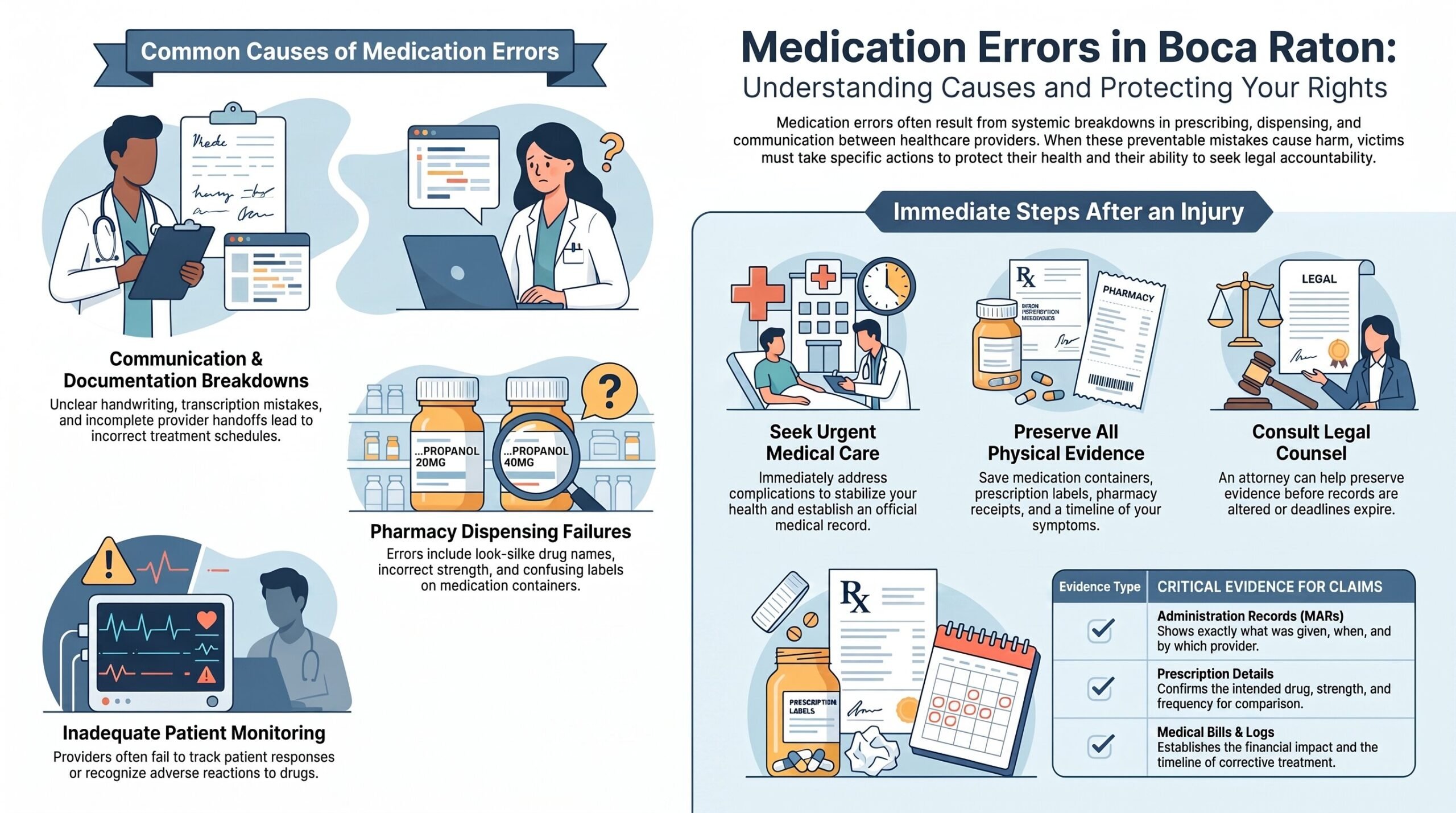
Boca Raton medication errors may arise from incorrect dosage instructions, pharmacy dispensing mistakes, inadequate medication monitoring, or poor communication among healthcare providers. Each cause can result in patients receiving the wrong medication, an improper amount, or insufficient guidance about potential risks. Identifying how these errors occur is critical when evaluating responsibility and the resulting injuries.
Incorrect Dosage Instructions
Incorrect dosage instructions can cause a patient to receive too much or too little medication, potentially resulting in serious injury, treatment failure, or dangerous interactions with other drugs. Such instructions may arise from unclear handwriting, transcription mistakes, outdated information, or communication gaps between a prescriber and patient. Medication labeling issues can also create confusion when directions use unfamiliar abbreviations, omit critical timing information, or conflict with the prescriber’s explanation.
Prescription clarification failures may occur when questions about strength, frequency, or duration are not promptly addressed. Consequently, patients, caregivers, and healthcare professionals may misunderstand how a medication should be taken. Warning signs can include unexpected symptoms, worsening illness, or changes in alertness. Careful review, clear communication, and documented counseling help reduce these risks and support safer treatment for every patient.
Pharmacy Dispensing Mistakes
Pharmacy dispensing mistakes occur when a pharmacy provides the wrong medication, strength, quantity, or instructions, potentially causing injury, treatment failure, or dangerous drug interactions. These errors may result from Medication labeling issues, including look-alike drug names, unclear directions, incorrect auxiliary warnings, or labels attached to the wrong container. Pharmacy workflow failures can also arise when staff members misread prescriptions, select an incorrect product, enter inaccurate information into computer systems, or overlook required verification steps.
Busy environments, staffing shortages, interruptions, and inadequate communication may increase the likelihood of these mistakes. Patients and caregivers may suffer preventable harm when a dispensed medication differs from the prescriber’s order. Documentation, prescription records, container labels, and witness accounts can help clarify what occurred and support accountability after an error.
Inadequate Medication Monitoring
Inadequate medication monitoring occurs when healthcare providers fail to track a patient’s response to a prescribed drug, recognize adverse effects, or adjust treatment when medical conditions change. Effective monitoring requires reviewing symptoms, laboratory results, life signs, and relevant medical history at appropriate intervals. Medication reconciliation can identify duplications, contraindications, or outdated prescriptions that increase the risk of harm.
Providers should also assess patient compliance without assuming that missed doses reflect negligence, since cost, confusion, or physical limitations may interfere with proper use. Barcode verification can support accurate administration, but it does not replace clinical observation or follow-up. When monitoring is neglected, preventable complications such as toxicity, allergic reactions, uncontrolled conditions, or withdrawal may develop. Careful documentation and timely reassessment help restore patients and promote responsible treatment.
Poor Provider Communication
Poor provider communication can cause medication errors when physicians, nurses, pharmacists, and other healthcare professionals fail to share complete and timely information. Incomplete medication lists, unclear orders, and overlooked allergy information may lead to incorrect drugs, dosages, or schedules. Miscommunication documentation can also create confusion when records do not accurately reflect a patient’s current treatment, recent reactions, or necessary changes. During transfers between facilities, verbal reports and electronic records should be reviewed carefully so that vital details are not lost.
Discharge planning requires particularly clear instructions about medications, potential side effects, follow-up appointments, and which provider should address concerns. Patients and caregivers may face preventable harm when professionals fail to coordinate these responsibilities. Thorough communication, accurate records, and confirmation of understanding can help protect patients from avoidable medication errors.
Don’t Wait. Call Our Florida Personal Injury Lawyers Now!


Legal Rights of Boca Raton Medication Error Injury Victims
Medication error victims in Boca Raton may have the legal right to seek compensation when a healthcare provider, pharmacy, or drug manufacturer’s negligence causes injury. Available remedies can address medical expenses, lost income, additional treatment, pain, and other documented losses. A qualified attorney may evaluate prescription negligence claims by reviewing records, identifying responsible parties, and determining whether Florida law permits recovery.
Medication error victims may pursue compensation for medical expenses, lost income, additional treatment, pain and suffering, and other documented losses.
Victims may have rights to:
- Request complete medical and pharmacy records
- Obtain an independent review of the injury
- Pursue insurance negotiations or civil litigation
- Seek damages within applicable legal deadlines
Prompt documentation can preserve evidence, clarify the treatment timeline, and support a fair assessment of harm. Family members and caregivers may assist injured individuals in communicating with counsel and following medical recommendations. Legal guidance can also help a person understand comparative fault, potential product-liability issues, and procedural requirements without interfering with ongoing care. Although medication error prevention remains important for public safety, an injured person’s immediate legal priorities may be protecting their health, preserving evidence, and securing access to lawful compensation.
Don’t Wait. Call Our Florida Personal Injury Lawyers Now!
Why Do Boca Raton Medication Errors and Injuries Happen?
When medication errors occur in Boca Raton healthcare settings, they often result from breakdowns in prescribing, dispensing, communication, or administration procedures. Physicians may select an inappropriate drug, dosage, or treatment schedule because of incomplete records, unclear orders, or insufficient information about allergies and existing conditions. Pharmacy staff can misread prescriptions, enter data incorrectly, or dispense medications with confusing labels, particularly during periods of heavy workload. Nurses and other providers may administer the wrong medication or dose when handoffs are rushed or instructions are misunderstood.
Systemic conditions can increase these risks. Staffing shortages, interruptions, inadequate supervision, and poorly designed electronic systems may undermine careful review. Limited Patient safety training can leave personnel unprepared to recognize warning signs or follow verification protocols consistently. Regular pharmacy workflow audits may identify recurring hazards, communication gaps, and process weaknesses before injuries occur. Language barriers, similar medication names, and failures to reconcile prescriptions during transfers between facilities can also contribute. Effective prevention requires coordinated procedures, reliable documentation, and an organizational commitment to patient safety.
Don’t Wait. Call Our Florida Personal Injury Lawyers Now!
What Should You Do After a Boca Raton Medication Error Injury?
After a medication error, the injured individual should seek immediate medical care to address potential complications and establish a medical record. The individual should document the medication, dosage, instructions, symptoms, treatment received, and any communications concerning the error. A Boca Raton lawyer can then evaluate the circumstances, preserve relevant evidence, and explain available legal options.
Seek Immediate Medical Care
Prompt medical attention should be obtained immediately after a suspected medication error, particularly if the individual experiences difficulty breathing, severe dizziness, confusion, chest pain, seizures, or other sudden symptoms. A responsible caregiver should call 911 or take the person to the nearest emergency department when urgent symptoms arise. Even when symptoms appear mild, prompt evaluation can help identify adverse reactions, incorrect dosages, dangerous interactions, or delayed effects.
The individual or accompanying caregiver should tell clinicians which medication was taken, the suspected amount, and when it was administered, if available. They should ask about patient safety, request medication reconciliation, and avoid delays in treatment while awaiting clarification. Medical professionals can stabilize the patient, monitor changes, and determine appropriate follow-up care without compromising immediate health needs.
Document the Medication Error
A detailed record of the suspected medication error should be created as soon as the person’s immediate medical needs have been addressed. The record should identify the medication, prescribed dosage, dispensing instructions, administration time, and symptoms that followed. A Medication error timeline can clarify when prescriptions were issued, filled, taken, and corrected. Copies of prescription labels, discharge papers, pharmacy receipts, treatment notes, and relevant messages should be preserved in a secure location.
The individual or a designated caregiver should write down the names of healthcare professionals involved and the information each provided. Photographs of packaging, pills, or visible injuries may also preserve useful details. Records should remain factual and avoid speculation. Notes may help identify inconsistencies, including possible pharmacy policy violations, while supporting accurate communication with appropriate authorities.
Contact a Boca Raton Lawyer
When a medication error causes injury, consulting a Boca Raton lawyer can help determine whether the circumstances support a medical malpractice, pharmacy negligence, or product liability claim. An attorney can review medical records, prescriptions, pharmacy labels, treatment notes, and documented communications to identify where the process failed. Prompt legal guidance may also help preserve evidence, identify responsible parties, and explain deadlines that could affect a potential claim. The injured patient or family should provide complete, accurate information and avoid speculating publicly about the incident. A lawyer may coordinate with medical professionals to evaluate the injury, necessary treatment, and long-term effects. Legal review can also encourage Medication error prevention by examining whether patient safety protocols were followed. Through informed advocacy, counsel can help protect the patient’s rights while supporting broader efforts to improve safe care.
Critical Evidence in a Boca Raton Medication Errors Injury Case
A medication error case may depend on organized records that establish what was prescribed, administered, and what harm resulted.
Essential evidence commonly includes:
- Medication administration records
- Prescription and dosage details
- Witness statements and testimony
- Medical bills and records
Together, these materials can help clarify liability, treatment consequences, and the full scope of claimed damages.
Medication Administration Records
Medication Administration Records (MARs) provide a detailed account of the medications prescribed, dispensed, and administered to a patient, making them critical evidence in a Boca Raton medication error injury case. These records may identify who administered a medication, when it was given, and whether required documentation was completed. They can also reveal omissions, conflicting entries, unexplained corrections, or delays that warrant further investigation.
Compared with nursing notes, hospital charts, and pharmacy record reviews, MARs may help determine whether care followed documented procedures. Patient communication gaps, such as unreported allergies, unclear instructions, or missed symptom reports, may also become apparent when records are examined as a whole. Preserving original electronic entries, audit trails, and paper documentation supports a reliable evaluation of events and assists counsel in responsibly presenting concerns.
Prescription And Dosage Details
Prescription and dosage details provide another key basis for evaluating whether a medication error occurred in a Boca Raton injury case. The prescription identifies the intended drug, strength, route, frequency, and duration, allowing reviewers to compare those instructions with the medication supplied and administered. Discrepancies may reveal prescribing mistakes, pharmacy transcription errors, or Medication labeling issues that increased the risk of harm. Records should also indicate whether dosage adjustments were ordered based on age, weight, allergies, kidney function, or other relevant conditions. Evidence concerning patient medication adherence helps distinguish an incorrect prescription from a failure to follow accurate instructions, without placing improper blame on the patient. A careful review may include pharmacy labels, discharge directions, refill histories, and relevant communications documenting changes or clarifications.
Witness Statements And Testimony
When available, witness statements and testimony can help establish how a medication was prescribed, dispensed, explained, or administered in a Boca Raton injury case. Patients, family members, caregivers, pharmacists, nurses, and other observers may describe instructions, warnings, conversations, or departures from expected procedures. Their accounts can clarify timing and identify who handled the medication before the injury occurred. Medication tracking records may also support a witness’s recollection by showing when doses were ordered, delivered, or given, without replacing testimony about what was communicated.
Attorneys typically assess consistency, firsthand knowledge, memory, and impartiality when evaluating each account. Witness credibility issues can arise when statements conflict, information is learned indirectly, or a witness has a personal interest. Careful interviews and preparation help preserve accurate testimony while respecting every participant’s role and responsibility.
Medical Bills And Records
Beyond witness accounts, medical bills and records provide documented evidence of the treatment required after a suspected medication error. Hospital invoices, prescription receipts, laboratory reports, and follow-up notes can establish when harm occurred, what care was provided, and how expenses accumulated. These documents may also connect the prescribed medication to complications, additional treatment, lost work, or continuing medical needs. Accurate records support Medication cost recovery by showing reasonable, necessary charges rather than relying on estimates.
They can clarify pharmacy billing disputes involving incorrect quantities, duplicate charges, or medications that were replaced after an error. A Boca Raton medication error injury lawyer may organize records chronologically, compare billing statements with clinical documentation, and identify missing information. Preserving originals and requesting complete copies helps protect the injured person’s interests while promoting fair accountability.
Don’t Wait. Call Our Florida Personal Injury Lawyers Now!
Long-Term Effects of Boca Raton Medication Errors Injuries
Medication errors can cause chronic health complications that persist long after the initial incident and may require ongoing medical treatment. These lasting effects can interfere with daily activities, employment, and overall quality of life. Patients and families may also face substantial emotional and financial strain while managing ongoing care and related expenses.
Chronic Health Complications
Chronic health complications can develop after a medication error, particularly when an incorrect drug, dose, or treatment delay causes lasting damage to critical organs or bodily systems. Patients may experience impaired kidney or liver function, neurological deficits, chronic pain, reduced mobility, or worsening of an underlying condition. Some injuries affect a person’s ability to work, communicate, manage daily activities, or participate in family and community life. These consequences may also create emotional strain and financial pressure for patients and caregivers.
Accurate records can help establish how the error occurred, what harm followed, and whether appropriate Medication management was provided. Medical evaluations may identify long-term damage and clarify its effect on future independence. A Boca Raton attorney can assess available evidence and explain potential legal options for affected individuals and families.
Ongoing Medical Treatment
Long-term injuries from a medication error may require ongoing medical treatment, including professional visits, prescription adjustments, physical therapy, diagnostic testing, or procedures to manage continuing symptoms. Care plans should be tailored to the individual’s condition and reviewed as symptoms change. Clinicians may monitor organ function, evaluate treatment responses, and coordinate referrals to appropriate experts.
Medication reconciliation failures can cause duplicate prescriptions, harmful interactions, or continued exposure to an incorrect drug, making careful review essential at every handoff in care. Providers should also document patient-specific dosing protocols, allergies, prior reactions, and relevant medical history to reduce the risk of additional errors. Consistent follow-up helps identify complications early and supports safer recovery. Records of appointments, prescriptions, tests, and treatment recommendations may clarify the scope of continuing medical needs.
Emotional And Financial Strain
When a medication error causes lasting injury, the resulting emotional and financial strain may extend well beyond the initial medical crisis. Patients may experience anxiety, depression, reduced independence, or fear regarding future treatment. Family members can face caregiving responsibilities that disrupt employment, education, and household stability. Ongoing appointments, rehabilitation, prescription costs, and necessary home modifications may create substantial financial pressure, particularly when the injured person cannot return to work.
Documentation of medical expenses, lost income, and emotional effects can help clarify the long-term consequences for those seeking accountability and support. These hardships also demonstrate why medication error prevention and patient safety protocols merit consistent attention. Healthcare providers, caregivers, and community advocates can support affected patients by promoting clear communication, thorough medication reviews, and timely assistance throughout recovery and legal evaluation.
Proving Liability in Boca Raton Medication Error Injury Cases
Establishing liability in a Boca Raton medication error injury case requires evidence that a healthcare provider, pharmacist, or facility failed to meet the applicable standard of care and that the mistake caused identifiable injury. Documentation may include prescriptions, medication labels, pharmacy records, electronic chart entries, discharge instructions, and witness statements. Medical experts often evaluate whether the provider selected, prescribed, dispensed, or administered the medication appropriately under the circumstances. They may also assess whether Medication error prevention measures, including patient safety protocols, were followed consistently.
The injured person generally must show a duty of care, a breach of that duty, a causal connection, and compensable harm. Relevant harm can include additional treatment, worsening illness, disability, lost income, and continuing medical needs. Prompt preservation of records is important because documentation may be corrected, transferred, or lost. A qualified legal professional can organize the evidence, consult appropriate experts, and present a clear account of how the error produced the injury.
Dealing With Insurance Companies After a Boca Raton Medication Error Injury
Insurance companies may respond to a Boca Raton medication error injury claim by requiring records, statements, and authorization to examine medical history. Claimants should provide precise information while limiting disclosures to materials relevant to the medication error and resulting harm. A patient advocate or attorney can help protect confidentiality, document communications, and support the preservation of claim rights, including applicable notice and filing deadlines.
Adjusters may question causation, downplay treatment needs, or propose an early settlement before the full impact is understood. Careful evaluation helps with avoiding common settlement mistakes, such as signing a broad release, accepting an insufficient amount, or overlooking future medical expenses. If coverage or compensation is denied, counsel may assist with appealing insurer denials and identifying contractual or legal grounds for reconsideration. Insurers sometimes request independent medical evaluations; claimants should understand the scope of the examination and ensure relevant medical information is accurately presented. Professional guidance can promote equitable treatment while helping injured patients and families pursue responsible accountability.
What to Expect During a Boca Raton Medication Error Injury Claim Process
A Boca Raton medication error injury claim typically begins with an initial case evaluation to assess liability, injuries, and potential damages. The process may involve gathering medical evidence, reviewing treatment records, and negotiating with insurers regarding fair compensation. If negotiations do not resolve the matter, the claimant may pursue a formal legal resolution through litigation or settlement.
Initial Case Evaluation
How does the initial case evaluation shape a medication error injury claim in Boca Raton? It establishes whether the reported harm may support a legal claim and identifies the most appropriate path forward. During this confidential consultation, an attorney generally listens to the patient’s account, reviews basic information about the medication, and considers when prescriptions were issued, when the medication was administered, when symptoms occurred, and when treatment was provided.
Creating a clear Medication error timeline can reveal important gaps, delays, or inconsistencies requiring clarification. The discussion may also address potential responsible parties, applicable deadlines, insurance communications, and the client’s immediate needs. With authorization, the firm may begin gathering patient records to confirm the sequence of care and evaluate the available documentation. This early assessment helps protect the individual’s interests while determining whether further investigation and representation are warranted.
Gathering Medical Evidence
Once the initial evaluation supports further review, gathering medical evidence provides the factual foundation for evaluating a medication error injury claim. Counsel may request prescription records, pharmacy profiles, discharge instructions, laboratory results, and relevant communications among healthcare providers. The Medication history can show what was prescribed, dispensed, administered, and taken, helping identify discrepancies or timing issues.
Hospital charts and follow-up records may document symptoms, changes in treatment, complications, and lasting limitations. A qualified medical professional may review these materials to assess whether the error likely caused the reported harm and whether additional care is reasonably necessary. Statements from relatives, caregivers, nurses, or other observers can clarify events when records are incomplete. Their consistency, knowledge, and demeanor may affect witness credibility. Properly organized evidence supports an accurate, compassionate assessment of the claim.
Negotiating With Insurers
During a Boca Raton medication error injury claim, negotiations with insurers typically begin after the available medical records and supporting evidence establish the nature and extent of the injury. A representative may review the documentation timeline, including prescriptions, treatment notes, and reported symptoms, before evaluating liability and potential compensation. Clear insurance communication helps prevent misunderstandings and keeps requests, responses, and deadlines organized.
Evidence such as dosage verification can clarify whether a prescribing, dispensing, or administration error occurred. Pharmacy recordkeeping may provide additional information about filling procedures, warnings, and prescription instructions. Insurers may request authorizations, statements, or independent medical reviews, and their initial offer may not reflect the claim’s full documented impact. Careful review and informed negotiation can support a fair assessment while protecting the injured person’s interests throughout the process.
Pursuing Legal Resolution
Pursuing legal resolution in a Boca Raton medication error injury claim generally involves filing a formal demand, complaint, or other legal pleading after the available evidence has been evaluated. Counsel may investigate pharmacy records, prescribing instructions, medical histories, witness accounts, and applicable standards of care. Evidence preservation guidance helps prevent the loss or alteration of relevant documents, electronic communications, packaging, and treatment records.
The claim may proceed through discovery, where each side exchanges information and questions witnesses under oath. A Settlement negotiation strategy considers liability, medical expenses, ongoing care, lost income, and other documented damages while addressing the client’s broader interests. If negotiations do not produce a fair result, the matter may proceed to mediation or trial. Throughout the process, informed decisions, confidentiality, and respectful communication support accountability and patient welfare.
Compensation for Boca Raton Medication Errors Injury Damages
Compensation for medication error injuries in Boca Raton may include medical expenses, lost income, reduced earning capacity, pain and suffering, and other losses supported by the evidence. Recoverable amounts depend on the error’s nature, the resulting harm, and documentation connecting the injury to negligent conduct. A medication delay, incorrect dosage, harmful interaction, or wrongful denial may require additional treatment and create lasting consequences. Records from physicians, pharmacists, hospitals, and therapists can help establish the course of events and the care required afterward.
Damages may also address necessary rehabilitation, follow-up appointments, prescription costs, and services needed during recovery. When an insurer disputes coverage for corrective treatment, insurance appeals and related correspondence may demonstrate the financial effects of that dispute. Evidence concerning treatment adherence can clarify whether the patient followed professional instructions and whether another party’s conduct caused the injury. An attorney may evaluate available compensation, identify responsible parties, and pursue a resolution that supports the injured person’s recovery and the family’s stability.
Economic vs Non-Economic Damages in Boca Raton Medication Errors Cases
Economic damages may cover measurable losses such as medical expenses, lost income, and rehabilitation costs resulting from a medication error. Non-economic damages address less tangible harm, including pain, emotional distress, and reduced quality of life. Calculating total compensation requires evaluating both categories and connecting each claimed loss to the medication-related injury.
Economic Damages
When a medication error causes injury, the resulting economic damages may include the measurable financial losses incurred by the patient and family. Recoverable amounts may include emergency treatment, hospitalization, diagnostic testing, prescription drugs, rehabilitation, and follow-up care. If the injury requires ongoing assistance, costs for home health services, medical equipment, transportation, and future treatment may also be considered.
Lost wages can arise when the patient cannot work or a family member must provide care. In some cases, reduced future earning capacity and diminished employment benefits may form part of the claim. Documentation is important, including medical bills, pay records, insurance statements, and professional opinions regarding anticipated expenses. Careful evaluation can help identify losses while supporting Medication error prevention and patient safety training efforts that protect other patients.
Non-Economic Damages
Beyond documented financial losses, a medication error may cause non-economic harm that is real but more difficult to quantify. A patient may experience physical pain, emotional distress, anxiety, loss of confidence in healthcare providers, or reduced enjoyment of daily activities. Some individuals face sleep disruption, embarrassment, or fear of taking necessary medicines after a harmful incident. Medication adherence risks may increase when a patient becomes uncertain about dosage instructions or distrustful of treatment recommendations.
Wrongful prescription impacts can also affect family relationships, independence, and the ability to participate in meaningful routines. In Boca Raton cases, these harms may be considered when evidence connects them to a pharmacy, prescriber, facility, or other responsible party. Documentation from patients, caregivers, and treating professionals may help describe the injury’s personal consequences.
Calculating Total Compensation
Accurately calculating total compensation in a Boca Raton medication error case requires separating economic damages from non-economic damages while evaluating how the injury has affected the patient’s life. Economic damages may include emergency treatment, hospitalization, rehabilitation, prescription costs, transportation, lost wages, reduced earning capacity, and future medical needs. Medication error documentation, including medical records, pharmacy logs, billing statements, and employment records, helps establish these measurable losses.
Non-economic damages address pain, emotional distress, loss of enjoyment, disability, disfigurement, and diminished quality of life. Because these harms lack fixed prices, attorneys may apply a damages calculation methodology based on the injury’s severity, duration, permanence, and impact on daily activities. A thorough assessment also considers comparative fault, insurance coverage, statutory limits, and expert testimony when determining a fair settlement or verdict.
When a Boca Raton Medication Errors Injury Case Goes to Trial vs Settlement
A Boca Raton medication error injury case may resolve through settlement or proceed to trial, depending on the strength of the evidence, the parties’ willingness to negotiate, and the extent of the patient’s injuries. Early evaluation typically considers medical records, pharmacy documentation, witness accounts, and expert opinions. These materials help establish timelines of evidence and clarify how the error occurred, who may be responsible, and what consequences followed.
Settlement discussions can provide a more predictable resolution, reduce litigation stress, and deliver resources sooner. An assessment of settlement value generally considers medical expenses, lost income, continuing care, and the patient’s quality of life. Negotiation leverage may increase when documentation is consistent, and the injury’s long-term effects are well supported.
If negotiations fail, trial strategy becomes crucial. Each side presents evidence, examines witnesses, and asks a judge or jury to decide disputed facts and compensation. Trial can provide a formal determination, but it involves greater uncertainty, expense, and time. Careful preparation helps protect the patient’s interests throughout either path.
Florida Laws That May Affect Your Boca Raton Medication Errors Case
The outcome of a Boca Raton medication errors case may depend on several Florida laws governing medical negligence, patient rights, and civil damages. These rules help determine whether a provider breached a professional duty and caused compensable harm. Relevant considerations may include:
Florida medical negligence laws may determine whether a medication error caused injury and which parties may be legally responsible.
- Florida prescribing standards govern medication selection, dosage, interactions, and monitoring.
- Patient safety obligations require appropriate communication, documentation, and follow-up.
- Medical negligence standards concerning reasonable care by physicians, nurses, pharmacists, and facilities.
- Damage rules addressing medical expenses, lost income, disability, and other legally recognized losses.
Florida law may also require evidence from qualified medical professionals to establish the applicable standard of care and explain how an error caused injury. Records such as prescriptions, administration logs, discharge instructions, and pharmacy communications can support that analysis. Comparative fault principles may affect liability when multiple parties contribute to an event. A qualified attorney can evaluate these laws, identify potentially responsible parties, and help protect an injured patient’s interests while pursuing accountability and service to affected families.
The Statute of Limitations for Boca Raton Medication Error Injury Cases
Because Florida law imposes strict deadlines, the statute of limitations can materially affect a Boca Raton medication error injury claim. Generally, a negligence action must be filed within two years after the injury is discovered, or should reasonably have been discovered. Florida’s medical negligence rules may also impose a four-year statute of limitations, subject to limited exceptions, including fraud, concealment, or misrepresentation. Claims involving wrongful death, minors, government entities, or other responsible parties can involve different requirements and shorter notice periods.
A delay may bar recovery even when medical records support substantial Medication error damages, including treatment costs, lost income, rehabilitation, and pain-related losses. The insurance claim timeline does not extend the statutory deadline; negotiations with an insurer nevertheless should not replace timely legal action. Preserving prescription records, pharmacy communications, discharge instructions, and related medical documentation can help establish when the error and its effects became known. Prompt attention allows affected individuals and families to understand applicable deadlines and protect their ability to pursue accountability and needed compensation.
How a Boca Raton Medication Errors Injury Lawyer Can Help You
After reviewing applicable deadlines, a Boca Raton medication error injury lawyer can assess whether the facts support a claim and identify each potentially responsible party. The lawyer may organize evidence and explain how professional negligence, inadequate warnings, dispensing mistakes, or communication failures contributed to the injury.
Assistance can include:
- Gathering Medication error documentation, prescriptions, pharmacy records, and treatment notes
- Consulting qualified medical experts about causation and accepted standards
- Calculating medical expenses, lost income, rehabilitation needs, and other damages
- Preparing negotiations or responding effectively to insurer claim denials
A lawyer can also communicate with healthcare providers, pharmacies, insurers, and opposing counsel, allowing the injured person and their family to focus on recovery and serving others. A careful investigation may reveal whether multiple entities share responsibility, including a prescribing professional, a dispensing pharmacy, a facility, or a manufacturer. Counsel can preserve relevant records, evaluate settlement proposals, and present a structured, evidence-based claim. When litigation becomes necessary, the lawyer can manage pleadings, discovery, expert testimony, and courtroom advocacy while protecting the client’s legal interests.
When to Contact a Boca Raton Medication Errors Injury Lawyer
Prompt consultation with a Boca Raton medication errors injury lawyer may be appropriate when an incorrect medication, dosage, prescription, dispensing decision, or inadequate warning causes harm. Early legal guidance can help preserve relevant evidence and clarify whether the injury resulted from preventable conduct.
A consultation may also be warranted when symptoms require hospitalization, additional treatment, rehabilitation, or ongoing medical monitoring. A Medication record review can help identify inconsistencies among prescribing instructions, pharmacy labels, dispensing records, and clinical notes. Individuals may seek assistance after an insurance claim denial, particularly when coverage disputes delay necessary care or compensation.
Potential concerns include pharmacy policy errors, incomplete patient counseling, documentation failures, and unclear responsibility among healthcare providers. Families should promptly inquire about wrongful death eligibility when a suspected medication error contributes to a patient’s death. Timely contact allows the lawyer to assess notice requirements, applicable deadlines, and available records without prejudging the claim. Independent medical documentation and written communications should be retained for review.
Why You Need an Experienced Boca Raton Medication Errors Injury Lawyer
An experienced Boca Raton medication error injury lawyer can evaluate whether a prescribing, dispensing, administration, or monitoring failure caused the patient’s injury. This assessment requires reviewing medical records, pharmacy documentation, medication histories, treatment instructions, and communications among healthcare providers. An experienced advocate can identify inconsistencies, preserve important evidence, and consult qualified medical professionals when the standard of care is disputed.
Medication errors may raise complex questions regarding causation, damages, institutional responsibility, and applicable filing requirements. A knowledgeable lawyer can organize those issues into a clear claim while seeking compensation for additional treatment, lost income, disability, pain, and other injury-related losses. The lawyer can also communicate with insurers and healthcare entities, allowing the patient and family to focus on recovery and supportive care.
Because these cases involve sensitive health information, counsel must respect HIPAA and patient confidentiality rights. Careful legal handling helps protect dignity while ensuring relevant evidence is used appropriately. Experienced representation can also promote accountability and support safer medication practices for other patients.
How to Choose the Right Boca Raton Medication Errors Injury Lawyer for Your Case
Choosing the right Boca Raton medication errors injury lawyer requires careful evaluation of the attorney’s experience, resources, and approach to medical negligence claims. A qualified lawyer should understand prescription errors, pharmacy failures, hospital mistakes, and the medical evidence needed to establish liability.
During an initial Case Evaluation, prospective clients should ask how the lawyer investigates the incident, identifies responsible parties, and explains available legal options. The attorney should prioritize Evidence Preservation, including medication records, pharmacy communications, discharge instructions, and witness accounts. Prompt preservation can protect essential facts before records change or disappear.
Experience in insurer negotiation is also important because carriers may minimize injuries or dispute causation. The lawyer should present a clear damages assessment covering treatment, lost income, long-term needs, and emotional harm. If negligence caused a fatal outcome, experience handling Wrongful Death claims may be essential. Clear communication, ethical service, and a demonstrated commitment to protecting vulnerable individuals should guide the selection.
About The Law Offices of Anidjar & Levine
The Law Offices of Anidjar & Levine represent individuals and families affected by suspected medication errors in Boca Raton and throughout South Florida.
The firm evaluates whether a prescribing, dispensing, labeling, or administration mistake may have caused injury, while recognizing that each matter requires careful review of the medical circumstances.
During the Medication Error Process, attorneys may examine treatment records, pharmacy documentation, communication logs, and applicable safety standards.
Their approach is intended to clarify potential responsibility and identify Compensation Options that may include medical expenses, lost income, rehabilitation costs, and other legally recoverable damages.
A legal consultation discussion generally includes an assessment of the timeline, injuries, and available records.
The firm also provides Evidence Collection Tips, such as preserving medication containers, discharge instructions, photographs, and correspondence with providers.
Because deadlines and evidentiary requirements can affect a claim, prompt professional guidance may help protect a person’s interests.
The attorneys seek informed resolutions while serving clients with preparation, diligence, and respect.

Frequently Asked Questions
Can Medication Errors Occur in Pharmacies, Nursing Homes, or at Home?
Medication errors can occur in pharmacies, nursing homes, and private residences. Pharmacy Liability may arise from Dispensing Errors, incorrect labeling, or failures in Physician Communication. Nursing Home Mistakes can involve improper administration, missed doses, or inadequate Caregiver Oversight. At home, Home Medication Risks include confusion about instructions, harmful interactions, and unsupervised changes. Careful review, accurate records, and prompt reporting of concerns can help protect patients and improve accountability across every setting.
What Medications Are Most Commonly Involved in Prescription Errors?
Prescription errors most commonly involve High Risk Drugs, including insulin, anticoagulants, sedatives, and chemotherapy agents, because small mistakes can cause severe harm. Dosage Misprints may lead to underdosing or dangerous overdosing, particularly when medications have similar names or packaging. Antibiotic mix-ups can produce ineffective treatment or allergic reactions. Opioid Errors remain especially serious because incorrect strengths, quantities, or instructions may cause respiratory depression, dependence, or fatal overdose, requiring vigilant verification.
Can a Medication Error Worsen an Existing Medical Condition?
Yes, a medication error can worsen an existing condition by providing ineffective, excessive, or contraindicated treatment. Such an error may cause severity escalation when symptoms remain uncontrolled or new adverse effects develop. It can also produce delayed treatment, allowing the underlying illness to progress and increasing the risk of worsening complications. Prompt medical evaluation, accurate documentation, and communication with qualified professionals help identify harm, support appropriate care, and protect the individual’s health.
Are Medication Errors Preventable Through Electronic Prescribing Systems?
Medication errors are often preventable through electronic prescribing systems, which can identify allergies, dangerous interactions, duplicate therapies, and incorrect dosages before medication reaches a patient. However, these tools do not eliminate every risk. The adoption of electronic systems may be limited by cost, inadequate training, workflow disruption, or incompatible software. Clinicians must verify alerts, communicate clearly, and maintain careful oversight because inaccurate records, overrides, and data-entry mistakes can still cause preventable harm.
Can Family Members File Claims for Patients Unable to Act Independently?
Family members may file claims for patients unable to act independently, but authority generally depends on guardianship eligibility, a valid power of attorney, or appointment as a personal representative. The appropriate representative must demonstrate the patient’s incapacity and legal standing to proceed. Claims may address liability for wrongful acts arising from medication errors, though procedural requirements and deadlines vary. Qualified legal guidance can help protect the patient’s interests and preserve available remedies.
—————————
Medication errors can cause serious, preventable injuries, resulting in significant medical, financial, and personal hardships.
Victims in Boca Raton should promptly preserve medical records, document their losses, and seek qualified legal guidance to assess potential negligence and available compensation.
An experienced medication error injury lawyer can investigate the circumstances, identify responsible parties, and protect the victim’s legal interests throughout the claim.
The Law Offices of Anidjar and Levine provide informed representation tailored to each client’s needs. Learn more from a Boca Raton Personal Injury Lawyer.

