




If you’ve suffered a catastrophic injury in Miami, you need a lawyer who acts fast to protect deadlines, preserve evidence, and control insurer narratives.
With the Law Offices of Anidjar and Levine, you’ll receive a structured plan, coordinated record requests, and clear guidance on documenting medical care, lost income, and long-term needs such as rehabilitation, equipment, and in-home support.
Your attorney should negotiate from a trial-ready position, explain contingency fees and case costs upfront, and keep you updated consistently.
If your injury involves medical negligence, review your options with a Miami Medical Malpractice Lawyer. Continue for essential steps and selection tips.
Main Takeaways
- A Miami catastrophic injury lawyer evaluates long-term medical needs, rehabilitation, and future income loss to value your claim accurately.
- Early legal help preserves evidence, meets filing deadlines, and prevents insurers from shaping the narrative.
- Your attorney gathers records, coordinates experts, and documents damages like adaptive equipment, in-home care, and loss of earning capacity.
- They negotiate with insurers using trial-ready preparation to challenge low offers and pursue fair settlements.
- Choose counsel with proven catastrophic injury experience, transparent contingency fees, and clear communication expectations and update routines.
How We Can Help With Your Miami Catastrophic Injury Claim
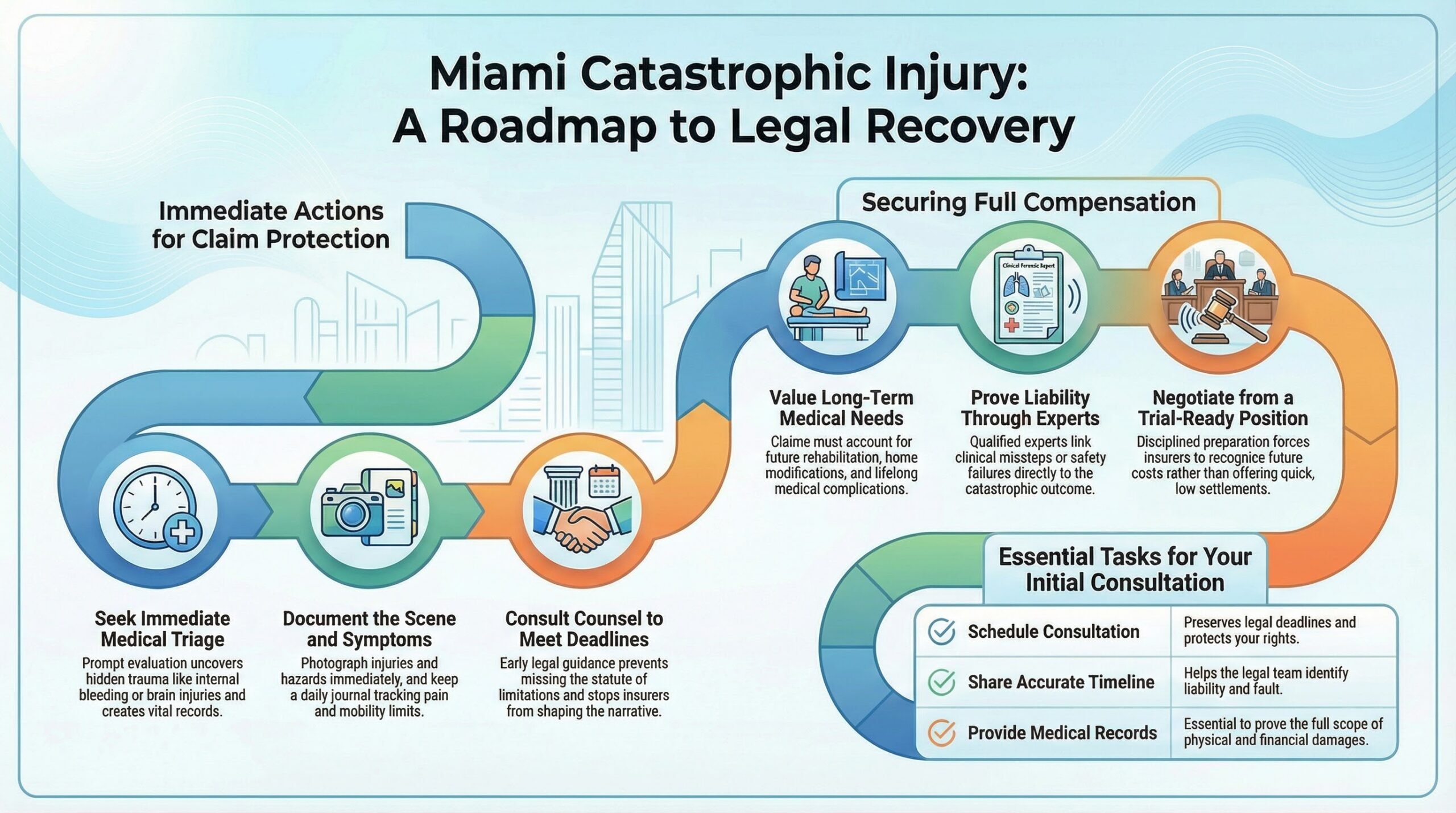
Take decisive steps to protect your claim after a catastrophic injury in Miami, because early decisions can affect both liability and the value of your case.
You can rely on our team to shoulder the legal workload so you can focus on recovery and supporting your family.
You’ll receive a structured plan, clear timelines, and guidance on what to document, what to avoid, and how to respond to insurers.
You’ll benefit from thorough evidence collection, coordinated records requests, and careful damage documentation, including future care and household impacts.
You’ll also get strong negotiation support, with trial-ready preparation that signals you won’t be pressured into an unfair resolution.
We prioritize fee transparency, so you understand costs and next steps before decisions are made.
You’ll receive consistent communication updates, including prompt answers to questions and status reports, so you can serve others without losing control of your own case.
Understanding Miami Catastrophic Injury Cases
Because catastrophic injuries often change every aspect of your life, you need to understand how Miami courts and insurers evaluate these cases before you can judge what a fair outcome looks like. You’ll typically see the focus placed on lasting impairment, future medical needs, lost earning capacity, and how the injury limits your independence and service to others.


In Miami, credible documentation drives value, so you must connect diagnoses to functional restrictions through treating physicians, therapy records, and life-care planning. Statistical Trends also matter because insurers track verdict ranges and settlement patterns, then use them to anchor negotiations.
Yet Insurance Nuances can shift the analysis, including policy limits, exclusions, lien claims, and how multiple coverages interact. You can strengthen your position by preserving evidence early, keeping consistent treatment, and avoiding gaps that invite causation disputes.
When you understand these evaluation points, you can pursue compensation that supports long-term stability while protecting the people who rely on you and the community you serve.

Common Causes of Miami Catastrophic Injuries
In Miami, you’re most likely to see catastrophic injuries arise from motor vehicle collisions, construction site accidents, medical negligence injuries, and slip and fall events.
When you evaluate these incidents, you can often trace them to preventable failures, such as unsafe driving, inadequate site protections, substandard clinical care, or poorly maintained premises. By identifying the specific cause early, you’re better positioned to document liability, preserve critical evidence, and protect your right to pursue full compensation.
Motor Vehicle Collisions
Even when you drive defensively and follow traffic laws, motor vehicle collisions remain one of the leading causes of catastrophic injuries in Miami. You can still face life-altering harm when others choose speed, tailgating, or aggressive lane changes, especially in dense traffic corridors.


Driver distraction, including texting, navigation screens, and in-car multitasking, often turns a minor mistake into a high-impact crash. Road design also plays a role, since confusing merges, poor sightlines, and inadequate signage can reduce reaction time and increase collision severity.
When a crash occurs, you may need extensive care and long-term support, and you may also feel called to protect your family and serve your community by pursuing accountability. Acting promptly helps preserve evidence and clarify fault.
Construction Site Accidents
While Miami’s skyline continues to rise, construction sites remain a frequent setting for catastrophic injuries when safety controls break down or deadlines take priority over proper procedures.
You can suffer life-altering harm from falls off scaffolds, crane failures, being struck by objects, and electrical contact when crews skip inspections or ignore training.
You also face hidden dangers, including Asbestos Exposure during renovation work or demolition, especially when containment and respirators aren’t enforced.
Below ground, Trench Cave-ins can crush or suffocate workers in seconds if shoring, sloping, and access points aren’t maintained.
When you serve others on these projects, you’re entitled to the same commitment to safety in return.
Document hazards, report violations, and seek prompt legal guidance to protect your rights and your future.
Medical Negligence Injuries
Catastrophic injuries don’t only happen on job sites; they can also occur in the exam room, operating suite, or emergency department when medical providers fail to meet accepted standards of care.
When a clinician misreads imaging, delays a diagnosis, or administers the wrong medication or dosage, you can face brain injury, paralysis, organ damage, or loss of limb.
Surgical mistakes, anesthesia errors, and failures to monitor critical signs can also cause irreversible harm within minutes.
You serve others best by staying informed, asking clear questions, and requesting thorough Patient education about risks, alternatives, and warning signs after treatment.
You can also encourage safer systems, including verified medication reconciliation and disciplined Safety checklists before procedures.
If negligence occurs, you should document symptoms promptly, preserve records, and seek legal guidance to protect your future.
Slip And Fall Events
Because a single loss of footing can change your life in seconds, slip and fall events remain a leading cause of catastrophic injury across Miami.
You may encounter hazards in grocery aisles, parking garages, and apartment stairwells, where poor lighting, clutter, and wetness create preventable danger.
When property owners ignore routine inspections and timely repairs, you can suffer spinal cord trauma, brain injury, or multiple fractures that alter your ability to serve others.
Surface materials such as polished tile, worn concrete, and loose rugs can reduce traction without warning, especially when maintenance is inconsistent. Your Footwear choices also matter, since smooth soles, high heels, or unstable sandals increase risk on slick or uneven ground. Document conditions promptly, then seek medical care and legal guidance.

Legal Rights of Miami Catastrophic Injury Victims
How do you protect your future when a life-altering injury upends your work, health, and independence? In Miami, you hold enforceable legal rights that can secure stability for you and those who depend on your care.


You may seek compensation for medical treatment, long-term rehabilitation, lost earning capacity, home modifications, and the full human cost of pain and diminished quality of life. When insurers minimize your losses, you can challenge unfair decisions through negotiation, litigation, and the Appeals process, while maintaining dignity and accountability.
Seek compensation for care, rehab, lost earning power, and life impacts—and challenge insurers through negotiation, litigation, and appeals.
You are also entitled to safeguards that respect your service-oriented values, including Privacy protections for sensitive medical records, employment information, and personal history.
Your legal claim can be structured to reduce unnecessary exposure, limit improper disclosures, and insist on respectful communication.
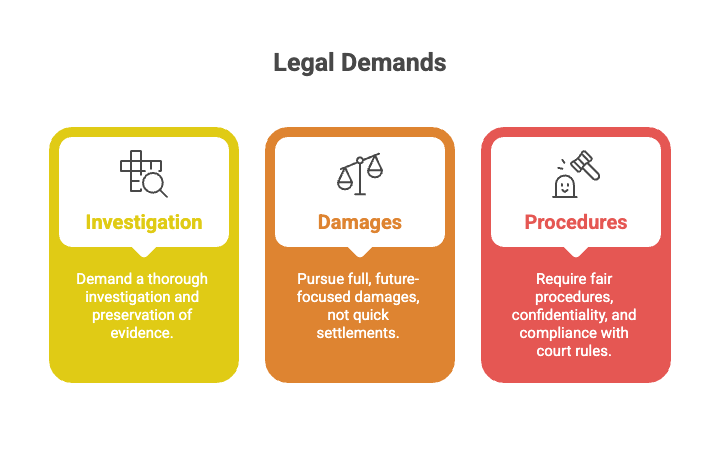
- Demand a thorough investigation and preservation of evidence
- Pursue full, future-focused damages, not quick settlements
- Require fair procedures, confidentiality, and compliance with court rules
Steps to Take After a Miami Catastrophic Injury
After a catastrophic injury in Miami, you should seek immediate medical care because prompt treatment protects your health and creates vital records.
You’ll also need to document your injuries and preserve evidence, including photos, witness information, and incident reports, while details are still clear.
As soon as you can, consult a Miami catastrophic injury lawyer so you don’t miss deadlines, you protect your rights, and you position your claim for full compensation.
Seek Immediate Medical Care
Even if you believe you can manage the pain, you should seek immediate medical care following a catastrophic injury in Miami, since prompt evaluation can uncover internal bleeding, brain trauma, or spinal damage that isn’t obvious at the scene.
Request emergency transport if symptoms worsen, and let clinicians complete a Triage Assessment to prioritize life-threatening conditions without delay.
You’ll also support those who depend on you by reducing preventable complications and stabilizing your condition early.
Be direct about what you feel, follow instructions, and don’t minimize new weakness, confusion, or numbness.
Consistent Pain Monitoring helps the team adjust treatment, identify deterioration, and coordinate specialized care when needed.
If you must wait, stay still, keep warm, and accept assistance, because protecting your recovery also protects your ability to serve others later.
Document Injuries And Evidence
Although your medical treatment comes first, you should start documenting your injuries and preserving evidence as soon as your condition allows, because critical details can disappear within hours.
Photograph visible injuries, damaged property, and the scene from multiple angles, then note dates, times, lighting, and weather.
Ask trusted family or friends to help if you can’t, and keep a simple daily journal that tracks pain, mobility limits, medications, and missed responsibilities.
Request copies of discharge papers, imaging reports, and follow-up instructions, and store them in one place.
Practice digital preservation by backing up photos, videos, and messages to secure, access-controlled storage.
Collect witness names and contact information, and save receipts for transportation and caregiving.
Maintain privacy by avoiding posting details on social media.
Consult A Miami Lawyer
When you’re medically stable, consulting a Miami catastrophic injury lawyer should move to the top of your priority list, because early legal guidance can protect your claim while evidence and timelines still favor you. You’ll gain structure, reduce mistakes, and position your recovery to support others who depend on you.
Ask direct questions about strategy, retainer agreements, and expected costs, and confirm client confidentiality before sharing sensitive details. Bring your records, witness information, and insurer communications so your lawyer can act quickly and responsibly.
| Task | Why it matters | What you do |
|---|---|---|
| Schedule consult | Preserve deadlines | Call promptly |
| Share timeline | Identify liability | Be precise |
| Provide records | Prove damages | Organize files |
| Review fees | Avoid surprises | Read retainer agreements |

How a Miami Catastrophic Injury Lawyer Can Help You
After a catastrophic injury disrupts your health, income, and daily independence, a Miami catastrophic injury lawyer can step in to protect your rights and impose order on a fast-moving legal and insurance process.
When catastrophic injuries upend your life, a Miami lawyer safeguards your rights and brings structure to chaotic legal and insurance demands.
You don’t have to manage deadlines, paperwork, and insurer pressure alone; your attorney coordinates the case so you can focus on recovery and supporting those who rely on you.
They gather medical records, witness statements, and expert opinions, then frame the evidence into a clear demand that reflects the full scope of harm.
Through disciplined Insurance Negotiation, your lawyer challenges low offers, documents every loss, and keeps communication professional and consistent.
If the other side won’t act responsibly, the lawyer shifts into Trial Preparation, building exhibits, identifying testimony, and preparing you for questions, while pursuing a resolution whenever possible.
Expect help with:
- Investigating liability and preserving evidence
- Calculating damages and presenting proof
- Managing filings, negotiations, and court appearances
Long-Term Effects of Miami Catastrophic Injuries
After a catastrophic injury in Miami, you may face lifelong medical complications that require ongoing monitoring, medications, and future procedures.
You’ll likely need sustained rehabilitation to rebuild function and adapt to lasting limitations, and that commitment can extend for years.
As these needs persist, you may experience significant financial pressure and ongoing emotional strain, which can affect your work, family stability, and long-term quality of life.
Lifelong Medical Complications
Living with a catastrophic injury in Miami often means confronting medical complications that don’t resolve with surgery, hospitalization, or a round of therapy. You may face chronic pain, reduced mobility, and organ or nerve damage that requires ongoing monitoring, even when you follow every medical recommendation carefully.
You also remain vulnerable to secondary infections from wounds, implanted hardware, or prolonged hospital exposure, and these infections can escalate quickly without prompt care. As prescriptions change over time, drug interactions can threaten your safety, affecting breathing, cognition, or heart rhythm.
You may need repeated imaging, expert consultations, and home medical equipment to prevent setbacks. When you serve others, these realities matter because stable health lets you remain present, dependable, and prepared to help your family and community.
Ongoing Rehabilitation Needs
Managing long-term rehabilitation often becomes the central challenge of a catastrophic injury in Miami, because progress depends on consistent, structured therapy rather than a single medical milestone. You’ll often coordinate physical, occupational, and speech therapy, while tracking goals and adapting routines as your abilities change.
Your commitment also supports those who care for you, as clear plans enable loved ones to serve effectively without confusion. You may need Home Modifications to reduce barriers and Assistive Technology to restore communication, mobility, or self-care.
| Need | Purpose | Example |
|---|---|---|
| Therapy schedule | Build function safely | Weekly OT/PT |
| Skill practice | Maintain daily independence | Transfer training |
| Environment supports | Increase access at home | Ramps, grab bars |
You should review progress regularly, so clinicians can adjust intensity, prevent setbacks, and protect long-term health.
Financial And Emotional Strain
Consistent rehabilitation can rebuild function, yet it often brings a sustained financial and emotional strain that doesn’t fade when therapy sessions end.
You may face ongoing bills for medications, adaptive equipment, transportation, and in-home help, while lost income reduces your ability to plan ahead.
When savings decline, you may face housing instability, especially if you need to modify your home or relocate for accessibility.
You also carry the quieter burden of uncertainty, frustration, and grief, which can affect your relationships and decision-making.
If loved ones step in, they may juggle work and caregiving duties, and caregiver burnout can still occur despite their best intentions.
You can serve your family best by seeking structured support, documenting costs, and preserving your capacity to advocate consistently.
Proving Liability in Miami Catastrophic Medical Malpractice Injury Cases
Because catastrophic outcomes often follow a chain of clinical decisions, proving liability in a Miami medical malpractice case requires more than showing a tragic result.
You must link a provider’s specific act or omission to a violated standard of care, then show how that breach produced the injury in a medically supported sequence. You’ll focus on what should’ve happened at each step, including assessment, testing, monitoring, and timely escalation.
Link each clinical misstep to the standard of care, then trace how it caused harm through missed assessment, testing, monitoring, or escalation.
To build that proof, you rely on records, timelines, and testimony that stays disciplined and service-minded, honoring the patient while demanding accountability.
Qualified Expert Witnesses explain the applicable standard and identify departures without speculation.
A careful Causation Analysis then connects those departures to the catastrophic outcome, addressing alternative causes and preexisting conditions.
You also preserve evidence, obtain complete charting and imaging, and document communications that reveal delays or ignored warnings.
When you present these elements clearly, you help the court see responsibility, not just misfortune.
Compensation for Miami Catastrophic Damages
When a catastrophic injury upends your life, compensation in a Miami case must account for far more than the initial hospital bills.
You may face lifelong rehabilitation, mobility aids, home modifications, in-home nursing, and lost earning capacity, and your claim should reflect the full scope of these needs.
You are also entitled to support for the ways your injury changes how you serve your family, your community, and your calling.
Effective recovery often depends on disciplined documentation, clear treatment plans, and credible projections from medical and vocational experts.
During Insurance Negotiation, you must insist that adjusters recognize future costs, not just what’s already paid.
A careful Noneconomic Valuation also matters because pain, disfigurement, loss of independence, and diminished enjoyment of life can be profound, even when they’re harder to quantify.
The Statute of Limitations for Miami Catastrophic Injury Cases
In the weeks after a catastrophic injury, the statute of limitations may feel like a distant concern, yet it can decide whether you’re allowed to pursue compensation at all. In Miami, most negligence claims must be filed within a set period, and missing it can bar recovery, even when your need is urgent, and your intent is to protect those who depend on you.
Limited exceptions may apply, including Discovery tolling when an injury or its cause couldn’t reasonably be known, and Equitable estoppel when a defendant’s conduct unfairly prevents timely filing.
| Issue | Why it matters | Your focus |
|---|---|---|
| Injury date | Often starts the clock | Record critical dates |
| Discovery tolling | May delay the start | Preserve proof of late discovery |
| Equitable estoppel | May block deadline defenses | Document misleading conduct |
| Government claims | Shorter, special notice rules | Track notice requirements |
| Wrongful death | Different trigger date | Confirm accrual date promptly |
Why You Need an Experienced Miami Catastrophic Injury Lawyer
Statutes of limitations set the outer boundary, but the quality of your case is built in the days and months that follow a catastrophic injury. You need an experienced Miami catastrophic injury lawyer because early decisions shape medical documentation, expert involvement, and the narrative that insurers will later challenge.
When you’re focused on recovery and caring for others who depend on you, counsel can coordinate evidence preservation, obtain incident data, and secure witness statements before they disappear. You also benefit from accurate valuation of long-term needs, including rehabilitation, adaptive equipment, in-home support, and future income loss.
An experienced lawyer uses technological resources to analyze records, manage deadlines, and present damages clearly, reducing avoidable gaps that can limit compensation.
If language or cultural barriers affect communication with providers or insurers, multilingual representation helps you convey symptoms, restrictions, and goals with precision. You gain a disciplined advocate who anticipates defenses and keeps your case moving toward a just outcome.
How to Choose the Right Miami Catastrophic Injury Lawyer for Your Case
How do you identify the right Miami catastrophic injury lawyer for a case that may involve lifelong medical needs and high-stakes negotiations?
Start by confirming relevant trial and settlement experience with spinal cord injuries, brain injuries, burns, and amputations, because these claims demand disciplined case planning and credible damages proof.
Ask how the lawyer coordinates care needs with medical, vocational, and life-care experts, so your recovery plan reflects service to your family and community.
Insist on fee transparency from the first meeting, including the contingency percentage, case costs, and what happens if recovery is limited.
Set clear communication expectations, such as response times, update frequency, and who handles day-to-day contact.
Review prior results and client references, then evaluate how the lawyer explains options without pressure.
Choose counsel who listens carefully, protects your dignity, and prepares every file as if it will be tried in court.
About the Law Offices of Anidjar and Levine
Choosing counsel means more than checking credentials, so it helps to understand what you can expect from the Law Offices of Anidjar and Levine when a catastrophic injury threatens your long-term stability.
You’ll find a team that listens closely, explains options plainly, and pursues compensation with disciplined preparation and respectful advocacy.
Their firm’s history reflects a sustained focus on serious injury matters, and you benefit from processes designed to address multifaceted medical and financial harms.
You’re also supported by a service mindset grounded in community outreach, reinforcing that your recovery can strengthen the people around you.
| What you need | What you can expect |
|---|---|
| Clear next steps | Prompt updates, organized case planning |
| Strong documentation | Coordinated records review, expert support |
| Service beyond the file | Practical guidance, community-minded follow-through |
You stay informed, your family’s needs remain central, and your case moves forward with steady accountability.
Frequently Asked Questions
Will My Health Insurance Claim Reimbursement From My Settlement?
Yes, your health insurer may seek reimbursement from your settlement if your policy grants subrogation rights.
You should review plan documents, because ERISA or state rules can affect what they can recover.
You can often reduce the amount through lien negotiation, especially when medical bills exceed available funds or liability is disputed.
Act early, document payments, and request itemized statements. You protect your recovery, so you can continue serving others.
Can I Recover Damages if I Was Partially at Fault?
Yes, you can often recover damages even if you were partially at fault, because Comparative negligence reduces your award rather than automatically barring it.
Through Fault apportionment, the court or insurer assigns percentages of responsibility to each party, then adjusts compensation to match.
You should document your conduct, preserve evidence, and communicate honestly, since serving others well requires integrity.
You can still pursue fair reimbursement.
Timely action protects.
What Happens if the At-Fault Party Is Uninsured or Underinsured?
If the at-fault party is uninsured or underinsured, you’ll often turn to your own uninsured motorist coverage to fund medical care, lost income, and future needs.
You should promptly notify your insurer, document every loss, and avoid making early statements that could limit value.
If coverage falls short, you can pursue asset recovery by identifying available property, income sources, or responsible third parties.
You can then direct compensation toward sustained, service-focused recovery goals.
How Are Structured Settlements Used in Catastrophic Injury Cases?
You use structured settlements in catastrophic injury cases to secure reliable, long-term funding for care, housing, and support services.
You receive Periodic Payments on a set schedule, which helps you match compensation to future medical needs and prevent rapid depletion.
You can tailor Annuity Options to include guaranteed terms, lifetime benefits, or cost-of-living increases. You’ll also reduce investment risk while maintaining predictable resources for those you serve.
Do I Have to Testify in Court if My Case Goes to Trial?
You don’t always have to testify, but if your case goes to trial, you’ll often testify to explain important facts and serve the truth.
You can sometimes limit testimony through deposition alternatives, stipulations, or focused examinations, depending on the issues in dispute.
Still, juries expect to hear from you when credibility matters. Your attorney may also rely on expert witnesses to cover technical or medical points, reducing your time on the stand.
—————————
After a catastrophic injury in Miami, you can’t afford uncertainty or delay. You should document your losses, follow medical guidance, and protect your statement from insurers who may minimize your claim.
When you work with an experienced catastrophic injury lawyer, you’re better positioned to prove liability, calculate long-term damages, and pursue full compensation within Florida’s deadlines.
If you’re ready to act, you can contact the Miami Medical Malpractice Lawyer at The Law Offices of Anidjar & Levine for clear, decisive guidance.

We Can Help.