



Law Offices of Anidjar and Levine handles Florida vegetative state malpractice claims from first call to resolution, preserving evidence, securing complete medical records, and coordinating independent experts to prove breach, causation, and lifelong damages.
We build life-care plans, quantify future costs, and negotiate forcefully with insurers while preparing for trial.
Our team manages provider communications, analyzes coverage and venue, and meets strict presuit and statute deadlines.
We protect guardianship and consent issues and pursue full compensation for care, losses, and family impact, and the following sections explain how.
Learn more: Medical Malpractice Injury Lawyer
Key Takeaways
- We investigate negligence causing vegetative states, preserve records and device data, and retain experts to prove breach, causation, and lifelong damages.
- We handle Florida’s presuit notice, expert affidavit, and statute deadlines to protect your claim and avoid dismissal.
- We coordinate medical reviews and life‑care planning and calculate comprehensive losses, including nursing care, equipment, therapies, and lost income.
- We manage communications with hospitals, doctors, and insurers, pursuing evidence‑driven negotiation and litigation if settlement stalls.
- Free consultation with a Florida malpractice attorney to evaluate liability, identify defendants, and build a multidisciplinary case quickly.
How We Can Help With Your Florida Vegetative State Malpractice Injury Claim
Navigate through this challenging process with a team that knows what to do, when to do it, and why it matters. We guide your claim from the first call to final resolution, aligning strategy with your family’s needs and dignity.
Dig deeper into our in-depth case study: Strategic Litigation of Florida Vegetative State Malpractice Claims
We gather medical records, preserve evidence, and consult qualified experts to establish breach and causation. We also handle care coordination, ensuring providers document the level of support your loved one requires, which strengthens damages and future care planning.
We gather records, secure evidence, and coordinate care to prove breach, causation, and future support
We manage communications with facilities, physicians, and insurers so that you can focus on caregiving. Our insurance negotiation approach is methodical, evidence-driven, and timed to leverage expert findings and cost projections.
We calculate all-encompassing losses, including life‑care plans, attendant services, and adaptive supports. If settlement talks stall, we prepare decisively for litigation and trial.
Throughout, we keep you informed with clear updates, realistic timelines, and firm advocacy, so every decision advances your loved one’s long‑term security.
Understanding Florida Vegetative State Malpractice Injury Cases

With your claim management underway, we should ground our next steps in what makes a Florida vegetative state malpractice case distinct. These matters blend intricate medicine with exacting legal standards, requiring clear proof that a provider breached the standard of care and caused catastrophic, lasting harm.
We focus on the patient’s loss of consciousness, impaired awareness, and lifelong dependency, documenting how these realities affect liability, damages, and long-term support needs.
We also center medical ethics, because consent, end‑of‑life planning, and surrogate decision‑making often shape the record. Thorough family communication is crucial; it preserves timelines, captures changes in condition, and establishes what providers disclosed and when.
We assemble multidisciplinary evidence—clinical notes, expert reviews, life care plans, and financial analyses—to quantify economic and human losses with precision.
Florida law imposes notice, pre-suit investigation, and expert affidavit requirements. We meet those demands methodically, safeguarding deadlines, preserving evidence, and positioning your case for negotiation or trial with disciplined, compassionate advocacy.
Common Causes of Florida Vegetative State Malpractice Injuries
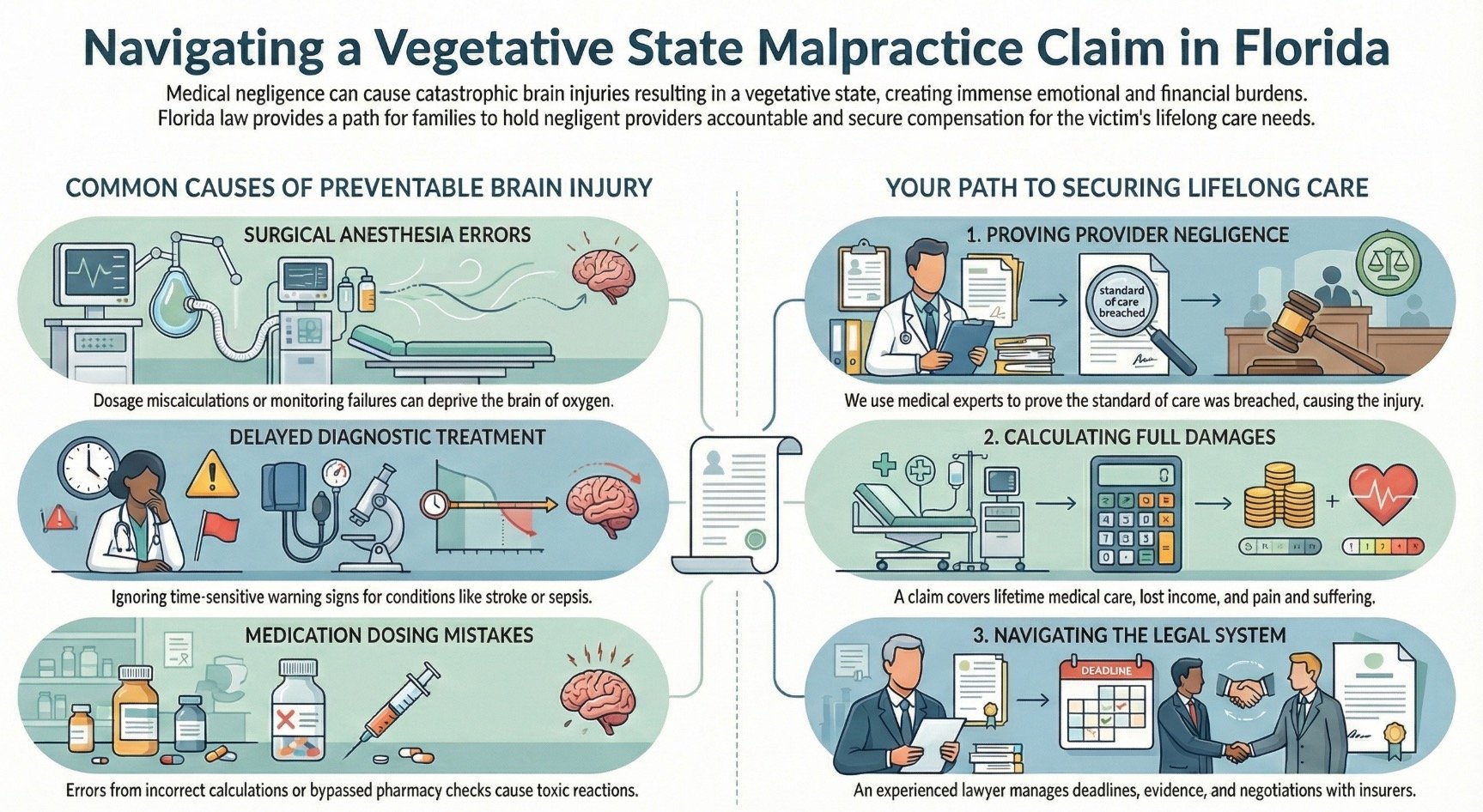
We often see vegetative state malpractice injuries arise from preventable medical errors, including surgical anesthesia errors that suppress breathing or awareness monitoring, delayed diagnostic treatment that allows pivotal conditions to worsen, and medication dosing mistakes that trigger catastrophic reactions.
We also assess oxygen deprivation events, whether during surgery, labor and delivery, or emergency care, that starve the brain of oxygen and cause irreversible damage.
As we examine these causes, we’ll identify where protocols failed, which providers are accountable, and what evidence proves negligence.
Surgical Anesthesia Errors
Although modern anesthesia is remarkably safe when executed correctly, small lapses during surgical care can trigger catastrophic brain injury that leads to a vegetative state.


We scrutinize what went wrong, identifying errors that transform a routine procedure into a lifelong crisis. Anesthesia awareness, dosage miscalculations, and unrecognized ventilation failure can cause oxygen deprivation, leading to irreversible harm.
Failures to monitor end-tidal CO2, blood pressure, and oxygen saturation, or to respond to alarms promptly, compound risk.
We also assess preoperative evaluations, drug interactions, and equipment maintenance to determine breach of duty. When protocols are ignored, accountability matters.
We gather records, consult experts, and build a clear causal narrative. Our goal is to secure resources for long-term care and uphold patient safety.
Delayed Diagnostic Treatment
Errors in the operating room aren’t the only threats to brain function; delayed diagnostic treatment can set the stage for the same devastating outcome. When providers ignore time-sensitive warning signs, the brain can be deprived of oxygen, causing irreversible injury.
We see delays arise from missed symptoms, incomplete histories, or slow imaging orders, all compounded by diagnostic bias that narrows thinking and overlooks pivotal alternatives. Stroke, sepsis, and traumatic brain injuries demand rapid escalation, clear communication, and strict adherence to protocols.


We evaluate whether triage was prompt, tests were ordered and interpreted in a timely manner, and consultations occurred without unreasonable gaps. We also examine documentation for deviations from standards. If a delay contributed to a vegetative state, we work to establish causation, hold accountable, and pursue resources that support long-term dignity and care.
Medication Dosing Mistakes
Too often, medication dosing mistakes transform treatable conditions into catastrophic brain injuries that lead to a vegetative state.
We see errors arise from skipped Medication reconciliation, incorrect weight-based calculations, and ignored contraindications.
Pediatric and geriatric patients face heightened risk when clinicians rely on memory instead of validated Dosing calculators, or when pharmacy cross-checks are bypassed.
These preventable mistakes can trigger toxic levels, severe hypotension, or dangerous drug interactions, depriving the brain of critical protection during acute illness.
We investigate order entries, nursing administration records, and pharmacy logs to pinpoint where the process failed.
We consult pharmacology experts to prove causation and quantify long-term care needs.
Our role is to hold providers accountable, drive safer practices, and secure resources for thorough rehabilitation and dignified, ongoing support.
Oxygen Deprivation Events
Medication missteps aren’t the only threats that leave patients with profound brain injury; oxygen deprivation events pose an equally devastating risk. When the brain is denied adequate oxygen, cells die rapidly, and even brief delays in response can cause irreversible harm.
We see this after anesthesia errors, blocked airways, equipment failures, or delayed intubation.
In maternity care, neonatal hypoxia demands vigilant fetal monitoring and timely delivery decisions. In hospitals, missed alarms, improper ventilator settings, and inadequate post-operative observation can prove fatal.
We also confront exposure cases, including carbon monoxide poisoning from faulty systems or unsafe environments, where silent toxicity deprives tissues of oxygen. Our role is to investigate timelines, protocols, and staffing, identify breaches in standards of care, and pursue accountability that supports long-term rehabilitation and dignified life care.
Legal Rights of Florida Vegetative State Malpractice Injury Victims
When medical care goes wrong and a loved one is left in a vegetative state, we need to move quickly to protect their legal rights under Florida law. As surrogate decision-makers, we stand for patient advocacy and family rights, ensuring dignity, access to records, and accountability.
Florida law permits recovery for medical expenses, long-term care, lost earnings, pain and suffering, and loss of consortium. We also safeguard guardianship and consent issues, so decisions reflect the patient’s values, not institutional convenience.
- We picture hospital corridors at dawn, chart in hand, asserting the right to complete records and transparent explanations.
- We envision a quiet living room, documents organized, affirming guardianship, and durable powers that honor the patient’s voice.
- We see a courtroom, evidence on display, and expert testimony that translates negligence into clear, compensable harm.
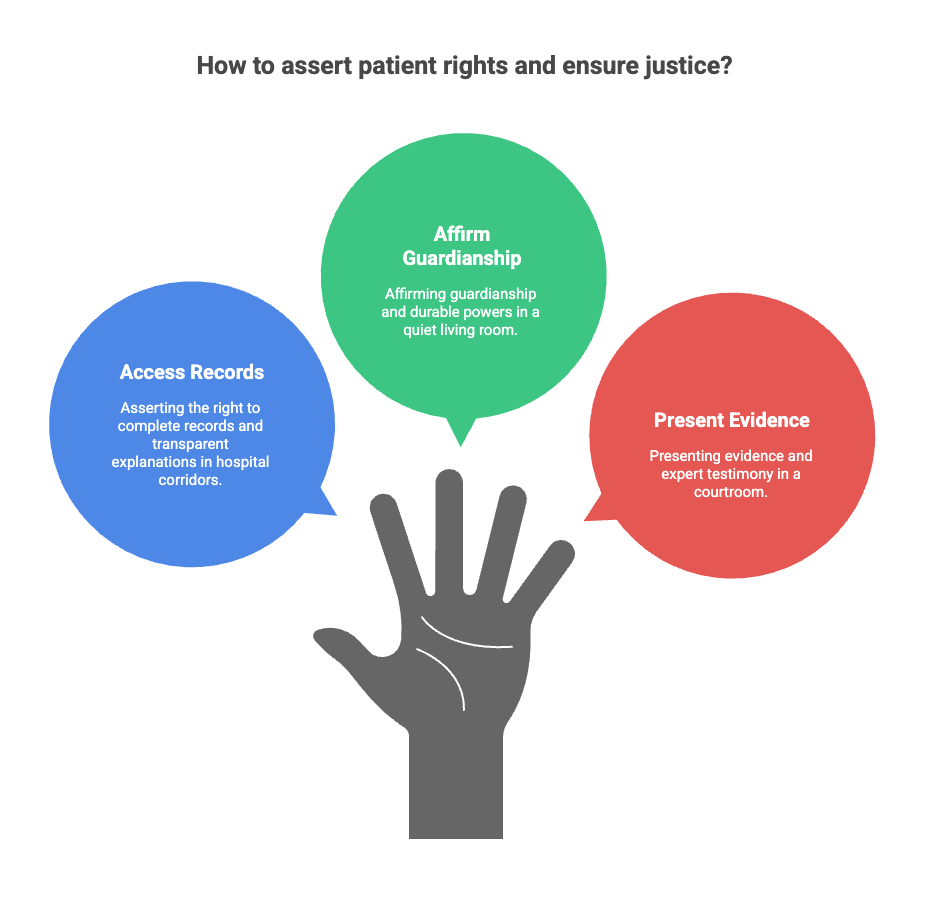
Statutes of limitation and presuit notice rules are strict, so asserting rights early preserves vital claims and supports long-term care stability.
Steps to Take After a Florida Vegetative State Malpractice Injury
When a suspected malpractice event leads to a vegetative state, we act quickly to secure an urgent, independent medical evaluation to stabilize the patient and document condition changes.
We preserve and organize all medical records, imaging, medication logs, and provider communications to protect essential evidence and timelines.
We then consult an experienced Florida malpractice attorney promptly, ensuring legal deadlines are met and a targeted investigation begins without delay.
Seek Urgent Medical Evaluation
Although the situation is overwhelming, we must prioritize an immediate, thorough medical evaluation to protect the patient’s life and preserve indispensable evidence. Time is pivotal in suspected malpractice leading to a vegetative state, so we arrange an emergency assessment without delay.
We insist on a full neurological workup, including neurological imaging such as CT and MRI, to identify reversible complications, document injury patterns, and guide interventions.
We coordinate with experts in neurology, critical care, and rehabilitation to stabilize airway, breathing, and circulation, then assess brain function, reflexes, and responsiveness. We request exhaustive labs, seizure monitoring, and intracranial pressure evaluation when indicated.
We ask clear, focused questions about timelines, medications, and decision points. Prompt, precise care safeguards the patient, narrows differential diagnoses, and supports informed advocacy going forward.
Preserve Medical Records Evidence
Immediate stabilization sets the stage for the next priority: securing the paper and digital trail that proves what happened and why.
We request complete medical records immediately, including charts, orders, medication logs, imaging, lab results, and incident reports.
We ask for audit trails from electronic systems that capture access times, edits, and deletions.
We preserve bedside device data, pharmacy dispensing logs, and monitor downloads, because these entries often reveal timing and sequence.
We document a transparent chain of custody for every file and device, labeling, dating, and storing copies in tamper-evident formats.
We photograph wristbands, room whiteboards, and equipment settings before changes occur.
We keep a contemporaneous timeline of symptoms, staff communications, and shift changes.
We back up data in multiple secure locations, ensuring authenticity and traceability.
Consult an Experienced Malpractice Attorney
Secure seasoned legal counsel to protect your family’s rights and position the successful case. When a loved one suffers a vegetative state due to malpractice, we move quickly to assess liability, preserve evidence, and safeguard client rights.
An experienced Florida malpractice attorney coordinates medical experts, evaluates standards of care, and identifies systemic failures, ensuring we address both immediate and long‑term needs.
We begin with a focused case valuation that accounts for life‑care costs, lost income, specialized equipment, and future therapies. We also analyze insurance coverage, venue, and potential defendants to strengthen recovery prospects.
Throughout, we communicate clearly, prepare you for each step, and pursue accountability with discipline. By engaging counsel early, we protect deadlines, avoid missteps, and build the most substantial possible claim for your family.
How a Florida Vegetative State Malpractice Injury Lawyer Can Help You
While every case is unique, a Florida vegetative state malpractice injury lawyer can quickly assess the facts, preserve vital evidence, and chart a path forward for your family.
A Florida vegetative state malpractice lawyer swiftly secures facts, preserves evidence, and guides your family’s path forward.
We coordinate medical record reviews, consult qualified experts, and identify negligent acts with precision.
Our team manages deadlines, engages insurers, and prepares claims that reflect the full scope of losses, including caregiver burden and rehabilitation planning.
We also align legal strategy with your family’s values, ensuring decisions honor dignity and long-term care needs.
We handle communications so you can focus on service and support.
We locate life-care planners, evaluate facility standards, and document costs for skilled nursing, adaptive equipment, and transportation.
By structuring claims for present and future damages, we protect resources vital to sustained care.
- A bedside scene, monitors steady, a family supported by clear counsel.
- A meticulous file, timelines marked, experts ready to testify.
- A care roadmap, therapies scheduled, and funding secured for recovery.
Long-Term Effects of Florida Vegetative State Malpractice Injuries
As we assess long-term effects, we must address prolonged medical complications such as recurring infections, contractures, pressure injuries, and respiratory issues that require vigilant, ongoing care.
We also recognize the profound cognitive and emotional toll on families, including sustained grief, uncertainty, and decision-making fatigue that can strain mental health.
Finally, we examine the financial and caregiver burden, from intensive nursing costs and adaptive equipment to lost income and the logistics of 24/7 supervision.
Prolonged Medical Complications
Even after the acute crisis passes, the long-term medical complications of a vegetative state can be relentless and costly. We see recurrent infections, including pneumonia and urinary tract infections, that demand vigilant monitoring and rapid intervention.
Pressure ulcers, malnutrition, and dehydration emerge when care plans lack precision, and they can escalate quickly. Contractures and spasticity may worsen mobility, while unmanaged chronic pain undermines stability and comfort.
We also confront respiratory insufficiency, tracheostomy maintenance issues, and ventilator dependence, each requiring disciplined protocols. Gastrointestinal complications, such as aspiration and bowel dysmotility, mandate consistent oversight.
These conditions strain family dynamics and caregiving capacity, intensifying the need for sustainable resources. Our role is to coordinate medical evidence, quantify lifetime care costs, and secure accountability so long-term treatment remains consistent and dignified.
Cognitive and Emotional Toll
Though the body bears the visible injuries, the cognitive and emotional toll of a vegetative state reaches deeper, reshaping the lives of patients and families in profound ways.
We see memory pathways dim, attention falter, and communication cues vanish, leaving loved ones to interpret silence. These changes alter family dynamics, redistributing roles and expectations while challenging identity and hope.
We work to cultivate emotional resilience, guiding families to set realistic goals, track small gains, and maintain consistent routines that honor dignity.
We also address grief that doesn’t end, anxiety that resurges with each medical update, and moral distress over choices that shape daily care. By creating structured support plans and clear communication protocols, we help families remain cohesive, purposeful, and grounded in compassionate service.
Financial and Caregiver Strain
Emotional endurance must be matched by financial stamina, because a vegetative state creates ongoing costs that can overwhelm families and exhaust savings. We face recurring expenses for 24/7 care, medical supplies, home modifications, and transportation, and these demands compound quickly.
Insurance limits, copays, and denied claims create immediate Financial depletion, while lost wages reduce long-term stability.
We also confront Caregiver burnout, driven by physical fatigue, disrupted sleep, and constant vigilance, which erodes our capacity to serve with consistency.
To protect the patient and the family, we document every expense, pursue all available benefits, and evaluate structured settlements that secure predictable funding. We coordinate respite care, rotate duties, and adopt realistic schedules. With disciplined planning, we reduce risks and preserve strength for sustained advocacy.
Proving Liability in Florida Vegetative State Malpractice Medical Malpractice Injury Cases
While every case turns on its facts, proving liability in a Florida vegetative state malpractice claim requires a disciplined showing that a healthcare provider breached the accepted standard of care and that this breach directly caused the catastrophic brain injury.
We begin by preserving medical records, timelines, and witness accounts, then compare the provider’s conduct to what reasonably careful practitioners would have done.
To establish fault causation, we closely link each deviation to the harm, excluding alternative explanations through rigorous analysis.
We retain qualified experts to provide expert testimony on standards, breaches, and neurological outcomes. Their insights clarify how delayed diagnosis, medication errors, anesthesia mishaps, or failures in monitoring can precipitate hypoxic or traumatic brain damage.
We also evaluate hospital policies, staffing levels, and supervision to identify systemic failures.
Through depositions and independent reviews, we synthesize evidence into a coherent liability narrative.
Our role is to pursue truth with precision, safeguard dignity, and hold negligent parties accountable under Florida law.
Compensation for Florida Vegetative State Malpractice Damages
Having established how liability is proven, we next focus on the damages available to support long-term care and restore as much quality of life as possible.
We focus next on damages that fund long-term care and restore quality of life.
We begin with a meticulous loss valuation that captures lifetime medical care, skilled nursing, therapies, accessible housing, transportation, and adaptive technology.
We also pursue non-economic damages for pain and suffering, loss of companionship, and the family’s profound loss of consortium, grounded in credible testimony and expert analysis.
We build economic models that project inflation, wage growth, and caregiving needs, then present them through clear visuals a jury can trust.
Because Florida applies comparative fault, we rigorously examine records and timelines to minimize any fault allocation that could reduce the award.
Our jury strategies emphasize human impact and future needs, aligning facts with compassionate, service-oriented advocacy.
Finally, we negotiate assertively with insurers, preparing every case as if trial-bound to secure thorough, sustainable compensation.
The Statute of Limitations for Florida Vegetative State Malpractice Injury Cases
From the outset, we emphasize that Florida’s statute of limitations for medical malpractice is strict and unforgiving, making early action vital in vegetative state cases.
Generally, a claimant must file within two years of when the injury was discovered, or should have been found with due diligence, and no later than four years from the malpractice date. This outside deadline is the statute of limitations, which can bar claims even when harm is severe.
We act promptly to preserve rights because pre-suit investigation and notice requirements consume time. Tolling exceptions may extend deadlines in narrow circumstances, such as fraudulent concealment, minority, or incapacitation, but courts interpret these limits closely, and proof burdens are significant.
In vegetative state matters, incapacity can pause the clock, yet it doesn’t erase the four-year cap unless fraud is shown. We would like you to please document discovery dates, medical records, and provider communications. Timely action honors the patient’s needs and safeguards the claim.
Why You Need an Experienced Florida Vegetative State Malpractice Injury Lawyer
Deadlines in Florida malpractice cases leave little room for error, so retaining an experienced vegetative state malpractice lawyer protects your claim from the outset. We steer the pre-suit investigation, preserve essential evidence, and guarantee compliance with statutory notice requirements.
Our experience helps us quickly identify negligent acts, consult the right medical experts, and build a record that withstands insurer scrutiny.
We also understand the sensitive dimensions of these cases. Questions of medical ethics often arise when life-sustaining treatment, informed consent, or deviation from standards of care are at issue. We approach these concerns with rigor and discretion, aligning legal strategy with your loved one’s documented wishes and best interests.
Beyond litigation, we coordinate resources that support the family’s daily burdens. We work with reputable life-care planners, connect you with family counseling when appropriate, and pursue compensation that funds long-term care.
Our role is to protect your rights, advance your case efficiently, and honor your commitment to compassionate caregiving.
How to Choose the Right Florida Vegetative State Malpractice Injury Lawyer for Your Case
While every malpractice claim is unique, choosing the right Florida vegetative state malpractice lawyer starts with verifying focused experience and proven results in catastrophic brain injury cases.
We should review case outcomes, trial readiness, and access to medical experts, life-care planners, and economists.
Let’s interview candidates, ask how they set patient expectations, and request a clear litigation roadmap that covers investigation, filing, discovery, and negotiation.
We also need transparent lawyer fees. Contingency arrangements are standard, but we should confirm percentages, cost advances, and what happens if the case doesn’t recover.
Written engagement terms prevent misunderstandings and protect families.
Communication matters. We should evaluate whether the firm offers a dedicated point of contact, regular updates, and prompt responses.
Finally, we must assess resources and alignment with our values. Does the team demonstrate compassion, cultural sensitivity, and a commitment to long-term client support? The right lawyer blends courtroom strength with service-oriented advocacy, ensuring dignity and accountability.
About the Law Offices of Anidjar and Levine
Stepping into a vegetative state malpractice case demands a firm with depth, discipline, and proven results, and the Law Offices of Anidjar and Levine deliver precisely that.
We bring a focused team, meticulous case preparation, and the resolve to pursue accountability for medical negligence that alters lives.
Our approach is client-centered and mission-driven, aligning our work with families who value service, dignity, and justice.
We investigate aggressively, consult leading experts, and build evidence that stands up to scrutiny. We communicate promptly, explain options clearly, and guide you through every decision point.
Our client testimonials reflect consistent advocacy, measured counsel, and outcomes that help secure long-term care and stability.
We’re known for strategic litigation, strong negotiation, and readiness for trial when necessary.
We tailor strategies to the medical, legal, and financial intricacies of vegetative state injuries.
With disciplined advocacy and precise execution, we work to hold institutions accountable and secure full compensation to support your loved one’s needs.
Frequently Asked Questions
Can I File a Claim on Behalf of an Incapacitated Family Member?
Yes, we can file a claim on a loved one’s behalf, provided we’ve legal authority. We typically proceed through a power of attorney, a court-appointed guardianship, or the appointment of a guardian ad litem to protect the person’s interests.
We’ll verify capacity, gather medical and financial documentation, and petition the court if needed. We then initiate the claim, preserve evidence, and advocate for appropriate compensation, always prioritizing the incapacitated person’s well-being.
How Are Medical Liens Handled in Vegetative State Settlements?
Medical liens are typically satisfied from settlement proceeds, prioritized by law and contract, then reduced through lien negotiation.
We verify lien validity, audit medical billing for errors, and challenge unrelated or inflated charges.
We coordinate with hospitals, insurers, and government payers to seek statutory reductions and hardship considerations.
We obtain written releases before disbursement, protect the settlement’s tax and compliance posture, and document all resolutions, ensuring the incapacitated person’s long‑term care needs remain properly funded.
Will a Lawsuit Affect Ongoing Medicaid or SSI Benefits?
Yes, a lawsuit can affect ongoing Medicaid or SSI benefits, but careful planning can prevent that impact.
We typically recommend asset protection strategies, such as a properly structured special needs trust or pooled trust, to shelter settlement funds.
We also coordinate spend-downs, annuities, and reporting requirements to maintain eligibility.
We’ll assess resource limits, allocate costs, and implement compliant disbursement plans, ensuring continuity of care while preserving long-term support and maximizing every allowable safeguard.
Can Out-Of-State Providers Be Sued in Florida Courts?
Yes, out-of-state providers can be sued in Florida if they’ve sufficient contacts establishing personal and service jurisdiction, such as treating Florida patients, marketing here, or causing injury felt in Florida.
We assess whether Florida’s long-arm statute and due process are satisfied, then address venue challenges, such as forum non conveniens.
We’ll document ties to Florida, evaluate evidence location and witness convenience, and strategically file to honor your needs while maximizing enforceability and judicial efficiency.
How Do Structured Settlements Work for Long-Term Care Needs?
Structured settlements provide long-term care by converting compensation into periodic payments, ensuring predictable funding for medical, therapy, and attendant care.
We coordinate schedules that match projected needs, then integrate inflation adjustments and contingencies.
We often recommend structured trusts to safeguard eligibility for benefits, manage disbursements, and monitor providers.
We also align payouts with life-care plans, equipment replacement cycles, and respite support.
Ultimately, we design reliable, tax-advantaged streams that uphold dignity, continuity, and prudent stewardship.
—————–
We’re ready to guide you through every step of a Florida vegetative state malpractice claim.
Our team investigates liability, preserves evidence, and pursues full compensation for medical care, long-term support, and losses.
We coordinate experts, manage deadlines, and negotiate or litigate with unwavering focus. If you suspect negligence caused your loved one’s condition, contact us promptly.
We’ll evaluate your case, explain your options, and act decisively to protect your rights. The firm of Anidjar & Levine stands ready to help.
Learn more: Medical Malpractice Injury Lawyer

We Can Help.