



The Law Offices of Anidjar and Levine help Florida families take swift action against nursing home abuse.
We secure immediate safety, notify authorities, and preserve essential evidence, including records, photos, and witness accounts.
We coordinate medical evaluations, evaluate facility policies and staffing, and pursue compensation for medical costs, pain and suffering, and related losses.
We manage insurers, meet strict deadlines, and work with experts to prove negligence and causation.
We also challenge arbitration clauses when appropriate and protect against retaliation, so you can see how we build a strong claim.
Learn more about our broader experience here: Medical Malpractice Injury Lawyer
Key Takeaways
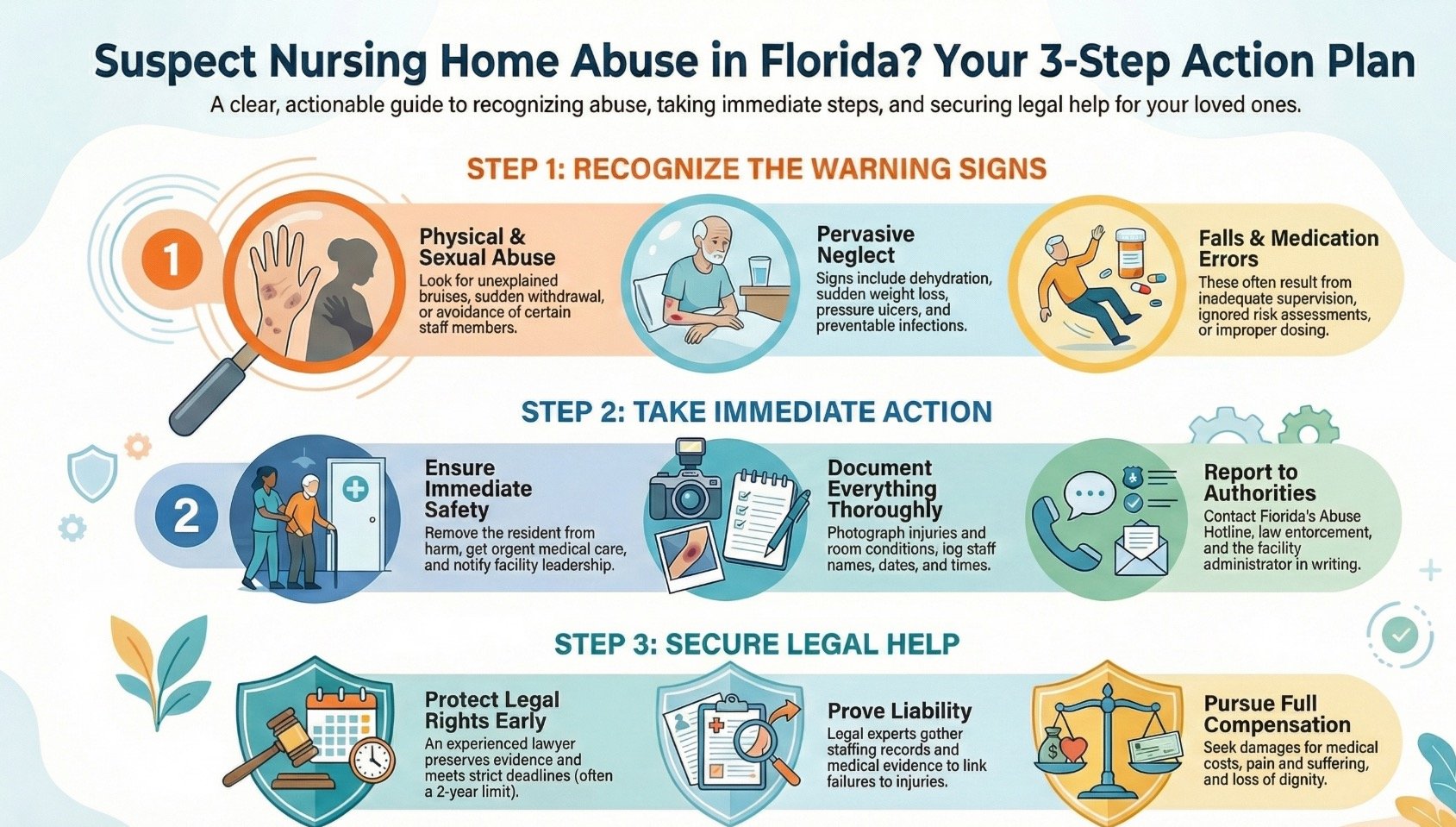
- Immediate steps: ensure safety, get medical care, notify facility leadership and physician, and report abuse to law enforcement and Florida’s Abuse Hotline.
- Preserve evidence: photograph injuries and the room, secure records and incident reports, collect witness statements, and maintain the chain of custody for physical items.
- Legal help: hire experienced Florida counsel early to protect rights, handle presuit requirements, and address arbitration clauses and spoliation risks.
- Proving liability: gather medical and staffing records, assess policy and training failures, and retain qualified experts to link breaches to injuries.
- Deadlines: most claims must be filed within two years; special rules apply for discovery, wrongful death, and tolling exceptions.
How We Can Help With Your Florida Nursing Home Abuse Injury Claim
Whether you’re just discovering signs of neglect or facing a confirmed incident of abuse, we move quickly to protect your loved one and preserve your legal rights. We begin with a focused intake, prioritize safety, and coordinate immediate steps to document conditions, interview witnesses, and secure records.
Dig deeper into our in-depth case study: Establishing Liability in Florida Nursing Home Medical Malpractice Claims
We guide you through reporting pathways, align with your caregiving goals, and maintain consistent, respectful communication.

We develop a strategic case plan that clarifies objectives, timelines, and responsibilities. We arrange family meetings to gather facts, align expectations, and guarantee every voice is heard. We consult qualified experts to evaluate staffing levels, supervision practices, and compliance failures.
We pursue accountability through tailored advocacy that addresses both individual harm and systemic breakdowns.
We also advance policy reform where patterns reveal broader risks, urging facilities to improve training, staffing, and oversight. Throughout, we handle insurer communications, protect deadlines, and position your claim for meaningful results.
Understanding Florida Nursing Home Abuse Injury Cases
After we stabilize the situation and set a clear plan, we turn to what the law requires and how these cases work in Florida. These cases rest on duties imposed by state and federal regulations, residents’ rights, and the standard of care.
We assess whether the facility met obligations regarding supervision, fall prevention, nutrition, hygiene, medication management, and timely medical referrals.
We examine policies, staff training records, and facility inspection reports to assess compliance and identify systemic failures. We collect medical records, care plans, incident reports, and witness statements, then consult qualified experts to link breaches to the harm suffered.
Causation and damages must be proven with clarity, including physical injuries, emotional trauma, and related financial losses.
We also evaluate arbitration clauses, notice requirements, and applicable statutes of limitations, which can be short and unforgiving. Throughout, we center the resident’s dignity, document conditions promptly, and preserve evidence so your loved one’s voice is heard and protected.
Common Causes of Florida Nursing Home Abuse Injuries
We often see nursing home injuries arise from physical and sexual abuse, which can occur when facilities lack proper screening, training, or oversight of staff.
Neglect, including dehydration and malnutrition, as well as medication errors and overdoses, frequently reflect systemic failures in care plans and monitoring.
Falls tied to inadequate supervision are also common, underscoring the need for appropriate staffing levels, fall-risk assessments, and prompt interventions.
Physical and Sexual Abuse
Confront the reality that physical and sexual abuse in Florida nursing homes remains one of the most severe and underreported threats to resident safety. We must recognize that abuse can be subtle or overt, occurring behind closed doors and masked by fear, shame, or cognitive impairment.
Warning signs include unexplained bruises, sudden withdrawal, avoidance of certain staff, and changes in hygiene or sleep.


We approach each case with urgency and respect, documenting injuries, safeguarding medical records, and preserving witness statements. Privacy violations and consent issues often reveal systemic failures in staffing, training, and supervision. We work to secure immediate protection, report misconduct, and hold facilities accountable through civil claims.
Our role is to advocate with resolve, restore dignity, and pursue compensation for pain, trauma, and related losses.
Neglect and Dehydration
Though neglect can be less visible than overt abuse, it’s one of the most common and dangerous causes of injury in Florida nursing homes—often manifesting as dehydration, malnutrition, pressure ulcers, and preventable infections.
We help families recognize warning signs, such as dry mouth, confusion, reduced urine output, sudden weight loss, or worsening mobility. These indicators often stem from understaffing, inadequate staff training, and poor hydration protocols that fail to account for residents’ medical conditions.
We press facilities to implement individualized care plans, scheduled fluid rounds, and accurate intake and output tracking. Proper documentation, timely wound care, and prompt physician communication are vital.
When neglect causes harm, we investigate facility policies, staffing levels, and compliance records, then pursue accountability and compensation to safeguard your loved one’s health and dignity.
Medication Errors and Overdoses
Safeguarding medications and many nursing home injuries can be prevented. We see errors arise from improper dosing, missed administrations, and confusing prescription labeling, which can trigger dangerous interactions or overdoses.
Residents with multiple conditions require precise tracking, yet handwritten notes and rushed shifts invite mistakes that harm fragile patients.
We prioritize strict medication reconciliation, accurate charts, and pharmacy coordination to guarantee the right drug, dose, and timing. Facilities should verify allergies, document changes after hospital discharges, and use bar-code scanning or double-check protocols for high-risk drugs.
Staff must communicate promptly with physicians when symptoms shift or side effects appear. When administrators cut corners, the risk escalates. If your loved one suffered a medication error, we can investigate, preserve records, and hold negligent parties accountable.
Falls and Inadequate Supervision
While many falls are preventable with proper planning and vigilance, inadequate supervision remains one of the most common and devastating sources of nursing home injuries in Florida. We see preventable falls arise when facilities ignore individualized risk assessments, delay call-light responses, or allow unsafe transfers without proper assistance or equipment.
Poor staffing ratios compound the problem, leaving residents unattended during high-risk moments like toileting, bathing, or nighttime ambulation.
We also evaluate environmental hazards that heighten fall risk, including cluttered hallways, poor lighting, uneven flooring, and missing handrails. Medication side effects and dehydration can further impair balance, demanding closer observation.
When facilities fail to monitor, document, and intervene, they breach accepted standards of care. We gather records, policies, and witness accounts to prove negligence and pursue full accountability.
Legal Rights of Florida Nursing Home Abuse Injury Victims
Because Florida law and federal regulations impose clear standards on long‑term care facilities, nursing home abuse injury victims have enforceable rights to safety, dignity, and compensatory relief.
We take these resident rights seriously, and we use them to protect vulnerable individuals and support family advocacy when facilities fail. Our role is to ensure that care plans are followed, risks are addressed, and violations are documented precisely.
When standards are breached, the law permits accountability and meaningful compensation.
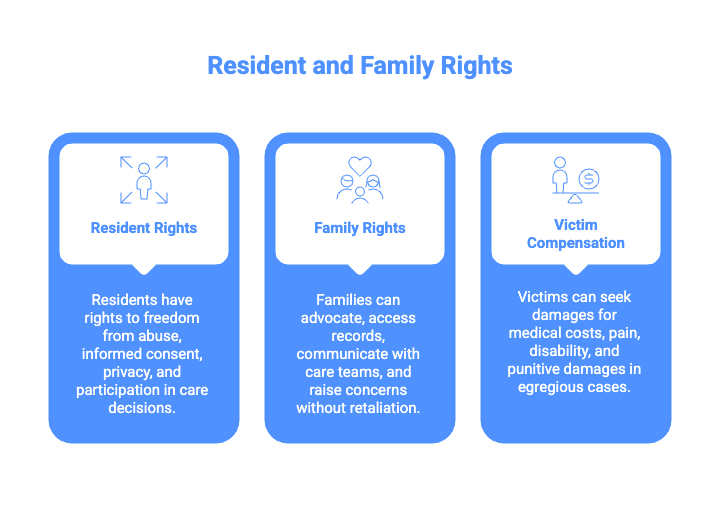
- Residents have the right to be free from abuse and neglect, to informed consent, to privacy, and to participate in care decisions, including transfers and discharges, in accordance with legal protocols.
- Families may act as advocates, access records, communicate with care teams, and elevate concerns without retaliation, making the resident’s voice transparent and respectful.
- Victims can seek damages for medical costs, pain and suffering, disability, and, in egregious cases, punitive damages that deter future misconduct.
Steps to Take After a Florida Nursing Home Abuse Injury
When abuse is suspected, we first ensure immediate safety by removing the resident from harm and obtaining urgent medical care.
We then document evidence thoroughly, including photographs of injuries and conditions, detailed timelines, staff names, medical records, and witness accounts.
Finally, we report the incident to the appropriate authorities and facility administrators, and we seek experienced legal counsel to protect rights and preserve claims.
Ensure Immediate Safety
Amid the shock of discovering harm, our priority is to guarantee the resident’s immediate safety and stabilize their condition. We assess injuries, summon medical care, and remain with the resident to assure calm, privacy, and dignity.
If the environment is unsafe or the alleged abuser remains nearby, we press for immediate relocation within the facility or to a trusted alternative. We notify nursing leadership, demand protective supervision, and confirm that care plans are adjusted without delay.
We also escalate internally when needed. We contact family decision-makers, the assigned physician, and the facility’s administrator, insisting on swift corrective action.
If we suspect criminal conduct, we initiate criminal reporting to law enforcement, and we alert Florida’s Abuse Hotline and the Long-Term Care Ombudsman, safeguarding the resident while official interventions begin.
Document Evidence Thoroughly
Even as we secure safety and medical care, we move quickly to document every detail that may prove the abuse and preserve your legal options.
We gather staff names on duty, log dates and times, and record observations in precise language.
We use photograph documentation to capture injuries, bed conditions, medical devices, room layouts, and clothing, ensuring clear angles, close-ups, and wide shots.
We save medical charts, medication lists, care plans, and incident logs, organizing originals and copies.
We preserve physical items, such as torn garments or bedding, and maintain a strict chain of custody to protect evidentiary value.
We also collect witness statements promptly, noting each person’s role and contact information.
Throughout, we timestamp and securely store materials, creating a credible, chronological record.
Report and Seek Counsel
Although every case is unique, we urge families to report suspected abuse immediately and contact qualified counsel without delay. Swift action protects the resident, preserves evidence, and holds facilities accountable.
We begin with internal reporting avenues, notifying the administrator and Director of Nursing in writing, and requesting a prompt safety plan. We also escalate externally by filing reports with Florida’s Agency for Health Care Administration and Adult Protective Services, and, if necessary, calling law enforcement for imminent danger.
Next, we engage legal counsel to safeguard rights and guide communications. We coordinate record preservation, manage insurer contact, and prevent retaliatory transfers. We also track regulatory deadlines and potential civil claims.
By reporting promptly and seeking counsel, we protect vulnerable residents, deter further harm, and advance a just resolution.
How a Florida Nursing Home Abuse Injury Lawyer Can Help You
Protect your loved one’s rights and strengthen your claim with a Florida nursing home abuse injury lawyer who knows how to build cases and hold facilities accountable. We investigate promptly, preserve crucial evidence, and coordinate with medical experts to identify breaches in care.
We scrutinize policies, staffing levels, and staff training records, then link those failures to the harm your family member suffered. Our approach emphasizes clarity, timeliness, and strategic advocacy.
1) Evidence development and case strategy: We collect records, interview witnesses, and analyze facility data, ensuring the narrative of neglect or abuse is fully supported.
2) Regulatory and insurer negotiations: We confront insurers and facilities with documented violations, negotiate from a position of strength, and seek swift, fair compensation.
3) Courtroom and family advocacy: We litigate when necessary, present persuasive testimony, and keep you informed, empowering you to participate meaningfully in every decision.
Together, we pursue accountability, promote safer practices, and secure resources your loved one needs.
Long-Term Effects of Florida Nursing Home Abuse Injuries
We must address how abuse can cause lasting physical health deterioration, including chronic pain, mobility loss, and heightened vulnerability to illness.
We also recognize the psychological trauma and PTSD that may follow, which can impair memory, sleep, mood, and trust, often requiring sustained therapy and support.
Finally, we’ll consider the financial and legal burdens, from ongoing medical costs and lost resources to intricate claims that demand careful documentation and strategic advocacy.
Physical Health Deterioration
Enduring abuse in a Florida nursing home can trigger a cascade of physical decline that persists long after the immediate injuries heal. We often see residents suffer nutritional decline due to skipped meals, poor hydration, or withheld assistance, which undermines immunity and slows wound healing.
Prolonged immobility and neglect also cause muscle wasting, joint stiffness, and balance deficits, increasing fall risk and fractures.
We focus on identifying pressure ulcers, recurrent infections, and unmanaged pain, all signs that care has failed. Cardiovascular and respiratory capacity can diminish when residents are left inactive, while untreated diabetes or hypertension accelerates organ damage.
Our role is to document these patterns, secure prompt medical evaluations, and pursue accountability. By doing so, we help restore safety, stabilize health, and prevent further deterioration.
Psychological Trauma and PTSD
Although physical wounds may fade, the psychological toll of Florida nursing home abuse often deepens over time, culminating in anxiety, depression, and post-traumatic stress disorder (PTSD).
We recognize that survivors may relive events through nightmares, intrusive memories, and hypervigilance, especially when Trauma triggers resemble past abuse. These symptoms can erode trust, isolate residents from supportive relationships, and impair daily functioning.
We work to identify patterns, document symptoms, and connect families with evidence-based care, including trauma-focused therapy and careful medication management.
Resilience building remains vital, pairing safety planning with structured routines, calming techniques, and compassionate advocacy. By coordinating with clinicians and caregivers, we help create stable environments, reduce exposure to triggers, and support gradual recovery.
United, we safeguard dignity, restore confidence, and promote lasting psychological healing.
Financial and Legal Burdens
When abuse occurs in a Florida nursing home, the harm extends beyond health outcomes and triggers significant financial and legal strain. We see families absorb long term costs for hospitalization, rehabilitation, and specialized caregiving, often after income is reduced to provide support.
Unexpected expenses arise for relocation, safety modifications, and psychological care. These burdens intensify when we face insurance denials, billing errors, or wrongful coverage limitations.
We help you document damages, preserve evidence, and pursue compensation from facilities, insurers, and responsible individuals. Our approach includes evaluating contracts, challenging arbitration clauses, and coordinating expert assessments that quantify lifetime care needs.
We also address Medicaid planning and subrogation issues to protect recoveries. Together, we work to stabilize finances, enforce accountability, and secure resources for dignified, sustained care.
Proving Liability in Florida Nursing Home Abuse Medical Malpractice Injury Cases
Establishing liability in a Florida nursing home abuse medical malpractice case demands a disciplined approach that links substandard care to a resident’s injury.
We begin by defining the applicable standard of care, then identifying how facility staff deviated from it. We collect and analyze medical documentation, staffing records, care plans, and incident reports, ensuring the timeline and causation are clear.
We corroborate these records with witness accounts and resident histories, preserving every detail that supports negligence.
We then engage qualified experts to provide expert testimony. These experts explain what competent providers should have done, and how the failures—such as delayed assessment, medication errors, or inadequate monitoring—directly caused harm.
We also assess institutional factors, including training, supervision, and policies, to determine corporate liability. Throughout, we protect evidence, address spoliation risks, and meet Florida’s presuit requirements.
Compensation for Florida Nursing Home Abuse Damages
With liability grounded in evidence and expert support, we next focus on securing full compensation for the harm a resident endured. We calculate damages methodically, documenting medical expenses, future care needs, rehabilitation, and necessary assistive devices.
We also pursue compensation for pain and suffering, loss of dignity, emotional distress, and loss of enjoyment of life, translating these harms into credible valuations supported by records and testimony.
Economic losses include hospitalization, medications, therapy, transportation, and out‑of‑pocket costs borne by families. When abuse disrupts bonds, we address derivative claims that reflect the need for family reconciliation, counseling, and supportive services.
In cases involving intentional misconduct or gross negligence, we evaluate punitive damages to deter future wrongdoing and strengthen preventive advocacy across facilities.
We present thorough life‑care plans, retain medical and financial experts, and substantiate every category with clear proof. Our objective is restorative justice: resources that fund healing, elevate safety standards, and honor the resident’s voice.
The Statute of Limitations for Florida Nursing Home Abuse Injury Cases
Although evidence preservation drives every case decision, strict filing deadlines ultimately govern your right to recover for nursing home abuse in Florida.
We act quickly because most abuse and neglect claims must be filed within two years from when the injury is discovered, or reasonably should have been discovered.
Most abuse and neglect claims must be filed within two years of discovering the injury.
If the claim alleges fraud, concealment, or misrepresentation, the discovery date can shift, yet a hard outer limit often applies.
Missing the deadline usually bars recovery, regardless of the claim’s validity.
We also evaluate tolling exceptions that may pause the clock in limited circumstances.
These can include situations involving incapacity, the defendant’s concealment, or minor plaintiffs who require additional protection.
Wrongful death stemming from nursing home abuse follows a separate two-year period that begins on the date of death.
To serve your loved one well, we calculate all applicable deadlines early, track every trigger date, and file within the strictest timeframe to preserve your rights.
Why You Need an Experienced Florida Nursing Home Abuse Injury Lawyer
Deadlines only matter if we preserve and present the right case, and that’s where an experienced Florida nursing home abuse lawyer makes the difference. We grasp how to secure records quickly, interview witnesses, and retain qualified experts, all while protecting evidence from spoliation.
We also know Florida’s elder‑care regulations and how to translate violations into compelling proof of negligence and damages.
We guide you through sensitive family dynamics, coordinating communication so loved ones feel heard without compromising the case. We help you build emotional resilience for the long process, preparing you for depositions, hearings, and difficult disclosures.
Our team calculates full damages, including medical costs, future care, and non‑economic harm, and we pursue insurers with disciplined negotiation and litigation strategies.
We prioritize your loved one’s safety, seeking immediate remedial measures and, when necessary, court orders. With focused advocacy and tested procedures, we reduce risk, amplify accountability, and position your claim for maximum, timely recovery.
How to Choose the Right Florida Nursing Home Abuse Injury Lawyer for Your Case
How do we identify the Florida nursing home abuse lawyer who’s best equipped to protect your family and maximize your recovery? We start by confirming focused experience with elder neglect and abuse, not just general injury claims.
We examine results in similar cases, and we request references.
We assess client communication: Does the firm provide a clear roadmap, regular updates, and prompt responses? We insist on transparency in fee structures, including contingency percentages, case costs, and what happens if we don’t prevail.
We also evaluate resources. A capable lawyer engages medical experts, investigators, and life-care planners, and can move swiftly to preserve records and testimony.
We look for courtroom readiness, demonstrated by trial experience and strong negotiation skills.
Finally, we align on values. The right advocate treats our loved ones with dignity, respects our time, and prioritizes safety and accountability. When these elements align, we position your family for a just, efficient, and meaningful recovery.
About the Law Offices of Anidjar and Levine
Even in the most challenging elder neglect and abuse cases, we at the Law Offices of Anidjar and Levine bring focused experience, disciplined investigation, and relentless advocacy to protect Florida families.
We pursue accountability with careful case development, timely action, and clear communication, so you can concentrate on your loved one’s well-being while we manage the legal burdens.
Our firm’s history reflects decades of service across Florida, built on courtroom skill, principled negotiation, and compassionate client care.
We collaborate with medical experts, investigators, and life‑care planners to document harm, quantify losses, and present persuasive claims.
Our client testimonials consistently highlight our responsiveness, thorough preparation, and tireless follow‑through.
We believe service means preparation and presence. From the first call, we explain options, set expectations, and update you at each step.
We’re trial-ready, yet pragmatic in securing fair settlements. When facilities fail in their duty, we stand prepared to protect your elder’s dignity and rights.
Frequently Asked Questions
Can I Move My Loved One During an Ongoing Investigation or Lawsuit?
Yes, we can move a loved one during an investigation or lawsuit, but we should carefully plan the timing of the relocation to protect safety and preserve evidence.
We’ll coordinate medical transfers, secure records, and notify investigators to avoid disrupting the case.
We must document conditions before and after the move, maintain continuity of care, and assess legal implications, including potential claims impact.
Let’s create a relocation plan that prioritizes well‑being while safeguarding rights and evidentiary integrity.
How Do I Discreetly Document Suspected Abuse Without Alerting Staff?
We discreetly document suspected abuse by prioritizing safety, privacy techniques, and precise records.
We keep a dated log of behaviors, injuries, and statements, using neutral language.
We capture digital evidence—photos, messages, call logs—storing files in secure, cloud-based folders with backups.
We avoid recording in restricted areas, disable flash and sound, and promptly transmit notes off-site.
We preserve original metadata, refrain from sharing widely, and consult trusted authorities for proper reporting and chain-of-custody guidance.
Are There Bilingual Resources for Non-English-Speaking Families in Florida?
Yes, Florida offers bilingual resources for non-English-speaking families. We can connect you with Spanish interpreters through hospitals, ombudsman programs, and state hotlines, guaranteeing clear communication during care meetings and complaints.
We also work with cultural liaisons who bridge customs, family expectations, and facility policies. Additionally, many agencies provide translated documents, multilingual intake, and advocacy support.
In collaboration, we’ll coordinate these services promptly, safeguard dignity, and ensure your loved one’s needs are accurately understood and respected.
What Happens if the Resident Has Dementia and Can’t Testify?
The case can proceed without the resident’s testimony. We rely on medical records, care plans, incident reports, and staffing logs to establish what occurred.
We pair this documentation with expert testimony from geriatricians, nurses, and forensic experts to explain causation, standards of care, and harm.
We also gather witness statements, facility policies, surveillance footage, and prior violation histories. Jointly, these sources create a reliable narrative, safeguarding the resident’s rights despite dementia-related limitations.
Do you think I can Recover Costs for Relocating to a Safer Facility?
Yes, you can often recover reasonable relocation expenses when abuse or neglect necessitates a move. We document the causal link, calculate costs, and pursue reimbursement for deposits, movers, transport, and short-term care differentials.
We also seek compensation for necessary safety upgrades at the new facility, such as monitoring devices or focused staffing. We coordinate medical and facility records, preserve invoices and contracts, and present expert opinions to substantiate necessity, reasonableness, and foreseeability under applicable law.
—————————-
We’re here to protect your loved one, pursue accountability, and secure the compensation they deserve.
With prompt investigation, strategic advocacy, and an unwavering focus on results, we’ll guide you through every step—from reporting and evidence collection to negotiation or trial.
Time limits are strict, so don’t wait. Contact the Law Offices of Anidjar & Levine for a free consultation.
We’ll review your case, explain your rights, and build a tailored plan to achieve justice and meaningful financial recovery.
Learn more about related claims with our Medical Malpractice Injury Lawyer resource.

We Can Help.