



At the Law Offices of Anidjar and Levine, we help Florida families pursue locked-in syndrome claims by proving causation and projecting lifelong care needs.
Our team secures evidence, retains medical and life-care experts, and builds credible damages models covering 24/7 nursing, respiratory support, adaptive communication, home modifications, and lost earnings.
We safeguard benefits, meet strict deadlines, and coordinate with treating clinicians to document ongoing needs.
We’re trial-ready to leverage full compensation through settlement or verdict, and we explain Florida rights, timelines, and lawyer selection so you can act with confidence next.
Learn more: Medical Malpractice Injury Lawyer
Key Takeaways
- We investigate causes such as crashes, malpractice, strokes, or toxins and retain neuroradiology and neurology experts to establish liability and causation in Florida.
- We secure records fast, preserve evidence, interview witnesses, and use forensic imaging to establish timelines, breaches of care, and responsible parties.
- We build comprehensive life care plans that detail 24/7 support, respiratory management, communication tech, home modifications, and therapy, with Florida market cost data.
- We pursue full damages, connecting day-in-the-life evidence to economic and non-economic losses, accounting for medical inflation and benefit limitations.
- We coordinate immediate medical guidance, benefit protection, care coordination, and litigation holds to stabilize health and strengthen your Florida claim.
How We Can Help With Your Florida Locked-in Syndrome Injury Claim
Guide this process with a team that understands the medical, legal, and financial complexities of locked-in syndrome. We coordinate every phase of your Florida claim, from urgent evidence preservation to timely filings, so you can focus on care.

Dig deeper into our in-depth case study: Securing a Future After Catastrophe — A Framework for Locked-in Syndrome Legal Claims in Florida
We work with treating physicians and life-care planners to document current needs and long-term costs, ensuring rehabilitation access is fully accounted for in demand packages and negotiations.
We protect caregiver rights by addressing respite support, wage loss, and training requirements within the damages model. We communicate with insurers and providers, manage liens, and contest inadequate coverage determinations.
We build liability with expert testimony, thorough accident reconstruction when applicable, and meticulous record reviews. We also safeguard public benefits eligibility while structuring potential recoveries.
Throughout the case, we provide clear updates, concise guidance, and strategic options. We prepare for trial from day one, leverage that readiness in settlement discussions, and remain dedicated to securing complete, durable outcomes.
Understanding Florida Locked-in Syndrome Injury Cases
Although every case is unique, Florida locked-in syndrome claims share core medical and legal elements that we must address with precision.
We begin by confirming the diagnosis, documenting the extent of paralysis, and establishing communication capacity, often through eye-tracking or coded responses.
We then map the lifetime care plan, detailing hospitalizations, rehabilitation techniques, adaptive technology, and caregiver support, because these items drive damages and future costs.
We work closely with neurologists, physiatrists, speech-language experts, and life-care planners to quantify needs.
Accurate projections of home modifications, assistive devices, and attendant care are critical, and we verify each cost with current Florida market data.
We also evaluate insurance coordination, lien exposure, and public benefits to ensure the plan is sustainable.
Proving the impact requires careful testimony from clinicians and family, along with day-in-the-life documentation.
We connect these proofs to economic and non-economic damages, presenting a straightforward, credible narrative that honors the client’s dignity and long-term well-being.
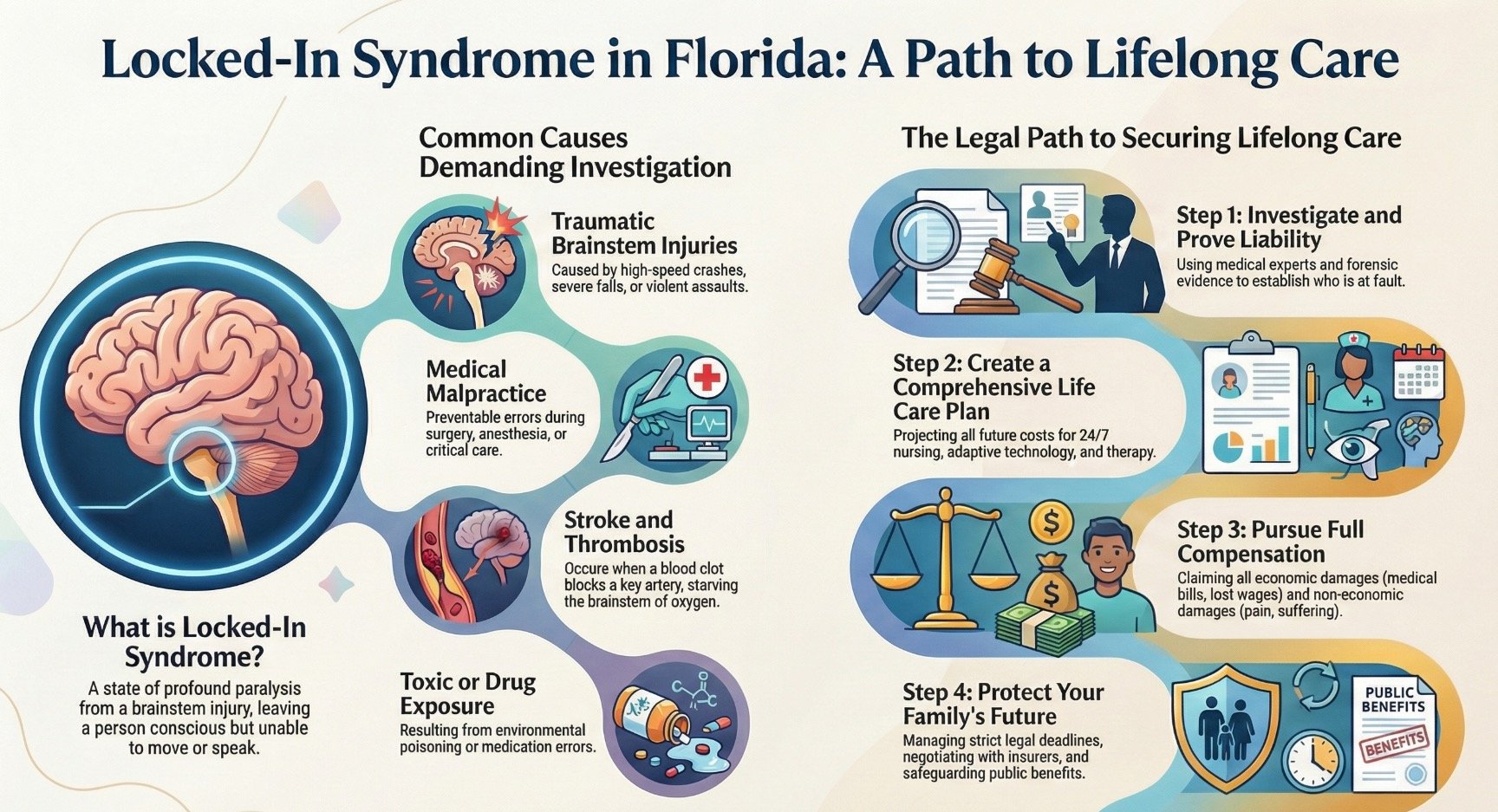
Common Causes of Florida Locked-in Syndrome Injuries
As we examine common causes of locked-in syndrome in Florida, we focus on traumatic brainstem injuries from crashes or falls, preventable medical malpractice incidents, and cerebrovascular events such as stroke and thrombosis.
We also consider toxic or drug exposure that can damage the brainstem or disrupt vital neurological functions.
Traumatic Brainstem Injuries
Even when a patient survives a violent impact, trauma to the brainstem can sever the pathways that carry nearly all voluntary motor signals, producing the profound paralysis characteristic of locked-in syndrome.
We most often see this after high-speed crashes, falls from height, diving incidents, or blunt assaults that shear delicate fibers in the pons. A brainstem hemorrhage or contusion can compress critical tracts, while swelling and secondary ischemia deepen neurological loss.
Respiratory compromise frequently follows because the brainstem coordinates breathing, airway reflexes, and arousal, making rapid intervention indispensable.
We focus on prompt evidence collection, including crash data, eyewitness accounts, and neuroimaging that documents pontine injury. We work with neuroradiologists and rehabilitation experts to link mechanism to deficits, forecast long-term needs, and secure resources for round-the-clock care.
Medical Malpractice Incidents
Not all cases stem from violent trauma; medical errors can also produce the catastrophic paralysis of locked-in syndrome.

We routinely see preventable lapses during surgery, anesthesia, or critical care that lead to brainstem injury. Failures include improper airway management, unmonitored hypotension, delayed intubation, medication errors, and unsafe positioning that compromises blood flow.
Radiology misreads and delayed escalation to higher levels of care can also be decisive.
We investigate whether providers honored informed consent, disclosed material risks, and offered reasonable alternatives.
Our chart review scrutinizes timelines, essential sign trends, medication dosing, and compliance with hospital protocols.
We retain experts to assess breaches of the standard of care, causation, and the extent of harm.
Stroke and Thrombosis
Silence can follow swiftly when a stroke or thrombosis starves the brainstem of blood. When a clot blocks the basilar artery, communication between brain and body can collapse, leaving only eye movement intact. We appreciate how devastating this is for families who serve and support vulnerable loved ones, and we act quickly to preserve evidence and protect rights.


Locked-in syndrome often stems from clot formation driven by atrial fibrillation, atherosclerosis, dehydration, or prolonged immobility. Missed warning signs, delayed imaging, or failures in timely anticoagulation can convert a treatable event into permanent paralysis.
We evaluate whether care met standards, from triage to thrombolysis and endovascular options. We also counsel on stroke prevention, medication adherence, and monitoring plans. Our role is steadfast advocacy, informed by medicine and law.
Toxic or Drug Exposure
Tracing toxic and drug exposures is vital when locked-in syndrome follows preventable poisoning or medication error. We investigate whether environmental toxins, contaminated water, or industrial releases caused brainstem injury, and we evaluate prescribing, dispensing, and monitoring failures that allowed toxic levels to accumulate.
We also examine occupational exposures, including solvents, heavy metals, pesticides, and anesthetic gases, evaluating employer compliance with safety standards, training, and ventilation.
We coordinate toxicology reviews, pharmacy audits, and workplace inspections, preserving evidence before it disappears. We analyze product labels, safety data sheets, and adverse event histories to identify liability across the supply chain.
When negligence is proven, we pursue full damages for lifelong care, assistive technology, and lost income. Our goal is accountability, prevention, and stability for your family’s future.
Legal Rights of Florida Locked-in Syndrome Injury Victims
Although locked-in syndrome severely limits physical communication, it doesn’t diminish a person’s legal rights under Florida law. We recognize each client’s dignity, and we work to enforce those rights with precision. Victims may pursue civil remedies against negligent drivers, healthcare providers, employers, or product manufacturers.
We safeguard decision-making authority through guardianship or powers of attorney, and we ensure access to insurance benefits and public assistance.
Our advocacy strategies focus on accountability, long-term care funding, and full valuation of losses.
- We document liability through medical records, expert testimony, and incident investigations, strengthening fault and causation.
- We calculate economic and non-economic damages, including life-care costs, lost earnings, and loss of consortium.
- We protect procedural rights, meeting notice deadlines, evidentiary standards, and statutes of limitations.
- We confront insurers and defendants, demanding fair settlements and preparing for trial when needed.
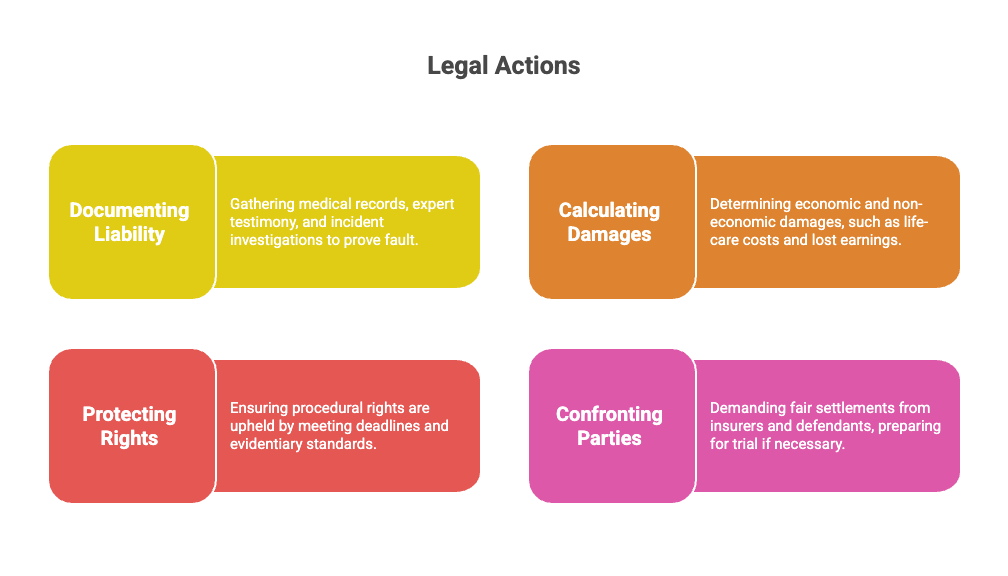
Together, we uphold your voice, secure lawful compensation, and protect your future with disciplined legal representation.
Steps to Take After a Florida Locked-in Syndrome Injury
After a locked-in syndrome injury in Florida, we act quickly to secure immediate medical care, ensuring a clear diagnosis and stabilizing treatment.
We then help you preserve evidence and records, including medical reports, imaging, timelines, witness details, and communications, to protect the integrity of your claim.
Finally, we contact legal counsel without delay, so your rights are safeguarded and crucial deadlines are met.
Seek Immediate Medical Care
Why does timing matter so much? Locked-in syndrome often results from brainstem injury, where rapid intervention can stabilize essential functions and limit secondary harm.
We urge you to call 911 immediately and clearly report neurological symptoms, so first responders can initiate the proper emergency protocol. Early airway support, blood pressure control, and stroke evaluation can be decisive within minutes.
As you wait, keep the person calm, note the time symptoms began, and avoid moving them unless safety requires it. When EMS arrives, ask about transport logistics and request routing to a thorough stroke or neurocritical care center, if available.
On arrival, insist on prompt imaging, neurological assessment, and continuous monitoring. Fast, coordinated care supports survival, preserves function, and positions your loved one for focused rehabilitation.
Preserve Evidence and Records
Swift medical stabilization sets the stage for the next priority: preserving evidence and records that may determine accountability and future compensation.
We document everything promptly, because details fade and systems overwrite data. We secure medical records, imaging, medication logs, and care notes, and we request incident reports, surveillance footage, and EMS run sheets immediately.
We photograph injuries, assistive devices, and the scene, then timestamp and label each file for chain preservation.
We capture witness identities, statements, and contact information, and we save correspondence, billing statements, and insurance communications. We maintain a master index, noting sources, dates, and version histories.
For durability and integrity, we use digital archiving with redundant, read-only backups, while storing originals in sealed folders. Consistent naming conventions and audit trails reduce disputes and strengthen proof.
Contact Legal Counsel
Engage experienced legal counsel as soon as the patient is medically stable, because early advocacy shapes the entire claim strategy. We’ll triage the facts, identify liable parties, and secure urgent evidence while coordinating respectfully with treating providers.
Our team evaluates insurance coverage, potential third-party claims, and venue, then sets a disciplined timeline to protect the statute of limitations.
We maintain structured client outreach, keeping you informed, answering questions, and aligning legal actions with the patient’s rehabilitation goals. We gather expert opinions early, calculate future care costs, and safeguard benefits eligibility. If needed, we pursue court orders for preservation and disclosure.
After resolution, we provide post-settlement counseling, including lien resolution, trust planning, and compliance guidance, so resources endure and support long-term care.
How a Florida Locked-in Syndrome Injury Lawyer Can Help You
Although every locked-in syndrome case is uniquely complex, a Florida injury lawyer can step in immediately to protect your rights, preserve crucial evidence, and chart a path to compensation. We evaluate liability, secure records, and coordinate expert testimony to ensure your claim reflects the full scope of harm. Our role is to shoulder the legal burden so you can focus on care, Family communication, and stability.
- We investigate the fault, collect medical and accident evidence, and interview witnesses with precision.
- We calculate damages, projecting lifelong care, adaptive equipment, and Technological solutions that preserve dignity and independence.
- We manage insurers, negotiate from a position of strength, and, when necessary, litigate decisively in Florida courts.
- We guide support networks and align resources for transportation, home modifications, and care coordination.
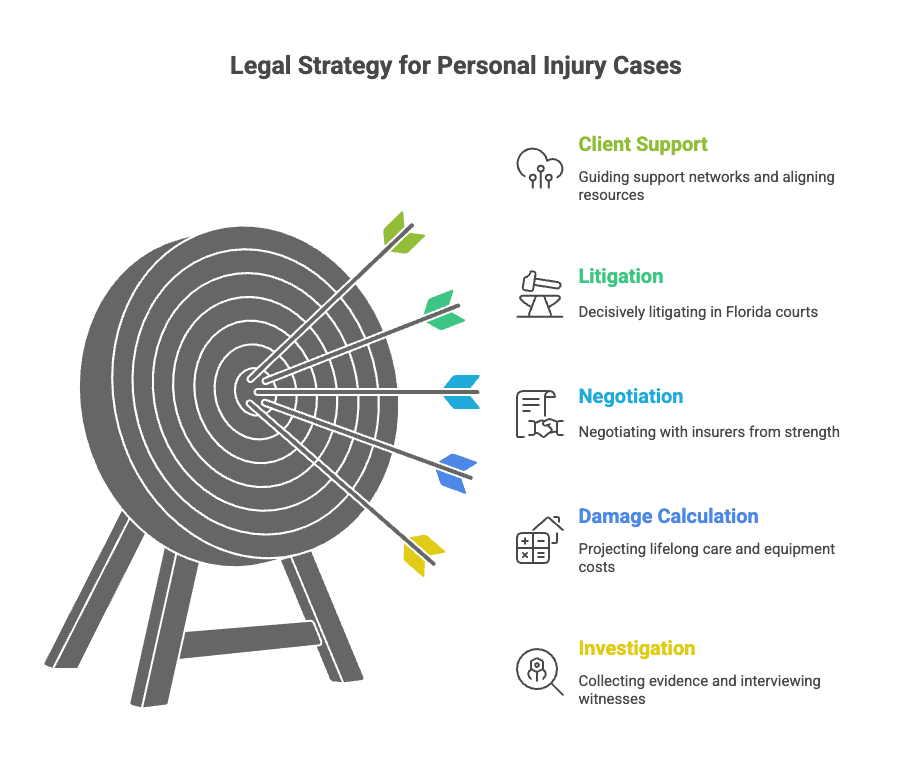
We also structure claims to protect public benefits and pursue all responsible parties. From demand letters to trial strategy, we keep you informed, responsive to needs, and steadfast in advocacy.
Long-Term Effects of Florida Locked-In Syndrome Injuries
As we assess long-term effects, we recognize that physical complications can progress over time, including muscle atrophy, respiratory issues, and heightened risk of infection.
We also address the cognitive and emotional impact, as communication barriers, anxiety, and depression may persist even when thinking remains intact.
Finally, we evaluate lifelong care and costs, accounting for specialized equipment, skilled nursing, therapy, and ongoing medical monitoring that shape both daily life and financial planning.
Physical Complications Progression
While initial stabilization is vital after a locked-in syndrome diagnosis, the long-term physical complications often define a patient’s daily reality and care needs. We see a predictable progression that demands vigilant, coordinated support.
Respiratory decline may emerge as weakened muscles impair cough strength, increasing pneumonia risk and necessitating suctioning, assisted ventilation, and rigorous pulmonary hygiene.
Immobility drives contractures, spasticity, and bone loss, requiring disciplined range-of-motion therapy, splinting, and careful positioning.
We also monitor skin integrity, since pressure ulcers develop quickly without proactive offloading, moisture control, and nutritional support. Swallowing deficits can worsen, compelling feeding tube optimization and aspiration prevention.
Autonomic instability may affect blood pressure and temperature regulation, calling for structured monitoring and rapid intervention. By anticipating these trajectories, we safeguard health, preserve comfort, and reduce avoidable crises.
Cognitive and Emotional Impact
Even when motor function remains profoundly limited, cognition often stays intact, creating a stark divide between mental awareness and physical expression that shapes every aspect of long-term recovery. We recognize that this mismatch can heighten frustration, anxiety, and isolation, especially when communication is slow or misunderstood.
Cognitive rehabilitation helps preserve attention, memory, and executive functioning, while also building reliable communication strategies that honor the person’s voice.
We guide families through Emotional adjustment with structured support, clear goals, and consistent feedback. Depression and grief are common, yet they’re manageable with therapy, medication oversight, and supportive routines. We collaborate with speech-language pathologists, neuropsychologists, and counselors to align treatment with the individual’s values.
In concert, we foster resilience, safeguard dignity, and sustain meaningful relationships and decision-making.
Lifelong Care and Costs
Though each case is unique, lifelong care for locked-in syndrome typically requires a coordinated, 24-hour support model that blends medical oversight, adaptive technology, and home or facility-based services. We help families plan all-inclusive care that anticipates daily needs, emergent events, and long-term stability.
Costs span in-home nursing, respiratory management, communication devices, mobility equipment, and therapy. Housing adaptations, vehicle modifications, and reliable transportation often represent major upfront expenses, while equipment replacement adds recurring costs.
We also account for respite services that reduce caregiver burnout, as sustained support protects both safety and dignity. A detailed life care plan projects medical inflation, benefit limits, and out-of-pocket obligations.
We identify public benefits, private insurance strategies, and litigation recoveries to stabilize funding. With diligent planning, we secure continuous, high-quality care.
Proving Liability in Florida Locked-in Syndrome Medical Malpractice Injury Cases
Establishing liability in a Florida locked-in syndrome medical malpractice case demands a disciplined, evidence-driven approach that ties a provider’s deviations from the standard of care to the catastrophic outcome.
We begin by securing the complete medical record, identifying missed warnings, delayed interventions, and protocol failures. We then retain qualified experts to define the applicable standard, explain the breach, and connect that breach to brainstem injury.
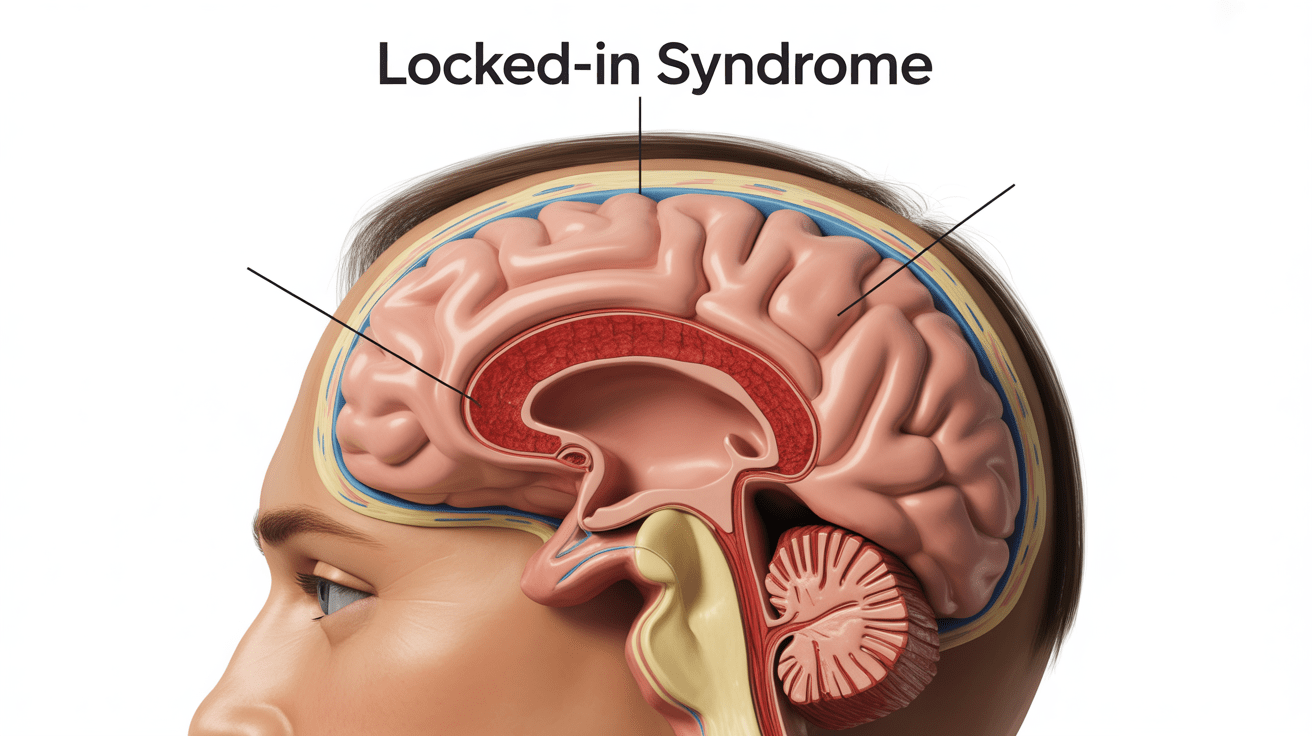
We employ forensic neuroimaging to anchor the timeline and mechanism of harm, correlating diffusion-weighted MRI and vascular studies with charted symptoms and orders. This objective data supports expert causation opinions, which are vital under Florida law.
We also examine staffing levels, communication breakdowns, and policy compliance to assess systemic negligence.
To preserve and strengthen the claim, we issue litigation holds, interview witnesses early, and obtain affidavits that memorialize crucial facts. Through meticulous case building, we convert intricate medicine into clear proof, allowing us to demonstrate fault with precision and integrity.
Compensation for Florida Locked-in Syndrome Damages
While no dollar figure can restore independence after a brainstem injury, Florida law allows us to pursue full civil compensation to fund lifelong care and protect your family’s stability.
We document every loss with precision, translating needs into clear economic and non-economic damages. We claim past and future medical costs, hospitalizations, and in-home nursing, along with durable medical equipment and adaptive technology.
We also seek funding for innovative intensive therapy and rehabilitation, including communication interfaces and mobility solutions. Our plans address home modifications, transportation, and round-the-clock caregiver support.
When wages are lost, we calculate lifetime earning capacity and employment benefits, supported by vocational and economic experts.
Pain and suffering, loss of consortium, and loss of enjoyment of life warrant significant compensation. We present daily impact evidence to make certain your loved one’s voice is heard.
Finally, where conduct was reckless or egregious, we evaluate punitive exposure to deter similar harm and safeguard community standards.
The Statute of Limitations for Florida Locked-in Syndrome Injury Cases
Securing full compensation only matters if we file your claim on time, so we closely track Florida’s statute of limitations and any exceptions that may extend or shorten it. Locked-in syndrome cases often arise from catastrophic negligence, and timing determines whether a court will hear your claim.
Generally, Florida imposes strict deadlines for personal injury and medical negligence claims, but nuances in the statutes can affect when the clock starts, pauses, or expires.
Discovery rules, minority tolling, fraud concealment, and incapacity may create filing exceptions, while pre-suit medical malpractice requirements can compress practical timelines.
We begin by preserving evidence immediately, then calculate the controlling deadline based on the incident type, defendant class, and applicable tolling statutes. Government defendants may trigger shorter notice periods, requiring swift action to protect your rights. We also evaluate multi-defendant scenarios to ensure every claim is timely.
Why You Need an Experienced Florida Locked-in Syndrome Injury Lawyer
Because locked-in syndrome cases sit at the intersection of elaborate medicine and high-stakes litigation, you need counsel who can decode both. We comprehend the neurology, the ICU records, and the long-term rehabilitation plans, and we translate that complication into persuasive evidence.
Our role is to build a straightforward narrative that honors the patient’s voice, even when patient communication is limited, and to hold every negligent party accountable.
We coordinate with medical experts who can explain causation, prognosis, and life-care costs in precise terms. We quantify future needs, including mobility technology, respiratory support, nutrition, and caregiver training, so a settlement or verdict funds thorough care.
We also anticipate insurer tactics and defense strategies, ensuring deadlines, liens, and benefits are handled correctly.
With experienced counsel, you gain disciplined advocacy that protects dignity, secures resources, and relieves administrative burdens. We focus on the case so that you can focus on compassionate, sustained care.
How to Choose the Right Florida Locked-in Syndrome Injury Lawyer for Your Case
Even amid urgent medical needs, choosing counsel requires a deliberate, criteria‑driven approach.
We start by evaluating a lawyer’s specific experience with locked‑in syndrome, examining verdicts, settlements, and expert networks. We confirm Florida licensure, disciplinary history, and trial readiness, since intricate neuro-injury cases often demand litigation.
We assess communication: do they invite thoughtful Client Questions, offer clear timelines, and provide direct access to the attorney?
We scrutinize the Fee Structure, ensuring contingency terms, costs, and lien handling are transparent in writing. We ask about investigative resources, from life‑care planners to neurologists, and whether the firm conducts early damages modeling to guide strategy.
We verify hospital and insurer negotiation experience, as well as familiarity with Medicaid, Medicare, and subrogation issues that affect net recovery.
Finally, we weigh chemistry and mission alignment. We should feel respected, informed, and supported, with updates promised at defined intervals and decisions grounded in evidence, ethics, and client-centered advocacy.
About the Law Offices of Anidjar and Levine
With those selection standards in mind, we introduce the Law Offices of Anidjar and Levine, a Florida firm that pairs deep catastrophic-injury experience with hands‑on client service.
Meet the Law Offices of Anidjar and Levine: catastrophic injury experience with attentive, hands-on client service.
We focus on intricate neurological harm, including locked-in syndrome, and we build cases methodically, from early investigation to trial-ready presentation. Our team coordinates medical experts, life‑care planners, and economists to document the full scope of loss, ensuring your voice remains central.
We measure success by client outcomes and by trust earned. Our client testimonials consistently highlight responsive communication, compassionate guidance, and determined advocacy.
We return calls, explain options plainly, and keep families informed at every milestone. With multiple office locations across Florida, we’re accessible for in‑person meetings and hospital visits, and we can mobilize quickly when timing matters.
We operate on contingency, align our incentives with yours, and press insurers for full accountability. If you need focused representation, we’re ready to serve.
Frequently Asked Questions
What Should I Bring to My Initial Consultation for a Locked-In Syndrome Case?
Bring all medical records, imaging, medication lists, and discharge summaries. We’ll need timelines for symptoms, emergency visits, and contact information for treating providers. Please gather insurance policies, denial letters, bills, and proof of lost income: secure incident reports, witness information, and photos or videos.
Prepare caregiver interviews, daily care logs, and assistive device needs. Include prior conditions, rehabilitation plans, and support services. Finally, bring your questions, goals, and any communication from insurers or facilities.
Can Family Members Act as Legal Guardians During the Claim Process?
Yes, family members can act as legal guardians during the claim process if a court appoints them or appropriate documents exist.
We’ll guide you on obtaining temporary guardianship for urgent decisions and establishing a durable power of attorney for ongoing authority.
We’ll guarantee the guardian meets fiduciary duties, preserves evidence, and authorizes medical and financial actions.
We’ll also petition promptly when capacity is in question, coordinating with providers to protect the client’s rights.
How Are Life-Care Planners Selected and Who Pays Their Fees?
Life-care planners are selected for proficiency, credentials, and impartiality; we typically retain an independent assessor with rehabilitation, nursing, or case management backgrounds.
We vet their methodology, testimony history, and alignment with care needs.
Their fees are usually advanced by the plaintiff’s counsel as case costs, though insurers or defendants may fund competing evaluations.
Ultimately, funding sources can be recovered from a settlement or verdict, subject to court approval and fee-shifting rules.
Will Pursuing a Claim Affect Medicaid or SSI Eligibility?
Yes, a claim can affect Medicaid or SSI eligibility due to resource limits, but careful planning can protect benefits.
We evaluate settlement impact early, then implement benefits coordination strategies such as Special Needs Trusts or ABLE accounts.
We structure payments to avoid spikes in countable resources, document medical set-asides when appropriate, and time disbursements prudently.
We also let agencies know as required to make sure they comply.
With coordinated planning, we preserve eligibility while securing needed compensation.
Can I Recover Costs for Home Modifications and Adaptive Communication Technology?
Yes, we can pursue recovery for reasonable costs of home modifications and assistive communication technology.
We document medical necessity, obtain expert evaluations, and present detailed estimates, invoices, and life-care plans to substantiate damages.
We also seek related expenses, including installation, training, maintenance, and future upgrades.
We coordinate benefits to avoid duplication, then maximize available insurance and defendant resources.
We’ll structure compensation to protect eligibility for needs-based programs while ensuring long-term functionality and safety.
——————–
We’re ready to guide you through every stage of a Florida locked-in syndrome injury claim.
Our team investigates liability, preserves evidence, and negotiates firmly while preparing your case for trial if necessary.
We’ll protect your rights, manage deadlines, and coordinate medical and financial experts to quantify damages.
If you or a loved one faces this life-altering condition, contact the Law Offices of Anidjar & Levine for a confidential consultation.
We’re committed to pursuing the full compensation you merit.
Learn more about your options with our Medical Malpractice Injury Lawyer resources.

We Can Help.