



At the Law Offices of Anidjar and Levine, we help Florida patients injured in hospital slip-and-fall incidents act fast to preserve evidence, prove negligence, and pursue full compensation.
We secure incident reports, surveillance, and medical records before they’re lost, interview witnesses, and coordinate expert evaluations to establish duty, breach, and causation.
We manage insurer communications, calculate damages, and meet strict filing deadlines.
Our tailored strategy aims for a substantial settlement and trial readiness if needed.
Continue for what steps to take now and how we protect your claim, and learn more with our Medical Malpractice Injury Lawyer resource.
Key Takeaways
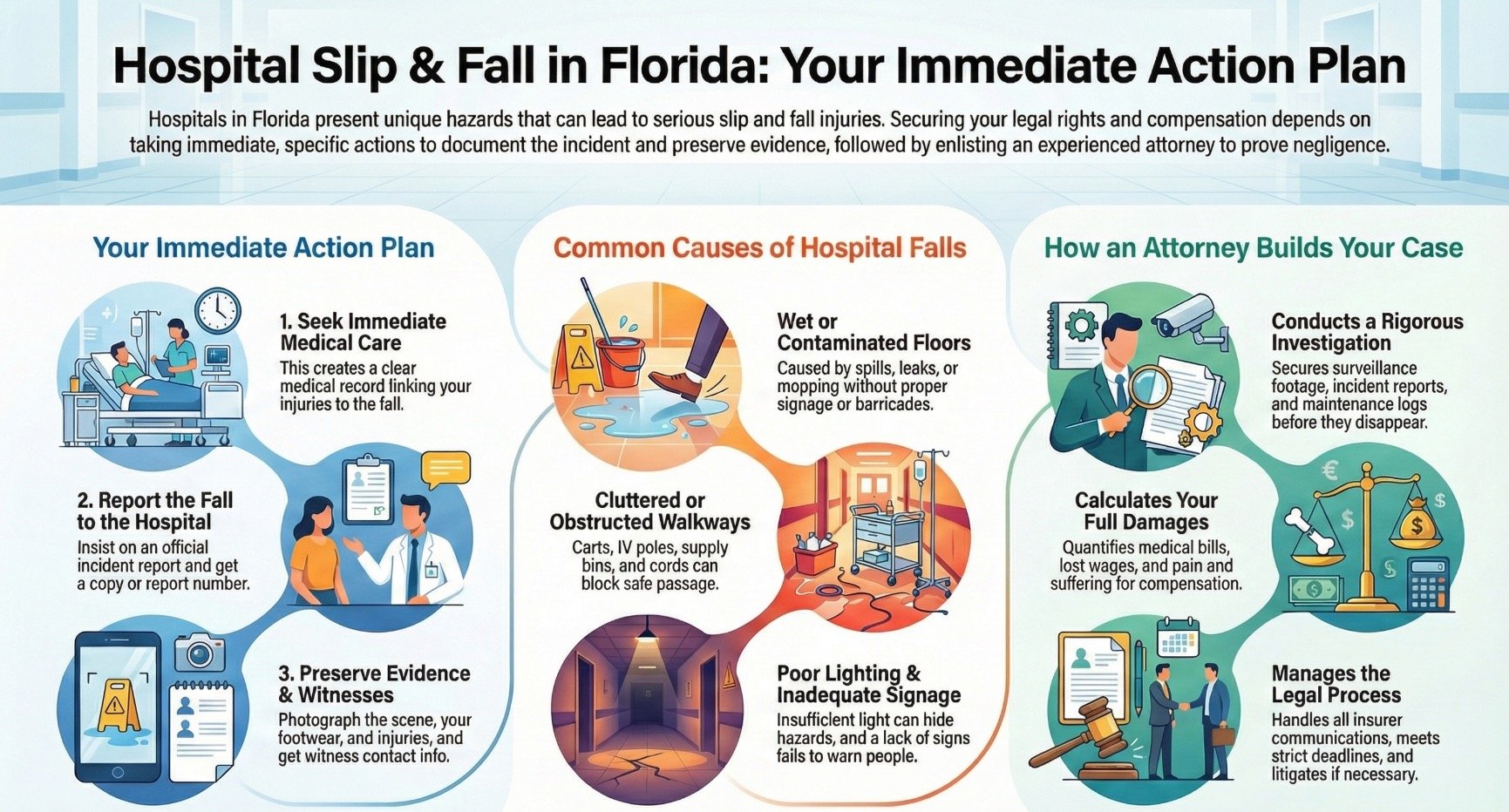
- Act immediately: report the fall to hospital administration/risk management, get an incident report number, and request surveillance before it’s overwritten.
- Preserve evidence: photograph the scene, footwear, and injuries; collect witness contacts; send preservation letters; secure medical records and imaging.
- Seek prompt medical care: obtain evaluations for hidden injuries (concussion, spine), follow discharge instructions, and maintain consistent treatment documentation.
- Legal help: a Florida lawyer investigates liability under premises laws, secures records/footage, consults experts, manages insurers, and calculates full damages.
- Deadlines matter: your attorney files timely claims, preserves maintenance/staffing logs, and negotiates or litigates for compensation for medical costs, wages, and pain.
How We Can Help With Your Florida Hospital Slip And Fall Injury Claim
Even before you leave the hospital, we can begin protecting your rights and building a strong slip-and-fall claim. We coordinate prompt evidence collection, secure incident reports, and request surveillance footage before it’s overwritten.
Learn more: Strategic Analysis of Florida Hospital Slip and Fall Litigation.
We document hazardous conditions, interview witnesses, and preserve your medical records to establish a clear link between negligence and harm.



We practice focused patient advocacy, communicating with providers to ensure your treatment plan and discharge instructions are accurately recorded. We manage insurer contacts to prevent harmful statements, and we track bills, liens, and lost wages to quantify damages with precision.
Our approach prioritizes your recovery while safeguarding your claim.
We develop a strategy tailored to your goals, then conduct rigorous settlement negotiations informed by medical opinions and expert analysis. When needed, we consult authorities on safety standards and life-care costs.
If the insurer resists accountability, we’re prepared to litigate, file motions promptly, and pursue full compensation with disciplined, evidence-driven advocacy.
Understanding Florida Hospital Slip And Fall Injury Cases
Although hospitals are places of healing, they also pose unique hazards that can lead to serious slip-and-fall injuries. Understanding these cases requires careful attention to the hospital’s duties, the circumstances of the fall, and the evidence that proves breach and causation.
We evaluate whether the facility implemented reasonable safety protocols, conducted timely inspections, and accurately documented incidents.
We approach each matter through the dual lenses of patient advocacy and risk management. Patient advocacy guides how we gather medical records, preserve surveillance footage, identify witnesses, and secure expert opinions.
Risk management informs our analysis of policies, staffing practices, training, and response procedures, which often reveal systemic liability-related gaps.
We assess the full scope of damages, including medical costs, lost income, and functional limitations, while also considering future care needs. By aligning legal strategy with clinical realities, we present explicit, credible claims that honor your recovery and promote safer hospital environments.
Common Causes of Florida Hospital Slip And Fall Injuries
When hospitals fail to control hazards, slips often stem from wet or freshly mopped floors, spilled liquids or leaks, and cluttered or obstructed walkways.
We also see injuries linked to poor lighting and inadequate signage, which reduce visibility and delay hazard recognition.
As we examine these common causes, we’ll identify how each condition creates risk and what evidence can establish liability.
Wet or Freshly Mopped Floors
Frequently, wet or freshly mopped hospital floors create hazardous conditions that demand prompt attention and clear warnings. We recognize that patient safety hinges on disciplined cleaning protocols and vigilant oversight.


When staff follow documented mopped timetables, they must pair them with visible signage, restricted access, and non-slip mats to reduce risk. Without these measures, even routine cleaning can put patients, visitors, and caregivers at risk.
We evaluate whether the facility scheduled floor care during high-traffic periods, whether signs were positioned at every approach, and whether staff monitored drying times. We also examine training records, mopped timetables, and compliance audits to confirm consistency.
Our role is to hold hospitals to reasonable standards, ensuring their cleaning protocols protect those they serve and prevent avoidable falls.
Spilled Liquids and Leaks
Spilled liquids and hidden leaks pose a persistent slip risk in hospitals, especially around patient rooms, medication prep areas, cafeterias, and utility corridors. We often see fluids from IV bags, ice machines, beverage stations, or condensate lines creating transparent hazards that staff and visitors may not detect in time. When facilities fail to monitor and document recurring leak points, preventable injuries follow.


We work to show how prompt inspection, clear signage, and timely remediation reduce risks and prevent mold growth that signals prolonged moisture. Incident reports, maintenance logs, and surveillance help establish notice and responsibility. If patterns reveal delayed cleanup or absent safeguards, janitorial negligence may be evident. Our role is to preserve evidence, secure witness statements, and pursue accountability to protect patients and caregivers.
Cluttered or Obstructed Walkways
Amid the constant movement of equipment, staff, and visitors, cluttered or obstructed walkways create foreseeable, preventable slip-and-trip hazards in hospitals. When carts, IV poles, supply bins, and cords block passage, patients and caregivers face unnecessary risk.
We evaluate how aisle congestion arises, whether from rushed turnover, improper staging, or neglected storage protocols, and we document how long obstructions remained. Hospitals must implement clear corridor policies, enforce housekeeping standards, and coordinate maintenance schedules to guarantee debris and equipment are promptly removed.
We review incident logs, staffing patterns, and training records to determine whether safety rounds occurred and if corrective measures were timely. When hospitals disregard these duties, we hold them accountable and pursue compensation that supports our clients’ recovery.
Poor Lighting and Signage
Often overlooked, inadequate lighting and unclear or missing signage create conditions in hospitals where patients, visitors, and staff can misjudge hazards and lose safe footing.
When corridors, stairwells, and parking areas suffer from insufficient illumination, shadows conceal spills, uneven thresholds, and rolling equipment.
Unclear signage compounds the risk by failing to direct foot traffic around wet floors, construction zones, or restricted areas.
We evaluate whether lighting levels meet industry standards, whether bulbs were maintained, and whether warning placards were positioned, visible, and timely.
We also examine surveillance footage and incident reports to confirm notice and response times.
Legal Rights of Florida Hospital Slip And Fall Injury Victims
Accountability frames every hospital slip and fall claim in Florida, and your legal rights flow from that principle. We focus on holding facilities to the duty of reasonable care, ensuring hazards are identified, corrected, and communicated.
Your Patient rights include dignified treatment, timely assistance, and transparency about conditions that can cause harm. When those standards fail, Florida law permits recovery for medical costs, lost income, and pain, subject to Compensation limits and evidentiary proof.
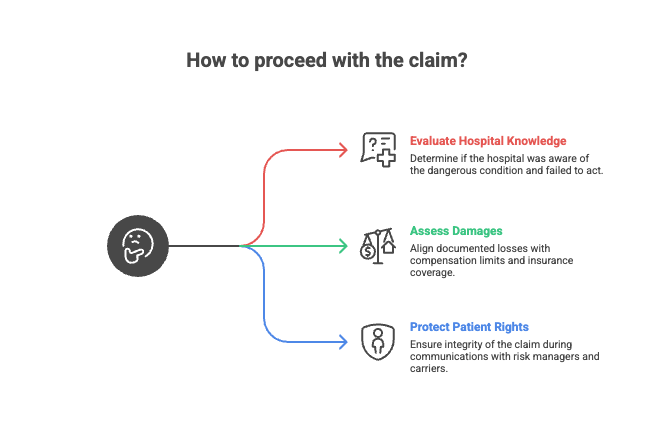
- We evaluate whether the hospital knew, or should have known, about a dangerous condition and failed to act.
- We assess the scope of damages, aligning documented losses with applicable Compensation limits and insurance coverage.
- We protect patient rights during communications with risk managers and carriers, and we hope that the integrity of your claim is maintained.
We also consider comparative negligence, which can reduce recovery if fault is shared. Our role is to advance your interests, document liability, and position your claim for a fair resolution.
Steps to Take After a Florida Hospital Slip And Fall Injury
After a hospital slip and fall in Florida, we should seek immediate medical care to document injuries and protect our health.
We then promptly report the incident to the hospital administration, requesting an incident report number and noting that the staff have been notified.
Finally, we preserve evidence and witnesses by photographing the scene, securing footwear and clothing, and collecting names and contact information for anyone who saw the fall.
Seek Immediate Medical Care
Prioritize prompt medical evaluation to protect your health and your claim. After a hospital slip-and-fall, we encourage you to let a clinician assess you immediately, even if the pain seems manageable. An emergency evaluation can identify hidden injuries, such as concussions, spinal issues, or internal damage, that worsen without timely care.
You can use early documentation to strengthen your claim by linking injuries to the incident with clear medical records.
We should request appropriate imaging tests when indicated, including X-rays, CT scans, or MRIs, to confirm or rule out fractures, soft-tissue tears, and head trauma.
Follow all discharge instructions, schedule recommended follow-ups, and keep copies of prescriptions, referrals, and diagnostic results. Consistent treatment supports recovery, and it creates a reliable timeline that helps us protect your legal rights with precision.
Report Incident Promptly
With medical care underway, we should also report the incident to the hospital without delay to preserve facts and meet policy requirements.
Prompt patient reporting demonstrates diligence, supports safety improvements, and establishes an official record. We should notify the charge nurse or administrator, request an internal report, and confirm that the time, location, and conditions are accurately captured.
Ask for the names and titles of staff who receive the report, and note the unit or department involved.
We must request a copy or confirmation number for the incident documentation and record how the hospital intends to follow up. Provide a concise, factual account, avoiding speculation. If pain increases or new symptoms appear, update the report promptly.
Timely reporting protects patients, informs risk management, and strengthens accountability.
Preserve Evidence and Witnesses
Lock in the facts while they’re fresh by collecting and safeguarding every piece of evidence tied to the fall.
We secure photographs of the scene, your footwear, and any liquid, debris, or signage, noting dates, times, and locations.
We request copies of incident reports, surveillance footage, and relevant medical records immediately, since hospitals may overwrite data quickly.
We document injuries with dated photos and maintain a dedicated file for receipts, treatment notes, and communications.
We obtain contact information for every witness and conduct timely interviews, focusing on witness statements preservation through consistent summaries and confirmations.
We protect the chain of custody for physical items by labeling, sealing, and logging transfers.
We also send preservation letters to the hospital, placing it on notice to retain all evidence.
How a Florida Hospital Slip And Fall Injury Lawyer Can Help You
Find your way through the aftermath of a hospital slip and fall with a focused legal strategy built to protect your rights and maximize your recovery. As your counsel, we evaluate liability, compare facts to Florida premises laws, and make a disciplined plan anchored in patient advocacy.
We identify hazards, document conditions, and examine whether protocols were breached, including potential medical negligence that worsened your injuries.
- We conduct a rigorous investigation, secure records and surveillance, and consult qualified medical and safety experts.
- We calculate full damages, including medical costs, lost income, and pain and suffering, and present substantiated demands.
- We negotiate with insurers, challenge low offers, and, when necessary, prepare a persuasive case for trial.

Throughout, we coordinate treatment documentation, streamline communications, and protect you from insurer tactics. We file timely claims, meet statutory deadlines, and preserve evidence integrity. Our objective is clear: secure accountability, reduce your burdens, and obtain the compensation you merit.
Long Term Effects of Florida Hospital Slip And Fall Injuries
We now turn to the long-term consequences of Florida hospital slip and fall injuries, focusing on chronic pain syndromes that can persist despite treatment and complicate daily functioning.
We also assess how these injuries restrict mobility, threaten independence, and require assistive devices or ongoing rehabilitation.
Finally, we examine cognitive and emotional impacts, including memory issues, anxiety, and depression, which can undermine recovery and quality of life.
Chronic Pain Syndromes
Enduring pain long after a hospital slip and fall isn’t uncommon, and it can develop into chronic pain syndromes that disrupt daily life and recovery.
We often see symptoms persist beyond normal healing timelines, signaling nerve involvement, inflammatory cascades, or central sensitization. When the nervous system remains overactive, ordinary sensations can trigger disproportionate pain, fatigue, and sleep disturbance.
We work with clients and care teams to document diagnoses, track triggers, and coordinate evidence-based plans.
Fibromyalgia management may include graded exercise, cognitive-behavioral strategies, sleep hygiene, and appropriate medications, supported by careful pacing to prevent flare-ups.
We also ensure that thorough medical records capture pain trajectories, functional limitations, and treatment responses.
Mobility and Independence
Preserving mobility and independence after a hospital slip-and-fall requires early planning, disciplined rehabilitation, and realistic goals aligned with medical restrictions. We work with clinicians to map out safe movement strategies, establish a therapy schedule, and define benchmarks that respect healing timelines.
We encourage a layered approach: strength and balance training, gait re-education, and pain-aware pacing to prevent setbacks.
We also prioritize practical supports that protect dignity while reducing risk. Appropriate assistive devices—such as canes, walkers, and transfer aids—should be professionally fitted and periodically reassessed.
Targeted home modifications, including grab bars, non-slip flooring, improved lighting, and threshold ramps, reduce hazards and conserve energy. We document functional limitations, therapy progress, and equipment needs, positioning you to secure coverage, coordinate care, and maintain independence with confidence.
Cognitive and Emotional Impacts
Although physical recovery often takes center stage, cognitive and emotional consequences from a hospital slip and fall can be just as disruptive and longer lasting. We often see survivors struggle with attention deficits, slowed processing, and memory loss that complicate daily tasks and caregiving.
These challenges undermine confidence, reduce autonomy, and strain family systems that want to help.
Emotional distress frequently follows, including anxiety, irritability, sleep disruption, and depressive symptoms that can intensify pain and delay healing.
We work to document these impacts with neuropsychological evaluations, treatment records, and testimony from those who observe the changes. By connecting symptoms to the incident, we help secure therapy, medication management, and supportive services.
With precise evidence and sustained advocacy, we aim to restore function, protect dignity, and fund long‑term recovery.
Proving Liability in Florida Hospital Slip And Fall Medical Malpractice Injury Cases
Before we can recover damages for a hospital slip-and-fall, we must establish who’s legally responsible and how their conduct caused the injury. We start by identifying duty, breach, and medical causation. Hospitals must maintain safe premises, monitor hazards, and follow policies for spills, cords, and equipment.
We secure incident reports, surveillance footage, maintenance logs, and staffing records, then interview witnesses and evaluate adherence to protocols and industry standards.
We also analyze whether negligent medical decisions contributed to the fall, such as improper fall-risk assessment, medication errors causing dizziness, or failure to provide assistive devices. Expert testimony connects the breach to the injury and clarifies medical causation with measurable findings.
Florida’s comparative negligence rules require us to assess each party’s share of fault, including whether a warning was ignored or the footwear was unsafe. By building a precise timeline and preserving evidence early, we position your claim on strong, defensible liability grounds.
Compensation for Florida Hospital Slip And Fall Damages
With liability established through evidence and expert analysis, we turn to the value of your claim and the categories of compensation Florida law allows.
We begin by quantifying medical expenses, including emergency care, imaging, surgery, hospitalization, rehabilitation, and future treatment needs. We coordinate with your providers to document costs and verify medical necessity, ensuring accurate recovery that supports your healing and independence.
We also calculate lost wages, documenting missed work, reduced hours, and diminished earning capacity if your injuries limit future employment. When appropriate, we consult vocational and economic experts to present reliable projections.
We pursue compensation for pain and suffering, addressing physical limitations, sleep disturbance, and loss of enjoyment of daily life. We assess household and caregiving services necessitated by injury, along with mobility aids, home modifications, and transportation.
When hospitals or insurers dispute causation or valuation, we prepare evidence-driven presentations and negotiate firmly. If settlement efforts fail, we’re ready to litigate to secure your full, lawful recovery.
The Statute of Limitations for Florida Hospital Slip And Fall Injury Cases
Protecting your right to compensation starts with understanding Florida’s statute of limitations for hospital slip and fall injuries. We must act promptly, because the law imposes strict Filing deadlines that can bar a valid claim if missed.
Generally, Florida provides a two-year window for negligence actions, measured from the date of injury or discovery. Still, Statutes of Limitations can shorten or extend that period in limited situations.
We evaluate whether the hospital is a public entity, whether a minor is involved, or whether the injury was discovered later due to delayed diagnosis. Each factor can affect timing and notice requirements. For claims involving government-owned hospitals, presuit notice and shorter timelines may apply, and failure to comply can be fatal to the case.
We also preserve evidence early, document medical care, and identify all responsible parties before the deadline approaches. By tracking all applicable Filing deadlines, we safeguard your claim and position the case for timely, lawful pursuit.
Why You Need an Experienced Florida Hospital Slip And Fall Injury Lawyer
Deadlines alone don’t win cases; experienced counsel does. We recognize that hospital slip-and-fall claims demand swift action, a disciplined strategy, and meticulous Evidence preservation. Surveillance footage, incident reports, and maintenance logs can vanish quickly, and witnesses may forget pivotal details.
We move decisively to secure records, preserve video, and document hazardous conditions before they change.
Hospitals and insurers often dispute liability, shift blame, or minimize injuries. We counter those tactics with targeted investigations, expert analysis, and precise damage calculations.
When falls intersect with Medical negligence—such as medication effects, inadequate supervision, or unsafe discharge—we identify all responsible parties and align the facts with Florida law.
We manage communications, stop misinformation, and frame your claim with clear, admissible proof. Our experience with hospital protocols and risk management teams enables us to anticipate defenses and negotiate from a position of strength.
We keep your case organized, your rights protected, and your recovery prioritized, while we build the strongest path to full compensation.
How to Choose the Right Florida Hospital Slip And Fall Injury Lawyer for Your Case
Although many attorneys advertise their slip-and-fall experience, selecting the right Florida hospital injury lawyer requires a focused evaluation. We begin by evaluating a firm’s hospital-specific results, including prior verdicts and settlements, because inpatient settings involve unique protocols, custodial records, and the need for rapid evidence preservation.
We verify that the lawyer conducts prompt site inspections, retains qualified medical and safety experts, and understands hospital risk management procedures.
We also recommend structured client interviews to test communication, strategy alignment, and responsiveness. During these meetings, we ask how the attorney will secure surveillance footage, charting, incident reports, and witness statements under tight timelines.
We examine staffing, caseload, and who’ll handle depositions and hearings.
Transparent fee arrangements matter. We confirm contingency percentages, litigation costs, and whether expenses are advanced, itemized, and deducted before or after the fee.
Finally, we check bar discipline, peer reviews, and client testimonials, then compare written engagement letters to validate that the scope, deadlines, and reporting cadence are clear and enforceable.
About the Law Offices of Anidjar and Levine
Selecting counsel with proven hospital premises results sets the standard for what you should expect from us at the Law Offices of Anidjar & Levine.
We focus on Florida hospital slip-and-fall cases, aligning meticulous investigation with timely, strategic advocacy.
Our attorneys analyze policies, incident reports, surveillance, and medical records, then build fact-driven claims that hold facilities accountable while safeguarding your recovery.
We measure success by your outcome and experience. Our client testimonials reflect consistent communication, prompt updates, and thorough preparation.
We coordinate medical care, manage insurer contact, and press for full compensation so that you can focus on healing.
When litigation is required, we prepare every case as if it will be tried, which strengthens our negotiating position.
Service to others guides our work beyond the courtroom.
Through community outreach, safety education, and pro bono initiatives, we raise awareness to prevent falls and protect vulnerable patients.
We’re ready to put our experience to work for you.
Frequently Asked Questions
Can I Sue a Hospital and a Cleaning Contractor Simultaneously?
Yes, we can sue a hospital and a cleaning contractor simultaneously as dual defendants. When both entities may have contributed to unsafe conditions, the law permits claims alleging shared liability.
We’d investigate contracts, policies, inspection logs, and incident reports, then apportion fault based on evidence. We’d file timely, preserve surveillance footage, and secure witness statements.
This approach protects your rights, maximizes recovery options, and makes certain each responsible party is held to its duty of care.
Will Medicare or Medicaid Seek Reimbursement From My Settlement?
Yes. Medicare and Medicaid typically seek reimbursement from your settlement. We evaluate any Medicare lien and medicaid recovery claims, verify conditional payments, and dispute unrelated charges.
We coordinate with lien holders, comply with reporting rules, and negotiate permissible reductions based on procurement costs or hardship where applicable. We guarantee proper set-asides if future care is implicated, protect your net recovery, and finalize releases so disbursement proceeds only after accurate, documented resolution of all public benefit liens.
How Do I Quickly Preserve Hospital Security Camera Footage?
Act immediately: we send a written preservation letter to the hospital’s risk manager and security department, requesting footage retrieval and chain preservation.
We specify cameras, dates, times, and locations, and demand suspension of routine overwrite policies.
We follow by serving a subpoena or court order if needed.
We document all communications, request audit logs, and ask for native files with metadata.
We confirm secure transfer protocols and verify integrity using checksums upon receipt.
What if I Fell While Visiting a Patient, Not Receiving Treatment?
Yes, you may still have a claim. As visitors, we’re generally protected by premises liability, and guest rights require hospitals to maintain reasonably safe conditions, warn of hazards, and address spills promptly.
We’d document the scene, report the fall immediately, and request an incident report. We’d also preserve security footage, gather witness information, and seek medical evaluation.
Finally, we’d evaluate negligence, causation, and damages to determine visitor liability and pursue compensation where warranted.
Can a Prior Mobility Issue Reduce My Compensation Under Comparative Negligence?
Yes, a prior mobility issue can reduce compensation under comparative negligence. Insurers may argue your pre-existing conditions contributed to the fall, using medical records and gait assessments to allocate fault.
We counter by distinguishing baseline limitations from hazards that a reasonable property owner should have corrected. We document safety violations, obtain expert opinions, and correlate the mechanics of incidents with injuries.
In concert, we present a precise causation analysis that minimizes fault attribution and preserves rightful damages.
————————–
We’re ready to protect your rights and pursue the compensation you deserve after a hospital slip-and-fall.
Our team investigates promptly, preserves evidence, and builds a compelling claim grounded in Florida premises liability law.
We handle insurers, negotiate assertively, and, when needed, litigate to seek full accountability.
Don’t delay; deadlines can bar your recovery. Contact the Law Offices of Anidjar & Levine today for a free consultation, and let us put our experience and resources to work for you.
Learn more about how we can help as your Medical Malpractice Injury Lawyer.


We Can Help.