



We protect Florida elders by acting fast to secure safety, document harm, and preserve essential evidence.
The Law Offices of Anidjar and Levine coordinates with physicians, facilities, and Adult Protective Services, seeks emergency orders when needed, and separates the elder from danger.
Our team investigates negligence, abuse, medication errors, and financial exploitation, building strong claims under Florida law and meeting strict deadlines.
We pursue medical costs, pain and suffering, injunctive relief, and work to prevent retaliation and further harm. Continue to see how we structure protection and recovery.
For related medical negligence matters, see our Medical Malpractice Injury Lawyer.
Key Takeaways
- Immediate safety first: separate the elder from harm, call 911 for imminent danger, and request APS wellness checks under Florida mandatory reporting laws.
- Preserve evidence early: photograph injuries, secure medical and pharmacy records, staffing logs, surveillance, and maintain strict chain of custody.
- Investigate thoroughly: interview witnesses, consult clinical/pharmacology experts, and build a fact-based timeline aligning records and observations.
- Legal action: establish duty, breach, causation, and damages; pursue compensatory damages, injunctions, and emergency guardianship when decision-making is compromised.
- Facility and financial accountability: report neglect/abuse, address systemic failures, and freeze suspicious transactions in cases of financial exploitation.
How We Can Help With Your Florida Elder Abuse Injury Claim
Protect and advocate—those are our priorities when we take on your Florida elder abuse injury claim. We listen closely, document your concerns, and act swiftly to safeguard your loved one.
Dig deeper into our in-depth case study: Protecting Florida’s Vulnerable: A Legal Framework for Combating Elder Abuse
We coordinate with physicians, facilities, and trusted professionals to secure records, preserve evidence, and assess harm with precision. Our approach respects intricate family dynamics, recognizing how stress, isolation, and caregiver burnout can conceal warning signs and complicate communication.
We build a clear factual record, interview witnesses, and identify responsible parties, whether individuals or institutions. We work to stop ongoing risks, seek protective measures when necessary, and prepare a tailored strategy to pursue accountability.

We guide you through each decision point, explain options, and maintain disciplined timelines. We also connect you with supportive services that reinforce safety and dignity. From initial intake to resolution, we remain focused on results, transparency, and steady advocacy that honors your loved one’s needs and your commitment to serve.
Understanding Florida Elder Abuse Injury Cases
With your immediate concerns addressed and safeguards underway, we turn to the framework that defines Florida elder abuse injury cases. These matters involve harm caused by neglect, exploitation, or physical, emotional, or financial abuse, often within facilities or private homes.
We analyze whether a duty of care existed, how it was breached, and how that breach caused measurable damages. Medical records, staffing logs, and witness testimony form the evidentiary core.
We prioritize the elder’s voice through capacity assessments, ensuring decisions reflect their wishes when possible, and using guardianship only when necessary and lawful. We coordinate mandated reporting, preserve evidence, and evaluate civil remedies, including compensatory damages and injunctive relief.
Where appropriate, we organize family mediation to resolve disputes, clarify roles, and protect ongoing care. Throughout, we align strategy with regulatory standards and ethical obligations. Our role is to build a precise record, advance accountability, and secure meaningful, enforceable protections.
Common Causes of Florida Elder Abuse Injuries
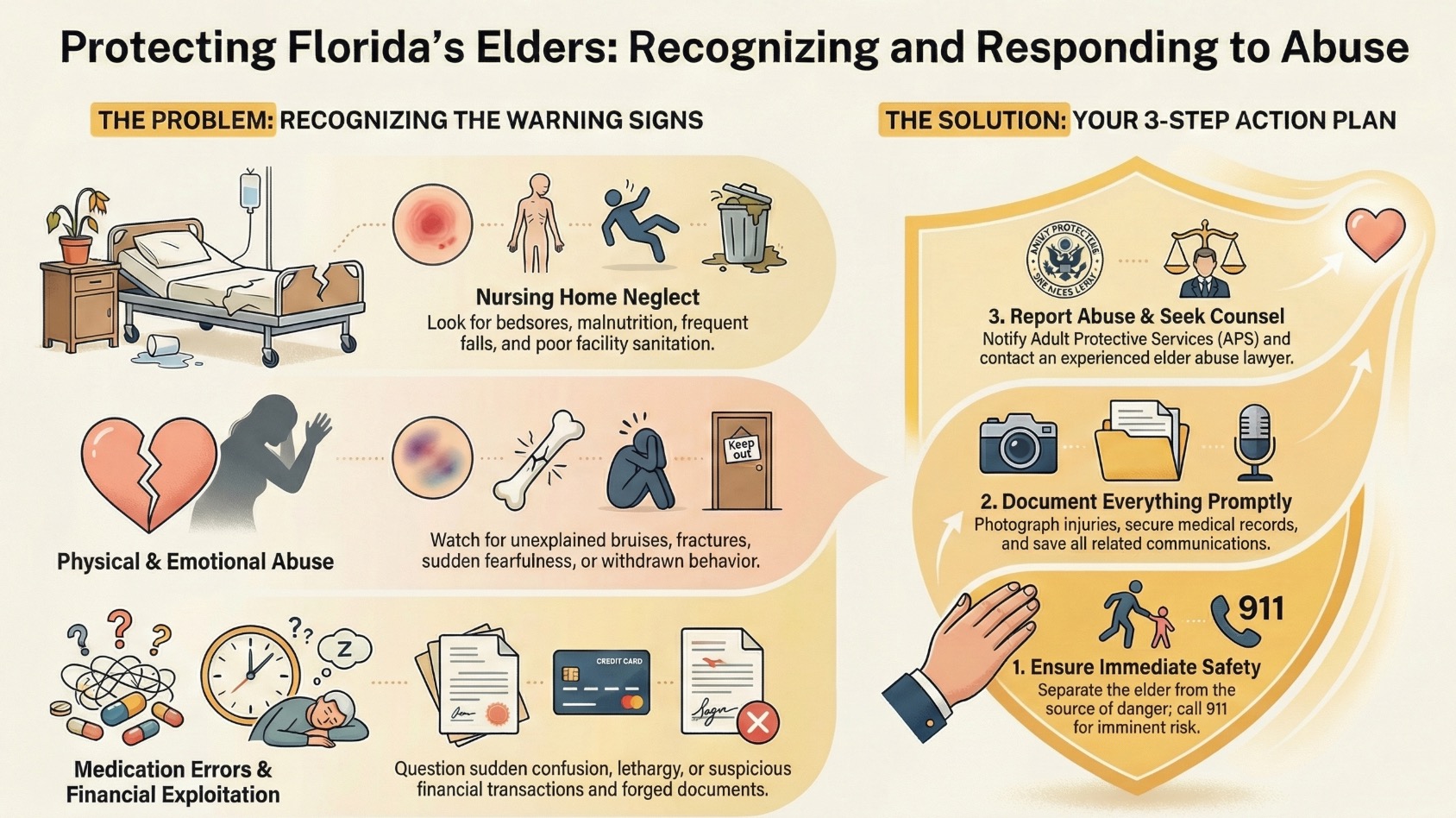
We must confront the most common causes of Florida elder abuse injuries, including nursing home neglect that leads to bedsores, malnutrition, and falls.
We also see direct harms from physical and sexual abuse, as well as preventable medication errors and overdoses that result from poor protocols or inadequate supervision.
Finally, we address financial exploitation scams that strip seniors of assets and independence, recognizing patterns that help us act quickly and decisively.
Nursing Home Neglect
Identifying nursing home neglect is essential because it’s one of the most common and preventable causes of elder abuse injuries in Florida. We look for red flags that signal systemic problems, not isolated mistakes.
Inadequate staff ratios often lead to missed medications, dehydration, pressure sores, and unsafe falls. Poor facility sanitation increases infection risk, aggravates chronic conditions, and compromises dignity.
We also evaluate care plans, nutrition logs, and response times to call lights to determine whether residents receive timely assistance.

When we investigate, we gather medical records, staffing schedules, and incident reports, then interview witnesses and consult clinical experts. Our goal is to document breaches of duty, connect them to harm, and demand corrective measures and compensation that protect residents and empower families to act.
Physical and Sexual Abuse
Confronting physical and sexual abuse in elder care demands decisive action because these assaults inflict profound physical harm and lasting trauma. We recognize how unequal power dynamics and isolation enable abusers, and we move quickly to protect residents.
Warning signs include unexplained bruises, fractures, genital injuries, sudden fearfulness, withdrawn behavior, and changes in sleep or hygiene. We also look for consent issues, such as residents unable to communicate boundaries or staff restricting access to family.


We document injuries, preserve evidence, and report immediately to authorities and facility administrators. We interview witnesses, review staffing patterns, and examine surveillance or access logs. Our approach prioritizes safety planning, medical evaluation, and trauma-informed advocacy.
When facilities ignore risks or hide misconduct, we pursue civil accountability to secure justice and prevent future harm.
Medication Errors and Overdoses
Just as physical assaults leave visible injuries, medication errors and overdoses can quietly cause devastating harm in Florida elder care settings.
We see errors arising from poor dosage monitoring, rushed administration, and communication failures between facilities and providers. Residents with multiple prescriptions face heightened risk when staff skip rigorous prescription reconciliation, ignore contraindications, or overlook allergies and prior adverse reactions.
We act quickly to secure medication records, staffing logs, and pharmacy data, preserving vital evidence before it disappears. We consult pharmacology experts to trace causal links, quantify harm, and identify systemic breakdowns.
Our goal is to protect vulnerable residents, demand accountability, and implement protocols to prevent repeat incidents. If your loved one shows sudden confusion, lethargy, or unexplained decline, we’re ready to investigate and advocate.
Financial Exploitation Scams
Too often, financial exploitation scams target Florida seniors through deceptive phone calls, forged documents, coerced transfers, and predatory “caregiver” relationships. We see identity theft, telemarketing fraud, and phishing schemes drain accounts and destroy financial security.
Scammers impersonate banks, insurers, or government agencies, create a sense of urgency, and isolate elders from trusted advisors. Unscrupulous agents misuse powers of attorney, alter beneficiary designations, and pressure for rapid wire transfers.
We act decisively to investigate, document losses, and pursue civil remedies. We secure financial records, interview witnesses, and collaborate with banks to freeze suspicious transactions. When appropriate, we coordinate with law enforcement and adult protective services.
We also help families establish safeguards: monitored accounts, limited authority documents, and verified communication protocols. Jointly, we protect dignity, restore stability, and hold wrongdoers accountable.
Legal Rights of Florida Elder Abuse Injury Victims
While the aftermath of elder abuse can feel overwhelming, Florida law provides clear rights and remedies to protect older adults and hold wrongdoers accountable.
We have strong statutes that prohibit physical, emotional, financial, and neglect-based harm, and we can pursue civil damages against individuals and facilities that breach their duties.
Victims and families also hold rights to records, to be free from retaliation, and to seek injunctions that stop ongoing abuse.
Estate planning intersects with these rights, especially when consent capacity is questioned, ensuring decisions reflect the elder’s true wishes.
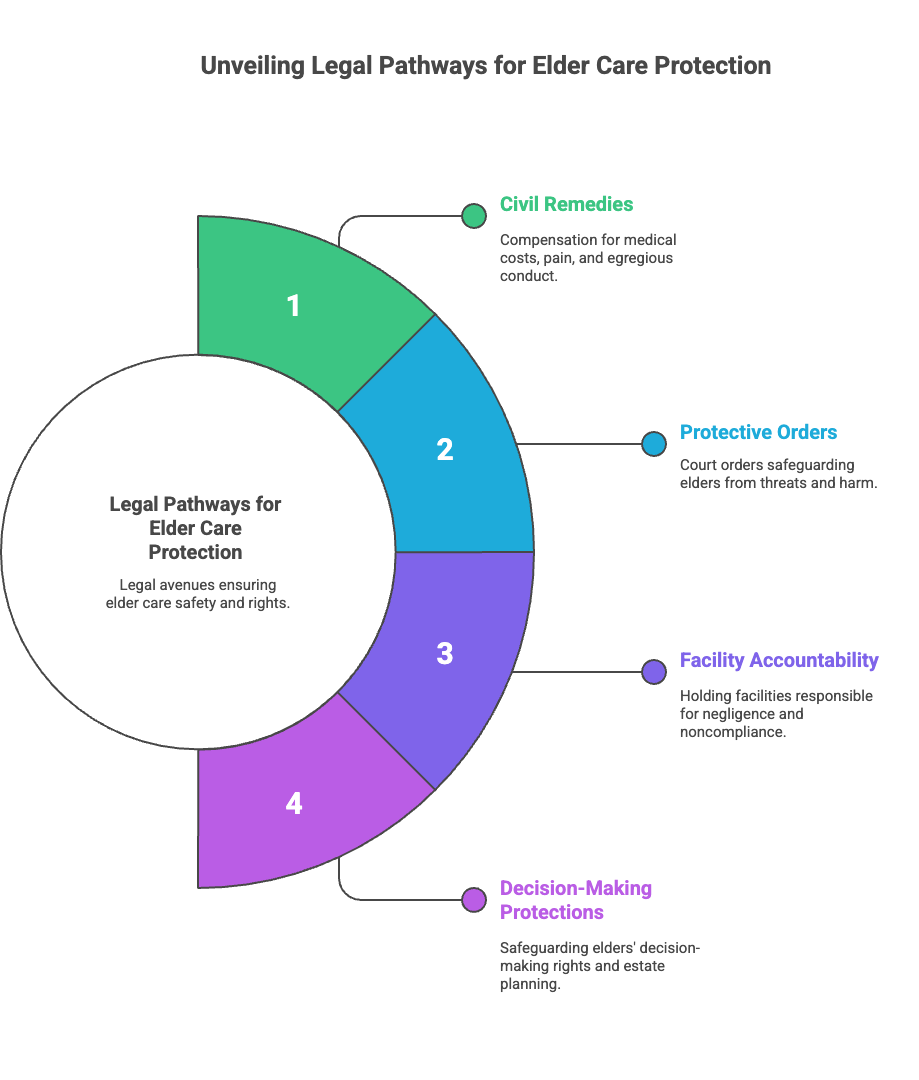
- Civil remedies: damages for medical costs, pain and suffering, and punitive awards for egregious conduct.
- Protective orders: court injunctions to remove threats, restrict contact, and mandate safety measures.
- Facility accountability: claims for negligent hiring, understaffing, violations of residents’ rights, and regulatory noncompliance.
- Decision-making protections: guardianship reviews, capacity evaluations, and validated estate planning updates when consent capacity is intact.
Steps to Take After a Florida Elder Abuse Injury
When an elder abuse injury occurs, we first guarantee immediate safety by removing the elder from harm and securing urgent medical care.
We then promptly document evidence, including photographs, medical records, witness accounts, and timelines, so that essential details aren’t lost.
Finally, we report the abuse to the proper authorities and seek experienced legal counsel to protect rights, preserve claims, and initiate appropriate action.
Ensure Immediate Safety
Securing immediate safety is our priority after any suspected elder abuse in Florida, because swift action can prevent further harm and preserve crucial evidence.
We begin by separating the elder from the source of danger, contacting 911 if there’s imminent risk, and requesting a wellness check when conditions are uncertain.
We coordinate with trusted family, physicians, and Adult Protective Services to stabilize care, confirm medications, and ensure supervision.
If the environment remains unsafe, we pursue emergency relocation to a secure facility or a vetted family setting.
When decision-making is compromised, we seek temporary guardianship to authorize medical treatment, restrict harmful access, and manage vital needs.
We also notify facility administrators, insist on safety plans, and arrange continuous monitoring to maintain protection.
Document Evidence Promptly
Please act quickly to preserve the truth and strengthen the case.
We document every detail as soon as possible, because memories fade and conditions change. Capture timely photographs of injuries, bed conditions, medications, mobility aids, and the room’s layout. Note dates, times, and the names of staff present.
Save voicemail messages, emails, and care logs, and back them up securely. We also keep original packaging for medications and medical devices, recording lot numbers and instructions.
Maintain chain preservation for physical items and digital files. Store evidence in labeled containers or folders, restrict access, and record each transfer with dates and custodians. We create a written timeline that aligns records, images, and witness accounts.
This disciplined approach protects integrity, strengthens credibility, and supports a straightforward, fact-based narrative.
Report and Seek Counsel
With the evidence preserved and organized, we immediately move to reporting the abuse and securing legal guidance. Florida’s mandatory reporting laws require prompt notification to Adult Protective Services or local law enforcement, and we help initiate those reports clearly and thoroughly.
We provide names, dates, locations, and specific observations, ensuring officials can act quickly to protect the elder.
Next, we arrange a legal consultation without delay. Early counsel clarifies rights, deadlines, and available remedies, while protecting the survivor from retaliation or further harm. We review facility contracts, arbitration clauses, and insurance issues, and we advise on restraining orders or emergency transfers when safety demands it.
Throughout, we coordinate with healthcare providers and investigators, maintain a chain of custody for records, and prepare a measured, strategic plan to secure justice.
How a Florida Elder Abuse Injury Lawyer Can Help You
Although every case is unique, a Florida elder abuse injury lawyer can quickly evaluate the facts, identify liable parties, and move to protect your loved one’s rights. We coordinate evidence collection, preserve medical and facility records, and interview witnesses with urgency.
We also manage reporting obligations while respecting sensitive family dynamics, ensuring your loved one’s voice is heard and safeguarded.
Swift, compassionate advocacy to protect rights, preserve evidence, and amplify your loved one’s voice.
We handle communication with insurers and facilities, manage deadlines, and pursue compensation efficiently. From the outset, we explain likely outcomes and legal costs, offering contingency arrangements where appropriate, so you can focus on care and recovery.
Our goal is to relieve the burden, maintain dignity, and seek accountability through decisive action.
- Conduct a thorough case assessment, including record review and expert consultation.
- Secure protective measures, such as emergency orders and transfer planning, when warranted.
- Build a compelling claim, quantify damages, and negotiate from a position of strength.
- Litigate strategically, present admissible evidence, and advocate for full and fair compensation.
Long-Term Effects of Florida Elder Abuse Injuries
When we assess elder abuse cases in Florida, we must address the long-term consequences that often persist well beyond the initial incident.
Victims may face chronic physical complications that limit mobility and independence, along with psychological trauma and PTSD that impair daily functioning and erode trust.
We also evaluate the financial and legal fallout, including depleted assets, damaged credit, and intricate recovery efforts that require meticulous documentation and strategic action.
Chronic Physical Complications
Recognize that elder abuse rarely ends with the initial injury; it often triggers chronic physical complications that can undermine health for years. We see lingering pain syndromes, slow-healing wounds, and recurrent infections that reflect immune suppression.
Fractures, pressure ulcers, and untreated dehydration can accelerate mobility decline, leading to falls, muscle wasting, and loss of independence. Cardiovascular strain, malnutrition, and poorly managed diabetes further impair resilience, increasing hospitalization and mortality risks.
Our role is to identify these patterns early, coordinate thorough medical evaluations, and secure resources that restore function and dignity. We document medication errors, missed therapies, and inadequate monitoring that convert a preventable injury into a chronic condition.
By pursuing accountability and appropriate care plans, we help clients regain stability, reduce complications, and protect long-term health.
Psychological Trauma and PTSD
Even after visible injuries fade, psychological trauma can persist, reshaping an older adult’s daily life and health. We often see anxiety, sleep disturbance, and hypervigilance emerge, with symptoms that mirror PTSD.
Caregiver betrayal intensifies the harm, eroding trust and isolating survivors from vital supports. Trauma triggers—such as a raised voice, a medication cart, or a particular hallway—can provoke flashbacks, panic, or withdrawal, complicating care routines and rehabilitation.
We work to identify patterns, document symptoms, and connect clients with trauma-informed clinicians. Consistent routines, respectful communication, and safe environments reduce escalation and promote recovery. We collaborate with families and providers to build coping plans, monitor progress, and guarantee dignity.
When trauma undermines independence, we advocate for tailored services that stabilize well-being and protect long-term health.
Financial and Legal Fallout
Though physical wounds may heal, the financial and legal consequences of elder abuse often compound over months or years, draining resources and destabilizing care. We must anticipate cascading costs from stolen funds, unauthorized transfers, and coerced contracts.
These losses impair access to medical treatment, housing, and supportive services, placing families under sustained strain.
We act quickly to halt ongoing exploitation, trace misappropriated assets, and pursue asset recovery through civil remedies. When disputes arise over wills, trusts, or powers of attorney, we initiate targeted estate litigation to invalidate improper instruments and restore control.
We coordinate with banks, fiduciaries, and law enforcement, preserving evidence while enforcing protective orders. By asserting financial accountability and legal safeguards, we help you stabilize care, rebuild security, and protect future dignity.
Proving Liability in Florida Elder Abuse Medical Malpractice Injury Cases
Build liability methodically by aligning the facts with Florida’s legal standards for medical malpractice and elder abuse.
We begin by defining the duty of care owed to the elder, then show how actions or omissions breached that duty.
We connect the breach to specific injuries through precise timelines and corroborating sources. We gather medical records, facility policies, staffing logs, and incident reports, scrutinizing them for inconsistencies and patterns of neglect.
We secure expert testimony to establish the applicable standard of care and to explain how the provider’s conduct deviated from it. Qualified authorities interpret intricate data, link causation to clinical decisions, and counter defense narratives.
We interview witnesses, preserve electronic communications, and document prior regulatory citations that indicate systemic failures.
We also evaluate informed consent, medication management, fall-prevention protocols, and rapid-response practices. By integrating factual proof with authoritative analysis, we present a clear, evidence-driven case that meets Florida’s statutory requirements and honors our duty to protect vulnerable elders.

Compensation for Florida Elder Abuse Damages
While liability establishes accountability, compensation guarantees that the elder and their family receive meaningful relief for the harm suffered. We pursue damages that reflect the full scope of loss—medical expenses, rehabilitation, assistive care, and necessary home modifications.
We also seek compensation for diminished quality of life, emotional distress, and loss of dignity, supported by careful pain valuation that aligns injuries with credible medical and functional evidence.
We address financial harms with precision, documenting lost income for working elders and calculating the cost of increased caregiving needs. Where abuse contributes to a resident’s death, we coordinate with families to handle wrongful death claims and related estate disputes, ensuring recoveries are appropriately allocated and protected.
We work with economists, geriatric experts, and life-care planners to quantify future needs and secure structured solutions when appropriate. Our goal is to obtain fair, enforceable compensation that funds safety, healing, and stable support, while honoring the elder’s autonomy and legacy.
The Statute of Limitations for Florida Elder Abuse Injury Cases
Because timing can determine whether a claim survives, we begin every elder abuse case by analyzing Florida’s statutes of limitations and related notice rules.
Florida generally imposes two years for negligence in nursing home and assisted living settings, measured from when the injury is discovered or should have been discovered with reasonable diligence. Medical negligence claims may follow separate timelines, driven by presuit requirements and specific accrual triggers.
We review the nuances of the statute that can extend or pause the clock. Fraudulent concealment, incapacitation, and delayed discovery may affect accrual, but courts apply these doctrines narrowly. We also examine filing exceptions, including tolling when a defendant is absent from the state, uses a false identity, or when pre-suit investigations are pending.
Preserving evidence early is essential, as records, surveillance, and witness memories fade. We calculate deadlines conservatively, issue preservation letters promptly, and align presuit notices with statutory calendars to avoid forfeiting rights.
Why You Need an Experienced Florida Elder Abuse Injury Lawyer
Even before a claim is filed, an experienced Florida elder abuse lawyer protects your rights, preserves vital evidence, and positions the case for maximum recovery. We understand how to secure medical records, incident reports, and digital data before they disappear, and we coordinate with experts to document harm and causation.
Our guidance reduces stress for caregivers and loved ones, allowing you to focus on safety and healing.
We also navigate intricate family dynamics with discretion, ensuring decision-makers are aligned and conflicts don’t derail the case. When facilities stonewall, we use subpoenas, preservation letters, and regulatory complaints to compel cooperation. We evaluate damages thoroughly, accounting for medical costs, future care, pain, and loss of dignity.
As the matter progresses, we manage every court procedure, from pleadings and discovery to mediation and, if needed, trial. We anticipate defense tactics, meet deadlines, and advocate relentlessly, so your loved one’s voice is heard and respected.
How to Choose the Right Florida Elder Abuse Injury Lawyer for Your Case
Protecting a loved one means partnering with counsel who can match the urgency and intricacy of elder abuse claims.
We begin by verifying focused experience in Florida nursing home, assisted living, and in‑home abuse cases, not general personal injury. We review results, published cases, and disciplinary histories, then assess whether the firm demonstrates sustained eldercare advocacy through memberships, trainings, and community engagement.
During attorney interviews, we ask who’ll handle the file day to day, how investigations unfold, and what experts they deploy for medical, forensic, and facility‑standards issues. We expect clear explanations of timelines, evidence preservation, and communication practices.
Fee structures should be transparent, with contingency terms, cost advances, and lien handling spelled out in writing.
We also evaluate bedside manner and cultural competence to ensure respect for vulnerable clients.
Finally, we confirm our resources to litigate against insurers and corporate operators and request references to validate responsiveness, diligence, and outcomes.
About the Law Offices of Anidjar and Levine
Count on the Law Offices of Anidjar and Levine to bring focused, Florida‑specific advocacy to elder abuse cases in nursing homes, assisted living facilities, and home‑care settings.
We focus on protecting vulnerable seniors and hold facilities and caregivers accountable through meticulous investigation, strategic litigation, and responsive client service.
Our team coordinates medical reviews, secures records, preserves evidence, and pursues compensation that reflects both harm and future care needs.
We measure our work by outcomes and by trust.
Client testimonials describe attentive communication, clear guidance, and steadfast representation during difficult periods.
We maintain direct attorney access, return calls promptly, and keep you informed at every stage, so decisions are timely and well‑supported.
Beyond the courtroom, our community outreach educates families, providers, and volunteers on recognizing warning signs and reporting abuse.
We partner with local organizations, offer trainings, and share resources that strengthen prevention.
When you’re ready, we’re prepared to act decisively and protect your loved one’s dignity.
Frequently Asked Questions
Can I Move My Loved One During an Ongoing Investigation?
Yes, we can move a loved one during an ongoing investigation if their immediate safety is at risk.
We should document concerns, notify investigators, and preserve evidence, including records and photographs.
We must also review care plans, secure medications, and arrange a safe, compliant placement.
Because relocation can affect access to evidence and the availability of witnesses, we should consult counsel to address legal implications, coordinate with authorities, and ensure continuity of care, communication, and protective measures.
Are Bilingual Attorneys Available for Non-English-Speaking Families?
Yes, bilingual attorneys are available for non-English-speaking families. We offer Spanish-speaking attorneys and interpreters in other languages, ensuring precise communication at every stage.
We prioritize Cultural competency training to ensure our team understands linguistic nuances, family dynamics, and community values. We’ll explain legal options clearly, prepare documents accurately, and advocate effectively in negotiations and court.
We coordinate with trusted translators, maintain confidentiality, and provide regular updates, so you and your loved one remain fully informed and empowered.
Will Pursuing a Claim Affect Medicaid or Medicare Benefits?
Yes, pursuing a claim can affect benefits, but it doesn’t automatically jeopardize Medicaid eligibility or Medicare coverage.
Medicare may seek to recover benefits from settlements related to paid medical expenses. Medicaid also asserts liens and can require reimbursement, potentially impacting eligibility if funds are received directly.
We structure settlements to protect ongoing coverage, using tools like special needs trusts and lien resolution. We’ll coordinate with agencies, guarantee compliance, and safeguard your loved one’s vital benefits.
Can We Recover Costs for Relocating to a Safer Facility?
Yes, we can often recover reasonable relocation expenses when the move is in response to documented neglect or abuse.
We also pursue costs for safety upgrades, such as enhanced monitoring, accessibility modifications, or higher-acuity care, when they’re medically or professionally justified.
We’ll tie these expenses to the harm, use expert opinions, and gather invoices, contracts, and facility records.
We’ll also evaluate insurance, Medicaid, and Medicare implications to preserve benefits while maximizing your overall recovery.
How Do We Preserve Digital Evidence, Such as Texts or Camera Footage?
We preserve digital evidence by acting immediately. We save screenshots of texts, voicemails, and call logs with visible timestamps, then secure backups to cloud storage and an external drive.
We export full message threads as PDFs, retain original files with metadata, and avoid altering devices.
We request camera footage promptly and send written preservation letters to facilities and vendors.
We maintain a transparent chain of custody, documenting who collected, stored, and accessed each item.
—————————
We’re committed to protecting Florida’s seniors and holding abusers accountable.
If you suspect elder abuse or your loved one was harmed, we’ll investigate, preserve evidence, and pursue full compensation for medical costs, pain, and related losses.
Time limits apply, so please take action.
Contact the Law Offices of Anidjar & Levine for a free consultation.
We’ll explain your rights, outline your options, and handle the legal burden while you focus on safety, recovery, and restoring dignity.
Learn more about related claims with our Medical Malpractice Injury Lawyer resource.

We Can Help.