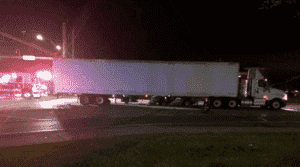





1.0 Introduction: The Unique Risk Profile of Commercial Truck Rollovers
Commercial truck rollover incidents represent a distinct and often catastrophic category of vehicular accidents. Their complexity stems from a challenging interplay of vehicle dynamics, operational factors, and regulatory compliance, distinguishing them from standard passenger car collisions. A rigorous analysis of these events reveals recurring patterns of causation that form the bedrock of liability determination.
Learn More: Tampa Truck Rollover Accident Lawyer
The inherent design of commercial trucks, specifically their high center of gravity, makes them uniquely susceptible to rollovers. This vulnerability is amplified when combined with contributing factors such as excessive speed, particularly when negotiating curves or turns. The physical environment can also introduce unique challenges. For example, specific terrains like the highway ramps and elevated roadways common in the Tampa area create conditions where these incidents are more likely to occur. Understanding these core risks is the first step in deconstructing how and why these devastating accidents happen. This analysis will proceed with a detailed examination of the primary causal factors that frequently lead to commercial truck rollovers.



2.0 Primary Causal Factors: A Framework for Negligence Analysis
A thorough liability investigation requires deconstructing a truck rollover accident into its primary causal components. These factors—ranging from driver decisions to corporate maintenance protocols—often reveal clear patterns of negligence across driver operations, cargo management, and vehicle maintenance. These components are not mutually exclusive; rather, they often intersect, where a fatigued driver (operator error) fails to compensate for a poorly maintained vehicle (mechanical failure) with a shifting load (cargo failure). By examining each element, a clearer picture of accountability emerges.
2.1 Operator Error: Speed, Fatigue, and Decision-Making
Driver behavior is a critical and frequent factor in rollover incidents. Excessive speed, particularly when a commercial vehicle is navigating curves, highway ramps, or turns, directly compromises the truck’s stability. Due to their elevated center of gravity, large trucks respond differently to cornering dynamics than passenger cars, and a driver’s failure to reduce velocity significantly can lead to a catastrophic loss of control.
Equally dangerous is driver fatigue, which is often linked to violations of federal hours-of-service regulations. Operating a commercial vehicle while drowsy results in slower reaction times, impaired judgment, and decreased spatial awareness, impairing a driver’s capacity to a degree comparable to intoxication. This diminished capacity makes a driver unable to respond appropriately to changing road conditions or sudden hazards, dramatically increasing the risk of an accident. These negligent actions represent a direct breach of the professional duty of care owed to other motorists.
2.2 Cargo Integrity Failures: The Physics of Improper Loading
Improper cargo loading and distribution serve as a frequent and entirely preventable cause of truck rollovers. The physics are straightforward: freight that is imbalanced or inadequately secured can dangerously shift a truck’s center of gravity during transit. This instability makes the vehicle vulnerable to tipping, even during routine maneuvers like turning or changing lanes. A sudden shift in weight can initiate a rollover that an otherwise attentive driver cannot prevent.
Federal regulations mandate specific and stringent load securement standards to mitigate this exact risk. Violations of these standards, whether by cargo loaders or the commercial carrier responsible for verifying the load, represent a clear breach of duty. When an investigation reveals that improper loading contributed to a rollover, it provides clear evidence of negligence within the logistics chain, where commercial expediency was prioritized over mandated safety protocols.
2.3 Systemic Mechanical Failures: The Impact of Negligent Maintenance
Lapses in routine vehicle maintenance can create critical vulnerabilities that directly lead to rollover accidents. When trucking companies neglect established maintenance schedules, essential safety components can deteriorate, leading to catastrophic failure on the road. Key mechanical failures identified as contributing to rollovers include:
- Worn Brake Systems: A degraded braking system reduces a driver’s ability to control speed effectively, particularly when entering turns where velocity management is critical.
- Degraded Tire Treads: Worn tires diminish the vehicle’s grip on the road surface, which can be the difference between a safe maneuver and a loss of control at a pivotal moment.
- Faulty Suspension Systems: A compromised suspension negatively affects vehicle stability and balance, making the entire truck more prone to tipping during routine driving.
These preventable mechanical failures are often evidence of corporate negligence, where operational schedules and profit motives are prioritized over fundamental safety protocols, endangering every person on the roadway. These causal factors directly precipitate the profound, long-term consequences for victims.
3.0 The Human and Financial Impact: Quantifying Long-Term Damages
For victims of truck rollover accidents, documenting the full spectrum of long-term consequences is of strategic importance. This process moves beyond the immediate aftermath of the crash to capture the enduring physical, neurological, and financial devastation. Framing these effects is not just about highlighting a human tragedy; it forms the necessary basis for calculating comprehensive damages in subsequent legal and insurance claims.
3.1 Chronic Pain, Disability, and Neurological Trauma
The severe forces involved in rollover accidents often inflict life-altering physical and neurological injuries. The lasting effects frequently include:
- Chronic Pain and Permanent Disability: Many survivors face a lifetime of chronic pain, requiring extensive pain management programs, physical therapy, and other medical interventions. These conditions can lead to permanent disabilities that necessitate significant lifestyle adjustments or complete career changes.
- Traumatic Brain Injuries (TBI): A common outcome of rollovers, TBIs can result in permanent cognitive impairments such as memory loss, difficulty concentrating, and impaired decision-making. Victims may also suffer from sensory deficits and emotional dysregulation, which profoundly strain personal relationships and professional capabilities.
3.2 The Compounding Financial Burden
The severe physical injuries sustained in rollover accidents trigger severe and extended financial consequences for victims and their families. Key financial pressures include:
- The rapid accumulation of debt from emergency surgeries, long-term rehabilitation, and ongoing medical treatments.
- The inadequacy of insurance coverage, as policies reach maximum coverage limits, leaving victims responsible for hundreds of thousands in uncovered expenses.
- A significant loss of household income if the primary earner is unable to return to work due to their injuries.
- The ongoing and often unforeseen costs associated with lifetime care needs, adaptive equipment, and necessary home modifications.
Properly documenting these extensive damages is a critical step in the process of proving liability and securing a fair recovery.


4.0 Establishing Liability: An Investigative Framework
Determining liability in truck rollover cases is a meticulous process that moves beyond a surface-level assignment of fault. It requires a multi-faceted investigation to identify all responsible parties in the chain of command, from the individual driver to the corporation. This is accomplished by systematically gathering and analyzing key pieces of evidence.
Key Evidence Categories and Their Investigative Value
| Evidence Category | Investigative Value in Establishing Liability |
| Driver Logs & ELD Data | Determines compliance with hours-of-service regulations and identifies potential driver fatigue. |
| Maintenance Records | Reveals patterns of neglect, deferred repairs, and failure to adhere to maintenance schedules. |
| Cargo Loading Documents | Verifies weight distribution and compliance with federal load securement standards. |
| “Black Box” (ECU) Data | Provides critical pre-crash data on speed, braking, and steering inputs. |
| Accident Scene Documentation | Establishes vehicle positions, road conditions, and debris patterns for expert reconstruction analysis. |
| Witness Statements | Corroborates accounts of driver behavior and the sequence of events leading to the rollover. |
Based on this evidence, responsibility may be distributed among multiple parties. Liability does not always rest solely with the truck driver; the concept of shared liability is fundamental to ensuring all responsible entities are held accountable. For instance, the negligence of a third-party maintenance provider who fails to repair a faulty suspension system directly contributes to the causal chain of an accident triggered by a driver’s routine turn. This places the maintenance provider within the liability structure alongside the driver and trucking company. A complete investigation must therefore be grounded in the legal and regulatory standards that govern the commercial trucking industry.
5.0 Legal Framework and Procedural Considerations
Investigative findings in a truck rollover case are situated within a broader legal context. Federal and state regulations, such as the Federal Motor Carrier Safety Regulations, provide the objective standards against which negligence is measured. Simultaneously, procedural rules, such as statutes of limitation, govern a claimant’s ability to seek legal recourse. Navigating this framework is essential for protecting a victim’s rights.
Victims of truck rollover accidents possess specific legal rights designed to ensure they can obtain fair compensation for their losses. These fundamental rights include:
- Right to full compensation for economic damages, including all past and future medical expenses, rehabilitation costs, lost wages, and diminished earning capacity.
- Right to pursue non-economic damages for pain, suffering, emotional distress, and reduced quality of life.
- Right to a thorough investigation into the cause of the accident and professional legal representation to navigate the claims process.
In Florida, the statute of limitations establishes a strict deadline for filing a lawsuit. Missing this legal deadline can permanently bar a victim’s right to compensation, regardless of the severity of their injuries or the clarity of the evidence. This makes timely consultation with legal counsel essential to preserve all recovery options. Understanding these rights and rules provides the foundation for a final assessment of these complex cases.
6.0 Conclusion: Key Principles for Liability Assessment in Rollover Cases
The analysis of commercial truck rollover incidents reveals a complex but understandable pattern of causation and liability. These are not simple accidents but are frequently the result of systemic failures that extend from the driver’s seat to the corporate boardroom. For legal and insurance professionals tasked with assessing these cases, a clear set of principles is essential for reaching a just and accurate conclusion. The core takeaways for a comprehensive liability assessment can be summarized as follows:
- Multi-Factor Causation: Acknowledge that rollovers are rarely caused by a single failure but by a combination of operator error, cargo mismanagement, and mechanical neglect. A thorough investigation must examine each of these contributing factors.
- Evidence is Paramount: Emphasize that liability is established through a systematic analysis of a wide range of evidence. A compelling case is built upon the meticulous collection and interpretation of electronic data, maintenance logs, cargo documents, and accident scene documentation.
- Distributed Liability: Recognize that legal responsibility often extends beyond the driver. The carrier, shippers, and maintenance vendors who failed in their respective duties of care must be identified and held accountable as part of a complete liability picture.
- Damages are Comprehensive: A comprehensive liability assessment demands a full accounting of the long-term physical, neurological, and financial consequences for the victim. Calculating damages requires a forward-looking assessment of lifetime care needs and lost earning capacity.


We Can Help.