




Introduction: The Scenario
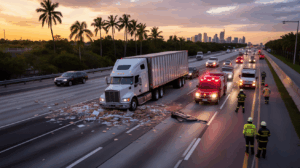
A routine drive through Miami is shattered in an instant by the overwhelming impact of a collision with a Home Depot delivery truck. The aftermath is a disorienting mix of twisted metal, emergency responders, and the sudden, terrifying onset of serious injury.
Learn More: Miami Home Depot Truck Accident Lawyer
For the victim, the immediate physical and emotional shock is quickly compounded by a cascade of overwhelming questions: Who is responsible? How will medical bills be paid? What happens to their job, their family, their future? This initial period of crisis is precisely when strategic legal intervention becomes most critical.
The challenges inherent in a commercial vehicle accident of this nature are immediate and complex. They require a level of expertise far beyond that of a typical car crash claim. Key difficulties include:
- Navigating Complex Liability: Unlike a standard two-car accident, a collision with a commercial entity like Home Depot involves a web of potentially liable parties. Responsibility may extend beyond the driver to include the corporate employer, third-party contractors responsible for delivery, and even maintenance providers who serviced the vehicle.
- Preserving Critical Evidence: The most compelling evidence in a commercial truck accident is highly perishable. Data from the truck’s electronic control module (black box), telematics systems, GPS logs, and dashcam footage can be overwritten or lost within days. Without swift action, the digital proof of negligence can disappear forever.
- Countering Insurer Tactics: Almost immediately, the victim was contacted by Home Depot’s commercial insurer, whose representatives are trained to elicit statements that minimize corporate liability and pressure victims into premature, low-value settlements.
- Quantifying Long-Term Damages: The true cost of a serious injury unfolds over a lifetime. Calculating future medical needs, diminished earning capacity, chronic pain, and the profound psychological trauma of the event requires a meticulous and evidence-based approach involving coordination with medical and economic experts.
It was at this critical juncture that the Law Offices of Anidjar and Levine intervened, immediately halting the insurer’s advances and shifting the dynamic from one of crisis and vulnerability to one of strategic control and methodical preparation for justice.



1. The Response: Implementing a Disciplined, Multi-Phase Strategy
In the face of a complex commercial vehicle accident, a structured and proactive legal response is paramount. A disciplined case plan is essential to protect the client’s rights, secure fleeting evidence, and build an irrefutable foundation for maximum recovery. The strategy implemented by the Law Offices of Anidjar and Levine is deconstructed into three core phases, each designed to methodically advance the client’s case from a position of strength.
Phase I: Immediate Evidence Preservation and Investigation
The firm’s first priority is a rapid-response investigation to secure critical evidence before it can be lost, altered, or destroyed. This begins with sending formal spoliation letters—a non-negotiable first step to legally compel all potential defendants to preserve key records and electronic data, creating grounds for sanctions if evidence is destroyed. The specific evidence targeted includes:
- Electronic Control Module (ECM) data and telematics
- GPS logs and route planning records
- Dashcam and other surveillance footage
- 911 audio
- Vehicle maintenance and pre-trip inspection logs
- Cargo loading records, manifests, and scale tickets
- Witness statements
Securing each piece is vital. ECM data reveals the truck’s final moments, maintenance logs expose a history of neglect, and loading manifests can prove violations of federal weight standards. Together, this mosaic of data moves the case from a simple accident report to a documented account of corporate negligence.
Phase II: Comprehensive Liability and Damages Assessment
With the evidence secured, the firm undertakes a comprehensive analysis to identify every potentially liable party. This investigation examines the roles of the driver, Home Depot as the employer, third-party delivery contractors, and external maintenance providers. The firm leverages its deep knowledge of Florida trucking regulations and federal safety standards to build a clear narrative of negligence, determining whether violations related to driver qualifications, hours-of-service, or cargo securement contributed to the crash.
Simultaneously, the team meticulously documents the full scope of the client’s damages. This involves coordinating with medical and economic experts to quantify all past and future medical costs, lost wages, diminished earning capacity, future care needs, and the significant impact of pain and suffering. This dual-track approach ensures that as the case for liability strengthens, the valuation of damages is built with equal precision.
Phase III: Assertive Advocacy and Client Communication
Phase III transitions to assertive advocacy, where the firm establishes complete control over the information landscape. By managing all interactions with insurers, the legal team insulates the client from high-pressure tactics and prevents them from making inadvertent statements that could be used to undermine the claim. A thorough demand package is prepared, presenting the rigorously documented evidence of liability and the full valuation of damages with clarity and precision. Throughout this entire process, the firm maintains a commitment to consistent and transparent client communication, providing regular updates so the client always understands the status and direction of their case.
This multi-phase strategy systematically builds a powerful case, setting the stage for a deeper investigation into the specific failures that caused the collision.
2. The Investigation: Uncovering the Root Causes of the Collision
Proving liability in a commercial truck accident requires moving beyond the surface facts of the crash to uncover the underlying systemic failures or specific acts of negligence that set the stage for disaster. The firm’s investigation is designed to pinpoint these root causes, focusing on the most common factors that contribute to serious collisions involving vehicles like Home Depot delivery trucks. This detailed analysis transforms a collection of evidence into a compelling narrative of fault.
2.1. Driver Fatigue and Distraction
The investigation scrutinized the driver’s conduct for signs of fatigue, which can slow reaction times, create catastrophic closing distances, and lead to microsleep incidents. The team analyzed electronic logging data against federal hours-of-service rules to identify violations. Going further, the investigation subpoenaed dispatch communications, route planning documents, and delivery schedules, which revealed that corporate scheduling practices created the conditions for fatigue. Phone records and telematics data were integrated to identify in-cab distractions, establishing a critical link between unsafe driver conduct and the resulting harm.
2.2. Improper Loading Practices
A commercial truck’s stability is directly tied to how its cargo is loaded and secured. The investigation delved into whether improper loading practices contributed to a loss of vehicle control. By examining manifests, scale tickets, and loading logs, the team verified whether federal cargo regulations for loading, securement, and weight limits were honored. An unbalanced or inadequately restrained load can shift during transit, altering the truck’s center of gravity and severely compromising its steering and braking capabilities. This analysis revealed negligence by loading dock crews, broadening the scope of liability beyond the driver.
2.3. Systemic Vehicle Maintenance Failures
The firm’s investigation included a forensic review of the truck’s upkeep to identify systemic maintenance failures. Maintenance schedules, vendor records, and pre-trip and post-trip inspection reports were examined for evidence of deferred repairs or overlooked defects. This uncovered a pattern of neglect, specifically involving neglected braking systems, underinflated or unevenly worn tires, dim lighting, and weakened suspensions. This evidence established clear negligence on the part of the carrier for failing to ensure its fleet was roadworthy.
2.4. Contribution of Hazardous Road Conditions
Finally, the investigation assessed external factors that may have contributed to the collision. An analysis of scene evidence and traffic engineering records determined that poor road maintenance and flawed drainage design played a role in the crash. By demonstrating how a public entity failed to maintain the roadway in a safe condition, the firm ensured that this contributing party also bore partial responsibility for the crash, holding all negligent parties accountable.
This comprehensive investigation revealed a cascade of failures—from systemic pressures leading to driver fatigue, to negligent loading practices and deferred fleet maintenance—constructing an irrefutable narrative that traced the cause of the collision from the driver’s seat directly to the corporation’s bottom-line-driven safety oversights.


3. The Outcome: Securing Full Compensation and Long-Term Stability
The ultimate objective of a disciplined legal strategy is to achieve a resolution that addresses not only the immediate financial pressures but also the profound and lasting consequences of a serious accident. The resolution secured in this case was multifaceted, ensuring every aspect of the client’s loss was acknowledged and compensated.
- Comprehensive Financial Recovery The settlement provided full payment for all economic damages, including past and future medical costs, reimbursement for all lost income, compensation for diminished earning capacity, and the complete repair or replacement value of property damage.
- Valuation of Human Loss The firm successfully translated the client’s non-economic damages into a justified monetary figure. This included significant compensation for the physical pain endured, the emotional distress of the experience, and the lasting psychological trauma symptoms—such as anxiety, depression, and post-traumatic stress—that followed the crash.
- Resolution of Financial Burdens To maximize the client’s net recovery, the firm expertly managed the lien resolution process, negotiating with health insurers and medical providers. This critical step shielded the client from post-settlement financial stress and ensured they retained the largest possible portion of the funds secured on their behalf.
- Accountability for All Liable Parties The resolution held every negligent party accountable for their role in causing the accident, from the driver to the corporation and its contractors. This outcome not only delivered a measure of justice for the client but also reinforced safety standards within the community.
Ultimately, the successful resolution empowered the client to move forward with the financial security needed to manage their recovery and the sense of justice that comes from holding negligent parties responsible.
4. Conclusion: Key Takeaways for Victims of Commercial Truck Accidents
This case study demonstrates that claims arising from accidents with Home Depot trucks and other commercial vehicles are inherently complex and fraught with challenges that can overwhelm an unrepresented victim. The intricate web of corporate liability, the rapid disappearance of critical evidence, and the sophisticated tactics of commercial insurers require an immediate and strategic legal response. The success of this case was forged through a disciplined, multi-phase approach that prioritized evidence preservation, meticulous damage calculation, and assertive advocacy.
If you or a loved one has been injured in a collision with a Home Depot truck in Miami, it is crucial to act quickly to protect your legal rights. Strict deadlines apply to these claims. Contact the Law Offices of Anidjar and Levine for a free consultation to understand your options and begin building your claim today.


We Can Help.