




If you suspect an epidural abscess in Miami, you need an attorney from Law Offices of Anidjar and Levine who can act fast to preserve electronic hospital records, imaging orders, lab results, and time-sensitive timestamps before they change.
You’ll benefit from a clear timeline, multilingual support, and remote consultations that let you sign documents and review evidence without delay.
Your lawyer should coordinate expert review, identify responsible providers, and document damages, then negotiate or litigate as needed.
Learn more by speaking with a Miami Medical Malpractice Lawyer and continue to see what matters next.



Main Takeaways
- An epidural abscess case depends on timing, symptoms, and whether providers responded promptly to clinical warning signs and imaging needs.
- A Miami injury lawyer can secure key records early, including charts, radiology metadata, lab results, consult requests, and time-stamped medication logs.
- Counsel can identify responsible parties by reviewing provider decisions, hospital policies, staffing delays, and gaps in assessment or follow-up care.
- Damages are documented with proof of medical bills, lost income, future care needs, and out-of-pocket costs tied to neurological injury.
- Legal teams coordinate expert reviews, negotiate with insurers, and prepare for trial while offering remote consultations, multilingual support, and transparent fee structures.
How We Can Help With Your Miami Epidural Abscess Injury Claim
When does a treatable spinal infection become a life-altering injury with lasting complications?
You’re entitled to counsel that acts quickly, protects your dignity, and keeps your focus on helping your family and community while your claim moves forward.
You can rely on our team to gather medical records, timelines, and witness accounts, then organize the facts into a clear demand supported by documentation of damages.
You’ll receive Multilingual Support so you can communicate precisely, ask questions freely, and make informed decisions without added stress.
If travel or health limits your schedule, you can use Remote Consultations to review evidence, sign documents, and prepare for essential steps from home.
You’ll get consistent updates, practical guidance on next actions, and firm advocacy in negotiations and, if needed, in court.
You stay supported, and your claim stays disciplined and ready for resolution.
Understanding Miami Epidural Abscess Injury Cases
Clarity matters in Miami epidural abscess injury cases because the outcome often turns on what happened, who knew about it, and how quickly appropriate care was provided.
You must connect symptoms, clinical notes, and timing to objective proof, including Diagnostic Imaging results and lab findings, while keeping the focus on preventable harm.
You’ll also benefit from understanding Epidemiology Trends, since they can frame foreseeability, screening vigilance, and the standard of attention expected in busy Miami settings.
| What you document | Why it matters |
|---|---|
| Symptom timeline | Shows urgency and escalation |
| Provider communications | Establishes notice and response |
| Diagnostic Imaging timing | Supports delay or timely action |
| Treatment milestones | Links to neurological outcome |
| Current limitations | Grounds damages and service needs |
When you approach the case with disciplined records and a service-minded purpose, you help your legal team advocate for safer care and for resources that support your recovery and those you serve.



Common Causes of Miami Epidural Abscess Injuries
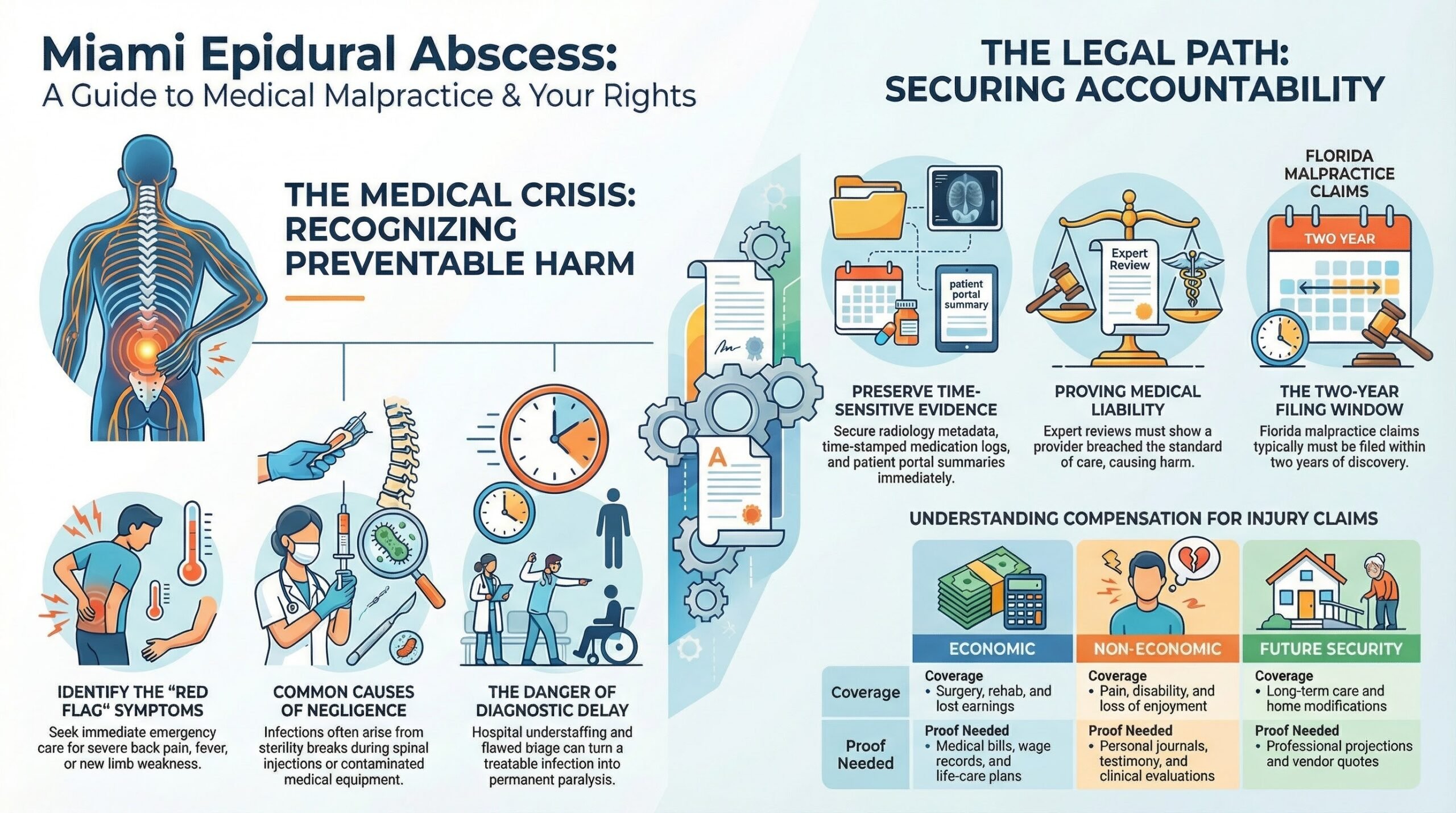
You can develop an epidural abscess after spinal procedures and injections, especially when infection control breaks down or bacteria enter the spinal area.
It can also result from an untreated bloodstream infection or contaminated medical equipment, both of which can introduce dangerous pathogens into the epidural space.
When providers delay diagnosis and treatment, you’re more likely to face severe complications, because pressure and infection can progress quickly.
Spinal Procedures And Injections
Although spinal procedures and injections often provide meaningful relief, they can also introduce bacteria into the epidural space if sterility is compromised or post-procedural care falls short.
If you’re serving patients through pain management or perioperative care, you can reduce risk by insisting on strict hand hygiene, sterile draping, and properly prepped skin before any needle enters the spine.
When clinicians use fluoroscopic or ultrasound guidance, you should still verify that imaging equipment, probe covers, and gel handling comply with infection-control protocols, as shortcuts can contaminate the field.
You should also watch for prolonged procedure time, repeated needle passes, or mishandling of medication vials, as each increases exposure opportunities.
Afterward, you should educate patients to report fever, worsening back pain, or new weakness promptly.
Untreated Bloodstream Infections
When a bloodstream infection goes unrecognized or undertreated, bacteria can travel through the circulation and seed the epidural space, turning a manageable illness into a spinal emergency.
You may start with fever, fatigue, or localized pain, but the infection can escalate quickly if diagnosis or follow-up is delayed.
If you serve others in healthcare, ministry, or community work, you can encourage timely evaluation, especially for people with diabetes, kidney disease, or recent skin infections.
Delayed or incomplete antibiotics may fuel Antibiotic Resistance, limiting effective options and prolonging bacteremia.
A weakened or misdirected Immune Response can’t contain the spread, allowing pressure and inflammation to threaten nerves and mobility.
You should urge prompt blood cultures, targeted therapy, and close monitoring for neurologic changes.
Contaminated Medical Equipment
Bloodstream infections can spread silently, yet some epidural abscess injuries start at the point of care through contaminated medical equipment.
When you serve patients, you trust that needles, catheters, and trays arrive clean, sealed, and properly handled; however, a single lapse can introduce bacteria directly into the spinal spaces.
Breakdowns often occur when staff rush turnover, reuse single-use items, or skip required steps in sterilization protocols, even if the equipment looks acceptable.
You can also face risk when facilities rely on a strained supply chain, accept substituted products, or store supplies in humid, high-traffic areas.
Delayed Diagnosis And Treatment
Because an epidural abscess can progress quickly, delayed diagnosis and treatment remain one of the most preventable causes of severe Miami epidural abscess injuries.
When you present with back pain, fever, or new weakness, clinicians must act promptly; however, hospital understaffing can lengthen triage, delay imaging, and postpone infectious disease consultations.
If providers rely on incomplete Diagnostic algorithms, they may dismiss early symptoms as routine strain, and you lose vital hours before antibiotics or decompression begins.
You can serve others by speaking up, documenting changes, and insisting your concerns are escalated with urgency and respect.
| What you endure | What timely care can preserve |
|---|---|
| Rising pain and fear | Mobility and independence |
| Unanswered alarms | Trust and dignity |
Legal Rights of Miami Epidural Abscess Injury Victims
Although an epidural abscess can escalate quickly and leave you facing lasting harm, Miami law still gives you clear legal rights to pursue accountability and financial recovery.
Even when an epidural abscess turns life-threatening, Miami law preserves your right to seek accountability and financial recovery.
You can seek justice not only for yourself, but also to protect future patients through higher standards of care.
Your claim may arise from negligent diagnosis, improper spinal procedures, or delayed surgical referral, and it can include both economic and non-economic losses.
You also retain Privacy Rights, and providers must handle your medical information lawfully while records are obtained and reviewed.
If an insurer delays, undervalues, or denies benefits without a reasonable basis, you may have remedies for Insurance Badfaith under Florida law.
Crucial rights often include:
- The right to full compensation for past and future medical costs.
- The right to recover lost income and reduced earning capacity.
- The right to damages for pain, disability, and loss of enjoyment.
- The right to hold all responsible parties accountable, including institutions.



Steps to Take After a Miami Epidural Abscess Injury
After a Miami epidural abscess injury, you must seek immediate medical care because prompt diagnosis and treatment can limit lasting harm.
You should document your symptoms and treatment in detail, including timelines, provider names, test results, and discharge instructions, so your records remain clear and consistent.
You’ll also want to contact a Miami lawyer as soon as you can, since early legal guidance helps protect evidence and preserve your options.
Seek Immediate Medical Care
Act quickly and seek immediate medical care if you suspect an epidural abscess, since early evaluation and treatment can prevent permanent nerve damage and other life-altering complications.
If you have severe back pain, fever, weakness, numbness, or new bowel or bladder changes, go to an emergency department or call 911 without delay.
When you arrive, communicate clearly and calmly, so clinicians can set proper triage priorities and rapidly assess neurological function.
Ask whether imaging and infectious disease evaluation are being pursued, and follow instructions closely, even if you’re trying to remain strong for others.
If transportation is difficult, request EMS coordination, as trained responders can monitor changes, relay vital information, and expedite safe transfer to the appropriate facility.
Your prompt action protects your health and the health of those who depend on you.
Document Symptoms And Treatment
Prompt medical evaluation is only part of protecting yourself from an epidural abscess, because you should also create a clear record of what you experienced and how providers responded.
Write down symptom onset, location of pain, fever, weakness, numbness, and any bladder or bowel changes, noting dates, times, and progression.
If fatigue or confusion makes writing difficult, record Voice Notes immediately after critical events, such as new symptoms, calls to clinics, or emergency visits.
Save discharge papers, imaging reports, lab results, prescriptions, and referral instructions, and photograph medication labels and wound sites when applicable.
Request visit summaries via patient portals and log each provider name and recommendation.
If you use a smartwatch, export Wearable Data showing temperature trends, heart rate, sleep disruption, and activity decline.
Contact A Miami Lawyer
When should you contact a Miami lawyer for a suspected epidural abscess injury?
You should reach out as soon as you suspect a delayed diagnosis, inadequate follow-up, or a complication after an epidural, especially if new weakness, fever, severe back pain, or bladder changes appear.
Early legal guidance helps you protect records, preserve timelines, and support accountability that can improve care for others.
Choose counsel who can coordinate Virtual Consults so you can act quickly while focusing on recovery and community responsibilities.
Ask for Fee Transparency in writing, including contingency terms, costs, and who pays expenses if the case doesn’t proceed.
You’ll also want a lawyer who can secure expert review, request hospital logs, and communicate with insurers without exposing you to avoidable statements.
How a Miami Epidural Abscess Injury Lawyer Can Help You
How do you protect your rights after an epidural abscess leaves you facing unexpected complications and mounting medical costs?
You work with a Miami epidural abscess injury lawyer who investigates quickly, preserves vital records, and communicates with you in a way that reflects Client Accessibility and Billing Transparency, so you can stay focused on recovery and serving those who depend on you.
A lawyer can help you by taking decisive, structured steps:
- Collecting evidence by securing charts, imaging, lab results, and timelines before they change or disappear.
- Identifying responsible parties by reviewing provider actions, hospital policies, and follow-up care decisions.
- Calculating fair damages by documenting medical expenses, lost income, and out-of-pocket costs with supporting proof.
- Negotiating and litigating by handling insurers and defense counsel, and preparing your case for court if needed.

You’ll regain clarity, and you’ll make informed decisions with confidence.
Long-Term Effects of Miami Epidural Abscess Injuries
If you’ve suffered a Miami epidural abscess injury, you may face long-term complications that extend well beyond the initial infection and treatment.
You can experience chronic pain and reduced mobility, lasting neurological impairment such as weakness or numbness, and psychological or cognitive effects that disrupt your daily functioning.
You’ll need to understand how these outcomes develop over time, because they often shape your medical care, work limitations, and overall quality of life.
Chronic Pain And Mobility
Although prompt treatment can stop the infection, a Miami epidural abscess injury may still leave you with chronic pain and lasting mobility limits that change how you work, drive, and handle daily tasks.
You may notice stiffness, muscle guarding, and reduced endurance, so pacing your day becomes vital when you also serve others.
A structured plan can support steadier movement and safer routines, including Home modifications and Balance training, while your care team tracks progress and adjusts goals.
| Challenge | Practical response | Service-minded benefit |
|---|---|---|
| Persistent back pain | Consistent therapy, heat/ice, pacing | You conserve energy for caregiving |
| Limited walking tolerance | Assistive devices, graded activity | You stay reliable in community roles |
| Fall risk | Balance training, Home modifications | You protect others by staying steady |
Neurological Impairment Outcomes
When an epidural abscesscompresses the spinal cord or damages nearby nerves, you can face long-term neurological impairment even after the infection clears.
You may notice Sensory deficits, including numbness, tingling, or reduced temperature awareness, which makes safe movement and caregiving more difficult.
Weakness can persist, and your Motor coordination may decline, affecting balance, gait, and fine hand control needed for daily tasks and service to others.
Some people develop spasticity or altered reflexes, which can complicate transfers, driving, and work duties.
You’ll often need consistent neurological follow-up, targeted rehabilitation, and adaptive strategies to protect function and prevent falls.
Clear documentation of these limitations is important because it links your symptoms to the injury and supports appropriate long-term care planning.
Psychological And Cognitive Effects
Because an epidural abscess can trigger prolonged inflammation, pain, sleep disruption, and periods of severe illness, the aftermath often includes psychological and cognitive effects that don’t resolve on the same timeline as the infection itself. You may notice anxiety, irritability, depressed mood, or PTSD symptoms tied to hospitalization, invasive procedures, or fear of relapse.
These reactions can strain your ability to provide consistent attention and patience to patients, clients, or family members.
Cognitive changes also matter. You might experience Memory deficits, slower processing speed, or difficulty multitasking, especially when fatigue and medications persist.
You can support recovery by tracking triggers, prioritizing sleep hygiene, and seeking trauma-informed counseling, neuropsychological evaluation, or rehabilitation when needed.
By addressing these impacts early, you protect your judgment, empathy, and capacity to serve others safely and consistently.
Proving Liability in Miami Epidural Abscess Medical Malpractice Injury Cases
To prove liability in a Miami epidural abscess medical malpractice case, you’ll need to show that a healthcare provider owed you a duty of care, breached the accepted medical standard, and caused a preventable delay in diagnosis or treatment that led to measurable harm.
You do this by documenting what a reasonably careful clinician would’ve done when you presented warning signs such as fever, severe back pain, neurologic changes, or elevated inflammatory markers, and comparing that to what actually occurred.
You’ll strengthen your case by preserving Electronic Records, including triage notes, medication logs, imaging orders, consult requests, and time stamps that reveal gaps in assessment or follow-up.
Maintain tight Evidence Custody for discharge instructions, lab results, and communications, so no one can dispute authenticity or completeness.
Expert review then connects the breach to the delay, and the delay to objective injury, helping you advocate responsibly for patient safety and improved care standards.
Compensation for Miami Epidural Abscess Damages
Accountability shapes how Miami epidural abscess claims are valued, and compensation should reflect the full medical, financial, and personal impact of a delayed diagnosis or treatment.
You can pursue damages that restore stability, support your family, and help you continue serving others in your community.
A thorough demand ties each loss to records, expert opinions, and practical future needs.
| Damage Category | What It Covers | Proof You’ll Use |
|---|---|---|
| Economic | Surgery, rehab, mobility aids, lost earnings | Bills, wage records, life-care plan |
| Non-Economic | Pain, disability limits, loss of enjoyment | Journals, testimony, evaluations |
| Future Security | Long-term care, home changes, attendant help | Projections, vendor quotes, experts |
You should also address tax implications, because the way funds are labeled can affect net recovery.
When ongoing care is required, structured settlements may provide predictable income, reduce financial risk, and align payouts with treatment schedules and caregiving responsibilities.
The Statute of Limitations for Miami Epidural Abscess Injury Cases
Damage calculations won’t matter if you miss the filing deadline, so you need to know how Florida’s statute of limitations applies to a Miami epidural abscess injury claim.
In most medical negligence matters, you generally have two years from when you knew, or should’ve known, that malpractice caused your harm, and no more than four years from the incident, subject to limited statutory provisions.
Because an epidural abscess can be misdiagnosed or delayed, you should document the first date symptoms were tied to negligent care, then track all related treatment.
Pay close attention to pre-suit notice requirements and other filing deadlines, since they can affect timing and your ability to proceed in court.
Florida recognizes narrow tolling exceptions, such as fraudulent concealment or certain circumstances involving minors, but you shouldn’t assume they’ll apply.
Acting promptly protects your capacity to serve your family and community through recovery.
Why You Need an Experienced Miami Epidural Abscess Injury Lawyer
Because epidural abscess injuries often hinge on subtle clinical warning signs and rapid changes in neurological status, you need a Miami lawyer who knows how to investigate both the medicine and the timeline without delay.
You can’t afford missed chart entries, delayed consult notes, or gaps in imaging that obscure when intervention should’ve occurred.
An experienced attorney coordinates qualified medical reviewers, tracks clinical decision points, and connects breakdowns in care to the harm you now live with.
You also need disciplined evidence preservation from the start, including hospital policies, audit trails, radiology metadata, and communications that may be deleted or altered.
When insurers minimize the injury, your lawyer’s trial advocacy matters because credible case themes must withstand cross-examination and juror scrutiny.
You pursue accountability not for its own sake, but to protect patients and strengthen safety standards.
With seasoned counsel, you can press for full compensation while keeping the focus on improving care for others.
How to Choose the Right Miami Epidural Abscess Injury Lawyer for Your Case
How do you separate a truly capable Miami epidural abscess injury lawyer from a firm that only markets results?
You start by evaluating focus and discipline.
Ask whether the attorney has handled spinal infection and delayed-diagnosis claims, and request concrete examples of outcomes, not slogans.
Ask if the attorney has handled spinal infection and delayed-diagnosis cases, and demand real outcomes—never marketing slogans.
Confirm the lawyer can coordinate with medical experts who can explain causation and future care needs with precision.
Next, measure Client Communication.
You should know who’ll update you, how often, and what happens when urgent symptoms or record issues arise.
A service-minded lawyer will listen, set expectations, and treat your case as a responsibility to protect your recovery and your family’s stability.
Finally, demand Fee Transparency.
You should receive a clear written agreement, a plain explanation of contingency percentages, costs, and liens, and a direct answer about what you might owe if the case doesn’t succeed.
About the Law Offices of Anidjar and Levine
The Law Offices of Anidjar and Levine represent clients across Miami in complicated injury matters, including claims involving epidural abscesses and other delayed-diagnosis failures that can lead to permanent harm.
You receive focused guidance, clear communication, and a team that prepares every case with disciplined attention to medical records, timelines, and causation.
You can expect prompt updates, respectful treatment, and practical next steps.
You also benefit from a Firm history grounded in accountability and client service, built through years of advocating for injured Floridians.
You’re supported by attorneys and staff who coordinate evidence, consult appropriate experts, and pursue compensation for medical care, lost income, and long-term needs.
Because you may feel called to protect others from similar harm, you’ll appreciate the firm’s Community outreach, which reinforces a commitment to safer practices and informed decision-making.
When you work with this team, you’re not just filing a claim; you’re pursuing responsibility and meaningful change.

Frequently Asked Questions
What Is the Difference Between an Epidural Abscess and Meningitis?
You can distinguish an epidural abscess from meningitis by location and impact.
An epidural abscess forms a pus collection between the bone and the spinal canal, often compressing nerves, while meningitis inflames the meninges around the brain or spinal cord.
Pathophysiology differences include focal mass effect versus diffuse meningeal inflammation.
Diagnostic distinctions rely on MRI for abscess, but lumbar puncture and CSF analysis guide meningitis care as you serve patients safely.
Can I Travel or Fly During Treatment and Recovery?
You may travel, including by air, only if your treating team clears you and your symptoms remain stable.
You’ll need strict medication management, with written schedules, refills, and a plan for IV antibiotics if required.
Don’t fly if you have a fever, worsening pain, new weakness, or uncontrolled nausea.
Arrange accessible seating, limit lifting, and schedule follow-up care at your destination so you can keep serving others safely.
Will My Health Insurance Cover Treatment if Malpractice Is Involved?
Yes, your health insurance will usually cover medically necessary treatment, even if malpractice is involved, as long as you follow network, referral, and authorization rules.
However, your plan may later seek reimbursement through Subrogation Rights if a settlement or judgment pays medical costs.
If the provider carries Liability Coverage, those funds may ultimately repay your insurer.
You should keep records, notify your insurer, and avoid signing releases prematurely.
How Long Do Epidural Abscess Symptoms Take to Appear After a Procedure?
Epidural abscess symptoms may appear within 24–72 hours after a procedure, but onset may occur days to several weeks later.
You can’t rely on timing alone because a delayed presentation is possible, especially if early signs seem mild.
You should watch for worsening back pain, fever, chills, new weakness, numbness, or changes in bladder or bowel function.
If you serve others, act promptly and seek urgent evaluation.
Can an Epidural Abscess Injury Affect Future Pregnancies or Childbirth Options?
Yes, an epidural abscess injury can affect future pregnancies and childbirth options, depending on any lasting neurologic deficits, spinal scarring, or chronic pain.
You’ll need early preconception counseling, so you can plan safe delivery choices with obstetrics, anesthesia, and neurology working collaboratively.
Fertility implications are usually limited, but severe infection, prolonged inflammation, or medications may complicate timing.
You can serve others best by prioritizing follow-up and coordinated care.
—————————
If you’ve suffered harm from an epidural abscess in Miami, you can’t afford delay or uncertainty.
You should document your symptoms, preserve medical records, and seek prompt legal guidance to protect your rights.
With the statute of limitations and complicated medical issues involved, you’ll need counsel who can identify negligence, secure expert support, and pursue full compensation for your losses.
Working with the Law Offices of Anidjar and Levine and consulting a Miami Medical Malpractice Lawyer can strengthen your position and improve your chances.


We Can Help.