



At the Law Offices of Anidjar and Levine, we investigate Florida surgical nerve damage by rapidly reviewing operative and anesthesia records, engaging board‑certified experts to prove breach and causation, and preserving essential evidence.
We evaluate informed consent gaps, positioning and instrument issues, and postoperative care to establish liability, then build demand packages with billing analyses and life‑care plans.
We manage insurers, prepare litigation from day one, and pursue full compensation under Florida’s two‑year malpractice timeline.
Learn how an experienced team like ours protects your rights and maximizes recovery.
Speak with a Medical Malpractice Injury Lawyer today.
Key Takeaways
- We investigate surgical nerve injuries statewide in Florida, leveraging operative and anesthesia records, imaging, and expert review to prove duty, breach, and causation.
- Our team prepares litigation-ready demand packages with expert opinions, billing analyses, and life-care plans to maximize compensation.
- We identify negligence from surgical technique, anesthesia placement, positioning, equipment/sterilization failures, and informed consent gaps using logs and protocols.
- Immediate steps: secure diagnostics, document symptoms, preserve evidence, and coordinate neurologic and pain management to protect health and your claim.
- Transparent contingency fees, proactive insurer negotiations, depositions, and targeted motions ensure your case is built for settlement or trial.
How We Can Help With Your Florida Surgical Nerve Damage Injury Claim
From the outset, we evaluate your surgical nerve injury claim with rigorous attention to medical and legal detail, then build a strategy tailored to Florida law. We coordinate medical record reviews, consult qualified experts, and identify the precise breach that caused harm.
Dig deeper into our in-depth case study: Anidjar & Levine’s Litigation Strategy for Surgical Nerve Damage Claims in Florida
Our team documents pain, functional loss, and future care needs, ensuring your damages are fully articulated.
We lead with Patient advocacy, keeping you informed while we handle insurers and opposing counsel. We prepare demand packages that integrate expert opinions, billing analyses, and life-care assessments, presenting a clear picture of liability and loss.
Through disciplined Settlement negotiation, we leverage evidence, align offers with projected needs, and protect you from undervaluation.



If litigation is necessary, we develop timelines, depose witnesses, and file targeted motions to strengthen your position. Throughout, we coordinate liens, preserve evidence, and meet deadlines. Our goal is straightforward: secure accountable compensation that supports your recovery and preserves your dignity.
Understanding Florida Surgical Nerve Damage Injury Cases
Although every outcome turns on its facts, Florida surgical nerve damage cases generally hinge on three pillars: proving a duty of care, identifying a breach through specific surgical errors or omissions, and linking that breach to measurable harm.
We begin by confirming the physician-patient relationship and the applicable standard of care for the procedure. We then compare what occurred to what a reasonably prudent surgeon would have done, using operative records, expert opinions, and imaging to document deviations and the resulting deficits.
Causation is crucial, so we align postoperative findings with the timeline of events, distinguishing preexisting conditions from new injuries. We assess damages with precision, incorporating pain, loss of function, medical costs, and disrupted recovery timelines.
Throughout, we evaluate informed consent materials against patient expectations, ensuring risks were disclosed and alternatives explained. Our method is disciplined, evidence-driven, and compassionate, focused on restoring dignity while building a clear, credible pathway to accountability and fair compensation.
Common Causes of Florida Surgical Nerve Damage Injuries
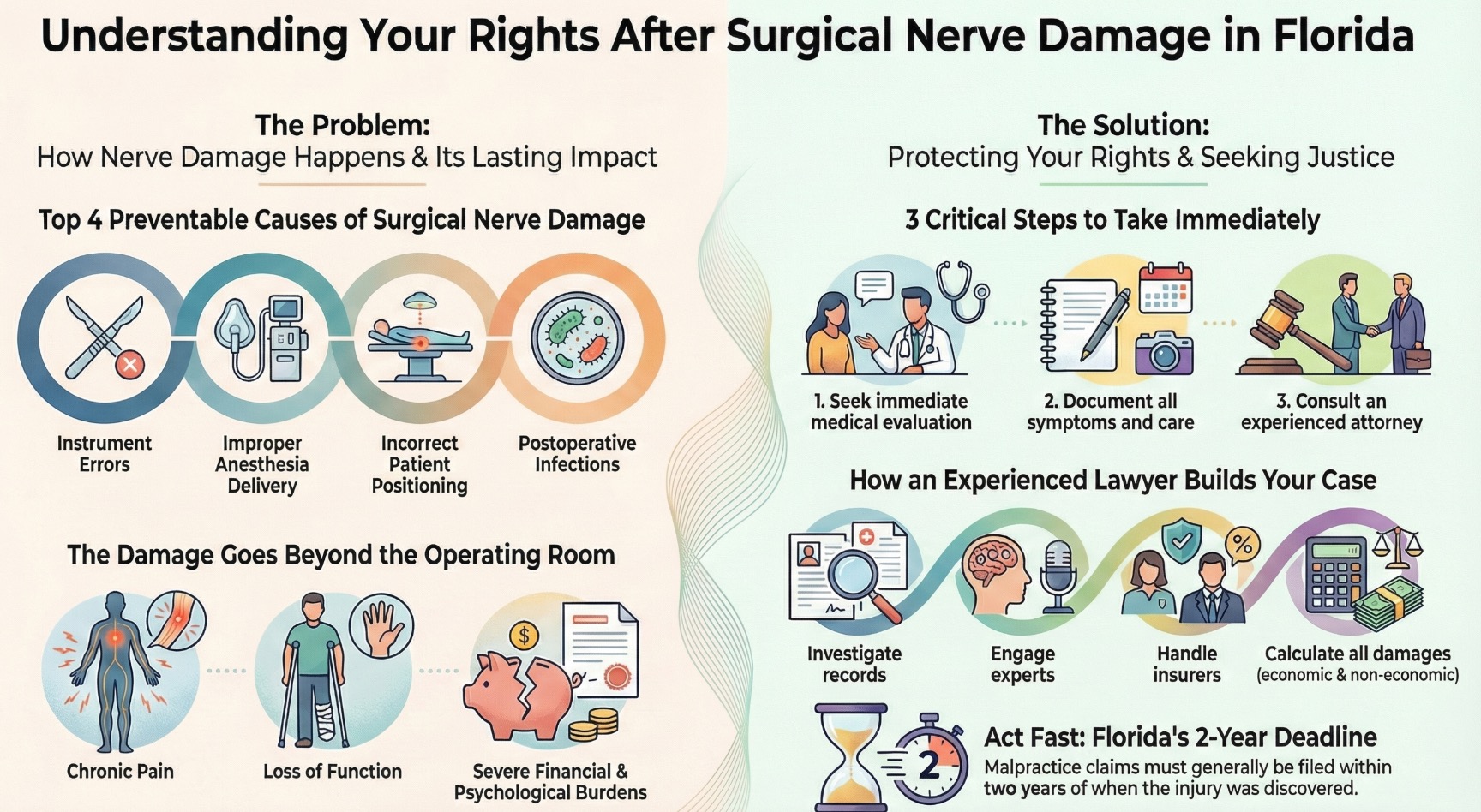
When surgical nerve damage occurs in Florida, we often trace it to preventable causes such as surgical instrument errors and anesthesia-related nerve injury.
We also assess whether improper positioning or prolonged compression during the procedure created undue pressure on vulnerable nerves.
Finally, we examine postoperative infection complications that can inflame or damage nerve tissue, clarifying how each cause may establish liability.
Surgical Instrument Errors


Surgical instrument errors rank among the most preventable causes of nerve damage in Florida operating rooms, yet they occur with alarming frequency. We see injuries arise from dull or misaligned instruments, improper clamping near nerve bundles, and unrecognized device defects.
When teams rush or skip checklists, precision slips, and delicate neural structures suffer avoidable harm.
We hold providers to rigorous standards because patient safety depends on discipline. Proper surgical instrument sterilization prevents biofilm and debris from impairing visibility and function, while instrument calibration protocols guarantee that cutting, cautery, and navigation tools perform within safe tolerances.
We scrutinize maintenance logs, tray preparation, and handoff communications to identify lapses. When preventable errors cause nerve damage, we move quickly to secure the records, consult experts, and pursue accountability on behalf of our clients.
Anesthesia-Related Nerve Injury
Understanding how anesthesia can injure nerves helps us better protect patients and build strong claims. During regional anesthesia, the anesthetic is delivered near nerve bundles to create a nerve blockade.
When performed without proper planning, imaging, or monitoring, the needle or catheter may penetrate or irritate nerves, causing neuropathic pain, weakness, or sensory loss. Excessive anesthetic volume, wrong concentration, or prolonged exposure can also damage neural tissue.


We evaluated whether ultrasound or nerve-stimulation guidance was used, whether informed consent addressed risks, and whether the team followed sterile technique and dosing protocols. We scrutinize documentation of paresthesia, aspiration, and pressure readings that should prompt immediate adjustment.
By coordinating expert review and gathering perioperative records, we establish causation, identify negligent deviations, and pursue full compensation for lasting nerve injury.
Positioning and Compression
Across operating rooms statewide, improper patient positioning and unrelieved pressure are leading, yet preventable, causes of surgical nerve damage. When teams overlook alignment, elevation, or restraint tension, nerves can be stretched, compressed, or ischemic for hours.
We examine whether surgeons and nurses applied evidence-based positioning protocols, monitored vulnerable points, and used adequate operative padding.
Bony prominences, the ulnar groove, and the peroneal nerve at the fibular head demand vigilant protection, especially during lengthy procedures.
We assess charts, anesthesia records, and positioning logs to identify lapses that convert routine care into avoidable harm. If preventable compression caused neuropathy, we would build a precise narrative linking breaches to injury.
Our role is to champion safer patient positioning practices, enforce accountability, and secure the resources needed for your recovery.
Postoperative Infection Complications
While infections are often discussed in relation to fever and wound care, they also pose a direct threat to peripheral nerves in the postoperative period. Bacteria and inflammatory byproducts can compress or infiltrate nerve tissue, causing pain, numbness, weakness, or delayed healing.
When infections spread, abscesses may form near nerve pathways, increasing pressure and risking permanent damage.
We help clients identify these risks early and document lapses in postoperative wound care that allow infections to progress. Missed warning signs, delayed cultures, or improper antibiotic selection can worsen outcomes, especially amid rising antibiotic resistance.
We work with medical experts to assess whether protocols were followed, whether consultation occurred promptly, and whether imaging or debridement was timely. Our goal is to protect your recovery and preserve function.
Legal Rights of Florida Surgical Nerve Damage Injury Victims
Even after a complicated surgery, patients in Florida retain fundamental legal rights when nerve damage occurs, and those rights begin with the duty of care owed by their healthcare providers.
We recognize that Patient advocacy and clear communication are crucial to enforcing those rights. Providers must meet accepted standards, obtain informed consent, and document risks and alternatives. When those duties lapse, legal remedies may be available for medical expenses, lost wages, and pain and suffering.
Florida law also protects your ability to challenge Consent disputes, including inadequate disclosure or unauthorized procedures. We help evaluate whether negligence, lack of supervision, or device misuse contributed to the injury.
Our role is to safeguard your dignity, guarantee accountability, and pursue outcomes that support healing and service to others.
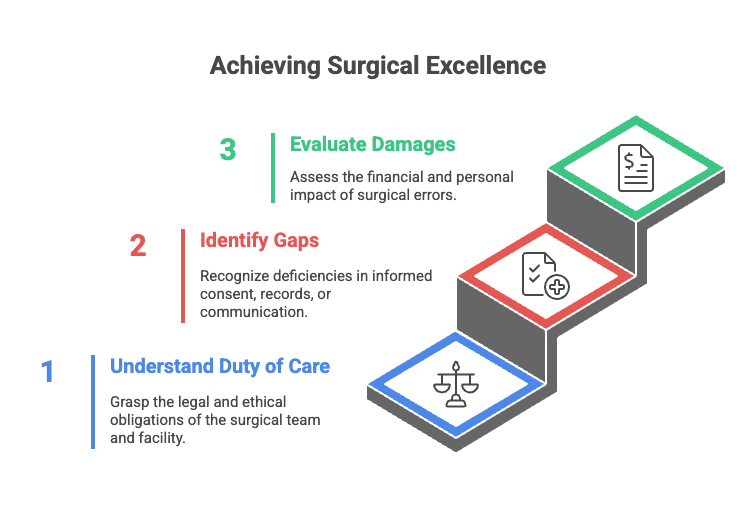
- Understand how the duty of care applies to your surgical team and facility.
- Identify gaps in informed consent, records, or postoperative communication.
- Evaluate damages tied to disability, vocational impact, and future care costs.
Steps to Take After a Florida Surgical Nerve Damage Injury
After a surgical nerve injury in Florida, we should first secure an immediate medical evaluation to confirm the diagnosis, stabilize symptoms, and establish a clear record.
We must then document everything carefully, including pain levels, functional limitations, provider communications, medications, and all follow-up care.
Finally, we should consult an experienced injury attorney promptly to protect our rights, preserve evidence, and position the claim for a timely and thorough evaluation.
Seek Immediate Medical Evaluation
Because nerve injuries can worsen quickly and early documentation is crucial, we should urge you to seek immediate medical evaluation at the first sign of numbness, burning pain, weakness, or unusual tingling after surgery.
Prompt assessment allows clinicians to perform emergency diagnostics, identify the affected nerve or region, and determine whether intervention can prevent further harm.
Early treatment can mitigate swelling, reduce compression, and lower the risk of secondary complications that may become permanent.
We encourage you to contact your surgeon and, if symptoms escalate, proceed to the emergency department.
Ask whether imaging, neurologic consultation, or electrophysiologic testing is indicated based on your presentation.
Swift medical action protects your health, supports responsible caregiving, and guarantees that the clinical picture is assessed while symptoms are most acute and treatable.
Document Symptoms and Care
Creating a precise record of your symptoms and care establishes a reliable foundation for both medical management and any future legal claim.
We should document pain levels, numbness, tingling, weakness, and functional limits each day, noting triggers and duration.
Consistent wound tracking is crucial; we’ll photograph incisions at regular intervals, record drainage, swelling, color changes, and temperature, and note any signs of infection.
We should maintain medication logs that list names, dosages, times taken, side effects, and missed doses, aligning entries with symptom changes.
We also recommend organizing test results, therapy sessions, and assistive devices used, preserving appointment summaries and discharge instructions.
When possible, we’ll capture statements from caregivers or family who observe our limitations.
Timely, organized records demonstrate diligence and help support informed, coordinated care.
Consult Experienced Injury Attorney
Securing counsel early lets us protect our rights, frame the facts correctly, and avoid missteps that can undermine a deserving claim.
When we consult an experienced injury attorney, we gain informed guidance on liability, damages, and deadlines, which helps us preserve evidence and build a persuasive record.
We discuss medical records, operative notes, and expert review, aligning our strategy with the injury’s trajectory and our long‑term needs.
We expect strict client confidentiality, clear communication, and prompt answers.
We also request a transparent fee structure, typically a contingency arrangement, so legal costs don’t block access to justice.
An experienced lawyer can coordinate with treating providers, manage interactions with insurers, and calculate future care and wage loss.
Early counsel positions us to pursue full and fair compensation efficiently and ethically.
How a Florida Surgical Nerve Damage Injury Lawyer Can Help You
Find your way through the aftermath of a surgical nerve injury with a legal team that knows how to build a compelling claim from the ground up. We guide you through each step, clarify your rights, and safeguard vital deadlines. Our approach centers on patient advocacy, ensuring your voice is heard, and your needs drive the strategy.
We collect and analyze medical documentation, consult qualified experts, and develop a clear narrative that links negligent actions to your injuries and losses.
Navigate surgical nerve injury claims with patient-centered advocacy, expert analysis, and vigilant protection of your rights and deadlines.
- We coordinate records, imaging, and operative notes, then preserve evidence with meticulous chain-of-custody practices.
- We handle insurer communications, negotiate assertively, and counter tactics that minimize responsibility or undervalue damages.
- We prepare litigation from day one, drafting precise pleadings, conducting depositions, and presenting persuasive testimony.
From calculating economic and non-economic damages to aligning treatment costs with life needs, we aim to secure full, fair compensation. Throughout, we provide consistent updates, respectful counsel, and unwavering advocacy.
Long-Term Effects of Florida Surgical Nerve Damage Injuries
We need to address how chronic neuropathic pain can persist after surgery, limiting daily activities and requiring ongoing treatment that may only partially control symptoms.
We also consider loss of function, which can impair mobility, dexterity, or sensation, and may affect your ability to work or manage routine tasks.
Finally, we evaluate the psychological and financial impact, including anxiety or depression, reduced quality of life, and mounting medical and income losses that demand careful documentation and strategic planning.
Chronic Neuropathic Pain
Often, chronic neuropathic pain follows surgical nerve damage and persists long after the initial wound heals. We see clients describe burning, shooting, or electric sensations that disrupt sleep, focus, and daily care for loved ones. Understanding neuropathic pain mechanisms matters because pain can continue even when incisions look normal.
Under central sensitization theory, the nervous system amplifies signals, lowering pain thresholds and causing innocuous touch to feel intolerable.
We document symptom patterns, triggers, and treatment response to build credible evidence.
We coordinate with pain consultants to evaluate medications, nerve blocks, and nonpharmacologic therapies, while tracking functional impact on caregiving and community service. Our role is to connect medical findings to liability and damages, ensuring your story is supported by records, expert opinions, and clear causation analysis.
Loss of Function
While neuropathic pain can dominate daily life, the lasting harm from surgical nerve injury in Florida often includes measurable loss of function that reshapes work, mobility, and self-care. We see weakness, reduced coordination, and limited range of motion undermine tasks that once felt routine.
Sensory deficits dull protective feedback, increasing fall and burn risks, while muscle atrophy progresses when nerves fail to activate critical motor units. Gait changes stress joints, and fine-motor loss hampers dressing, feeding, and safe tool use.
We help document these impairments through functional testing, therapy records, and objective measurements that capture real-world limitations. We work with treating clinicians to define prognosis, establish necessary accommodations, and structure rehabilitative plans that prioritize safety, independence, and dignity, even when full recovery remains uncertain.
Psychological and Financial Impact
Though pain and functional loss are immediate concerns, the psychological and financial toll of surgical nerve damage in Florida can be equally enduring. We often see anxiety, sleep disruption, and depression undermine daily life, while uncertainty about recovery amplifies stress.
Families shoulder a caregiver burden that reshapes routines, strains relationships, and reduces income when loved ones miss work to assist.
Costs escalate quickly. Repeated expert visits, medications, and adaptive devices compound expenses, and limited therapy access can delay progress, increasing long-term needs. Transportation, home modifications, and lost earning capacity further erode stability.
We document these impacts with precision, connect clients to supportive resources, and build claims that reflect the true scope of harm. Our goal is accountability, thorough care, and a financial recovery that sustains your future.
Proving Liability in Florida Surgical Nerve Damage Medical Malpractice Injury Cases
Pinpoint liability by aligning medical facts with legal standards that govern surgical care in Florida. We begin by establishing the applicable standard of care for the procedure, then identify how the surgeon or team deviated from that benchmark.
Operative reports, anesthesia records, and post-operative notes help us trace when, where, and how the nerve injury likely occurred. We pair those records with expert testimony from board-certified authorities who explain what a prudent provider would have done.
Next, we conduct a rigorous causation analysis. We distinguish unavoidable risks from preventable errors, connecting the deviation to the precise nerve damage through timelines, imaging, and differential diagnoses.
We evaluate informed consent materials to determine whether material risks were disclosed and whether technique choices aligned with accepted practice. We also assess hospital policies, staffing, and supervision.
With this framework, we assemble a fact-driven narrative that links breach to injury, satisfies Florida’s evidentiary requirements, and positions your claim for accountability.
Compensation for Florida Surgical Nerve Damage Damages
Having established who’s responsible and how the breach caused the injury, we turn to what full and fair compensation looks like under Florida law. Our goal is to account for every loss you’ve endured and will face, so your recovery is sustainable and dignified.
We pursue economic damages that cover all reasonable medical costs, including hospitalization, specialist care, medications, rehabilitation, and adaptive devices. We also calculate future expenses, such as revision surgeries, long‑term therapy, and home modifications.
Lost wages and diminished earning capacity are documented with precision, using employment records and expert analysis.
We also seek non-economic damages for pain, loss of function, and the daily burdens that follow nerve injuries. Your emotional recovery matters, so we include compensation for anxiety, sleep disruption, and loss of enjoyment of life.
When appropriate, we present structured settlements to safeguard long-term needs, and we substantiate every claim with medical opinions, life-care plans, and credible testimony.
The Statute of Limitations for Florida Surgical Nerve Damage Injury Cases
Because timing can make or break a medical negligence claim, we pay close attention to Florida’s statute of limitations for surgical nerve injury cases.
Florida generally requires medical malpractice actions to be filed within two years of when the incident occurred, or when the injury was discovered or should have been discovered with due diligence. This is known as the discovery rule, and it can be pivotal in nerve-damage cases that develop gradually.
We also monitor the four‑year statute limitations period, which typically serves as an outer deadline regardless of discovery, subject to limited exceptions. If fraud, concealment, or intentional misrepresentation delayed awareness, a seven‑year cap may apply, though it’s rare and tightly construed.
For minors, nuanced timing rules can extend deadlines, but they remain bounded by statutory caps.
Prompt evaluation safeguards evidence, preserves expert testimony, and ensures statutory pre‑suit requirements are met. Acting early protects your claim and your recovery.
Why You Need an Experienced Florida Surgical Nerve Damage Injury Lawyer
Deadlines alone don’t win cases, and the same urgency that governs Florida’s statutes should also guide your choice of counsel. Surgical nerve damage claims demand precision, medical fluency, and disciplined strategy.
We bring experienced counsel that understands how nerve injuries unfold, how records conceal crucial facts, and how to prove causation with clarity. Our role is to shoulder the legal burden so you can focus on healing.
We move quickly to preserve evidence, consult qualified experts, and map every loss, from diminished dexterity to long-term vocational impact. Hospitals and insurers defend these claims vigorously, so we counter with meticulous investigation, authoritative expert testimony, and measured negotiation. When necessary, we litigate decisively.
Our commitment to client advocacy means we communicate consistently, explain options plainly, and pursue outcomes that restore dignity and security. We aim to secure full compensation for medical care, future treatment, income loss, and pain, ensuring accountability while upholding your well-being.
How to Choose the Right Florida Surgical Nerve Damage Injury Lawyer for Your Case
While the injury may feel overwhelming, choosing the right Florida surgical nerve damage lawyer should follow a clear, disciplined process.
We begin by evaluating focus: confirm the firm handles medical negligence and intricate nerve injury cases regularly, and ask for concrete outcomes. We then evaluate patient advocacy by observing how the attorney listens, explains causation, and outlines a strategy that centers on your recovery and long-term needs.
Next, we verify credentials and resources. We look for board certifications, trial experience, and access to respected medical experts. We also review communication practices, including who’ll manage your case day to day and how often we’ll receive updates.
We scrutinize fee structures with precision. Ask for a written contingency agreement, clarify case costs, and understand how liens and expenses are handled upon recovery.
Finally, we check references and disciplinary history, compare proposed timelines, and choose the lawyer whose plan, integrity, and readiness to litigate align with your goals.
About the Law Offices of Anidjar and Levine
Built on relentless client advocacy and disciplined case preparation, the Law Offices of Anidjar and Levine offers a dedicated team focused on detailed injury litigation, including surgical nerve damage claims across Florida.
We handle complicated medical evidence, coordinate with consultants, and advance your case with precision, ensuring you’re informed at every step while we shoulder the legal burden.
Our firm’s history reflects a sustained commitment to accountability, careful case selection, and meaningful results for injured patients.
We’ve developed protocols for preserving operative records, evaluating standards of care, and quantifying long-term functional losses, all to support a clear damages narrative.
Client testimonials consistently highlight our responsiveness, thorough communication, and persistence in negotiations and trial.
We operate with a service-first mindset, aligning strategy with your recovery goals, not just the next deadline.
From early claim evaluation to courtroom presentation, we marshal facts, experts, and resources to position your case decisively, and we remain accessible until resolution.
Frequently Asked Questions
Can I Switch Surgeons After Suspected Nerve Damage Without Hurting My Claim?
Yes, you can change surgeons after a suspected nerve injury without jeopardizing your claim. We recommend you seek a second opinion promptly, document all symptoms, and request complete medical records before transferring care.
We’ll coordinate the switch to protect continuity, preserve evidence, and avoid gaps insurers exploit. Inform your new surgeon about the claim, provide objective assessments, and avoid discussing fault.
Timely follow-up, consistent treatment, and precise documentation strengthen causation, damages, and credibility while prioritizing your recovery.
How Do I Preserve Surgical Instruments or Records as Evidence?
We preserve surgical instruments and records by issuing prompt written preservation letters to the hospital and surgeon, requesting they secure all devices, packaging, logs, and electronic data.
We demand photographic documentation before any movement, then arrange sealed storage.
We obtain complete medical records and device-tracking reports to verify metadata.
We maintain strict chain preservation with dated custody logs, restricted access, and third‑party storage when needed, ensuring admissibility and preventing spoliation that could undermine your claim.
Will My Immigration Status Affect My Ability to File a Claim?
Yes, your immigration status typically doesn’t bar you from filing a claim, and courts evaluate claim eligibility based on harm and liability, not status.
We address immigration concerns confidentially, safeguarding your privacy while we document injuries, preserve records, and calculate damages.
We coordinate care and testimony to ensure compliance with legal procedures.
If status-related issues arise, we collaborate with trusted immigration counsel to minimize risk while pursuing full compensation within applicable deadlines and evidentiary standards.
Can I Pursue a Claim if I Signed an Informed Consent Form?
Yes, you can still pursue a claim. Signing an informed consent form doesn’t excuse negligence or unsafe practices.
We examine the validity of consent, ensuring you received accurate information about risks, alternatives, and explanations without coercion. If the procedure deviated from standards or exceeded the consented scope, liability may exist.
The burden of proof often shifts to demonstrating that negligent acts caused harm despite consent. We’ll document expectations, disclosures, and surgical conduct, then align expert testimony to establish causation and damages.
Are There Support Groups for Coping With Post-Surgical Nerve Pain?
Yes, several support groups address post-surgical nerve pain.
We can connect you with hospital-based programs, chronic pain clinics, and national organizations that host peer support meetings, both in person and online.
These groups share evidence-based pain management strategies, including pacing, mindfulness, and medication literacy.
We also recommend condition-specific forums and vetted social media communities.
Let’s coordinate with your care team for referrals, confirm group credentials, and establish a sustainable participation plan aligned with your recovery goals.
———————
At the Law Offices of Anidjar and Levine, we’re committed to protecting your rights after surgical nerve damage in Florida, and we’re prepared to act quickly.
Our team investigates liability, preserves evidence, consults medical experts, and pursues full compensation for your losses.
We’ll guide you through deadlines, negotiate with insurers, and, when necessary, litigate aggressively. If you or a loved one suffered nerve damage from a procedure, contact us today.
We’ll evaluate your claim, explain your options, and start building a strategic, evidence-driven case on your behalf.
Learn more about how we can help: Medical Malpractice Injury Lawyer


We Can Help.