



At the Law Offices of Anidjar and Levine, we handle Florida foreign object left inside injury cases with urgent intake, meticulous evidence preservation, and seasoned medical experts.
We secure medical records, imaging, and operative reports, preserve the object and chain of custody, and meet Florida presuit requirements.
We pursue medical costs, lost wages, and pain and suffering, building liability through counts, logs, and expert testimony.
Florida generally allows two years from the date of discovery, so swift action is essential.
Learn how we protect your health, legal rights, and recovery next.
Explore your options with our Medical Malpractice Injury Lawyer team.
Key Takeaways
- We handle Florida retained surgical object cases, from rapid intake and liability assessment through negotiation, settlement, or trial.
- We secure medical records, imaging (original DICOM), surgical counts, OR logs, and preserve the object with chain of custody.
- Deadlines are critical: we manage notice, filings, insurer communications, and litigation holds to protect your claim and evidence.
- We retain qualified surgeons and perioperative nurses to prove breach, causation, and damages, and coordinate independent evaluations.
- If you suspect a retained object, seek emergency care, document symptoms, and contact us promptly for preservation and legal guidance.
How We Can Help With Your Florida Foreign Object Left Inside Injury Claim
From the outset, we assess your potential foreign object injury claim with precision, determine liability, and map a strategy to protect your rights under Florida law. We listen carefully, document your concerns, and coordinate urgent steps that protect your health and legal position.
Dig deeper into our in-depth case study: A Legal Analysis of Retained Surgical Object Litigation in Florida
Our focus is Patient advocacy, grounded in respectful communication, clear guidance, and decisive action on your behalf.
We secure medical records, imaging, and operative reports, then retain qualified experts to evaluate causation and damages. Evidence preservation is central; we send litigation hold notices, obtain facility policies, and collect witness statements before memories fade.
We calculate economic losses, consider future care, and build a fact-driven demand that reflects your needs and service to others.
We communicate with insurers, negotiate firmly, and, when necessary, litigate to obtain full accountability. Throughout, we manage deadlines, filings, and strategy, so you can focus on recovery while we safeguard the claim with discipline and integrity.
Understanding Florida Foreign Object Left Inside Injury Cases
Having outlined how we build and protect your claim, we now explain what a Florida “foreign object left inside” case involves and why it differs from other medical negligence matters.
These claims arise when a surgical instrument, sponge, or similar object remains in the body after a procedure, producing pain, infection, or organ damage. Because the event should never occur with proper protocols, liability often centers on breaches of basic surgical safety standards and documentation.
When surgical items are left inside, preventable errors cause pain, infection, and organ damage.
Florida law treats these incidents distinctly. The discovery rule may toll the statute of limitations, since symptoms can surface months or years later, and res ipsa loquitur can support proof of negligence.
We pursue thorough evidence, including operative reports, imaging, and expert testimony, to establish breach, causation, and damages with precision.
Our approach emphasizes patient advocacy and accountability. We quantify medical costs, lost earnings, and future care, while seeking corrective treatment funds and fair compensation for suffering.
Common Causes of Florida Foreign Object Left Inside Injuries
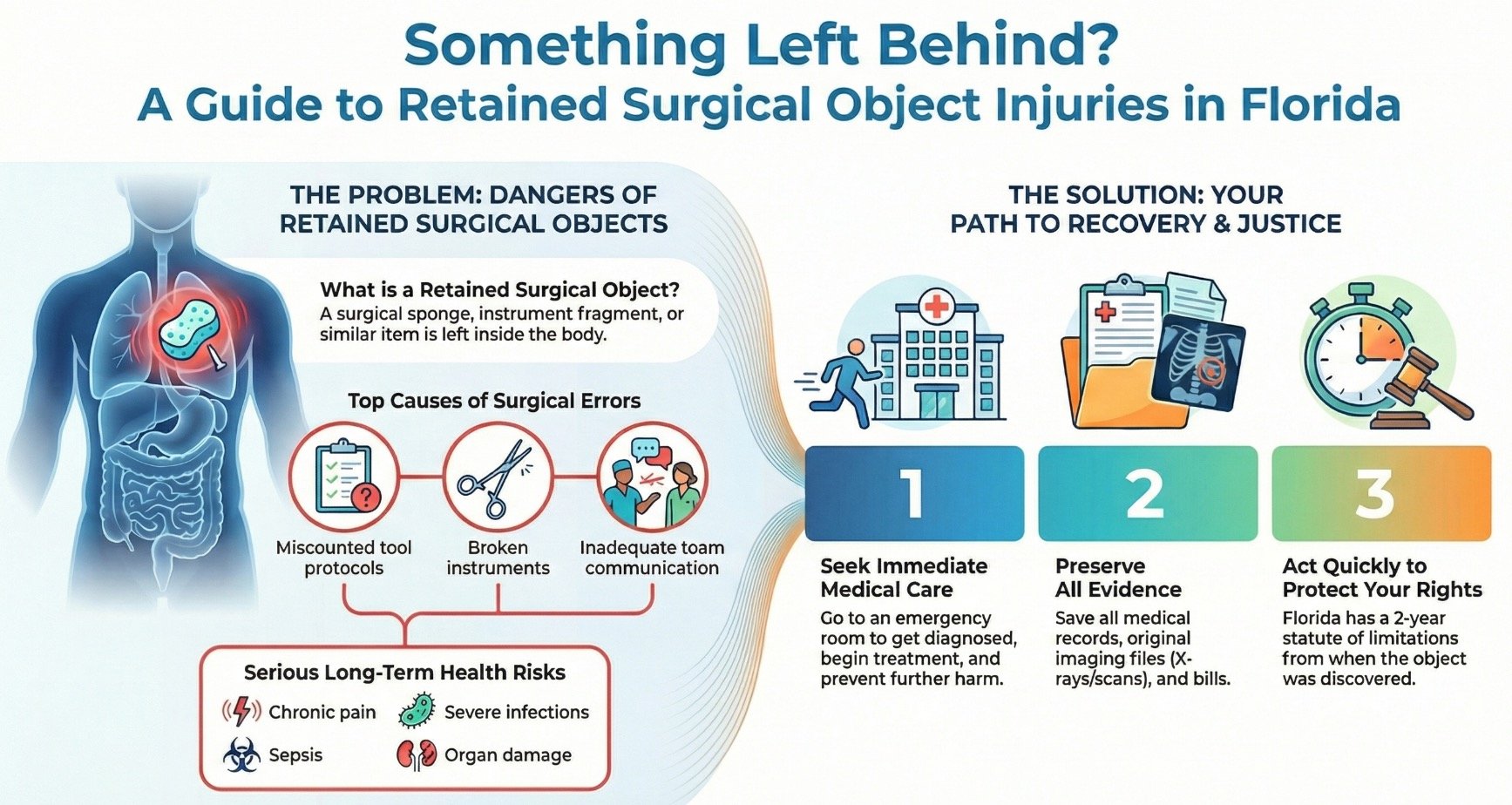
We often see foreign object injuries arise from surgical sponge retention and broken instrument fragments that remain unnoticed during closure.
These events frequently stem from miscounted tool protocols, where lapses in counting or documentation allow items to be left behind.
They’re also linked to inadequate surgical oversight, including insufficient team communication and failure to follow standardized safety checks.
Surgical Sponge Retention
Identifying surgical sponge retention as a leading cause of foreign object injuries in Florida surgeries requires careful attention to how these incidents occur and why they persist.
We often see breakdowns in surgical counting protocols, communication lapses during handoffs, and emergencies that disrupt routine procedures. A retained sponge can trigger infection, obstruction, and prolonged pain, and it may remain undetected until costly complications arise.
We help clients understand the legal implications, including potential negligence claims and the need for prompt investigation. We examine records, counting sheets, and radiographic evidence to establish causation and fault.
Effective prevention strategies include standardized counts, adjunct technologies like radio-opaque markers and barcode systems, and clear leadership accountability. When harm occurs, we pursue compensation and systemic improvements that protect future patients.
Broken Instrument Fragments
While retained sponges often result from counting and communication failures, another frequent source of foreign object injuries in Florida surgeries stems from broken instrument fragments left behind.
We often see tips from scalpels, clamps, drill bits, or a dental fragment shear off under stress, especially during orthopedic, ENT, and oral procedures. Even an industrial shard from a surgical device component can migrate into tissue, provoking infection, pain, and nerve damage.
Vigilant inspection of instruments before and after use, immediate field reassessment when resistance or unusual vibration occurs, and timely imaging when fragments are suspected are vital safeguards.
When injuries arise, we investigate device maintenance records, operating room logs, and manufacturer advisories, then secure experts to trace causation. Our goal is accountability, corrective protocols, and full compensation.
Miscounted Tool Protocols
Because even a single lapse can have grave consequences, miscounted tool protocols remain a leading cause of foreign objects left inside patients after Florida surgeries. We see how a rushed or inconsistent surgical count creates preventable risk, particularly during intricate procedures and emergent conversions.
Clear checklists, standardized handoffs, and audible confirmations at each stage reduce uncertainty, yet breakdowns still occur when documentation is incomplete or interrupted.
We advocate for resilient tool tracking that pairs manual counts with barcodes or radio-frequency tags. When teams reconcile counts before closure, discrepancies surface early and can be resolved promptly.
We also emphasize post-procedure reconciliation, ensuring every sponge, clamp, and accessory is accounted for. By enforcing disciplined counting and modern tracking, we help protect patients and preserve operating room integrity.
Inadequate Surgical Oversight
Despite rigorous standards, inadequate surgical oversight remains a pivotal driver of retained foreign objects in Florida operating rooms. When leadership at the surgical field falters, essential checks lapse, and preventable harm occurs.
We see how supervision failures undermine accountability, disrupt communication, and allow rushed or fragmented workflows to persist. These breakdowns often mirror gaps in staff training, where teams lack consistent reinforcement of counting protocols, handoff procedures, and escalation pathways.
We evaluate whether surgeons, anesthesiologists, and charge nurses exercised active oversight during high‑risk phases, including instrument reconciliation and wound closure. We also examine how policies were implemented in real time, not just on paper.
By scrutinizing chain-of-command decisions, we pinpoint where oversight failed and why. That investigation supports swift corrective action, thorough remediation, and strong claims on your behalf.
Legal Rights of Florida Foreign Object Left Inside Injury Victims
Although a retained surgical item can turn a routine procedure into a severe medical crisis, Florida law gives you clear rights to seek accountability and compensation. We can pursue claims for medical expenses, lost wages, pain and suffering, and future care.
Florida’s medical malpractice framework allows us to demand answers, compel disclosure, and secure expert review, while protecting your dignity through patient advocacy and record confidentiality. Our role is to assert your rights firmly, honoring your voice and your recovery.
Florida law empowers you to demand answers, protect dignity, and pursue full compensation after retained surgical items.
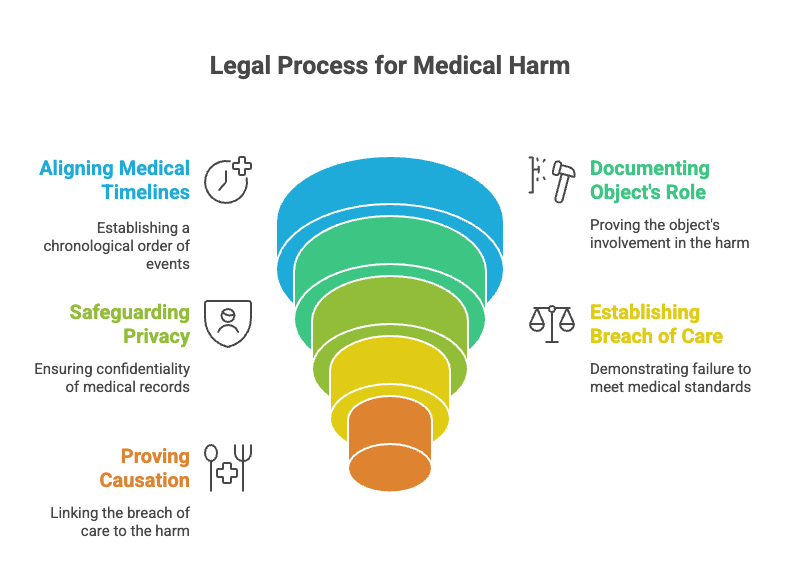
- We identify the responsible providers, align medical timelines, and document the object’s role in causing harm.
- We safeguard your privacy, limit unauthorized disclosures, and ensure that only necessary records are shared.
- We work with qualified experts to establish breach of the standard of care and causation.
You’re entitled to fair treatment, transparent communication, and a process that prioritizes healing. We focus on accountability, measure damages carefully, and press for outcomes that support long‑term health and stability.
Steps to Take After a Florida Foreign Object Left Inside Injury
When a foreign object may have been left after surgery, we quickly recognize symptoms—such as unusual pain, swelling, fever, or wound drainage—and act without delay.
We then seek immediate medical care to confirm the cause, begin treatment, and prevent further harm.
We also preserve evidence and records by saving imaging results, medical bills, prescriptions, and communications, and by keeping a detailed timeline of symptoms and appointments.
Recognize Symptoms Quickly
Soon after any surgery or invasive procedure, we should watch for signs that a foreign object may have been left inside the body and act without delay. We serve best by recognizing post op signs early, documenting them carefully, and staying attentive to changes that don’t fit a normal recovery.
Concerning indicators include persistent fever, escalating pain despite medication, and unusual fatigue.
We should examine the incision for signs of wound changes, such as spreading redness, heat, drainage with odor, or a new opening. Unexplained abdominal swelling, bloating, or rigidity may signal internal irritation. Nausea, vomiting, or difficulty passing stool can also raise concern.
Watch for nerve symptoms, including tingling, numbness, or weakness near or distant from the surgical site. Prompt recognition protects health and preserves essential records.
Seek Immediate Medical Care
If we suspect a foreign object was left after a procedure, we should seek urgent medical care without delay to protect our health and create a clear record of what’s happening.
Immediate attention limits complications, reduces infection risk, and guarantees timely diagnosis through an emergency evaluation. We should go to the nearest emergency department, describe our symptoms precisely, and note the procedure date and location.
Clinicians can order imaging, assess wound integrity, and initiate antibiotics if indicated. Appropriate pain management is vital, and we should communicate pain levels clearly so treatment is calibrated safely.
We must also avoid self-removal attempts, which can worsen injury. Prompt care demonstrates diligence, supports continuity of treatment, and prioritizes the well-being of the patient, family, and community we serve.
Preserve Evidence and Records
After securing urgent medical attention, we should immediately focus on preserving evidence and records to protect our rights and strengthen any future claim.
We need to obtain complete medical records, operative reports, and discharge summaries, then request certified copies to guarantee accuracy.
We must also secure all scans and films, prioritizing preservation of medical imaging by obtaining the original DICOM files and radiology reports.
We should document symptoms, pain levels, and limitations in a dated journal, and save bills, travel receipts, and correspondence.
If a foreign object is removed, we must ask the facility to preserve it and establish a transparent chain of custody, noting handlers, dates, and storage conditions.
We ought to avoid altering or discarding packaging and promptly notify our attorney to coordinate the secure retention of evidence.
How a Florida Foreign Object Left Inside Injury Lawyer Can Help You
While the harm from a retained surgical item can be overwhelming, we step in to take control of the legal and investigative process. We conduct a focused review of your medical records, consult qualified experts, and build a clear timeline that demonstrates where standards of care failed.
Our approach centers on patient advocacy, ensuring your voice is heard while we manage communications with insurers and hospitals.
We take charge of the investigation, amplify your voice, and hold providers accountable for retained surgical items.
- We coordinate independent imaging and expert evaluations to document causation and damages with precision.
- We preserve, subpoena, and analyze surgical logs, device counts, and policy manuals to identify systemic failures.
- We pursue full compensation, negotiating firmly, and, when necessary, litigating decisively.
We also press institutions for corrective action, urging them to adopt preventive policies that reduce future risk for others.
From the first consultation, we safeguard deadlines, manage all filings, and prepare your case for trial. Our objective is straightforward: establish accountability, secure measurable results, and restore safety and dignity through a disciplined legal strategy.


Long-Term Effects of Florida Foreign Object Left Inside Injuries
When a foreign object is left inside the body, we must consider the long-term consequences, including chronic pain and persistent inflammation that can undermine daily function.
We also assess the heightened risks of infections and sepsis, which may emerge weeks or months later and require urgent medical intervention.
Additionally, we examine how scar tissue and adhesions can restrict movement, cause organ complications, and lead to recurrent medical procedures.
Chronic Pain and Inflammation
Though symptoms can ebb and flow, chronic pain and inflammation are among the most pervasive long-term consequences of a retained surgical item, and they rarely resolve without targeted intervention.
We often see chronic inflammation distort tissue, irritate nerves, and limit mobility, creating a cycle of pain that disrupts work, caregiving, and community service.
When daily activities suffer, the ability to serve others suffers as well, compounding stress and delaying recovery.
Effective pain management begins with a careful diagnosis, imaging, and differential assessment to rule out overlapping causes.
From there, coordinated care—specialists, physical therapy, and evidence-based medications—can reduce swelling, protect function, and restore endurance.
We document symptoms, treatment responses, and functional losses, building a clear record that supports access to appropriate care and fair compensation for ongoing needs.
Infections and Sepsis Risks
Persistent pain often signals a deeper problem, and a retained object can also act as a nidus for infection that endangers long‑term health.
When foreign material remains after surgery, bacteria may colonize it, leading to persistent postoperative infections that are resistant to routine antibiotics. Fever, redness, drainage, and malaise warrant prompt evaluation because a localized infection can progress to sepsis.
We counsel clients to document symptoms, seek immediate care, and request targeted cultures and imaging.
Sepsis prevention requires rapid source control, appropriate antimicrobial therapy, and careful monitoring of crucial signs and lab markers.
We work with medical experts to establish timelines, trace lapses in sterile protocols, and prove causation. By building a precise record, we protect your recovery, secure necessary treatment, and pursue accountability for preventable harm.
Scar Tissue and Adhesions
Often overlooked in the early aftermath of surgery, scar tissue and adhesions can emerge as significant long-term consequences of a retained foreign object. When the body senses a foreign material, it mounts a healing response that lays down fibrous scar tissue, which can bind nearby structures and restrict normal motion.
Adhesions may lead to organ tethering, bowel obstruction, chronic pain, and impaired function that worsens over time.
We work to identify these complications early, documenting symptoms like abdominal cramping, altered bowel habits, limited range of motion, and post-surgical pain that doesn’t resolve. Imaging and diagnostic procedures can confirm adhesions and rule out other causes.
When appropriate, we coordinate with medical experts to evaluate surgical options, conservative therapies, and long-term care needs, while preserving evidence and protecting your legal rights.
Proving Liability in Florida Foreign Object Left Inside Medical Malpractice Injury Cases
Establishing liability in a Florida foreign object left inside case hinges on proving that a surgical team breached the standard of care and that this breach caused the patient’s injury.
Liability turns on proving a surgical breach of care directly caused the patient’s injury.
We begin by securing all operative records, nursing notes, sponge and instrument counts, and postoperative imaging.
We preserve the foreign object and document a transparent chain of custody to ensure admissibility and integrity.
We then retain qualified surgeons and perioperative nurses to provide expert testimony on what competent care required, how the count protocols failed, and why the retained object couldn’t occur absent negligence.
We also connect causation through medical records, testimony, and timelines that link symptoms, diagnostic findings, and revision surgery to the retained object.
Witness interviews, including circulator and scrub personnel, clarify roles and confirm deviations from policy.
We move promptly to meet Florida’s presuit requirements, serve notices, and obtain affidavits.
Throughout, we build a disciplined evidentiary record that establishes breach, causation, and accountability.
Compensation for Florida Foreign Object Left Inside Damages
Accountability takes shape through the full measure of compensation available under Florida law when a foreign object is left inside a patient. We pursue damages that restore stability, protect future health, and honor dignity. Economic losses include past and future medical expenses, corrective surgeries, rehabilitation, and lost wages or diminished earning capacity.
We also seek non-economic damages for pain and suffering, emotional distress, and loss of enjoyment of life, which recognizes the profound human impact of medical negligence.
When needed, we document household services, transportation, and assistive devices to make sure no support is left out. In cases of severe harm, we build life-care plans that quantify long-term needs with precision. If a loved one dies, we pursue wrongful death damages for eligible survivors.
Our patient advocacy centers on thorough evidence, expert analysis, and disciplined negotiation, while preparing every case for trial. By accurately valuing each loss, we help clients secure resources that sustain healing and independence.
The Statute of Limitations for Florida Foreign Object Left Inside Injury Cases
Securing full compensation also depends on filing within Florida’s strict time limits for medical negligence. In foreign object cases, the statute limits differ from ordinary malpractice claims because patients often discover the problem long after surgery.
Florida allows a two-year period to file from the time we knew, or should have known, about the retained object. Importantly, discovery tolling applies here, recognizing the hidden nature of sponges, instruments, or fragments left inside the body.
Even with discovery tolling, an outer deadline can apply, so we’ll make sure to keep your rights. Medical records, radiology, and operative reports help establish when the injury was or should have been discovered, and they anchor our timeline analysis.
We also evaluate any notice requirements and pre-suit investigations to guarantee compliance. Missing a deadline can forfeit claims, no matter how strong the evidence. By calculating dates precisely and filing without delay, we protect your case and safeguard your recovery.
Why You Need an Experienced Florida Foreign Object Left Inside Injury Lawyer
Although a retained surgical item may seem like an obvious error, proving liability and maximizing recovery in Florida requires seasoned counsel who understands the unique legal and medical complexities.
We investigate every detail with precision, coordinating expert reviews, medical record audits, and operative narratives to establish causation and damages. Our role is to protect patient trust while building a compelling evidentiary record that withstands defense scrutiny.
We know how hospitals document procedural checklists, instrument counts, and handoff communications. By analyzing these systems, we identify perioperative safety breakdowns and connect them to your injury. We also steer Florida’s presuit requirements, affidavits, and damage caps, ensuring deadlines and notice rules are met without error.
We work to quantify all losses, including corrective surgeries, infection-related care, lost wages, and enduring pain. Our strategy anticipates insurer defenses and expert challenges, positioning your case for a substantial settlement or trial. With disciplined advocacy, we pursue accountability and meaningful recovery.
How to Choose the Right Florida Foreign Object Left Inside Injury Lawyer for Your Case
When you’re choosing a Florida lawyer for a foreign object left inside injury, focus on proven medical malpractice experience, not general personal injury credentials.
We start attorney selection by verifying a track record with retained surgical items, sponges, or instruments, and by reviewing verdicts and settlements that reflect intricate litigation skill.
You can begin with proof: retained-object case results showing intricate, successful medical malpractice litigation experience.
We examine board certifications, hospital litigation experience, and resources for expert review, including surgeons, nurses, and life-care planners.
We schedule client interviews to assess communication, strategy, and courtroom readiness.
We ask about case screening, statutes of limitations, preservation of evidence, and how the firm manages independent medical exams.
We request a clear fee structure, costs for experts, and transparency on case valuation and timelines.
We confirm who’ll lead the file, how often we’ll receive updates, and whether the team offers bilingual support when needed.
Finally, we seek strong professional references and disciplinary histories to ensure integrity, diligence, and unwavering advocacy.
About the Law Offices of Anidjar and Levine
Because foreign object cases demand focused malpractice litigation, we’ve built the Law Offices of Anidjar and Levine around rigorous medical-legal advocacy and client-centered service.
We align our strategy with your healing and accountability goals, coordinating closely with medical specialists, investigators, and expert witnesses.
Our team prepares every matter for trial, pursuing early resolution only when it fully protects your long-term interests.
Our firm’s history reflects steady growth driven by disciplined case work and consistent results across Florida courts.
We maintain a high-touch approach, offering prompt communication, clear case roadmaps, and thorough evidence development.
Client testimonials highlight our responsiveness, courtroom readiness, and persistence in intricate hospital and surgical negligence disputes.
We structure representation to reduce your burdens, manage records and insurer communications, and preserve vital timelines.
From initial intake through settlement or verdict, we deliver precise advocacy, measured counsel, and ethical representation.
We’re ready to evaluate your case, explain options, and pursue the recovery you merit.

Frequently Asked Questions
How Do I Discreetly Confirm if a Foreign Object Remains After Surgery?
We confirm it discreetly by arranging prompt postoperative imaging, typically an X‑ray, ultrasound, or CT scan, depending on the surgical site and materials.
We coordinate testing through a provider who respects privacy, avoids notifying the original surgeon until results are precise, and secures copies of all records.
We then review findings in a confidential consultation, discuss symptoms, outline next steps for removal if needed, and guarantee continuity of care without unnecessary disclosure.
Can I Pursue a Claim if I Signed a Surgical Consent Form?
Yes, we can often pursue a claim even if you signed a surgical consent form. Informed consent permits known risks, but it doesn’t excuse negligence or leaving a foreign object.
We’d evaluate records, expert opinions, and causation to establish breach of duty. Comparative negligence may reduce recovery if your actions contributed, but it rarely defeats claims involving retained objects.
We’ll document damages, preserve evidence, and move promptly to protect your rights and those you serve.
Will Filing a Claim Affect My Ongoing Medical Treatment Providers?
Filing a claim shouldn’t disrupt your care. We work to preserve treatment continuity by communicating professionally with providers and limiting legal requests to what’s necessary.
Your medical confidentiality remains protected under HIPAA, and your doctors shouldn’t alter treatment due to a legal matter. If a conflict arises, we coordinate referrals and records to prevent gaps, guarantee accurate documentation, and support your recovery.
We’ll manage insurer and attorney contacts so you can focus on healing.
What Evidence Should I Preserve From Hospital Visits and Communications?
You should preserve complete medical records, all discharge summaries, operative notes, imaging, and medication lists. Keep invoices, insurance explanations of benefits, and appointment logs.
Save written communications, including emails, portal messages, and letters, and document all phone calls with dates, times, and participants.
Secure photographic evidence of wounds, devices, or complications, dated and labeled.
Retain physical items such as packaging or instructions. Store duplicates securely and maintain a consistent chain of custody to ensure credibility.
Are Bilingual Legal Services Available for Non-English-Speaking Clients?
Yes, we offer bilingual legal services. We provide Spanish interpreters, guarantee clear communication, and safeguard your rights at every stage.
We prioritize Cultural competence, respecting linguistic and community nuances, while delivering precise guidance and timely updates.
We translate essential documents, prepare you for hearings, and coordinate with bilingual experts when needed.
We also accommodate preferred communication methods, including phone, video, or in-person meetings, so you can participate fully and make informed, confident decisions.
———————————
We’re ready to protect your rights and pursue the full compensation you deserve after a foreign object injury in Florida.
Our team will investigate swiftly, secure expert testimony, and build a precise, evidence-driven claim.
We’ll manage insurers and deadlines, safeguard your case under Florida’s statute of limitations, and advocate relentlessly in negotiations or at trial.
Contact the Law Offices of Anidjar & Levine today for a free consultation, and let us put our experience and resources to work for you.
Learn more: Medical Malpractice Injury Lawyer

We Can Help.