



At the Law Offices of Anidjar and Levine, we investigate delayed stroke diagnosis cases in Florida, secure complete medical records and audit trails, consult neurologists and emergency medicine experts, and build timelines that prove breach, causation, and damages.
We quantify medical care, rehab, lost income, and future needs with objective evidence, then present documented demands and litigate if insurers resist.
We work on contingency, meet strict statutes of limitations, and keep you informed with disciplined case preparation.
Learn how we protect your rights and position your claim for full compensation.
Explore your options with a dedicated Medical Malpractice Injury Lawyer.
Key Takeaways
- We investigate delayed stroke diagnosis in Florida, securing records, EHR audit trails, timelines, and expert reviews to prove breach, causation, and damages.
- Florida malpractice deadlines are strict: typically two years from discovery and a four-year repose; wrongful death has separate timelines—act promptly.
- Our team retains neurologists, emergency physicians, and nursing experts to assess protocols, imaging timing, and deviations from stroke standards of care.
- We handle insurer communications, prepare demand packages, and, if needed, file suit and manage discovery—working on contingency with transparent fees and costs.
- We identify all liable parties—ER, hospital, radiology, and consultants—and pursue compensation for medical costs, lost income, rehabilitation, and future care.
How We Can Help With Your Florida Delayed Stroke Diagnosis Injury Claim
Act quickly to protect your rights and strengthen your claim. We move fast to secure essential evidence, organize timelines, and preserve records that can fade with time. Our team coordinates medical documentation, gathers imaging and lab results, and reviews chart notes to identify where protocols broke down.
Dig deeper with our in-depth analysis: An Analytical Framework for Delayed Stroke Diagnosis Malpractice Claims in Florida
We conduct caregiver interviews to capture observations from those who witnessed symptoms, communication, and response times, creating a reliable account of events.
We consult independent physicians to evaluate whether standards of care were followed, then translate findings into clear, persuasive support for your claim.
We handle insurer communications, meet statutory deadlines, and prepare thorough demand packages that quantify medical costs, lost income, and long-term care needs. When appropriate, we engage expert witnesses to explain causation and damages with precision.
Throughout the process, we keep you informed, protect your privacy, and coordinate resources that support recovery, allowing you to focus on healing while we advance your case.
Understanding Florida Delayed Stroke Diagnosis Injury Cases
When a stroke isn’t recognized or treated promptly, minutes can mean the difference between full recovery and permanent disability, and Florida law provides a path to hold negligent providers accountable.
In stroke care, every minute matters—and Florida law holds negligent providers accountable.

We evaluate whether clinicians met the applicable standard of care, including timely recognition of symptoms, appropriate imaging, and prompt treatment. If delays caused preventable harm, a malpractice claim may seek compensation for medical costs, lost income, rehabilitation, and future care.
We gather records, consult medical experts, and connect the timeline of events to the injuries sustained. Our analysis also considers stroke prevention counseling that should have been offered, as well as discharge instructions and follow-up.
We emphasize family support because caregiving burdens and life changes must be understood and documented.
Statutes of limitations and presuit requirements are strict in Florida, so early action matters. We guide you through each step, safeguard evidence, and present a precise, credible case grounded in medicine and law.
Common Causes of Florida Delayed Stroke Diagnosis Injuries
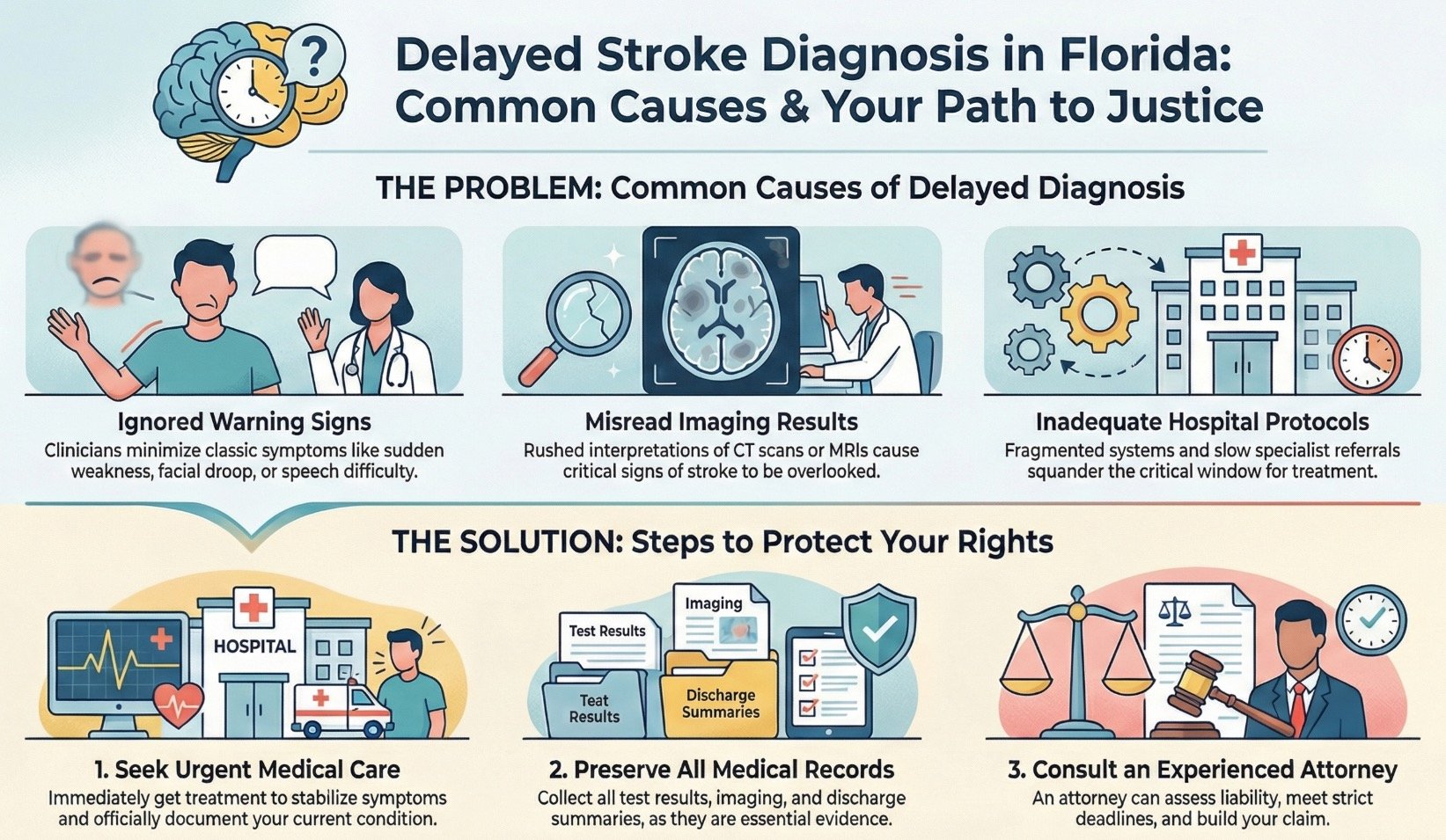
As we assess delayed stroke diagnosis injuries in Florida, we often see patterns such as misread imaging results and ignored warning signs that should have triggered immediate action.
We also encounter harmful delays in specialist referrals, which can squander critical treatment windows and worsen outcomes.
Finally, inadequate stroke protocols—whether in triage, imaging, or communication—frequently compound these errors and create preventable harm.
Misread Imaging Results
Sorting through imaging studies should reveal pivotal clues, yet misread CT scans or MRIs are a leading cause of delayed stroke diagnosis in Florida. We see how interpretation errors, rooted in rushed workflows and inconsistent protocols, allow small ischemic changes to be overlooked.
Reader bias compounds the risk, as clinicians may anchor on an initial impression and dismiss subtle findings that warrant urgent action.
We work to expose where the process failed: inadequate image quality, missed diffusion restrictions, or incorrect timing of follow-up imaging. When radiology and emergency teams don’t communicate clearly, delays multiply.
Our role is to gather records, consult independent experts, and demonstrate how a timely, accurate read would have changed outcomes. By holding providers accountable, we help secure answers, resources, and safer practices.
Ignored Warning Signs


Although stroke symptoms can appear subtle or fluctuate, ignored warning signs remain a common and preventable cause of delayed diagnosis in Florida. We frequently see patients report sudden weakness, facial droop, speech difficulty, severe headache, or vision changes, yet these red flags are minimized as fatigue, stress, or migraine.
When clinicians don’t document timelines, verify onset, or perform targeted neuro exams, missed symptoms multiply and time-critical treatment windows close.
We carefully gather patient testimony, nursing notes, and triage records to confirm what was reported and when. We compare those accounts with essential signs, stroke scales, and serial assessments to show how warning signs were overlooked.
Delayed Specialist Referral
When emergency clinicians hesitate to involve neurology or transfer to a stroke center, precious minutes are lost, and reversible injury can become permanent disability.
We see delays arise when teams underestimate symptoms, assume improvement, or wait for imaging before calling consultants. Referral timing is crucial because thrombolytics and thrombectomy depend on strict windows.
When consultant availability is limited, facilities must use tele-neurology or prearranged transfer agreements to avoid harmful gaps.
We examine call logs, page records, and transport intervals to determine whether a prompt consultation would have changed outcomes. If a hospital lacked reasonable coverage or failed to escalate, patients bear the risk.
We hold providers accountable and pursue resources families need to recover stability, dignity, and long-term care.
Inadequate Stroke Protocols
Despite clear national guidelines, many Florida hospitals still rely on fragmented or outdated stroke protocols that slow recognition and delay time‑critical care. When systems don’t standardize triage, imaging, and neurology consultation, patients lose vital minutes, and preventable harm follows.
We see gaps in screening tools, unclear escalation thresholds, and poor coordination between emergency staff, radiology, and transport.
These failures are avoidable. Hospitals should conduct rigorous protocol audits, measure door‑to‑imaging and door‑to‑needle times, and promptly address bottlenecks.
Consistent staff training is indispensable, reinforcing FAST and BE‑FAST assessments, thrombolysis criteria, and transfer pathways for thrombectomy. Clear accountability, standing orders, and real‑time checklists keep teams aligned.
When institutions neglect these duties, delays mount. We investigate these systemic lapses and pursue accountability to protect future patients.
Legal Rights of Florida Delayed Stroke Diagnosis Injury Victims
Should a stroke go undiagnosed or be diagnosed too late in Florida, your legal rights focus on proving that a healthcare provider’s delay breached the accepted standard of care and caused preventable harm.
We evaluate patient rights under Florida law, then measure conduct against established liability standards. Our role is to connect the delay to worsened outcomes, demonstrating that timely testing or treatment would likely have changed the result.
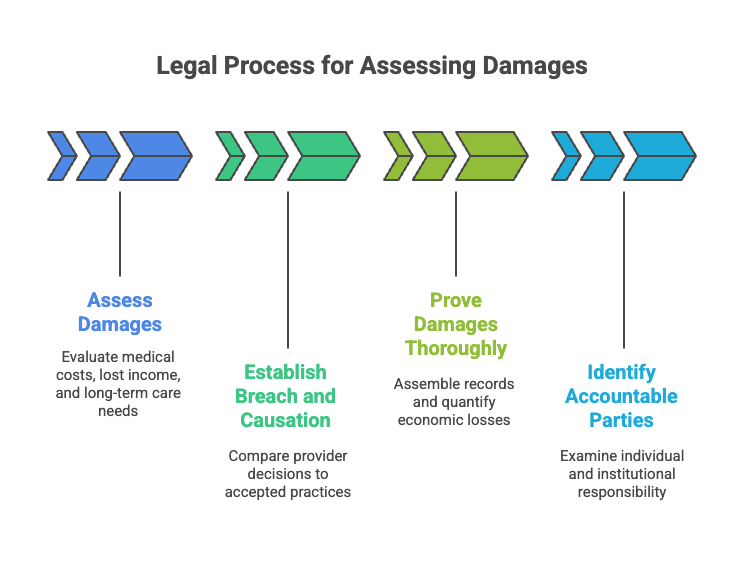
We also assess damages with precision, documenting medical costs, lost income, and long-term care needs.
- Establish breach and causation: We compare provider decisions to accepted practices, consult authoritative guidelines, and engage qualified experts to tie the delaysto measurable harm.
- Prove damages thoroughly: We assemble records, quantify economic losses, and substantiate non-economic impacts with credible medical and vocational analyses.
- Identify accountable parties: We examine individual and institutional responsibility, including emergency departments, hospitals, and diagnostic services, ensuring each liable actor is held to appropriate standards under Florida law.
Steps to Take After a Florida Delayed Stroke Diagnosis Injury
After a delayed stroke diagnosis, we should act quickly by seeking urgent medical care to stabilize symptoms and document current conditions.
We must preserve all medical records, including test results, imaging, discharge summaries, and communications, as these materials form the backbone of any evaluation.
We should then promptly consult an experienced attorney to assess liability, protect deadlines, and position your claim for an intense and timely pursuit of compensation.
Seek Urgent Medical Care
Recognizing new or worsening stroke symptoms and seeking urgent medical care is the most essential step we can take after a delayed diagnosis. Time-sensitive treatment can reduce brain injury, restore function, and prevent cascading complications.
If a loved one shows facial droop, arm weakness, speech difficulty, sudden confusion, severe headache, or vision loss, we call 911 immediately and request transport to a stroke-capable hospital.


Early recognition begins before a crisis, through community education and attentive observation. We monitor changes, note onset times, and inform clinicians of all prior delays so they can act decisively. We advocate for stroke alerts, rapid imaging, and expert consultations, while ensuring that critical signs and glucose are checked promptly.
By insisting on urgent evaluation, we protect safety, preserve options, and honor our duty to serve others.
Preserve Medical Records
Locking down the medical paper trail becomes our next priority, because accurate, complete records anchor both care and accountability.
We request all documents related to the delayed stroke diagnosis, including ER notes, imaging, lab results, medication lists, discharge summaries, and follow-up instructions. We also secure communications, such as patient portal messages and voicemail transcriptions, because timelines matter.
We organize records chronologically, label providers and facilities, and maintain a master index for fast reference. We ask for audit logs when available, which can reveal access times and entries. We safeguard originals, create digital backups, and store them in encrypted formats with redundant locations.
We practice disciplined patient advocacy by promptly correcting errors, documenting each correction request, and tracking responses to ensure the record is accurate and complete.
Consult an Experienced Attorney
You can secure seasoned legal counsel without delay to protect your rights and position your case for a strong recovery. When a delayed stroke diagnosis harms a loved one, we step in to evaluate liability, preserve evidence, and coordinate with medical experts.
Early consultation allows us to identify deadlines, assess damages, and develop a strategy aligned with your family’s needs.
We encourage you to review client testimonials to understand our approach and service. These firsthand accounts reflect our commitment to clear communication, diligent investigation, and respectful advocacy. We typically work on a contingency basis, so you owe no attorney’s fees unless we obtain compensation.
During your consultation, we’ll analyze records, interview witnesses, and explain the litigation path. Together, we’ll pursue accountability, protect your interests, and advance your recovery.
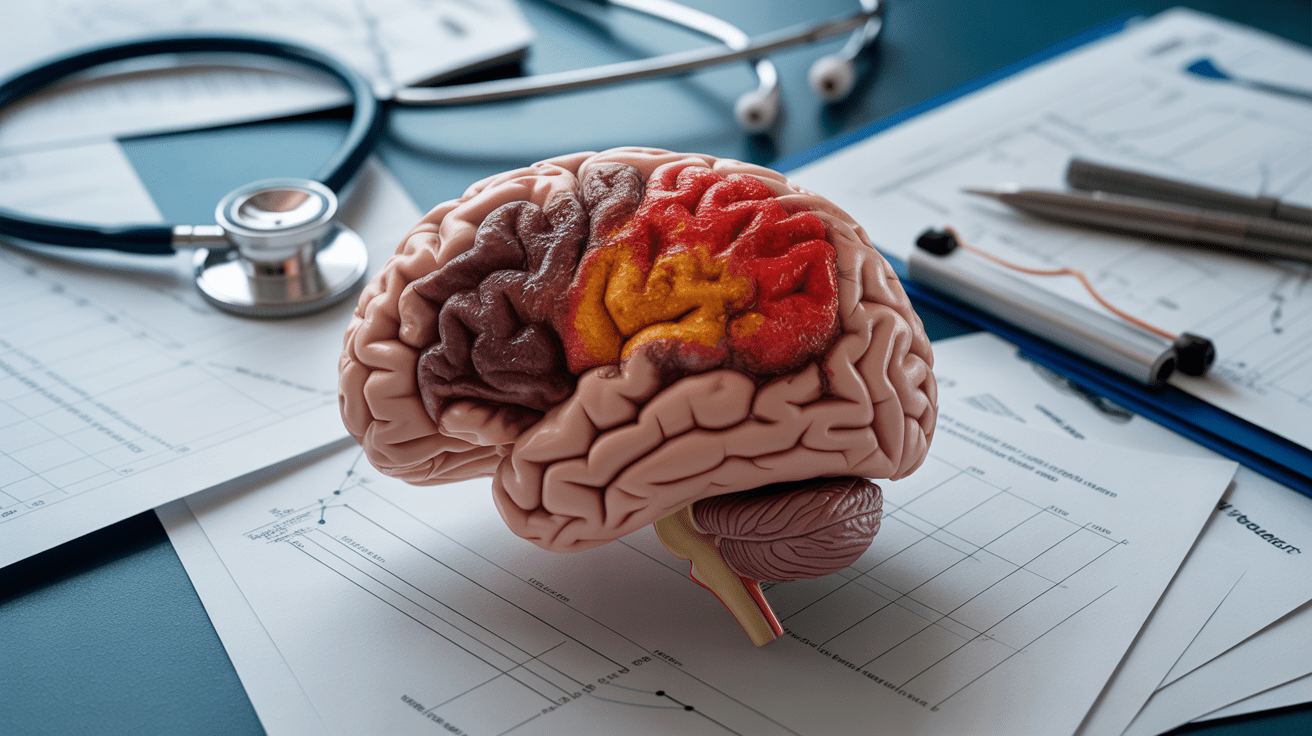
How a Florida Delayed Stroke Diagnosis Injury Lawyer Can Help You
Although every case turns on its facts, a Florida delayed stroke diagnosis injury attorney can move quickly to protect your rights and build a compelling claim. We investigate timelines, charting when symptoms emerged, what providers knew, and how protocols were followed or missed.
We also identify telemedicine pitfalls, ensuring remote encounters, triage decisions, and follow-up directives meet standards of care. Throughout, we center patient advocacy, coordinating with your clinicians to secure records, imaging, and expert review.
Swift, patient-centered advocacy to investigate delayed stroke diagnosis and uphold telemedicine standards of care.
- Liability analysis and evidence preservation: We obtain complete medical records, secure EHR audit trails, and interview witnesses, preserving vital details before they fade.
- Expert consultation and case valuation: We retain neurologists, emergency medicine authorities, and nursing experts to establish causation and damages, then calculate losses with precision.
- Strategic negotiation and litigation: We present an apparent, documented demand, challenge insurer defenses, and, if needed, file suit, manage discovery, and prepare for trial.
We communicate consistently, explain options, and pursue outcomes that honor your recovery and dignity.
Long-Term Effects of Florida’s Delayed Stroke Diagnosis Injuries
When a stroke diagnosis is delayed, we often see lasting cognitive and memory deficits that impair daily functioning and decision-making.
We also address mobility limitations that can reduce independence, including the need for assistive devices, rehabilitation, and home modifications.
Additionally, we recognize emotional and behavioral changes—such as depression, anxiety, or impulsivity—that strain families and complicate long-term recovery.
Cognitive and Memory Deficits
Because a delayed stroke diagnosis deprives brain tissue of oxygen for longer, many patients face lasting cognitive and memory deficits that reshape daily life and future independence.
We see persistent brain fog, slowed processing speed, and difficulties with attention that complicate planning, problem-solving, and decision-making.
Short‑term memory loss often undermines medication adherence and appointment follow‑through, while language impairment can hinder clear communication, reading comprehension, and task sequencing.
We work with clients and families to document these deficits with neuropsychological testing, care records, and witness accounts.
This evidence demonstrates how a delayed diagnosis caused measurable cognitive harm.
With a precise record, we can pursue compensation for cognitive rehabilitation, speech therapy, assistive technologies, and caregiver support.
Our role is to safeguard resources that sustain dignity, resilience, and informed daily functioning.
Mobility and Independence Loss
Cognitive impairments often appear alongside physical limitations that change how a person moves through the world. After a delayed stroke diagnosis, mobility can decline due to weakness, poor balance, and spasticity, which undermine safe walking and transfers.
We evaluate gait, endurance, and fall risk, then coordinate targeted rehabilitation that prioritizes functional independence.
We help you secure appropriate assistive devices, such as canes, walkers, wheelchairs, and ankle-foot orthoses, to stabilize movement and reduce injury. Home and vehicle modifications, including ramps, grab bars, and hand controls, support daily living and safe transportation.
We also plan for community reintegration by addressing accessible routes, transportation services, and return-to-work accommodations.
With coordinated therapy and advocacy, we aim to restore practical independence, maintain safety, and preserve dignity in daily life.
Emotional and Behavioral Changes
Although physical recovery often draws primary attention, emotional and behavioral changes after a delayed stroke diagnosis can be equally disruptive and long-lasting. We see clients struggle with mood swings, irritability, and unexpected tears, which can strain family dynamics and caregiving relationships.
Cognitive fatigue, reduced impulse control, and frustration with slowed processing may trigger conflict, even when everyone is trying to help.
We also watch social withdrawal take root, as fear of embarrassment or communication challenges discourages engagement. Depression and anxiety commonly follow, diminishing motivation for rehabilitation and daily routines.
We encourage structured support: consistent counseling, caregiver education, and coordinated care with neurologists and therapists. Early screening for depression, validated assessment tools, and tailored behavioral strategies help restore stability.
With compassionate, organized advocacy, we can protect dignity and rebuild connection.
Proving Liability in Florida Delayed Stroke Diagnosis Medical Malpractice Injury Cases
When a stroke diagnosis is delayed, proving liability in Florida hinges on demonstrating that a healthcare provider breached the applicable standard of care and that this breach directly caused preventable harm.
We begin by gathering records, timelines, and witness accounts, then map clinical decisions against what prudent providers would’ve done under similar circumstances.
We retain expert witnesses in emergency medicine, neurology, and nursing to define the standard, identify deviations, and explain how earlier intervention was feasible.
Our causation analysis focuses on timing. We examine last-known-well, symptom onset, triage notes, and imaging delays, linking missed red flags to lost treatment windows for thrombolytics or thrombectomy.
We also assess whether proper protocols—stroke scales, rapid CT, telestroke consults—were available and ignored.
We then connect breach to outcome using objective markers: infarct size, imaging progression, and functional decline.
Throughout, we build a straightforward, chronological narrative that withstands scrutiny and honors our duty to those harmed.
Compensation for Florida Delayed Stroke Diagnosis Damages
Accountability drives recovery in Florida delayed stroke diagnosis cases, and compensation must reflect the full scope of losses a preventable delay creates. We work to document every harm, linking medical evidence to practical needs and long‑term outcomes.
Economic damages include past and future medical care, stroke rehabilitation, prescription costs, adaptive equipment, home and vehicle modifications, and lost earnings or diminished earning capacity. We also seek funding for professional and family caregiver support, respite services, and care coordination.
Non-economic damages address pain and suffering, loss of enjoyment of life, and loss of consortium. When a delay leads to permanent deficits, we present life care plans that quantify ongoing therapies, transportation, and in‑home assistance.
If vocational retraining is realistic, we evaluate costs and expected benefit. We additionally pursue out‑of‑pocket expenses, from therapy copays to mileage.
Our objective is all‑encompassing, evidence‑driven compensation that sustains recovery, stabilizes families, and honors the burdens you carry.
The Statute of Limitations for Florida Delayed Stroke Diagnosis Injury Cases
Securing full compensation means nothing if a claim isn’t timely, so we address Florida’s statute of limitations at the outset. In delayed stroke diagnosis cases, the clock typically runs from when the injury is discovered, or reasonably should have been found, not necessarily the date of care.
These statute nuances matter because medical malpractice claims often unfold slowly, and warning signs may emerge over months.
We help you identify precise filing deadlines, confirm whether the two-year period applies, and evaluate the four-year statute of repose that can bar claims regardless of discovery. If fraud, concealment, or misrepresentation affected your awareness, extended timeframes may be available, but they’re narrow and fact-driven.
Wrongful death claims also carry distinct deadlines that must be honored without delay.
We gather records quickly, secure expert reviews, and give early notice when needed. By acting promptly, we preserve evidence, protect your rights, and keep your claim within every applicable deadline.
Why You Need an Experienced Florida Delayed Stroke Diagnosis Injury Lawyer
Although every malpractice claim is unique, delayed stroke diagnosis cases demand counsel who understands neurology, hospital protocols, and Florida’s elaborate medical liability laws. We bring that integrated knowledge to your case, aligning legal strategy with the medicine that governs stroke timelines and imaging.
We’re familiar with how diagnostic errors occur, how documentation should read, and where breakdowns in triage and handoffs often arise.
We also prioritize patient advocacy, ensuring your voice guides every step. We secure and analyze records immediately, retain qualified neurologists and emergency medicine experts, and build a causation narrative that links delay to worsened deficits.
Insurers contest these claims aggressively, so we prepare from day one as if a trial is inevitable, preserving evidence, protecting deadlines, and quantifying future care needs with precision.
Our experience allows us to translate complicated clinical data into clear proof, counter defense theories, and pursue full compensation for medical costs, lost wages, and long-term support.
How to Choose the Right Florida Delayed Stroke Diagnosis Injury Lawyer for Your Case
Start by narrowing the field to firms that focus on delayed stroke diagnosis and have proven results in Florida courts. We should verify trial experience, appellate outcomes, and settlements involving stroke-related negligence.
Ask for case examples that mirror your facts, and confirm the attorney who’ll actually handle the file, not just conduct intake.
We recommend a structured consultation. Set clear client expectations about communication, timelines, and decision points. Request a written plan outlining investigation steps, expert retention, and anticipated challenges. Evaluate access to neurologists, emergency medicine experts, and life-care planners, since credible experts often determine leverage and value.
Scrutinize fee structures with care. Contingency percentages should be transparent, with itemized costs for experts, depositions, and demonstratives. Clarify who advances expenses and how reimbursements occur if recovery is limited. Assess responsiveness: measure how promptly the team returns calls, explains risks, and sets deadlines.
Finally, confirm malpractice insurance, bar standing, and references from prior clients and co-counsel.
About the Law Offices of Anidjar and Levine
Built on rigorous advocacy and client-focused service, the Law Offices of Anidjar and Levine represent patients and families in complex medical negligence matters, including delayed stroke diagnosis across Florida.
We bring disciplined case preparation, targeted medical review, and assertive negotiation to every claim, aiming to secure accountability and restorative compensation.
Our firm’s history reflects steady growth driven by outcomes and community trust.
We’ve cultivated relationships with neurologists, emergency medicine experts, and life-care planners, enabling us to present clear causation and damages.
We coordinate medical records, timelines, and expert affidavits efficiently, so you can focus on healing while we press forward.
Client testimonials consistently highlight our responsiveness, transparent communication, and steadfast advocacy.
We set clear expectations, provide regular updates, and prepare you for each decision point. When negotiations stall, we litigate decisively, supported by meticulous evidence and trial readiness.
We measure success by meaningful results and the dignity restored to those we serve.
Frequently Asked Questions
Can I Switch Doctors After a Delayed Stroke Diagnosis Without Hurting My Case?
Yes, we can switch doctors after a delayed stroke diagnosis, and it won’t automatically hurt your case. We’ll document the change carefully, address continuity concerns, and guarantee records transfer fully.
When we change providers, we preserve treatment timelines, medication histories, and imaging. We’ll notify insurers promptly, avoid gaps in care, and follow referrals.
You can choose an expert experienced with stroke sequelae, follow recommendations, and keep all appointments. Thorough documentation protects credibility and strengthens causation.
How Do I Preserve Electronic Health Records and Patient Portal Messages as Evidence?
We preserve electronic health records by submitting written requests to the provider, asking them to export documents in their native format and PDF.
We also download patient portal messages, export threads, and capture date-stamped screenshots.
We create secure copies on encrypted drives and in the cloud, maintaining a transparent chain of custody with a dated inventory.
We disable auto-deletion, document metadata when available, and avoid altering files, ensuring authenticity for admissibility.
Will Pursuing a Claim Affect My Ongoing Rehabilitation or Insurance Benefits?
No, pursuing a claim shouldn’t interrupt rehabilitation or jeopardize insurance benefits. We coordinate with your providers to ensure uninterrupted care, emphasize rehab coordination, and structure communications to avoid treatment delays.
We also advise on policy terms, maintaining coverage and benefits protection while the claim proceeds. We’ll handle insurer requests, protect your privacy, and schedule evaluations around therapy.
If an insurer pressures you to pause care, we intervene promptly and let you know of any adverse actions.
Can Family Members Bring a Claim if the Victim Cannot Communicate?
Yes. If the victim can’t communicate, we can help a qualified family member file as a next friend or seek appointment as a substituted decision maker. Courts typically authorize these roles to protect the victim’s rights, preserve evidence, and meet deadlines.
We’ll evaluate capacity, gather medical proof, and prepare petitions, ensuring compliance with procedural requirements. We’ll also align the claim with guardianship, power of attorney, or healthcare surrogate documents to avoid conflicts and delays.
Are There Special Considerations for Telemedicine-Related Delayed Stroke Diagnoses?
Yes. Telemedicine-related delayed stroke diagnoses raise unique issues involving telemedicine liability and remote assessment standards.
We evaluate whether clinicians followed stroke protocols, verified time-last-known-well, and promptly escalated to in‑person imaging.
We scrutinize documentation quality, bandwidth or platform failures, licensure and jurisdiction, and informed consent for telehealth limits.
We also assess triage decisions, referral timing, and team coordination.
Collectively, we determine causation and damages, safeguarding patients while honoring our duty to serve vulnerable families.
———————-
We’re ready to protect your rights after a delayed stroke diagnosis. Our team investigates the facts, consults leading medical experts, and builds a precise, evidence-based claim.
We’ll pursue full compensation for medical costs, lost wages, and long-term care, while managing every step and deadline.
Don’t wait to act, as Florida’s statute of limitations can limit your options.
Contact the Law Offices of Anidjar & Levine today for a free consultation, and let us start advocating for the recovery you merit.
Learn more about how we can help: Medical Malpractice Injury Lawyer

We Can Help.