



At the Law Offices of Anidjar and Levine, we help Florida families pursue brain damage malpractice claims with immediate guidance and rigorous evidence preservation.
We secure complete medical records, consult independent experts, and build timelines to prove deviations from the standard of care and causation.
Our team manages presuit requirements, statutes of limitations, and negotiations while preparing every case for trial to maximize compensation for medical care, lost earnings, and long-term needs.
We offer clear communication and focused advocacy from start to finish, and the following sections explain how we proceed.
Learn more: Medical Malpractice Injury Lawyer
Key Takeaways
- Florida malpractice brain injury cases hinge on proving a provider deviated from the standard of care, supported by expert testimony and thorough medical record review.
- Act quickly: Florida’s two-year statute of limitations (with a four-year repose) and presuit notice requirements make early investigation critical.
- Preserve evidence immediately: obtain full charts and audit trails, imaging, anesthesia/device logs, staffing records, and build a minute-by-minute timeline.
- Establish causation using neuroimaging, neuropsychological testing, and independent experts to link delays, misdiagnosis, or dosing errors to the brain injury.
- Document current and future needs: cognitive, behavioral, and mobility deficits, life-care planning, therapies, assistive tech, and supervision costs.
How We Can Help With Your Florida Brain Damage From Malpractice Injury Claim
Although every malpractice case is unique, we begin by conducting a thorough, evidence-driven evaluation of your potential brain injury claim. We gather records, consult qualified experts, and map the facts to applicable standards of care.
Dig deeper with our in-depth case study: Strategic Management of Brain Injury Medical Malpractice Claims in Florida
From day one, we focus on protecting your rights, preserving vital evidence, and positioning your claim for the strongest possible outcome.
We coordinate medical assessments that inform rehabilitation planning, ensuring projected needs for therapies, assistive technology, and long-term support are fully documented. We quantify economic and non-economic losses with precision, using credible methodologies that insurers and courts respect.
We handle insurance negotiation with a disciplined strategy, countering undervaluation and delay with clear proof and firm advocacy.
We manage communications, deadlines, and litigation steps, so you can prioritize recovery and service to those who depend on you. We prepare every matter as if it will proceed to trial, which strengthens settlement leverage and promotes fair resolution grounded in evidence.
Understanding Florida Brain Damage From Malpractice Injury Cases

When we talk about brain damage arising from medical malpractice in Florida, we’re addressing injuries caused or worsened by a provider’s deviation from the accepted standard of care.
We assess how diagnostic decisions, treatment timing, and discharge planning align with that standard, then connect those failures to measurable neurological harm.
We focus on functional deficits, including cognition, language, behavior, and mobility, and we document how those deficits affect daily living and long‑term independence.
We rely on clinical records, expert opinions, and neuroimaging advances to establish the injury’s scope and causation. Detailed imaging, when combined with neuropsychological testing, helps us distinguish preexisting conditions from malpractice‑related damages.
We also evaluate life‑care needs, such as therapies, assistive technology, and supervision, because these costs often define the claim’s true value.
Throughout the process, we encourage collaboration with patient advocacy groups. They provide education, caregiver support, and practical resources, strengthening both recovery pathways and the evidentiary foundation of a case.
Common Causes of Florida Brain Damage From Malpractice Injuries
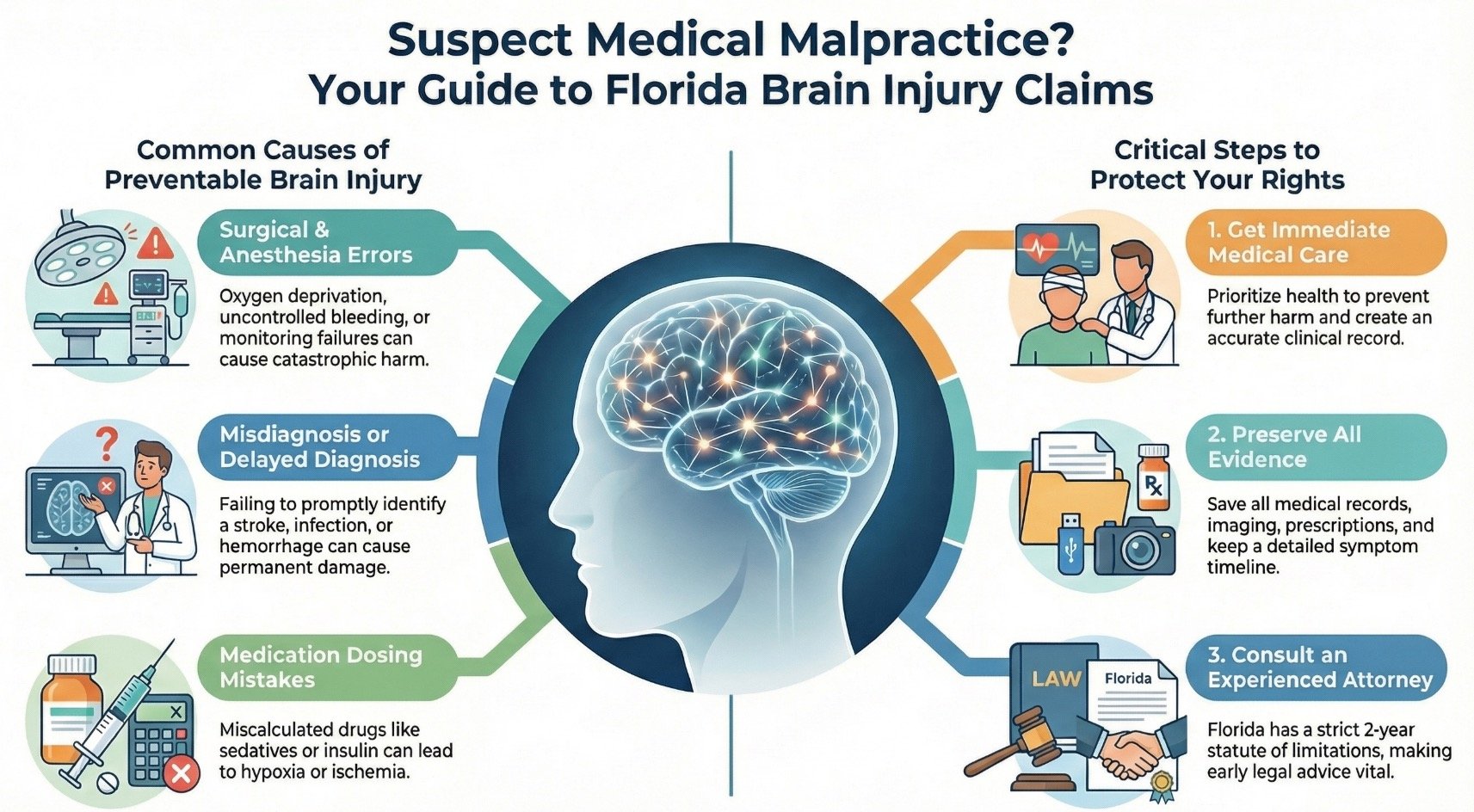
As we assess malpractice-related brain injuries in Florida, we focus on recurring causes that the evidence often reveals. Surgical errors and complications, misdiagnosis or delayed diagnosis, anesthesia monitoring failures, and medication dosing mistakes can interrupt oxygen delivery to the brain or trigger cascading harm.
We’ll outline how each scenario typically occurs, why it constitutes a breach of care, and what proof helps establish liability.
Surgical Errors and Complications


Even in well-run operating rooms, surgical errors and complications remain a leading source of preventable brain injury in Florida malpractice cases. We see anesthesia mistakes that deprive the brain of oxygen, uncontrolled bleeding that goes unrecognized, and positioning errors that impair circulation.
Breakdowns in a surgical checklist can lead to wrong-site procedures, medication mix-ups, or instrument retention, each posing catastrophic risks. Infections from lapses in sterile technique and delayed response to emerging complications can also cause permanent harm.


When families ask us to help, we move quickly to preserve records, consult independent experts, and analyze timelines minute by minute. We evaluate whether protocols existed, whether the team followed them, and where communication failed. Our goal is accountability, corrective action, and the resources your recovery requires.
Misdiagnosis or Delayed Diagnosis
Although many diagnostic decisions are time-sensitive, misdiagnosis or delayed diagnosis remains a frequent driver of preventable brain damage in Florida. When stroke, infection, hemorrhage, or hypoxia is missed or identified late, brain cells die, and deficits become permanent.
We focus on whether providers ordered appropriate diagnostic testing promptly, interpreted results accurately, and escalated care without delay. Equally essential, a timely consultant consultation can align treatment with accepted standards, reducing avoidable harm.
We examine triage notes, timelines, imaging, labs, and transfer decisions to identify gaps in clinical judgment and system failures. When negligence caused injury, we build a precise record linking delays to the neurological outcome. Our role is to secure accountability and the resources necessary for long-term rehabilitation, therapy, and dignified daily living.
Anesthesia Monitoring Failures
Routinely, preventable brain injuries occur when anesthesia teams fail to monitor oxygenation, ventilation, circulation, and depth of anesthesia with the vigilance the standard of care demands. When monitors alarm or trends shift, clinicians must act within seconds, not minutes. We investigate whether pulse oximetry, capnography, blood pressure, and ECG data were continuously tracked, documented, and interpreted. We also examine anesthesia depth, because inadequate titration can mask hypoxia or cause hemodynamic collapse.
Breakdowns in monitoring protocols, poor handoffs, and inattentiveness often precede catastrophic hypoxic events.
As your advocates, we obtain anesthesia records, device logs, and staffing assignments to reconstruct the timeline. We consult experts to identify deviations and causation, then hold facilities accountable. Our focus remains prevention, accountability, and securing resources for lifelong care.
Medication Dosing Mistakes
Monitoring failures often intersect with another preventable hazard: incorrect medication dosing, which can deprive the brain of oxygen or disrupt cerebral perfusion. When providers miscalculate sedatives, anticoagulants, insulin, or vasoactive drugs, patients face hypoxia, hemorrhage, or ischemia that can permanently injure neural tissue.
We examine records to identify lapses in pharmacy oversight, absent double-checks, and ignored alerts. We analyze dosing algorithms, weight-based calculations, renal adjustments, and infusion titrations to pinpoint where the protocol broke down.
We also look for communication gaps during handoffs and electronic order entry errors. Barcode mismatches, look-alike vials, and overridden warnings often signal systemic failure.
When standards require verification and monitoring, yet staff skip steps, liability follows. Our role is to secure accountability, fund neurological care, and promote safer medication systems.
Legal Rights of Florida Brain Damage From Malpractice Injury Victims
How do we protect your rights after a preventable brain injury in Florida? We start by affirming that you’re entitled to seek compensation when negligence causes harm. Florida law provides claims for medical expenses, lost income, long-term care, and non-economic damages, subject to specific deadlines and evidentiary standards.
We pair rigorous patient advocacy with strategic financial planning so your recovery is supported today and sustained tomorrow.
Pursue justice after preventable brain injury—Florida law supports compensation and sustained recovery through advocacy and planning.
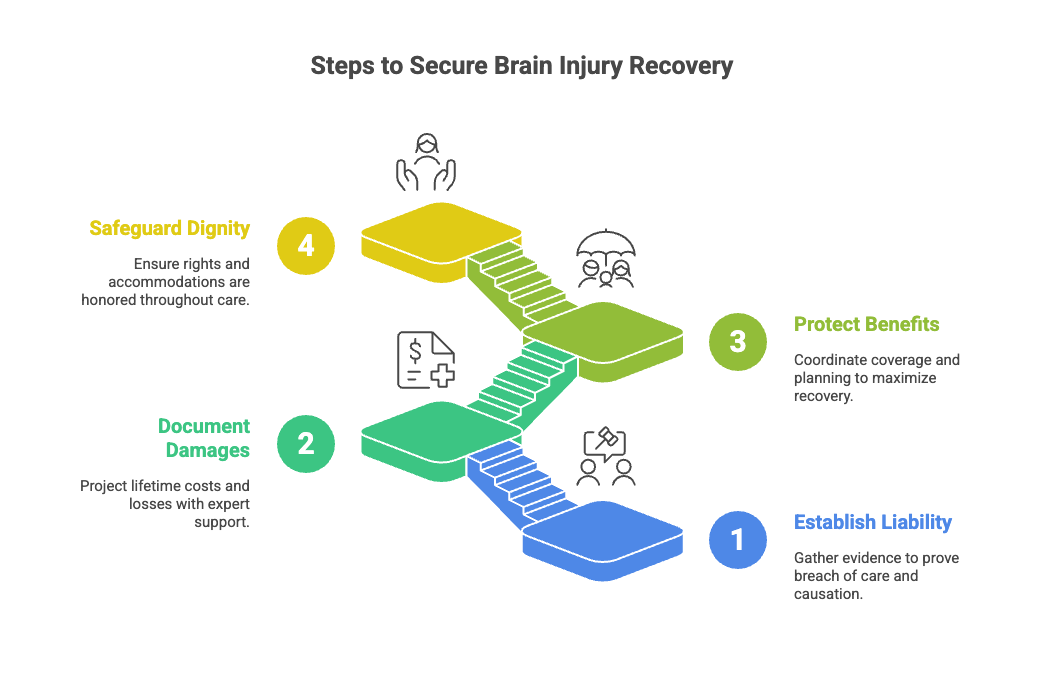
- We establish liability, gathering records, expert opinions, and witness accounts to prove that the standard of care was breached and caused the brain injury.
- We document damages thoroughly, projecting lifetime medical costs, attendant care, home modifications, and vocational losses with credible experts.
- We protect access to benefits, coordinating health coverage, liens, and special needs planning to preserve eligibility while maximizing recovery.
- We safeguard dignity and voice, ensuring informed consent rights, surrogate decision-making, and reasonable accommodations are honored throughout care and litigation.
Steps to Take After a Florida Brain Damage From Malpractice Injury
When a brain injury from malpractice is suspected, we act quickly to get immediate medical care to protect health and document the condition.
We preserve evidence by saving medical records, discharge summaries, prescriptions, imaging, and communications, and we keep a detailed timeline of symptoms and treatment.
We then consult an experienced attorney without delay to evaluate liability, safeguard deadlines, and guide the next steps.
Get Immediate Medical Care
Immediately seeking medical care after any suspected malpractice-related brain injury is crucial to protect your health and preserve your legal rights. We should prioritize safety first, call 911 for urgent transport when symptoms such as confusion, severe headache, vomiting, seizures, or loss of consciousness appear.
Prompt evaluation by emergency physicians enables stabilization, neuroimaging, and expert consultation, which can prevent secondary harm and provide an accurate clinical picture.
At the hospital, we advocate for clear triage, concise symptom reporting, and full disclosure of prior treatment. We request neurology involvement when indicated, and we ask about observation protocols if discharge is considered.
We also complete insurance verification early to avoid delays in care, while insisting that medical necessity guides decisions. Acting swiftly supports recovery and positions your case on a sound medical footing.
Preserve Evidence and Records
You can start by locking down every piece of information that could later prove what happened and why. We gather medical records, medication logs, imaging, and monitoring data, then request complete charts and audit trails in writing.
We save appointment reminders, discharge instructions, and billing statements because small details can confirm or refute pivotal events. We secure photos of injuries, keep a treatment journal, and record symptoms and functional changes daily.
We preserve devices, packaging, and labels, maintaining a transparent chain of custody to prevent challenges to authenticity. We identify and store witness names, roles, and contact information promptly. We request facility incident reports and preserve voicemail and text communications.
We build a precise timeline reconstruction, aligning records with recollections, to demonstrate causation, sequence, and deviation from standards.
Consult an Experienced Attorney
You can turn to a seasoned Florida medical malpractice attorney as early as possible, because skilled counsel frames the case strategy while evidence is fresh and deadlines are looming.
We’ll assess your timeline, preserve essential records, and coordinate expert reviews to verify causation and damages. Early consultation protects your rights, reduces costly missteps, and positions your claim for maximum leverage.
We also recommend vetting firms carefully. Review client testimonials for insight into communication, results, and compassion, then compare fee structures to understand contingency rates, costs, and transparency.
We’ll explain what expenses the firm fronts, how reimbursements work, and what recovery scenarios mean for you. United, we’ll map a litigation plan, define goals, and prepare for insurer tactics. With focused guidance, we advance your case efficiently and safeguard your family’s long‑term needs.
How a Florida Brain Damage From Malpractice Injury Lawyer Can Help You
Although every case is unique, a Florida brain damage from malpractice injury lawyer can immediately shoulder the legal and investigative burden so you can focus on recovery. We gather records, consult medical experts, and build a straightforward, evidence-based narrative that advances your rights while honoring your needs.
Our role is to protect your claim, coordinate resources, and pursue accountability with diligence and care.
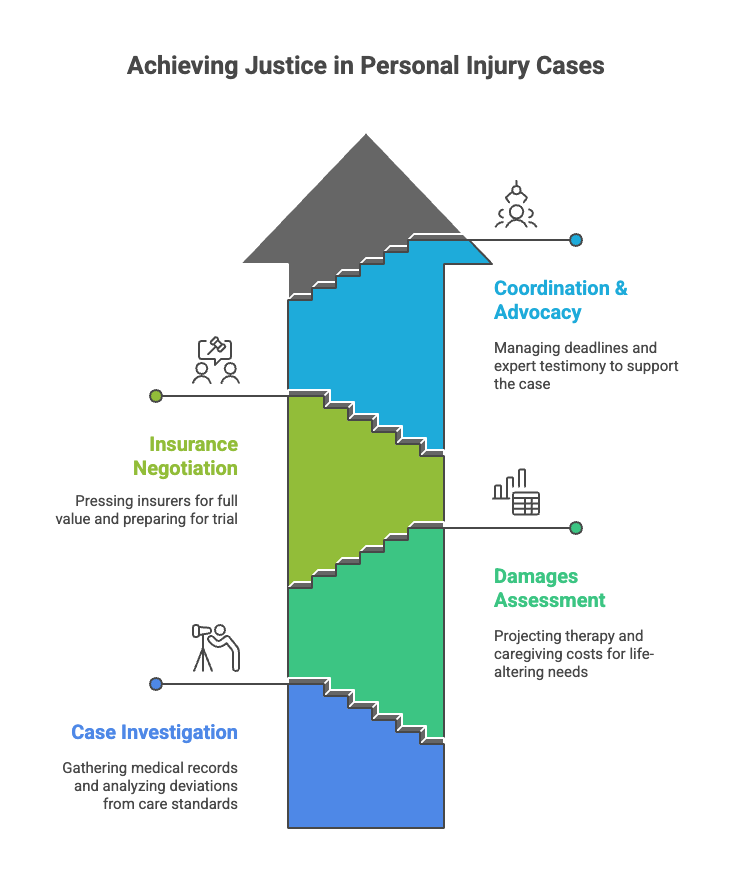
- Case investigation and proof development: We obtain medical records, analyze deviations from the standard of care, and preserve essential evidence.
- Damages assessment and rehabilitation planning: We work with clinicians to project therapy, assistive technology, and caregiving costs to support life-altering needs.
- Insurance negotiation and litigation readiness: We press insurers for full value, prepare meticulously for trial, and avoid settlements that undervalue your future.
- Coordination and advocacy: We manage deadlines, filings, and expert testimony, while keeping you informed and positioned for decisive action.
Together, we pursue justice, maximize resources, and safeguard your path forward.
Long-Term Effects of Florida Brain Damage From Malpractice Injuries
When malpractice causes brain damage, we often see persistent cognitive and memory decline that disrupts work, schooling, and daily independence.
We also recognize emotional and behavioral changes—such as irritability, depression, anxiety, or impulse control issues—that can strain families and support networks.
Collectively, these challenges frequently necessitate lifelong care, therapies, and assistive services, leading to substantial and ongoing costs that must be carefully documented and pursued.
Cognitive and Memory Decline
Even after the immediate crisis has passed, cognitive and memory decline can emerge as one of the most devastating long-term consequences of malpractice-related brain injuries in Florida. We often see deficits that undermine daily functioning, professional duties, and caregiving roles.
Short-term and working memory may falter, causing missed steps, repeated questions, and difficulty learning new information. Some clients experience language impairment, with slowed word-finding and reduced comprehension. Others face visuospatial decline, which complicates navigation, driving, and safe mobility.
We assess patterns that may signal early-onset dementia, distinguishing progressive conditions from static injuries, and we coordinate evaluations that document impairment with precision. Our role is to gather the medical proof, link negligent care to these losses, and pursue resources for treatment, assistive strategies, and long-term support.
Emotional and Behavioral Changes
Cognitive and memory losses rarely occur in isolation, and we frequently see lasting emotional and behavioral changes follow malpractice-related brain injuries. These changes can be subtle or disruptive, yet they consistently affect daily relationships and community roles.
Many clients report pronounced mood swings, irritability, and reduced impulse control, which can strain families and caregiving teams. Others experience apathy, anxiety, or depression, complicating recovery and engagement in rehabilitation.
We assess triggers, document patterns, and coordinate care with treating providers to connect behavior to injury. We also help clients implement structure, communication strategies, and safety plans that reduce conflict and risk.
When needed, we consult experts in neuropsychology and psychiatry to clarify diagnoses and support tailored interventions. Our focus remains practical, respectful, and grounded in evidence.
Lifelong Care and Costs
Although every case is unique, malpractice-related brain injuries often require lifelong care that spans medical, therapeutic, and daily living supports, and those needs carry substantial, evolving costs. We plan for ongoing neurologic care, rehabilitation, and mental health services, while coordinating caregivers, transportation, and structured routines.
We also account for home modifications that improve accessibility and safety, including ramps, widened doorways, roll-in showers, and smart-home controls. Assistive technology, from communication devices to mobility aids, must be updated and maintained, which adds recurring costs.
We calculate future medical expenses, replacement of lost earnings, and the value of paid and unpaid caregiving. We also analyze case management, respite care, and crisis planning. By building a detailed life-care plan, we document needs, justify costs, and pursue compensation that sustains long-term dignity and independence.
Proving Liability in Florida Brain Damage From Malpractice Medical Malpractice Injury Cases
Establish liability by methodically linking a breached medical standard of care to the brain injury and resulting damages.
We begin by identifying the applicable standard through authoritative guidelines and comparable practitioner conduct, then showing how the provider deviated from that benchmark. We secure medical records, timelines, and imaging to build a precise narrative of what occurred, when, and why it mattered.
We rely on expert testimony to define the standard, explain the breach, and anchor a rigorous causation analysis. Our experts address alternative explanations, evaluate preexisting conditions, and assess whether timely interventions would have prevented or reduced harm.
We connect the mechanism to the outcome, demonstrating how hypoxia, hemorrhage, or medication error produced specific neurological deficits.
We also prove foreseeability and duty, confirming that the provider-patient relationship existed and that harm was a predictable result of the breach. Finally, we document the injury’s scope with objective measures, ensuring the record supports clear, defensible conclusions regarding responsibility.
Compensation for Florida Brain Damage From Malpractice Damages
With liability grounded in evidence and expert analysis, we turn to the compensation Florida law allows for brain damage caused by medical malpractice. Our role is to secure a full and fair recovery that sustains your loved one’s dignity, future, and care.
We frame the claim around the human impact of medical negligence, then connect it to concrete financial needs supported by records and experts.
Grounded in evidence, we pursue full, dignified recovery for brain injury malpractice victims in Florida.
We begin with economic losses: lifetime medical care, in‑home assistance, rehabilitation, medications, adaptive equipment, and lost earnings or diminished earning capacity. We document these rigorously, using life‑care planners and economists to project costs and anchor damage valuation.
We also pursue non‑economic damages for pain, suffering, loss of enjoyment of life, and loss of consortium, presenting testimony that conveys day‑to‑day limitations with clarity.
When appropriate, we seek punitive damages for egregious conduct, meeting Florida’s heightened standards. Throughout, we coordinate liens, protect benefits eligibility, and structure recoveries to preserve long‑term stability.
The Statute of Limitations for Florida Brain Damage From Malpractice Injury Cases
Because deadlines control whether a claim can be heard at all, we move quickly to assess the statute of limitations for Florida medical malpractice causing brain injury.
Florida generally imposes a two-year time limit to file from the time the incident is discovered, or should have been found through diligence. These medical deadlines are strict, and courts enforce them closely.
A four-year statute of repose also applies, barring actions filed beyond that outer limit, regardless of discovery in most cases.
We review medical records promptly, evaluate discovery timelines, and pinpoint when the clock likely began.
If fraud, concealment, or intentional misrepresentation delayed discovery, tolling may extend the period, subject to statutory caps.
For minors, special provisions may alter the calculation, yet the repose can still restrict late claims.
Before filing, Florida requires a presuit investigation and formal notice to prospective defendants, which tolls the statute for a limited time. We coordinate these steps carefully to preserve every viable claim.
Why You Need an Experienced Florida Brain Damage From Malpractice Injury Lawyer
Although no two malpractice cases are alike, a brain injury claim in Florida demands counsel who understands both elaborate medicine and unforgiving legal procedure. We bring disciplined analysis to medical records, consult credible experts, and translate complicated findings into persuasive evidence.
This experience matters because insurers challenge liability, causation, and damages relentlessly, requiring precise strategy and timely action.
We also navigate jurisdictional nuances affecting venue, pre-suit requirements, and evidentiary standards. Minor procedural errors can jeopardize your claim, so we maintain rigorous case management and compliance. Our team coordinates life-care planning, economic assessments, and rehabilitation documentation to establish full, future-focused damages.
Client communication remains central to our practice. We explain each phase, set clear expectations, and respond promptly, so you’re never uncertain about next steps. We marshal resources efficiently, preserve vital deadlines, and protect your voice in negotiations and court.
With seasoned advocacy, we advance your case while honoring your recovery and dignity.
How to Choose the Right Florida Brain Damage From Malpractice Injury Lawyer for Your Case
Before we hire counsel for a malpractice-related brain injury, we should apply clear, objective criteria that test both legal acumen and practical readiness. We begin by verifying board certifications, peer ratings, and trial experience in intricate medical negligence and brain injury cases.
We then review outcomes, asking for representative settlements and verdicts, and scrutinize litigation strategies and expert networks.
We should conduct structured client interviews with prospective lawyers to evaluate their command of medicine, case valuation, and communication.
During consultations, we assess responsiveness, candor about risks, and the plan for preserving evidence and meeting deadlines. We also compare fee structures in writing, including contingency percentages, case costs, liens, and what happens if we don’t prevail.
Finally, we confirm resources: availability of neurologists, life-care planners, and economists, as well as bandwidth to advance costs. We request references, verify malpractice insurance, and guarantee the firm offers consistent, mission-driven advocacy centered on the injured person’s long-term needs.
About the Law Offices of Anidjar and Levine
From our first meeting to the resolution of your claim, the Law Offices of Anidjar and Levine delivers focused, hands-on representation for victims of malpractice-related brain injuries throughout Florida.
We approach every case with diligence, clear communication, and uncompromising advocacy.
Our team coordinates medical evaluations, preserves essential evidence, and advances claims efficiently, always centering your needs and long-term recovery.
Our firm’s history reflects decades of service to injured Floridians, shaped by trial experience, strategic negotiation, and consistent results.
We structure each matter with a dedicated attorney and support staff, ensuring prompt updates and accountability.
We welcome your questions, explain options plainly, and prepare every case as if it will go to trial.
Client testimonials highlight our responsiveness, professionalism, and steady guidance during difficult periods. They also reflect our commitment to ethical practice and community service.
We measure success by meaningful outcomes: fair compensation, protected rights, and restored stability for you and your family.
Frequently Asked Questions
Can You Help Coordinate Neurorehabilitation and Long-Term Care Planning Resources?
Yes, we can. We’ll connect you with neuro carecoordination teams, map rehabilitation goals, and align therapies with neuropsychological evaluations.
We’ll vet inpatient and outpatient programs, schedule follow-ups, and guarantee that medication, therapy, and assistive technology are integrated.
For long-term planning, we’ll organize home modifications, caregiving supports, community resources, and benefits navigation, while establishing measurable milestones, contingency plans, and periodic reviews.
We’ll coordinate communication among clinicians, insurers, and family to sustain continuity and outcomes.
How Do You Handle Cases Involving Minors With Malpractice-Related Brain Injuries?
We handle minors’ malpractice-related brain injuries by prioritizing capacity, safety, and long-term outcomes.
We establish guardianships or explore guardian adoptions when needed, coordinate medical evaluations, and preserve evidence promptly.
We quantify future care, therapies, and special education costs, then pursue compensation accordingly.
We provide school advocacy, securing IEPs, accommodations, and progression planning.
We collaborate with pediatric neurologists and life-care planners, communicate transparently with families, and protect recoveries through court-approved settlements and structured arrangements.
Will You Assist With Medicaid/Ssi Applications During the Case?
Yes, we assist with benefits throughout the case. We coordinate Medicaid navigation, identify eligibility pathways, and prepare documentation to reduce delays.
We also guide SSI applications, manage deadlines, and pursue SSI appeals when denials arise. We collaborate with medical providers to substantiate impairments, ensuring continuity of care and benefits.
We keep you informed, safeguard compliance, and align benefit strategy with litigation goals, so necessary services continue while we advance your claim with focus and precision.
Can You Pursue Claims Against Out-Of-State Providers Treating Florida Patients?
Yes, we can pursue claims against out-of-state providers treating Florida patients. We evaluate personal jurisdiction, forum selection, and venue, addressing jurisdictional challenges with strategic pleadings and affidavits.
We conduct a rigorous choice of law analysis to determine which state’s substantive law governs, then align expert testimony and evidentiary standards accordingly. We coordinate with local co-counsel when prudent, manage multi-state discovery, and protect the viability of your claims while prioritizing efficient resolution, accountability, and client-centered advocacy.
Do You Offer Bilingual Representation for Spanish-Speaking Brain Injury Families?
Yes, we offer bilingual representation for Spanish-speaking families of people with brain injuries. We maintain Spanish fluency across our team, ensuring clear communication, accurate interpretation of medical records, and precise advocacy.
We also prioritize cultural competence, respecting family dynamics, caregiving traditions, and decision-making preferences. We coordinate interpreters when needed, translate crucial documents, and prepare clients thoroughly for depositions and hearings.
Together, we protect your rights, preserve your dignity, and pursue full accountability through disciplined, compassionate representation.
————————
We’re ready to safeguard your rights, build a compelling claim, and pursue the compensation your family needs after malpractice-related brain damage.
Our team will investigate thoroughly, work with leading experts, and manage insurers and providers while you focus on recovery.
Time limits apply, so prompt action is crucial. If you have questions or need guidance, we’ll provide clear answers and decisive representation.
Contact the Law Offices of Anidjar & Levine for a free consultation, and let’s move your case forward with confidence.
Learn more about how we can help: Medical Malpractice Injury Lawyer.

We Can Help.