

The Law Offices of Anidjar and Levine evaluates whether another party’s conduct caused compensable harm and identifies available insurance or legal remedies. A Florida Personal Injury Lawyer gathers photographs, witness accounts, incident reports, medical records, and income documentation, then addresses insurers while building proof of liability and damages. Potential compensation may include medical expenses, lost earnings, rehabilitation costs, pain, and lasting limitations. Because comparative fault and filing deadlines may affect recovery, an individualized review can clarify the appropriate next steps and legal options.
Main Takeaways
- A St. Cloud personal injury lawyer evaluates liability, causation, damages, comparative fault, and filing deadlines.
- Common cases include vehicle collisions, slip and falls, workplace injuries, and medical malpractice.
- Lawyers gather photographs, witness statements, incident reports, medical records, and employment documentation to support claims.
- Compensation may include medical expenses, lost income, rehabilitation, reduced earning capacity, pain, and emotional distress.
- Seek prompt medical care, preserve evidence, document symptoms, and obtain legal guidance before communicating with insurers.
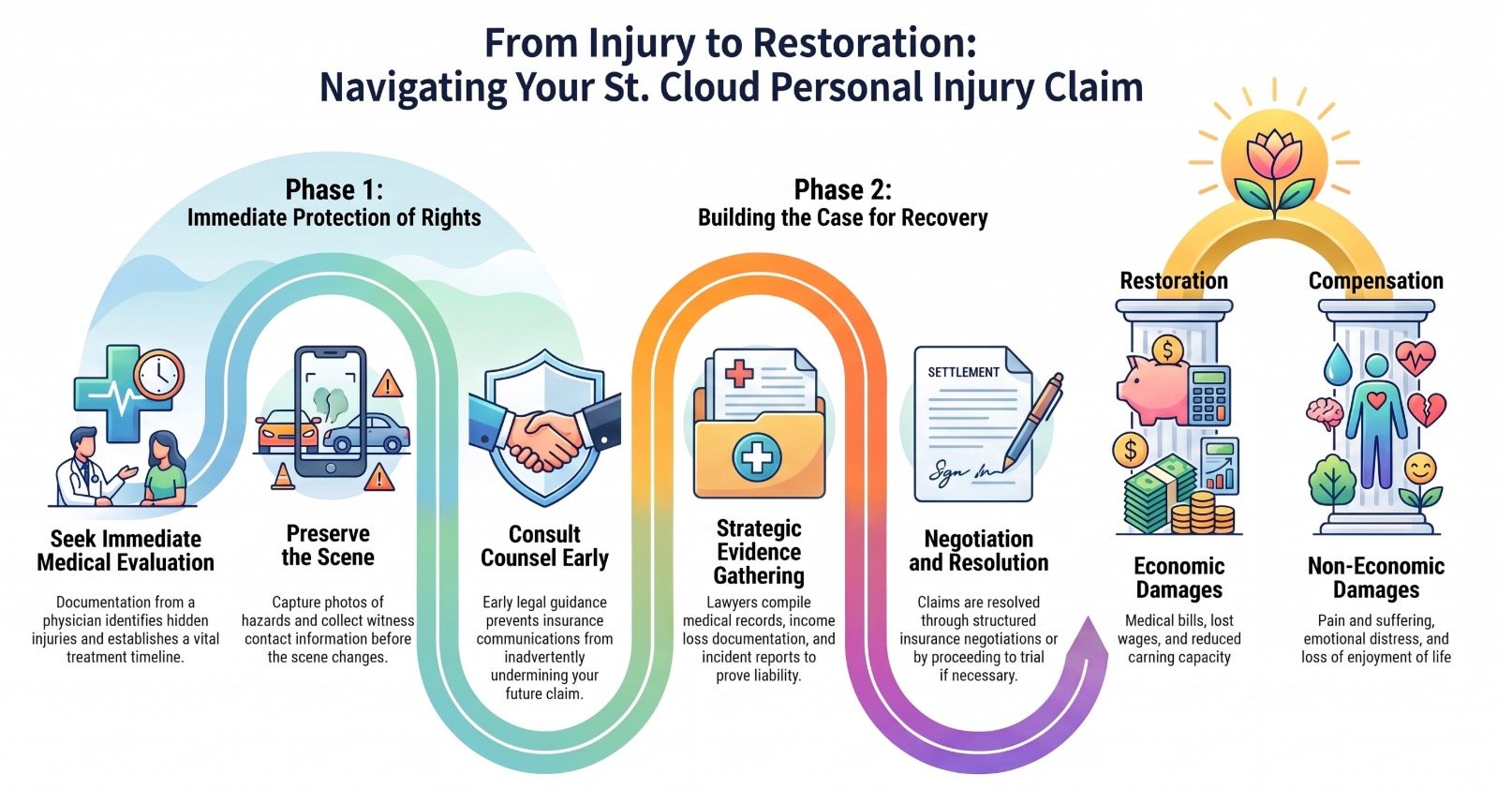
How We Can Help With Your St. Cloud Personal Injury Claim
When a personal injury claim disrupts an individual’s health, finances, or daily responsibilities, qualified legal guidance can provide a structured path toward restoration. A St. Cloud personal injury lawyer can help an injured person understand available remedies, organize relevant information, and communicate with insurers or opposing representatives. This support lets the individual focus on recovery while the legal team handles claim-related responsibilities.
Proving damages requires more than describing an accident’s consequences. Counsel may develop an evidence strategy that preserves photographs, witness accounts, employment records, and other materials supporting liability and harm. Medical documentation can establish the nature of injuries, treatment requirements, prognosis, and continuing limitations. Attorneys may also help calculate losses, including medical expenses, diminished earnings, rehabilitation costs, and other measurable impacts. Through careful review and responsible advocacy, legal guidance can help protect an individual’s interests and promote a fair evaluation of the claim while respecting the needs of families, caregivers, and the broader community.
Understanding St. Cloud Personal Injury Cases


Understanding a St. Cloud personal injury case requires careful evaluation of facts, records, and applicable legal standards. Each matter is assessed individually to determine whether another party owed a duty, breached that duty, and caused compensable harm. A structured fault determination considers statements, photographs, incident reports, and other available evidence without assuming liability prematurely.
OUR CONSULTATIONSARE FREE
START YOUR FREE CASE REVIEW

Medical record review helps clarify the nature of the injuries, required treatment, prognosis, and relationship between the incident and claimed damages. A liability investigation may examine insurance information, witness accounts, relevant policies, and conduct surrounding the event. These steps support an informed assessment rather than relying solely on initial impressions.
Compensation calculation generally considers medical expenses, lost income, reduced earning capacity, rehabilitation needs, and other legally recognized losses. Documentation must support each category, while settlement discussions should reflect both present and anticipated effects. A qualified St. Cloud personal injury lawyer can organize evidence, explain procedural requirements, and help affected individuals pursue a fair resolution while serving their families and communities.
Don’t Wait. Call Our Florida Personal Injury Lawyers Now!
Common Causes of St. Cloud Personal Injury


Personal injuries in St. Cloud commonly result from motor vehicle collisions, slip and fall accidents, workplace incidents, and medical malpractice. Each cause involves distinct legal and factual considerations, including liability, negligence, and the extent of the resulting harm. Understanding these circumstances helps clarify when an injured person may have grounds for a personal injury claim.
Motor Vehicle Collisions
Motor vehicle collisions are a common cause of personal injury in St. Cloud and affect drivers, passengers, pedestrians, and bicyclists. These incidents may result from Distracted driving, speeding, impaired driving, unsafe lane changes, or failure to obey traffic signals. Rear end collisions frequently occur when a driver follows too closely or fails to stop promptly, potentially causing whiplash, fractures, or other serious harm. Minnesota’s winter weather can further increase collision risks by reducing visibility and roadway traction. After a crash, injured individuals may require medical evaluation, transportation assistance, and support communicating with insurers. A personal injury lawyer can help preserve evidence, assess liability, and pursue compensation for medical expenses, lost income, property damage, and other losses. Prompt legal guidance may also protect an injured person’s rights while recovery remains the primary concern.
Slip And Fall Accidents
When hazardous conditions exist on another party’s property, slip and fall accidents may cause significant injuries and financial losses. Common hazards include wet floors, uneven pavement, inadequate lighting, loose carpeting, and obstructed walkways. Negligent maintenance can allow these conditions to persist, particularly when property owners or managers fail to inspect premises, repair defects, or provide appropriate warnings. During Minnesota winters, snow and ice may create dangerous surfaces near entrances, parking areas, and sidewalks. A property owner’s responsibility depends on factors such as notice of the hazard, reasonable inspection practices, and the foreseeability of harm. Injured individuals may face medical expenses, lost income, and ongoing limitations. Documentation, witness accounts, and prompt medical evaluation can help clarify what occurred and support a fair assessment of available legal remedies.
Workplace Injuries
Workplace injuries may result from unsafe equipment, inadequate training, hazardous substances, falls, overexertion, or insufficient safety procedures. Employers generally have a responsibility to maintain safe conditions, provide appropriate instruction, and address known hazards promptly. Workplace safety policies should identify risks, establish reporting procedures, require protective equipment, and explain emergency responses. Injuries may also arise when supervisors ignore violations or when workers fail to follow established precautions. Evaluating employee negligence standards can help determine whether an injured person’s conduct contributed to the incident, although such assessments depend on the specific facts and applicable law. Documentation, witness accounts, inspection records, and employment policies may clarify responsibility. A St Cloud personal injury lawyer can help injured workers understand available remedies, communicate with insurers, and pursue compensation for medical expenses, lost income, and related losses.
Medical Malpractice
Medical malpractice may occur when a healthcare provider fails to meet the applicable standard of care and injures a patient. In St. Cloud, potential claims may involve misdiagnosis errors that delay treatment, surgical mistakes, medication errors, or inadequate monitoring of a patient’s condition. Nursing neglect may occur when staff fail to provide prescribed care, respond to urgent symptoms, prevent foreseeable falls, or communicate critical changes to a physician. Other examples include birth injuries, improper anesthesia, and failures to obtain informed consent. Establishing liability generally requires evidence of the provider’s duty, a breach of that duty, causation, and resulting damages. Medical records, expert opinions, and witness accounts can help clarify what occurred. A qualified personal injury lawyer can evaluate the circumstances, explain available legal options, and support the patient’s recovery and interests.
Legal Rights of St Cloud Personal Injury Injury Victims
How can St. Cloud personal injury victims protect their legal rights after an accident? Minnesota law may permit an injured person to pursue compensation when another party’s conduct caused harm.
Understanding the basics of negligence helps establish duty, breach, causation, and measurable injury without speculating about how incidents occur.
- Victims generally have the right to seek medical evaluation, preserve records, and document injury-related losses.
- They may consult a qualified attorney, communicate cautiously with insurers, and pursue damages through negotiation or litigation.
- Available recovery can include medical expenses, lost income, rehabilitation costs, pain, and other legally recognized losses.
Damages calculation should rely on evidence, including bills, employment documentation, treatment forecasts, and testimony regarding lasting limitations. Minnesota’s comparative fault rules can reduce recovery if the victim shares responsibility, while statutory deadlines may limit the time available to file a claim. Prompt legal guidance helps protect evidence and evaluate options. Those serving injured neighbors can support informed decision-making without promising outcomes or encouraging unnecessary conflict. Each case requires an individualized review of facts and applicable law.
Why Do St Cloud Personal Injuries Happen?
Some injuries originate with product defects, including faulty design, manufacturing errors, or inadequate safety instructions. Unsafe construction practices, insufficient maintenance, and violations of building or traffic standards may also create dangerous conditions. Medical negligence can cause harm when providers misdiagnose conditions, administer inappropriate treatment, or fail to communicate material risks.
These incidents are not always caused by deliberate misconduct. Carelessness, inadequate policies, overlooked hazards, and organizational failures can produce serious consequences for people who depend on others for safety. Identifying the underlying cause helps clarify accountability and supports broader efforts to prevent similar injuries in the community.
What Should You Do After a St. Cloud Personal Injury?
After a St. Cloud personal injury, the injured person should seek immediate medical care, even if symptoms initially seem minor. Documenting the accident scene, including injuries, property damage, witness information, and relevant conditions, can help preserve important evidence. Contacting a personal injury lawyer promptly may also clarify your legal rights and support informed decisions about a potential claim.
Seek Immediate Medical Care
Seek prompt medical attention after a St. Cloud personal injury, even if symptoms initially seem minor. A physician can identify hidden injuries, establish an appropriate treatment plan, and document medical findings that may support later legal or insurance proceedings. Individuals should follow all instructions, attend recommended appointments, and report changes in pain, mobility, or emotional well-being. Emergency services may be necessary for severe bleeding, breathing difficulties, loss of consciousness, suspected fractures, or other urgent conditions. Medical professionals can also provide emotional support and explain recovery planning, helping injured people understand expected limitations and available resources. Keeping discharge instructions, prescriptions, and medical bills can help you manage care more effectively. Prompt evaluation prioritizes health while creating a reliable record of injuries and treatment without delaying necessary attention.
Document The Accident Scene
Accurate documentation of the accident scene can preserve evidence that may clarify how a St. Cloud personal injury occurred. If conditions permit, the injured person or a trusted companion should photograph vehicle positions, property damage, road conditions, traffic signs, lighting, and visible injuries. Images should include wide views and closer details, preferably with timestamps preserved. Names and contact information for witnesses can help maintain reliable accounts of what occurred. Notes should record the date, time, weather, location, and events immediately before and after the incident. Leave damaged clothing or personal items unchanged and store them safely. Evidence preservation also includes retaining relevant messages, receipts, and photographs. Promptly follow applicable reporting procedures, including notifying law enforcement or property representatives, to create an official record and support accurate review.
Contact A Personal Injury Lawyer
When should an injured person contact a St. Cloud personal injury lawyer? Legal guidance may be appropriate soon after an accident, particularly when injuries, disputed liability, or substantial medical expenses are involved. Early consultation helps preserve evidence, identify responsible parties, and prevent statements or agreements from undermining a potential claim. A lawyer can conduct a Client eligibility check, considering the nature of the incident, available insurance, injury documentation, and applicable deadlines. The legal team may also review insurance paperwork to identify coverage limits, exclusions, inaccurate descriptions, or settlement terms that fail to account for future needs. The injured person should provide medical records, photographs, witness information, police reports, and correspondence with insurers. Prompt, accurate communication enables counsel to protect the client’s interests while supporting a fair resolution.
Critical Evidence in a St. Cloud Personal Injury Case
Pivotal evidence can establish how the incident occurred, the extent of resulting injuries, and the financial consequences in a St. Cloud personal injury case.
The following materials may be particularly significant:
- Accident scene photographs and witness statements
- Medical treatment records
- Income loss documentation
Accident Scene Photos
Photographs taken at an accident scene can preserve essential evidence in a St. Cloud personal injury case. Images may document vehicle positions, roadway conditions, traffic signals, property damage, weather conditions, and visible hazards before the scene changes. A careful record can help clarify disputed events and support an accurate evaluation of responsibility. Individuals should photograph injuries, damaged clothing, safety equipment, and surrounding conditions when doing so is safe and does not interfere with emergency assistance. Wide-angle images can establish context, while detailed photographs may show important physical evidence. Files should retain original dates and metadata whenever possible. Preserving photographs promptly helps avoid spoliation, especially when evidence could be repaired, removed, or altered. Witnesses and responding personnel should not be obstructed during documentation.
Medical Treatment Records
Medical treatment records can provide important evidence in a St. Cloud personal injury case by documenting diagnoses, symptoms, prescribed care, and the connection between an incident and resulting harm. These records establish a treatment timeline, helping clarify when complaints began, how conditions progressed, and whether care matched medical recommendations. They may also reveal prior conditions, making accurate review essential when evaluating causation and damages. Evidence preservation requires obtaining complete records, billing statements, imaging results, and provider notes through appropriate authorization procedures. Organized medical documentation can support insurance documentation and help calculate past and anticipated expenses. Consistent records may further strengthen witness credibility by confirming reported symptoms and functional limitations through independent clinical observations. Prompt collection helps protect information that could otherwise become incomplete, unavailable, or difficult to interpret during claim evaluation and litigation.
Witness Statements
Witness statements can provide independent accounts of how an incident occurred, what conditions were present, and how the injured person appeared immediately afterward. In a St. Cloud personal injury case, these accounts may clarify disputed facts, identify unsafe conduct, and support or challenge information found in medical treatment records. A legal team may vet credible witnesses by confirming each person’s location, ability to observe, relationship to the parties, and consistency over time. The prior statements review process can reveal changes, omissions, or details that require careful explanation. Encourage witnesses to describe only what they personally saw, heard, or observed, rather than speculate about fault or medical outcomes. Prompt interviews are valuable because memories can fade, and contact information may become difficult to obtain.
Income Loss Documentation
When an injury prevents a person from working, income loss documentation can establish the financial impact as a measurable part of a St. Cloud personal injury claim. Pay stubs, tax returns, employment contracts, time records, and employer statements can verify wages missed during recovery. Medical restrictions and attendance records may link the absence directly to the injury, while payroll records can clarify lost overtime, bonuses, commissions, or benefits. A careful past earnings calculation should compare normal income with amounts actually received after the incident. Documentation should also address reduced earning capacity when limitations affect future employment. Because claim timing can influence evaluation and payment, gather records promptly and preserve them consistently. Accurate evidence helps representatives present a complete claim and supports fair assistance for the injured person and household.
Don’t Wait. Call Our Florida Personal Injury Lawyers Now!
Long-Term Effects of St Cloud Personal Injuries
Long-term injuries may cause chronic pain, reduced mobility, or permanent disability that affects a person’s ability to work and manage daily activities. Emotional and mental health consequences, including anxiety, depression, and trauma-related symptoms, may also persist after physical recovery begins. Ongoing medical expenses for treatment, rehabilitation, medication, and assistive care can create substantial financial burdens.
Chronic Pain And Disability
Chronic pain and disability can substantially alter an injured person’s ability to work, manage daily responsibilities, and maintain independence. Persistent limitations may reduce mobility, strength, stamina, or coordination, making everyday tasks and job duties harder. Some injured individuals require ongoing medical care, assistive devices, modified schedules, or help with transportation and household activities. Workplace rehab can support a safe return to employment by identifying functional restrictions, building practical skills, and coordinating treatment with vocational goals. Employers may also provide disability accommodations, including ergonomic equipment, adjusted duties, accessible workspaces, or flexible scheduling, when appropriate. When lasting impairments prevent comparable employment, documentation of medical limitations and lost earning capacity may become important. Careful records of treatment, restrictions, expenses, and functional changes can help clarify the injury’s continuing effects and support informed legal evaluation.
Emotional And Mental Health
In addition to physical limitations, a personal injury can produce lasting emotional and mental health effects that interfere with daily functioning and recovery. Anxiety, depression, sleep disruption, and trauma-related symptoms may affect employment, relationships, and a person’s ability to participate in rehabilitation. A panic disorder impact can include sudden episodes of fear, avoidance of necessary activities, and difficulty traveling or returning to work. Consistent treatment and therapy documentation can help demonstrate symptom progression, diagnoses, and compliance with recommended care. Records from mental health professionals, physicians, and supportive family members may provide emotional distress proof by connecting these conditions to the injury and its consequences. An injured person should not avoid counseling because of fear of insurance retaliation. Legal guidance can help protect privacy while presenting credible evidence of long-term psychological harm.
Ongoing Medical Expenses
When a St. Cloud injury produces lasting medical needs, ongoing expenses may extend well beyond initial emergency treatment. Follow-up appointments, rehabilitation, prescription medications, assistive devices, and future procedures can create substantial financial pressure for an injured person and family. Accurate documentation helps establish the expected duration and cost of necessary care. Medical records, treatment plans, expert evaluations, and billing statements may support a claim for both current and anticipated expenses.
A St. Cloud personal injury lawyer can support an insurance claim by communicating with insurers, organizing evidence, and addressing disputes over medical necessity. Counsel may also develop a settlement negotiation strategy that accounts for projected treatment, inflation, reduced earning capacity, and complications that could arise later. Thorough preparation helps protect a claimant’s ability to obtain compensation that reflects the injury’s long-term consequences and supports continued recovery.
Proving Liability in St. Cloud Personal Injury Cases
Establishing liability in a St. Cloud personal injury case requires showing that another party’s conduct caused the harm. A claimant generally must establish duty, breach, causation, and resulting damages. Evidence may include incident reports, photographs, video recordings, witness statements, medical records, and testimony from qualified professionals. Each item should connect the alleged misconduct to the injury and address arguments that another event caused the loss.
Prompt evidence preservation is crucial because physical conditions, surveillance footage, electronic records, and other materials can disappear or change. Anyone involved in an incident should document relevant details promptly, identify witnesses, and keep all records related to treatment and recovery. Legal counsel may issue preservation requests and investigate applicable safety standards, traffic rules, or premises obligations.
Damages valuation depends on reliable proof of medical costs, lost income, ongoing limitations, and other measurable effects. A careful, organized presentation helps decision-makers assess responsibility and ensures that the injured person’s needs are represented with accuracy, dignity, and fairness.
Dealing With Insurance Companies After a St. Cloud Personal Injury
After a St. Cloud personal injury, insurance companies may contact an injured person quickly to request statements, records, or authorization to review medical history. Responding carefully protects the individual’s interests while preserving accurate information for those evaluating the claim. The insurer’s representative may appear helpful, but the representative’s responsibility is to the insurance company, not the injured party.
An attorney can help organize communications, identify relevant documentation, and address unreasonable requests. Handling insurer deadlines is important because missed response dates may complicate negotiations or limit available options. Written communication often reduces misunderstandings and creates a reliable record of discussions.
Medical expenses can also create immediate pressure for an injured person and family. Counsel may help negotiate medical billing, review disputed charges, and coordinate lawful payment arrangements. These efforts can reduce unnecessary financial strain while treatment continues. The injured person should avoid signing releases or accepting settlement checks without understanding how they may affect future rights and responsibilities.
What to Expect During a St. Cloud Personal Injury Claim Process
A St. Cloud personal injury claim generally begins with an initial case evaluation to assess liability, injuries, and potential compensation. The process then involves gathering evidence and documentation, followed by negotiations with the insurance company regarding a fair settlement. If negotiations fail, the matter may proceed to trial, where the available evidence and legal arguments are presented before a court.
Initial Case Evaluation
When an injured person consults a St. Cloud personal injury lawyer, the initial case evaluation determines whether legal representation is appropriate. The attorney typically listens to the individual’s account, identifies the nature of the injuries, and discusses how the incident has affected daily responsibilities, work, and family obligations. This discussion helps clarify potential legal issues without promising a particular outcome.
The lawyer may explain applicable deadlines, possible sources of compensation, and the general stages of a claim. An initial insurance review can identify relevant policies, coverage questions, and communications requiring careful handling. Based on the available information, the attorney may outline a preliminary claims strategy and recommend practical next steps. The evaluation also provides an opportunity to discuss fees, communication practices, and informed decision-making before representation begins. Each assessment remains individualized, confidential, and focused on serving the client’s interests.
Evidence And Documentation
Because evidence often determines how an injury claim is evaluated, a St. Cloud personal injury lawyer may help organize records that clarify what occurred and how the injury affected the claimant. Evidence Collection can include photographs, incident reports, witness contact information, employment records, and relevant communications. Medical documentation is particularly important because treatment notes, diagnostic results, prescriptions, and billing statements establish the nature and extent of harm. These materials help prove damages, including Medical Costs, lost income, and ongoing care needs. Documentation may also address Liability Standards by connecting another party’s conduct to the incident and resulting injuries. Claimants should preserve original records, avoid altering photographs, and maintain a dated account of symptoms and limitations. Consistent, accurate documentation supports a clear evaluation of the claim.
Insurance Company Negotiations
Insurance company negotiations typically begin after the insurer reviews the incident report, medical records, employment documentation, and other evidence supporting the injury claim. The adjuster may request clarification, question liability, or evaluate whether the treatment and losses appear connected to the incident. Effective liability proofing requires organized records, witness information, photographs, and consistent explanations of how the event occurred. Damages evidence may include invoices, wage statements, rehabilitation records, and documentation describing daily limitations. Communication should remain accurate, professional, and timely, because casual statements can be misinterpreted or used to minimize the claim. A St. Cloud personal injury lawyer can handle insurer communications, identify incomplete evaluations, and present the client’s position in a structured manner. Careful negotiation focuses on factual support and protects the claimant from unnecessary pressure throughout the process.
Settlement Or Trial
A personal injury claim may conclude through a negotiated settlement or proceed to trial if the parties cannot reach a fair resolution. A settlement provides a defined outcome without courtroom uncertainty, but its terms should reflect documented losses, future needs, and liability evidence. Insurance company timelines may affect offers, medical evaluations, and payment processing, although they do not determine the claim’s true value. Effective negotiation strategy tips include maintaining organized records, presenting a clear demand, and avoiding statements that could undermine credibility. If negotiations fail, trial preparation may involve depositions, expert testimony, exhibits, and jury presentation. A court then decides liability and damages based on admissible evidence. Throughout either path, a St. Cloud personal injury lawyer can help protect the injured person’s interests while supporting a fair, responsible resolution.
Don’t Wait. Call Our Florida Personal Injury Lawyers Now!
Compensation for St. Cloud Personal Injury Damages
When a person suffers harm in an accident caused by another party’s negligence, compensation may be available for the resulting personal injury damages. A St. Cloud personal injury lawyer may evaluate liability, document losses, and identify the parties or insurers responsible for payment. Recoverable compensation can address accident-related treatment, rehabilitation, prescription costs, lost earning capacity, and other documented consequences. A careful assessment also considers Future medical needs when injuries require continuing care, monitoring, assistive devices, or additional procedures. Medical records, employment information, expert opinions, and testimony can help establish the extent and duration of those needs. Counsel may communicate with insurers, protect deadlines, and pursue a claims strategy suited to the evidence and the client’s circumstances. Because each claim involves different facts, settlement evaluations should account for liability disputes, available coverage, injury severity, and anticipated recovery. Legal guidance can help an injured person understand options, preserve access to necessary care, and promote a fair resolution.
Economic vs Non-Economic Damages in St Cloud Personal Injury Cases
Economic damages compensate documented financial losses, including medical expenses, lost income, and related costs. Non-economic damages address less readily measurable harm, such as pain, emotional distress, and diminished quality of life, requiring careful evaluation of the injury’s effects. Comparing these categories helps clarify how damage awards may reflect both financial consequences and personal suffering.
Economic Damages Explained
Although personal injury cases often involve significant physical and emotional consequences, damages are generally divided into two categories: economic and non-economic. Economic damages compensate an injured person for measurable financial losses caused by an incident. They may include emergency treatment, hospital bills, rehabilitation, prescription costs, property damage, and lost wages. When injuries limit the ability to work, compensation may also reflect reduced future earning potential, based on evidence concerning employment, income, skills, and medical prognosis. Documentation, such as invoices, pay records, and professional evaluations, can help establish these losses. Non-economic factors, including emotional distress, fall into a separate category and are evaluated differently. Punitive damages are also distinct because they may punish exceptionally harmful conduct rather than reimburse ordinary financial losses. Careful calculation helps preserve fair support for recovery and household stability.
Non-Economic Damages Valued
Non-economic damages address the personal effects of an injury that cannot be measured through bills or pay records. They may compensate for physical pain, emotional distress, disability, disfigurement, loss of enjoyment, and disruption of family or community relationships. In St. Cloud personal injury cases, valuation generally considers the injury’s severity, duration, treatment, prognosis, and effect on ordinary activities. Testimony from the injured person, relatives, medical professionals, and other witnesses may help explain these consequences. Comparative negligence considerations can reduce a recovery when the injured person shares responsibility for the harm, depending on Minnesota law and the assigned percentage of fault. Punitive damages eligibility is separate from compensation for personal losses and generally requires proof of particularly wrongful conduct. A careful evaluation helps present the human impact accurately while responsibly serving the injured person’s interests.
Comparing Damage Awards
Damage awards in St. Cloud personal injury cases generally include economic and non-economic damages. Economic damages compensate measurable losses, such as medical expenses, rehabilitation costs, lost wages, reduced earning capacity, and necessary future care. Non-economic damages address less tangible harm, including pain, emotional distress, disability, disfigurement, and diminished enjoyment of life. Their value depends on evidence describing how injuries affect daily responsibilities, relationships, and long-term independence. Liability factors also influence the final recovery. Minnesota’s comparative fault rules may reduce compensation when an injured person shares responsibility for the incident. A careful evaluation considers medical records, employment documentation, expert opinions, witness testimony, and the expected duration of limitations. Comparing these categories helps claimants and their families understand potential compensation while supporting fair outcomes for everyone affected by the injury and its consequences.
When a St. Cloud Personal Injury Case Goes to Trial vs. Settlement
When liability, damages, or settlement value remains disputed, a St. Cloud personal injury case may proceed toward trial rather than resolve through negotiation. The decision depends on the strength of the evidence, the client’s objectives, and the risks associated with continued litigation. A settlement can provide a defined recovery, reduce delay, and avoid the uncertainty of a jury’s decision. However, an offer may not fairly reflect medical expenses, lost income, lasting limitations, or other proven harm.
At trial, the trial timeline may extend for months as discovery, motions, preparation, and courtroom proceedings unfold. An attorney develops an evidence strategy, prepares witnesses, challenges opposing claims, and presents damages in an organized manner. The prospect of trial can create settlement leverage, particularly when credible evidence supports liability and losses. During negotiations, counsel evaluates each offer against likely outcomes, costs, and risks. If resolution remains inadequate, trial may be the best path to pursue accountability and full compensation for the injured person and those relying on that recovery.
Florida Laws That May Affect Your St. Cloud Personal Injury Case
Florida law can greatly influence how a St. Cloud injury claim is evaluated, negotiated, or presented in court. Understanding these rules helps injured individuals protect their interests while pursuing fair treatment and supporting responsible community care.
- Comparative negligence: Florida may reduce an award when the injured person shares responsibility for the incident. Evidence concerning conduct, warnings, and reasonable precautions can in turn affect recovery.
- Damages: Courts may consider medical expenses, lost income, and non-economic harm. In exceptional cases involving intentional misconduct or gross negligence, punitive damages may be available, subject to statutory requirements and limitations.
- Government defendants: Claims involving public agencies can raise sovereign immunity issues. Special notice procedures, damage caps, and other restrictions may apply, making early legal assessment important.
A qualified St. Cloud personal injury lawyer can evaluate evidence, identify applicable insurance and liability rules, and coordinate communication with insurers and public entities. The statute of limitations is also important, although its deadlines and filing requirements should be addressed separately. Each case requires individualized review.
The Statute of Limitations for St. Cloud Personal Injury Cases
Although personal injury claims may involve extensive medical and liability issues, they must also be filed within the deadline Florida law establishes. In many Florida negligence cases, the statute of limitations deadline is generally two years from the date of the injury, though the applicable period can depend on the claim’s legal basis and the parties involved. Missing that deadline may prevent a court from hearing the case, even when the underlying harm is substantial.
Several important exceptions may alter when the period begins or how long it lasts. The discovery rule can apply when an injury or its negligent cause could not reasonably have been identified immediately. Claims involving government entities may also require specific notice requirements before litigation proceeds, with shorter time limits than ordinary cases. Other rules can affect minors, wrongful-death actions, medical negligence, and claims involving delayed diagnoses. Because deadlines are fact-sensitive, preserving records, identifying potential defendants, and confirming the governing limitation period are crucial steps for protecting an injured person’s opportunity to seek accountability.
How a St. Cloud Personal Injury Lawyer Can Help You
A St. Cloud personal injury lawyer can provide structured guidance while protecting an injured person’s legal interests. The lawyer examines medical records, incident evidence, and applicable insurance coverage to develop a clear claim. This support lets clients and families focus on recovery and supporting one another without managing complex legal demands alone.
- Claim preparation: Counsel organizes documentation, identifies responsible parties, and offers Insurance paperwork tips to reduce omissions, inconsistent statements, and processing delays.
- Evidence development: The lawyer may interview witnesses, consult qualified professionals, and assess losses such as treatment costs, lost income, and continuing care needs.
- Resolution advocacy: A carefully planned settlement negotiation strategy presents supported damages and addresses insurer arguments. If discussions do not produce a fair result, counsel can explain available litigation procedures and represent the client’s interests.
Throughout the process, a lawyer communicates significant developments, clarifies decisions, and promotes informed participation. Professional representation also helps preserve accurate records and supports a fair, orderly resolution grounded in evidence and applicable law.
When to Contact a St Cloud Personal Injury Lawyer
Prompt legal guidance can be valuable soon after an injury, particularly when fault is disputed, injuries may require ongoing treatment, or an insurer requests statements and records. An early consultation can help an injured person understand their options while preserving a clear account of events. A St Cloud personal injury lawyer may advise on Evidence preservation, including photographs, witness information, incident reports, damaged property, and relevant electronic records. Guidance can also support careful insurance communication, reducing the risk that incomplete statements or premature settlements affect a potential claim. Medical documentation should begin promptly and continue throughout treatment, recording diagnoses, symptoms, limitations, referrals, and related expenses. Contact is especially appropriate when an injury affects work, caregiving, mobility, or daily responsibilities, or when another party denies responsibility. A timely review may identify what liability proof you need, such as safety records, vehicle data, surveillance, or expert assessments. Seeking help early lets you organize concerns and address them responsibly while the facts remain available.
Why You Need an Experienced St Cloud Personal Injury Lawyer
An experienced St Cloud personal injury lawyer can provide structured guidance when liability, damages, and insurance practices make a claim difficult to evaluate. Such counsel helps injured individuals and families understand available protections while preserving evidence needed to establish responsibility. A thorough investigation may examine negligent hiring, inadequate training, defective equipment, or supervision failures. In property-related incidents, premises accountability can depend on notice, maintenance records, warnings, and the relationship between the visitor and property owner. An experienced lawyer can coordinate medical documentation, assess the long-term effects of injuries, and communicate with insurers without allowing pressure to dictate decisions. This support enables clients to focus on recovery and the needs of those they serve. Careful legal review also helps identify responsible parties whose conduct may otherwise remain overlooked. By presenting a claim with organized evidence and a clear explanation of losses, counsel promotes a fair evaluation and protects the claimant’s opportunity to pursue appropriate compensation.
How to Choose the Right St Cloud Personal Injury Lawyer for Your Case
Choosing the right St Cloud personal injury lawyer requires more than comparing advertisements or initial consultation promises. A careful evaluation should consider the attorney’s experience with cases involving similar injuries, disputed liability, and significant medical expenses. The lawyer should explain applicable deadlines, potential challenges, and realistic outcomes without guaranteeing results.
During a Client consultation, prospective clients can assess whether the attorney listens carefully, answers questions clearly, and treats the individual’s concerns with respect. Effective representation also depends on dependable communication, organized case preparation, and access to appropriate investigative and medical resources. The firm’s fee structure and responsibility for case expenses should be provided in writing.
Experience with insurance negotiations is particularly important because insurers may minimize damages or shift blame. A suitable lawyer should demonstrate a thoughtful strategy for documenting losses and presenting persuasive evidence. Reviewing professional credentials, client feedback, and disciplinary history can also help individuals choose counsel committed to protecting their interests and supporting their recovery.
About The Law Offices of Anidjar & Levine
With a focus on personal injury representation, the Law Offices of Anidjar & Levine assists individuals pursuing compensation after accidents and other injury-causing incidents. The firm represents clients in matters involving motor vehicle collisions, premises liability, workplace injuries, and other claims requiring careful legal review. Its attorneys evaluate available evidence, identify responsible parties, and explain potential legal options in terms clients can understand.
Client communication remains an important part of the firm’s approach. Regular updates and responsive guidance help individuals make informed decisions while their claims develop. The legal team also considers medical documentation, insurance positions, financial losses, and applicable deadlines when developing a case strategy.
The firm’s services are intended to help injured individuals address the practical and legal challenges that follow an accident. By handling negotiations and, when appropriate, litigation, its attorneys seek to protect clients’ interests and pursue compensation supported by the facts and governing law.
Frequently Asked Questions
Can I Afford a St. Cloud Personal Injury Lawyer Without Paying Upfront?
You may be able to afford legal representation without paying upfront, depending on the lawyer’s payment options. Many personal injury attorneys accept a contingency fee and receive payment only if they recover compensation. This arrangement often involves no upfront costs, but the agreement should clearly explain expenses and percentages. A free consultation can clarify eligibility and obligations. People with limited resources may also explore pro bono services, legal aid programs, or referral organizations that offer assistance.
Will My Personal Injury Case Affect My Immigration Status?
A personal injury case generally does not affect immigration status because seeking compensation for injuries is a lawful right. However, immigration consequences can arise from unrelated criminal charges, false statements, or violations of immigration requirements. Filing a claim ordinarily does not create deportation risk or threaten work authorization. Because circumstances differ, the injured person should get a confidential legal consultation from qualified personal injury and immigration professionals before making major decisions.
Can I Change Lawyers if I Am Unhappy With My Current Representation?
Yes, a client generally may change lawyers when dissatisfied with communication, strategy, or representation. To transition counsel, the client should review the representation agreement, discuss concerns directly, and confirm any required court approval. The new lawyer can usually manage substitution procedures and obtain the case file. Address client dissatisfaction promptly because deadlines, negotiations, and litigation responsibilities continue during the transition. Fees and potential liens should also be clarified.
What Happens if the At-Fault Party Has No Insurance?
If the at-fault party has no insurance, the injured person may pursue No Insurance Coverage benefits through their own uninsured-motorist policy, if available. Such coverage can help address medical expenses, lost income, and qualifying damages, subject to policy limits and legal requirements. Other Legal Compensation Options may include pursuing the at-fault party’s personal assets, although recovery can be difficult. A qualified attorney can evaluate coverage, preserve evidence, and identify appropriate claims.
Can Family Members Attend Meetings With My Personal Injury Lawyer?
Yes, family members may attend meetings with a personal injury lawyer when the client and attorney agree. A client may bring trusted advocate to provide support, help recall information, or assist with communication. However, privacy considerations are important because unnecessary participants could affect attorney-client confidentiality or privilege. The lawyer may request that certain discussions occur privately, particularly when reviewing sensitive medical, financial, or liability information relevant to the claim.
—————————
St. Cloud personal injury claims require timely action, careful documentation, and a clear understanding of Florida law. An experienced personal injury lawyer can evaluate liability, assess damages, communicate with insurers, and pursue compensation through negotiation or litigation when necessary. Victims should avoid accepting premature settlements before understanding the full impact of their injuries. Florida Personal Injury Lawyer services from The Law Offices of Anidjar and Levine provide informed legal guidance designed to protect each client’s rights and support a fair resolution.

