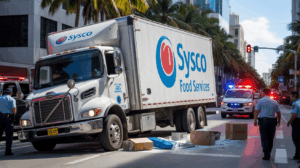





Introduction: The Complexities of Cargo-Related Collisions
Improper loading truck accidents present unique legal challenges that distinguish them from other commercial vehicle collisions. These cases are defined by complex chains of responsibility that often extend far beyond the driver, involving shippers, loaders, brokers, and carriers. Furthermore, establishing liability requires a sophisticated understanding of technical evidence, from vehicle dynamics and cargo securement standards to electronic data logs. This document provides a comprehensive strategic framework for legal professionals to navigate these complex cases, drawing from established best practices in investigation, evidence preservation, and liability analysis.
Learn More Here: Miami Improper Loading Truck Accident
Building a successful claim begins with a foundational understanding of the technical failures that transform a routine freight haul into a catastrophic event.
1.0 The Anatomy of an Improper Loading Accident: Core Causal Factors
Understanding the core causes of an improper loading accident is a strategic imperative. The ability to link the physical cause of the collision—such as a shifted load or an overweight trailer—to a specific regulatory or procedural failure is the foundation of proving negligence. A thorough analysis of these causal factors allows legal counsel to build a clear and defensible narrative of how a breach of duty directly resulted in harm.
1.1 Overloaded Cargo Weight Exceeding federal and state gross vehicle weight caps is a direct violation of safety regulations designed to protect the public. Excess weight compromises a truck’s fundamental systems by lengthening stopping distances, straining brakes, and reducing steering responsiveness. It also degrades tire integrity and magnifies impact forces in a collision, worsening injuries. Proof of this violation is established by securing and analyzing bills of lading, scale tickets from weigh-stations, maintenance logs showing brake and tire strain, and telematics data that may document weight.
1.2 Uneven Load Distribution Compliance with gross vehicle weight limits creates a deceptive sense of safety if load distribution is ignored. A negligently balanced load introduces instability that is invisible at a weigh station but catastrophic on an exit ramp. Improper cargo placement that shifts the vehicle’s center of gravity dramatically increases the risk of a rollover, especially on curves or during sudden lane changes. Uneven distribution also overloads specific axles, which can lead to tire failure and diminished braking on one side of the vehicle. A detailed analysis of weigh tickets with individual axle readings, alongside loading logs and plans, can reveal negligent practices that created this hidden hazard.
1.3 Inadequate Cargo Securement Failures in the physical securement of cargo can lead to the most catastrophic events, including rollovers, jackknifes, and multi-vehicle collisions caused by fallen debris. Proper securement involves using compliant tie-downs, blocking, and bracing to prevent any movement. An investigation must focus on the integrity of the hardware, evidence of required tension checks, and adherence to Federal Motor Carrier Safety Administration (FMCSA) standards that dictate the number and type of restraints required for specific cargo. A failure in any of these areas constitutes a clear breach of safety protocols.
1.4 Shifting Loads During Transit Cargo that appears secure at departure can become a dynamic hazard on the road. Dynamic forces from braking, turning, and uneven road surfaces can cause loads to shift, especially when initial securement was inadequate or cargo has settled. This is often linked to a failure to perform required post-departure inspections and retighten restraints. Black box data can reveal sudden changes in vehicle dynamics, while driver logs can indicate whether mandatory stops for cargo inspection were missed, allowing a minor shift to escalate into a complete loss of control.
With the technical causes established, the next critical step is to identify every entity in the supply chain that may bear legal responsibility for these failures.



2.0 The Chain of Responsibility: Identifying All Potentially Liable Parties
Executing a wide-ranging liability analysis is not merely advantageous; it is a primary strategic imperative. Failure to identify every potential defendant from the outset limits recovery options and cedes tactical ground. Unlike many vehicle accidents where fault is limited to one or two drivers, fault for a cargo-related incident often extends across multiple corporate entities, uncovering layered insurance policies and sufficient resources for a full client recovery.
- The Driver: Liability attaches to the driver for any failure to conduct the rigorous pre-trip and post-load inspections mandated by federal law. This duty is non-delegable and serves as the last line of defense against a shipper’s or loader’s negligence.
- The Motor Carrier (Trucking Company): The carrier holds vicarious liability for its driver’s negligence and may also bear direct liability for systemic failures. This includes inadequate training on cargo securement, poor maintenance of tie-down equipment, or creating systemic pressure on drivers to disregard weight limits to meet deadlines.
- The Cargo Loader/Shipper: This entity faces direct negligence for the physical act of loading, including improper weight distribution and inadequate securement. Liability can attach even when the process is automated by robots, based on theories of automation negligence, defective programming, or inadequate quality control.
- The Broker: A freight broker’s liability can arise from its role in the supply chain, particularly if it engaged in unsafe routing or assumed contractual duties related to the safe transport of the cargo.
- Maintenance Providers: If the accident was caused by the failure of securement equipment (e.g., chains, binders, straps) or critical vehicle components like brakes and tires, the third-party company responsible for maintenance may be held liable for its negligence.
Identifying these potential defendants is the first step; the next is to implement a rigorous investigative framework to secure the evidence needed to prove their negligence.
3.0 A Strategic Framework for Building the Claim: Investigation and Evidence Preservation
In truck accident litigation, evidence is a perishable asset. It is often controlled by the very parties being investigated and can be quickly lost, altered, or destroyed through routine business operations. Therefore, evidence gathering is a time-sensitive, strategic imperative that requires immediate and decisive action to secure the facts before they disappear.
3.1 Immediate Post-Accident Protocol
The actions taken in the moments and hours following a crash are critical for protecting a victim’s health and legal rights.
- Ensure Immediate Safety: The first priority is moving to a secure location away from traffic and other hazards. Calling 911 is essential to report injuries and blockages. It is also critical to seek a medical evaluation, even for what seem like minor symptoms, to create a medical record and rule out latent injuries.
- Document Crash Evidence: Before the scene is cleared, it is vital to document it thoroughly. This includes taking photographs of the vehicles from all angles, the position of the cargo, any failed securement devices (e.g., frayed straps, bent binders), and DOT numbers on the truck and trailer. Gathering contact information from witnesses and obtaining the police report number are also essential first steps.
- Seek Prompt Legal Guidance: Early legal counsel is critical for protecting a victim’s rights. An experienced attorney can immediately manage communications with insurers, shield the victim from adjuster tactics, and launch the formal investigation and evidence preservation process.
3.2 The Legal Investigation: Securing Indisputable Proof
Once the immediate aftermath is managed, the legal investigation must move to secure the objective proof needed to establish liability.
Categories of Essential Evidence
| Evidence Type | Specific Examples |
| Digital & Electronic Data | Electronic Control Module (ECM) – Dashcam video footage. Electronic Logging Device (ELD) data. Weigh-station logs. Warehouse surveillance video. Telematics and load sensor records. |
| Documentary Records | Load manifests and bills of lading – Driver training records and compliance histories, Maintenance and inspection logs for the truck and securement equipment. Dispatch communications and routing instructions. |
| Physical & Testimonial Evidence | Scene photographs and measurements -The damaged cargo and securement devices. Witness statement. Expert testimony from accident reconstructionists and cargo securement specialists. |
3.3 Formal Preservation Tactics
A crucial legal step in any commercial trucking case is the immediate issuance of formal preservation demands, also known as spoliation letters. These legally binding notices are sent to all potential defendants, instructing them not to destroy, alter, or dispose of relevant evidence. This demand explicitly covers critical information like ELD data, load manifests, internal communications, driver training files, and vehicle maintenance logs, which might otherwise be erased under routine data retention policies.
Once this body of evidence is secured, it must be strategically deployed to establish a clear causal link and fully quantify the resulting damages.


4.0 Proving Causation and Quantifying Damages
This phase of the litigation process has two parallel objectives. The first is to construct an irrefutable narrative of causation by connecting the preserved evidence to specific regulatory violations. The second is to meticulously document the full spectrum of the victim’s losses to ensure that any demand for compensation is complete, substantiated, and just.
4.1 Establishing the Causal Link
Liability is established by weaving the collected evidence into an irrefutable narrative of negligence. Each piece of evidence—from a frayed tie-down strap to a falsified weigh-station ticket—becomes a predicate fact that proves a direct breach of a specific FMCSA or state regulation. For example, evidence of too few tie-downs for a specific cargo weight is a direct violation of federal rules. This factual evidence is often paired with testimony from accident reconstruction experts who can use physics-based models and animations to show a jury precisely how an overloaded or shifted cargo caused the driver to lose control of the vehicle.
4.2 The Full Scope of Compensation
Compensation in these cases must account for every way the accident has impacted the victim’s life, from immediate medical costs to long-term emotional and financial disruption.
- Economic Damages: This includes all quantifiable financial losses, such as current and future medical expenses, lost wages from time away from work, diminished future earning capacity if the victim cannot return to their previous career, rehabilitation costs, and property damage.
- Non-Economic Damages: This category compensates for intangible losses that profoundly affect quality of life, including physical pain and suffering, and the loss of enjoyment of life resulting from the inability to participate in hobbies and daily activities.
- Long-Term Injury Impacts: Compensation must account for the lasting consequences of severe injuries. This includes chronic pain, permanent mobility issues, cognitive deficits such as memory and concentration problems, and emotional trauma like anxiety, depression, and intrusive thoughts.
- Financial and Daily Life Disruptions: The claim must also document and seek reimbursement for practical costs and disruptions, including expenses for ongoing therapy, household help needed during recovery, and other interruptions to daily routines.
While proving causation and damages is central, a successful claim must also navigate critical legal deadlines and regulatory nuances.
5.0 Navigating Procedural and Regulatory Complexities
Even the most well-documented case can fail if procedural rules are not strictly followed. Complex litigation involving commercial transportation requires deep knowledge of legal deadlines, jurisdictional rules, and industry-specific regulations that can influence a claim’s viability and strategy.
5.1 The Statute of Limitations in Florida
Florida law is strict regarding the timeline for filing a lawsuit. For most truck accidents, the statute of limitations generally allows two years from the date of the incident to file a negligence lawsuit. This two-year deadline typically applies to both personal injury and wrongful death claims. Courts rarely grant extensions, making it absolutely essential to act swiftly to investigate the claim and file it before time expires.
5.2 Advanced Regulatory Considerations
Beyond standard negligence principles, improper loading cases can involve nuanced legal and technical issues that require specialized expertise.
- Federal Maritime Law: When a cargo-related incident occurs within the jurisdiction of a port, such as PortMiami, federal admiralty principles may apply. Laws like the Carriage of Goods by Sea Act (COGSA) can govern the liability of carriers and stevedores (port-based loaders), potentially altering the legal framework and remedies available.
- Accident Reconstruction Animations: In cases where the dynamics of a load shift or vehicle trajectory are disputed, commissioning a scientifically accurate accident reconstruction animation can be a powerful tool. When paired with expert testimony, these visuals can help a jury understand complex mechanical forces and clarify how a loading failure directly caused the collision.
- Automated Loading Liability: A shipper cannot evade responsibility simply because pallets were loaded by robots. A shipper can still be sued and held liable for an improperly loaded truck based on legal theories of automation negligence. This could involve defective programming of the robots, inadequate quality control systems, or a general failure to oversee the automated process safely.
Understanding these technical, evidentiary, and procedural layers underscores the necessity of a disciplined and comprehensive legal strategy.
6.0 Conclusion: Key Strategic Principles for Success
Successfully litigating an improper loading truck accident claim requires a disciplined, multi-faceted strategy that integrates technical investigation, broad legal knowledge, and meticulous documentation. For legal professionals, the difference between an inadequate settlement and a just recovery lies in the execution of several core principles. The following takeaways represent the pillars of a successful claim.
- Act with Urgency: The most critical evidence in a trucking case is perishable. An immediate investigation is paramount to preserve scene evidence, electronic data, and company records before they are intentionally or unintentionally lost or destroyed.
- Adopt a Wide-Angle View of Liability: Never assume liability rests solely with the driver. A thorough investigation must scrutinize the entire supply chain—including the motor carrier, shipper, loader, and broker—to identify every party whose negligence contributed to the accident.
- Build the Case on Technical and Regulatory Foundations: A compelling claim is built on objective proof. The core of the legal argument should connect physical evidence of overloading, imbalance, or insecure cargo directly to specific violations of FMCSA and state regulations, establishing a clear and undeniable breach of duty.
- Document the Full Human and Financial Cost: Full and fair compensation is only possible when the full scope of harm is meticulously documented. This requires a diligent approach to quantifying all economic damages, substantiating non-economic losses, and projecting the long-term medical and financial impacts of the injuries.


We Can Help.